BEST SELLERS
Education
TRAGUS PIERCING: THE COMPLETE GUIDE
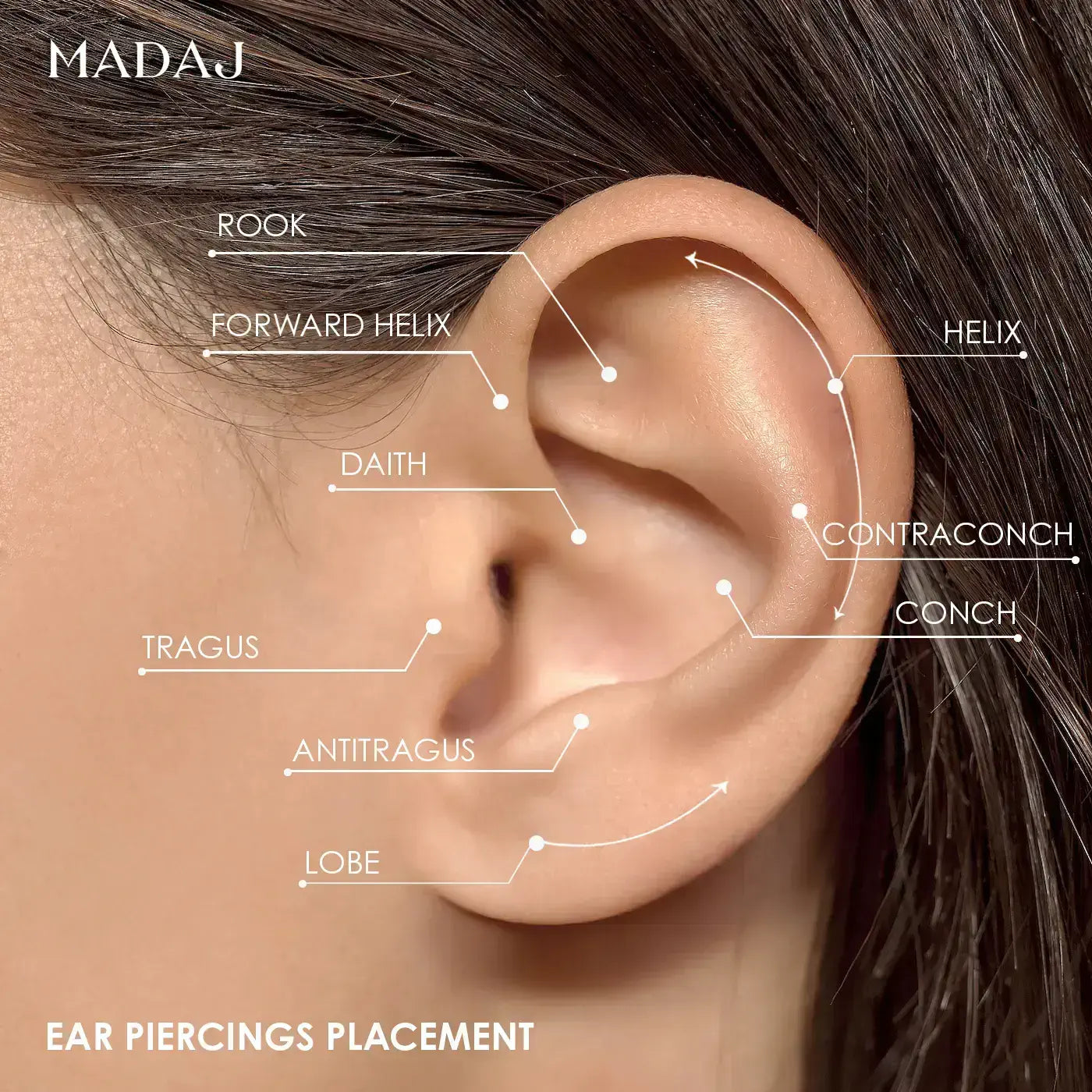
The tragus piercing sits on the small triangular flap of cartilage that partially covers the entrance to your ear canal. It is one of the most popular cartilage piercings for good reason: subtle enough for everyday wear, striking enough to anchor an entire ear composition, and versatile enough to work with studs, hoops, and decorative pieces once healed.
Whether you are considering your first cartilage piercing or adding to an existing collection, this guide covers everything you need to know: anatomy and placement, pain, the full healing timeline, aftercare, jewelry sizing, cost, and handling common issues like bumps and infections.

TRAGUS PIERCING PLACEMENT AND ANATOMY
The tragus is the small, thick piece of cartilage that protrudes directly in front of the ear canal, near the side of the face. If you press your finger against it, you can partially muffle the sound from that ear. That little flap is where the piercing goes.
The piercing is typically placed through the center of the tragus cartilage, angled slightly outward so the decorative end faces forward and is visible from the front. Exact positioning depends on your ear anatomy and the size of your tragus.
Is your tragus anatomy suitable for piercing?
Most people have a tragus large enough to pierce, but not everyone does. If your tragus is very small, very thin, or very flat, there may not be enough cartilage for the needle to pass through safely, leaving room for jewelry to sit comfortably. A tragus that is too thin increases the risk of rejection (the body pushing the jewelry out) and makes healing more difficult. The only way to know for sure is to visit a professional piercer for an in-person assessment. They will assess the thickness, shape, and angle of your tragus and tell you honestly whether it will work.
Tragus vs anti-tragus.
The anti-tragus is a small elevated ridge of cartilage located directly opposite the tragus, just above the earlobe. Although their names are similar, it is a different piercing in a different spot. The anti-tragus cartilage is usually thicker and denser, resulting in a more painful piercing (about 6/10 compared to 4/10 for the tragus). Both piercings look great together, offering a symmetrical framing around the ear canal.
Antitragus Piercing Full Guide
Surface tragus.
For people whose tragus cartilage is too small or thin for a standard piercing, a surface tragus piercing is sometimes offered as an alternative. Instead of passing through the cartilage, it sits on the flat skin just in front of the tragus. Surface piercings carry a higher rejection rate thanstandard cartilage piercings, so discuss the trade-offs with your piercer before choosing this option.
HOW MUCH DOES A TRAGUS PIERCING HURT?
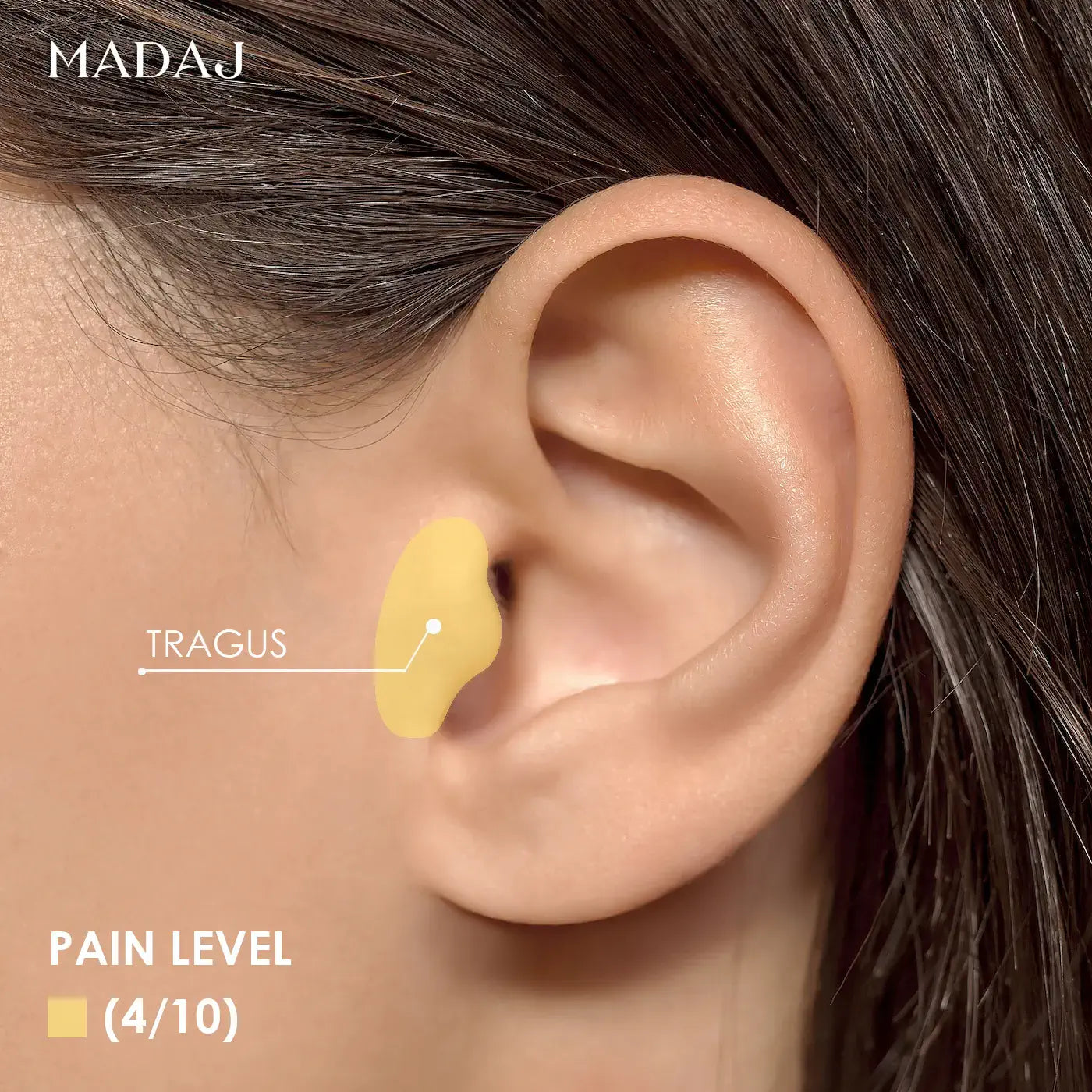
Pain level: 4 out of 10.
The tragus is made of relatively thin cartilage compared to areas like the conch or rook, resulting in moderate pain. Most people describe the sensation as a quick, firm pinch followed by pressure as the needle moves through. You might hear a small popping or crunching sound, which is just the needle passing through cartilage. It may sound worse than it feels. The piercing itself only takes a few seconds.
In the days after, expect some soreness, tenderness, and a dull ache around the area, particularly when anything touches or bumps the tragus. This settles within a week or two for most people. Because the tragus is right at the entrance to the ear canal, it can feel more sensitive than a helix piercing of similar pain rating, simply because you are more aware of activity in that area (talking on the phone, brushing hair past your ear).
For tips on reducing pain during any ear piercing (numbing cream, hydration, breathing techniques), see our Ear Piercing Pain Levels Guide.

THE TRAGUS PIERCING PROCEDURE
The entire appointment usually takes 15 to 20 minutes, with the piercing itself lasting only a few seconds.
Consultation and preparation. Your piercer will examine your tragus anatomy, discuss placement, and help you select your initial jewelry (almost always a flat-back labret stud for healing). The area is thoroughly cleaned with a medical-grade antiseptic, and the precise entry and exit points are marked with a sterile marker. You will check the positioning in a mirror and confirm before anything happens.
The piercing. Using a sterilized, single-use hollow needle (never a gun for cartilage), the piercer passes the needle through the marked spot on the tragus. Most studios use a freehand technique for the tragus, as its small size and shape make clamps impractical. The chosen jewelry is immediately inserted through the new channel. A skilled piercer will have this done in seconds.
Aftercare briefing. Before you leave, you will receive cleaning instructions and a healing timeline. Many studios offer a complimentary check-up at 4 to 6 weeks, which is also when downsizing usually happens (more on that below). Take advantage of this.
HOW MUCH DOES A TRAGUS PIERCING COST?
A tragus piercing typically costs between $30 and $80 at a reputable studio.
This usually includes the piercer's service fee and a basic starter stud in surgical steel or titanium. Jewelry is sometimes included in the quoted price, sometimes charged separately, so ask before booking.
What affects the price: location (city studios charge more than rural ones), the piercer's experience and reputation, and the material of the starter jewelry.
Upgrading to implant-grade titanium or solid gold at the time of piercing will add to the cost but reduce the risk of complications during healing.
As with all piercings, many experienced piercers are happy to work with jewelry you bring in, provided it is the correct gauge, sterile, and made from implant-grade material.
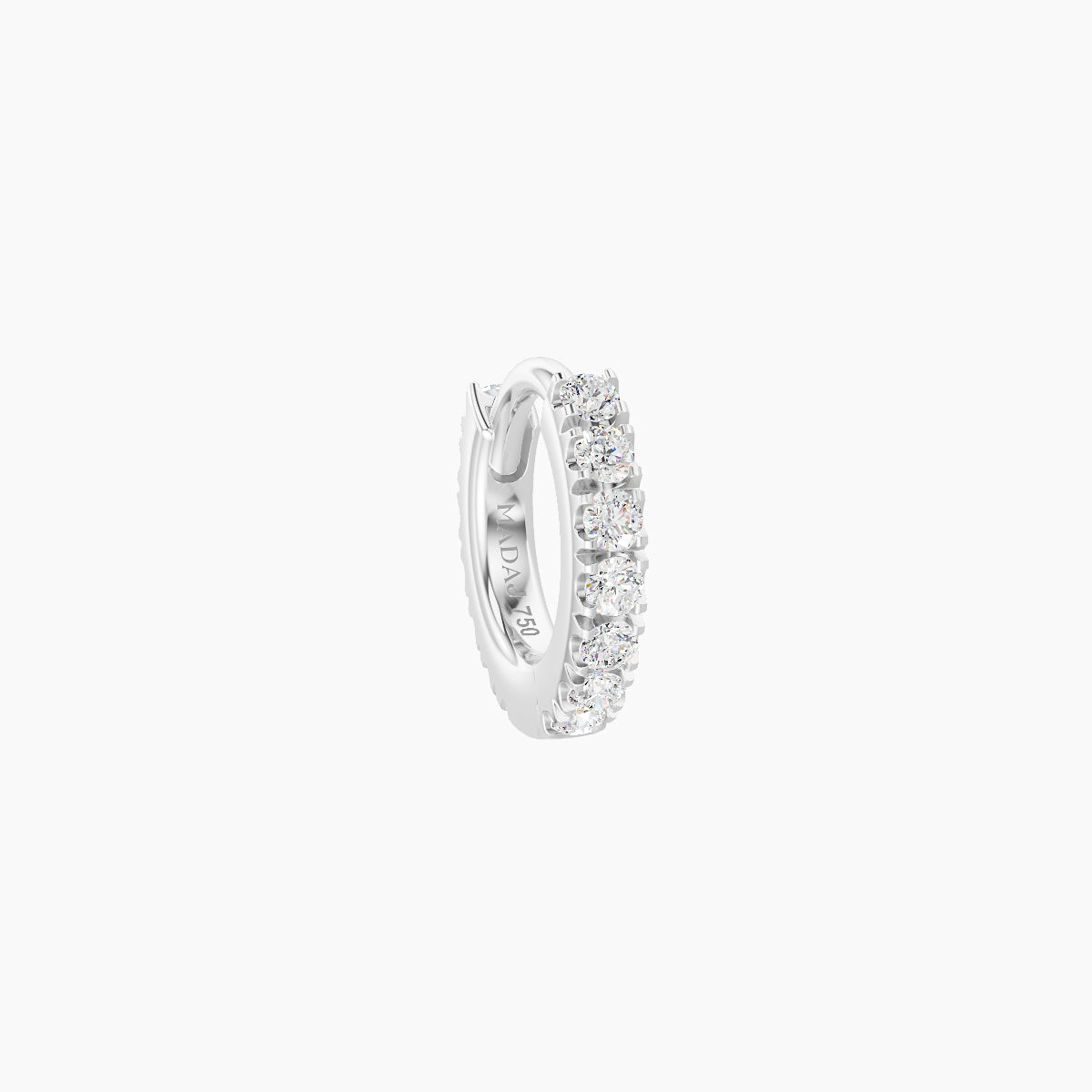
Purchasing your own high-quality piece gives you control over exactly what goes into your body. MADAJ's tragus piercings are crafted in hypoallergenic 18k gold, designed for both beauty and long-term biocompatibility.
Tipping your piercer is customary in most countries. A standard 15-20% tip on the service fee is appropriate.
TRAGUS PIERCING JEWELRY: SIZING, TYPES, AND MATERIALS
Gauge (thickness). The most common gauge for a tragus piercing is 16G (1.2mm), though some piercers use 18G (1.0mm) depending on the thickness of your cartilage. Ask your piercer what gauge they used so you can buy compatible jewelry later.
Post length/bar length. For the initial piercing, your piercer will fit a longer post (typically 8mm) to accommodate swelling. Once the swelling subsides (usually around 4 to 6 weeks), you should return for a downsizing to a shorter post (typically 5mm to 6.5mm). Wearing a bar that is too long after swelling resolves causes the jewelry to shift, snag, and irritate the piercing. Downsizing is one of the most overlooked steps in tragus aftercare, and skipping it is a common cause of healing bumps.
Hoop diameter. Once fully healed (6 months minimum), many people switch to a small hoop or clicker ring. The most common inner diameter for a tragus hoop is 5mm to 6.5mm, depending on your anatomy. Smaller hoops sit snug against the tragus for a minimal look; slightly larger ones give more breathing room. Hoops should not be worn during healing, as they rotate in the wound and cause friction.
Jewelry types. During healing: flat-back labret studs only. They sit flush against the back of the tragus and do not snag. After healing, studs, mini hoops, clicker rings, curved barbells, and decorative pieces are all options. Dangles and heavy charms should be avoided, as the tragus is small and excess weight can cause migration.
Materials. During healing, stick with implant-grade titanium (ASTM F-136) or solid 14k/18k gold (nickel-free). Avoid surgical steel of unknown grade, sterling silver (tarnishes inside the wound), and any plated or coated metals. After healing, you have more flexibility, but hypoallergenic materials remain the safest long-term choice. MADAJ tragus piercings in 18k gold set with natural diamonds are designed for everyday wear in healed piercings.

TRAGUS PIERCING AFTERCARE
The tragus sits in a high-traffic zone on your ear. Hair, phones, earbuds, pillows, and fingers all come into contact with it constantly, which makes consistent aftercare especially important.
Cleaning routine. Spray the front and back of the piercing twice daily with a sterile saline wound wash (0.9% sodium chloride, no additives). Let the saline sit for a moment, then gently pat dry with a clean, disposable paper towel. Do not use cotton balls or Q-tips, as fibers can catch on the jewelry and irritate the wound. Do not use alcohol, hydrogen peroxide, tea tree oil, or any ointments or creams unless prescribed by a doctor for an infection.
Do not twist, rotate, or fiddle with the jewelry. This old advice has been debunked. Moving the jewelry tears the delicate new tissue forming inside the piercing channel, introduces bacteria, and slows healing. Leave it completely alone, except for cleaning.
Keep hair away from the piercing. Long hair is one of the most common irritants for tragus piercings. Strands wrap around the jewelry, pull on it, and introduce hair products (conditioner, spray, oil) into the wound. Tie your hair back or tuck it behind your ear on the pierced side during the first few months.
Rinse after showering. Shampoo and conditioner residue can pool around the tragus. After washing your hair, gently rinse around the piercing with clean water before applying your saline spray.

TRAGUS PIERCING HEALING TIME AND STAGES
A tragus piercing takes 3 to 6 months to heal, though some people need up to 12 months. The tragus tends to heal somewhat faster than deeper inner-ear piercings (like the daith or rook) because it gets better air circulation on the outer ear.
Weeks 1-2 (inflammatory phase). Redness, mild swelling, tenderness, and warmth are all normal. You may see a small amount of clear or slightly yellowish fluid (lymph) that dries into light crusts around the jewelry. This is not pus. The swelling may make the initial post feel tight, which is why your piercer fitted a longer bar.
Weeks 3-8 (early healing). Swelling gradually subsides. Pain decreases to occasional tenderness, mainly when the piercing is bumped. Around week 4-6, visit your piercer for a downsizing to a shorter post. This is an important step that many people skip, and it makes a noticeable difference to comfort and healing speed.
Months 3-6 (maturation). The piercing may look and feel healed on the outside, but the internal tissue is still healing. Continue cleaning daily. Do not change the jewelry yourself until your piercer confirms the piercing is fully healed. Changing too early is one of the top causes of setbacks and irritation bumps.
Months 6-12. For some people, full internal healing takes up to a year. If your piercing still has occasional flare-ups (redness or tenderness after sleeping on it), it is not fully healed yet. Be patient.
LIVING WITH A NEW TRAGUS PIERCING
AirPods and earbuds.
This is probably the most common question people have before getting a tragus piercing, and the answer is straightforward: you cannot use in-ear earbuds (AirPods, Galaxy Buds, and similar) in the pierced ear for at least 3 to 6 months. The earbud presses directly against the tragus, creating constant pressure on the healing wound. This causes irritation, slows healing, and can trigger the formation of piercing bumps. Use over-ear headphones instead during healing. After full healing, most people can comfortably wear earbuds again, though some find that certain earbud shapes fit differently with a tragus stud in place.
Phone calls.
Avoid pressing your phone against the pierced ear. Use speakerphone, your other ear, or wireless earbuds in the opposite ear during healing.
Sleeping.
Try to sleep on the opposite side. Pressure from a pillow against the tragus compresses the jewelry into the wound, causing pain, prolonging healing, and potentially triggering irritation bumps. If you move around in your sleep, a travel pillow (the kind with a hole in the center) lets your ear sit in the gap without being pressed. Change your pillowcase every few days to reduce bacterial exposure.
Hair and styling products.
Hairspray, mousse, and styling creams should be kept away from the piercing. Cover your ear with a clean hand when applying these products. When drying your hair, be careful with towels, as they snag easily on tragus jewelry.
Which side should you get pierced?
Think about your daily habits. Which side do you sleep on? Which ear do you hold your phone to? Which side does your hair naturally fall? Getting pierced on the side that has the least contact with these things will make healing significantly easier.
COMMON TRAGUS PIERCING PROBLEMS AND HOW TO HANDLE THEM
Piercing bumps.
Small bumps around the entry or exit hole are the most common issue with tragus piercings. They are usually irritation bumps (not keloids), caused by pressure, friction, snagging, sleeping on the piercing, or wearing a bar that is too long. The fix is almost always to address the source of irritation: downsize the jewelry if needed, stop sleeping on it, stop touching it, and maintain consistent saline cleaning. Most irritation bumps resolve on their own once the irritant is removed.
Signs of infection.
An actual infection is less common than an irritation bump but more serious. Watch for: thick yellow, green, or foul-smelling discharge (as opposed to clear or slightly yellowish lymph fluid), pain that intensifies rather than gradually improving, redness that spreads outward from the piercing, the area feeling hot to the touch, and fever or feeling unwell. If you suspect an infection, do not remove the jewelry (this can trap the infection). Continue cleaning with saline and see a doctor. You may need antibiotics.
Swelling that seems excessive.
Some swelling in the first week is normal. If the jewelry appears to be embedded into the skin (sinking in on either side), see your piercer immediately. They may need to swap in a longer bar to accommodate the swelling.
The popping/crunching sound.
Many people hear or feel a slight pop as the needle passes through the tragus cartilage. This is completely normal and nota sign of anything going wrong. It can be startling if you are not expecting it, but it does not mean the piercing was done incorrectly.
Frequently Asked Questions
Not during healing (a minimum of 3 to 6 months). In-ear earbuds press directly against the tragus and can irritate the piercing, cause bumps, and significantly slow healing. Use over-ear headphones during the healing period. After full healing, most people can wear earbuds comfortably, though the fit may feel slightly different.
Typically $30 to $80 at a reputable studio, including a basic starter stud. Higher-quality jewelry (titanium or gold) adds to the cost. Always prioritize studio reputation and piercer experience over price.
Yes, but not dramatically. The tragus is rated about 4/10 compared to a lobe at 2/10. You will feel a noticeable pinch and some pressure as the needle passes through cartilage, but it is over in seconds. Most people find it very manageable.
Three to six months for most people, though it can take up to a year. The tragus heals somewhat faster than inner-ear cartilage piercings like the rook or daith because it gets better air circulation. Even if it looks healed after a couple of months, the internal tissue is still maturing.
Wait until your piercer confirms full healing, typically at least 6 months. Before that, you will need a downsize around 4 to 6 weeks to swap the initial longer post for a shorter one. Do not attempt to change jewelry yourself during healing.
Most tragus piercings are done at 16G (1.2mm), though some piercers use 18G (1.0mm). Ask your piercer which gauge they used so you can purchase correctly sized jewelry for future changes.
Some people claim relief from migraines after getting a tragus or daith piercing, based on the theory that these locations correspond to acupressure points. However, clinical evidence for this is limited and inconclusive. A tragus piercing should not be considered a medical treatment for migraines.
Most bumps around tragus piercings are irritation bumps, not keloids. Common causes: sleeping on the piercing, earbuds pressing against it, a bar that is too long, hair snagging on it, or touching the jewelry. Remove the source of irritation, continue saline cleaning, and the bump usually resolves within a few weeks. If it does not improve, visit your piercer.
Ideally, no. Getting pierced on the side opposite your preferred sleeping side makes healing significantly easier. Also consider which ear you hold your phone to and which side your hair falls on.
During healing: a simple flat-back labret stud. After healing: the most popular options are a small diamond or gemstone stud for everyday elegance, or a mini hoop (5 to 6.5mm) for a minimal, editorial look. The tragus is a small area, so delicate, refined pieces tend to look best. Heavy or oversized jewelry can cause migration.
EXPLORE MADAJ TRAGUS PIERCING COLLECTION
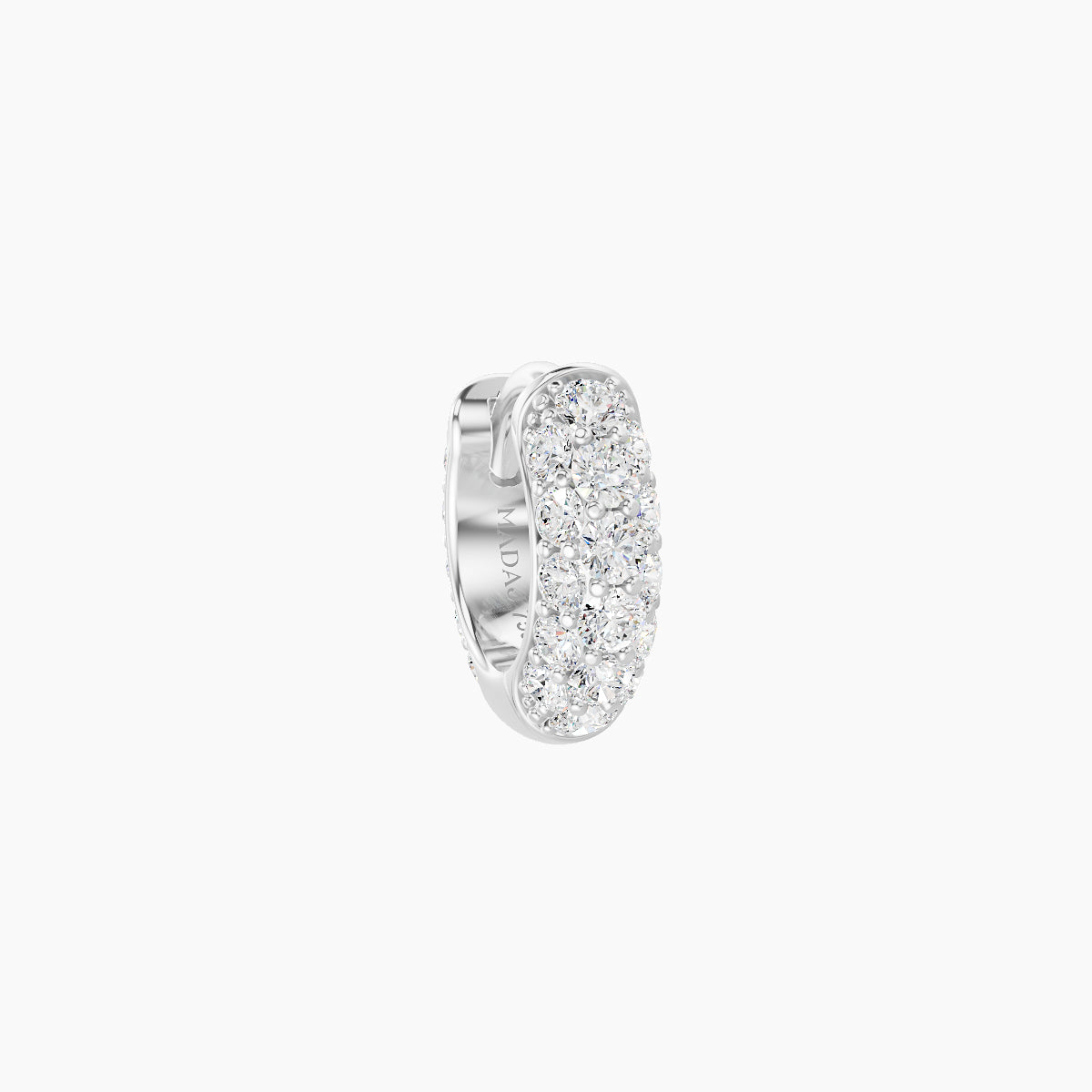
Every MADAJ tragus piercing is handcrafted in hypoallergenic 18k gold and set with natural, certified diamonds and gemstones. Recommended post lengths for tragus piercings: 5mm to 6.5mm. Recommended hoop diameters: 5mm to 6.5mm. Available in white, yellow, and rose gold.
TRAGUS PIERCING COLLECTION