Education
Your Complete Guide to Flat Piercings
Last Updated 21/07/2026 | Written by Maëlys Chamard, Co-Founder of MADAJ
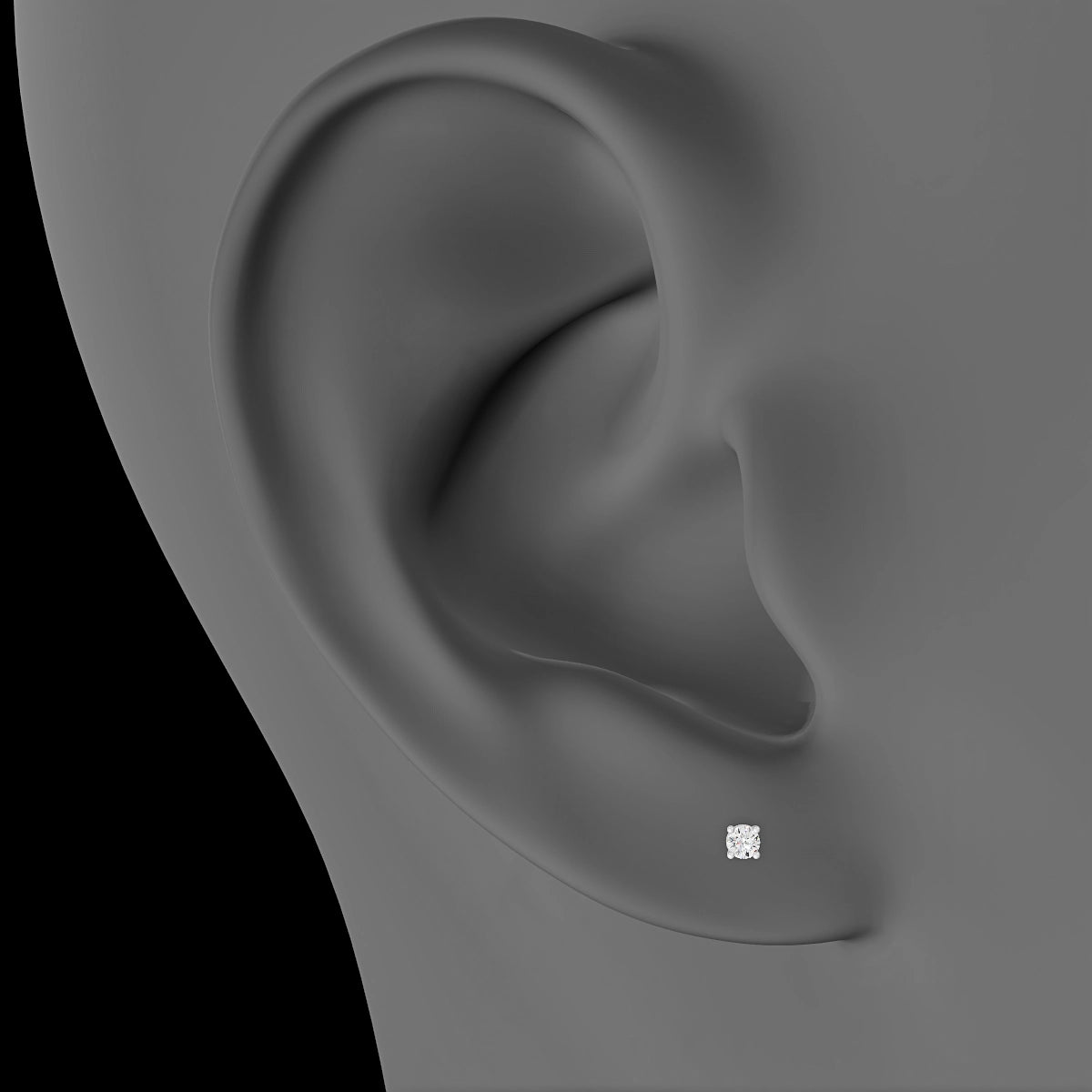
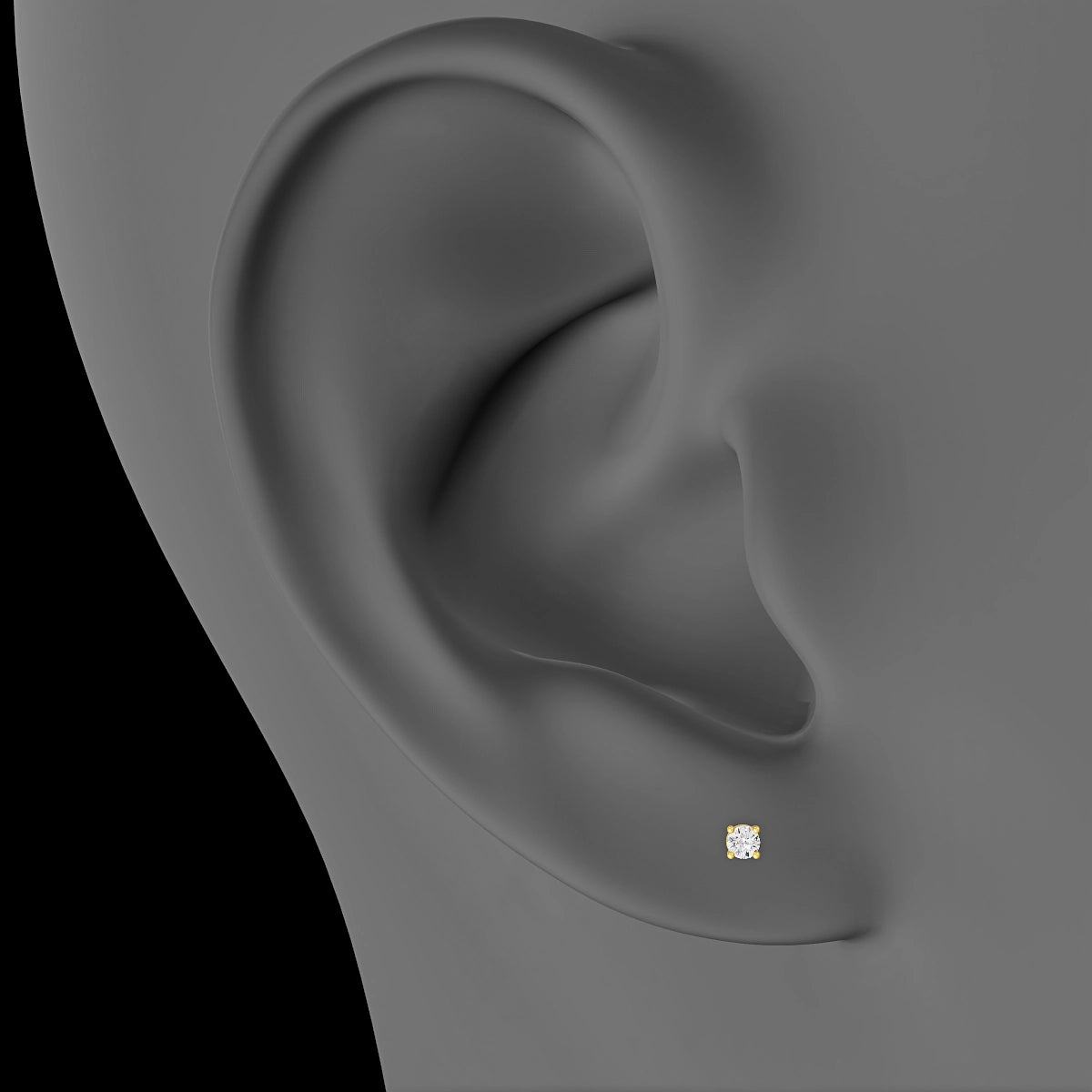
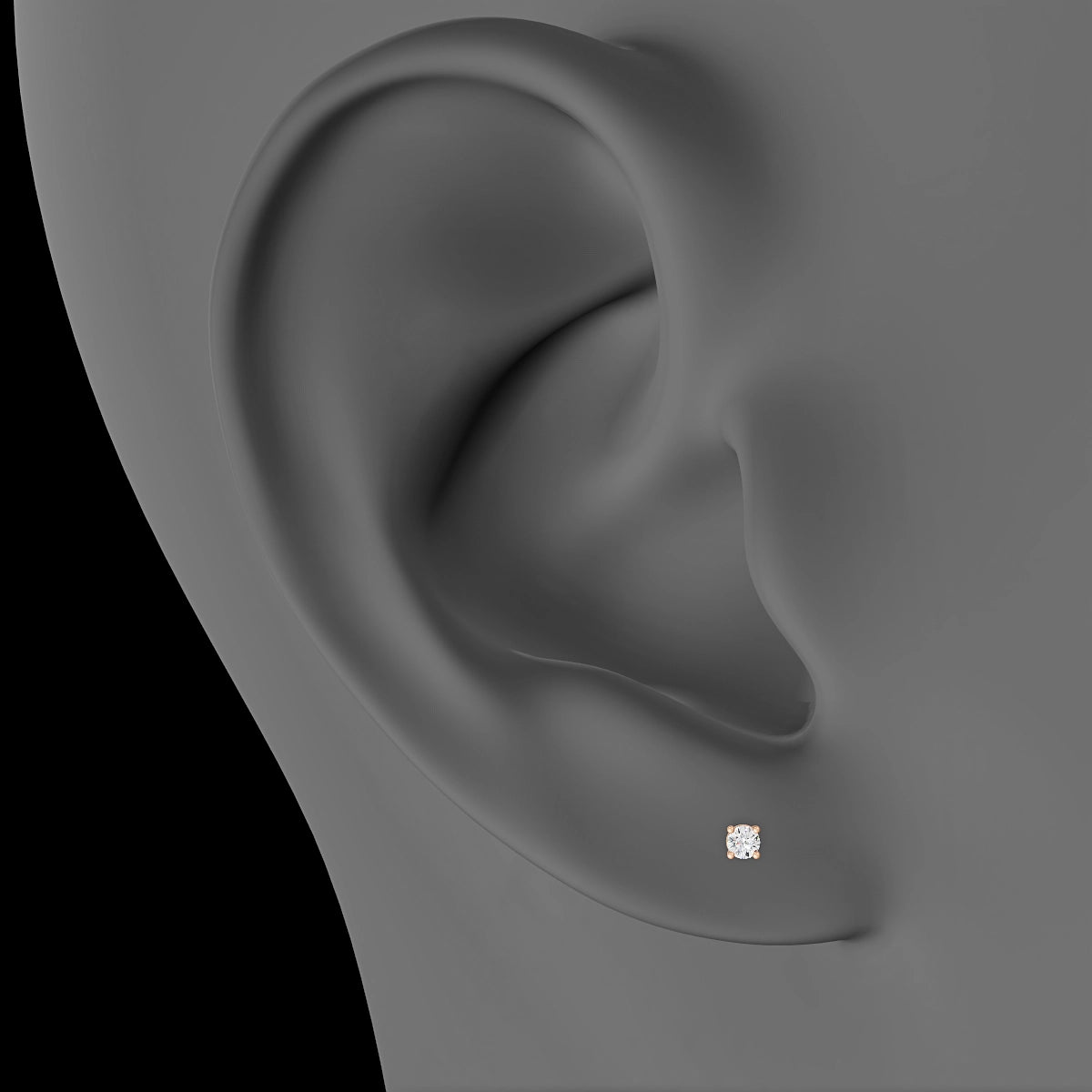
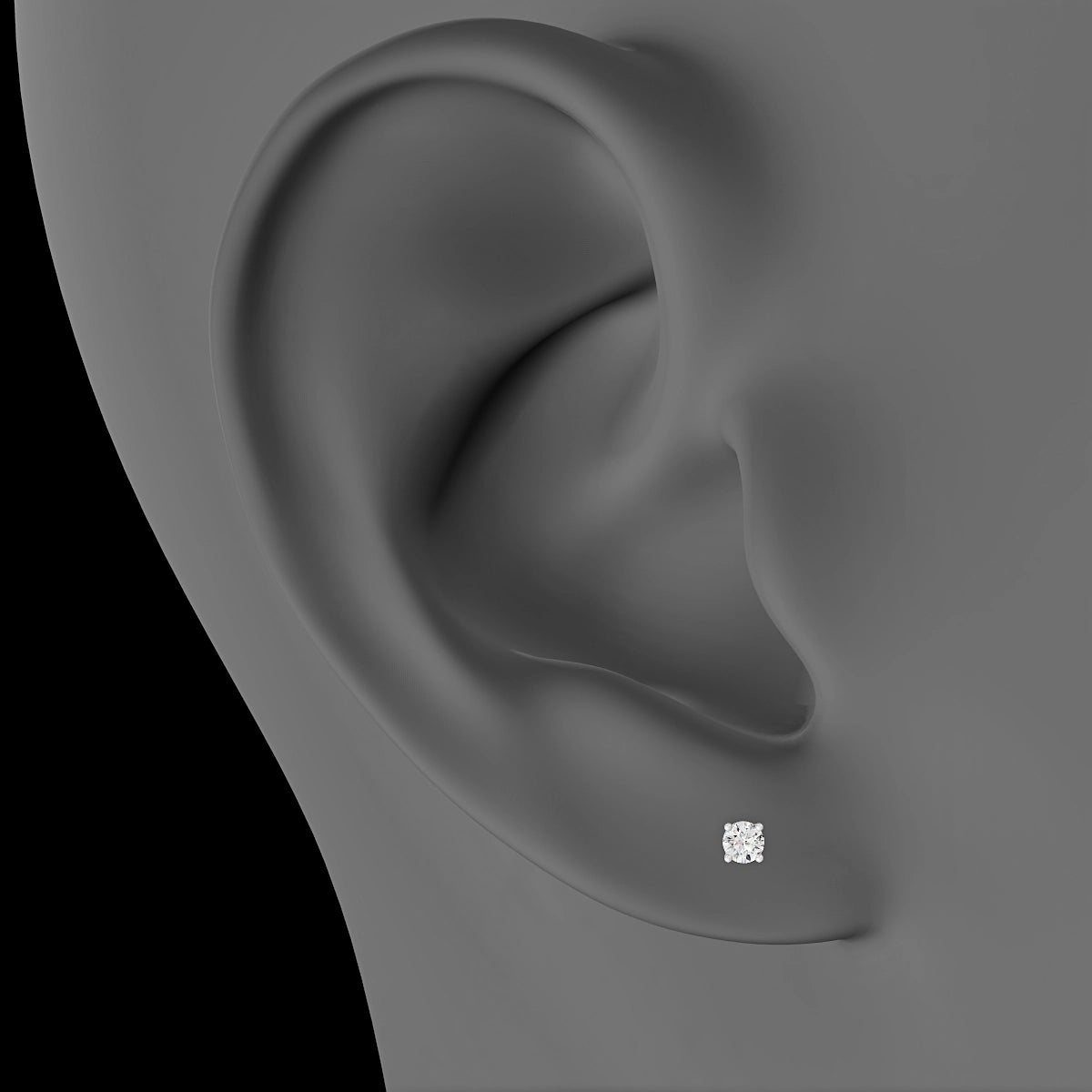
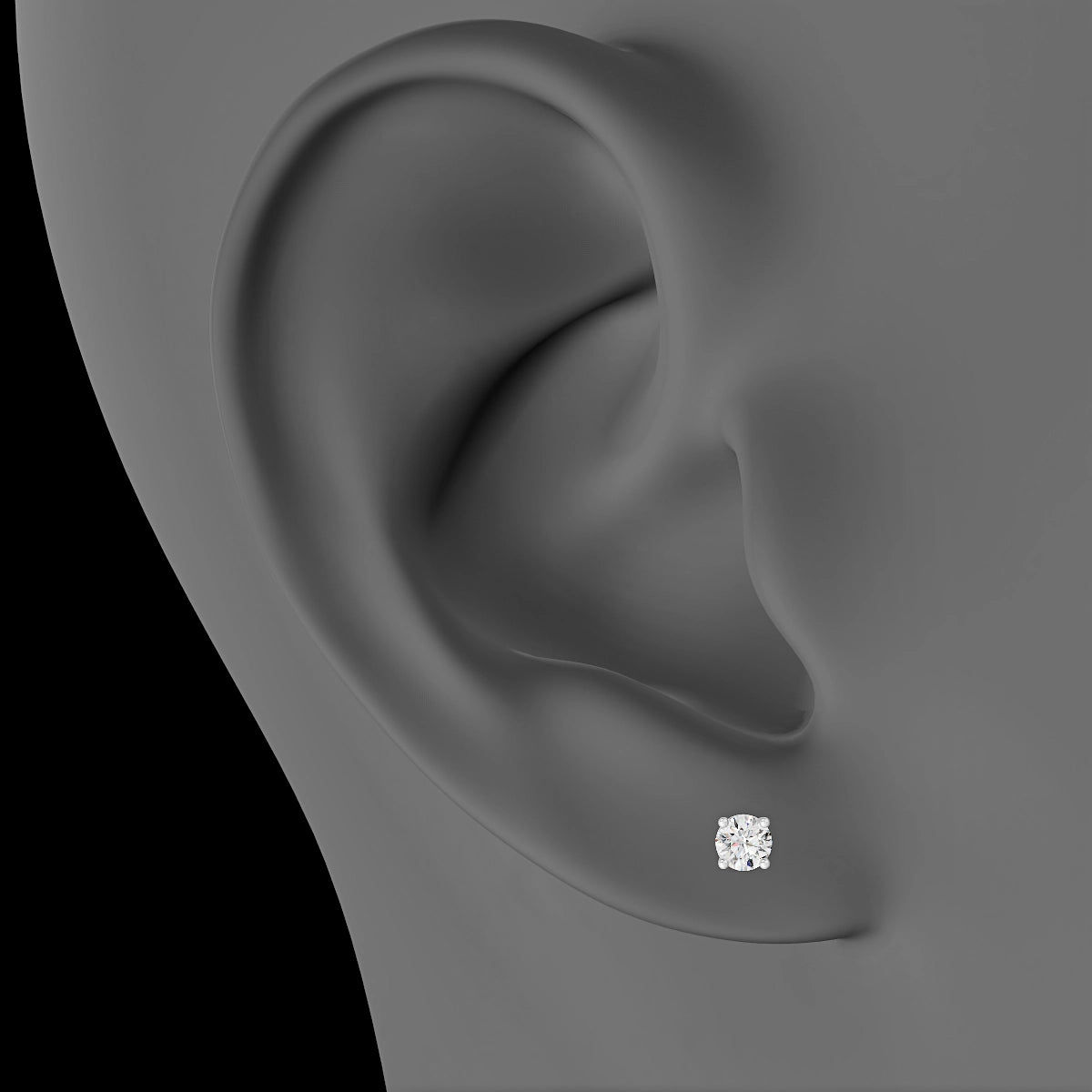
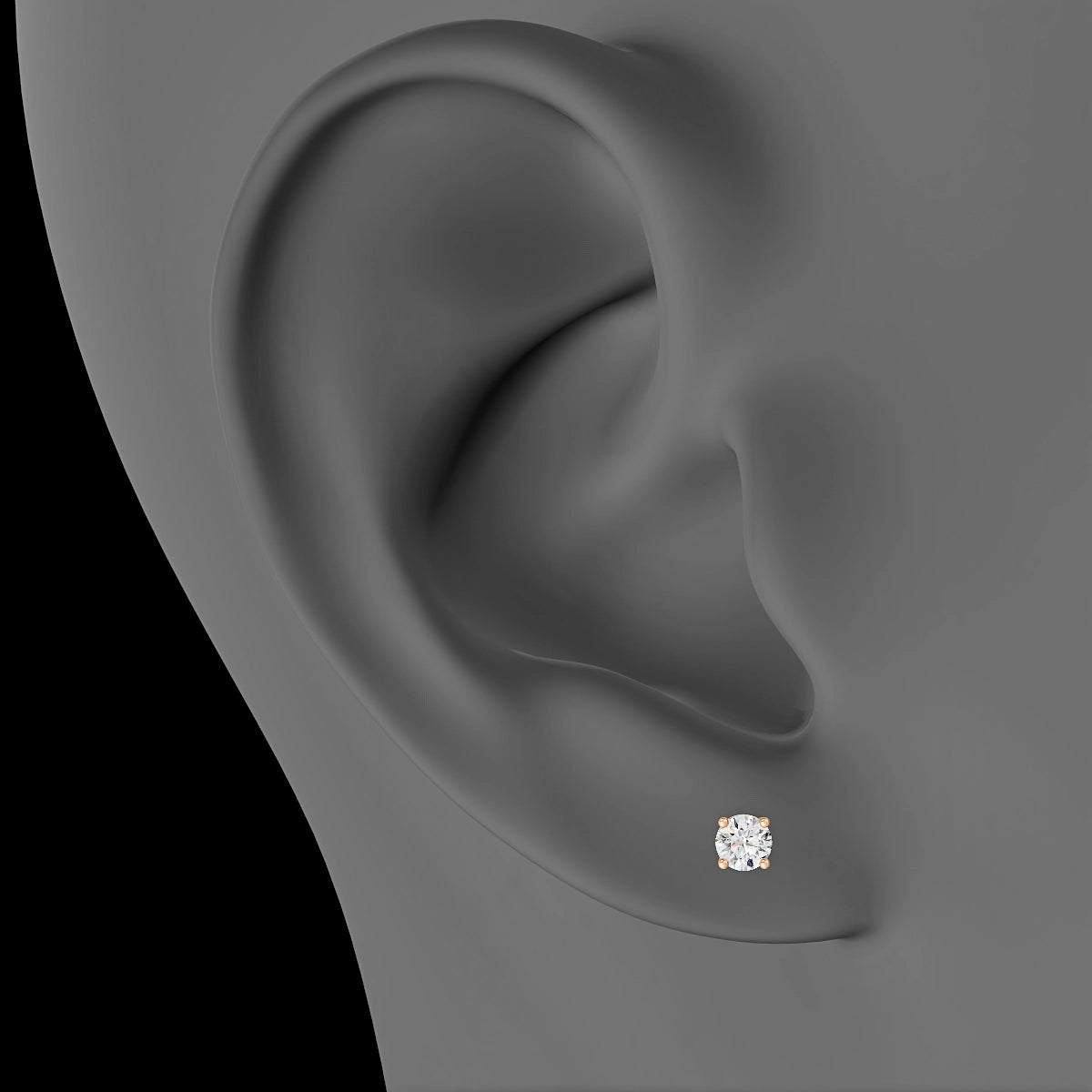
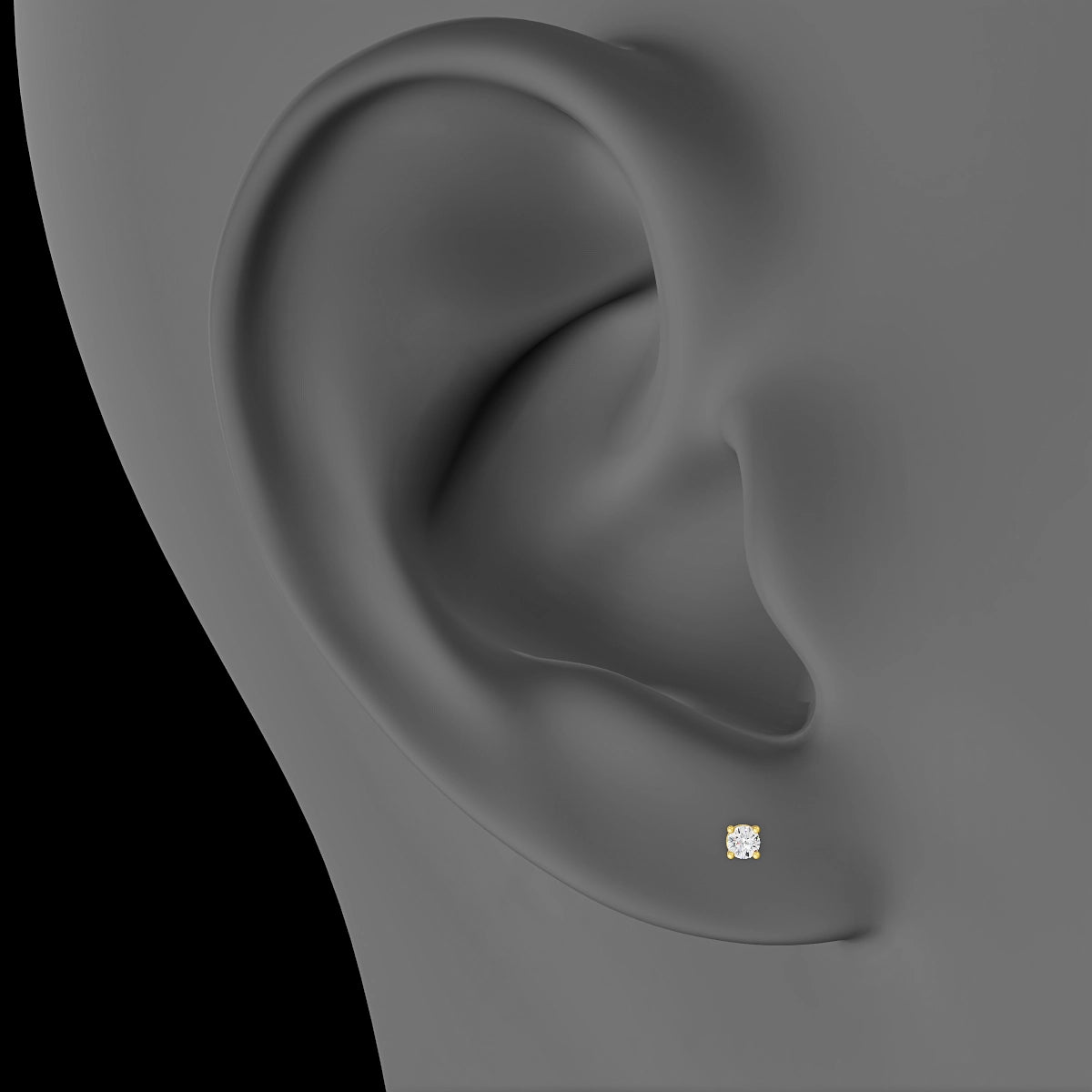
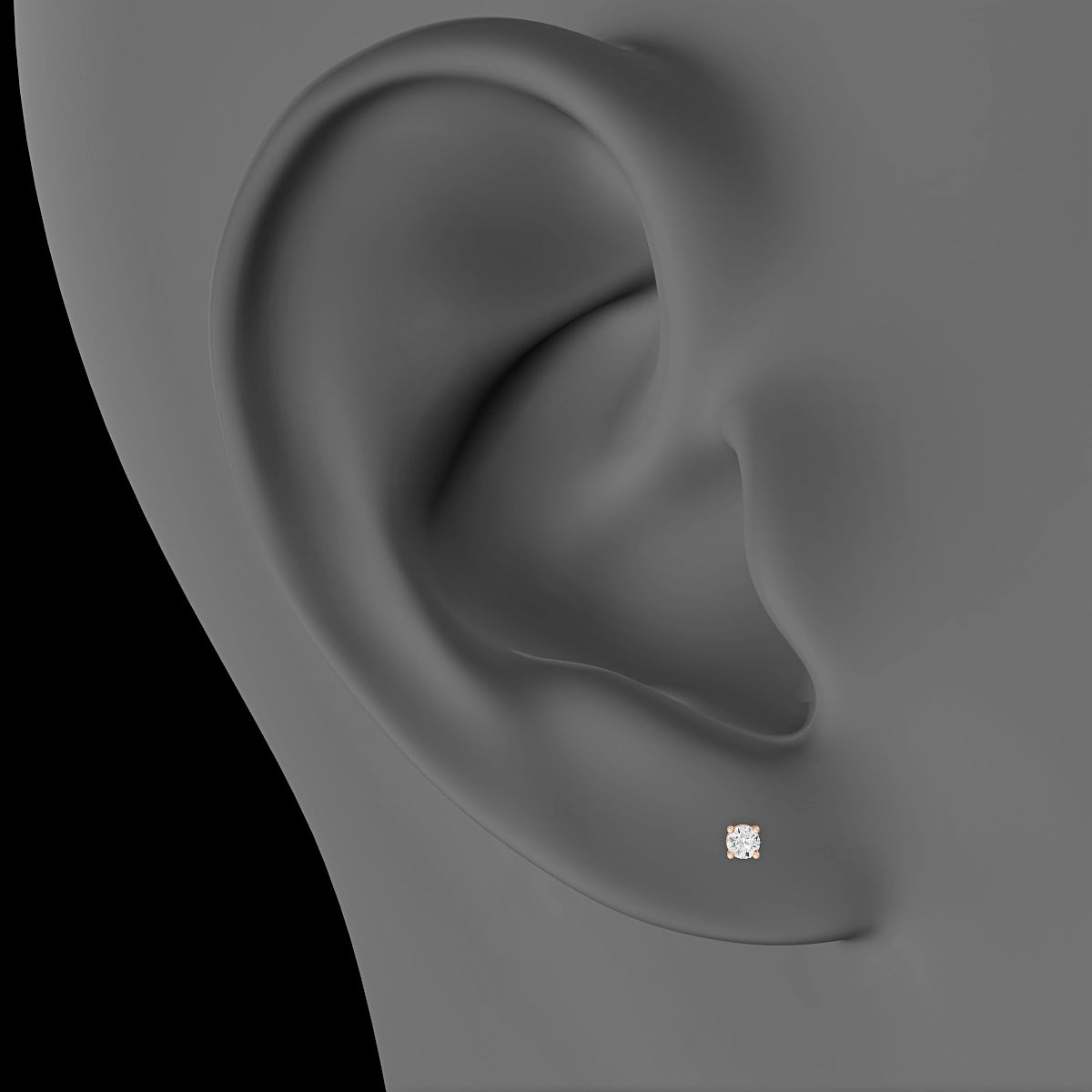
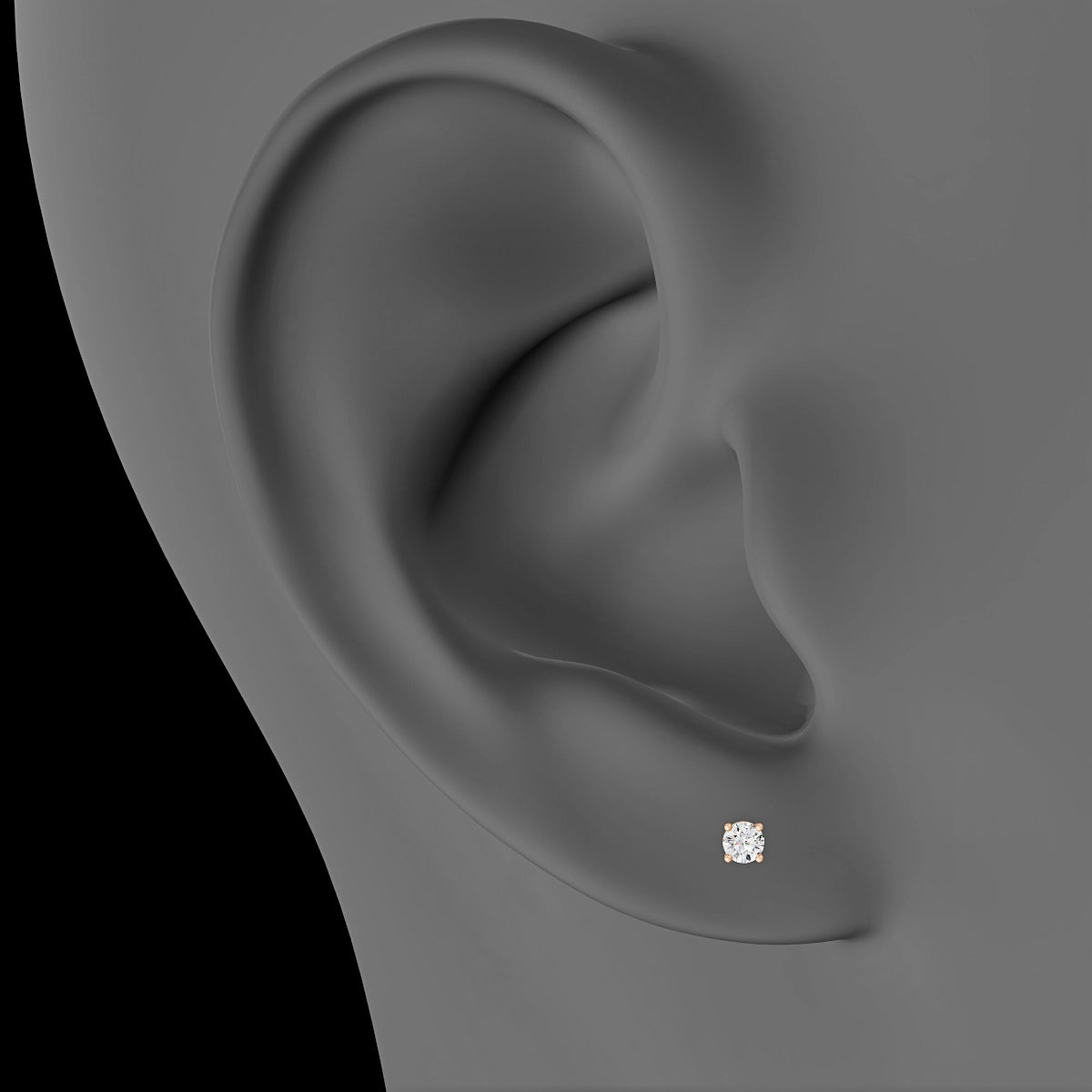
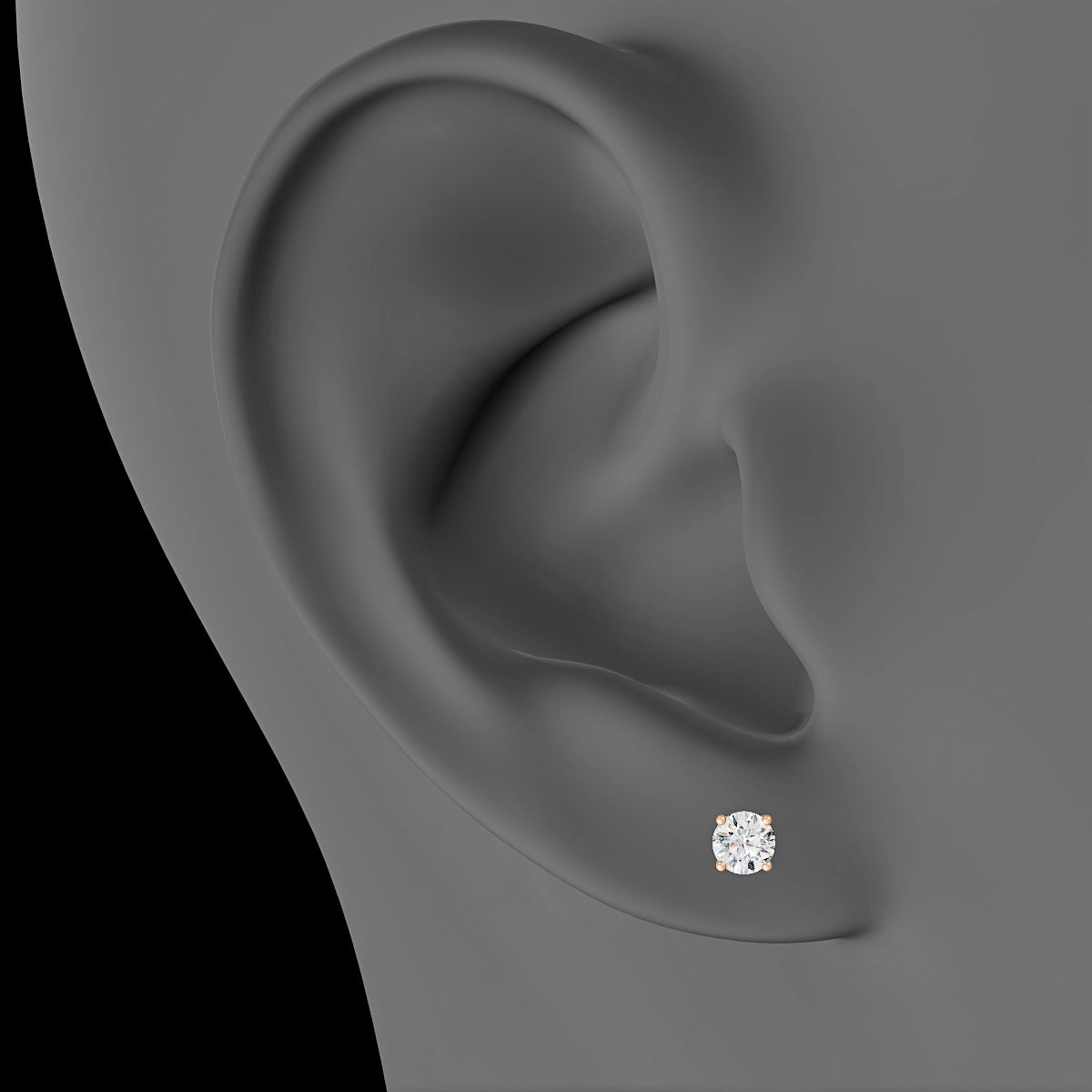
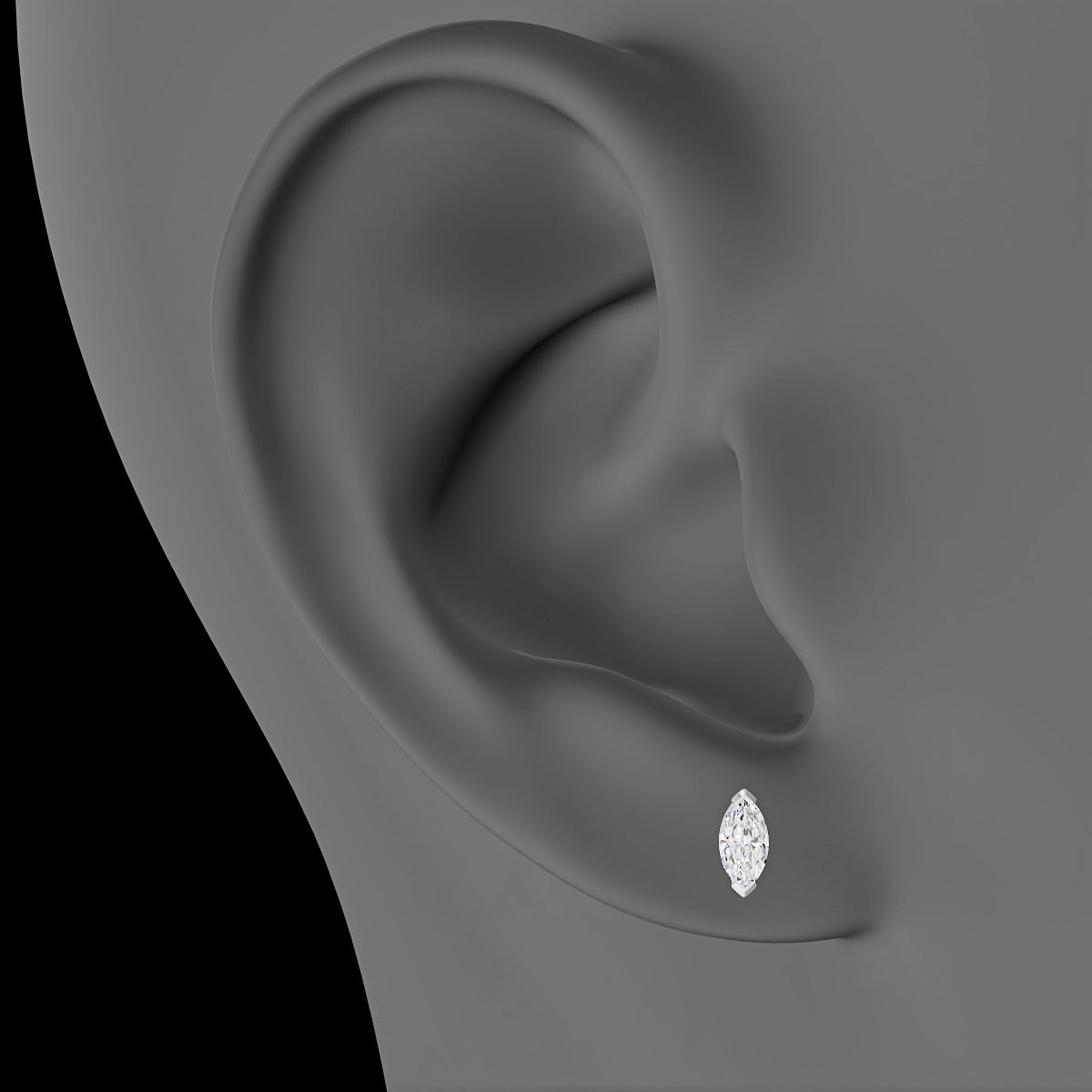
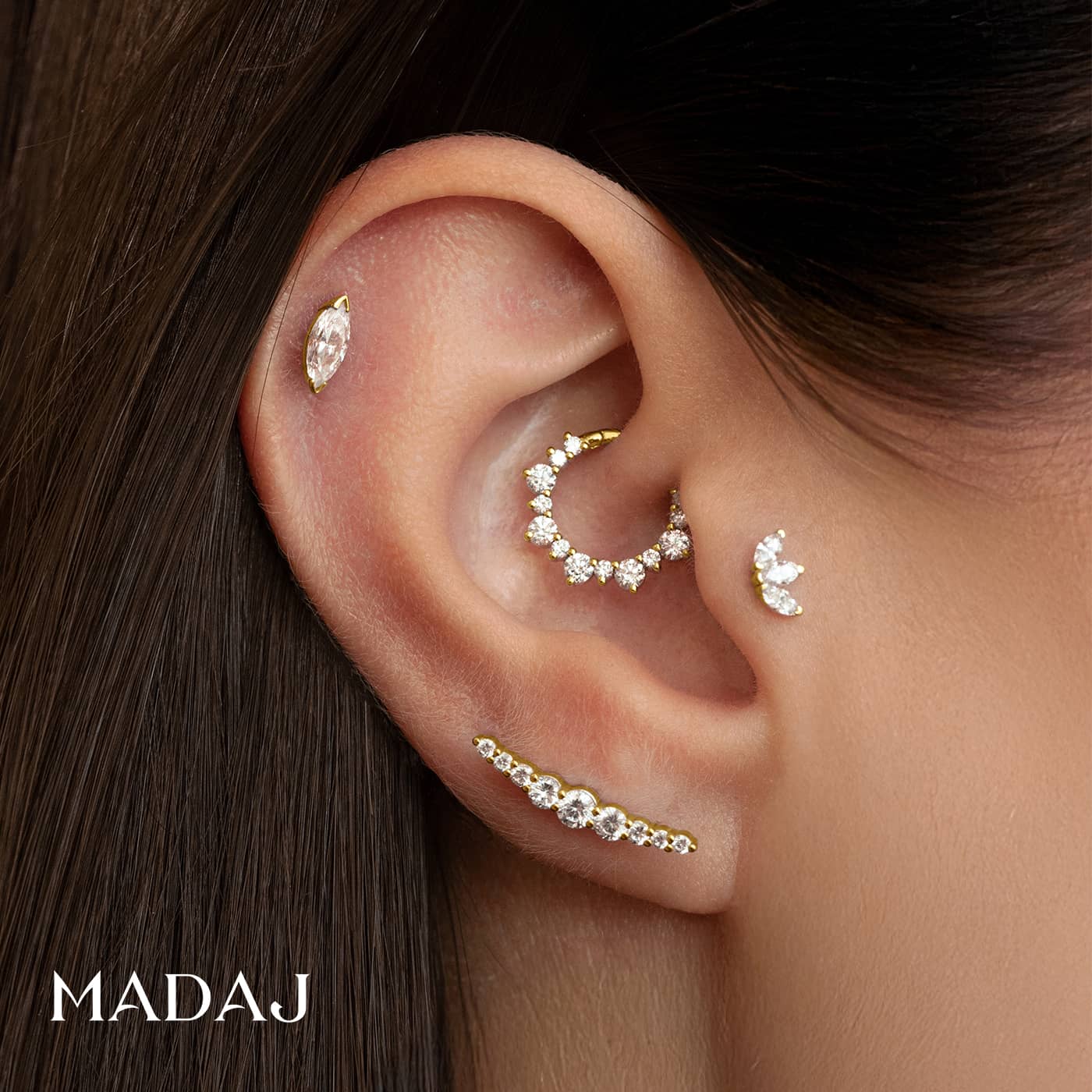
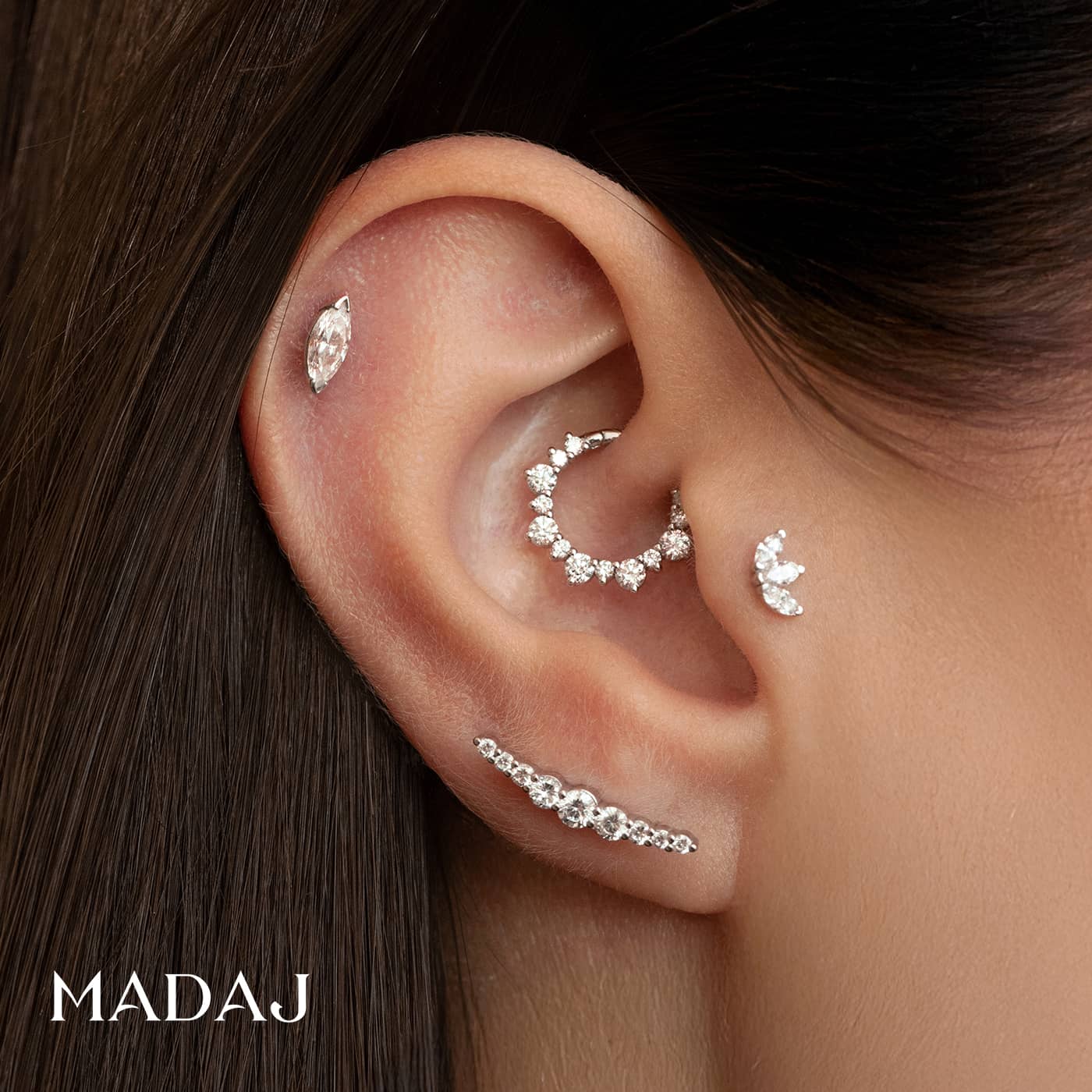
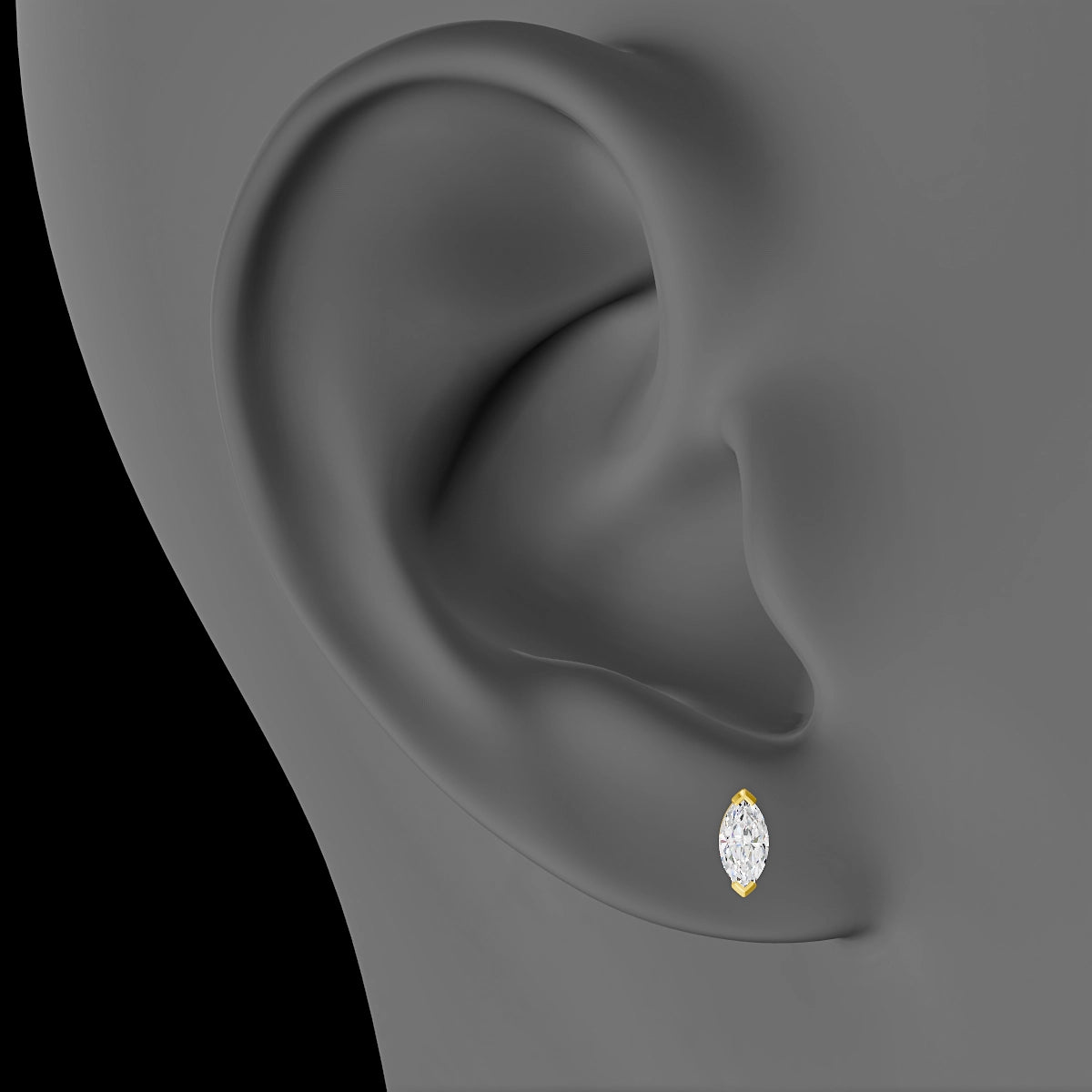
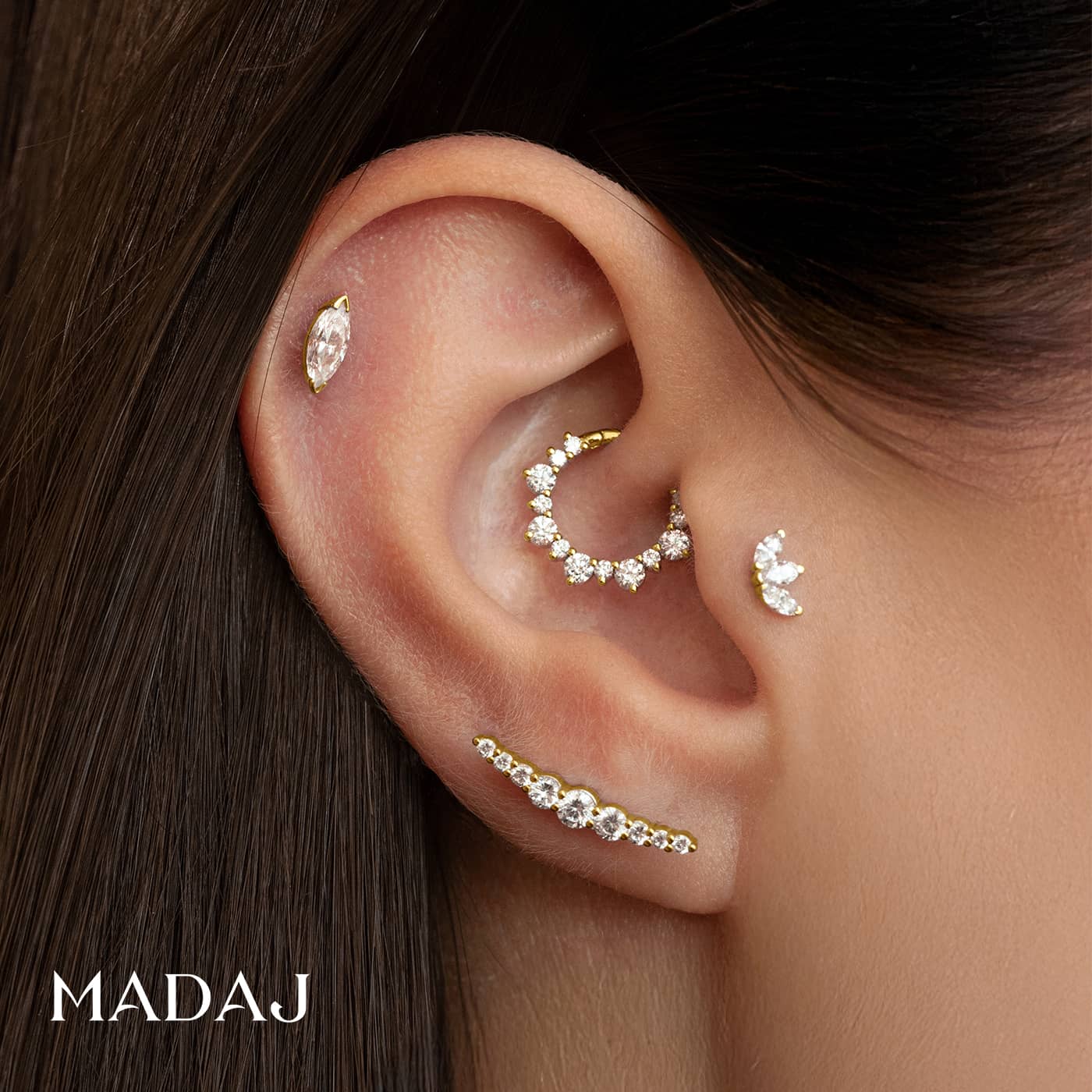
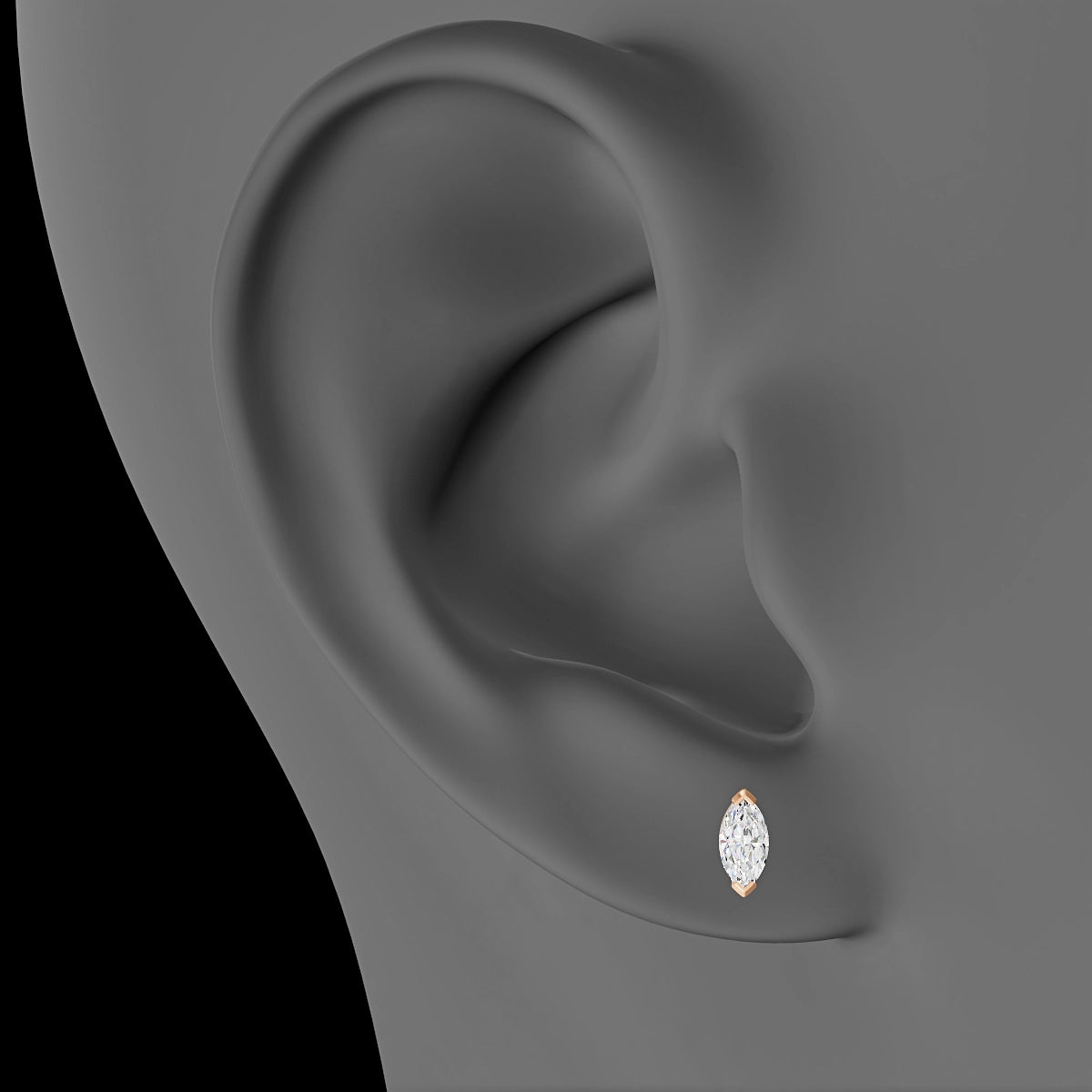
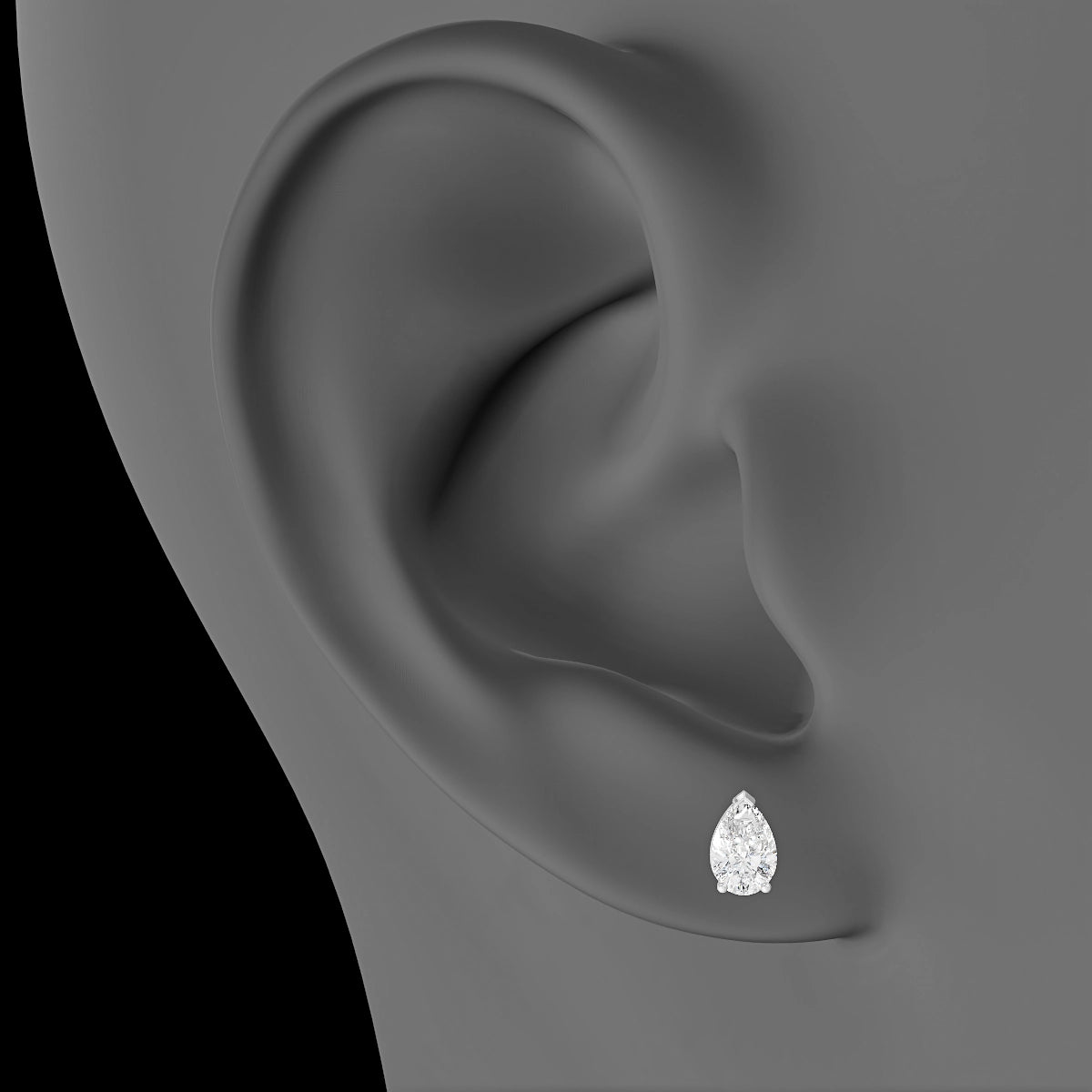
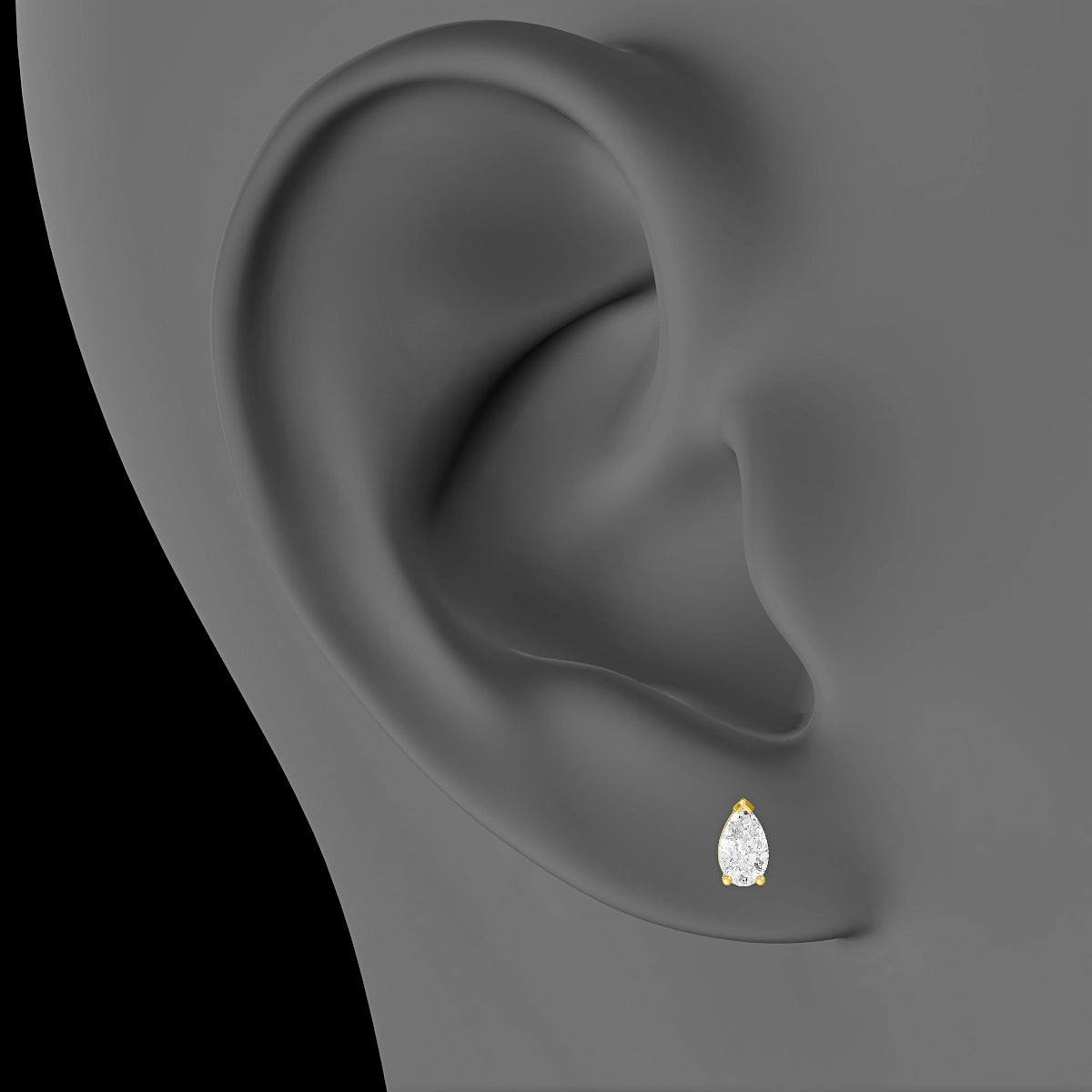
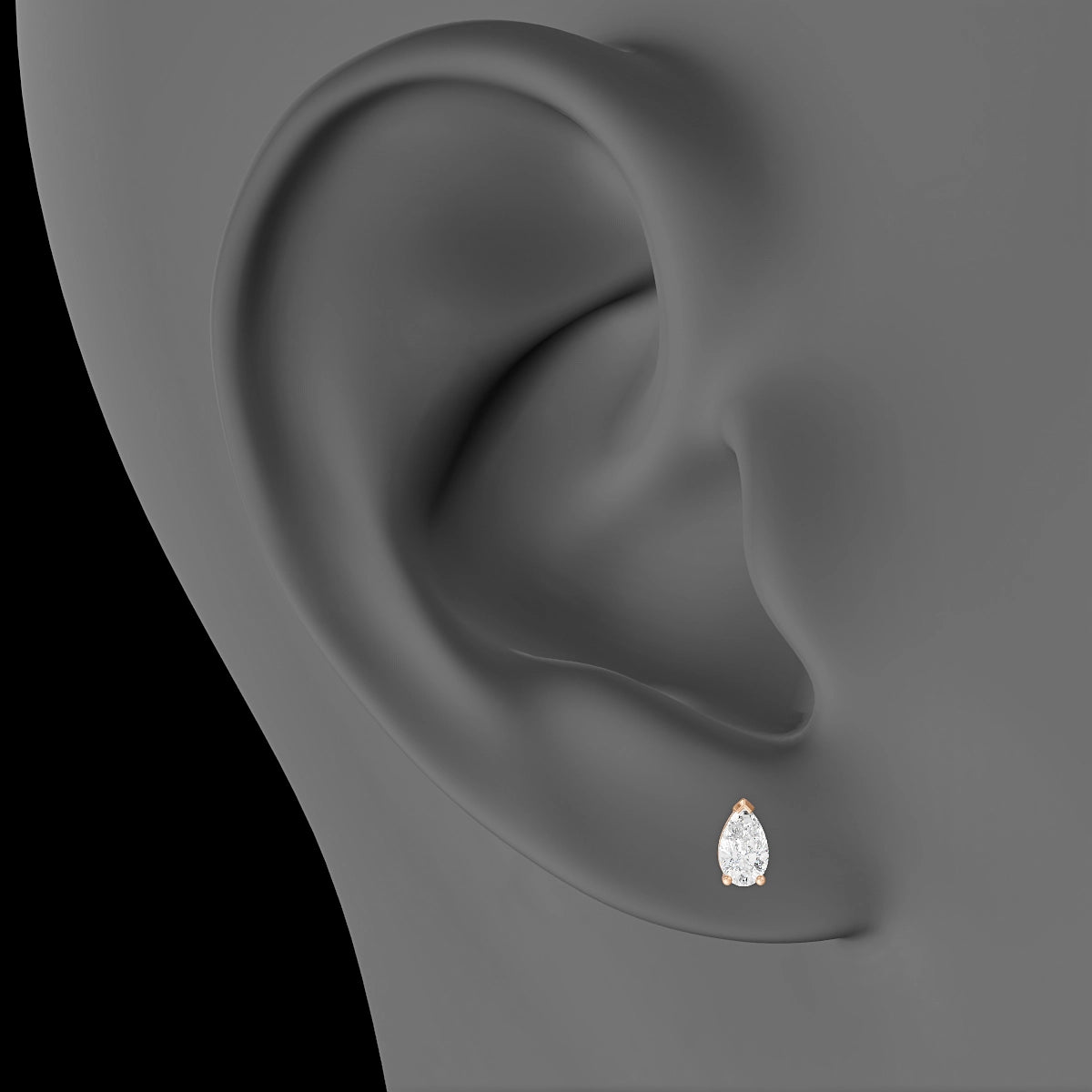
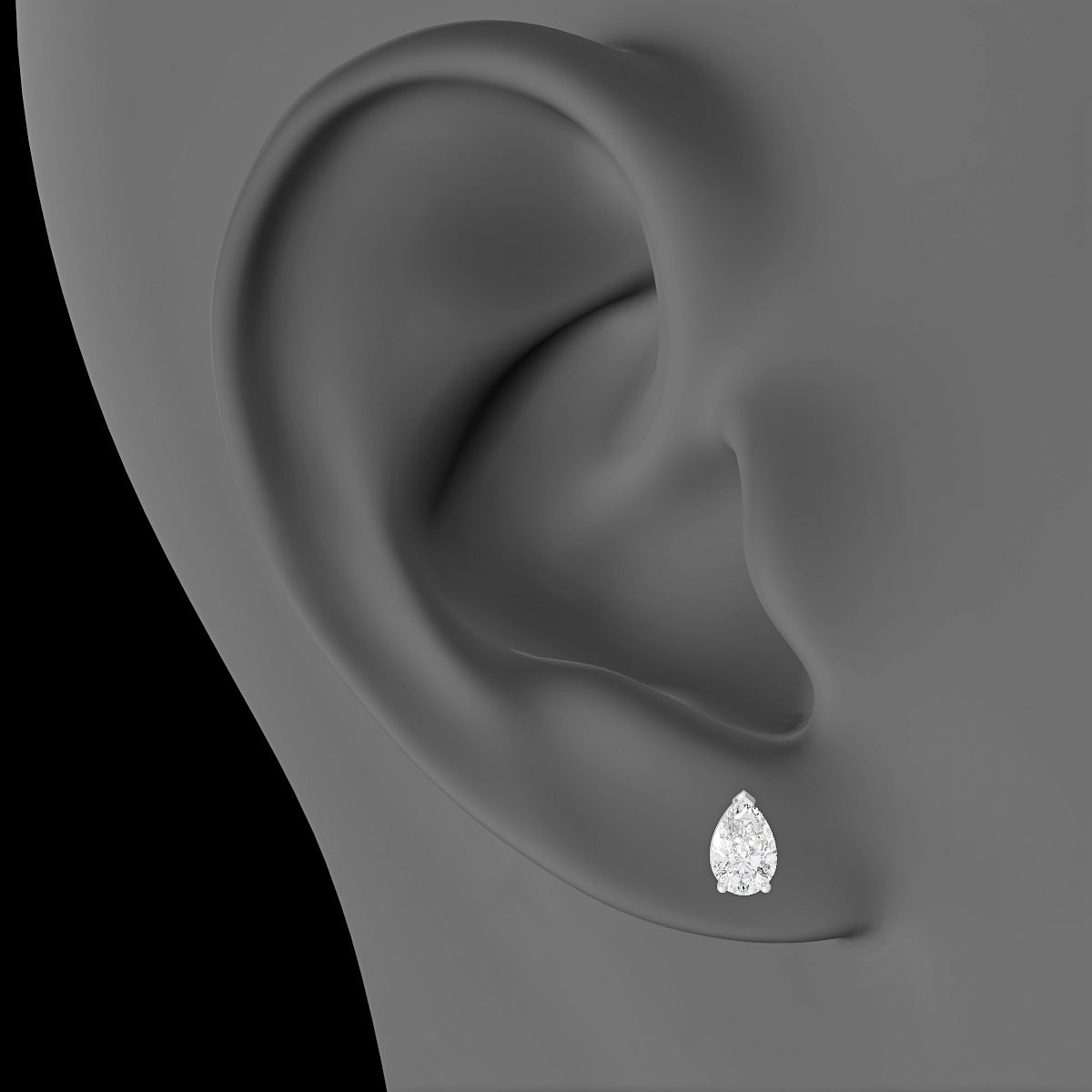
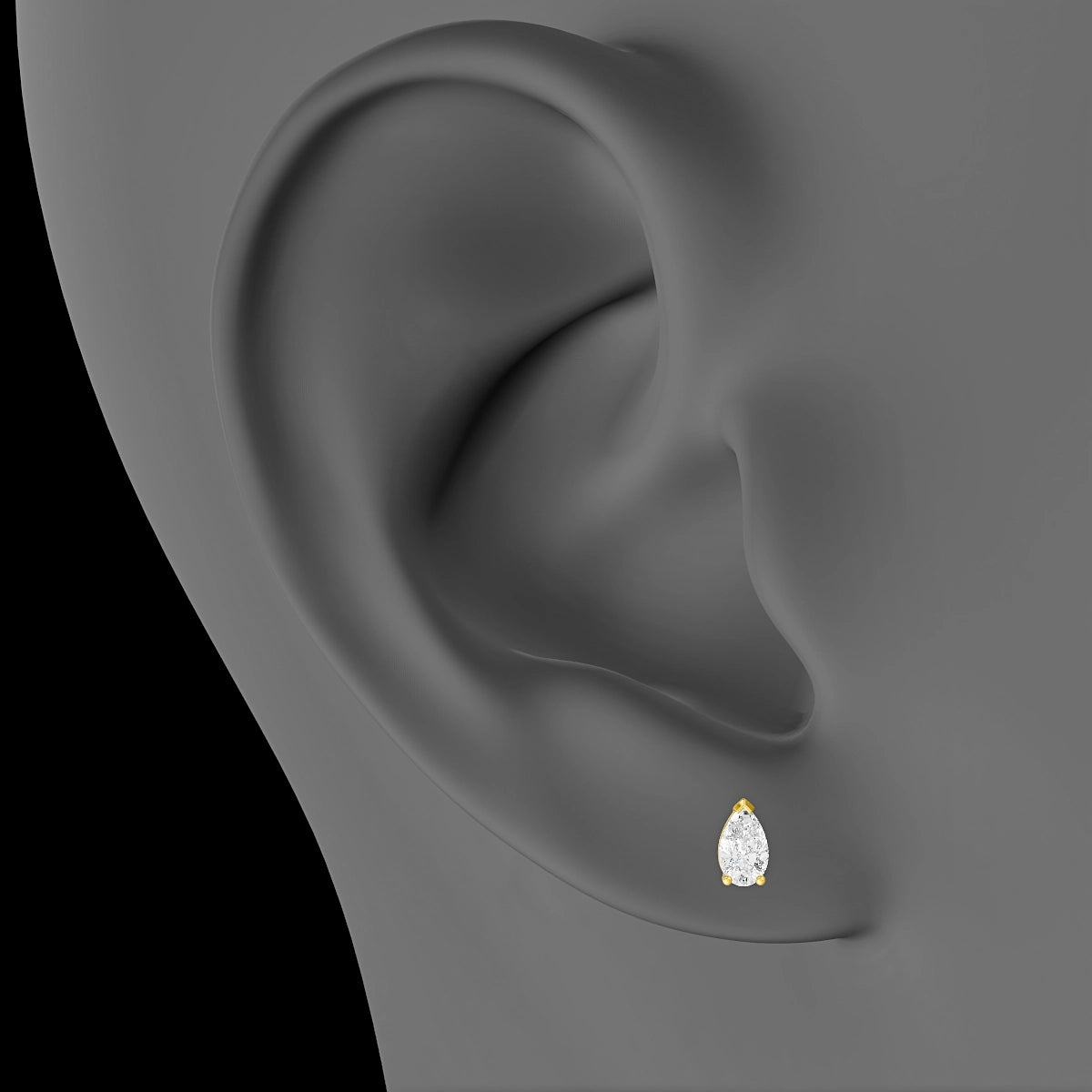
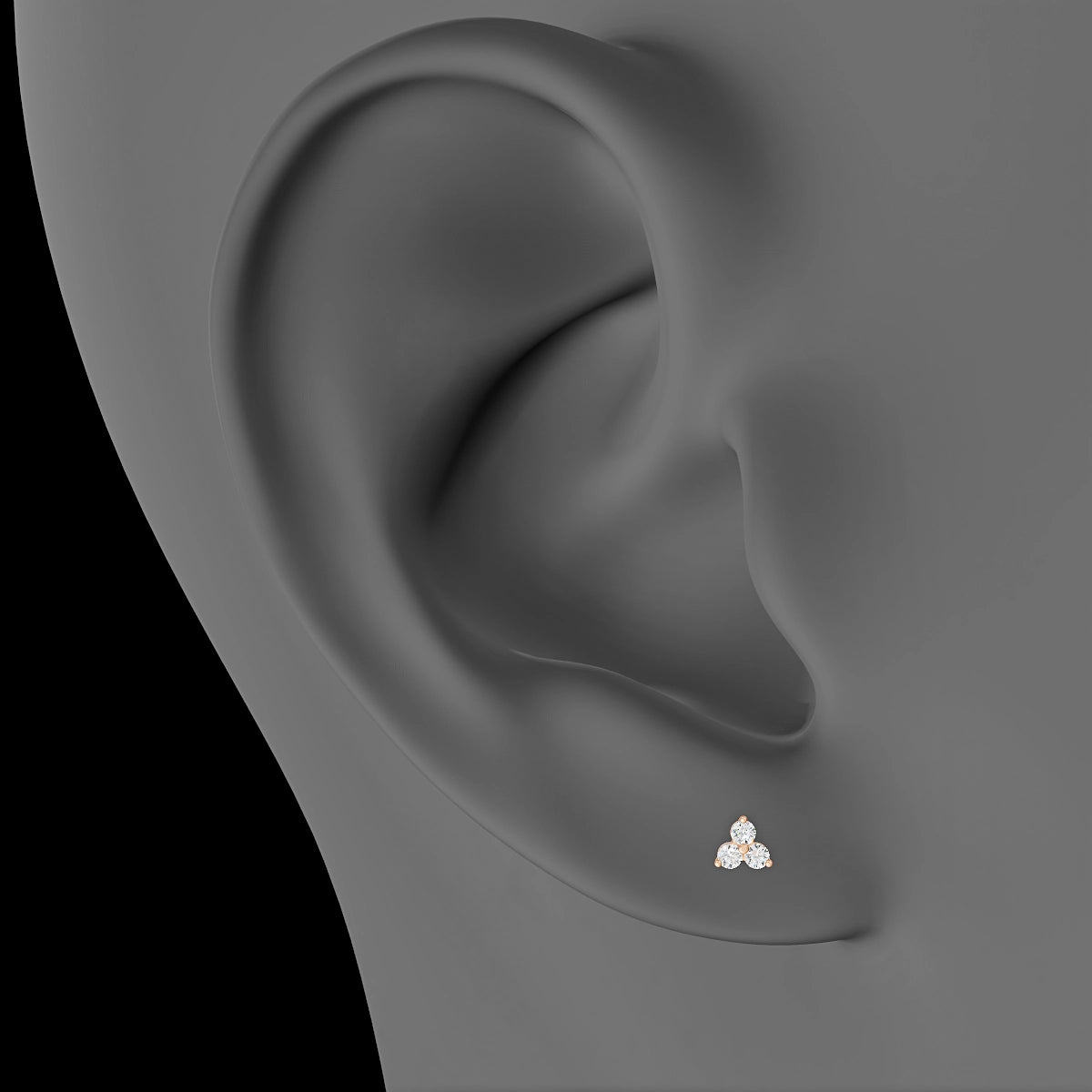
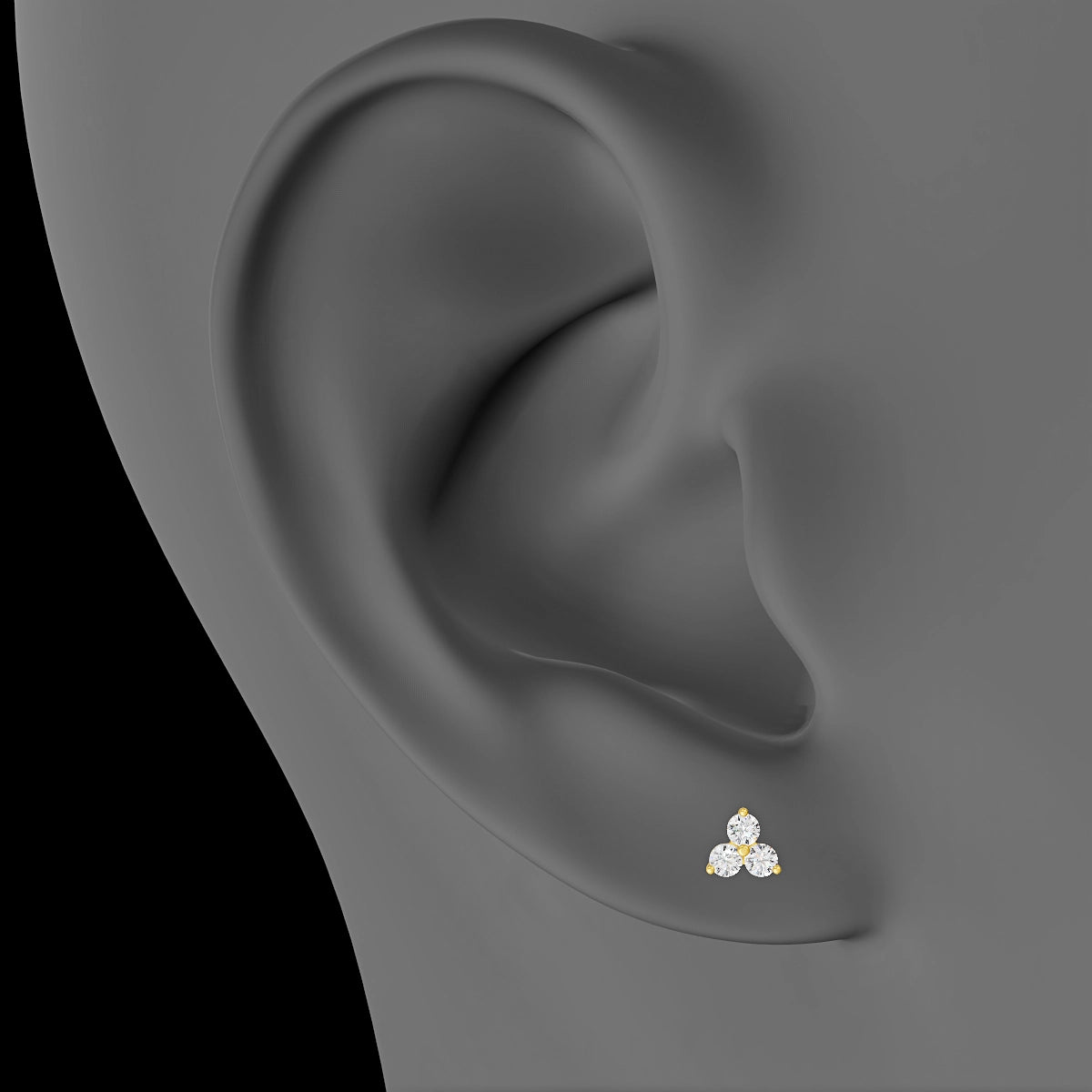
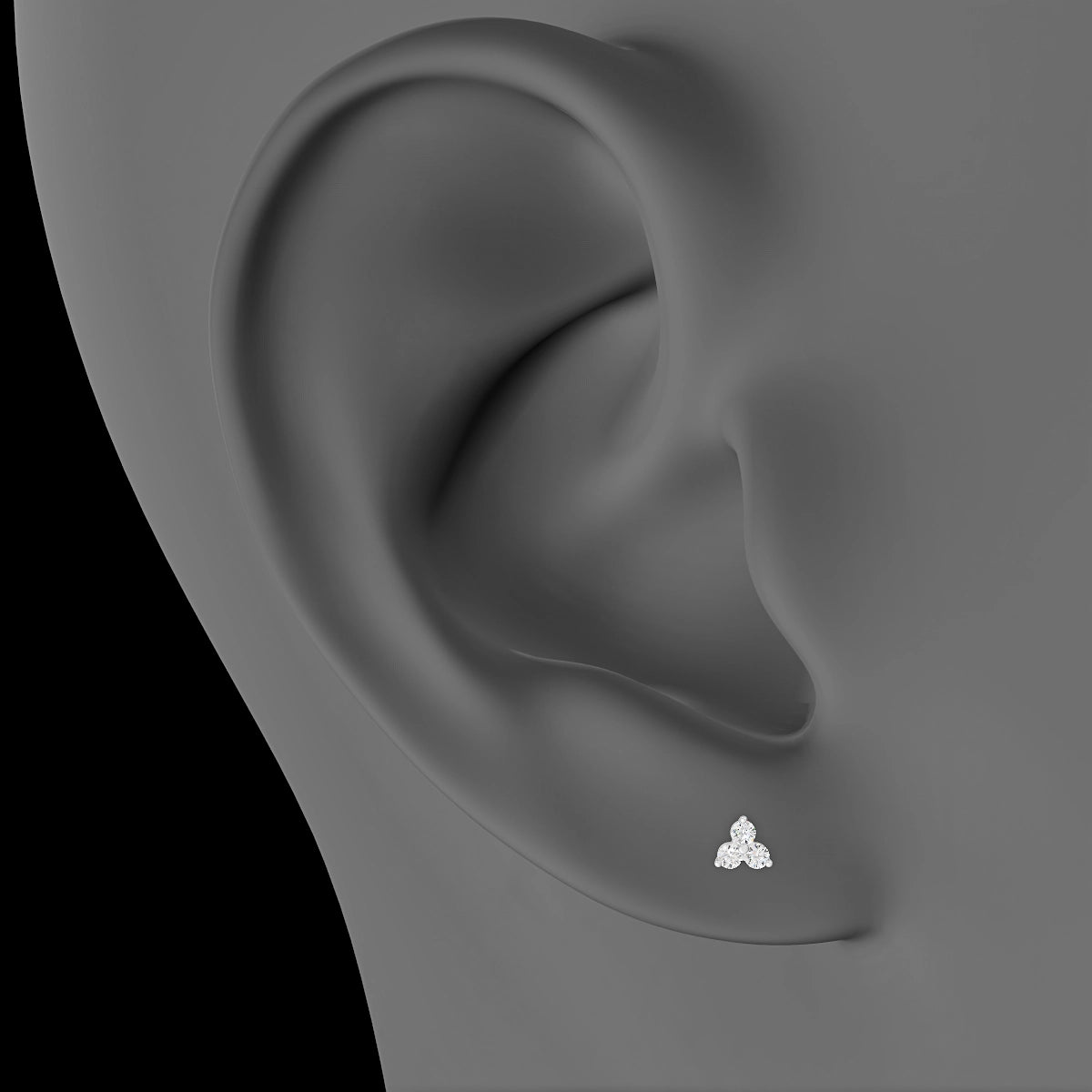
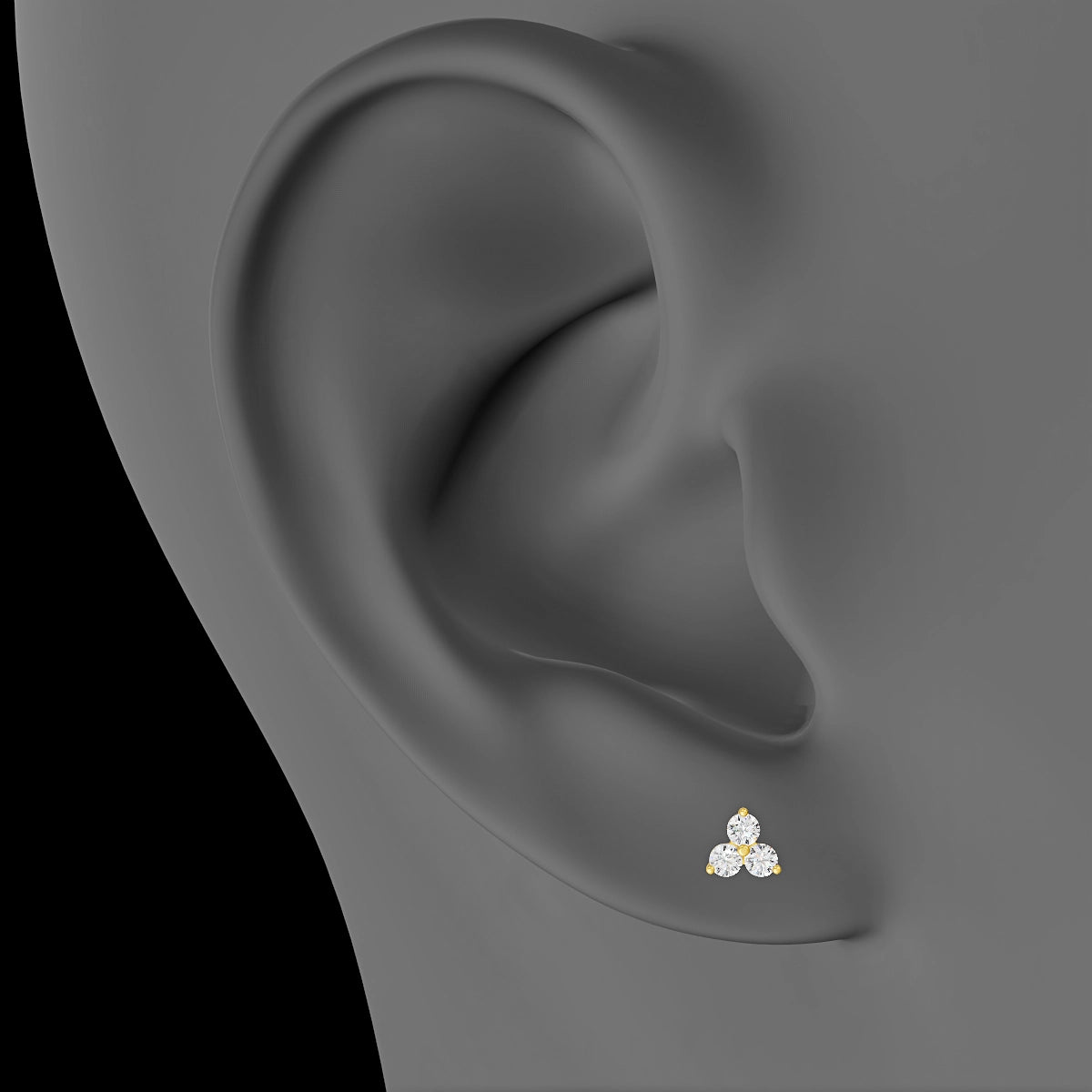
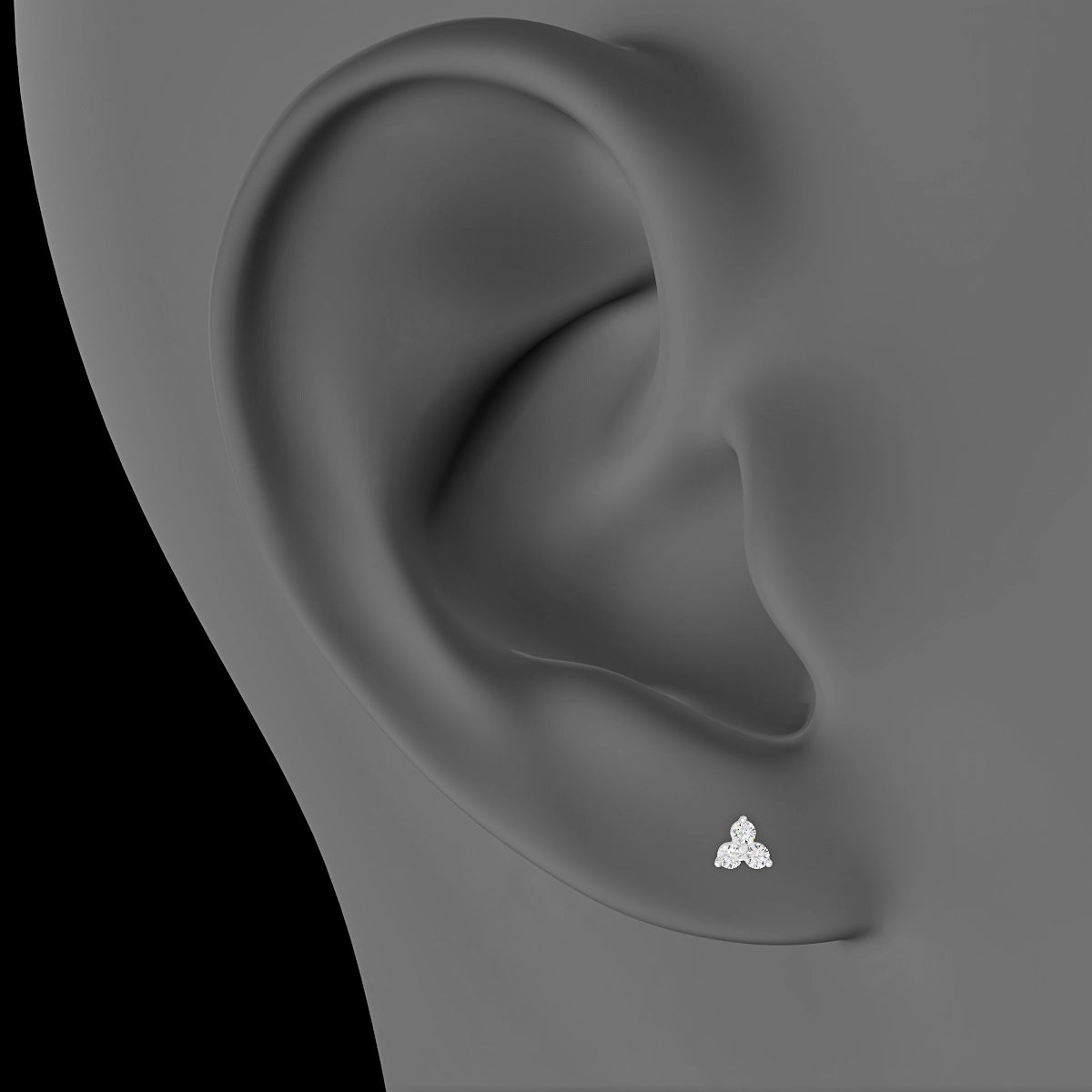
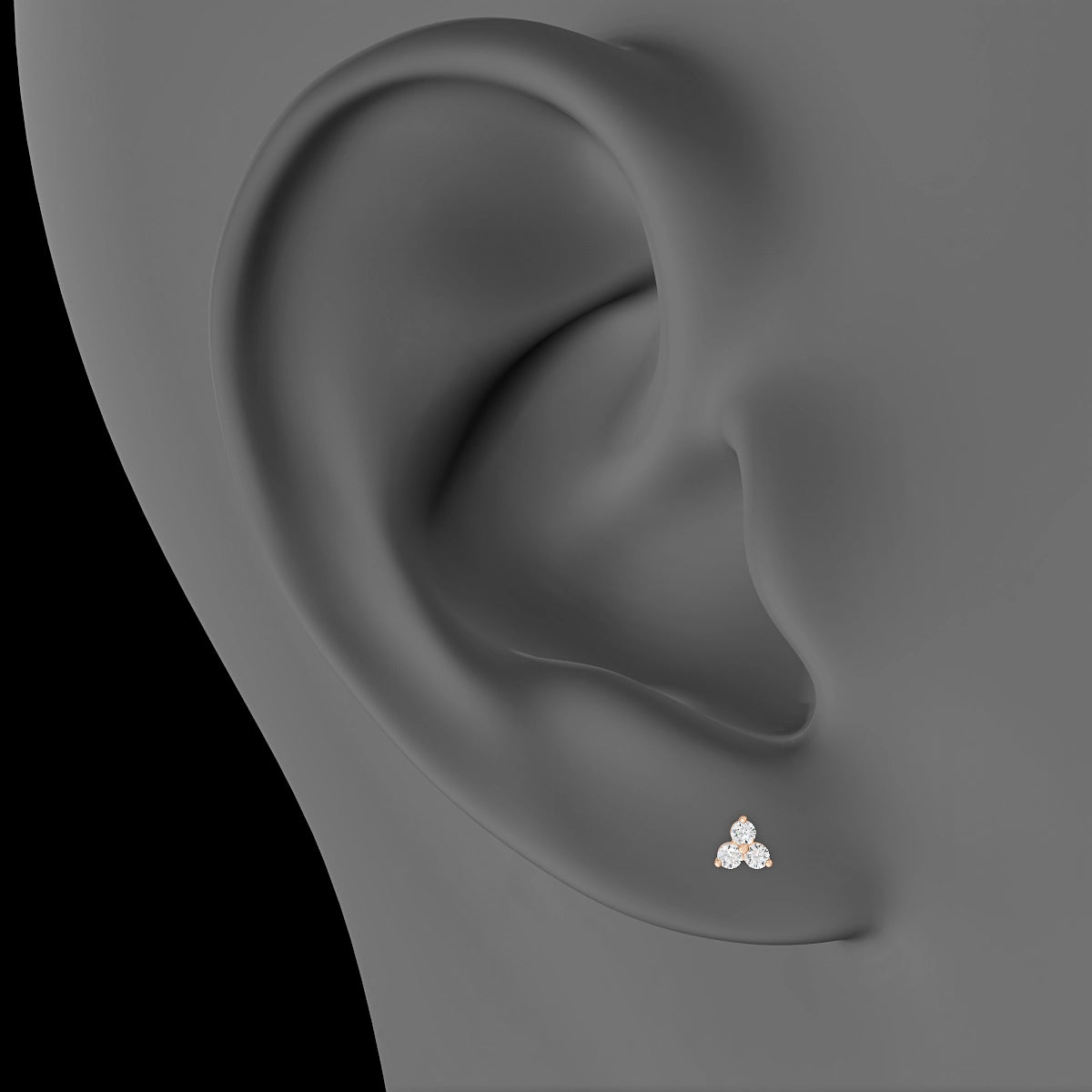
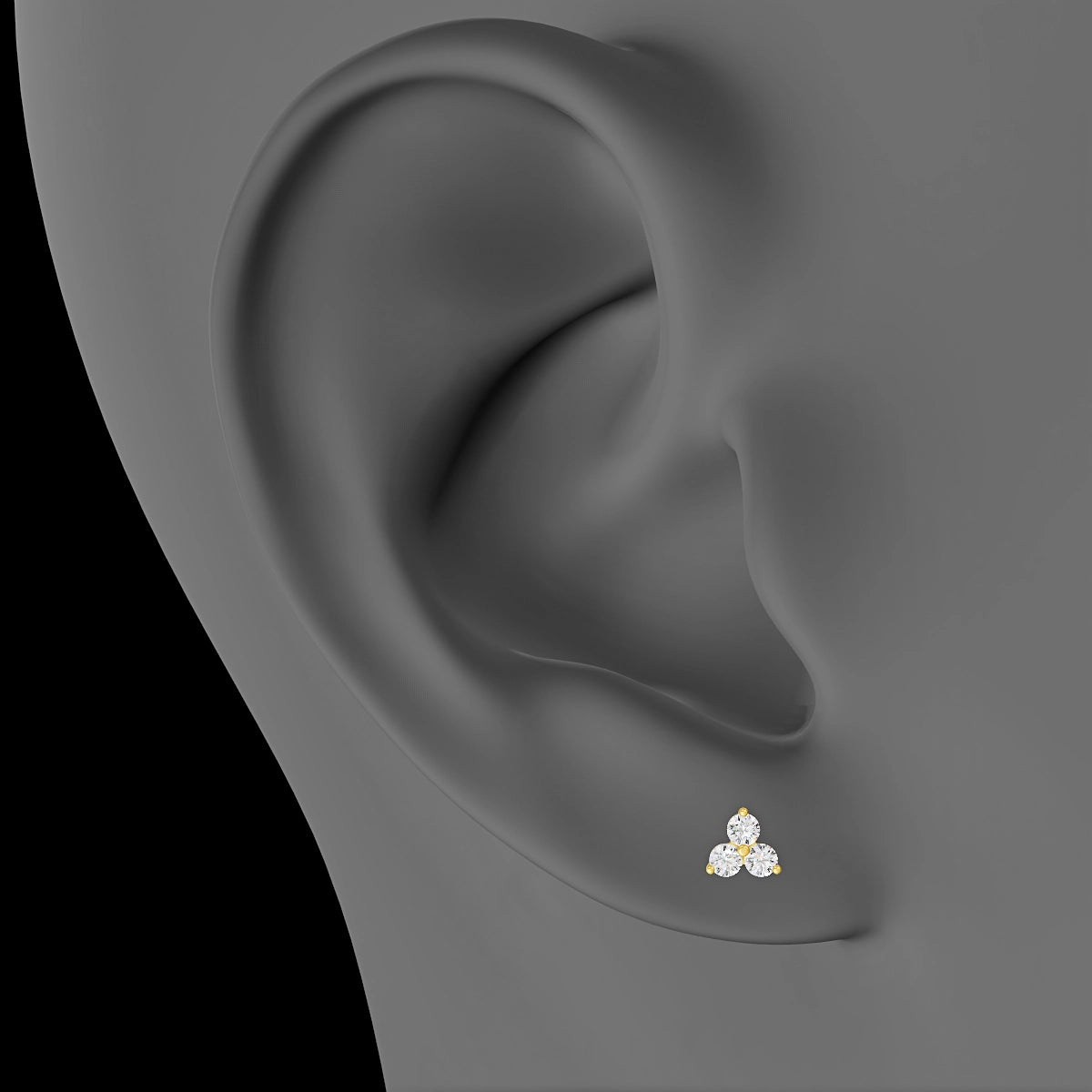
The flat piercing sits on the flat cartilage surface of the upper ear, just above the helix rim and outside the ear's natural curve.
It is a popular choice for people who want a cartilage piercing that reads as bold and graphic rather than delicate: it works well as a standalone statement piece, and it also pairs beautifully with a helix or forward helix piercing to anchor a wider ear composition. This guide covers everything you need before booking: flat piercing pain, healing time, jewelry sizing, and day-to-day aftercare.
Overview of the flat piercing
- Placement: The flat cartilage area on the upper outer ear, above the helix
- Pricing: $25–$50, plus the cost of the jewelry
- Pain Level: 5/10
- Healing Time: 6 to 12 months
- Aftercare: Clean twice a day with a sterile, saline-based solution. Avoid putting pressure on the area by not sleeping on the side with the earring until it heals.
Quick Links:
Placement & Anatomy | Is Your Anatomy Suitable? | Cost | Pain Level | Piercing Procedure | Jewelry: Sizing, Types & Materials | Aftercare | Healing Timeline | FAQs
Flat piercing placement & anatomy
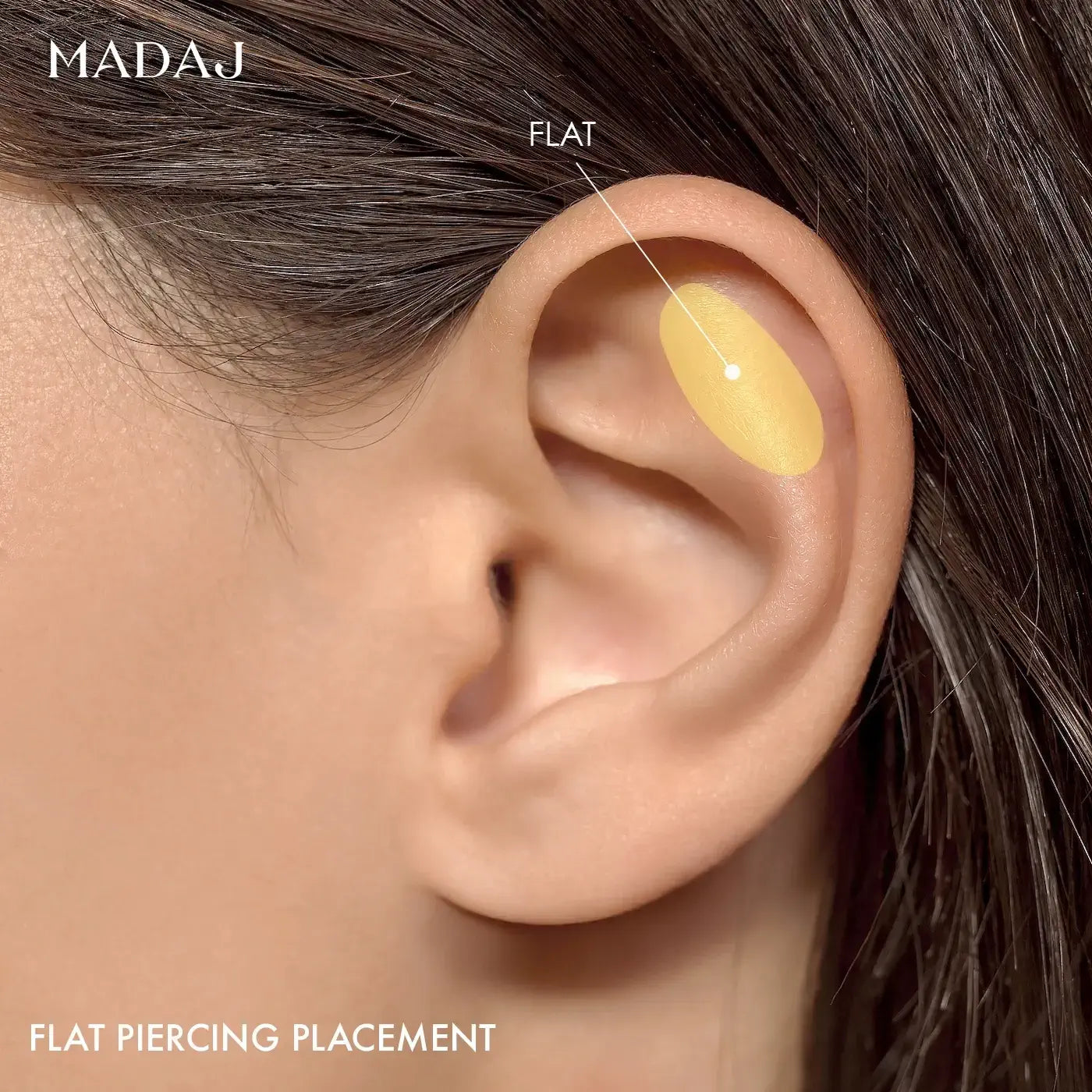
The "flat" refers to the smooth, flat section of cartilage that runs along the upper part of the outer ear, between the helix rim and the rest of the ear structure. Unlike the helix, which follows the curved outer edge, the flat area has no natural fold to guide placement.
It's often the placement people turn to when a classic helix piercing isn't quite right for their ear, since the flat area sits in roughly the same region but doesn't rely on a curved rim to anchor the jewelry.
Because there is no ridge or fold to follow, exact positioning is decided individually for each ear, based on the size and shape of the flat cartilage and how the piece will sit alongside any existing piercings.
Is Everyone's Ear Anatomy Suitable for a Flat Piercing?
Good news first: The flat is one of the more forgiving cartilage piercings out there. Spots like the snug or anti-tragus demand a very specific ear shape, but the flat area works for most people, in one form or another.
That said, "most people" doesn't mean "identical results." Ear anatomy is as individual as a fingerprint: some ears have a broad, generous flat area that can easily hold multiple piercings or a bolder, more sculptural piece, while others offer just enough room for a single, delicate stud. The cartilage itself varies too, from thin and pliable to noticeably dense, which changes both how the piercing feels and which jewelry will sit best.
Anatomy isn't the only thing worth thinking through before you book. Picture how the piercing will fit into your actual routine: if you wear glasses or a helmet often, that contact point matters. And style-wise, do you want something subtle that blends in, or a piece that becomes a focal point of your ear? Your answers, paired with your anatomy, are what shape the piercer's recommendation.
The only way to know for sure what your ear can hold is a hands-on consultation. A professional piercer will check the width, shape, and thickness of your flat cartilage and tell you exactly what's possible: one refined stud, a stacked pair, or something more ambitious.
Flat Piercing Cost: How much does it cost?
A flat piercing involves two separate costs:
- Piercing service fee: a piercer will typically charge $25–$50 for the procedure, though this varies by studio and location.
- Jewelry cost: varies depending on the materials and the design you choose.
- ASTM F136 titanium studs generally start at $10 and rise above $100 for more elaborate options, with pricing varying by store.
- 14k/18k gold with precious stones sits considerably higher, typically $100 to $2,500 or more, depending on carat and craftsmanship.
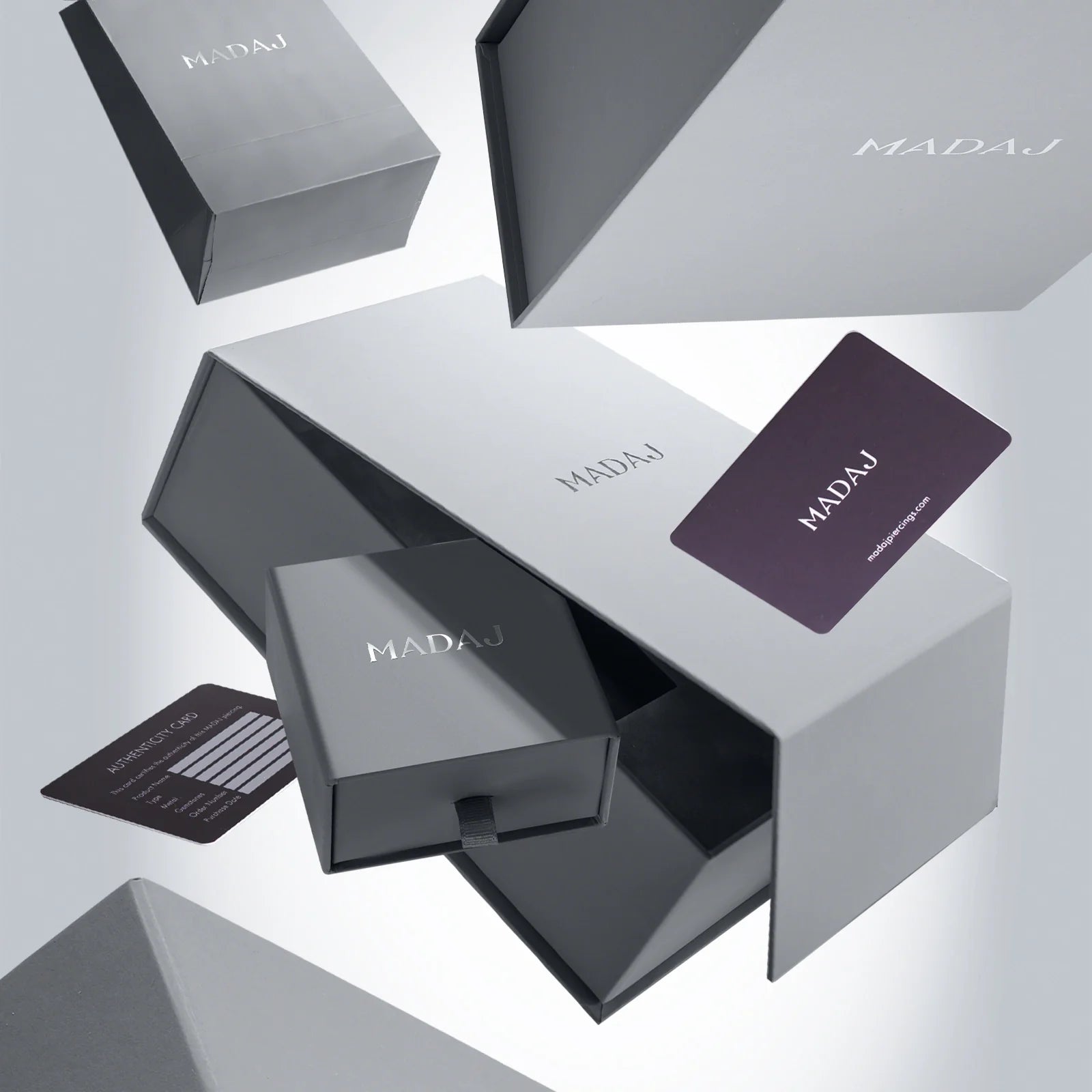
- MADAJ's flat piercing jewelry starts from $330, handcrafted to order in nickel-free, hypoallergenic 18k gold and set with diamonds, rubies, sapphires, emeralds, or black diamonds; all stones are G–VS grade natural diamonds and AAA grade gems, with a Certificate of Authenticity included.
How much does a flat piercing hurt?
Pain level: 5 out of 10.
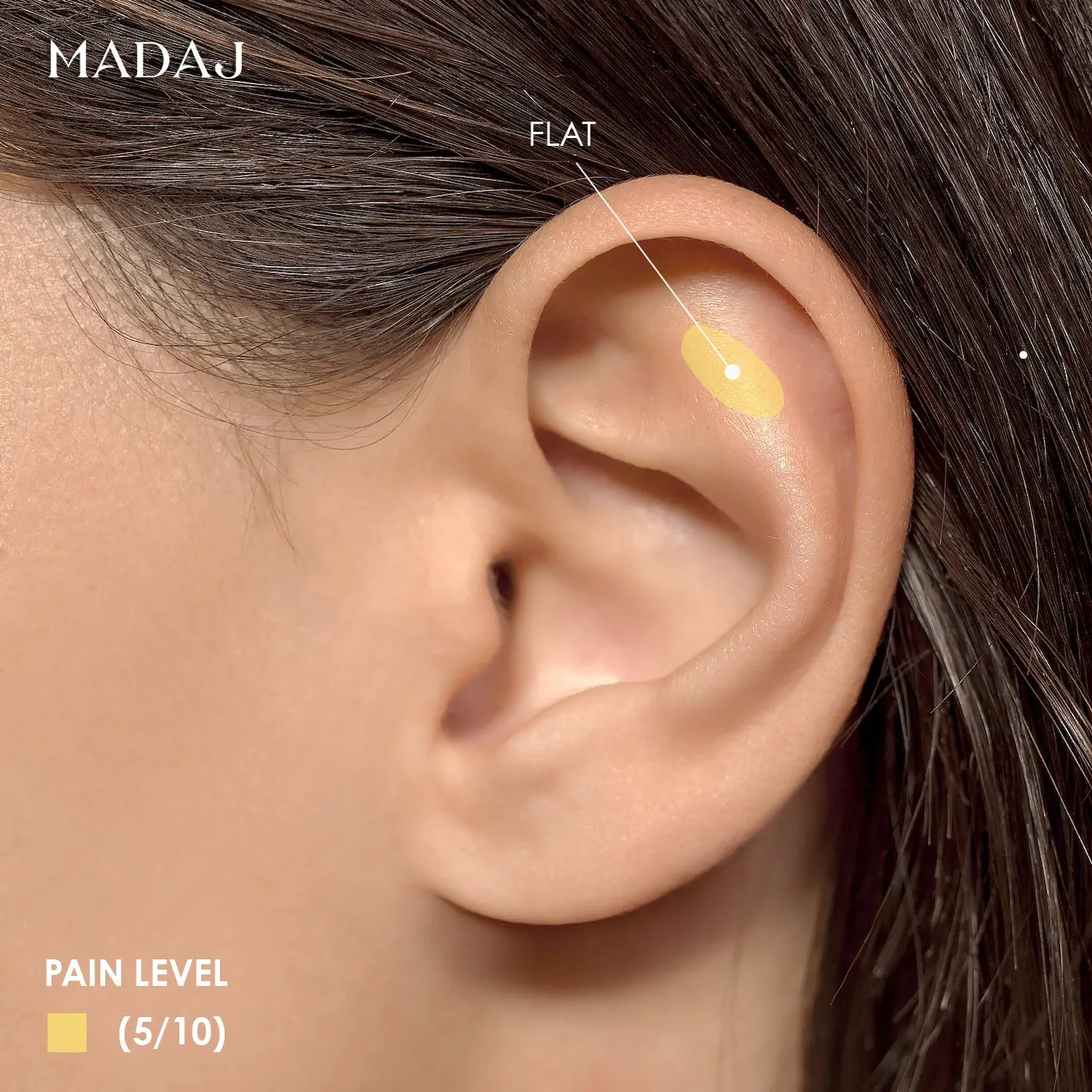
The flat area is denser cartilage than the lobe or tragus, which is why it typically ranks slightly higher on the pain scale. Most people describe the sensation as a firm, steady pressure followed by a brief sharp pinch as the needle passes through.
As with most cartilage piercings, you may hear a small popping or crunching sound as the needle moves through the cartilage. This is normal and is not a sign that anything has gone wrong.
In the days after, expect localized soreness and tenderness, particularly when the area is bumped or pressed against a pillow. This usually settles within one to two weeks.
Is a flat piercing more painful than a helix or tragus?
Slightly, the flat area is denser than both, though it remains well below higher-pain placements like the conch or rook.
How can I reduce the pain experienced during my flat piercing?
There are solutions to minimize pain during a flat piercing, such as the use of a lidocaine-based numbing cream (EMLA or generics). This cream is available in pharmacies by prescription. It is recommended to apply it between 30 minutes to 1 hour before the piercing.
To learn more about reducing the pain of a flat piercing, discover our Guide on Ear Piercing Pain Levels.
Flat piercing procedure

The entire appointment usually takes 15 to 20 minutes, with the piercing itself lasting only a few seconds.
- Consultation and Preparation. Your piercer will examine the flat area of your ear, discuss exact placement, and help you select your initial jewelry (typically a flat-back labret stud for healing). The area is thoroughly cleaned with a medical-grade antiseptic, and the entry and exit points are marked with a sterile marker. You will check the positioning in a mirror and confirm before anything happens.
- The Piercing. Using a sterilized, single-use hollow needle (never a gun for cartilage), the piercer passes the needle through the marked spot. The chosen jewelry is immediately inserted through the new channel.
- Aftercare Briefing. Before you leave, you will receive cleaning instructions and a healing timeline. Some piercers may recommend a check-up after the initial swelling goes down, especially if the jewelry needs to be downsized.
Flat piercing jewelry: sizing, types & materials
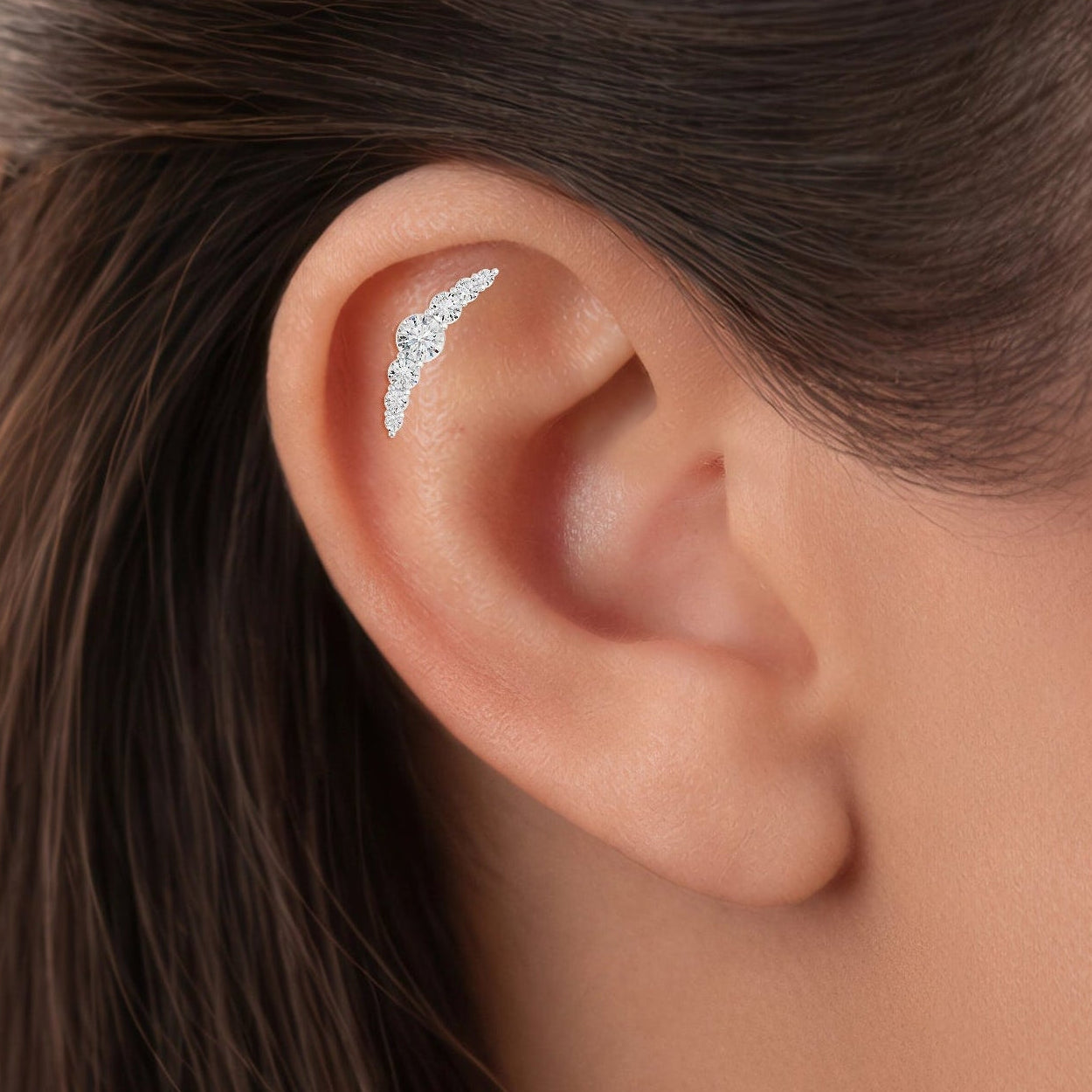
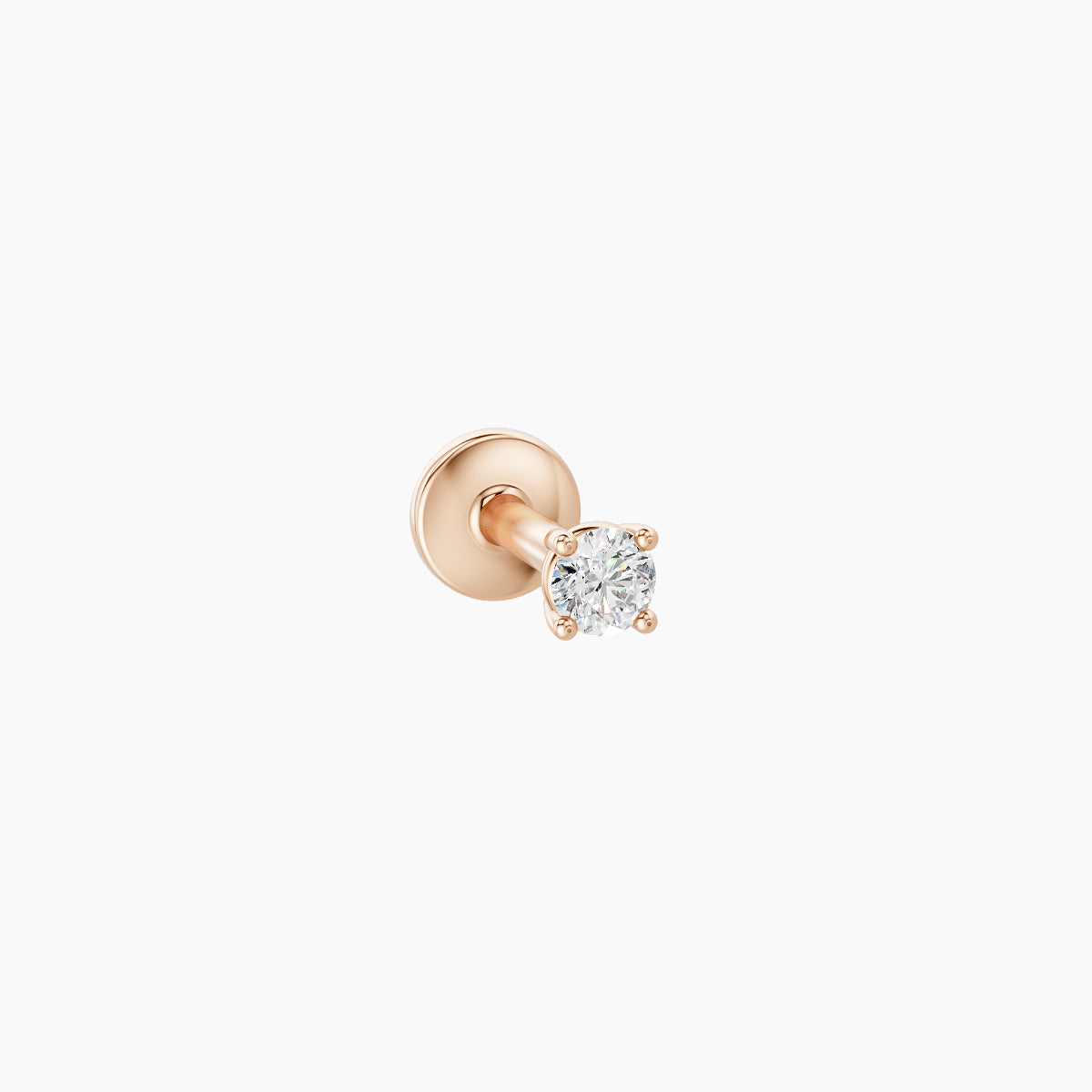
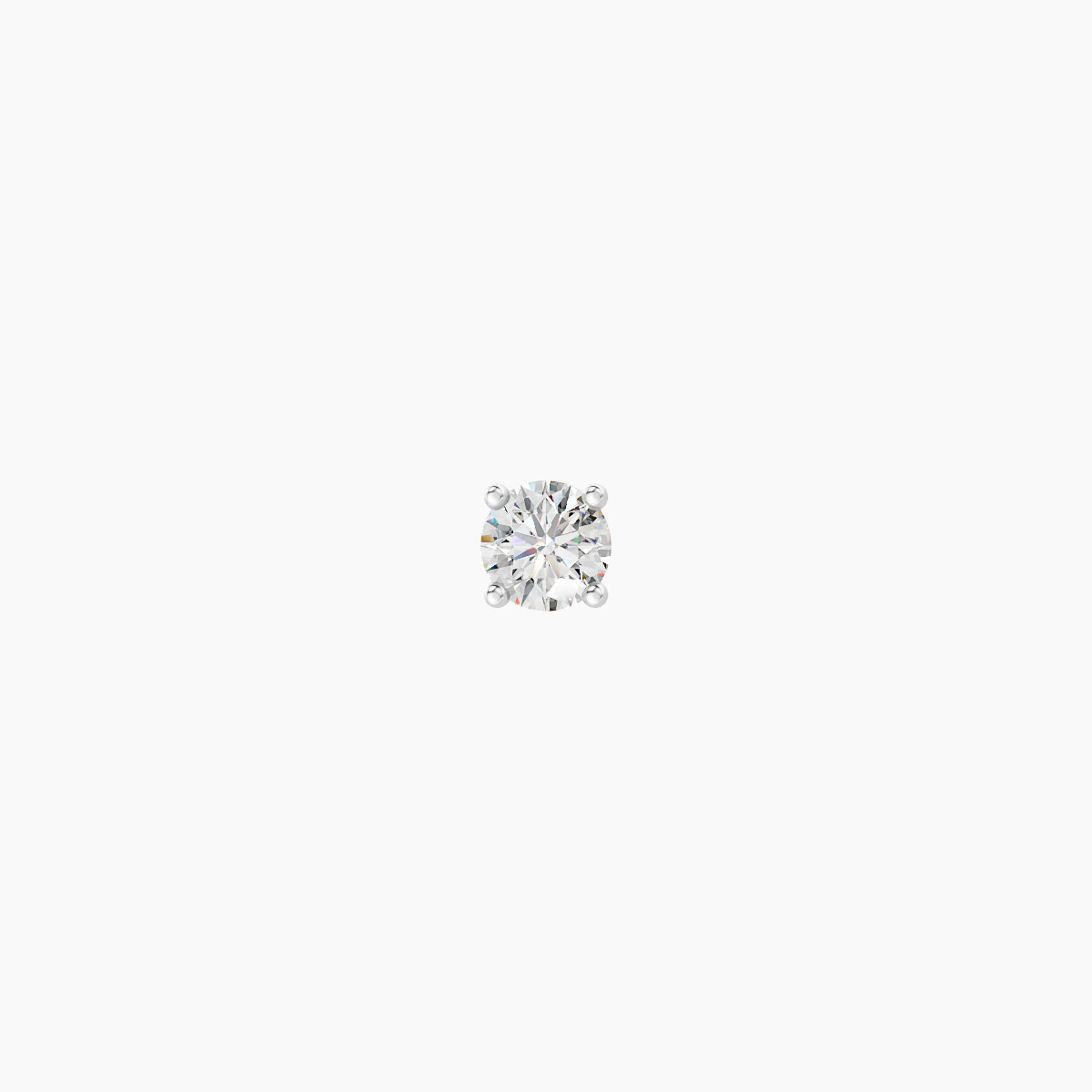
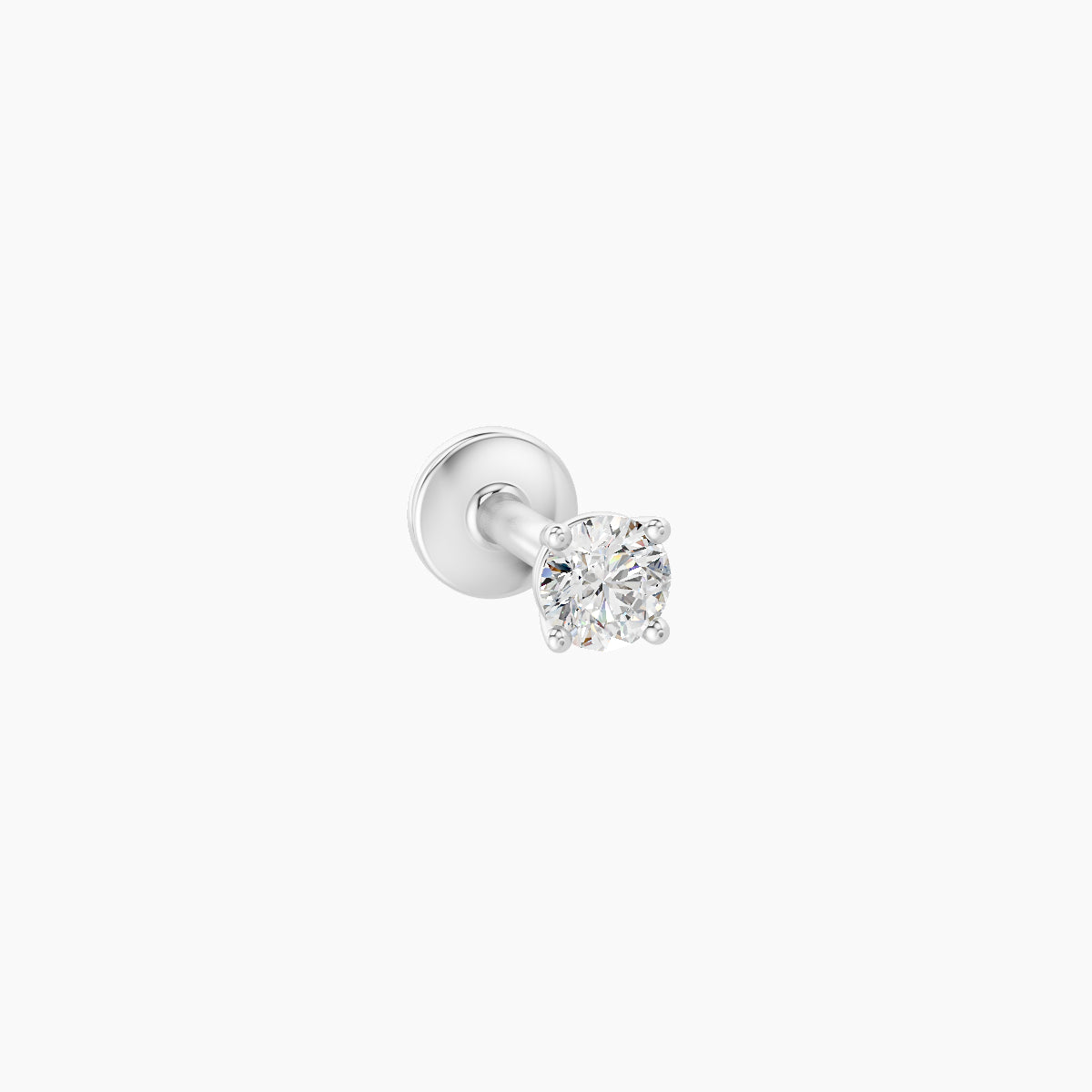
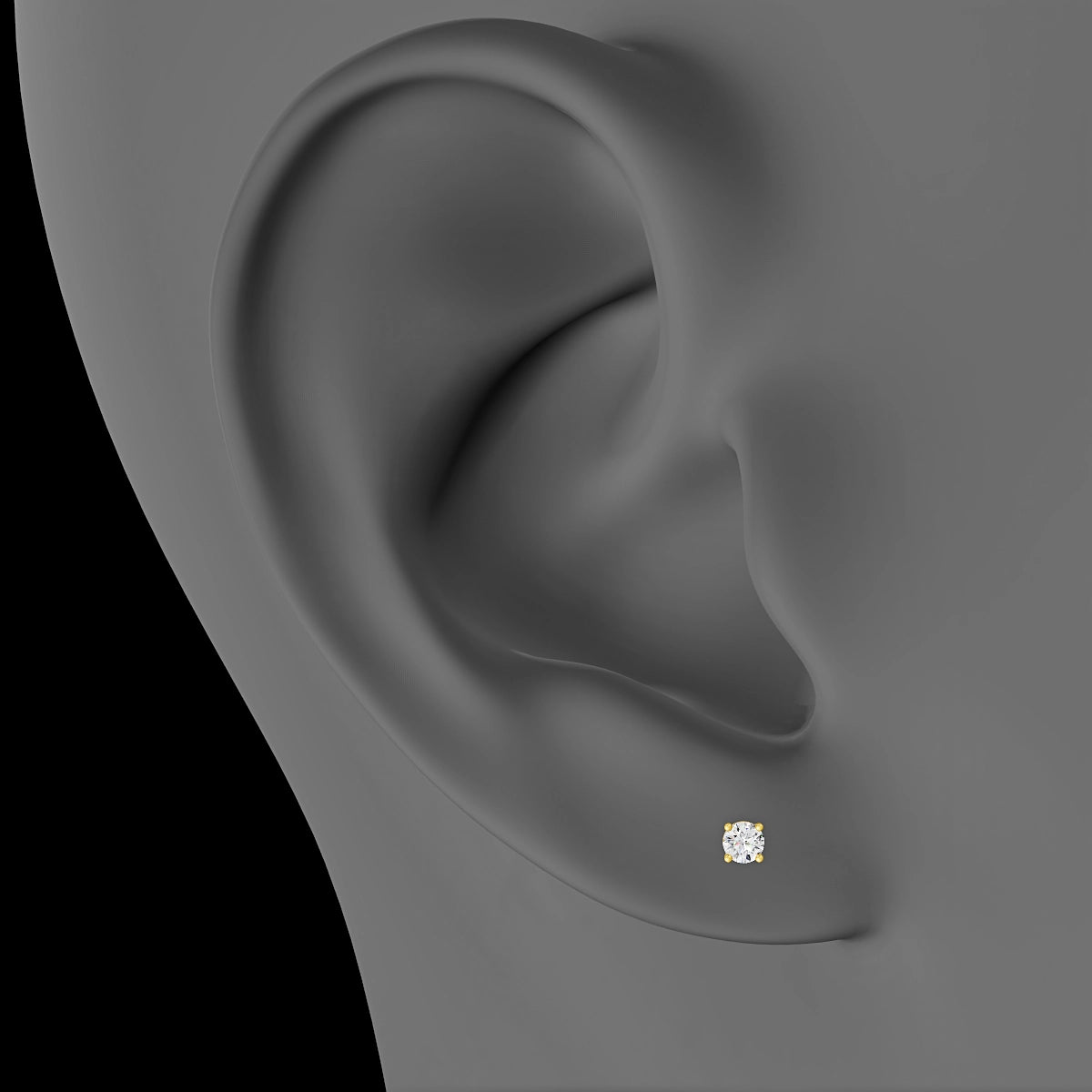
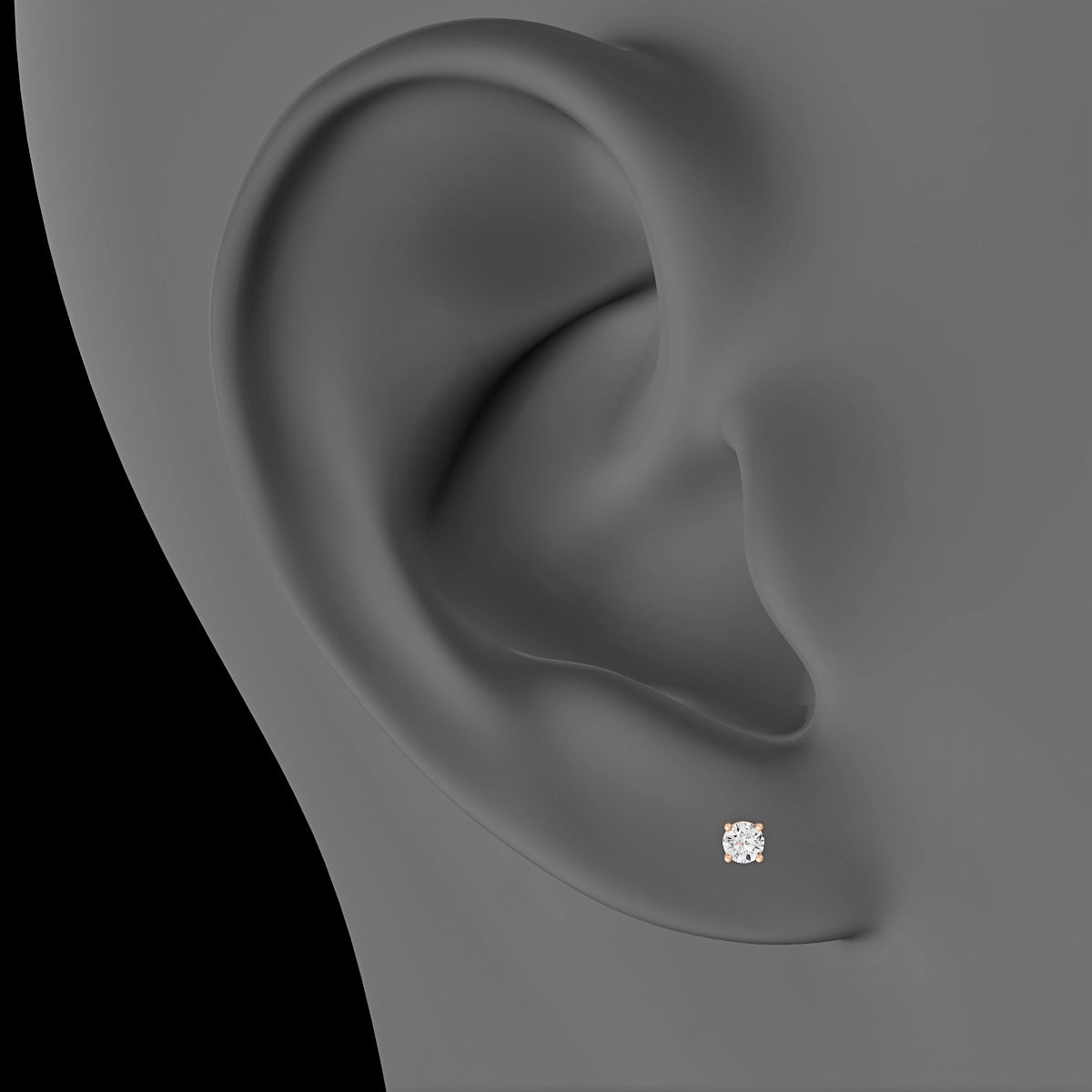
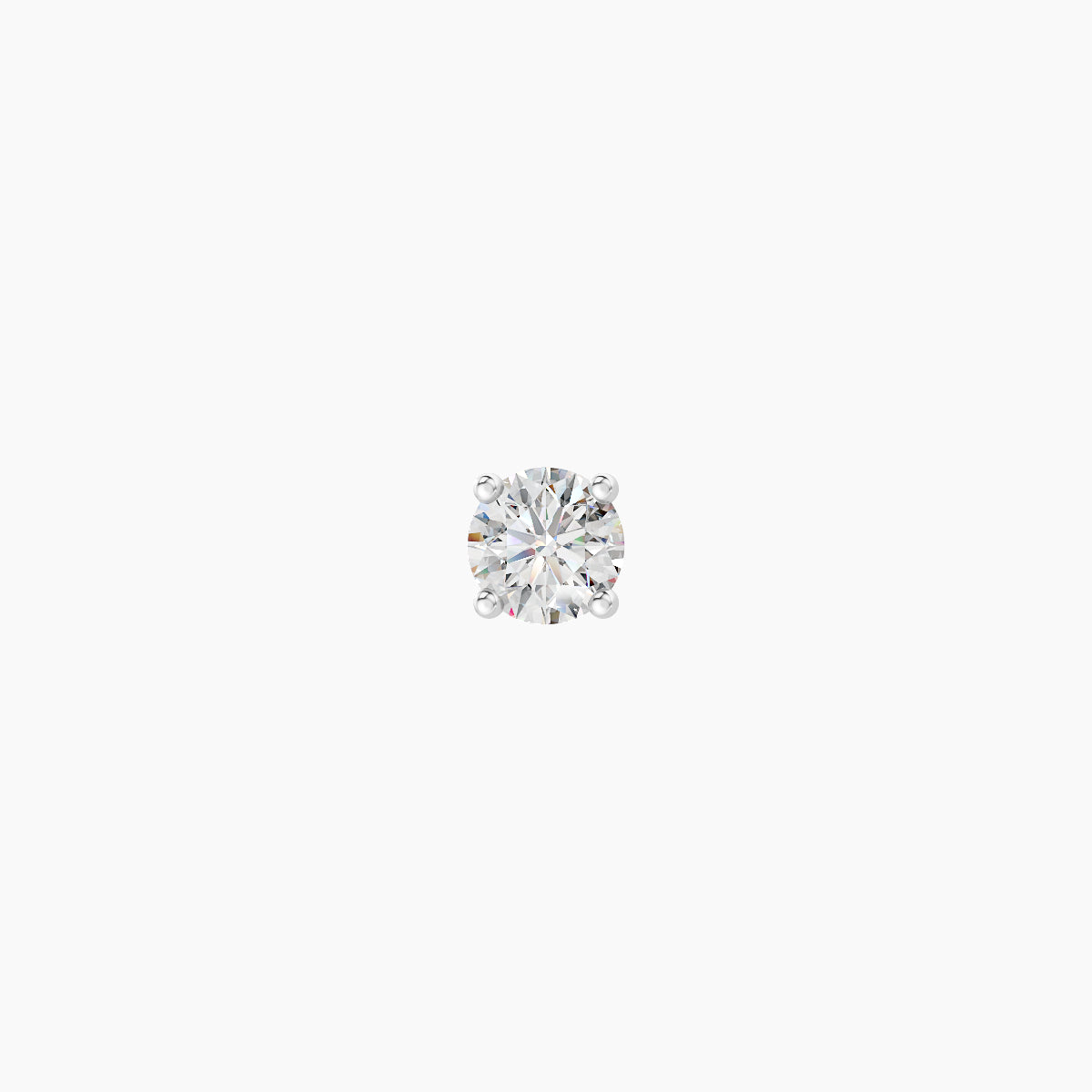
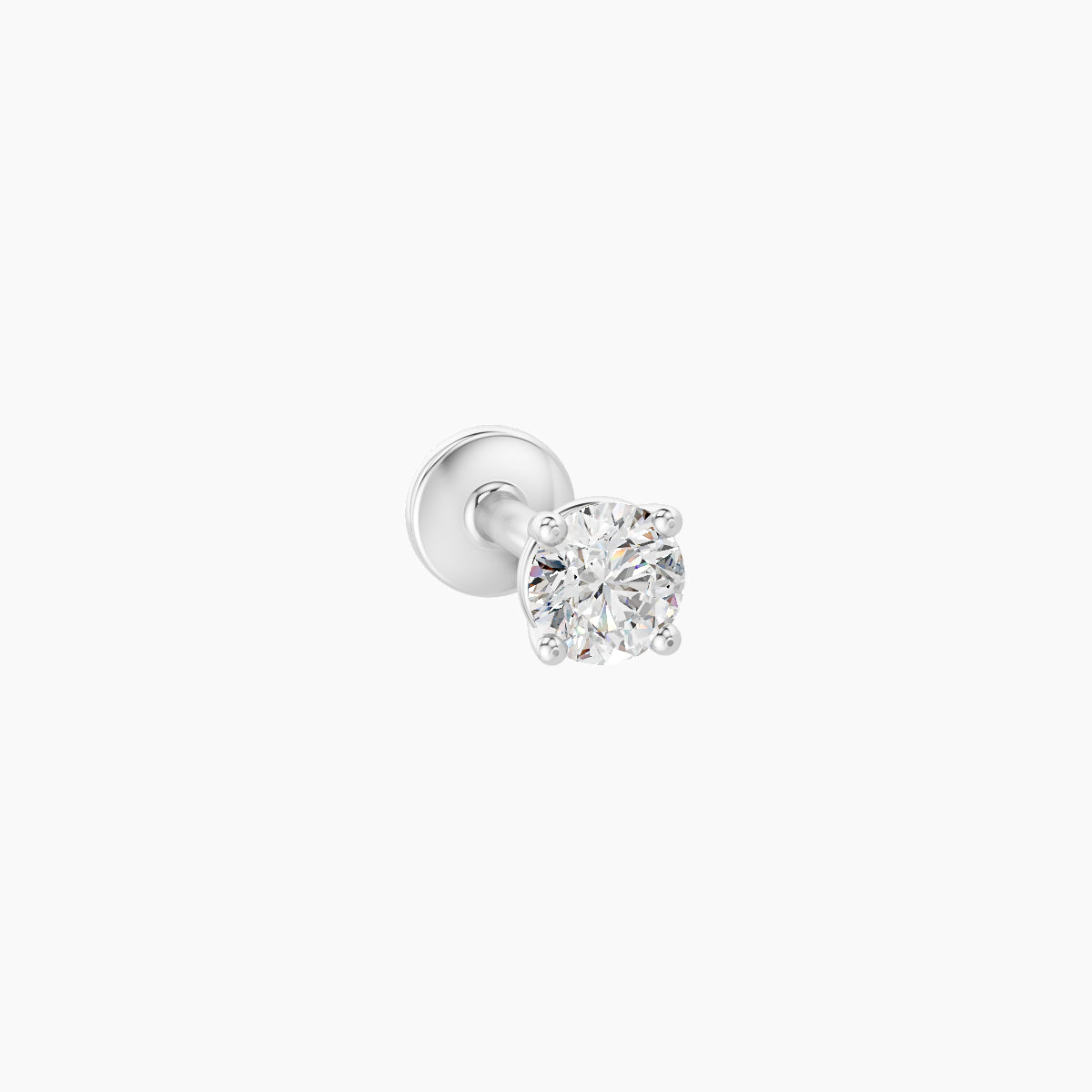
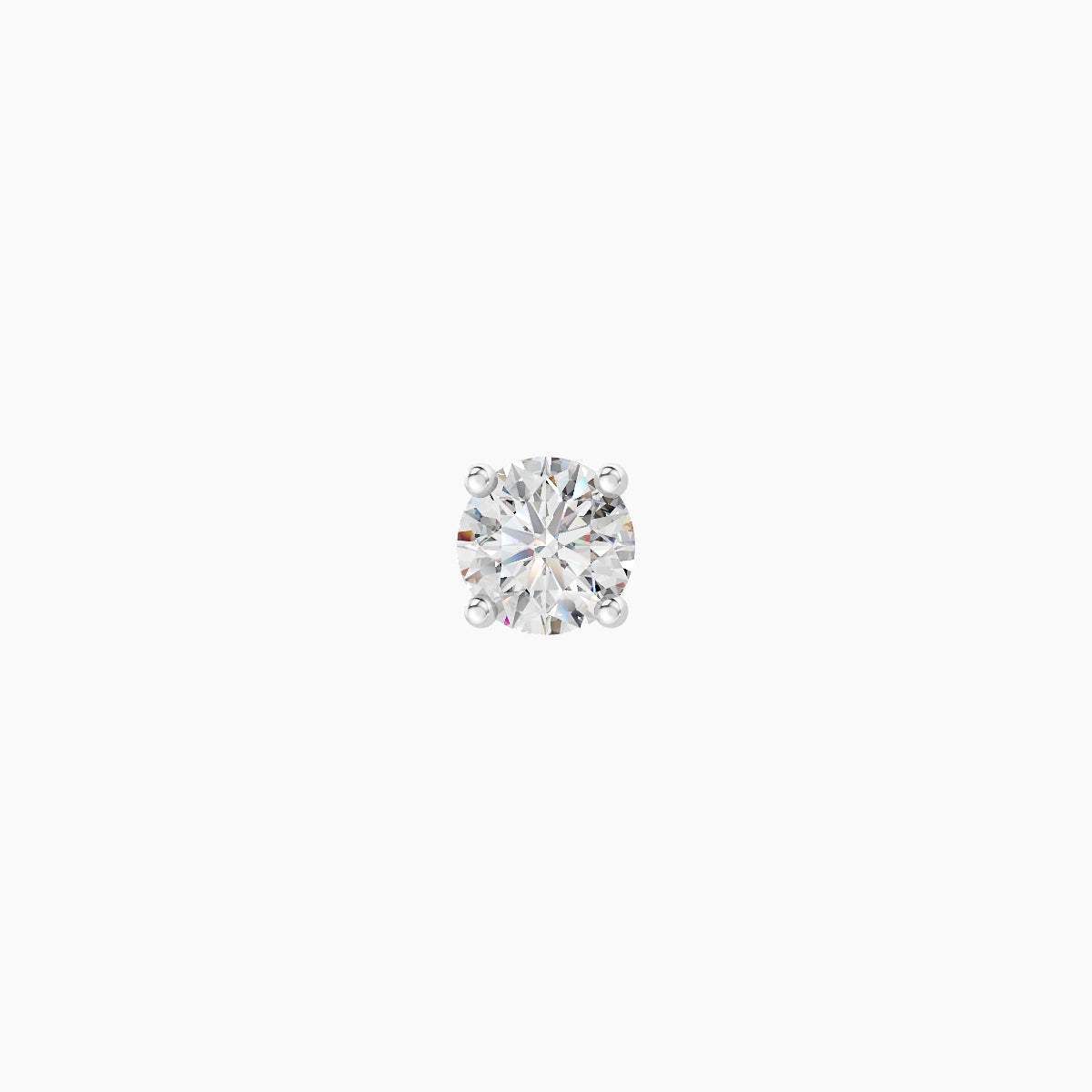
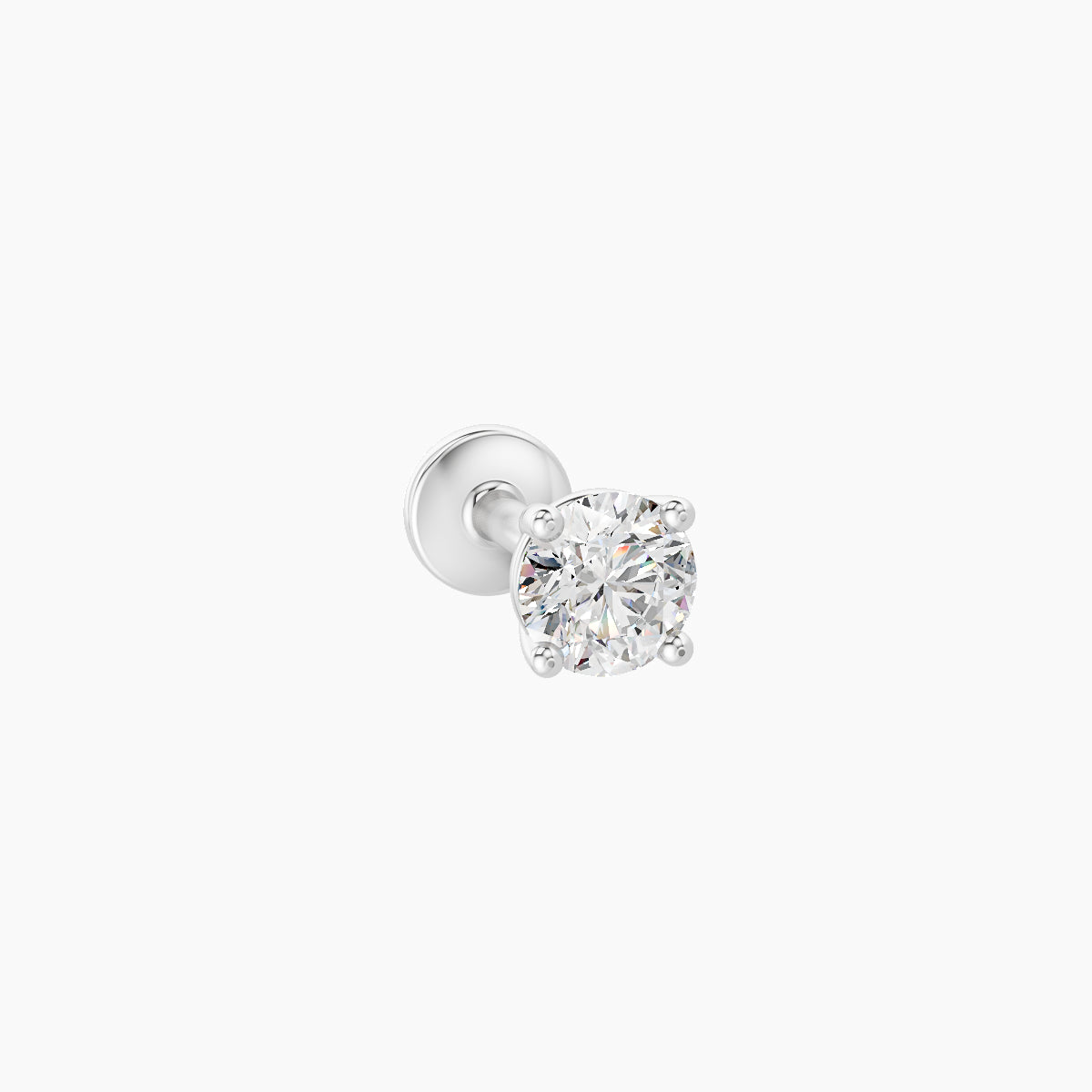
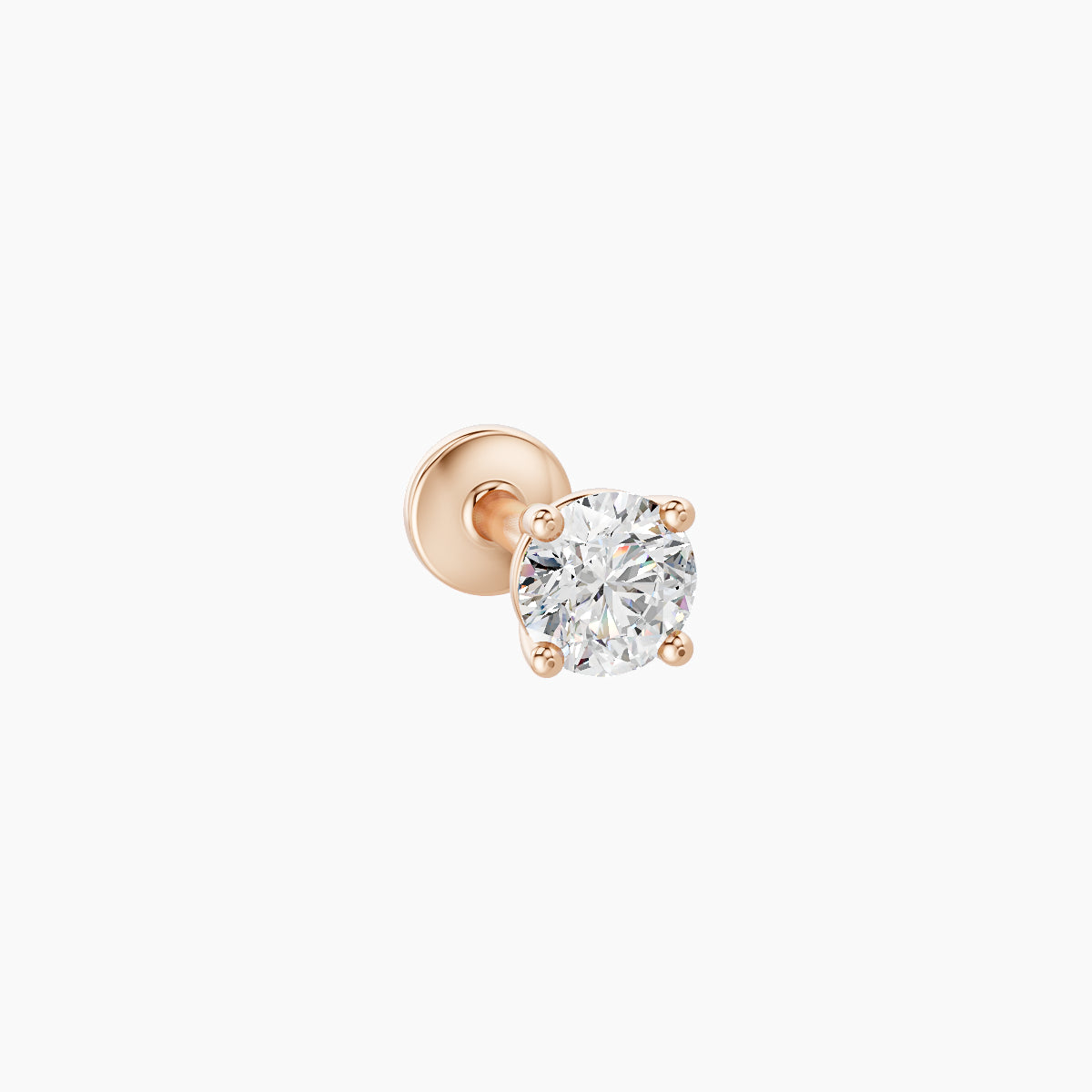
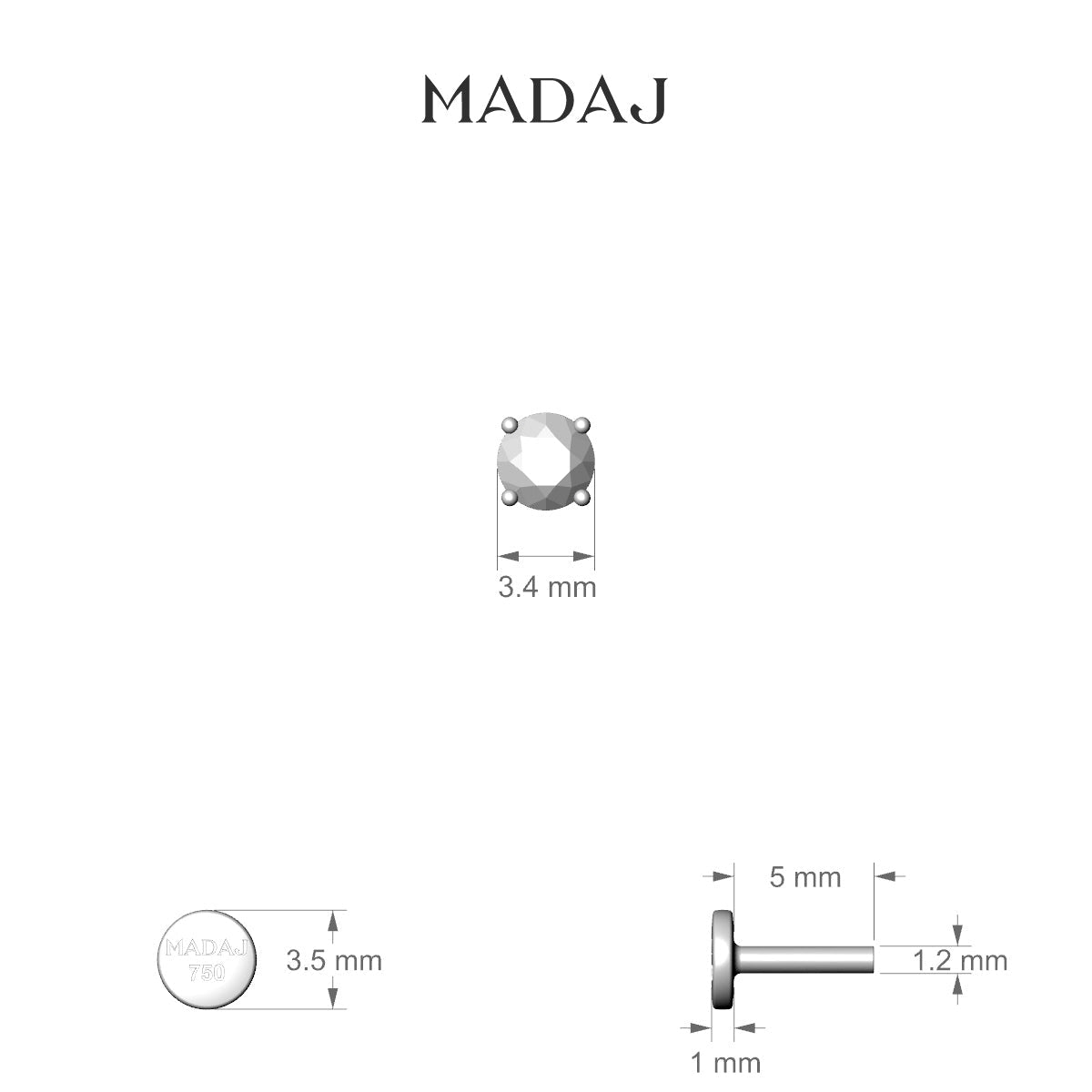
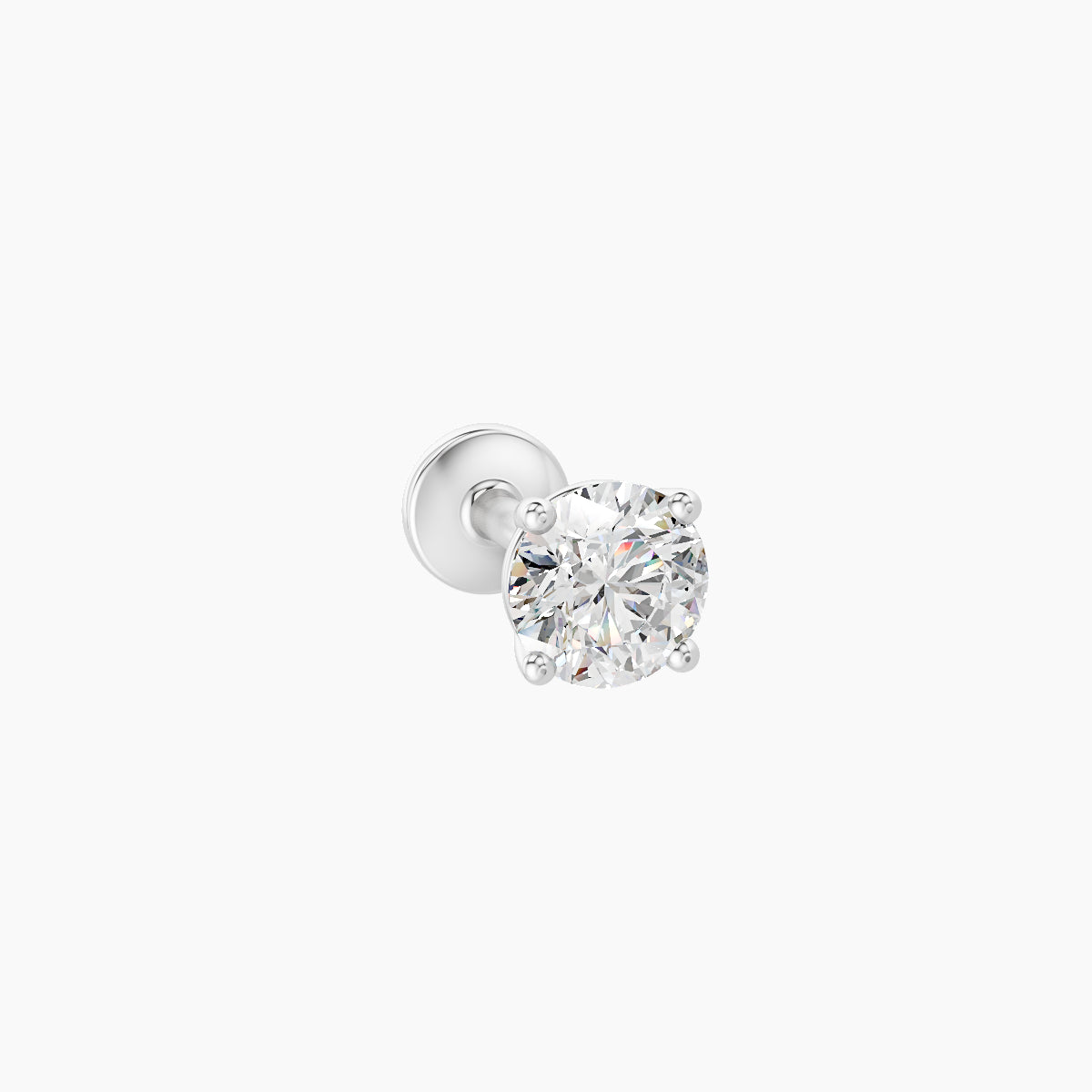
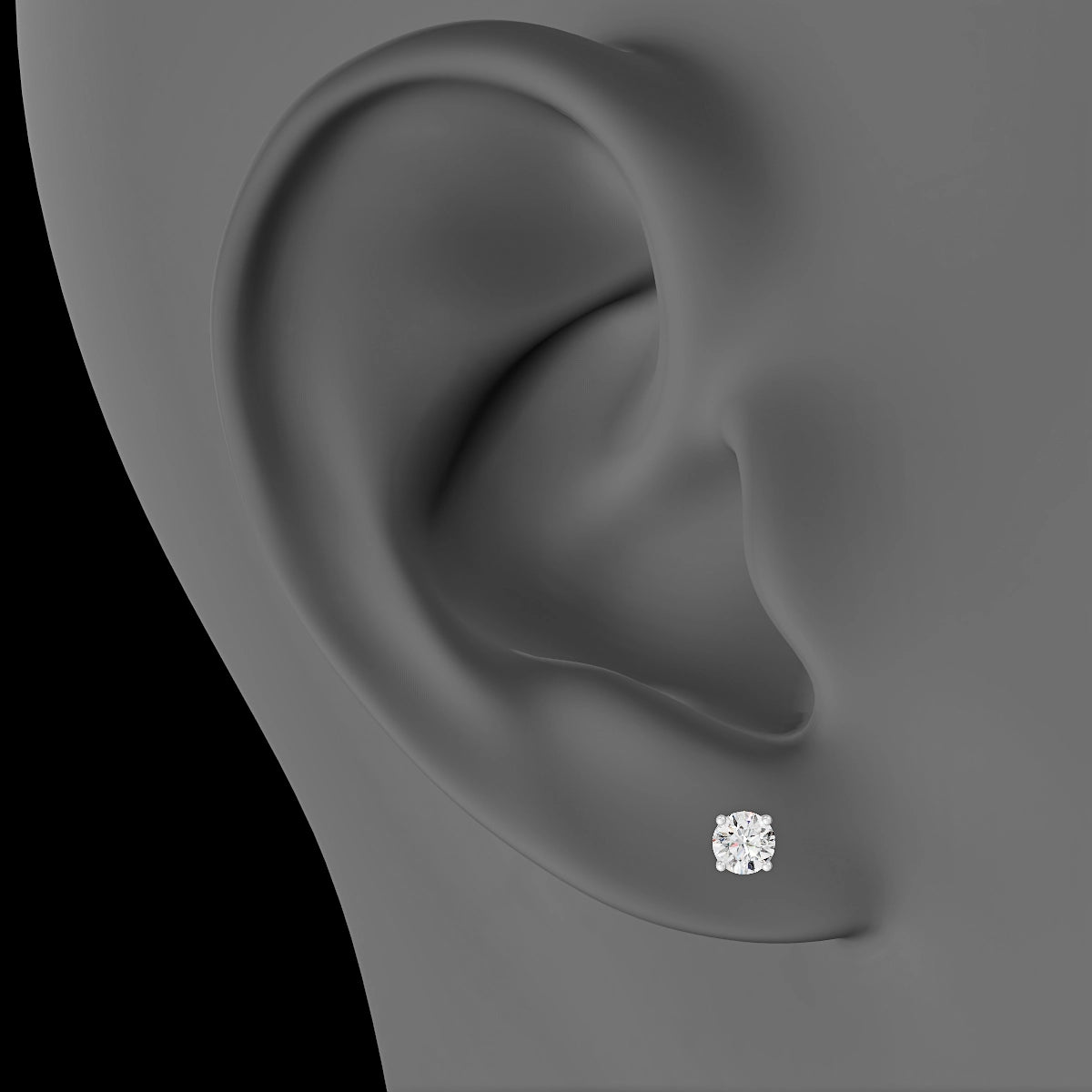
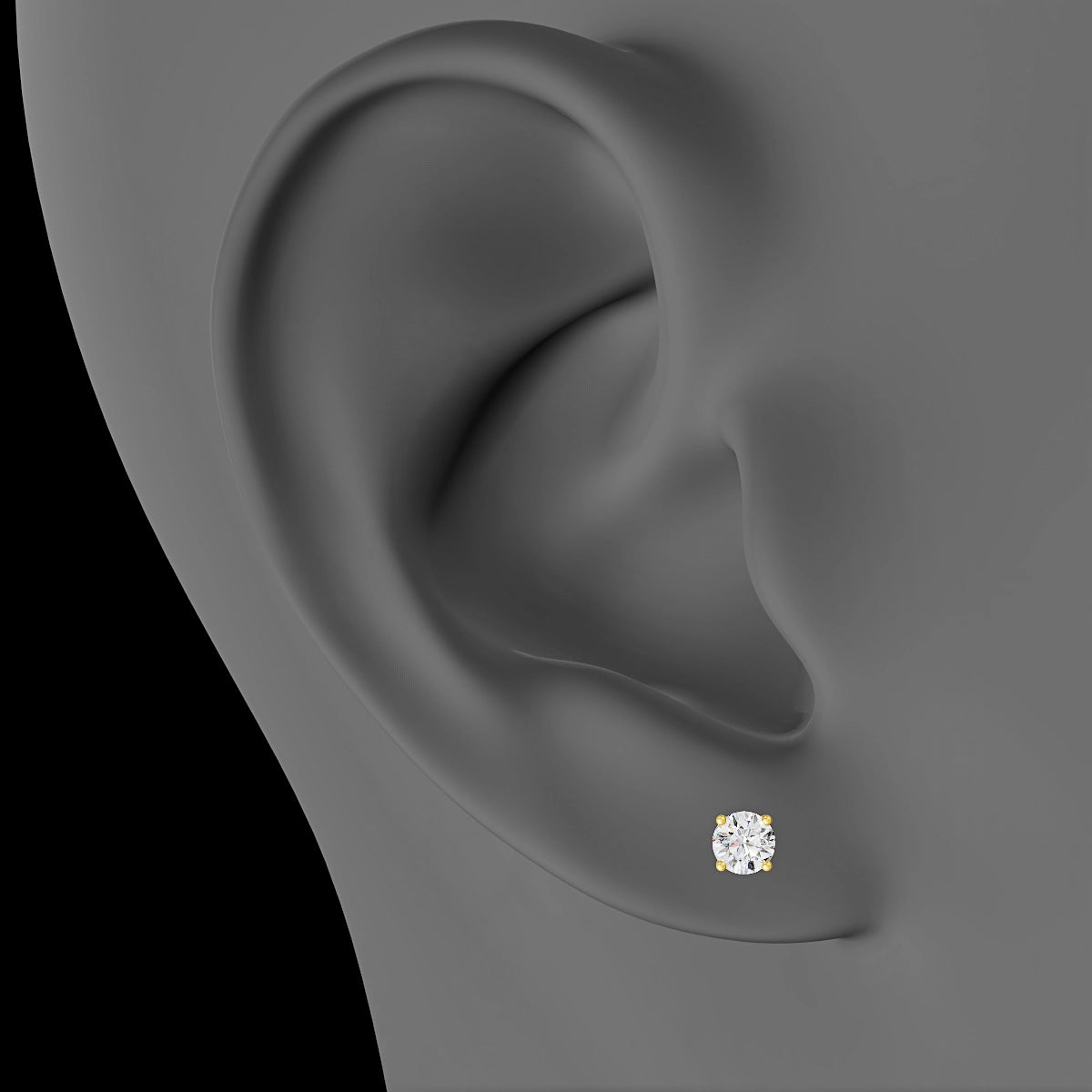
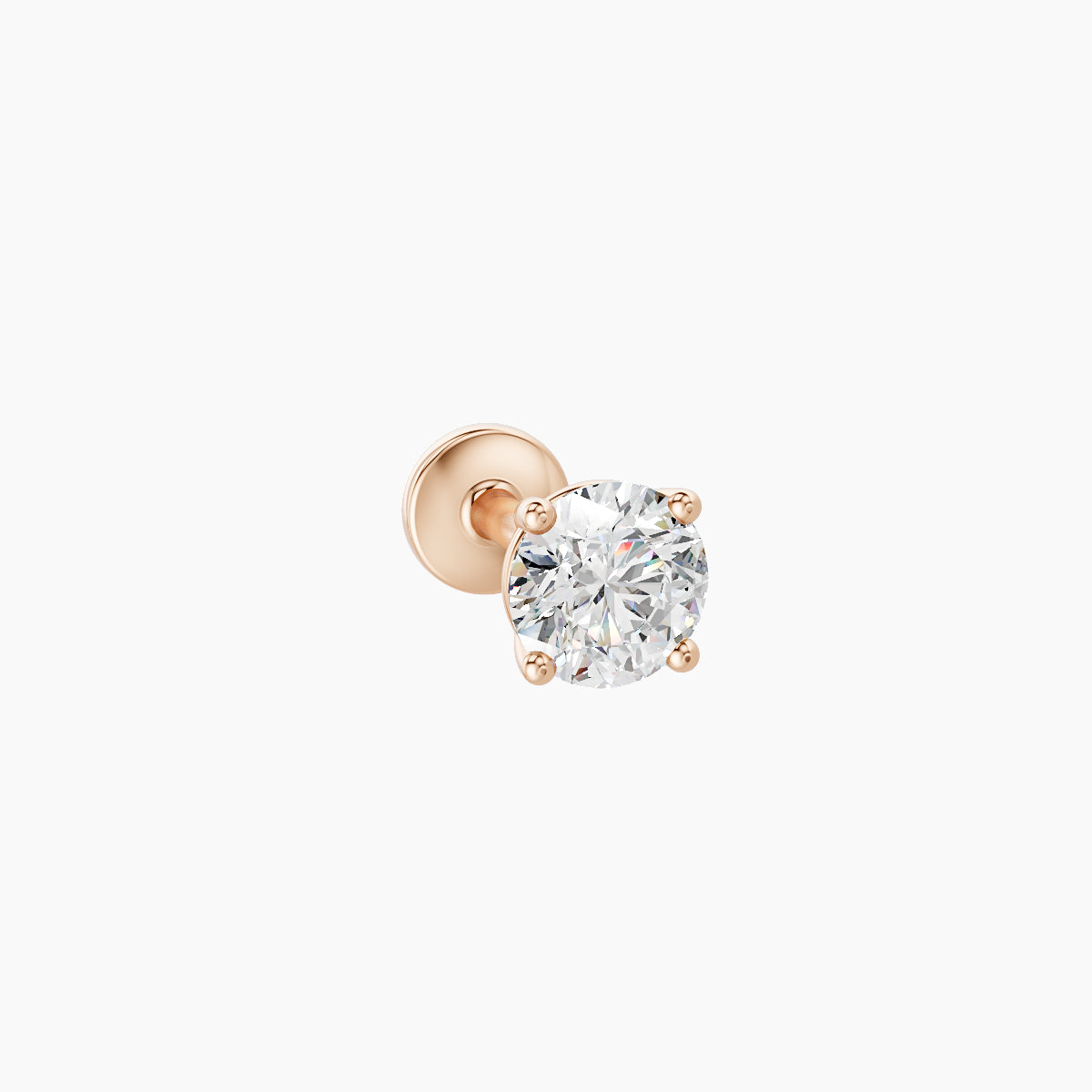
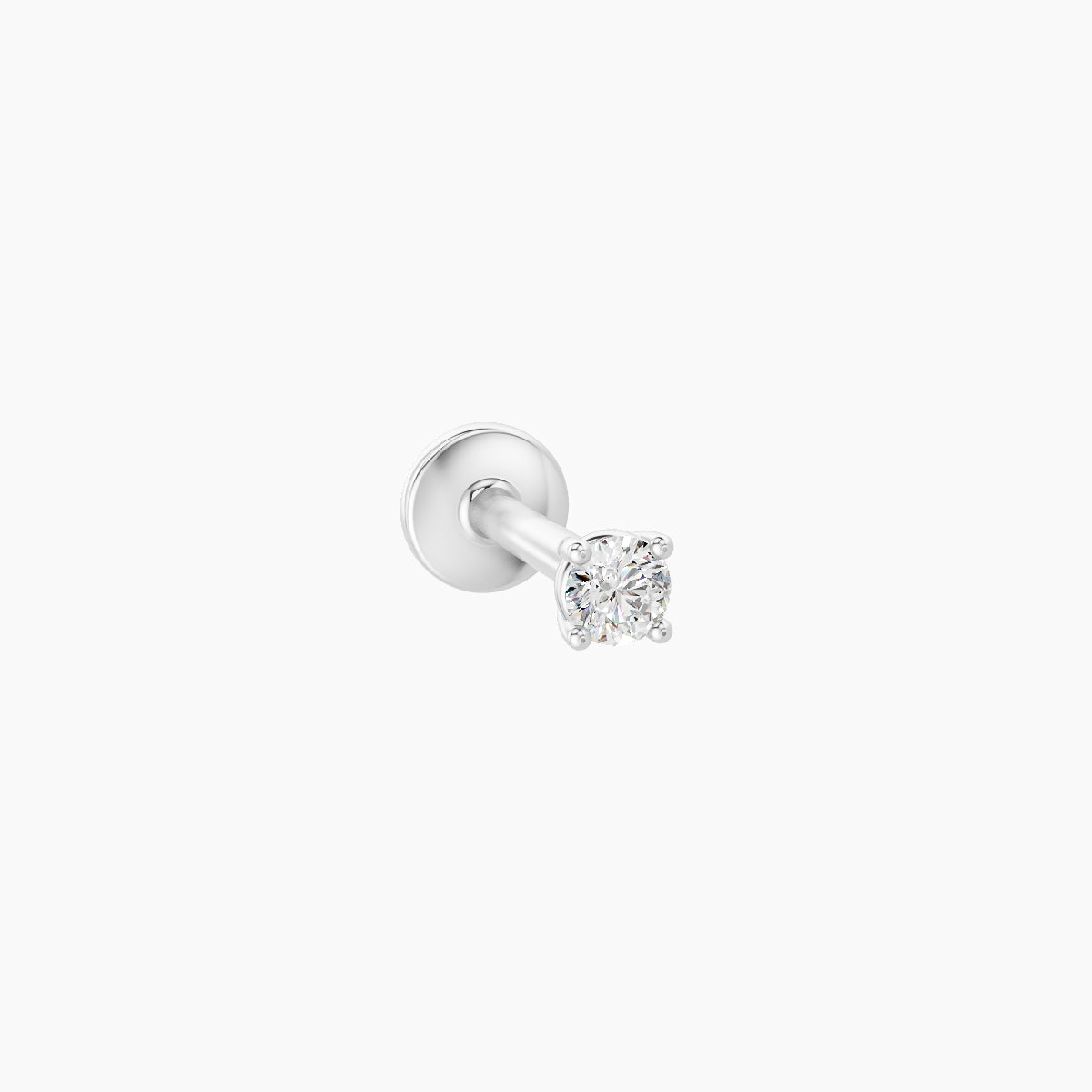
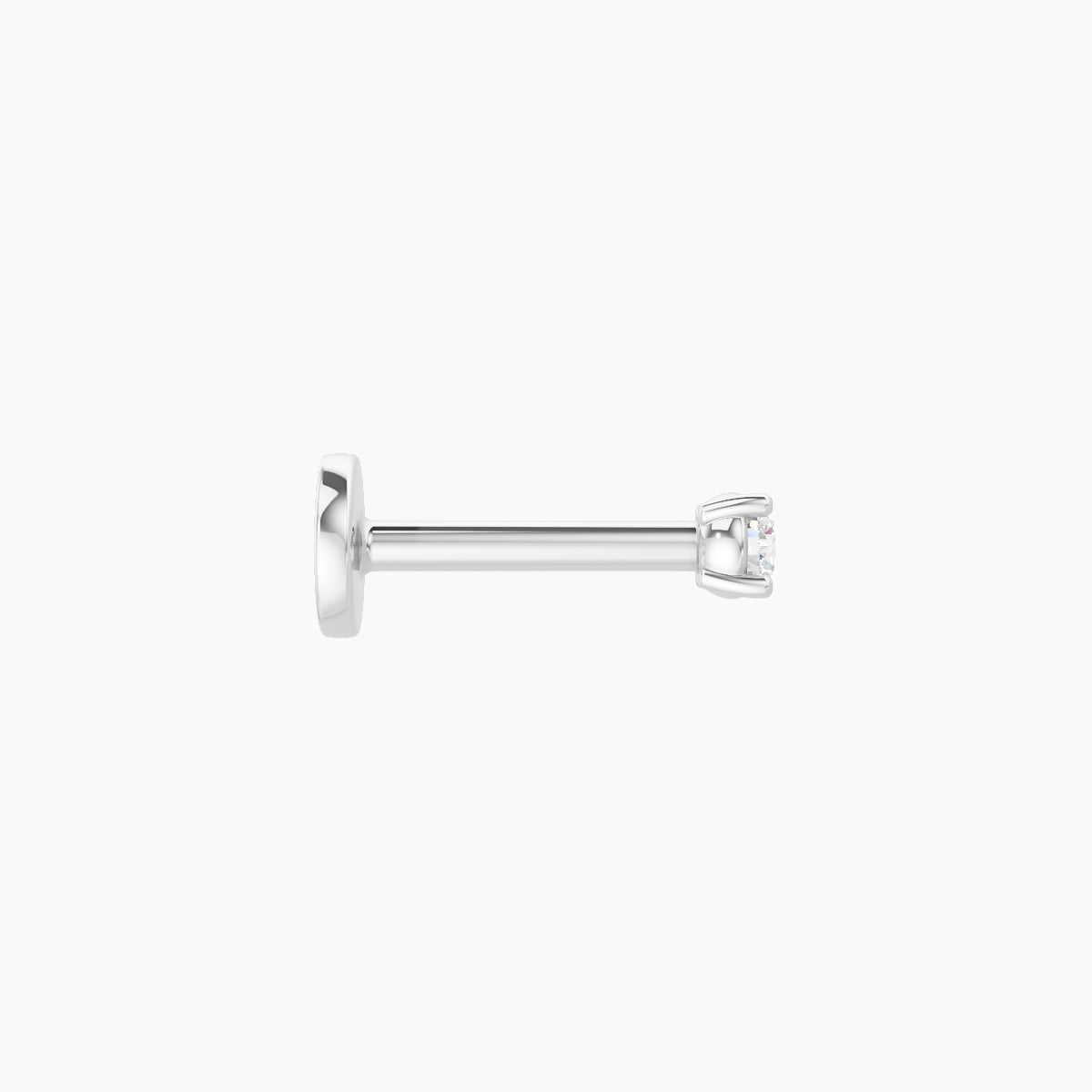
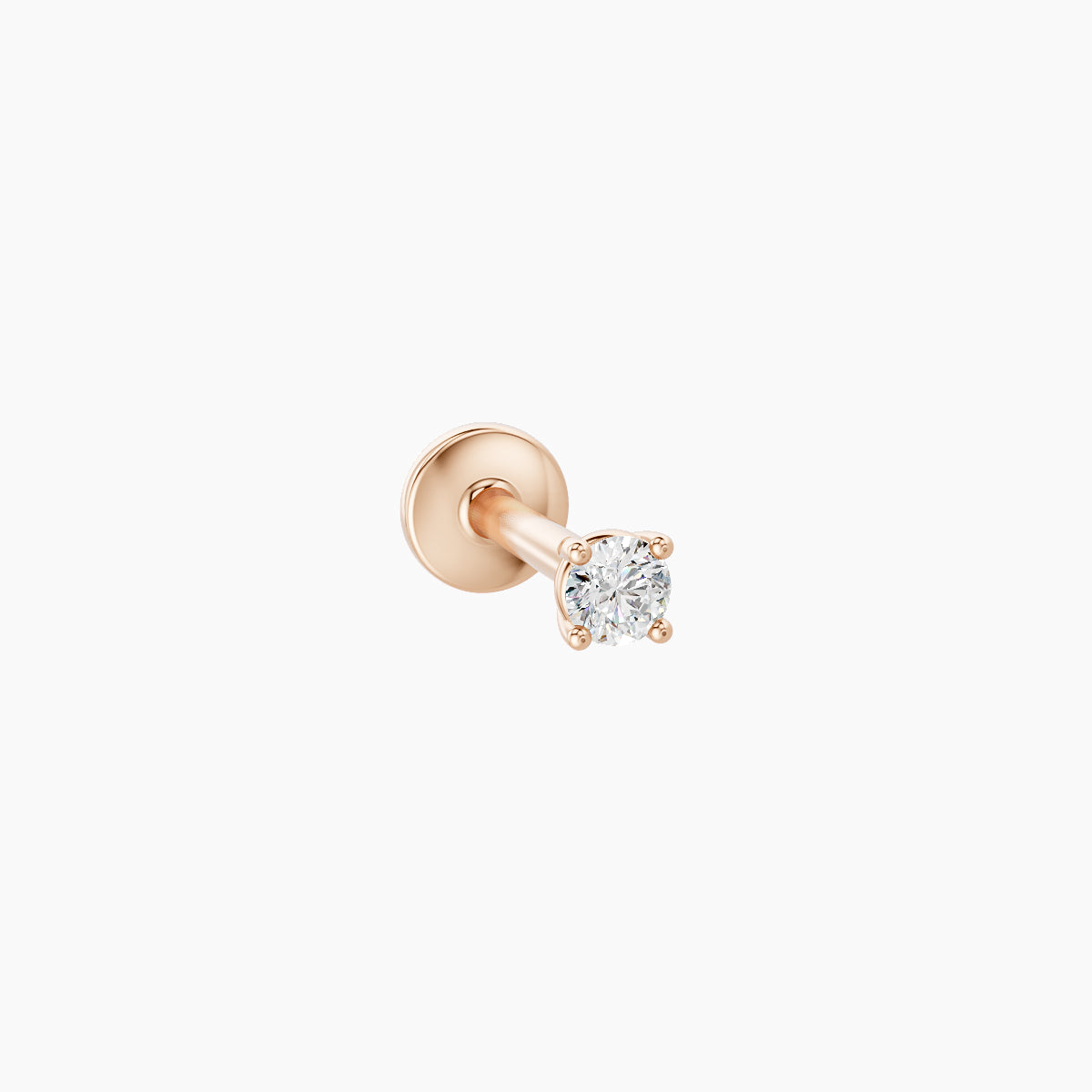
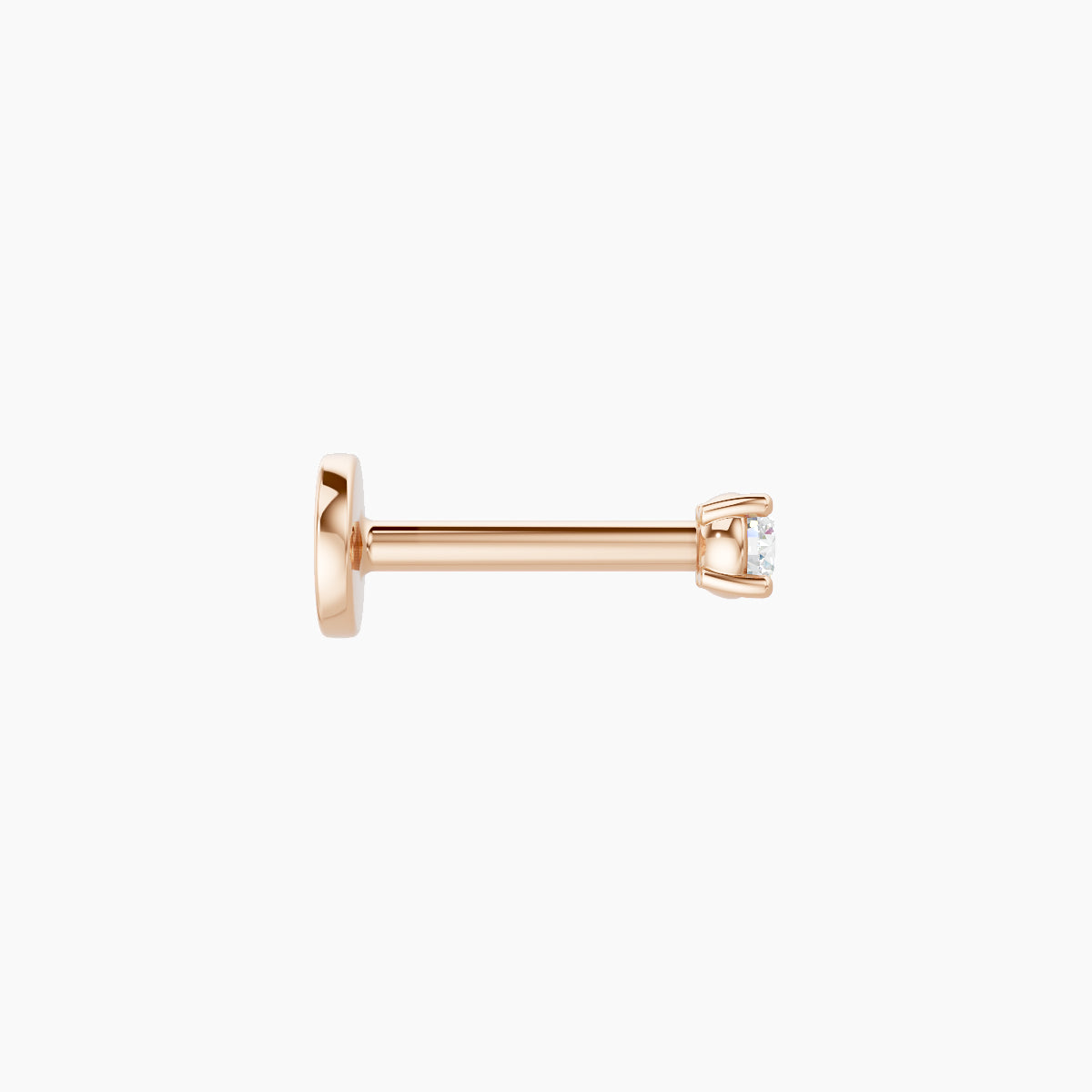
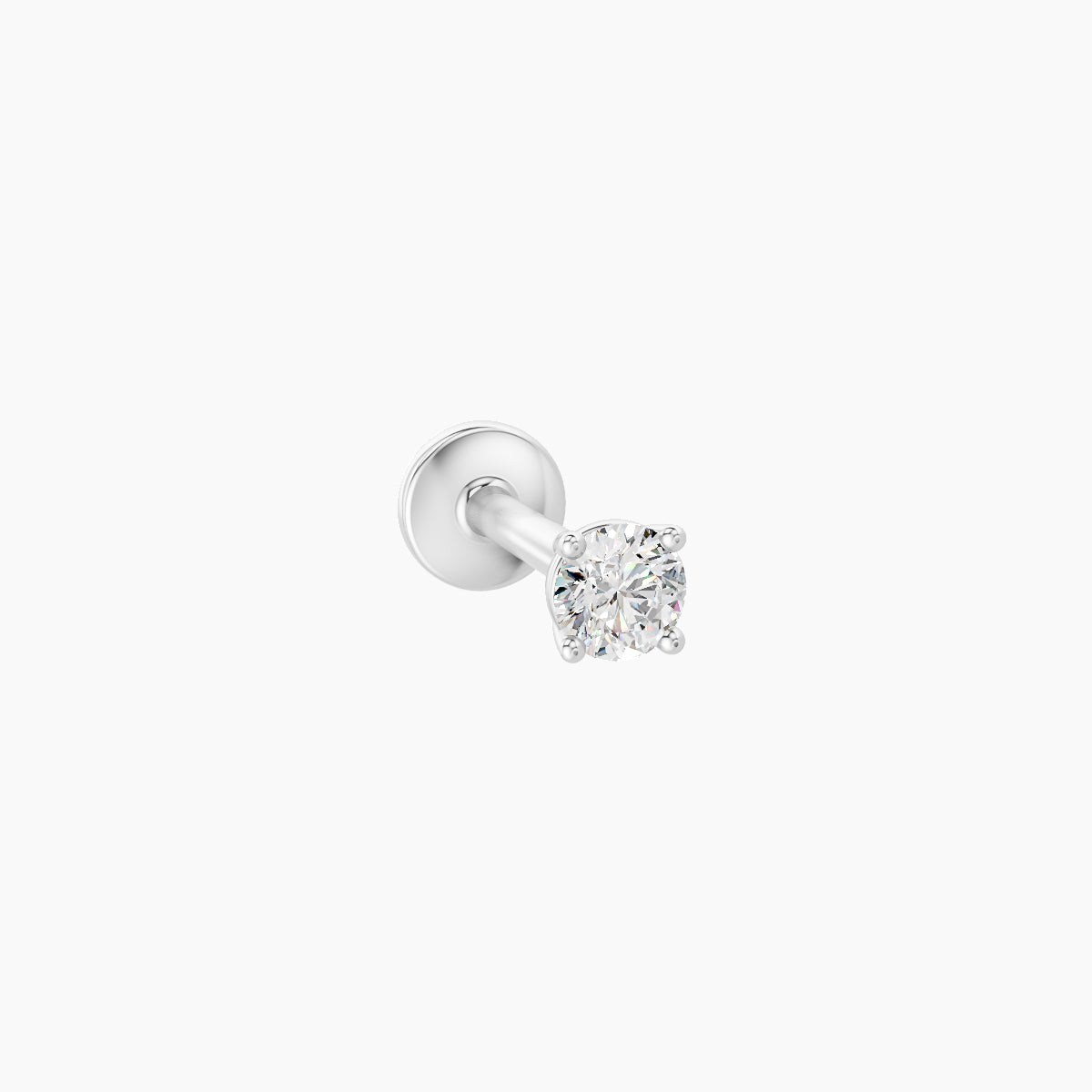
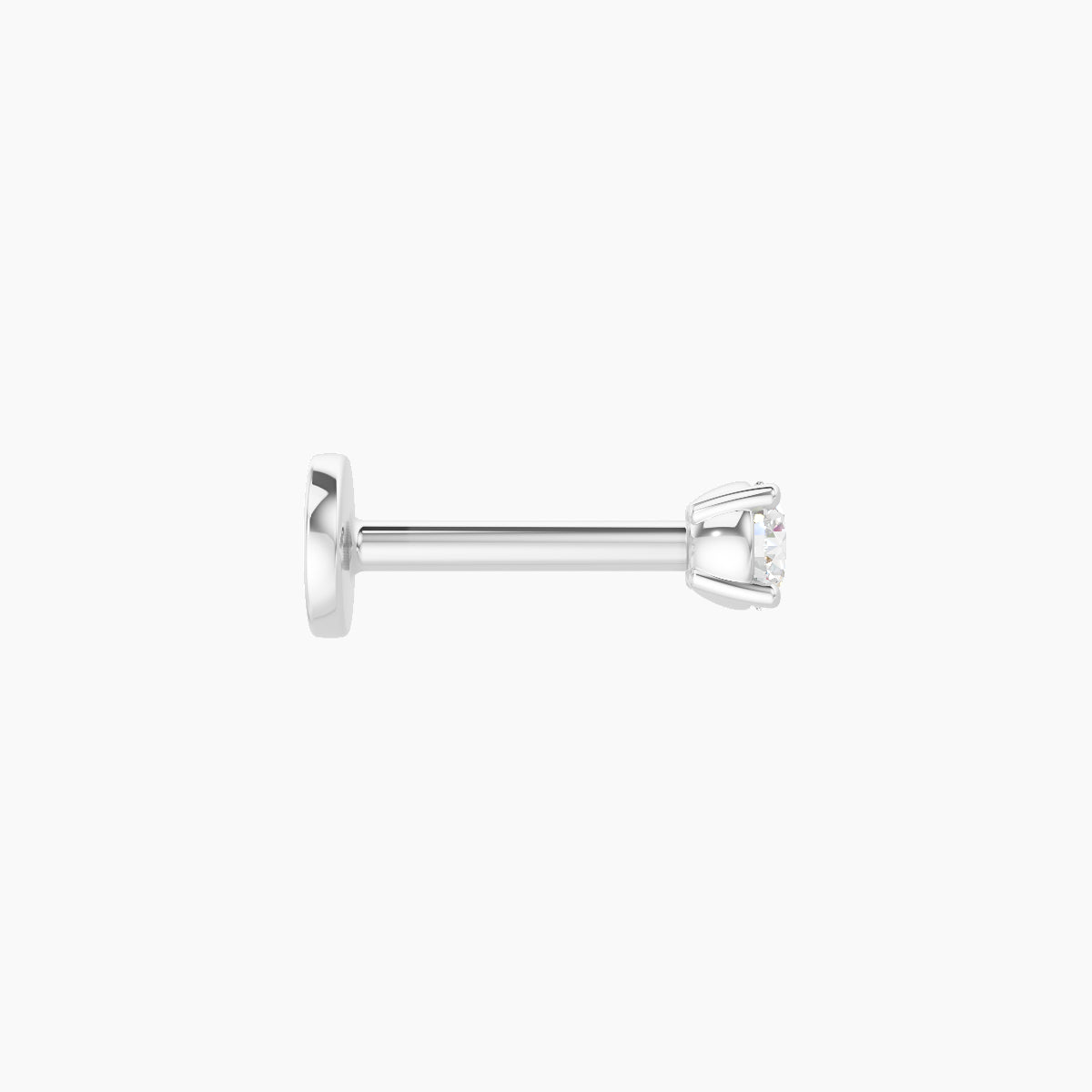
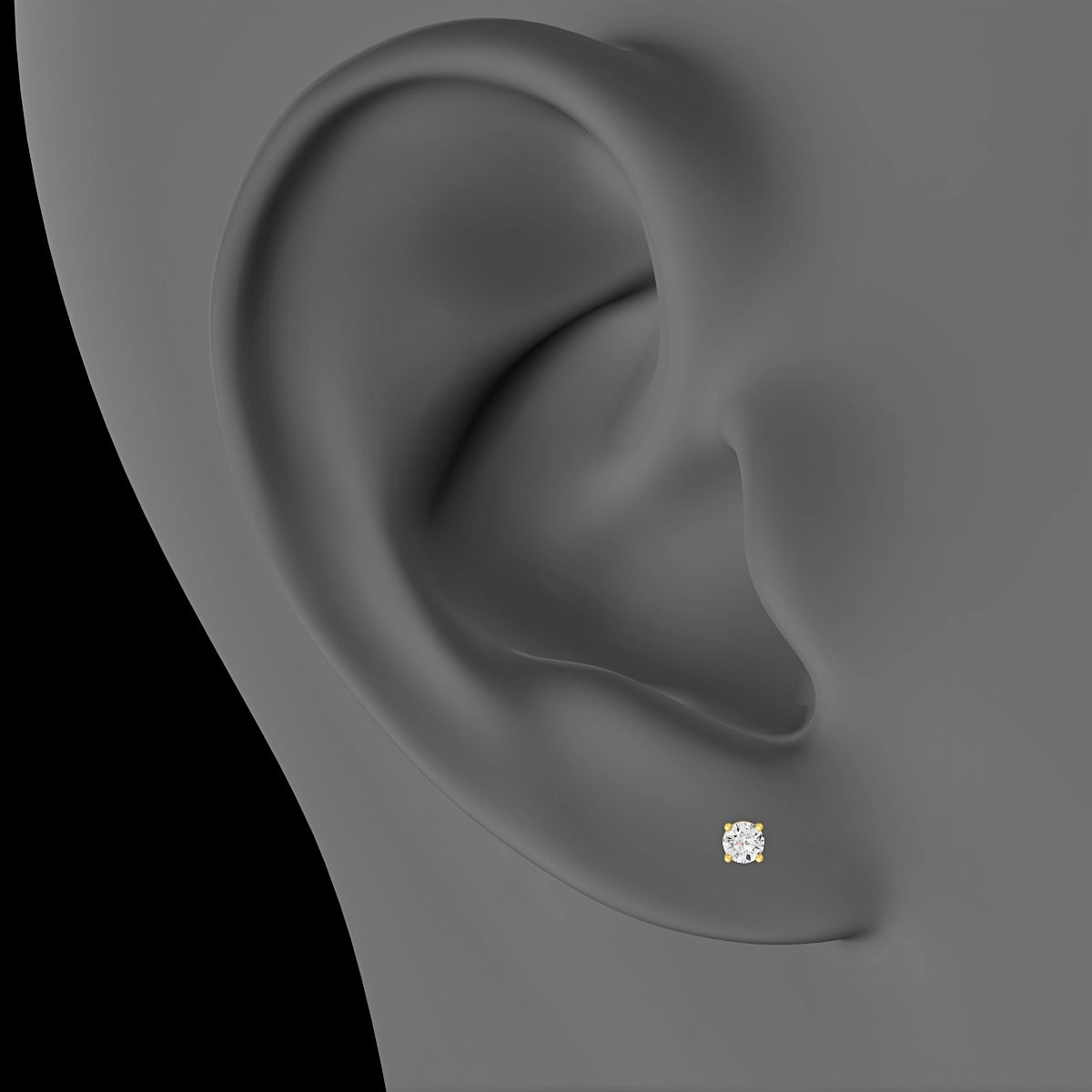
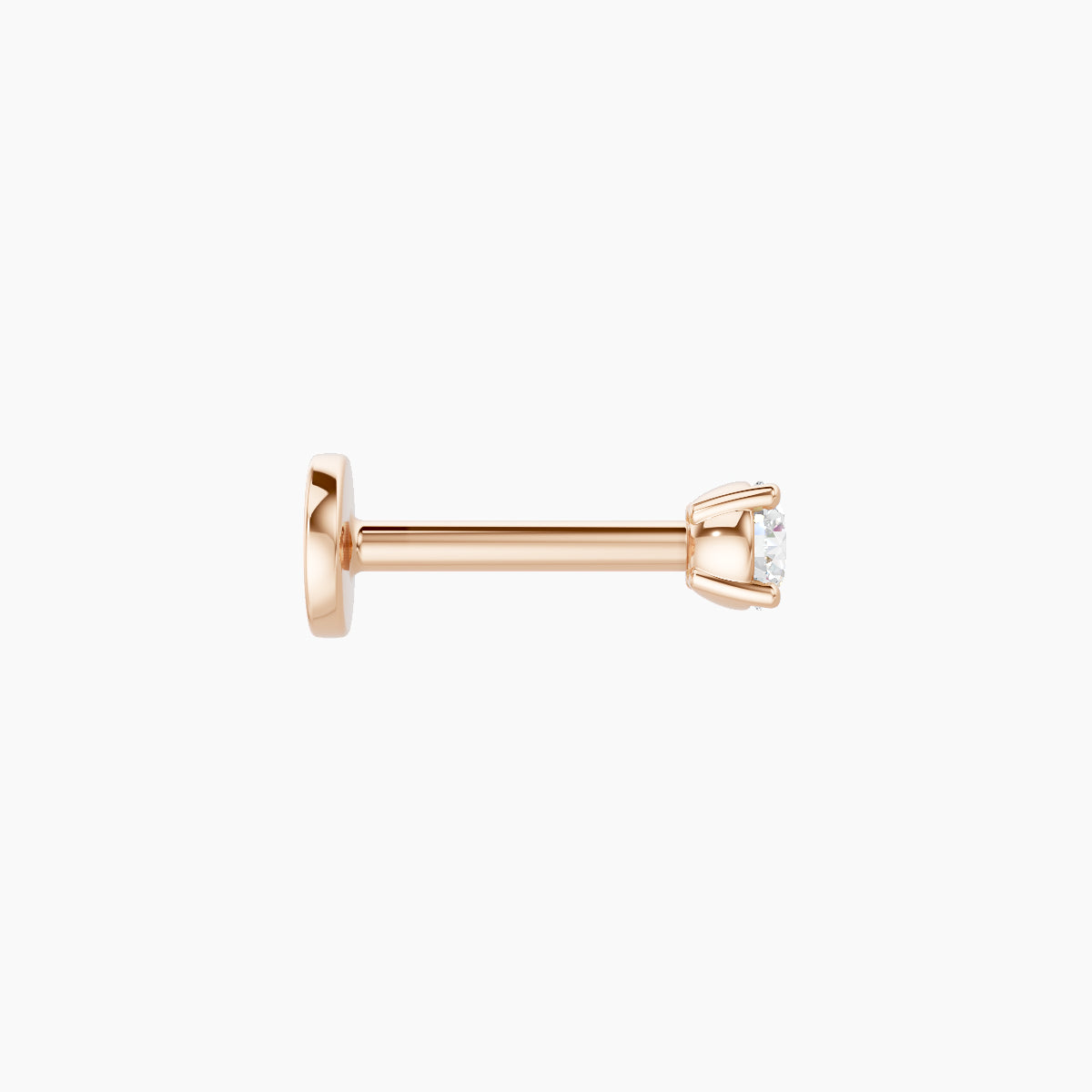
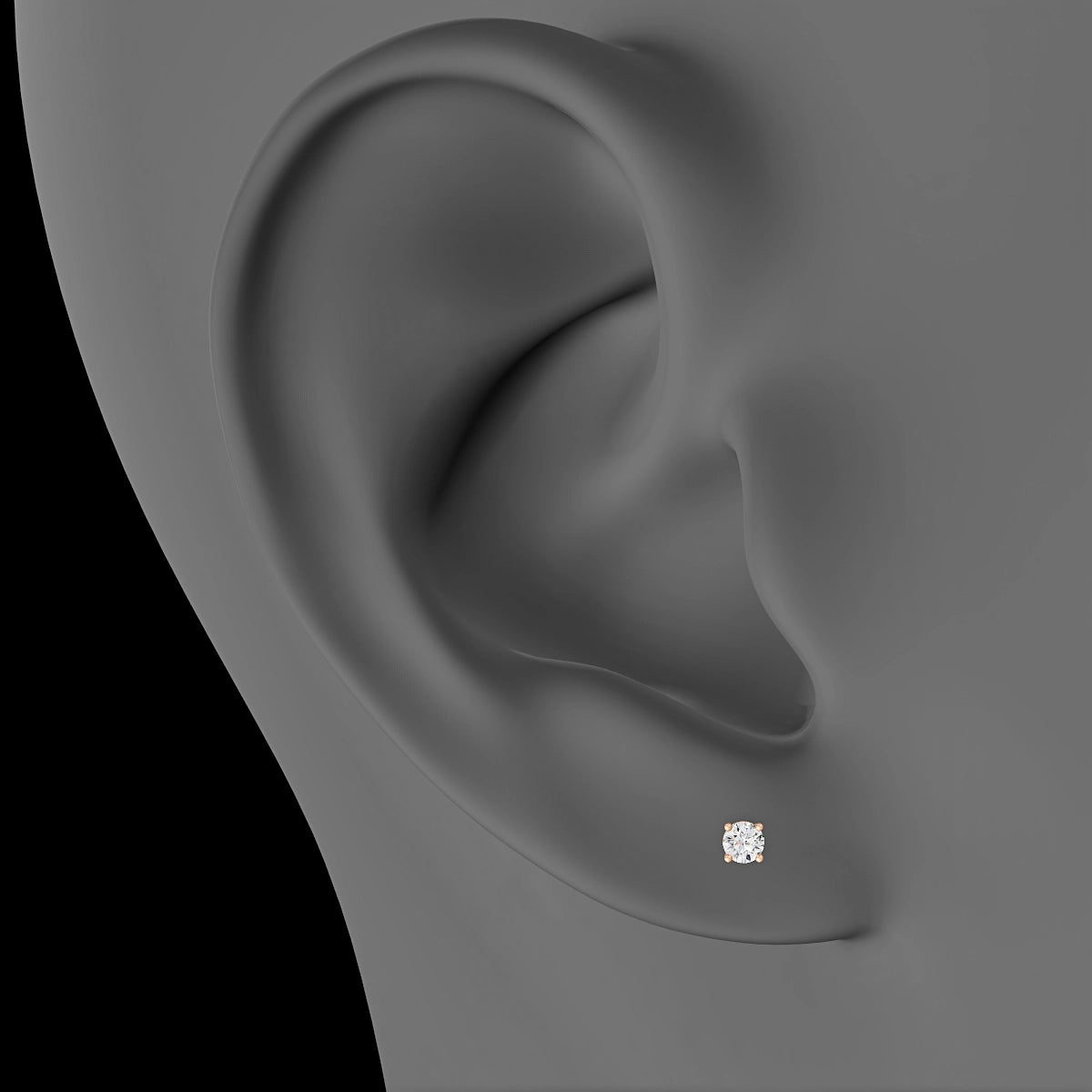
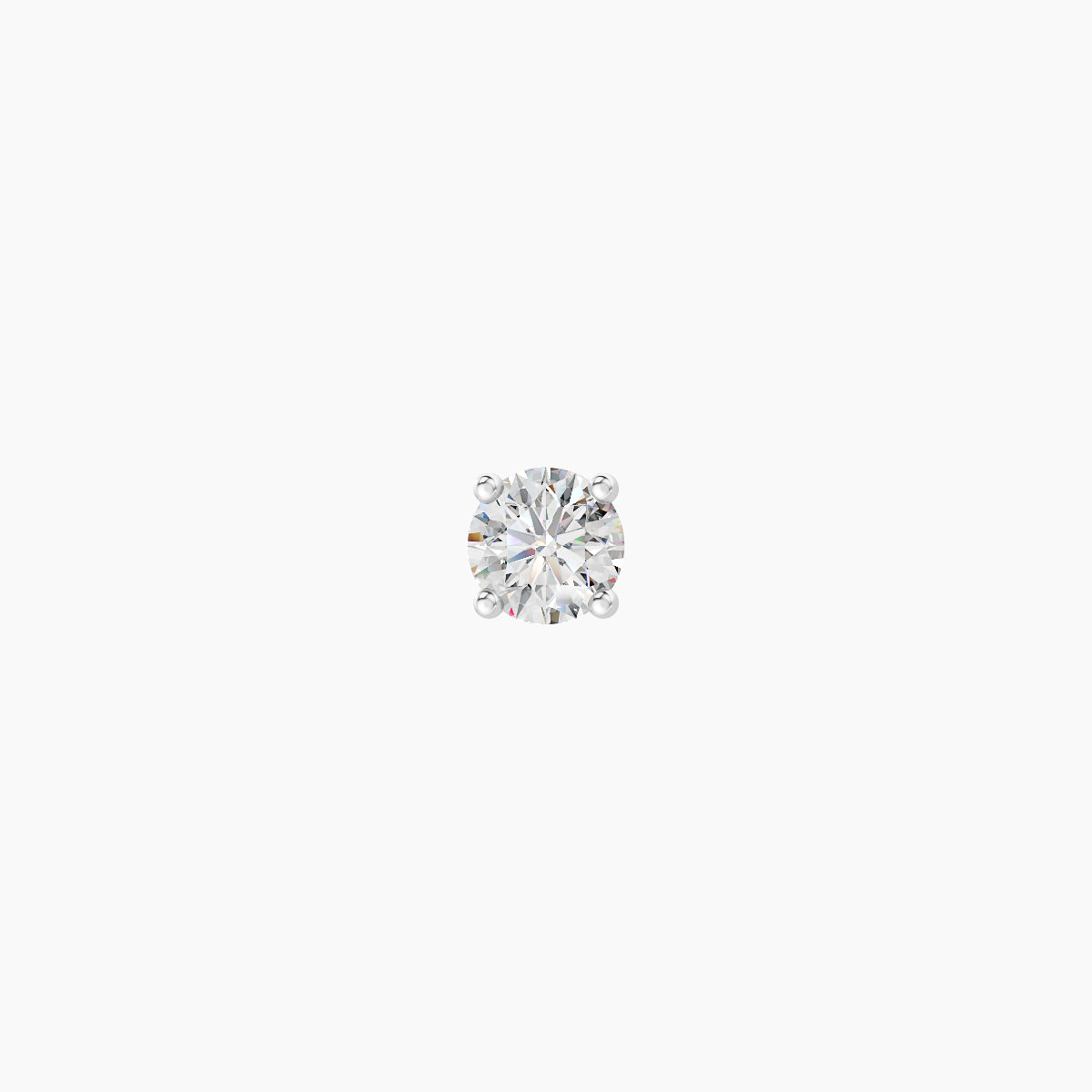
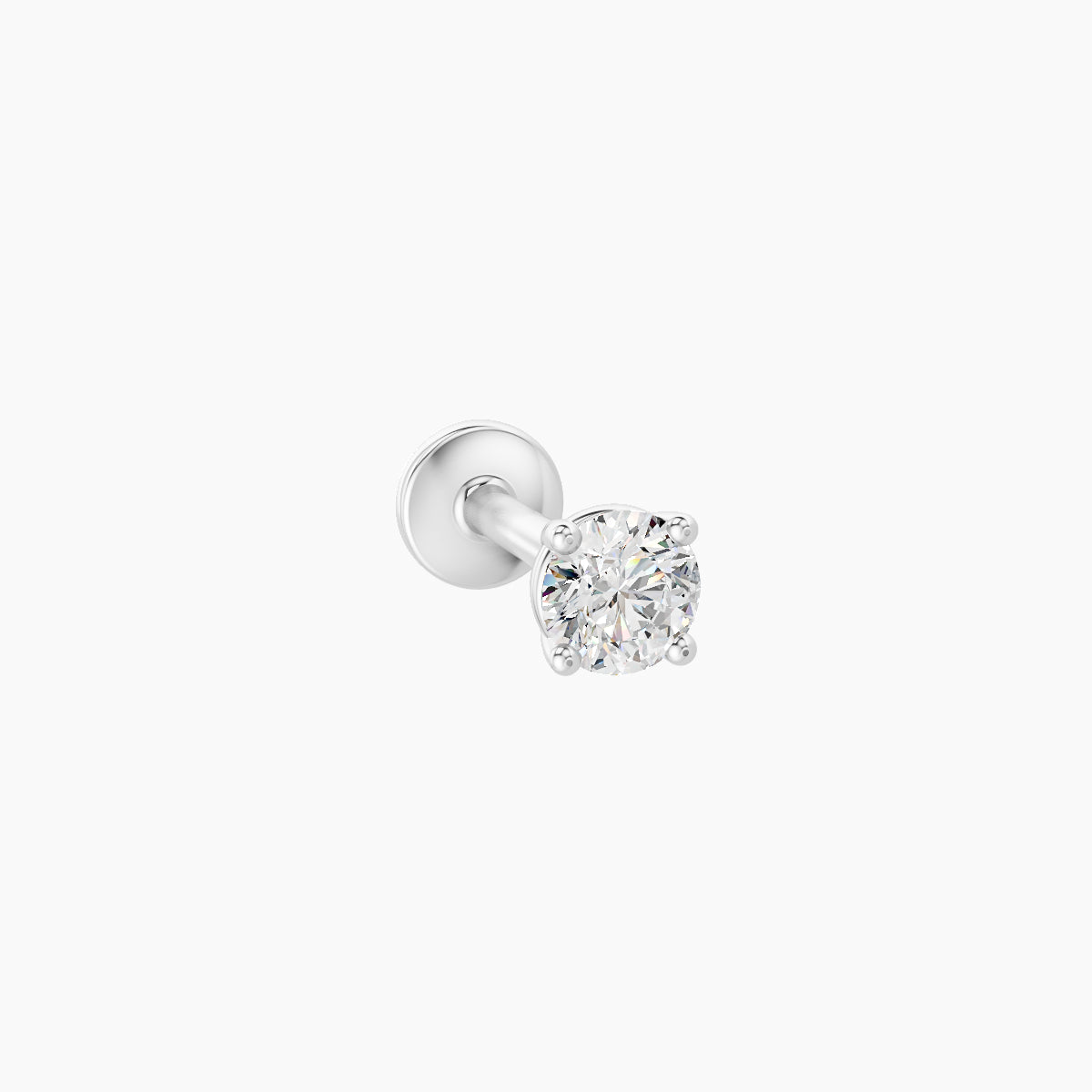
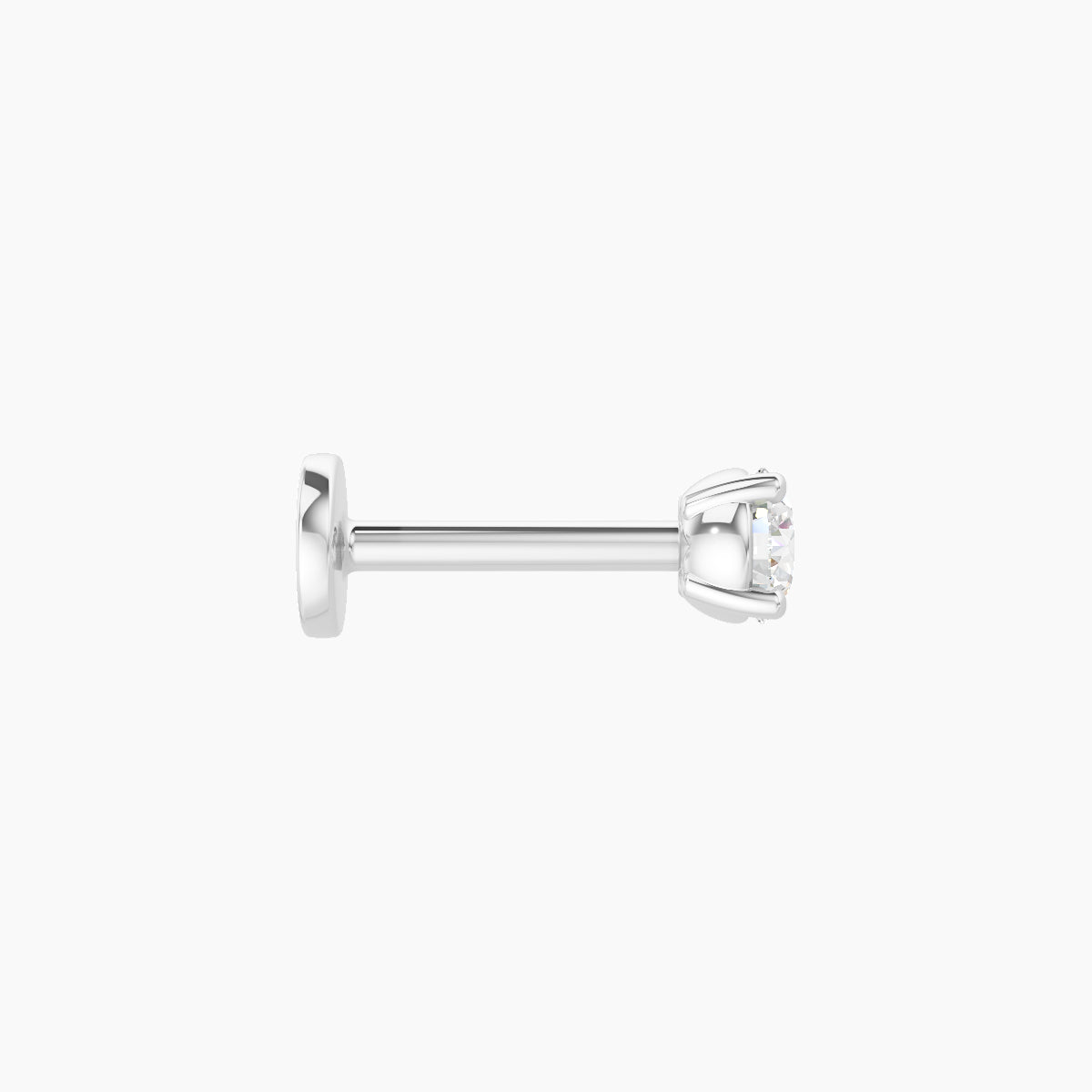
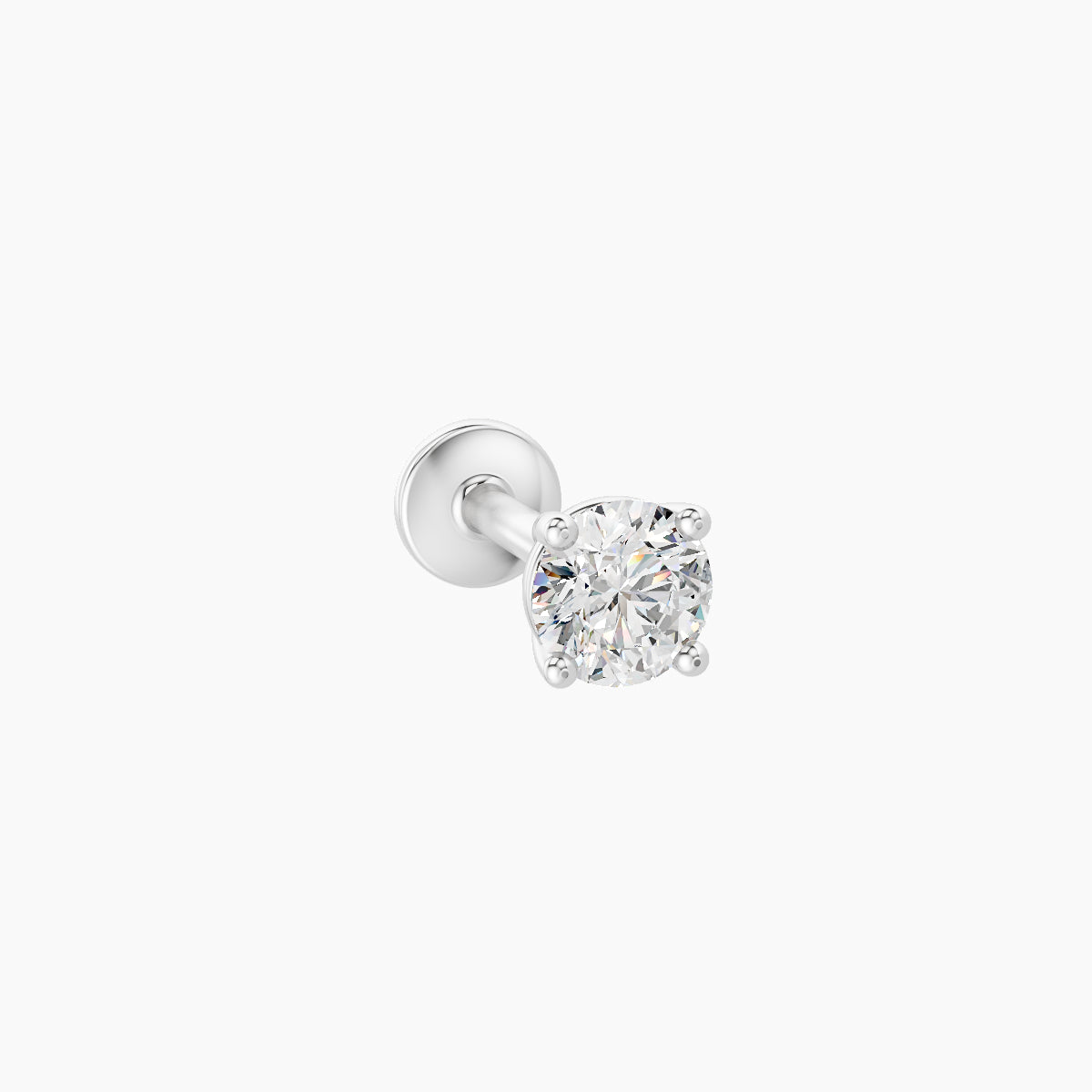
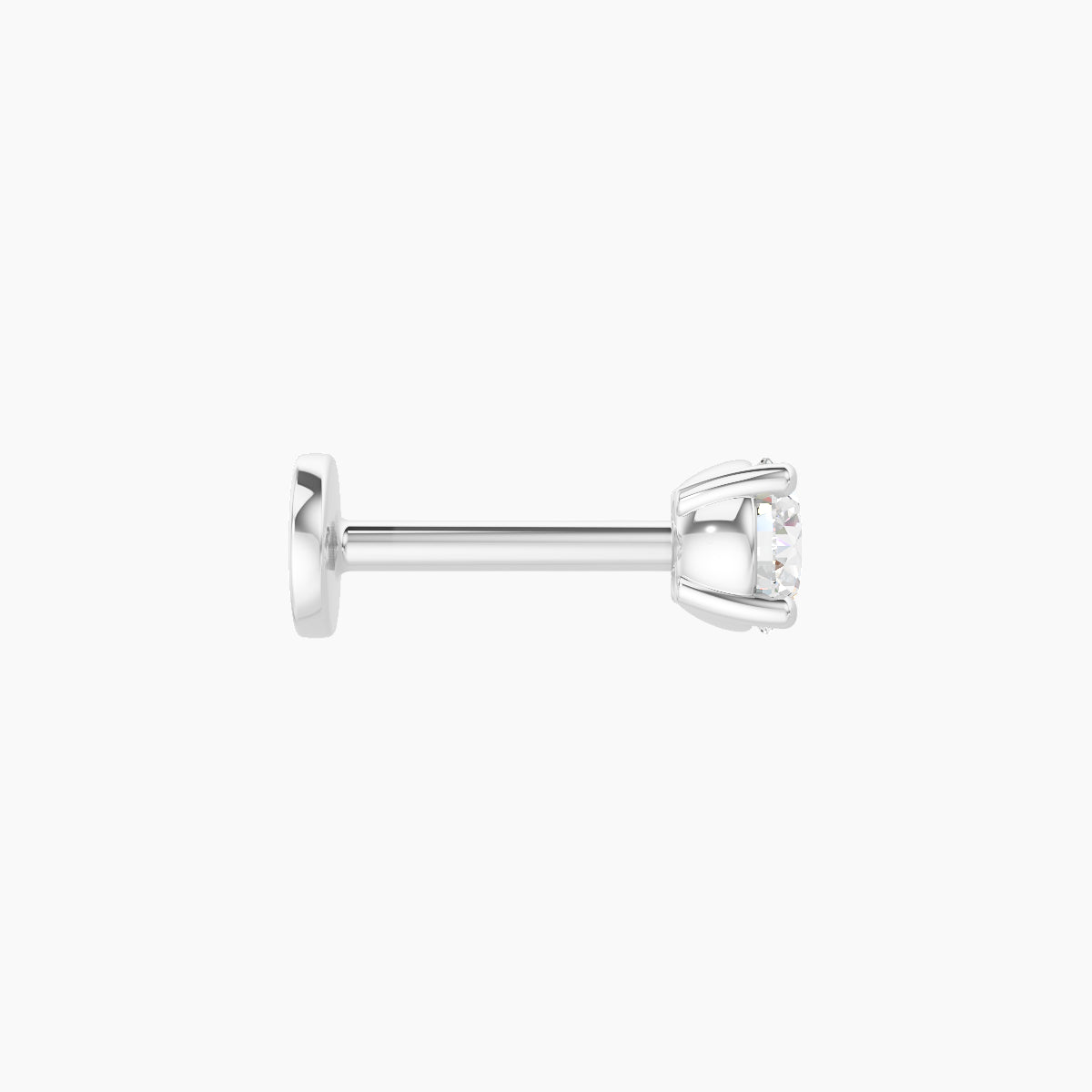
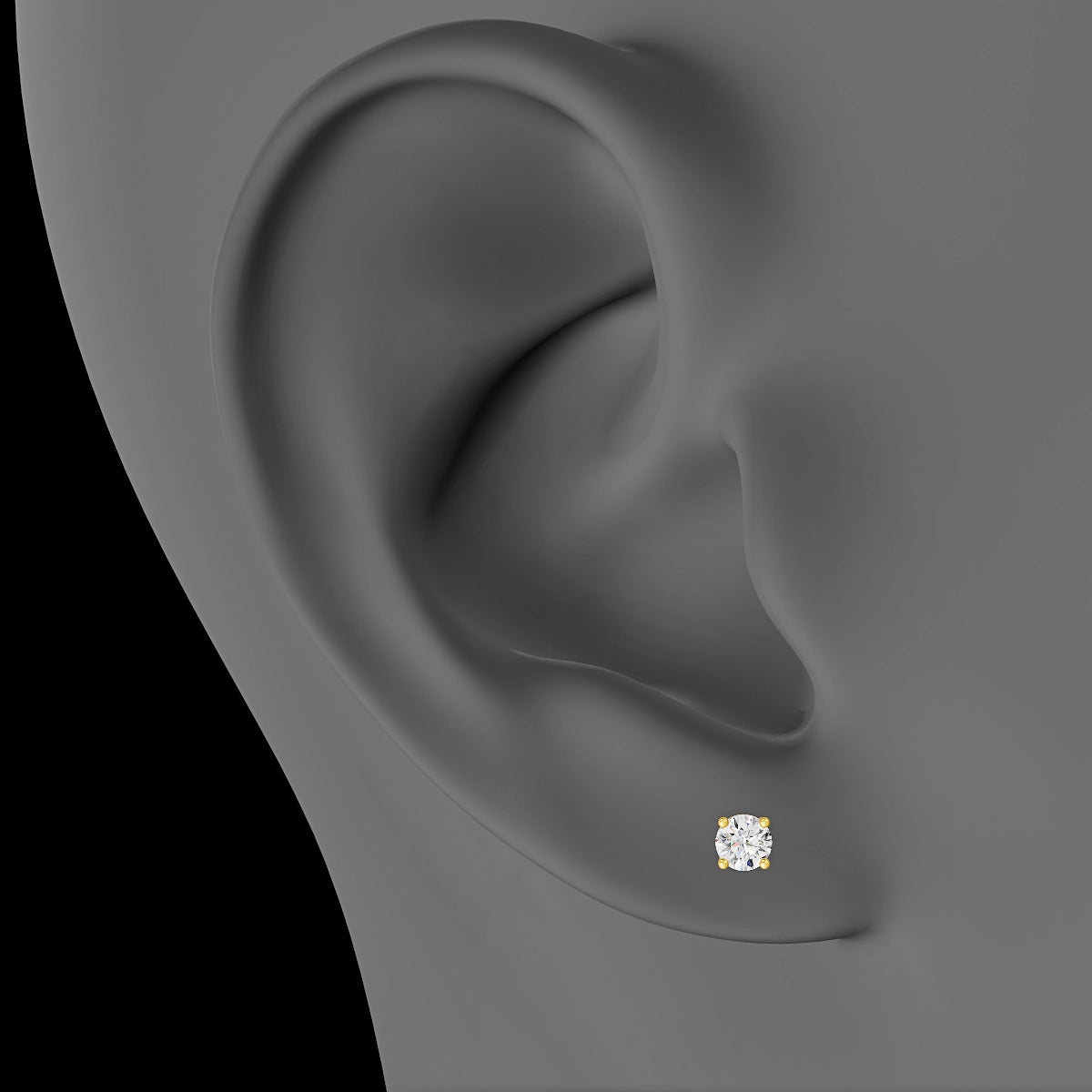
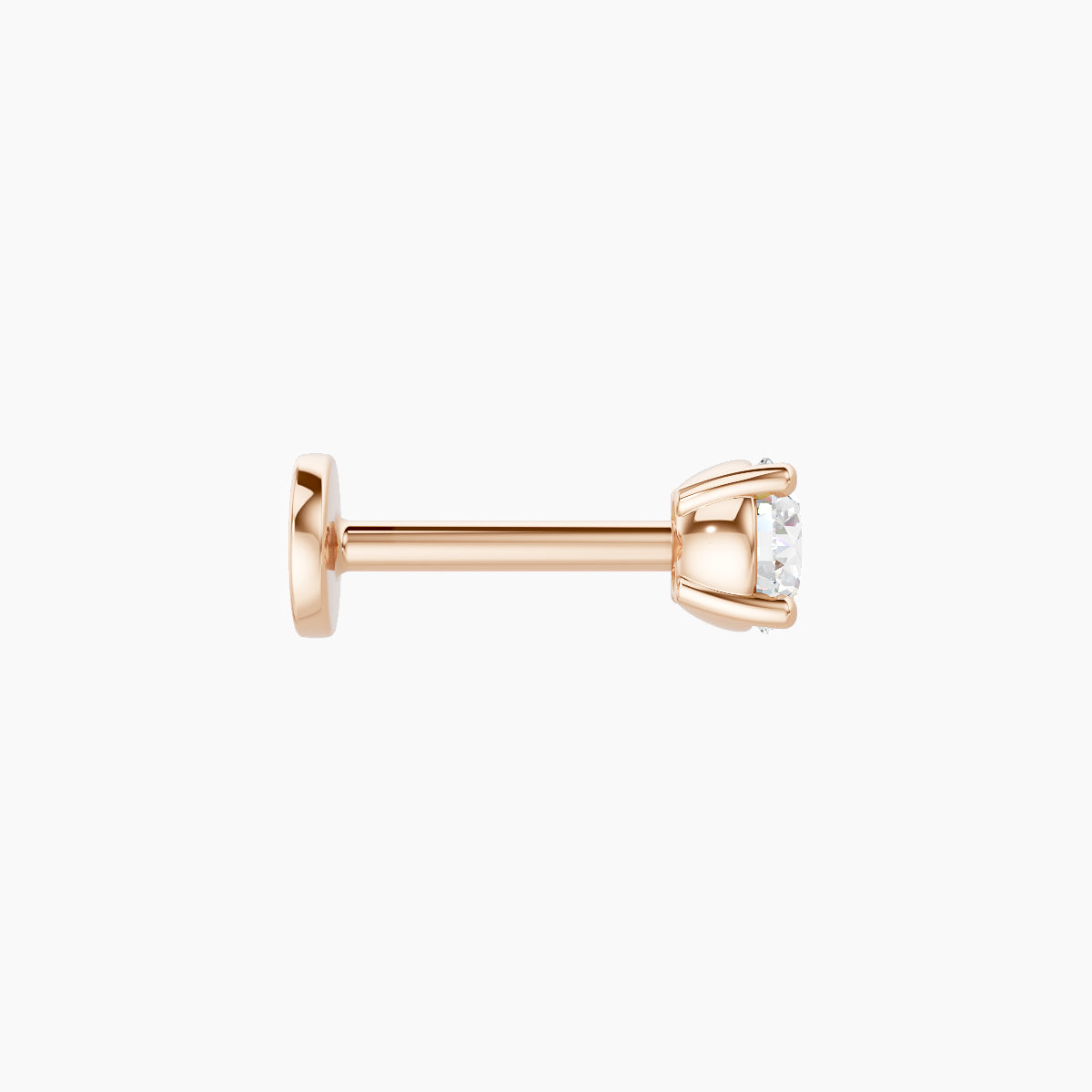
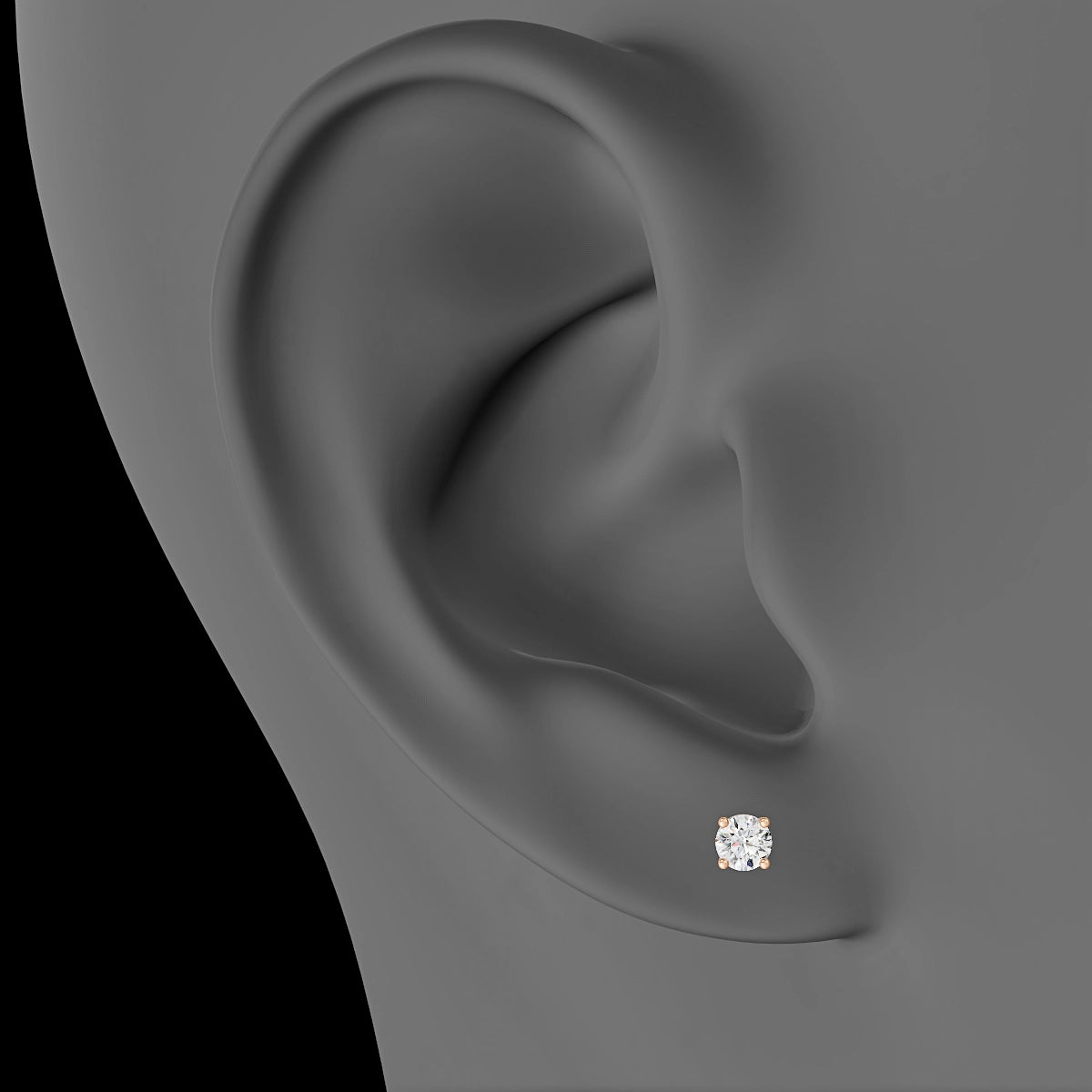
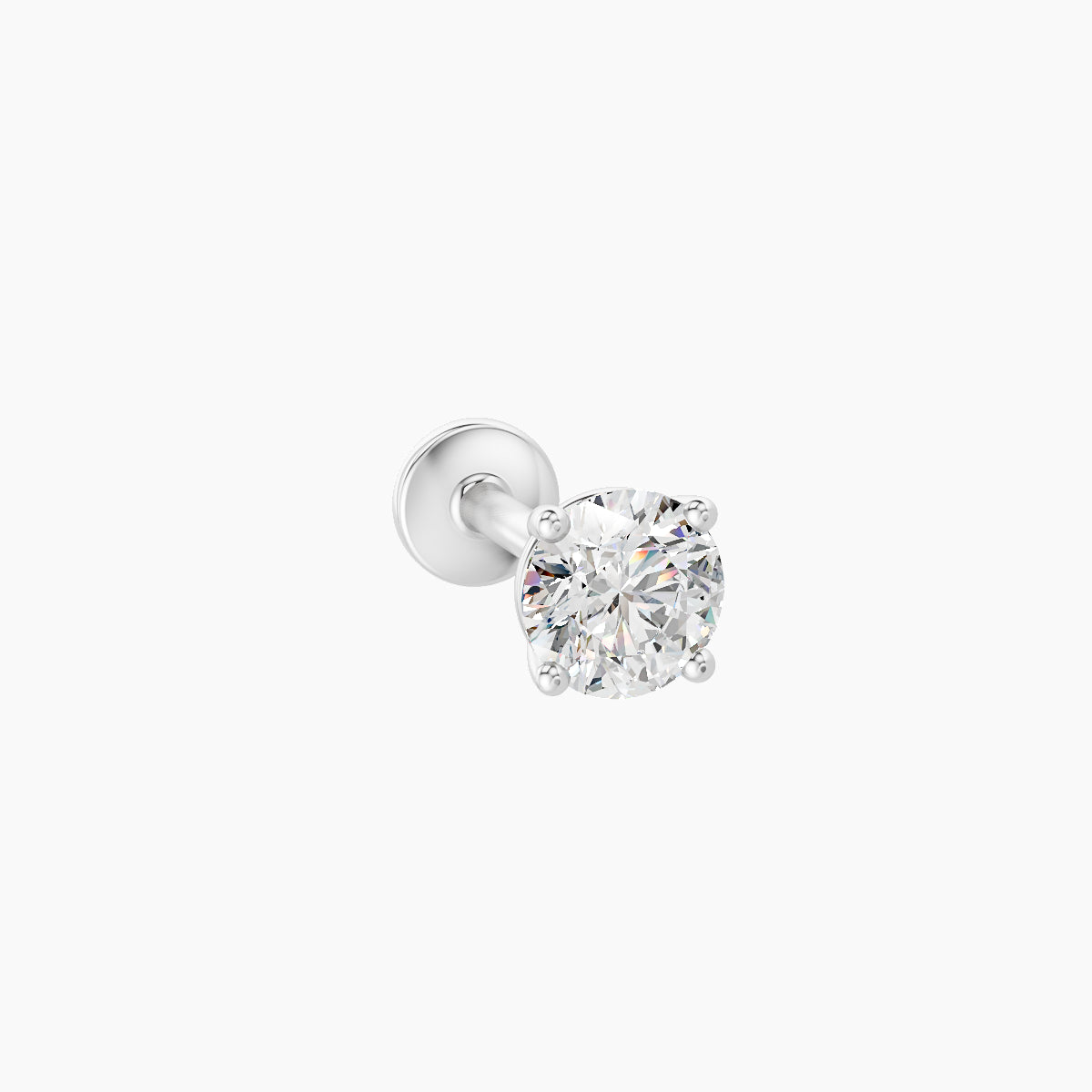
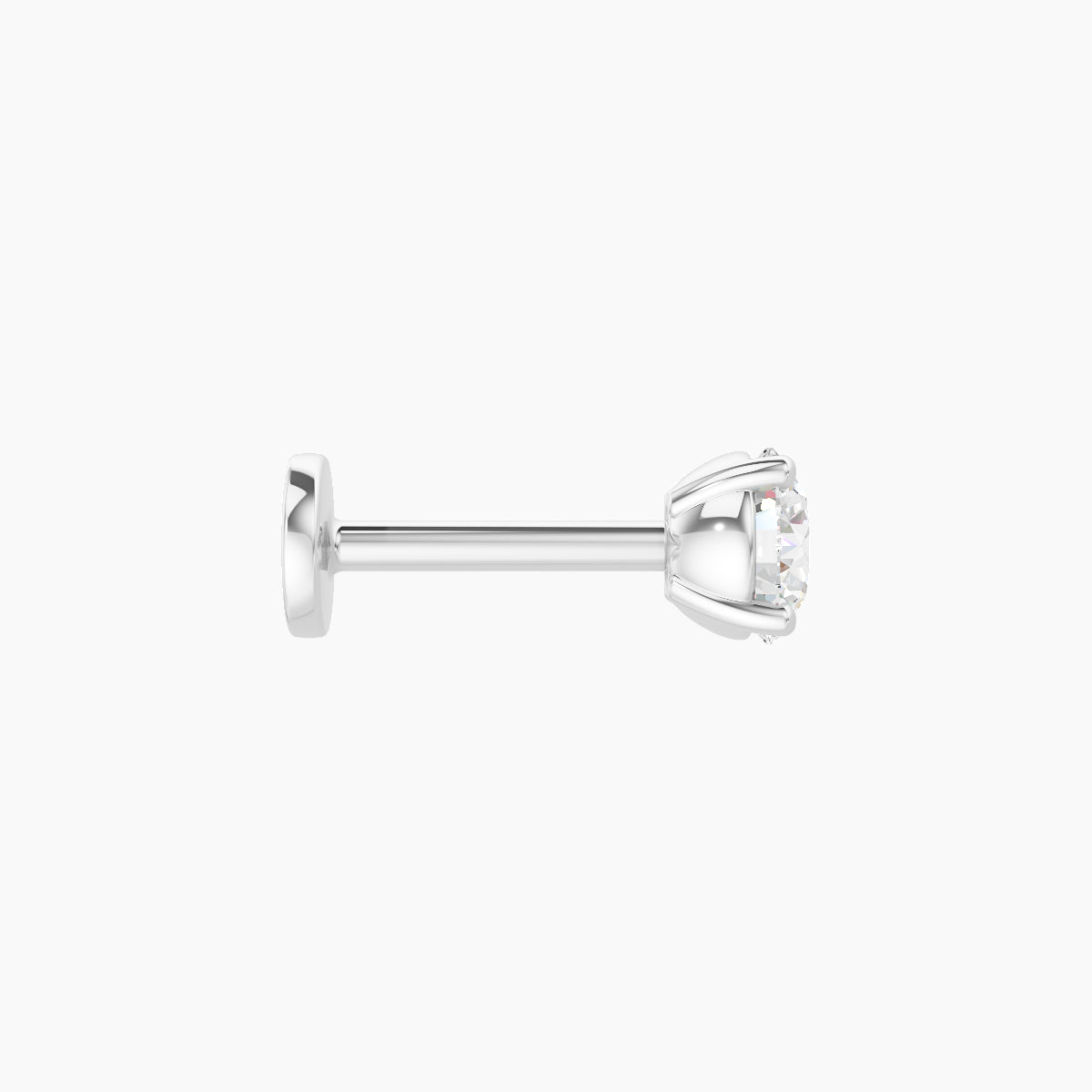
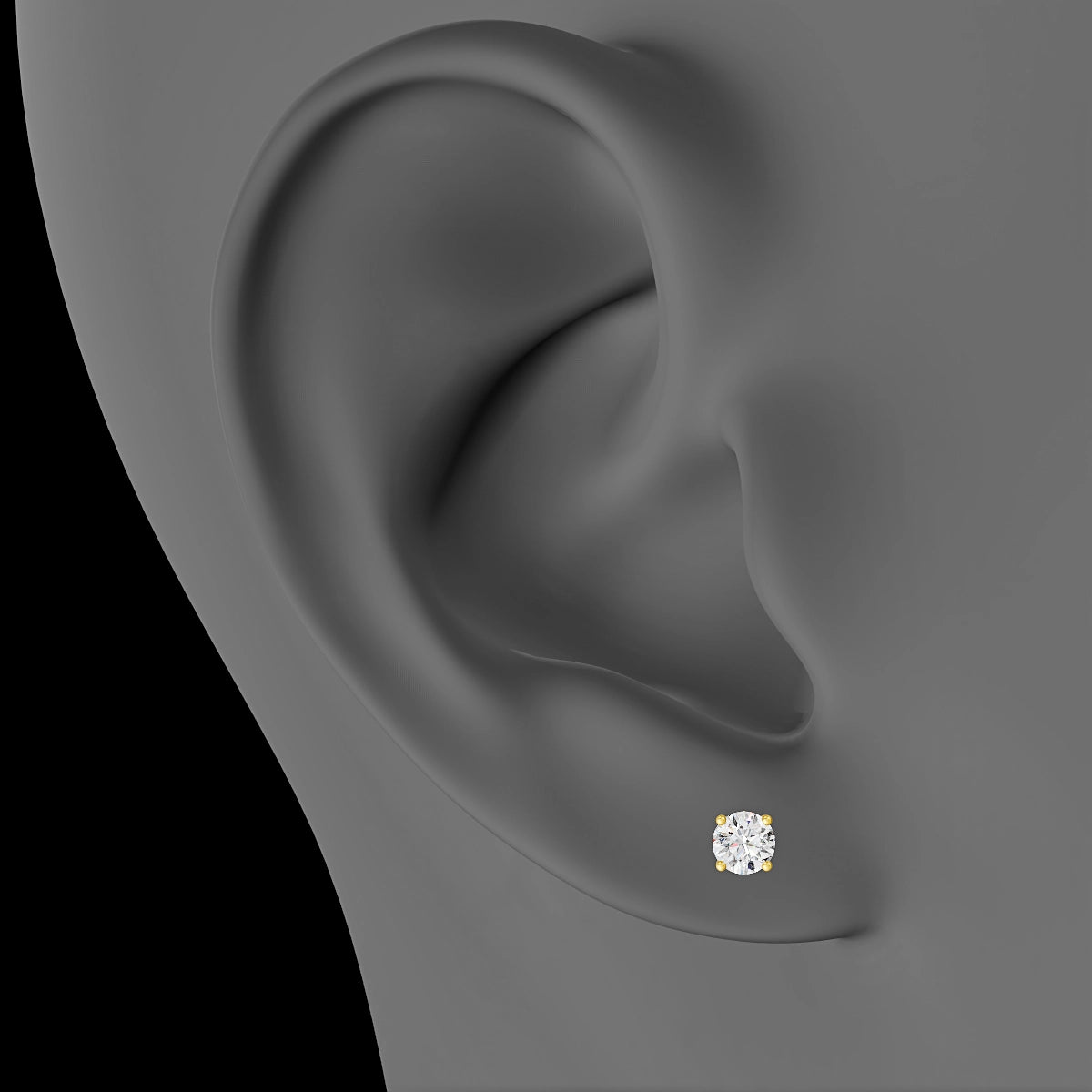
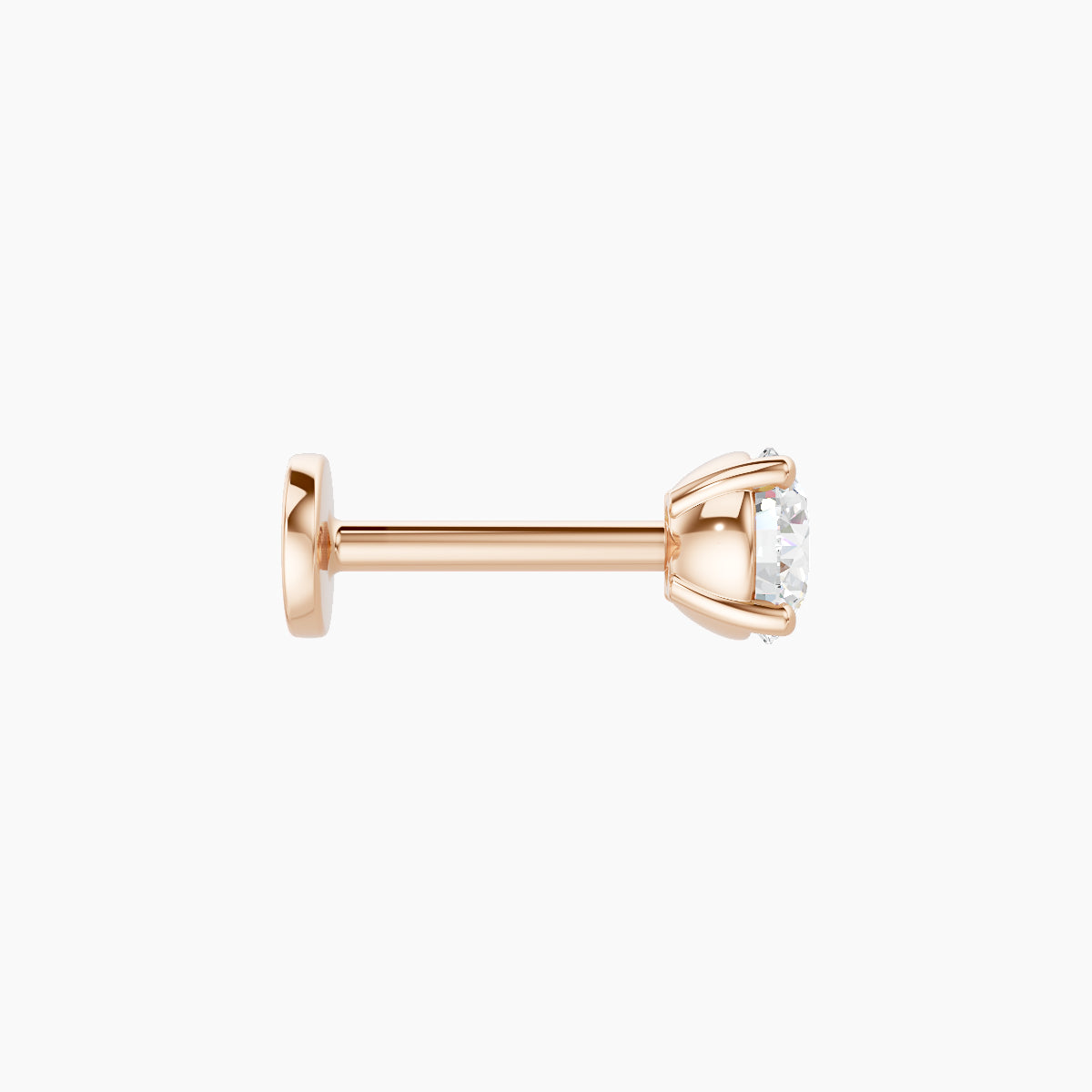
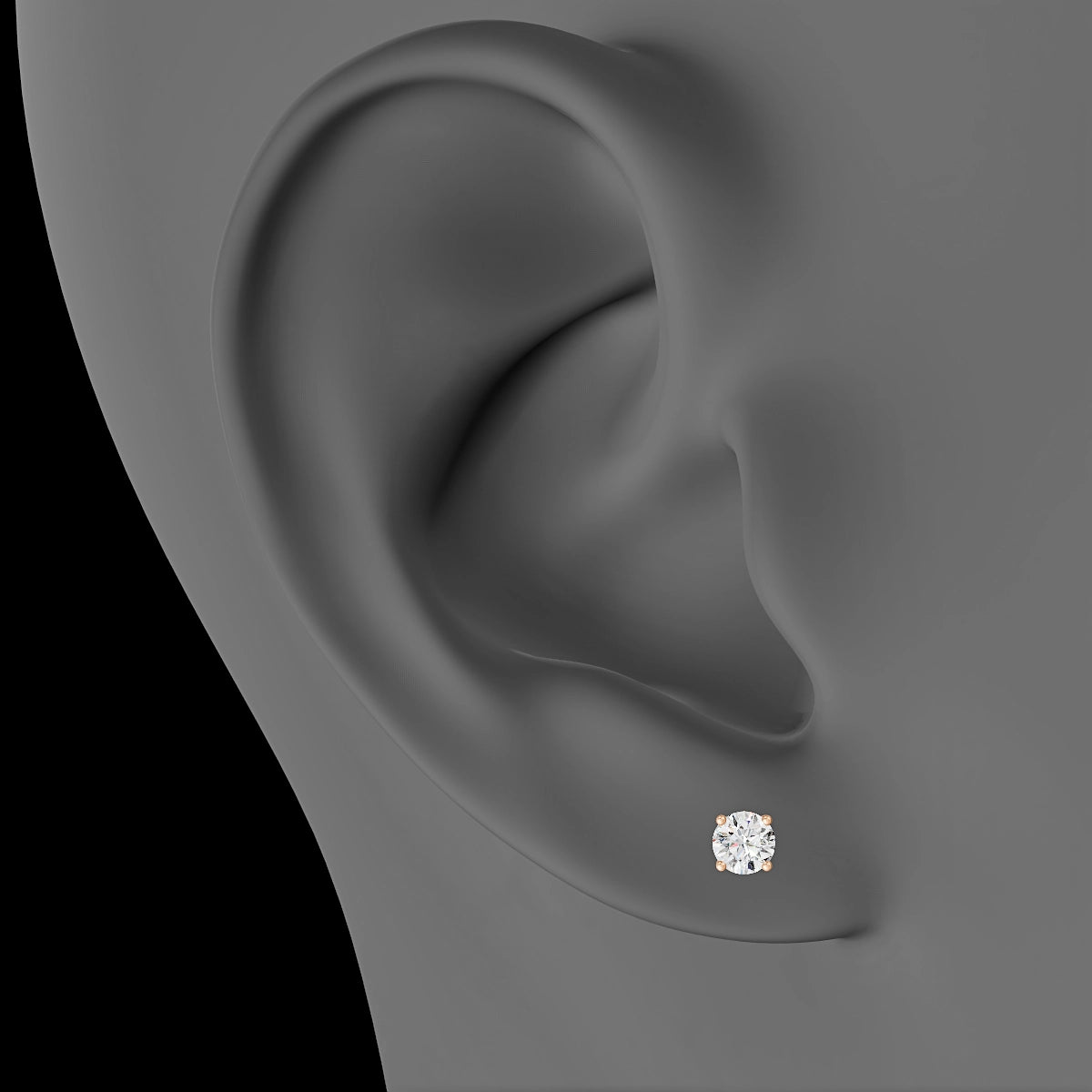
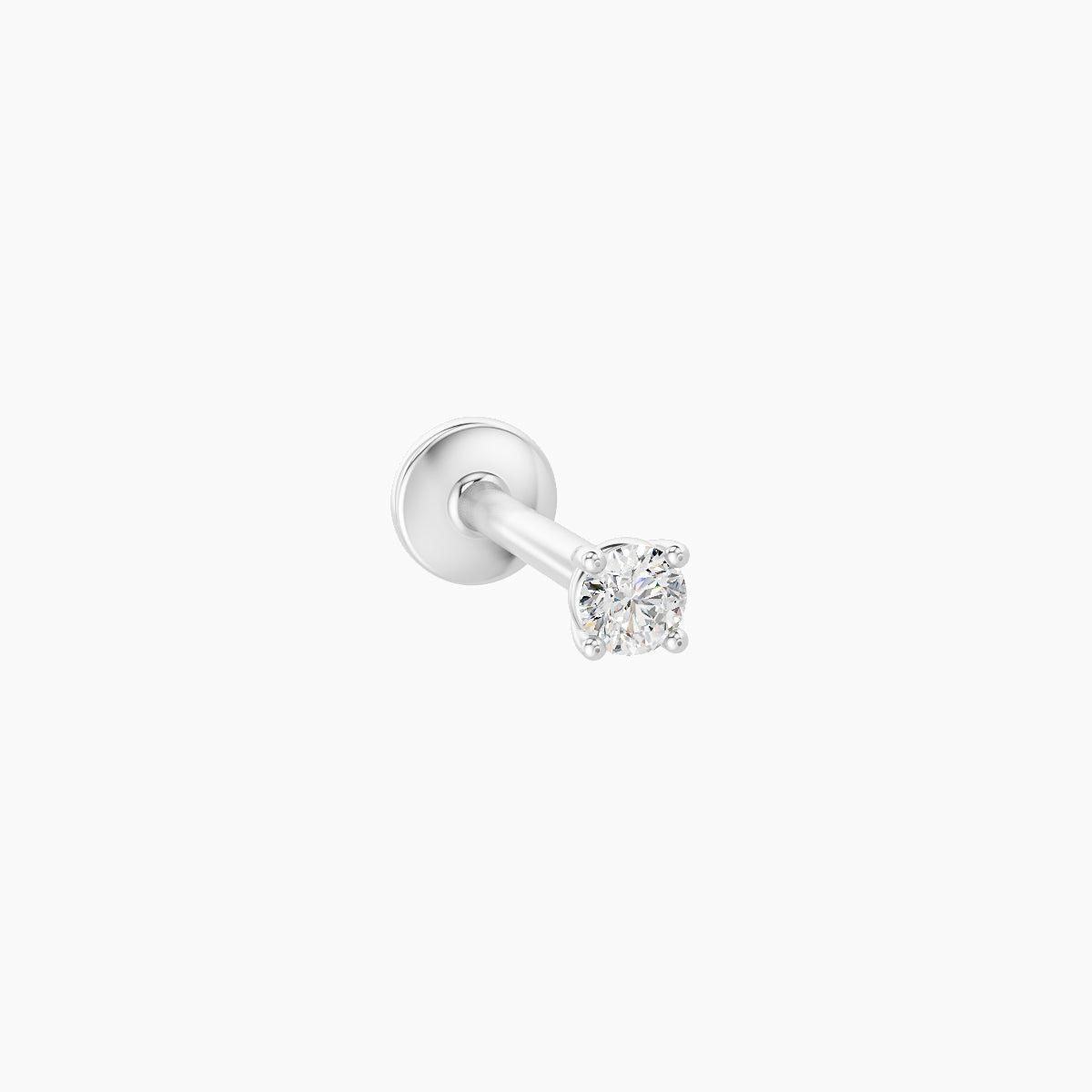
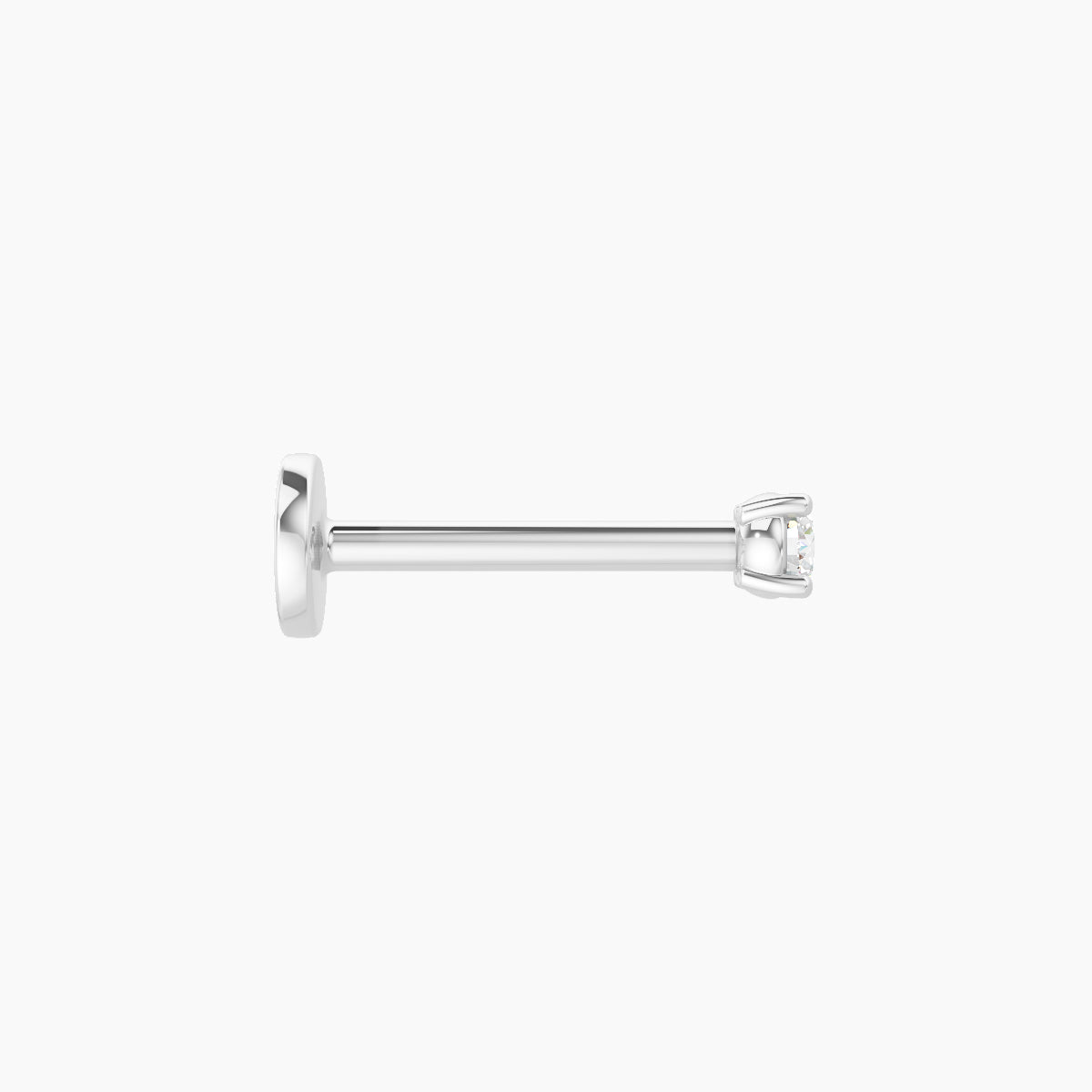
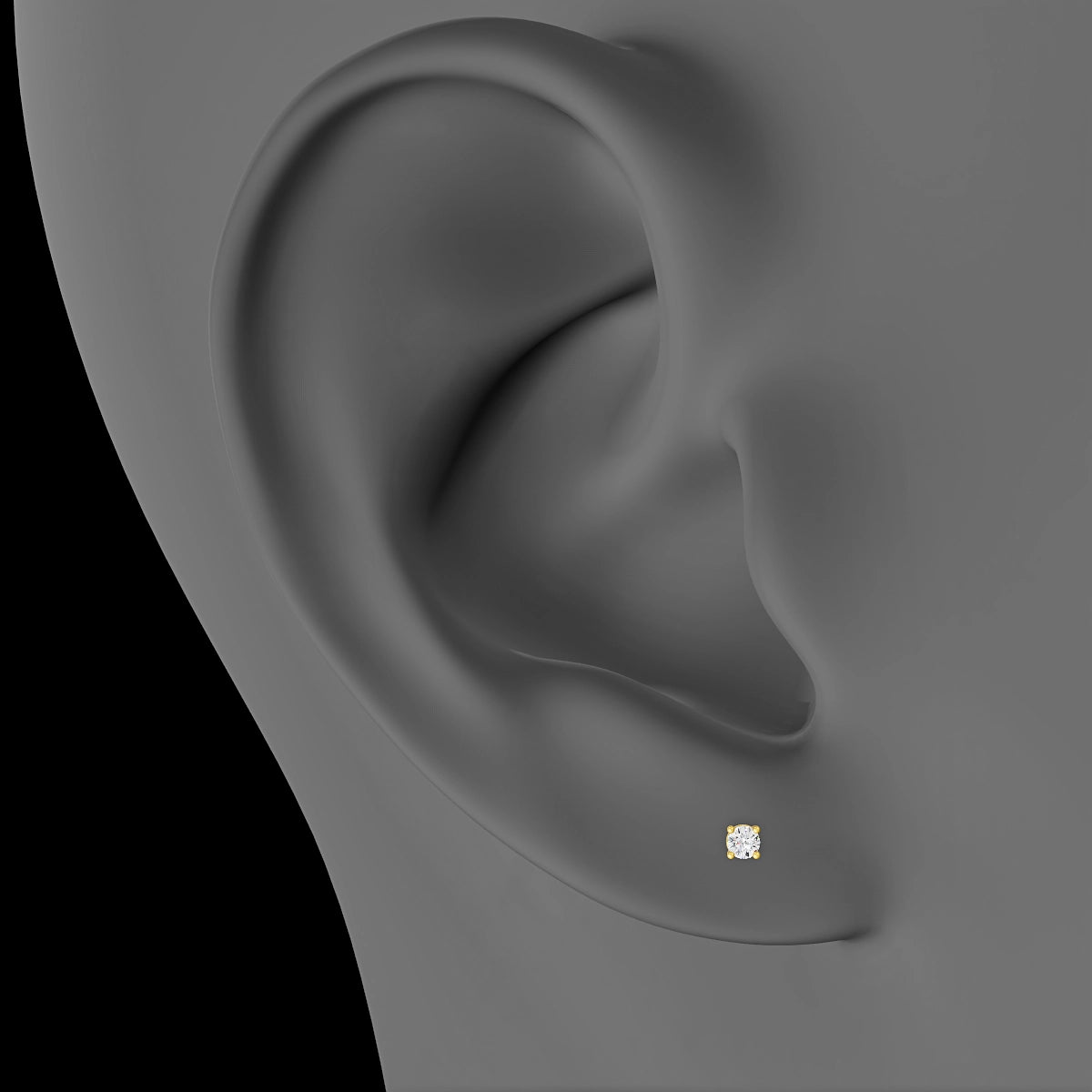
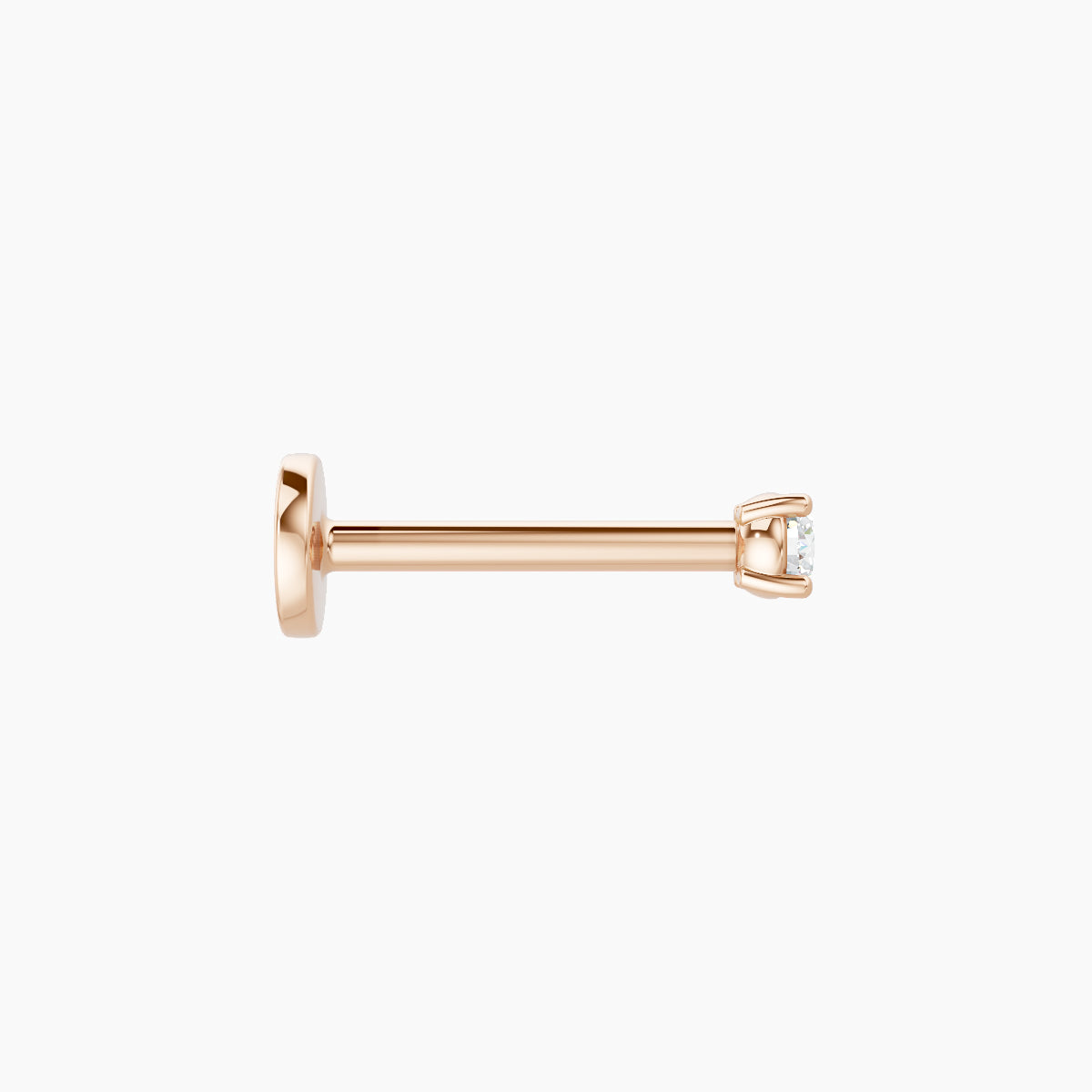
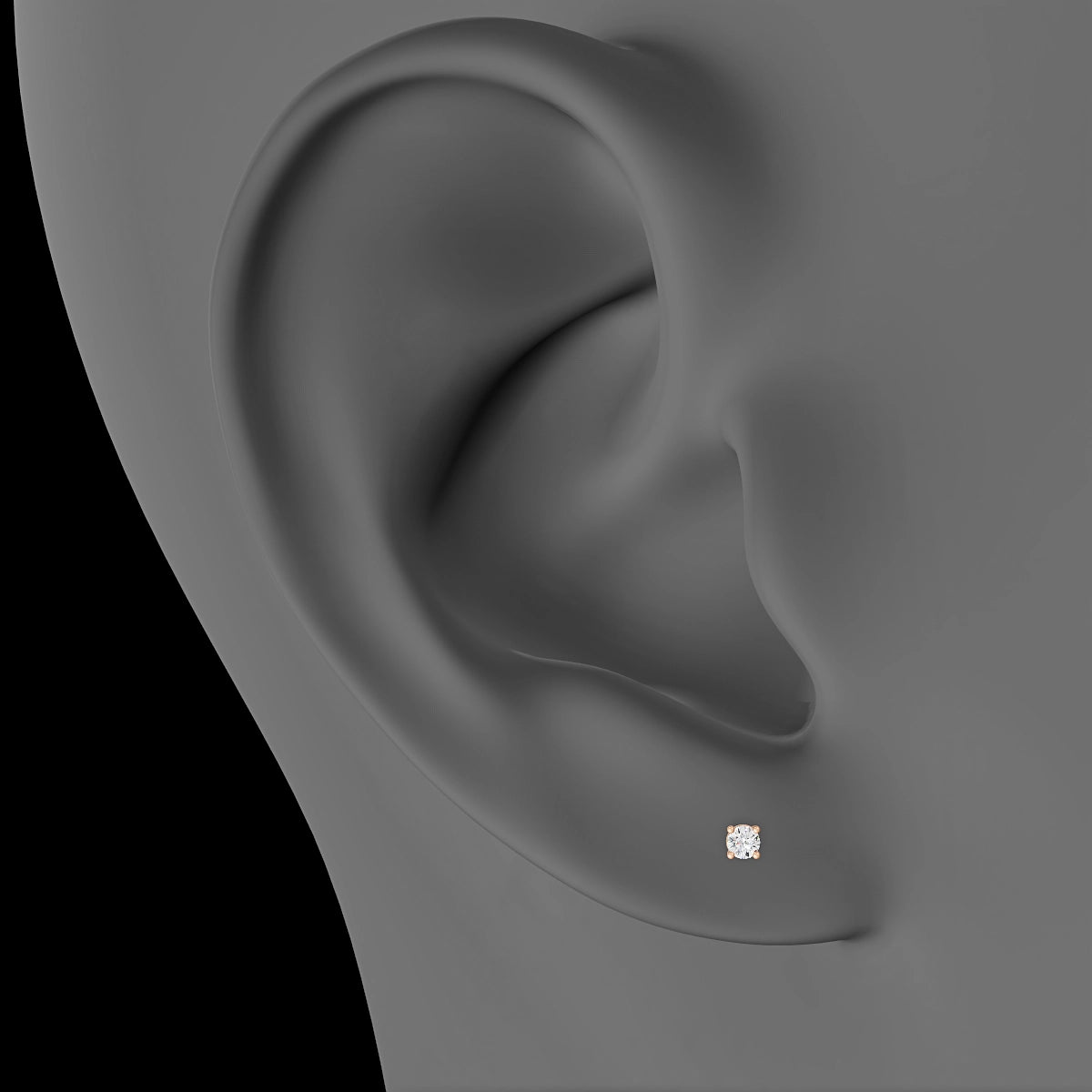
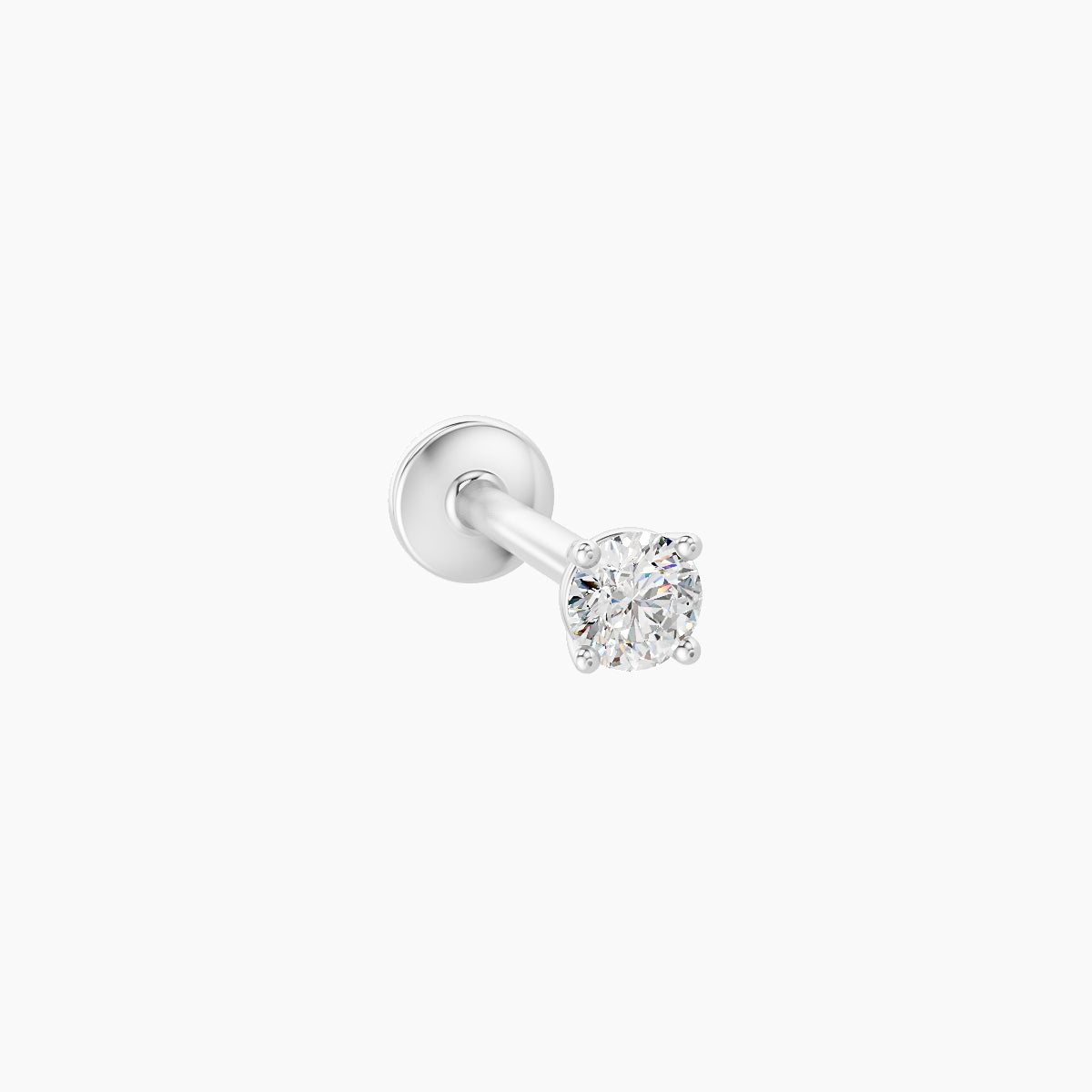
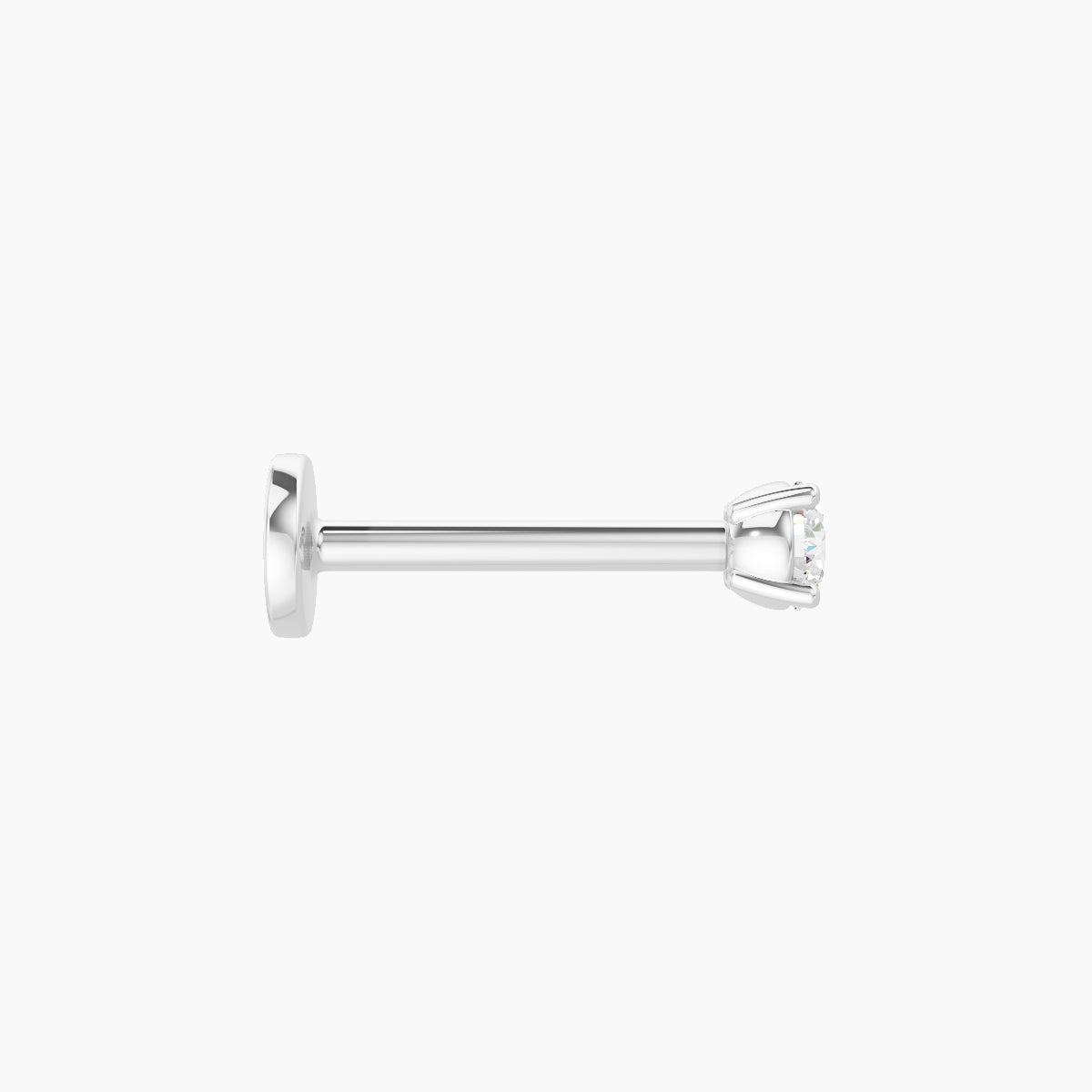
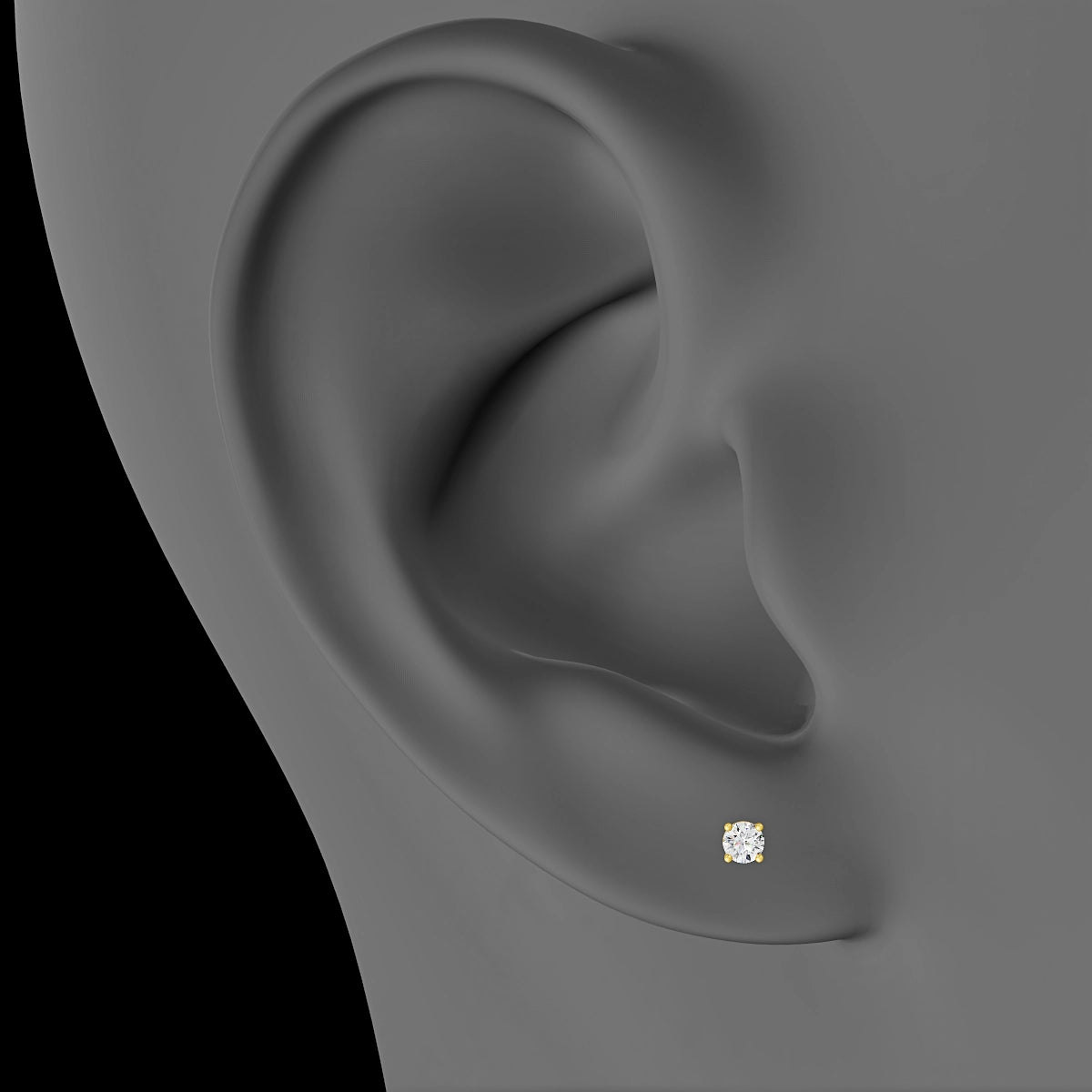
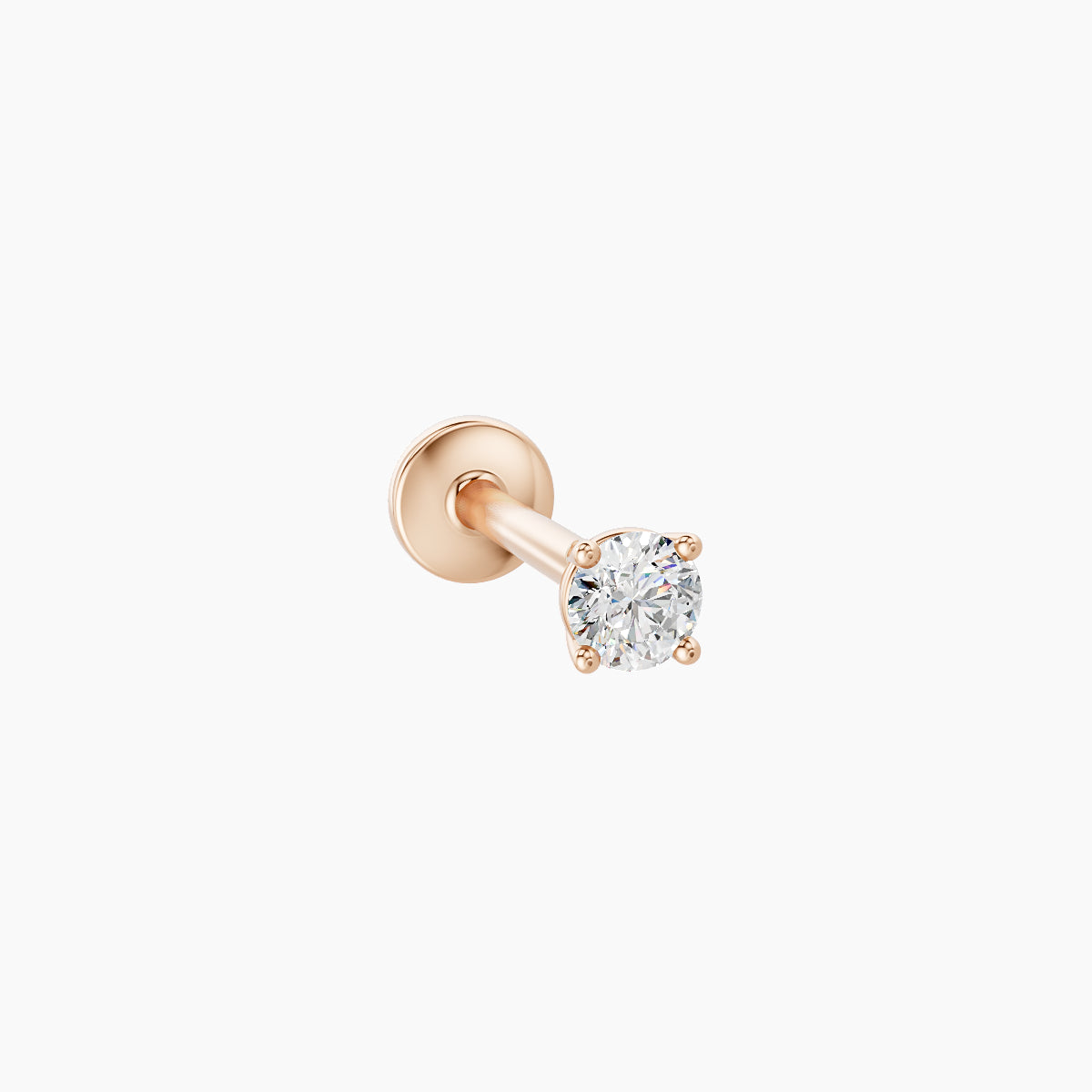
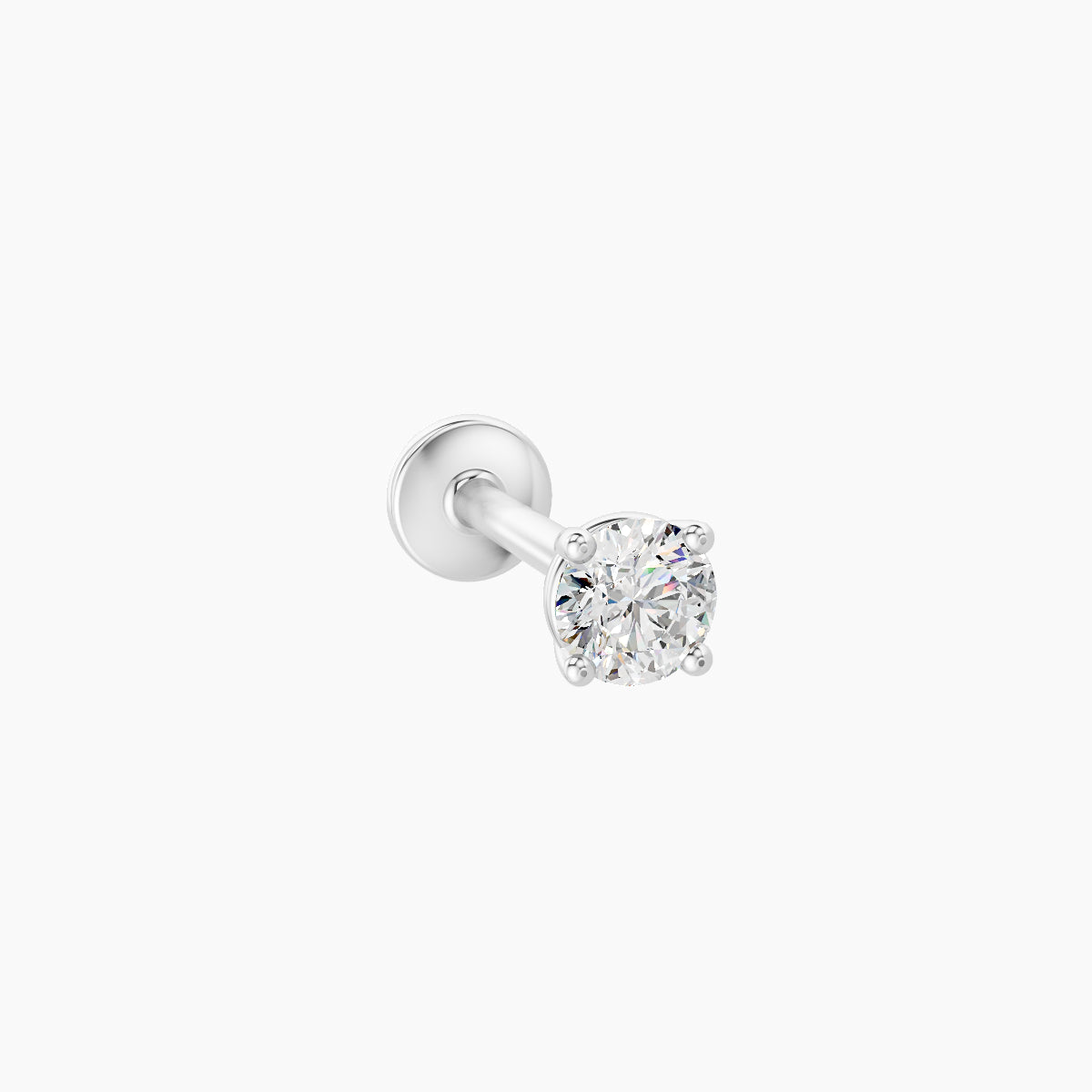
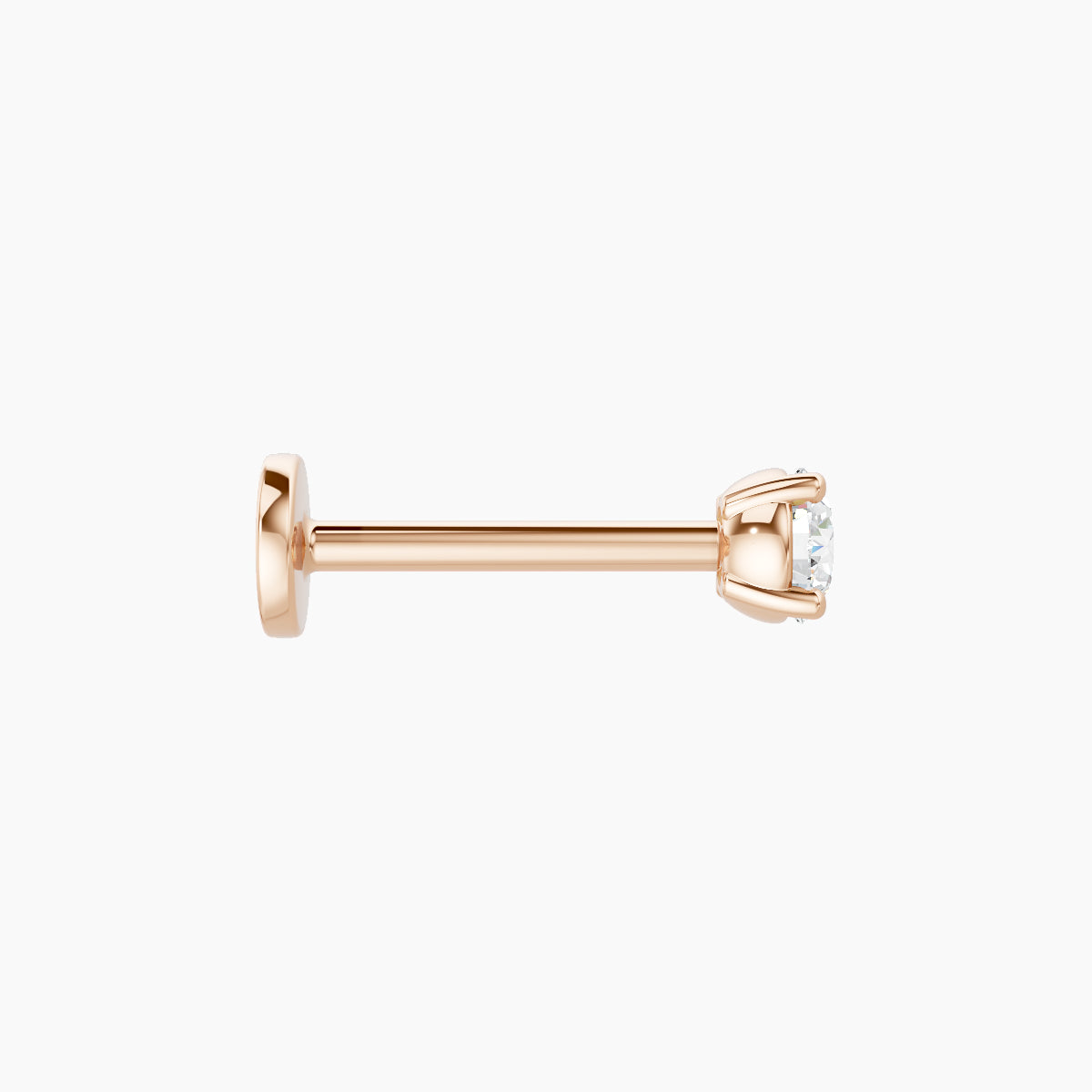
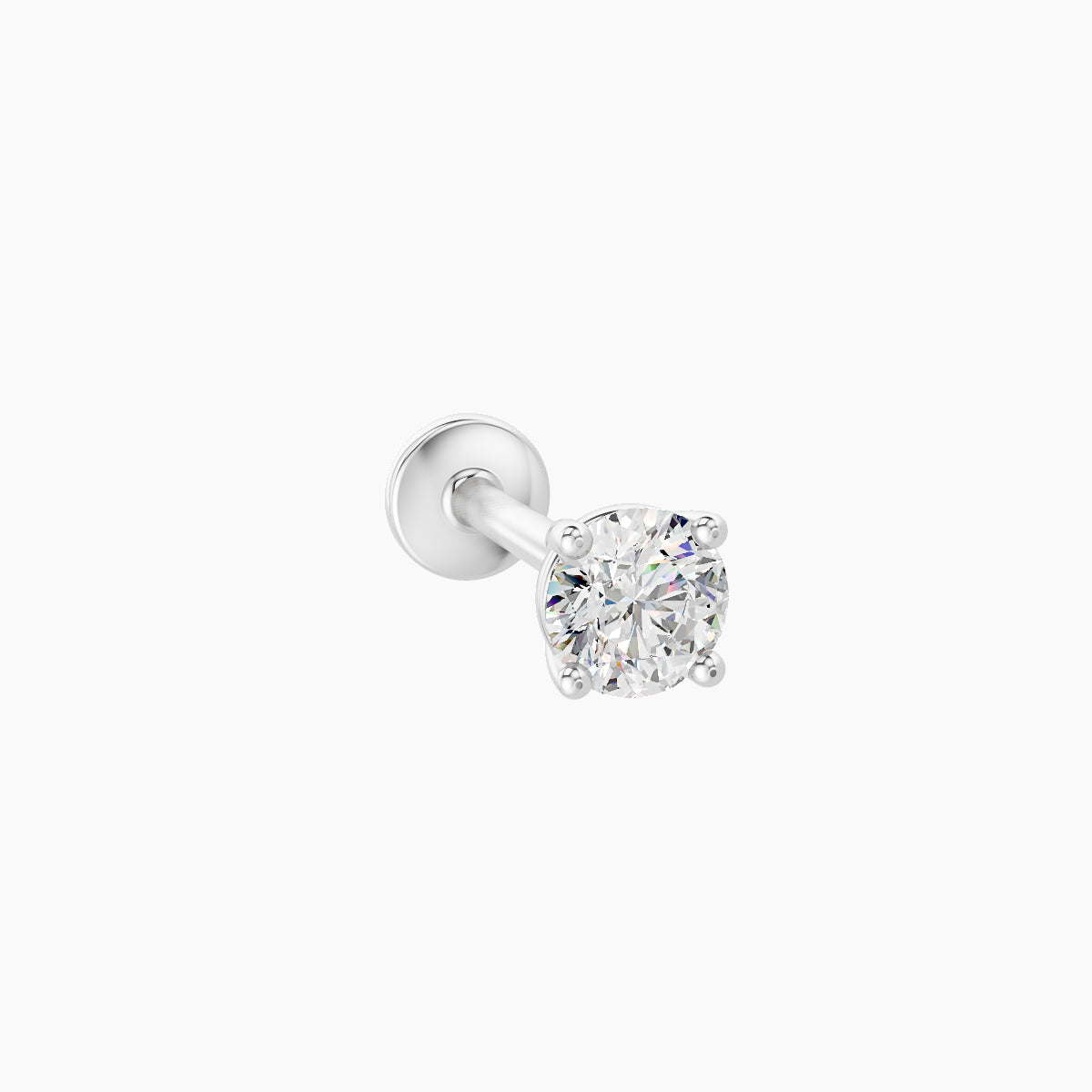
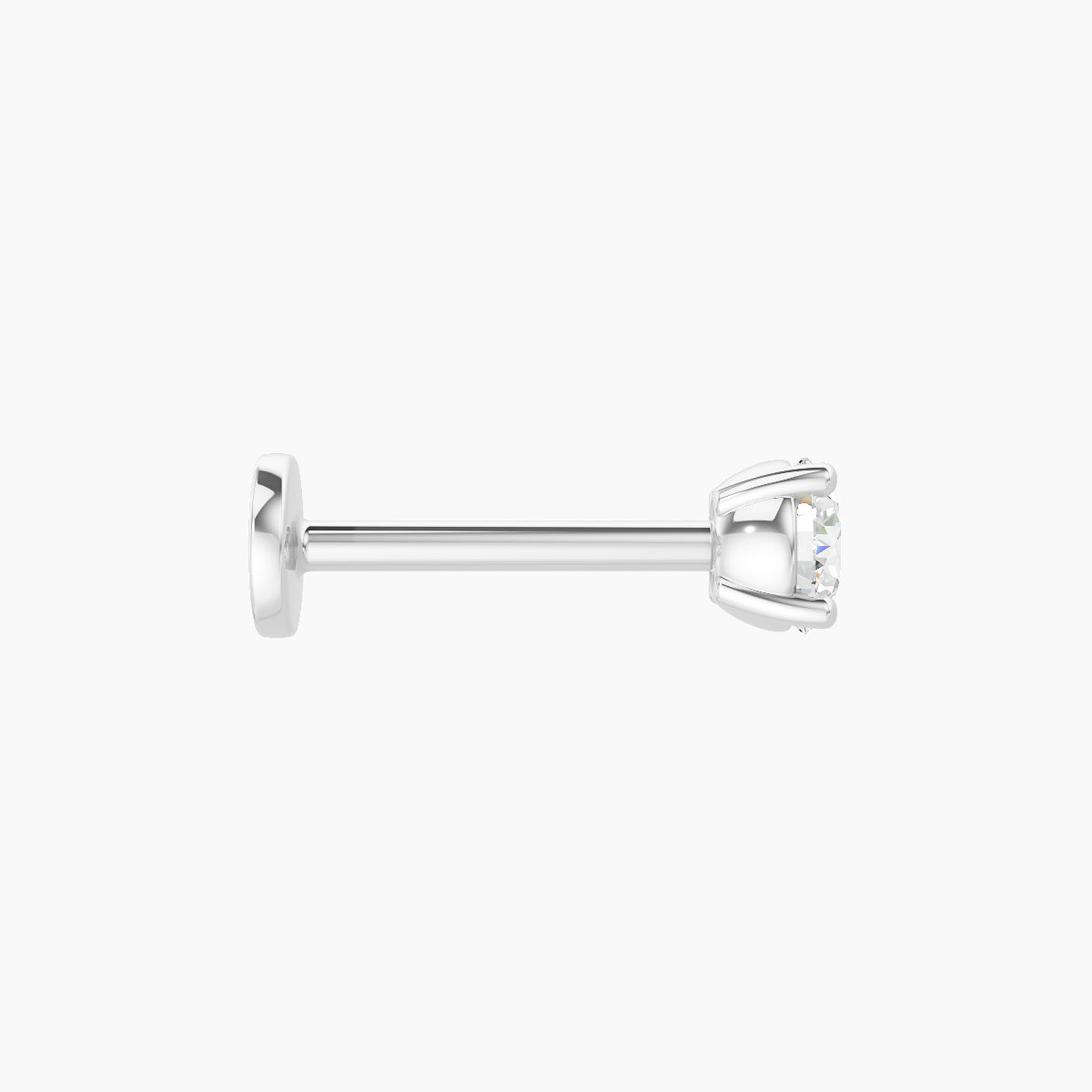
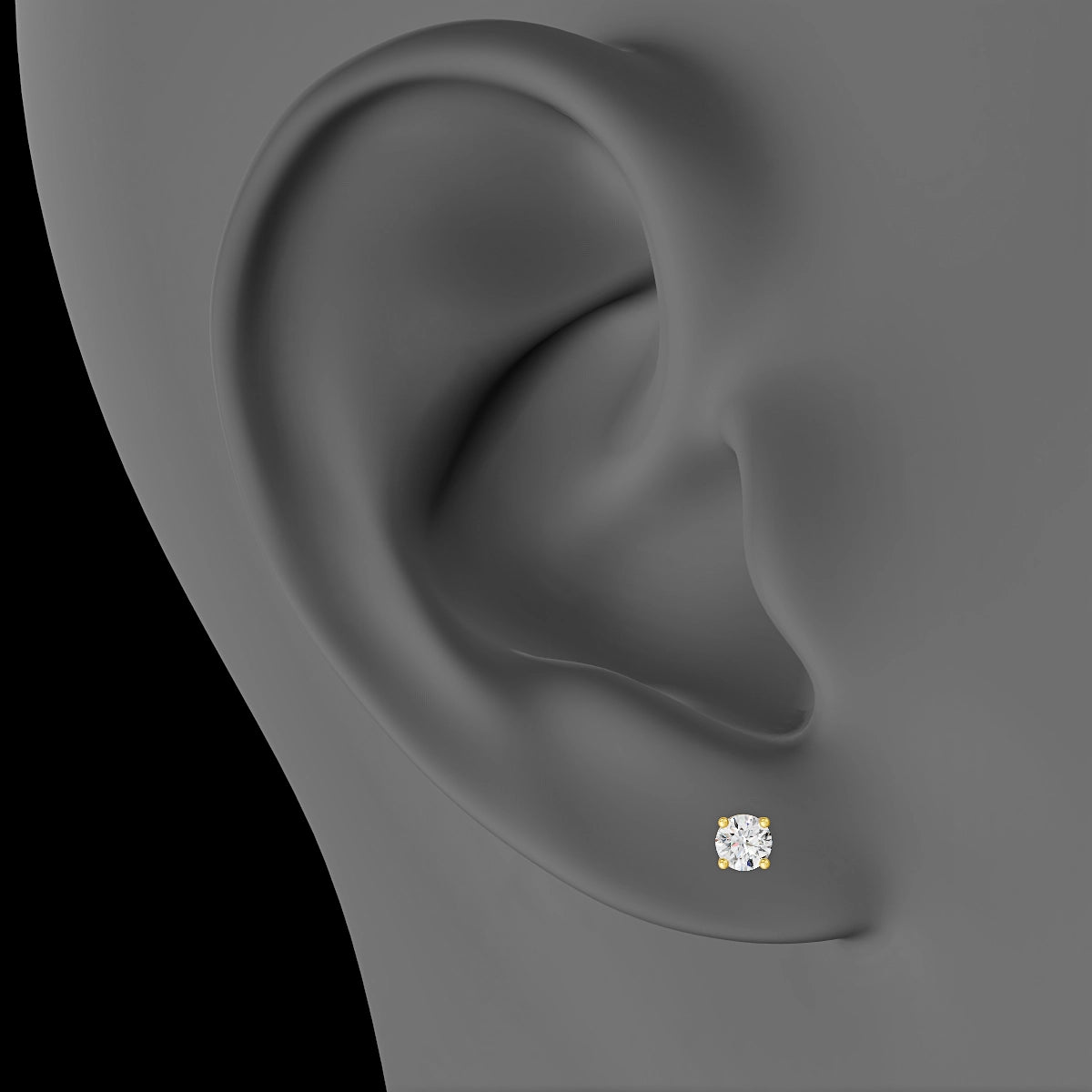
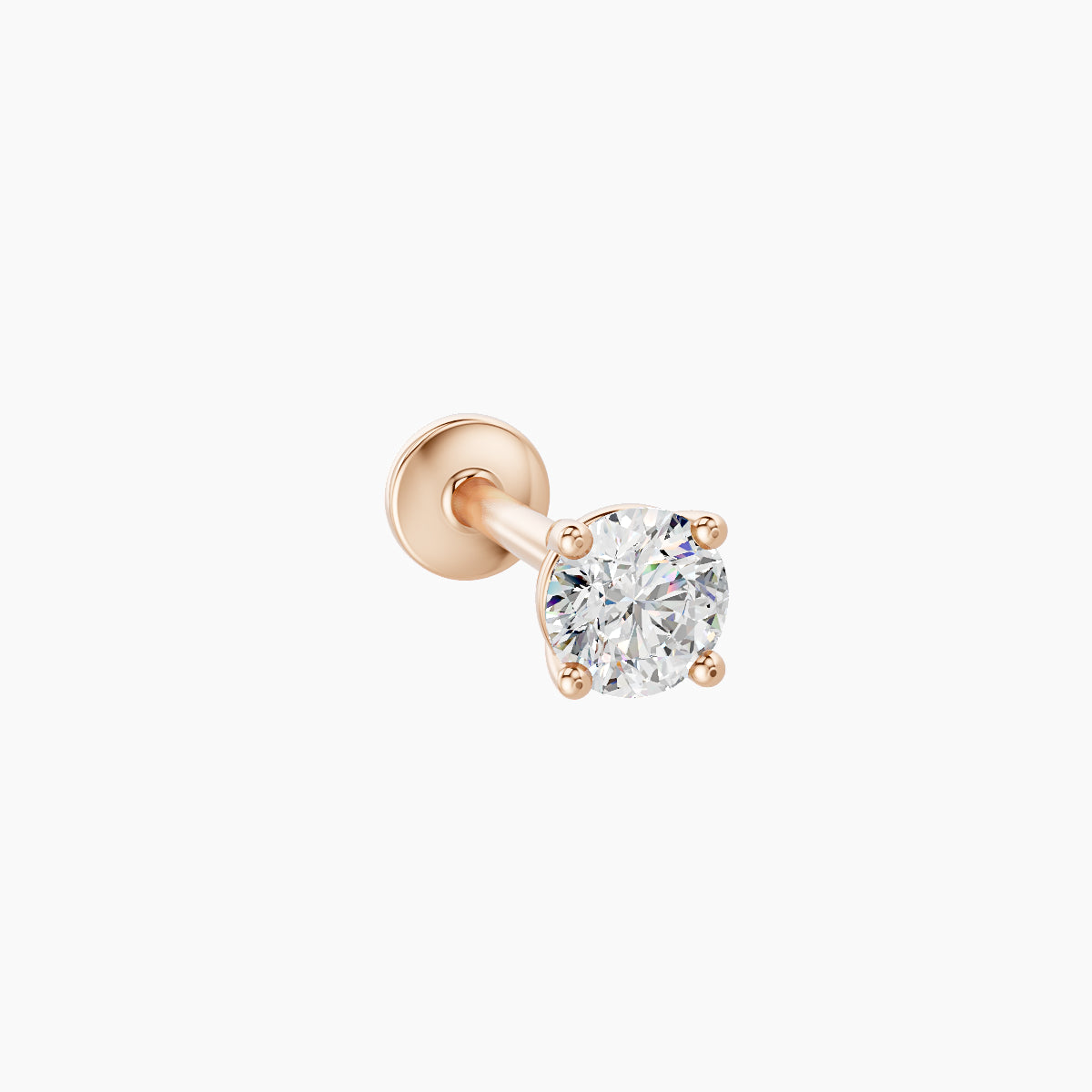
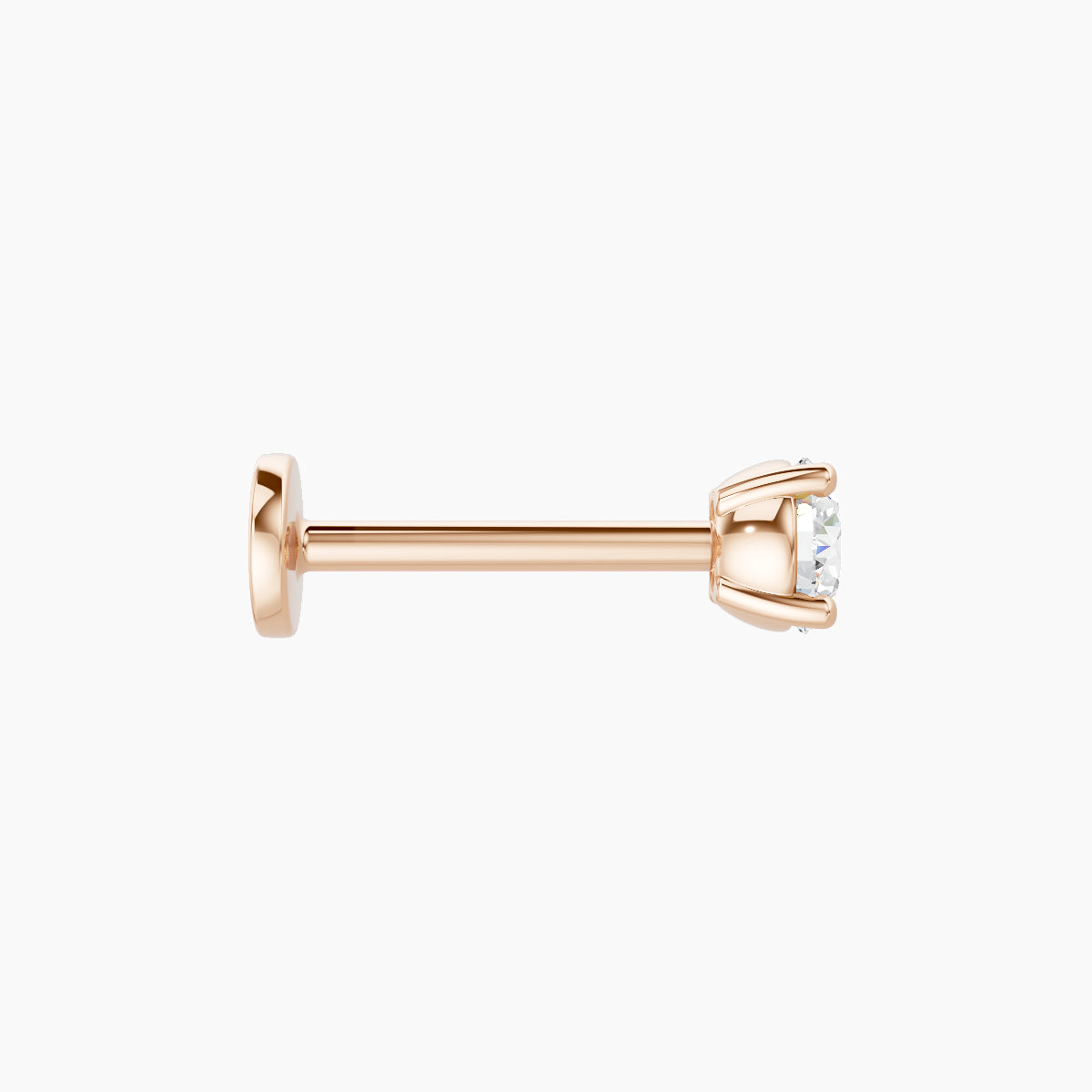
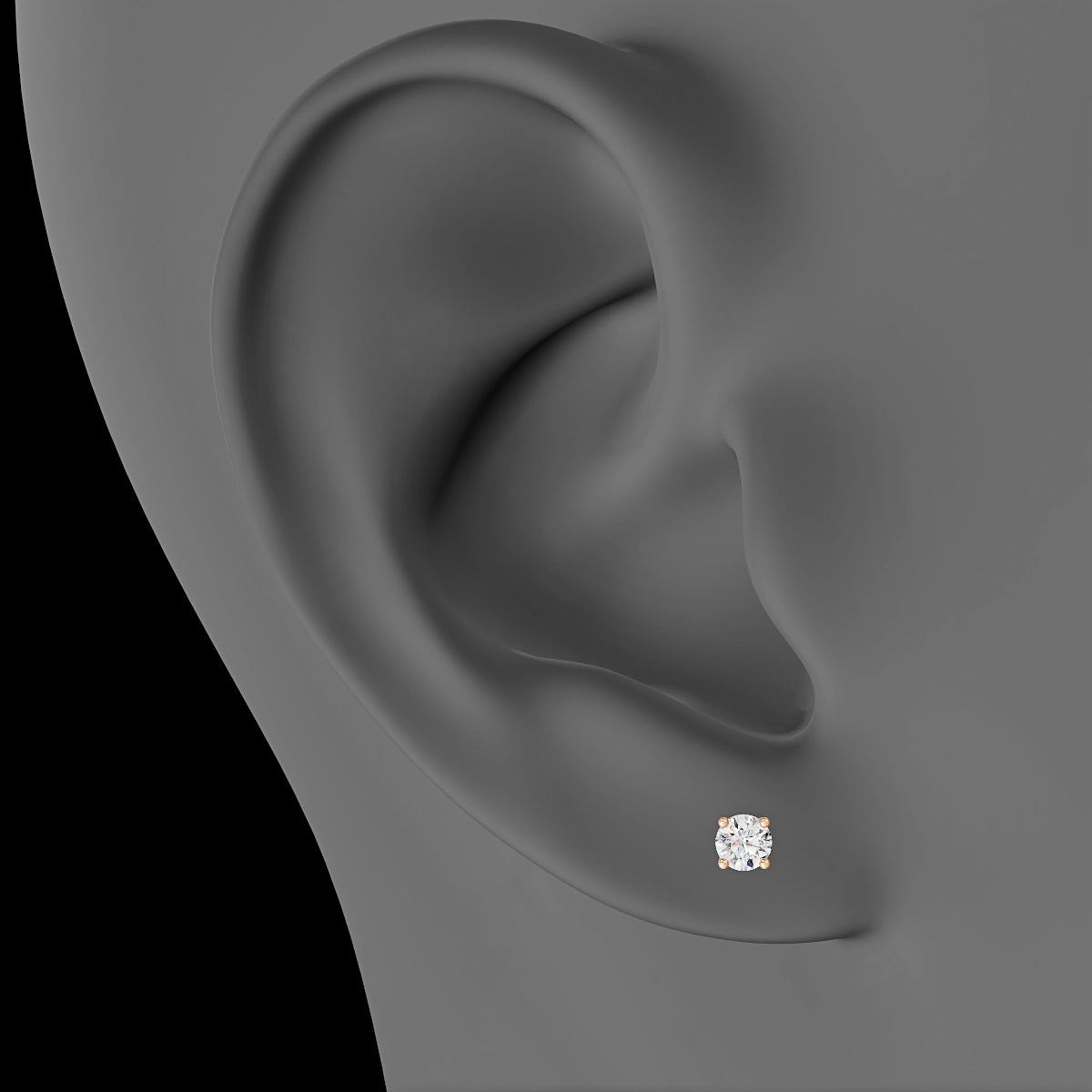
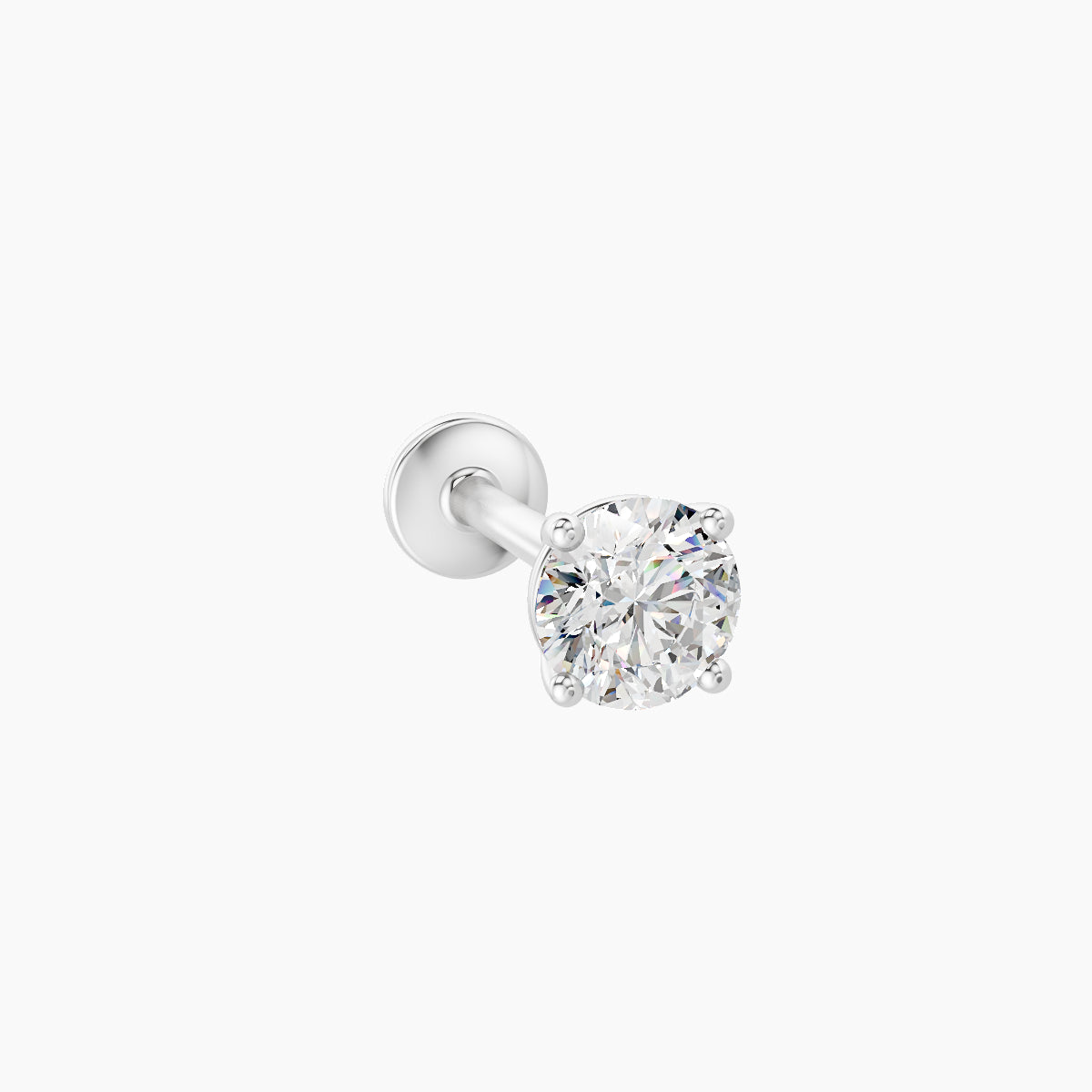
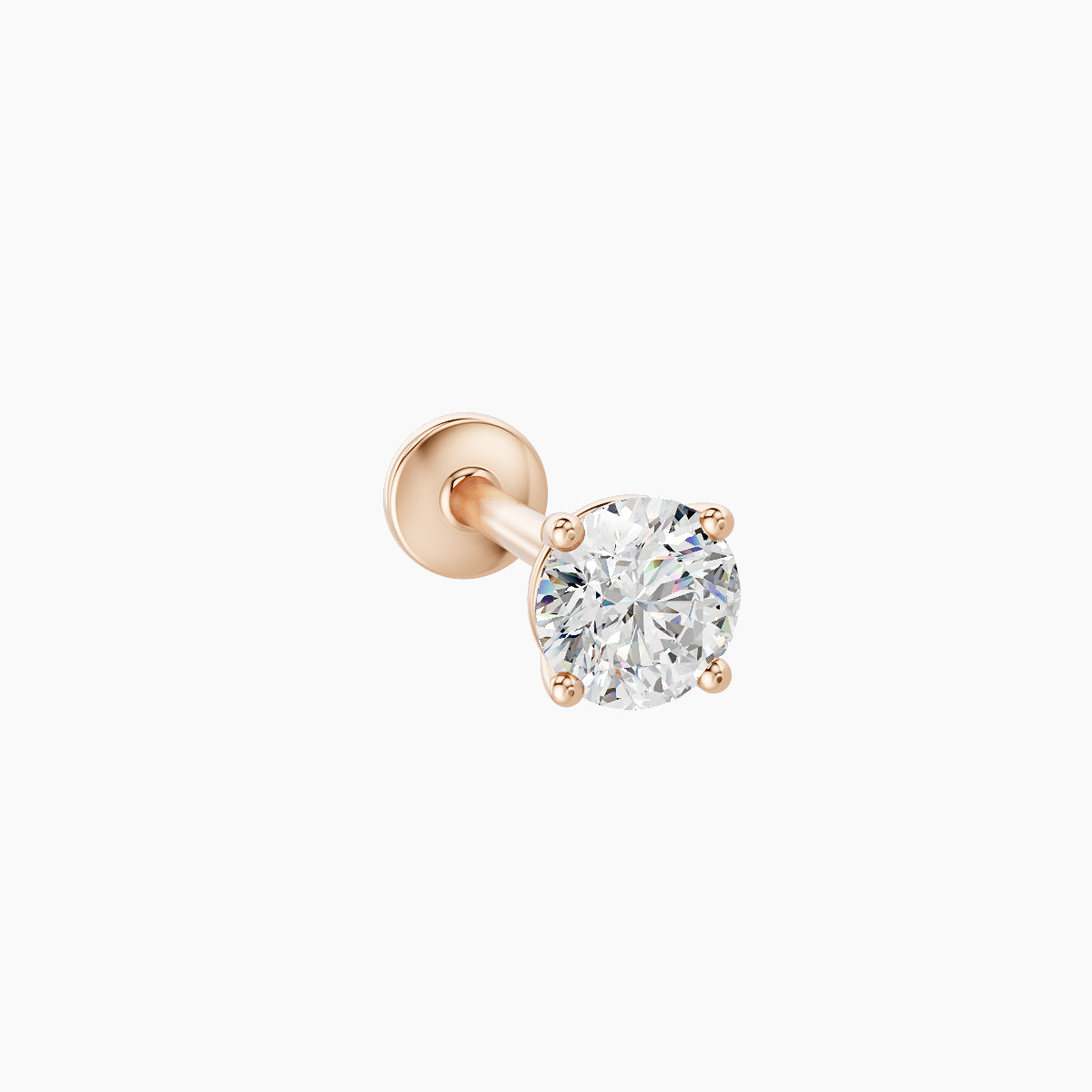
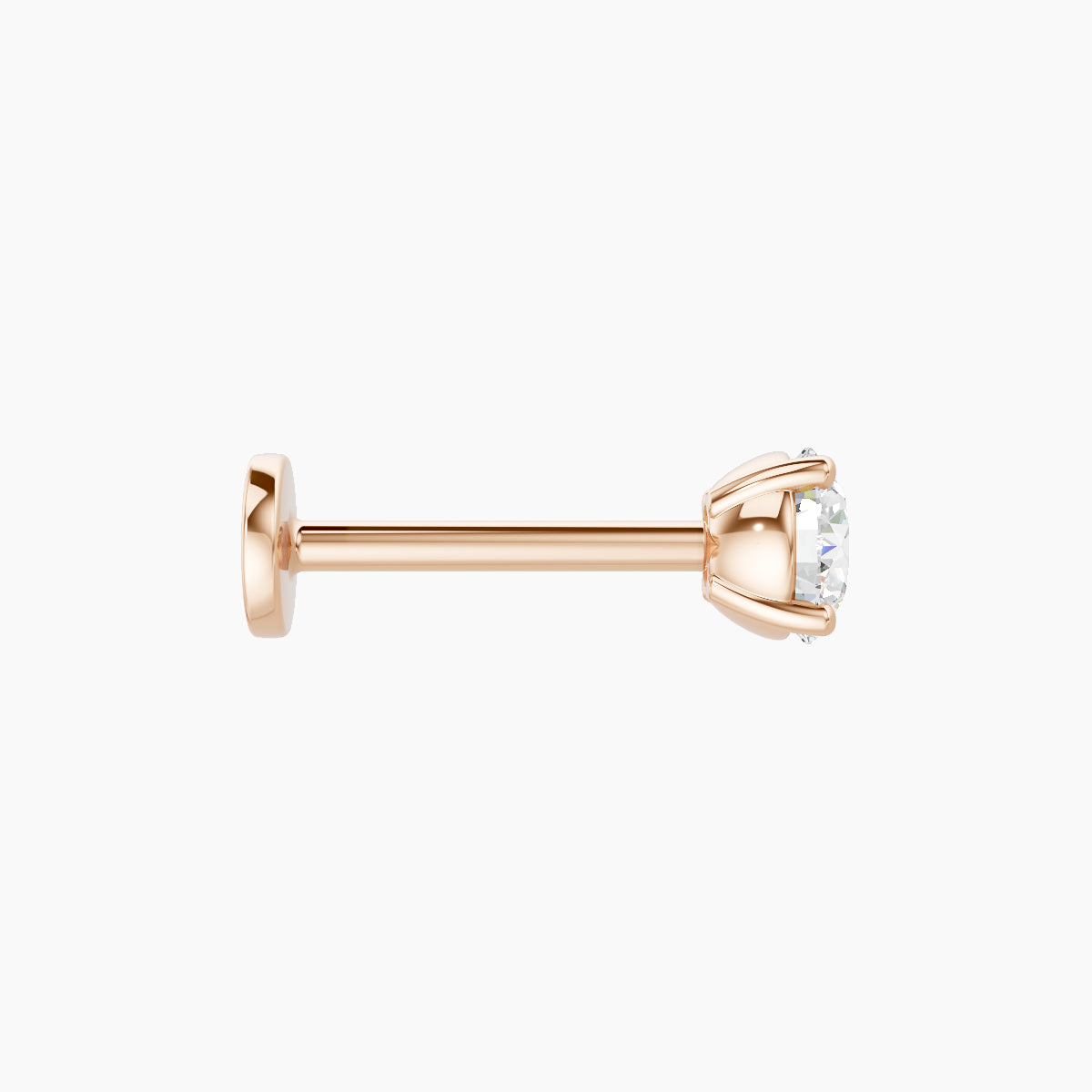
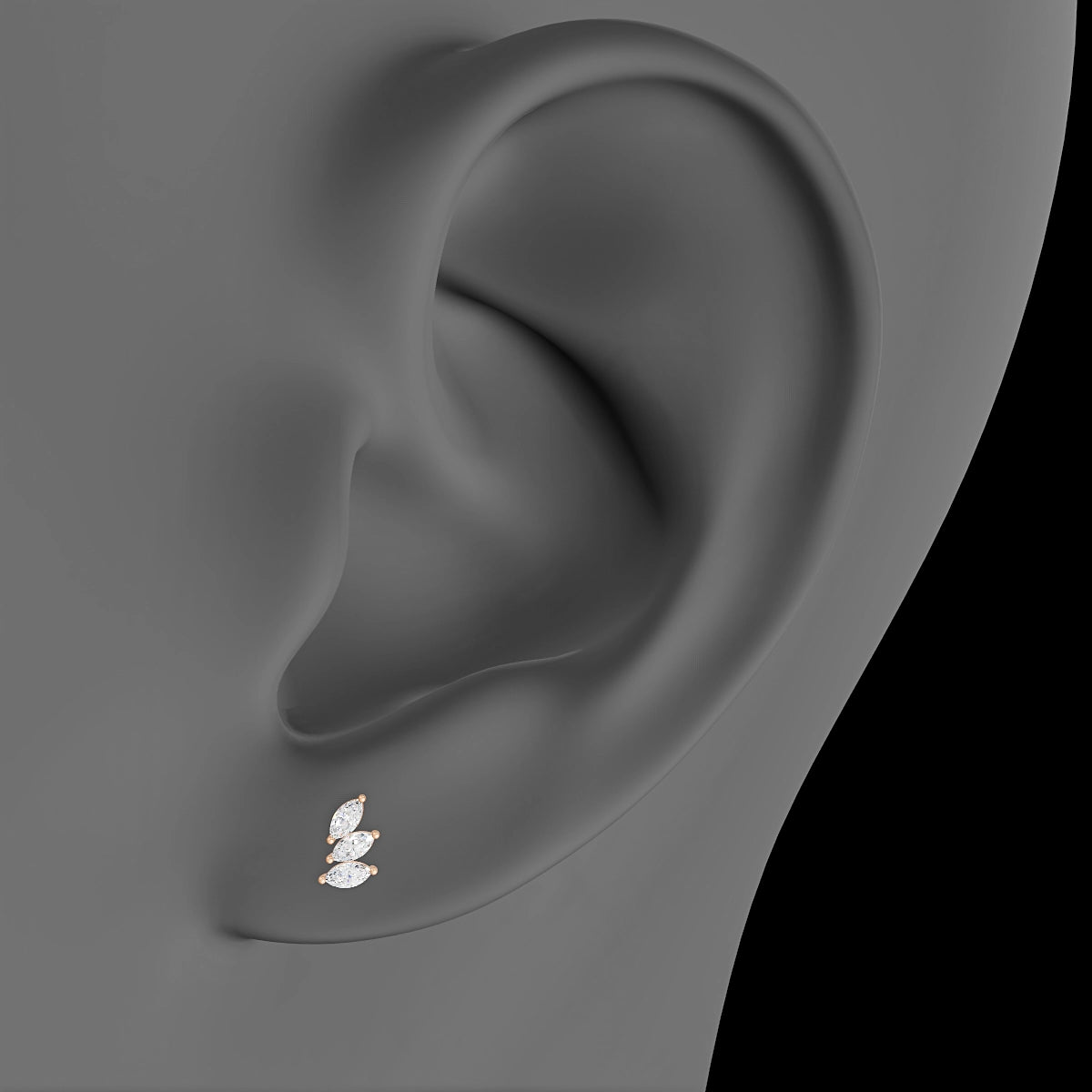
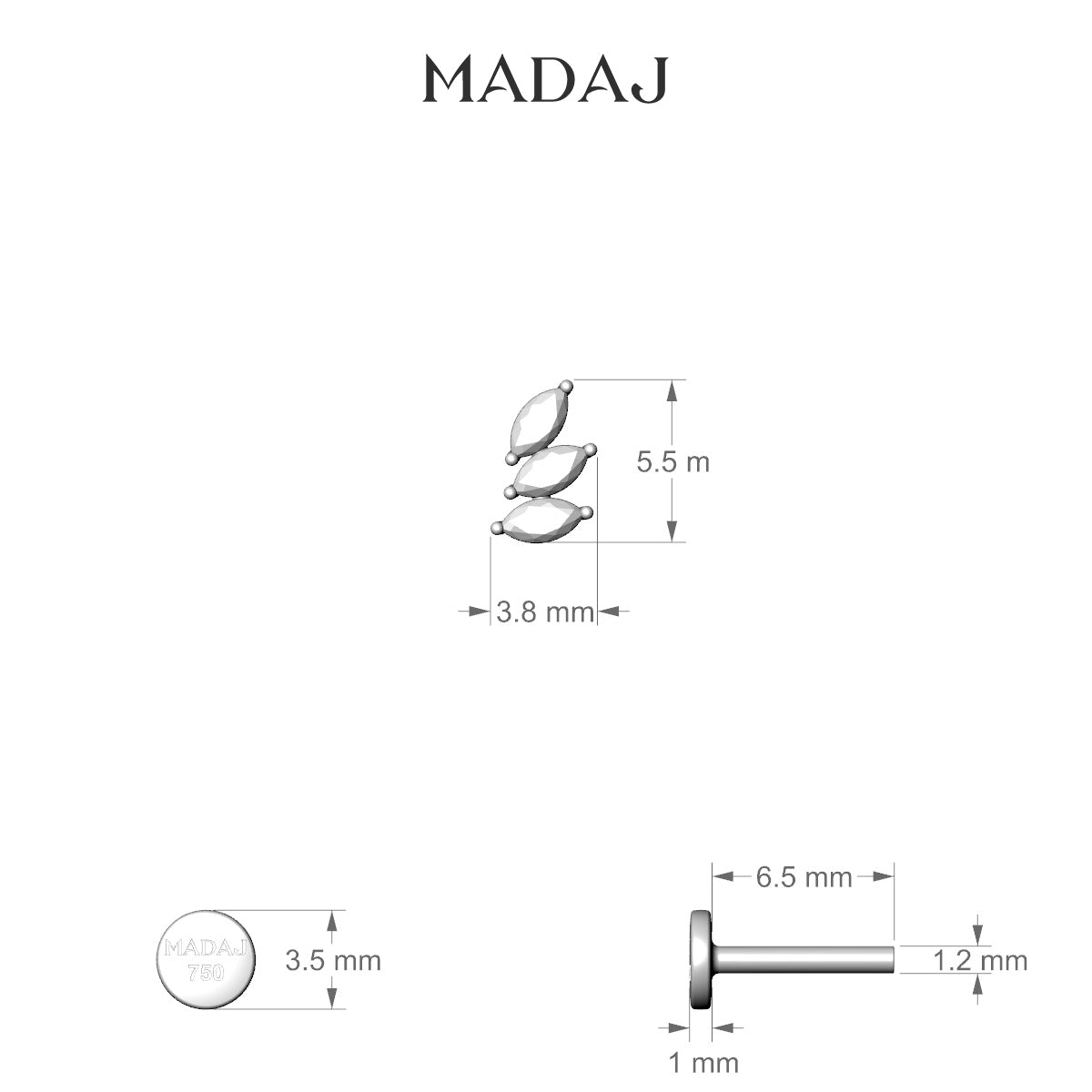
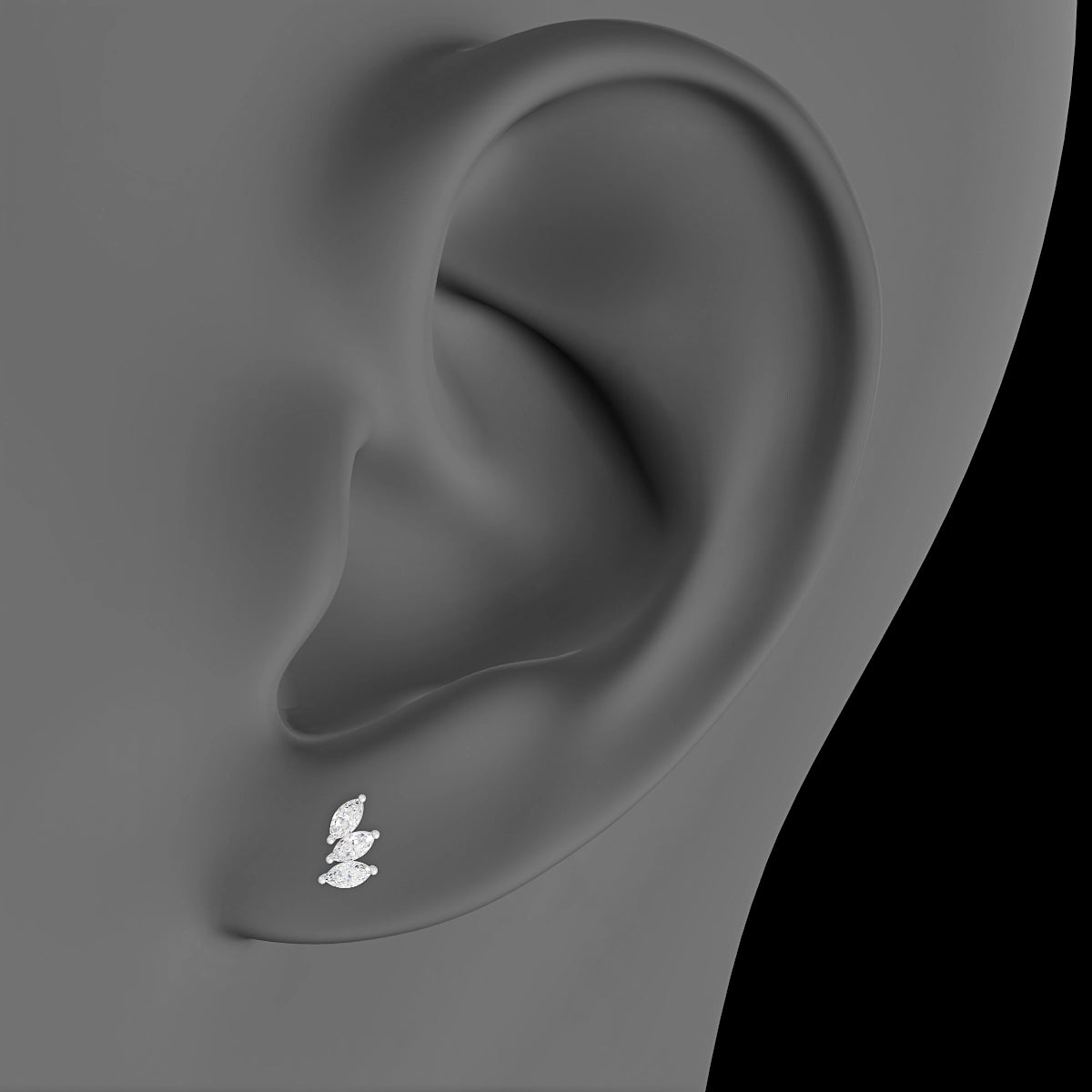
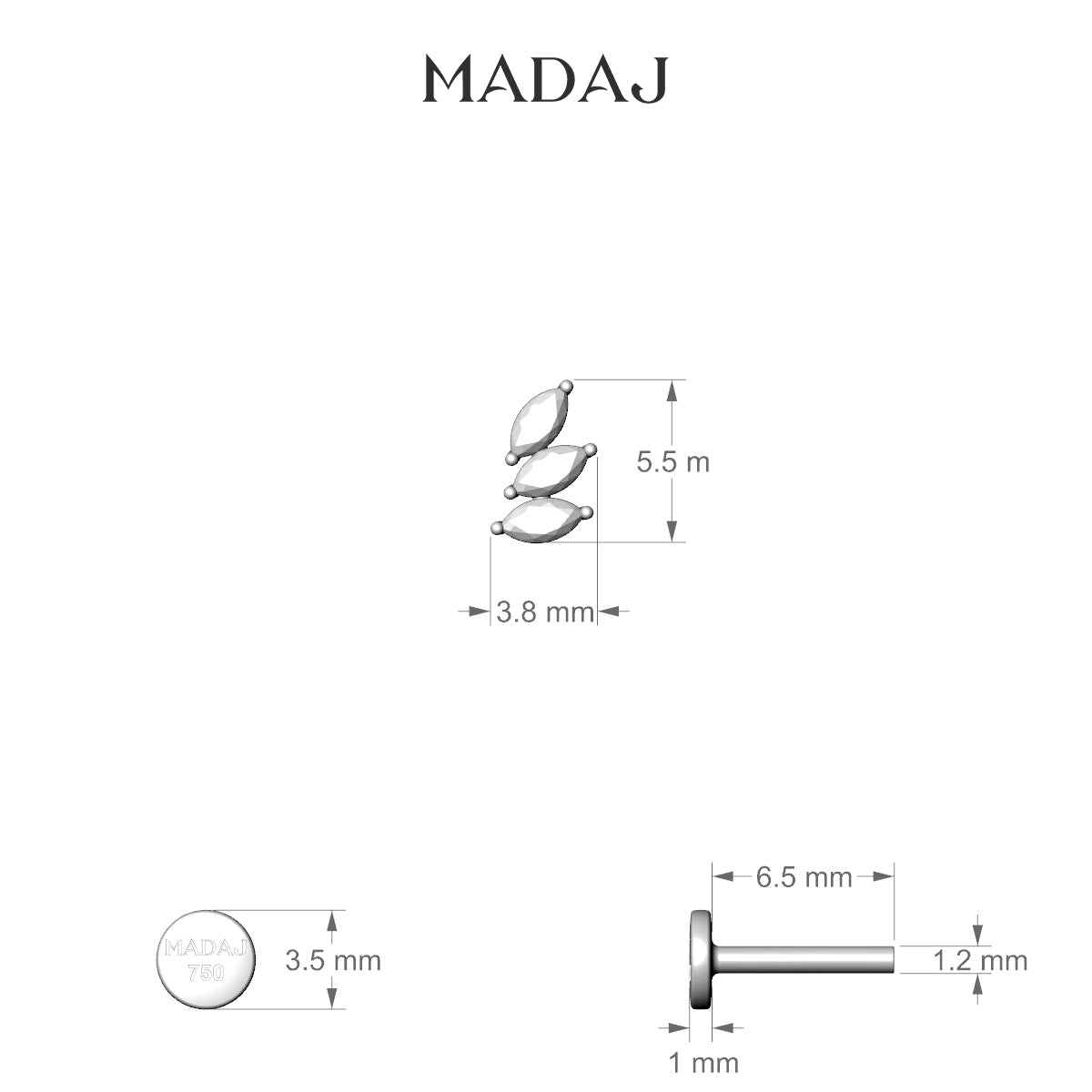
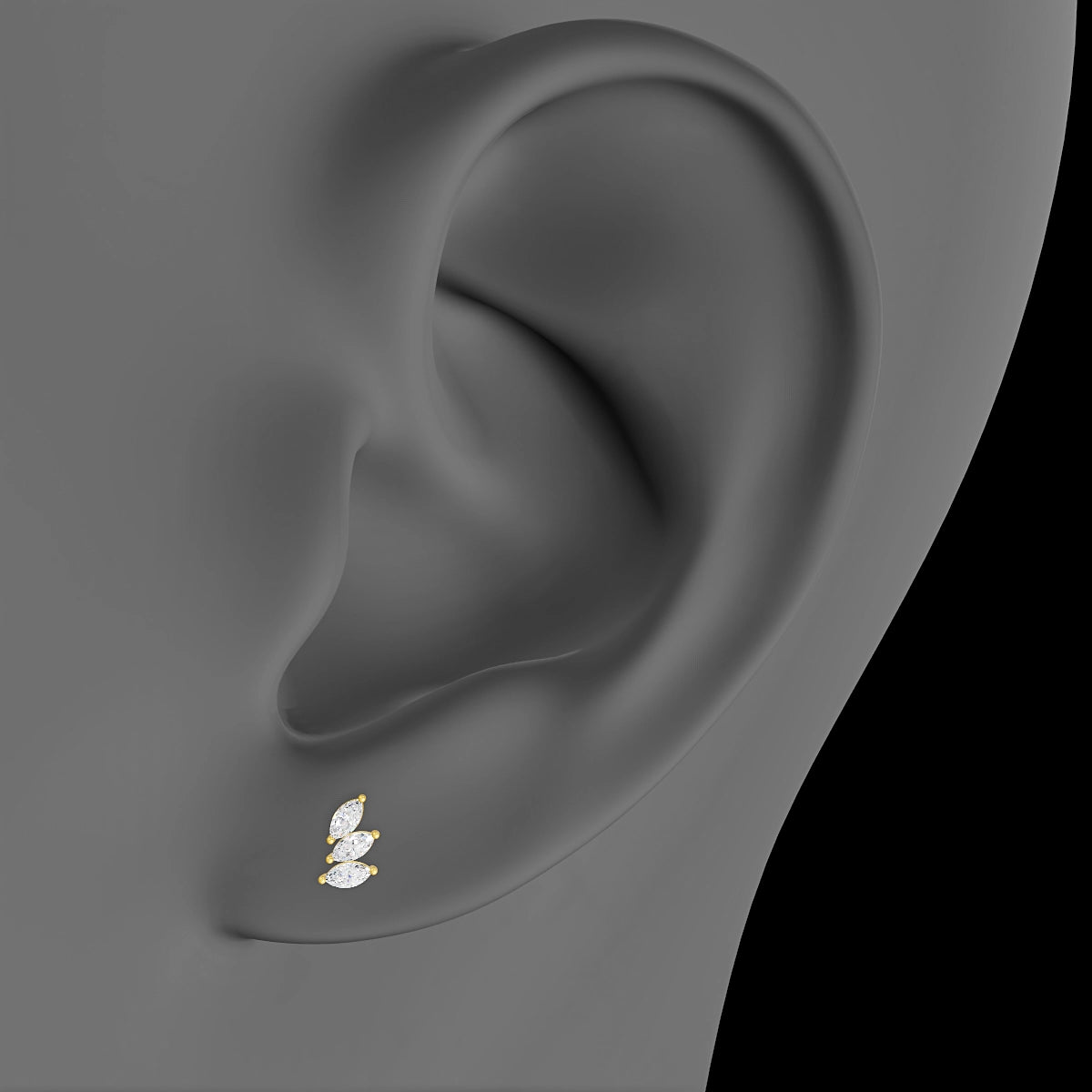
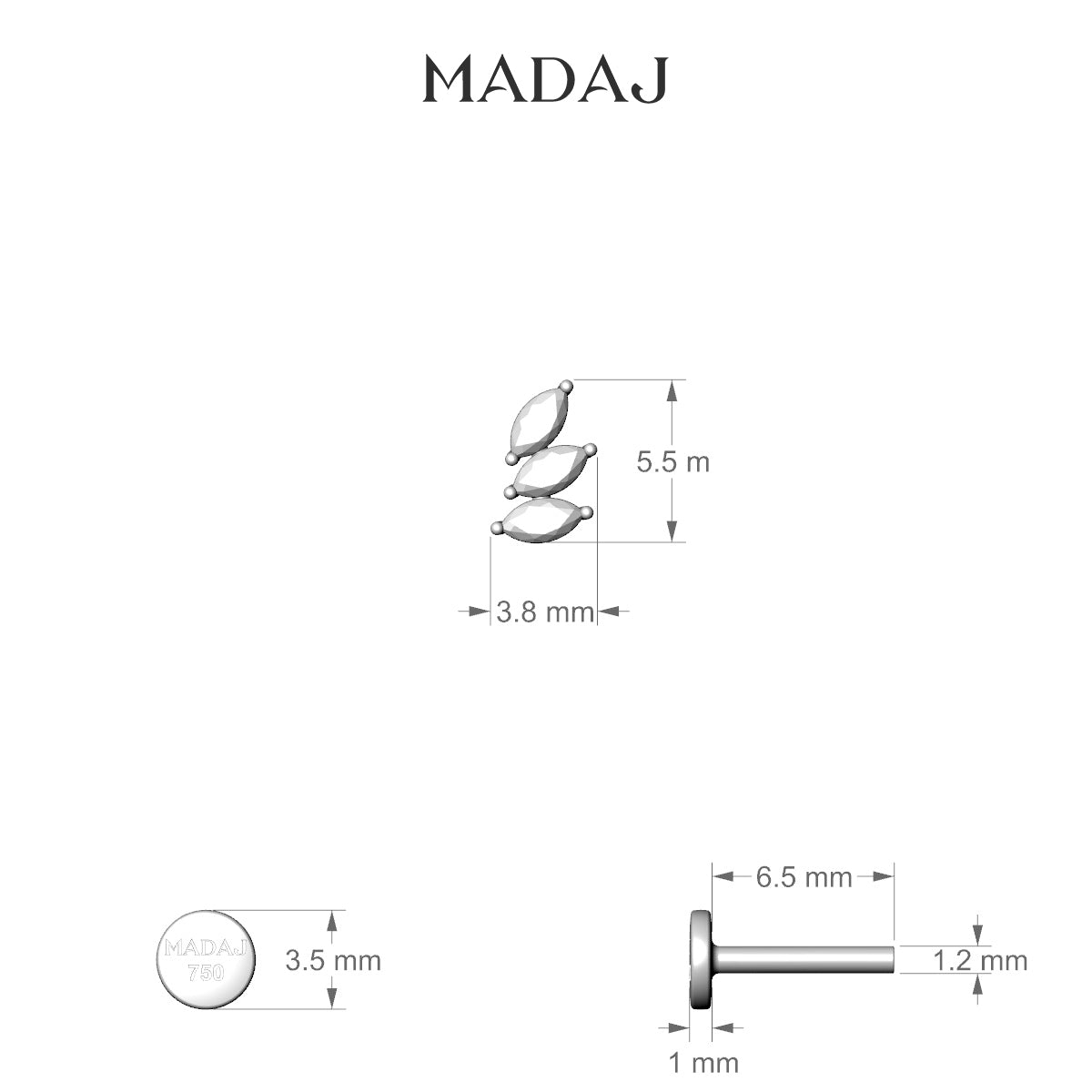
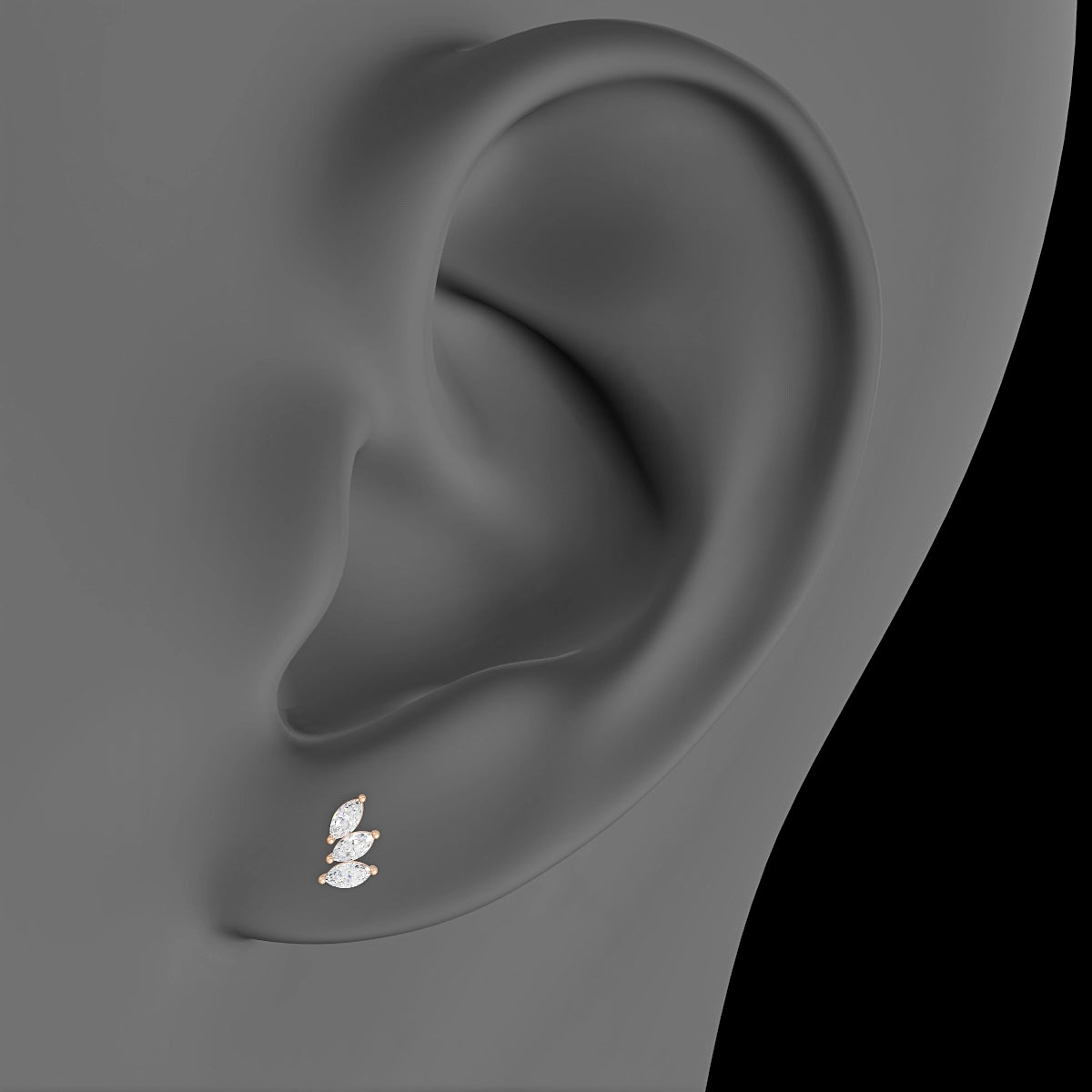
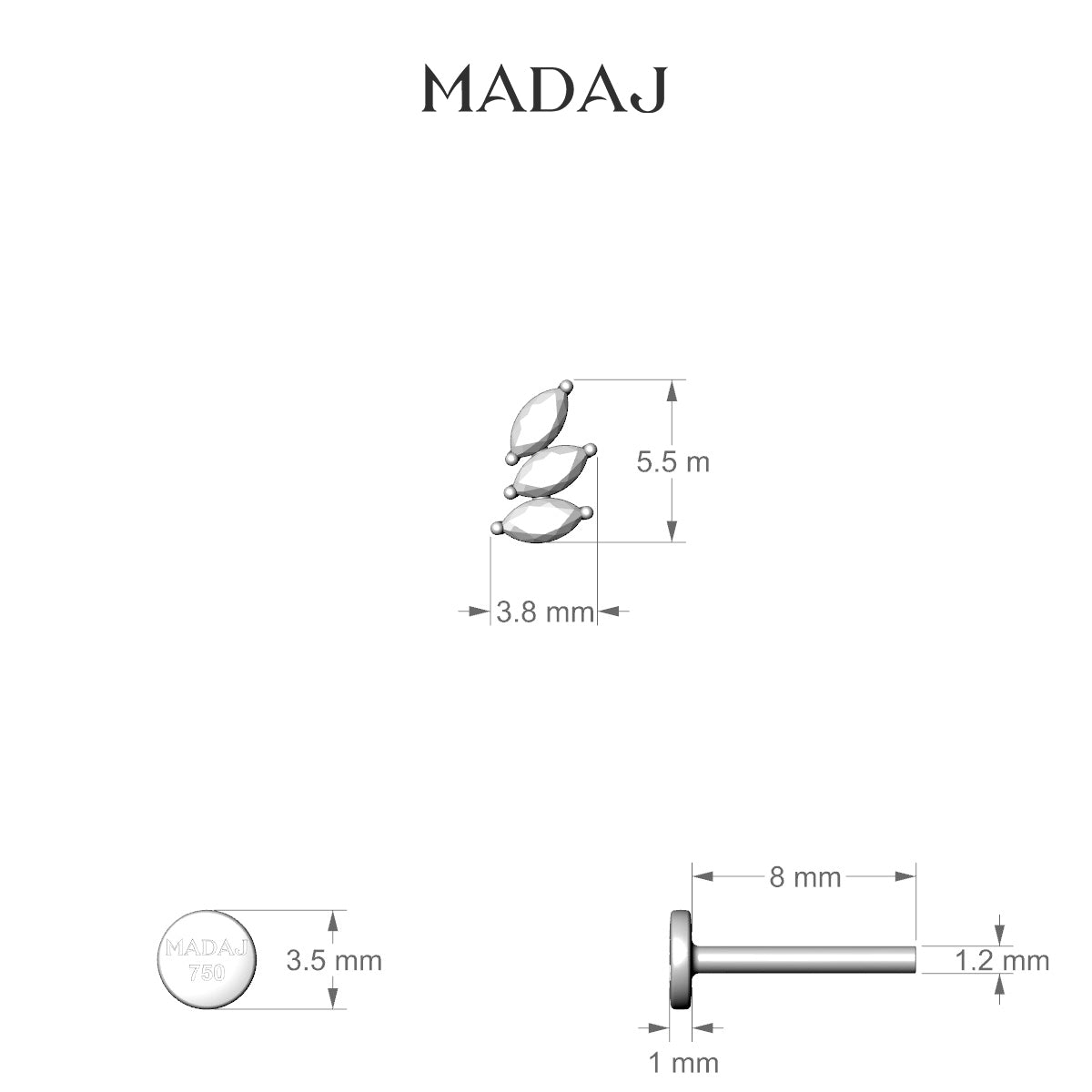
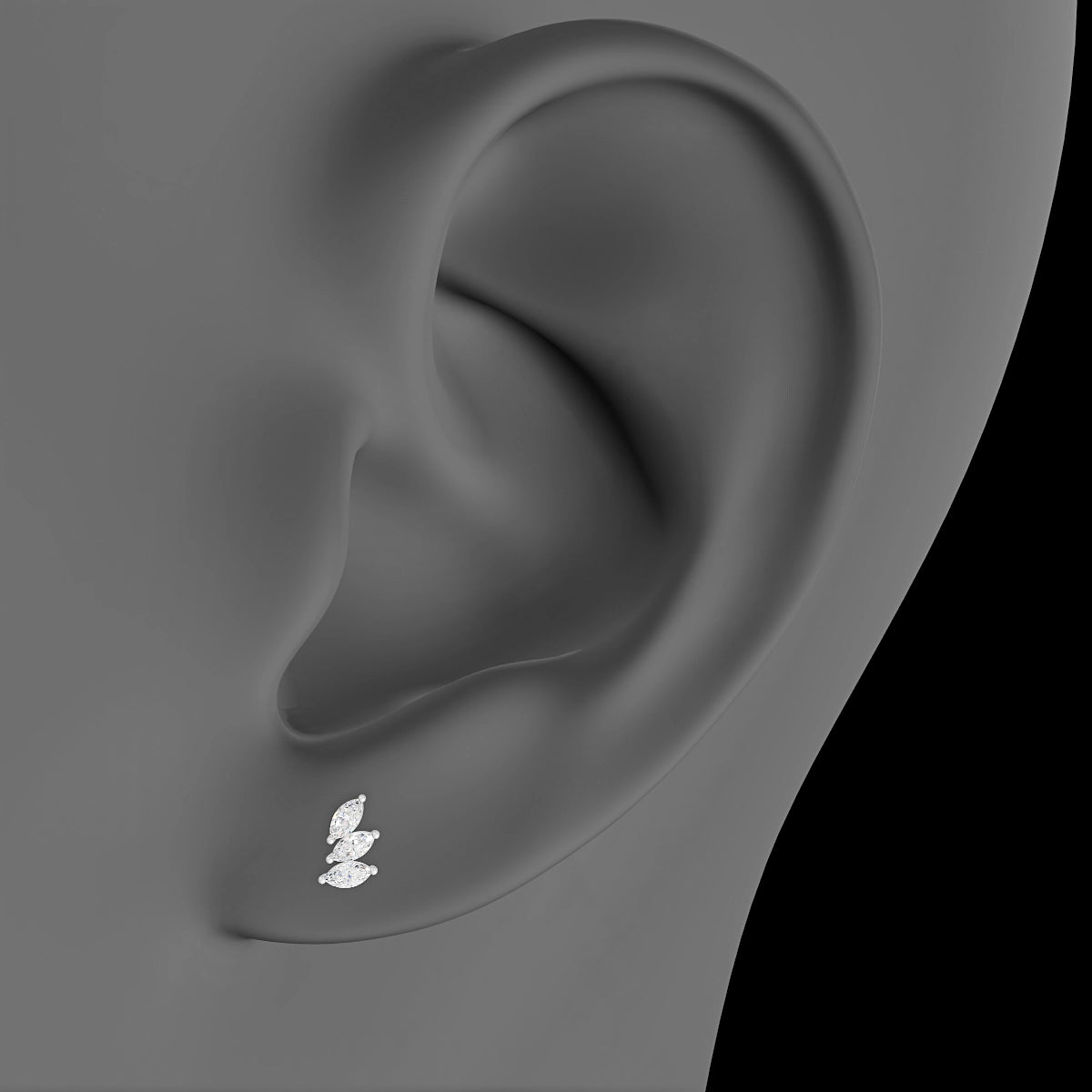
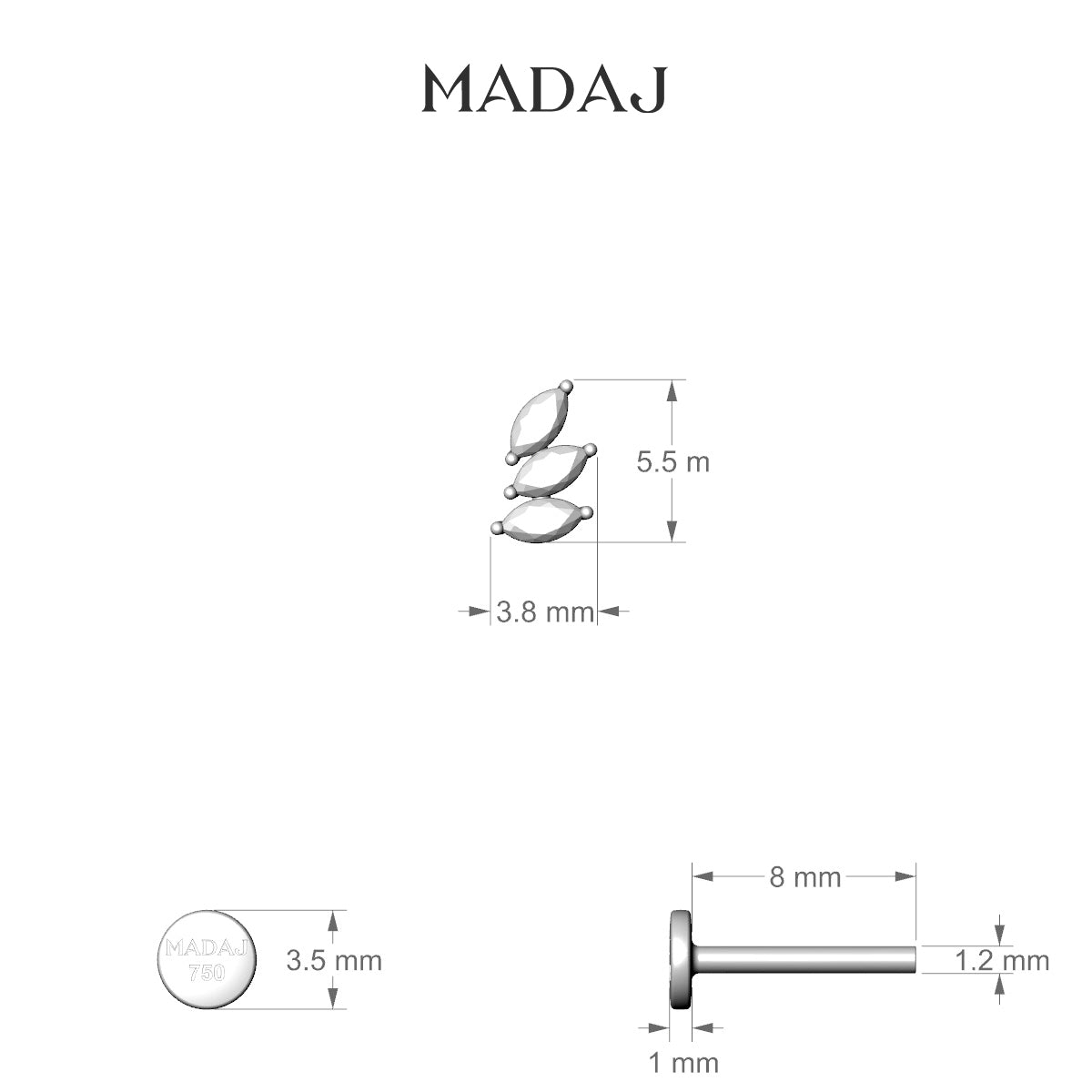
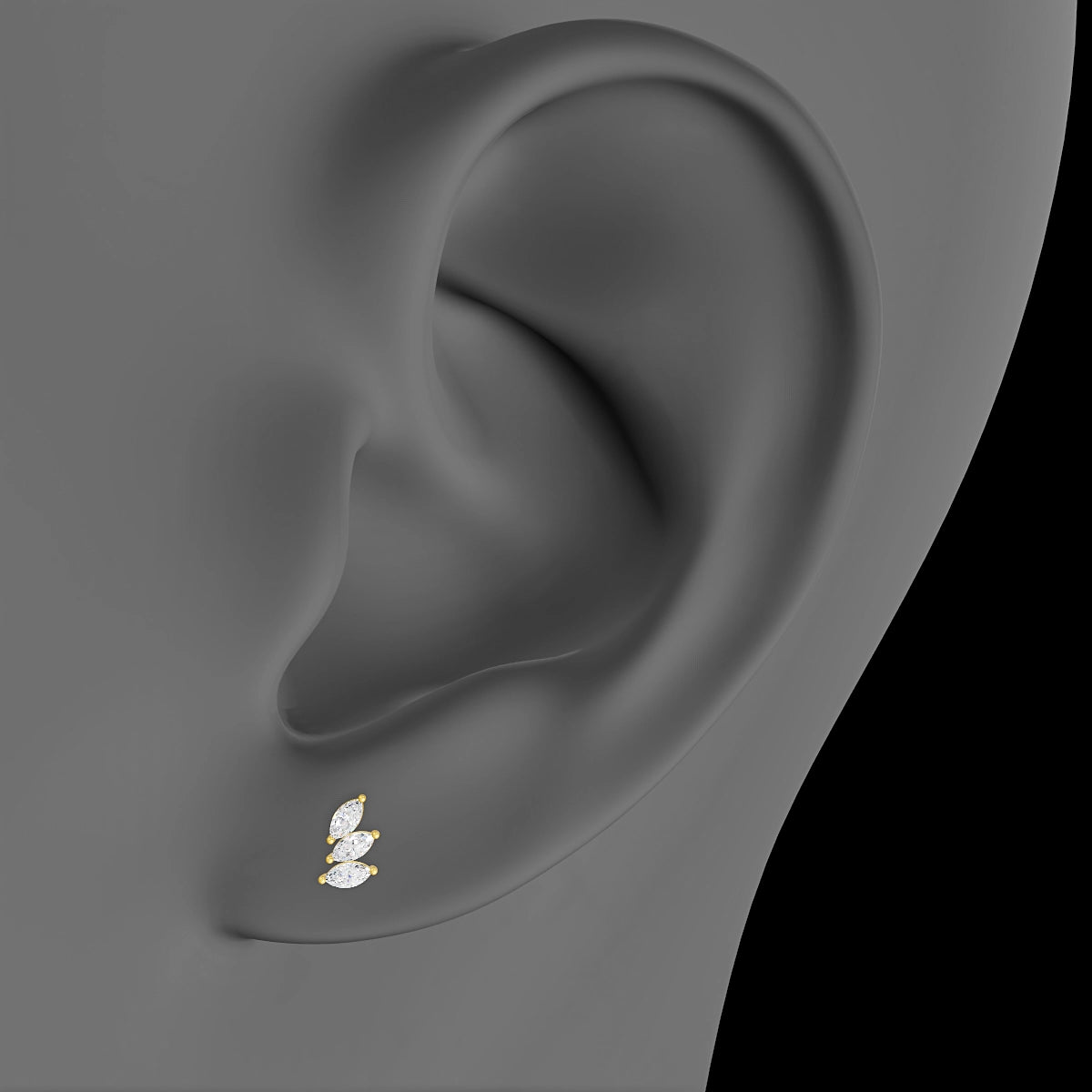
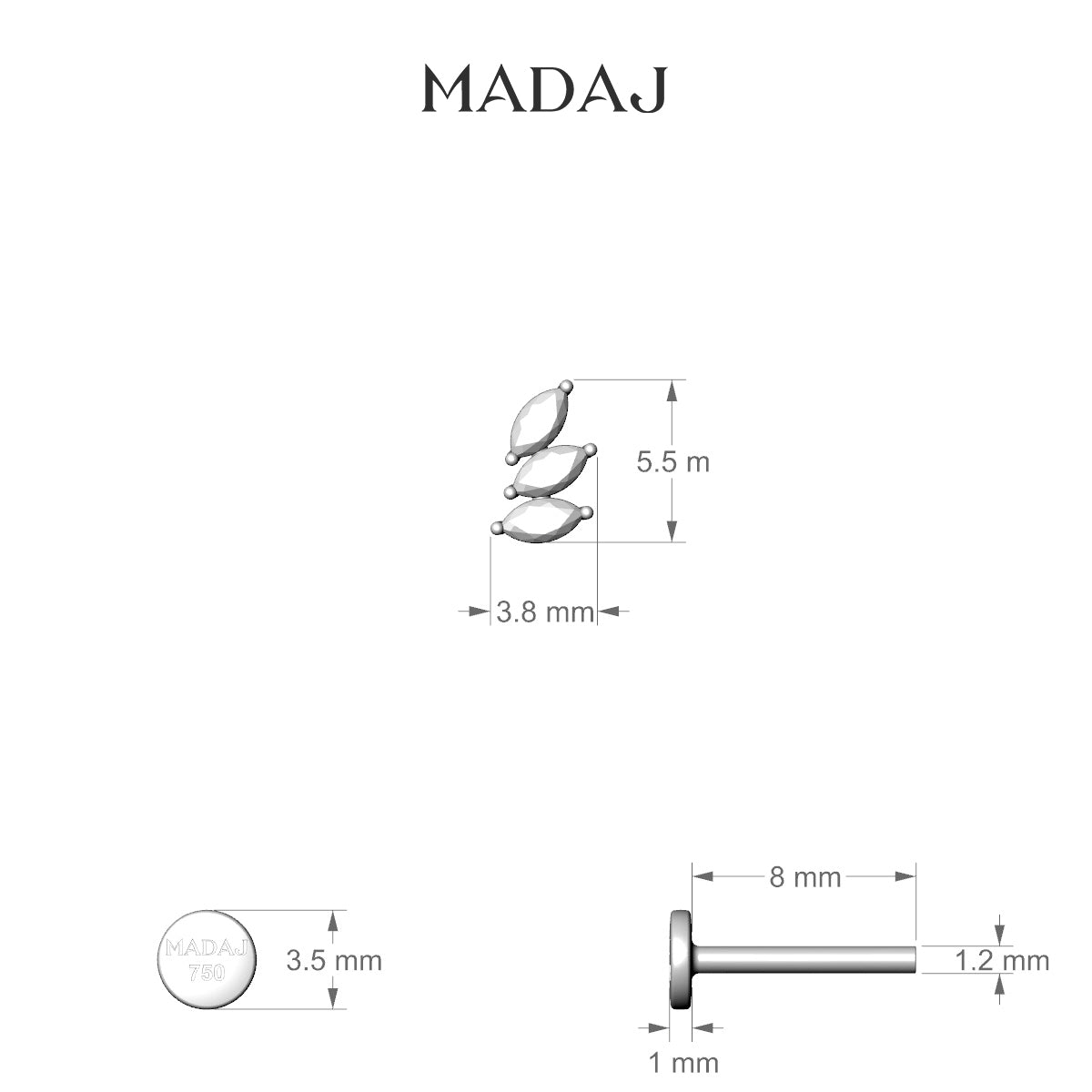
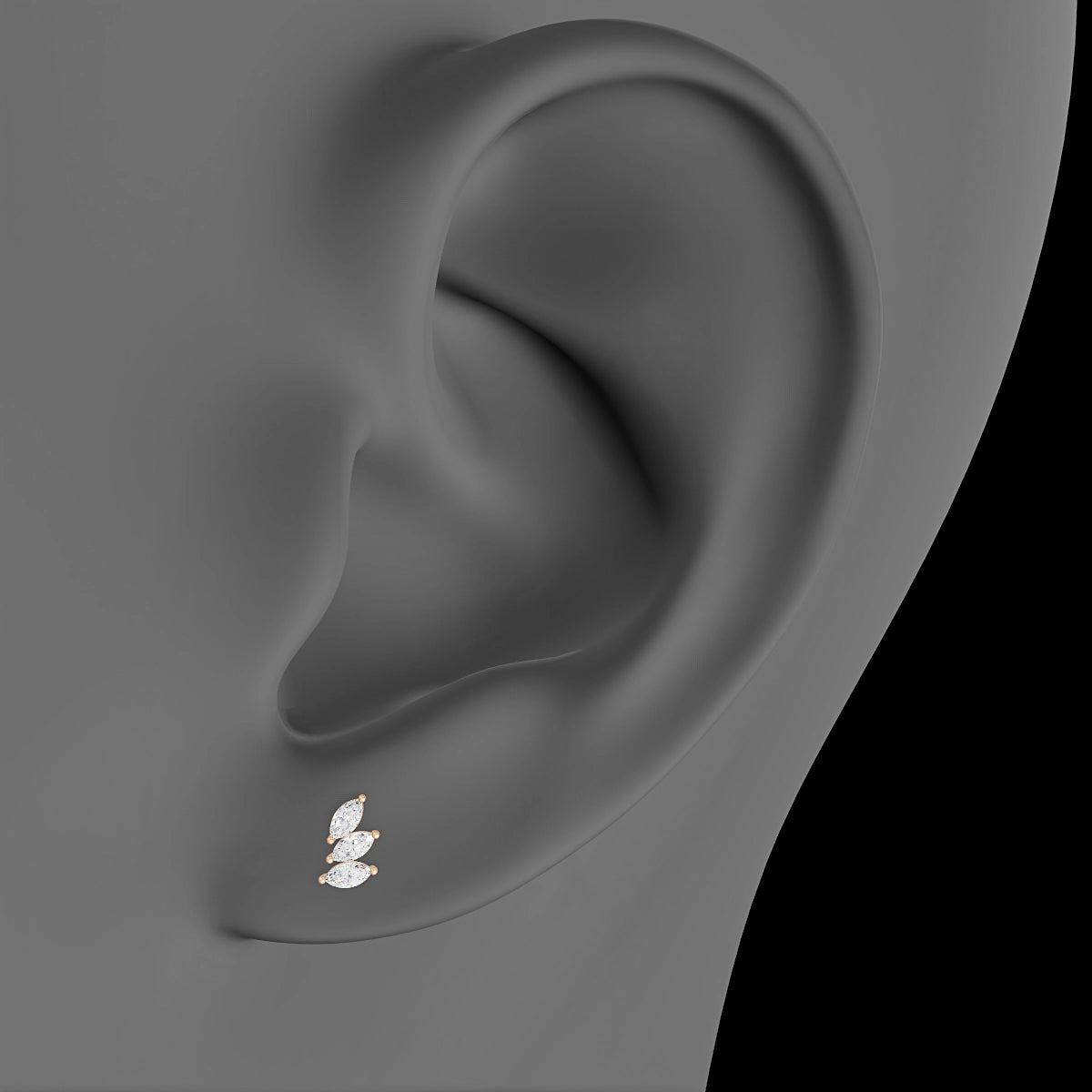
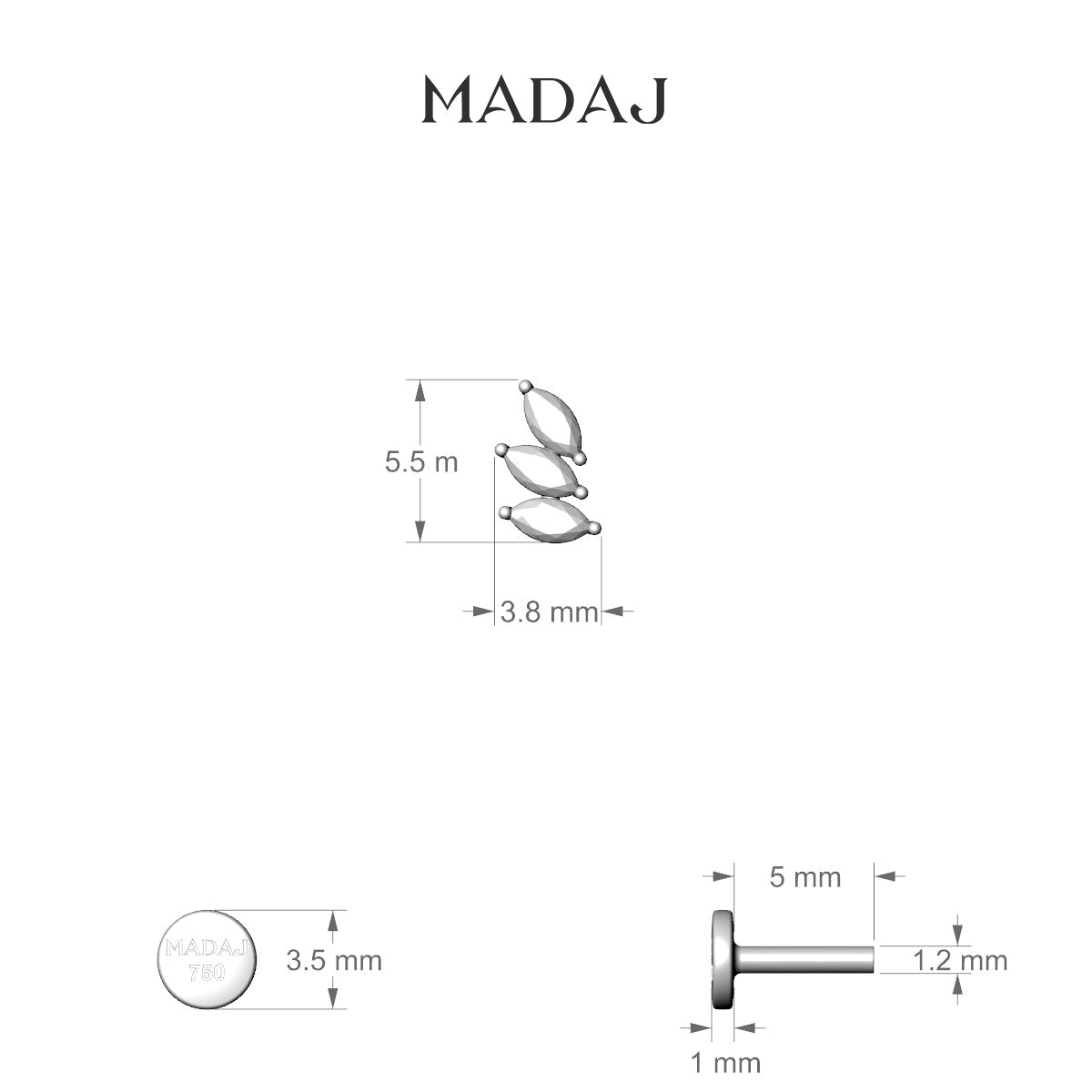
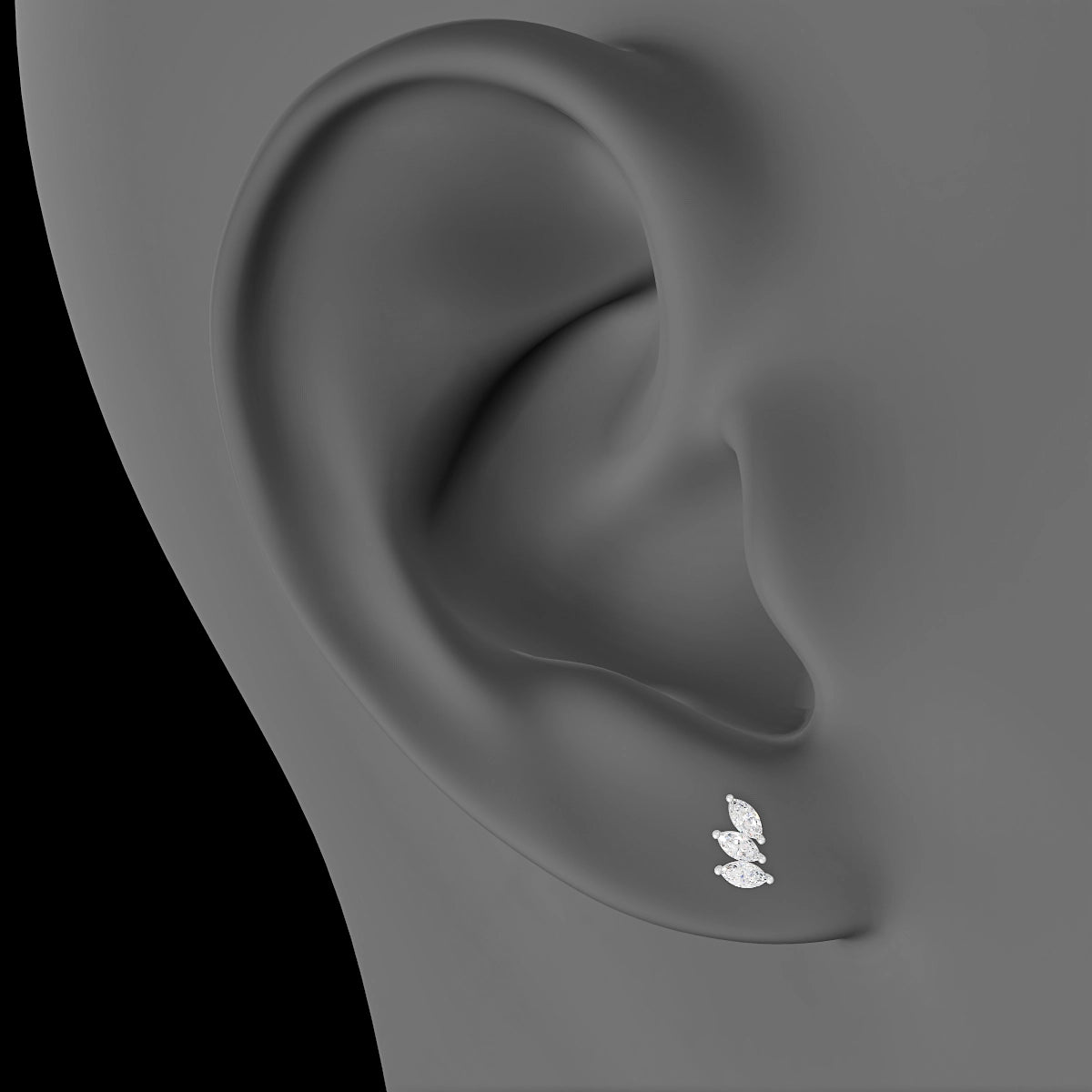
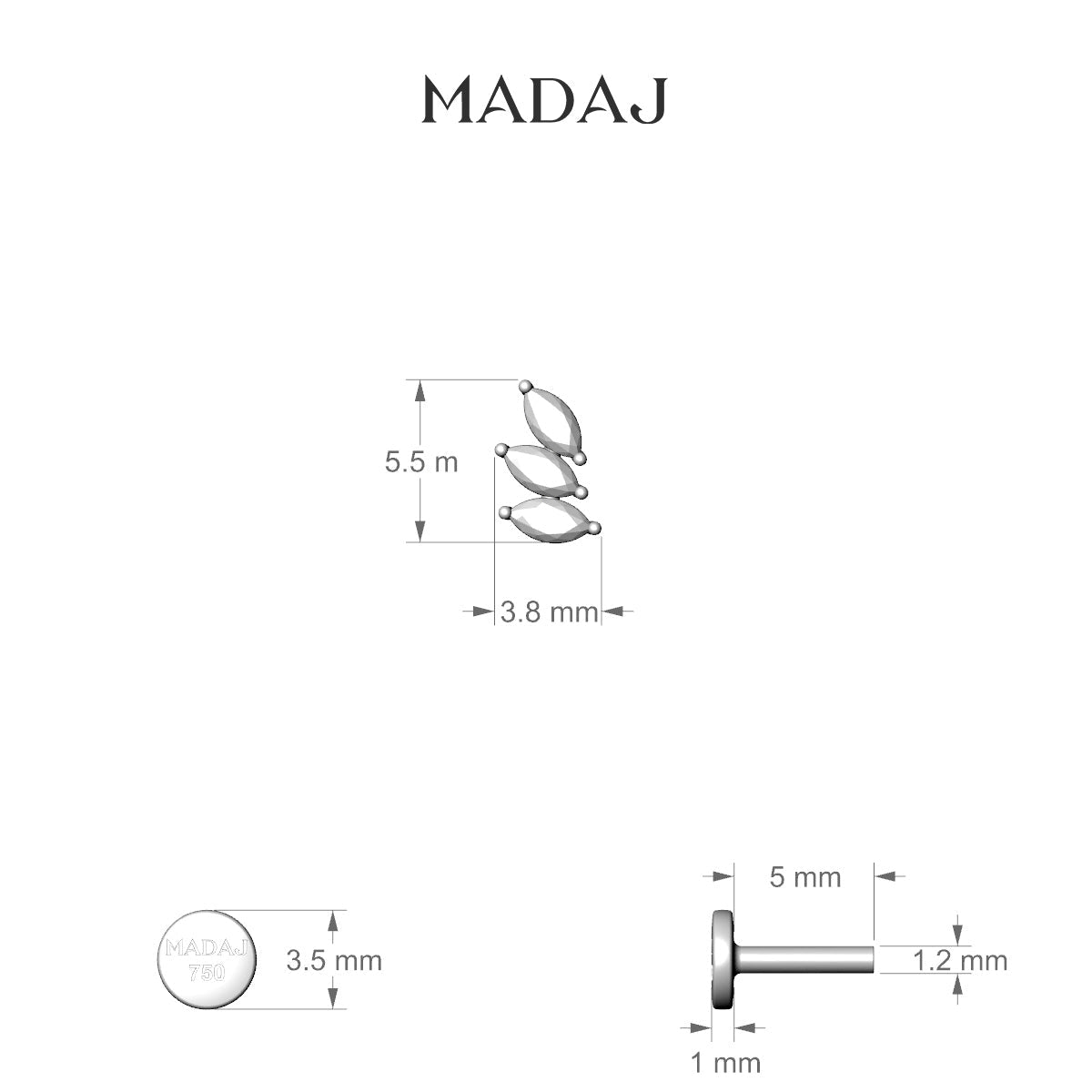
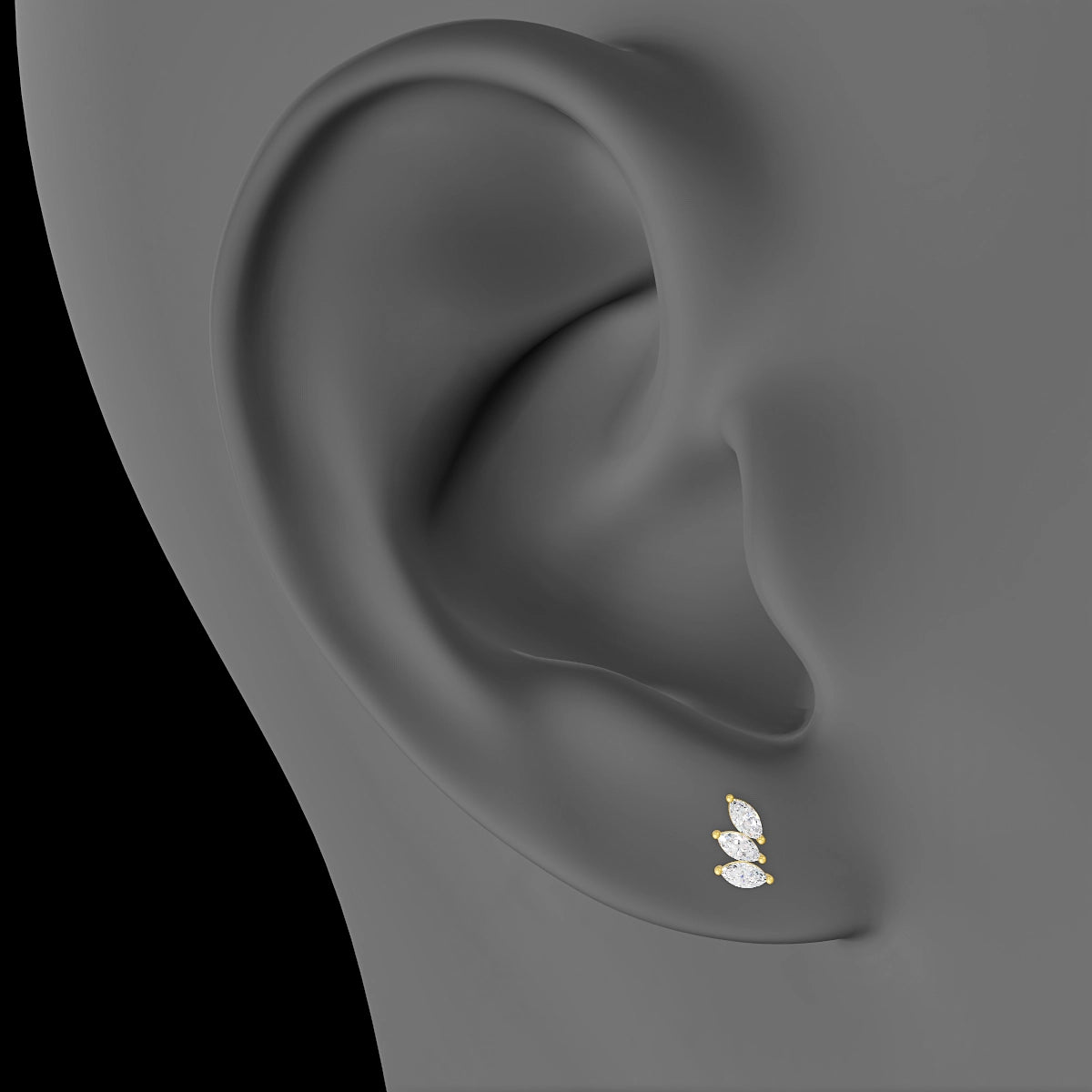
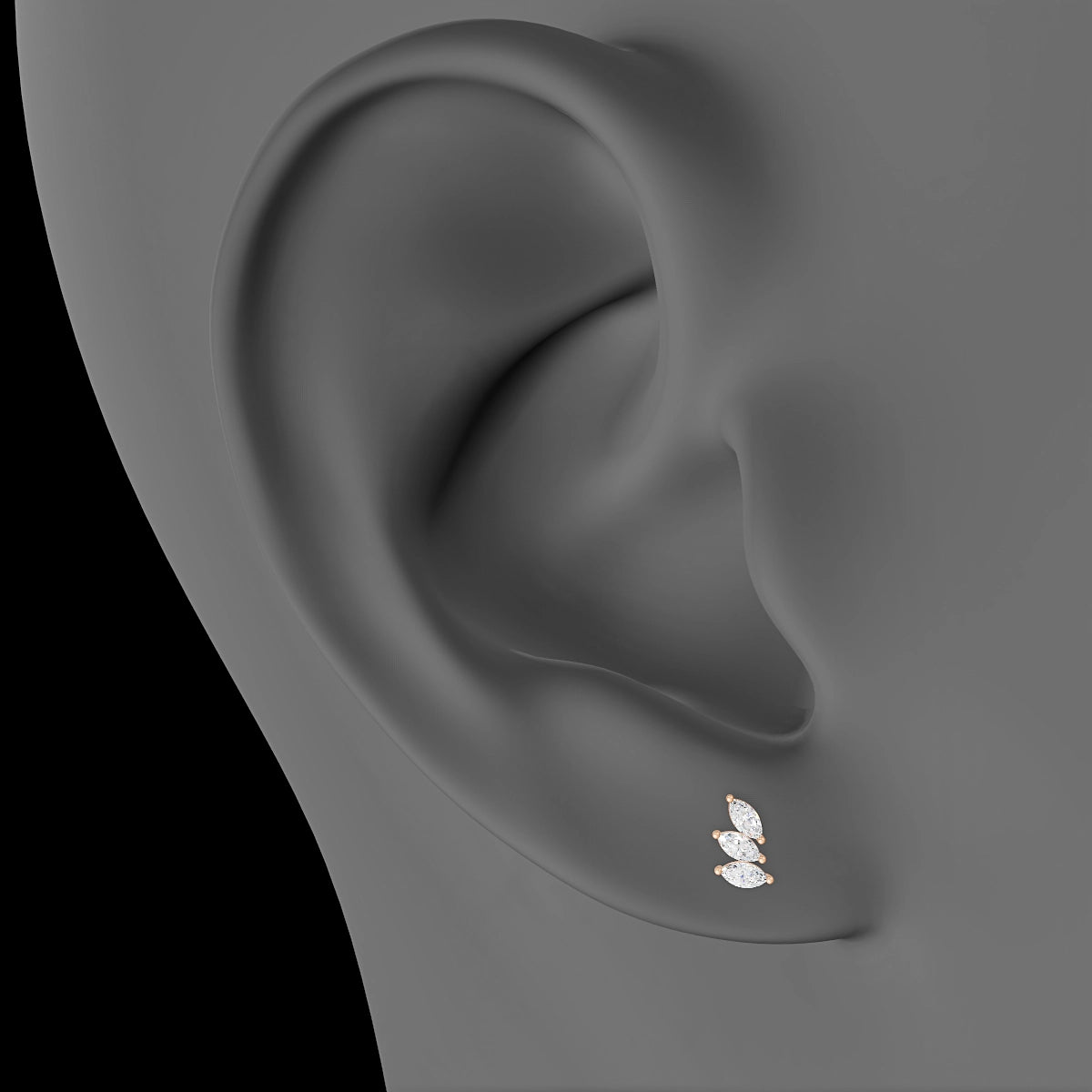
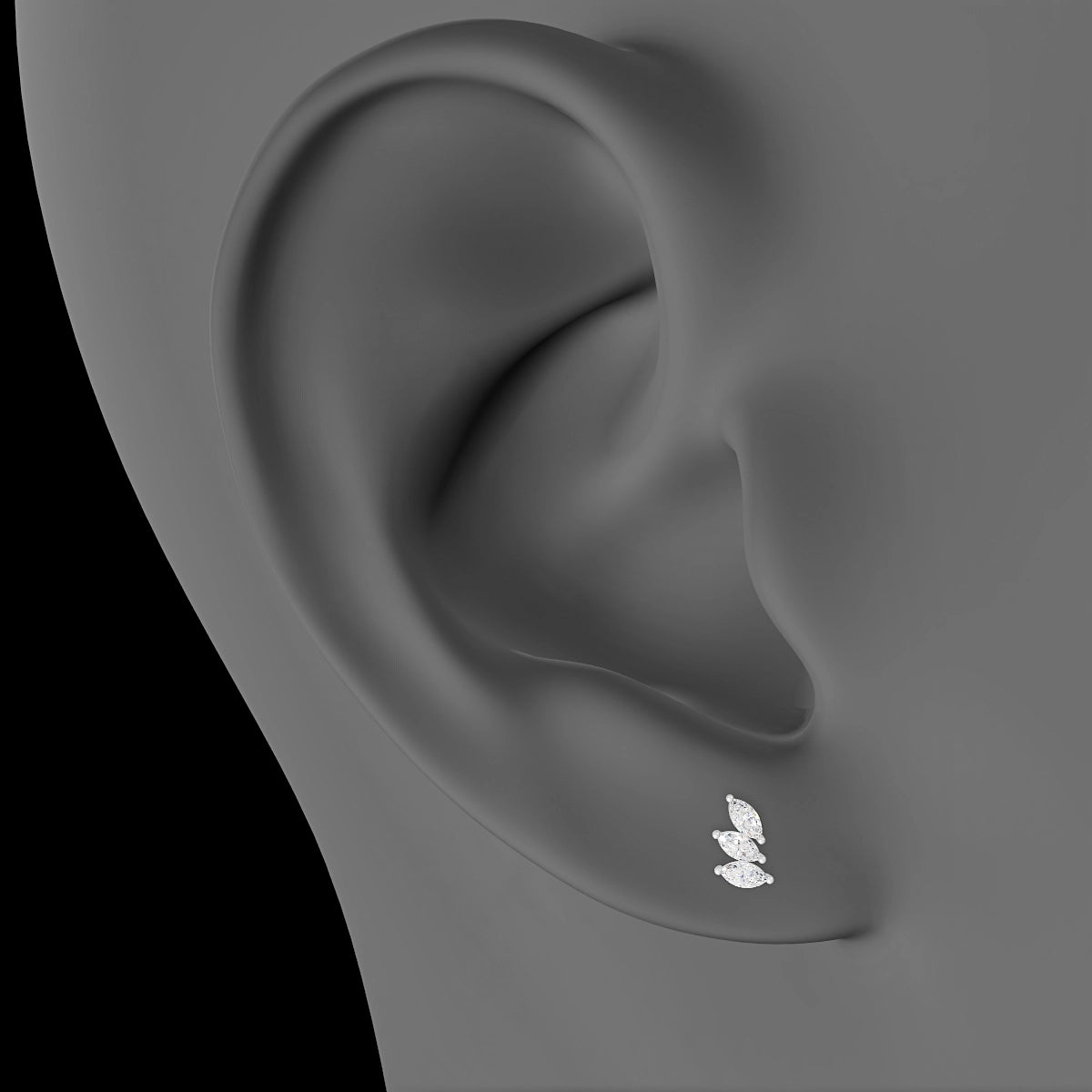
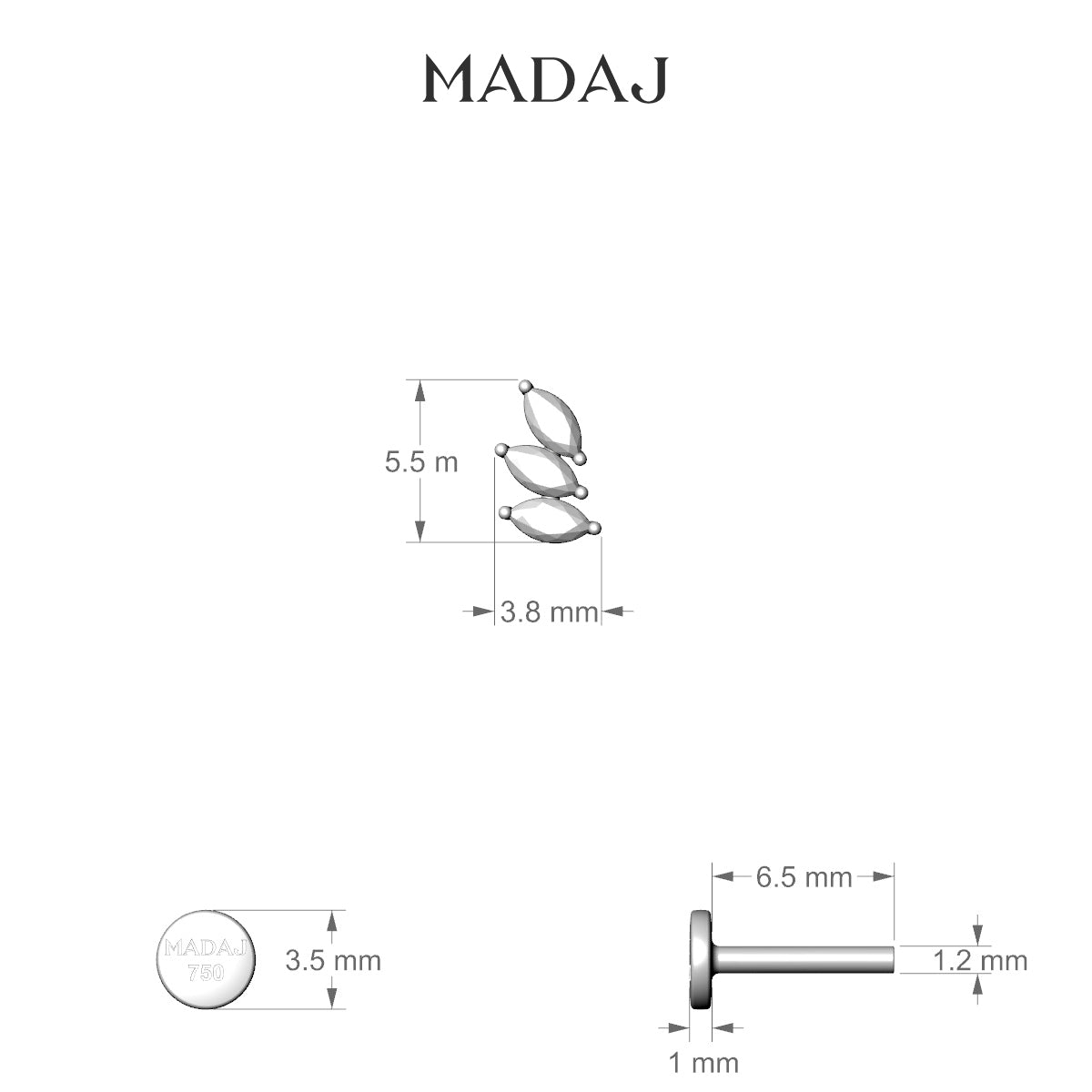
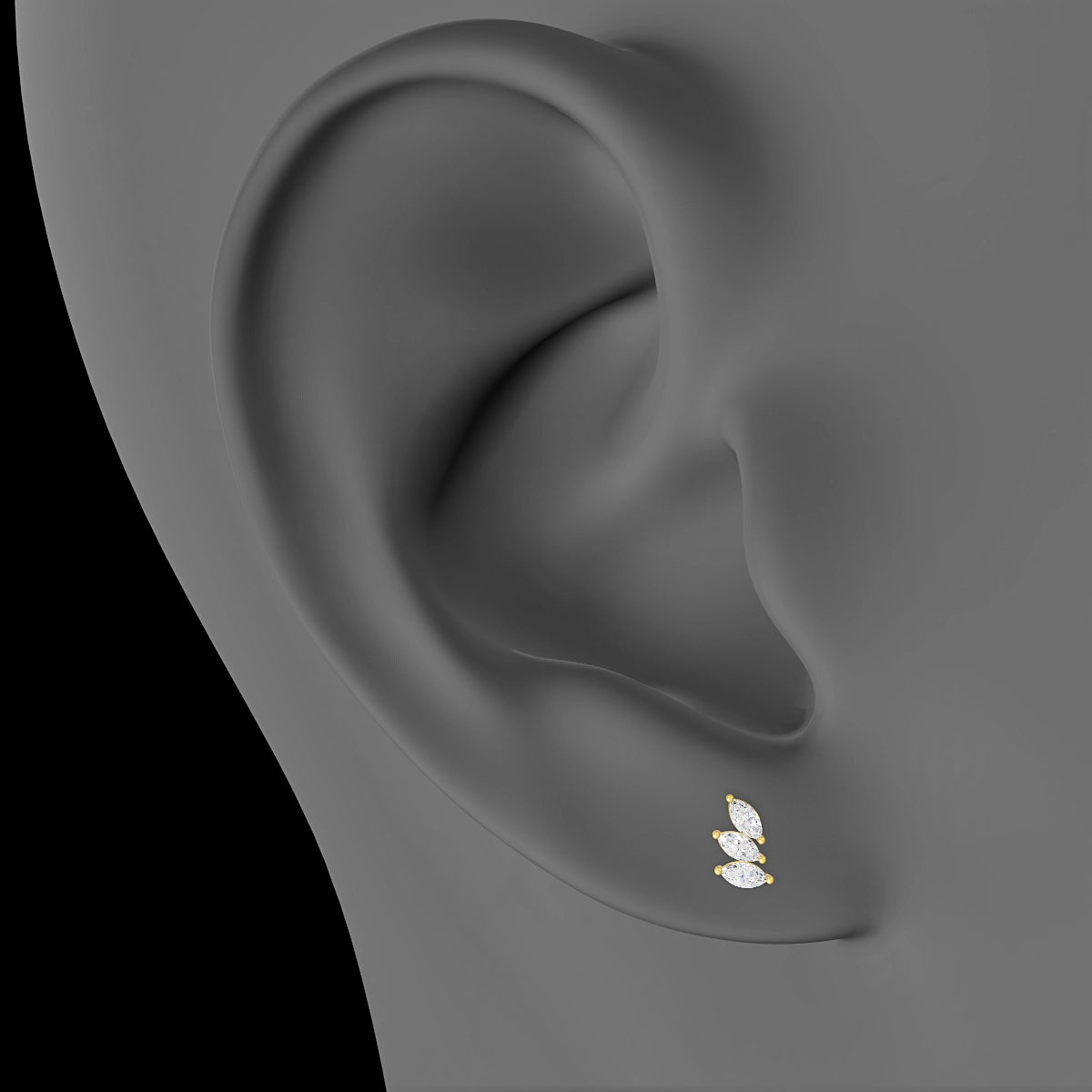
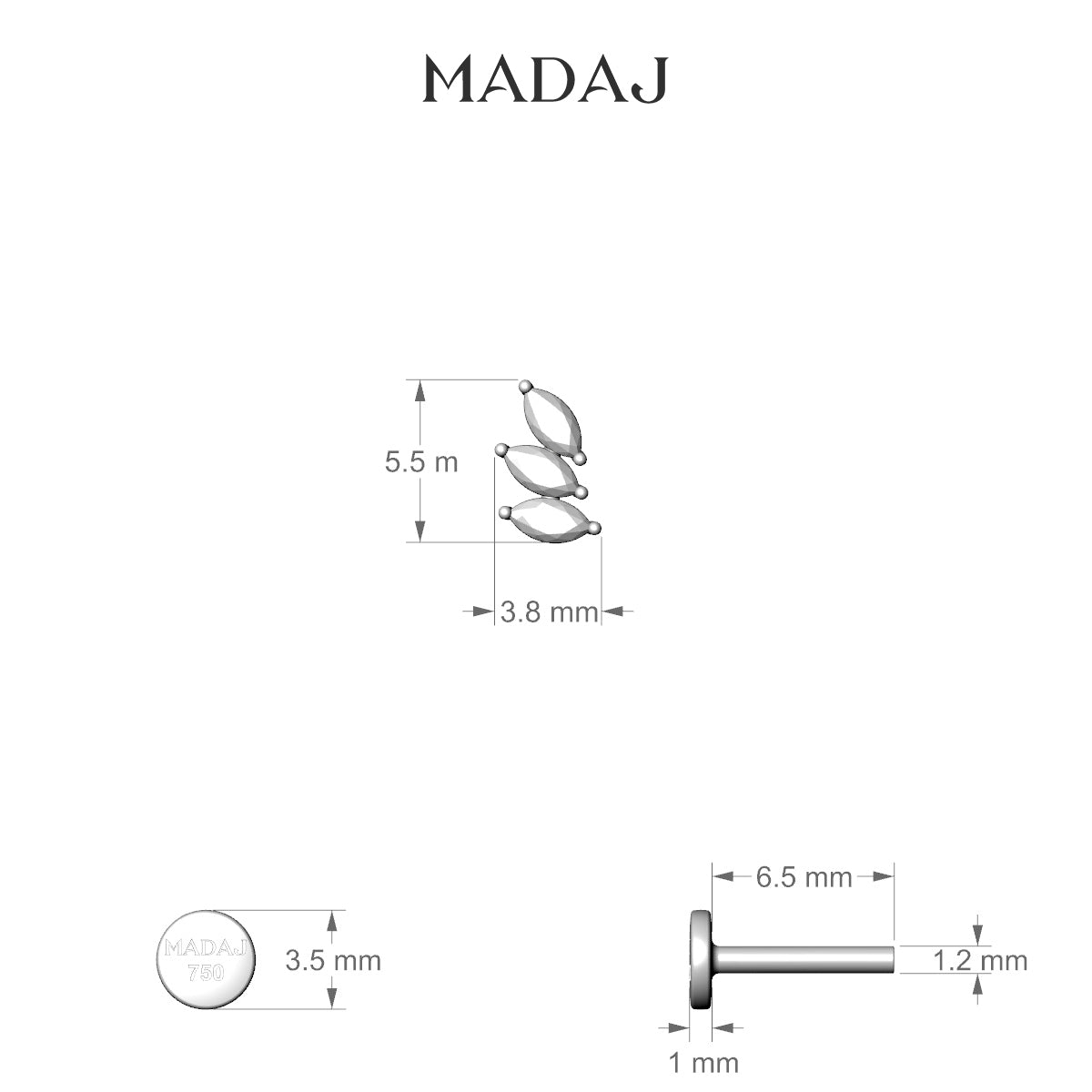
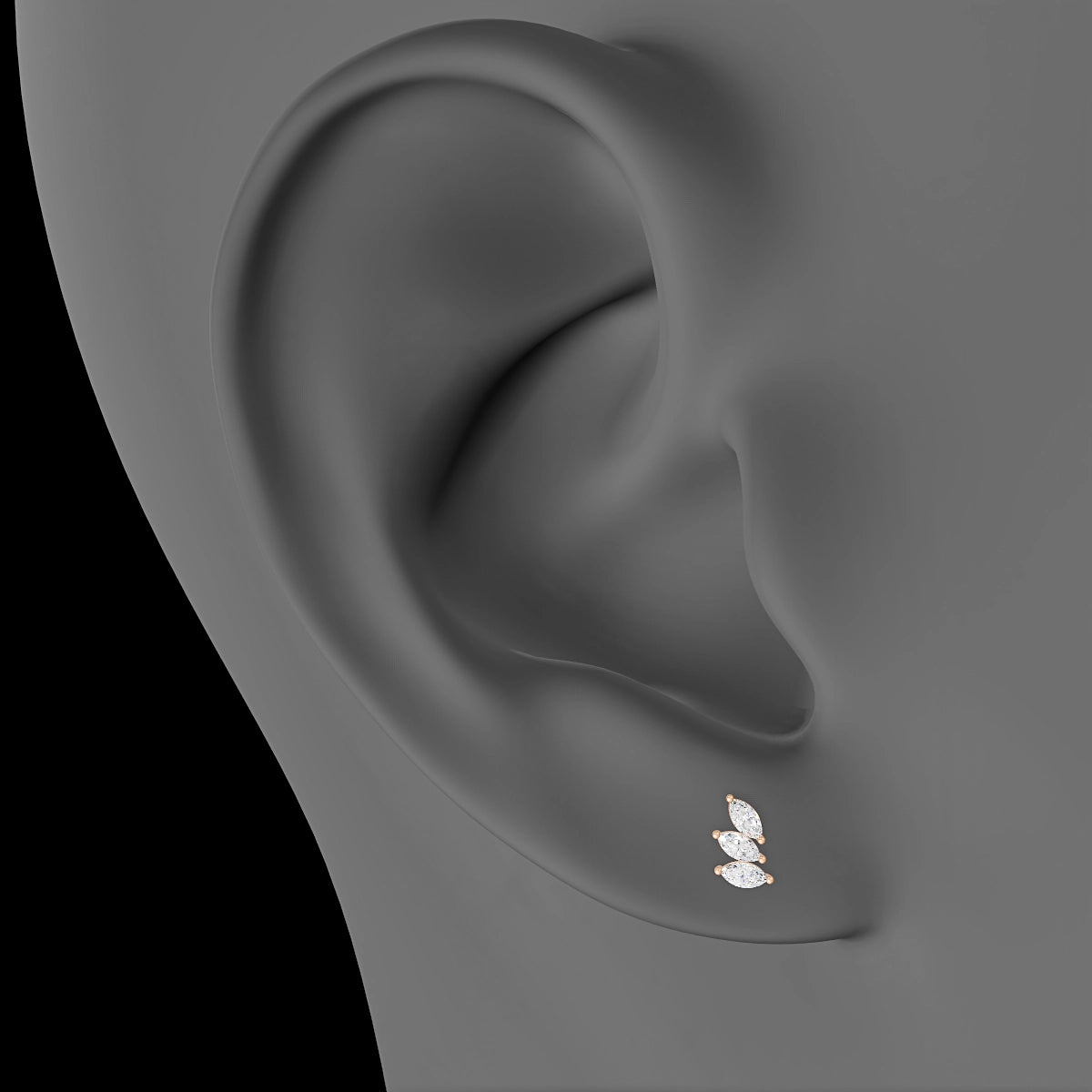
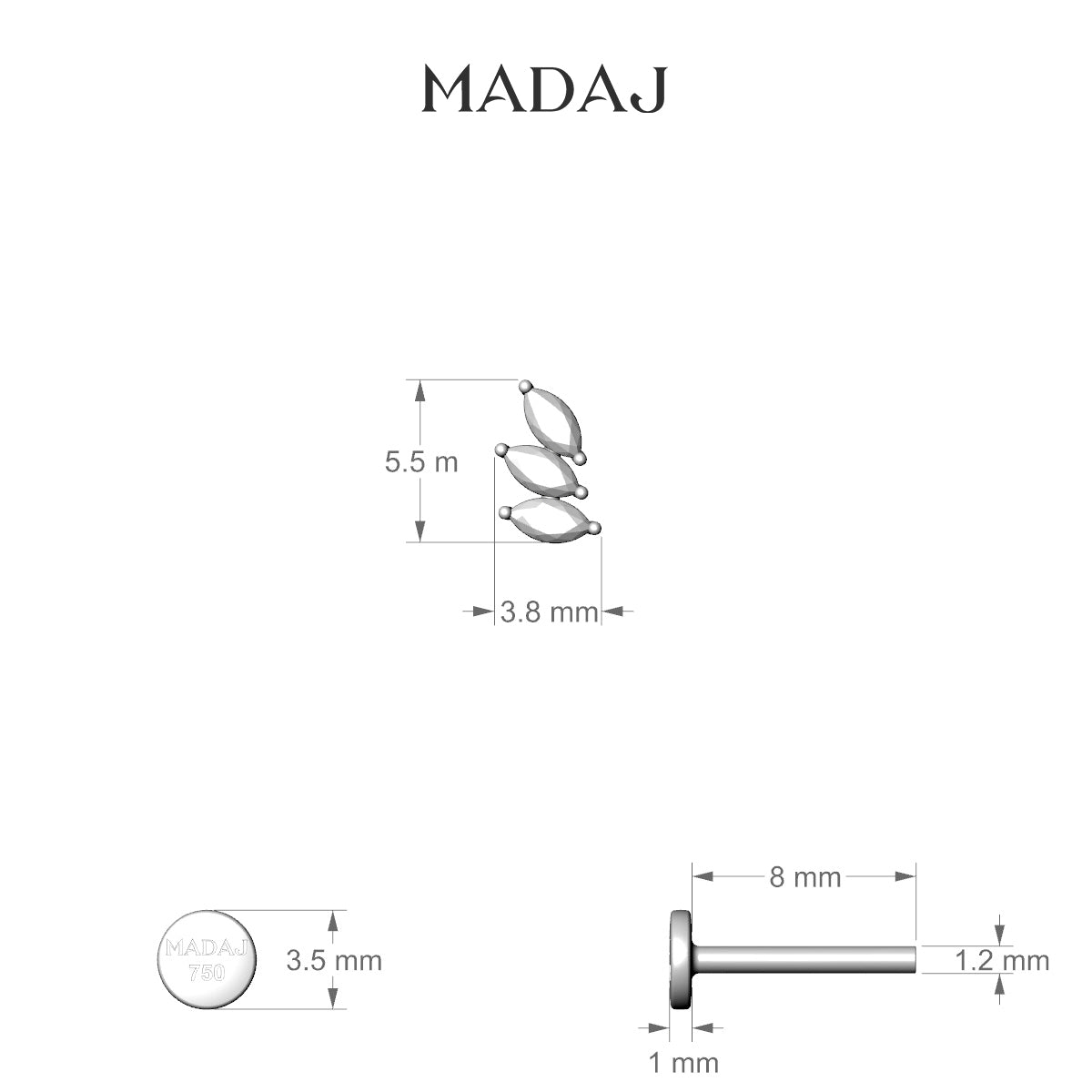
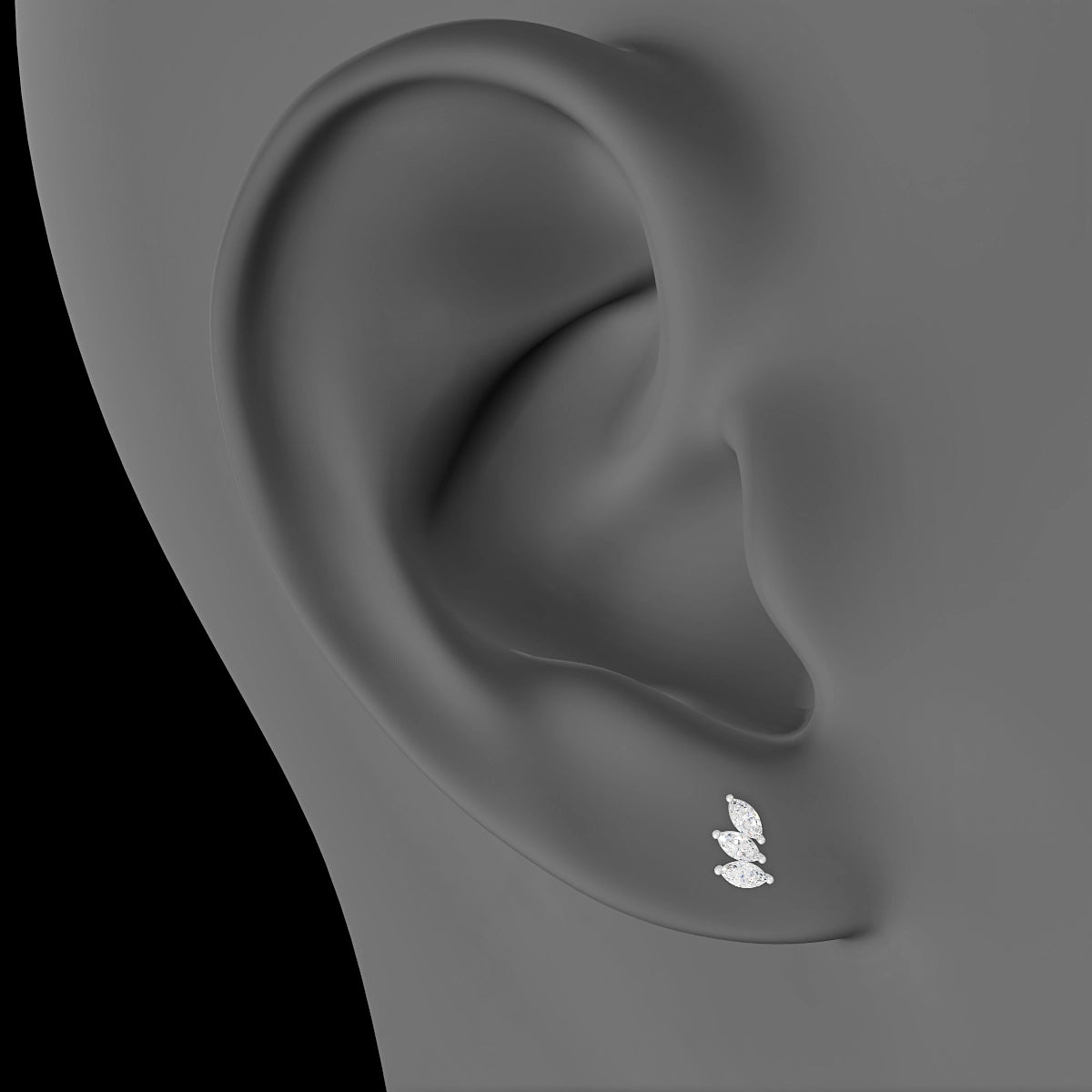
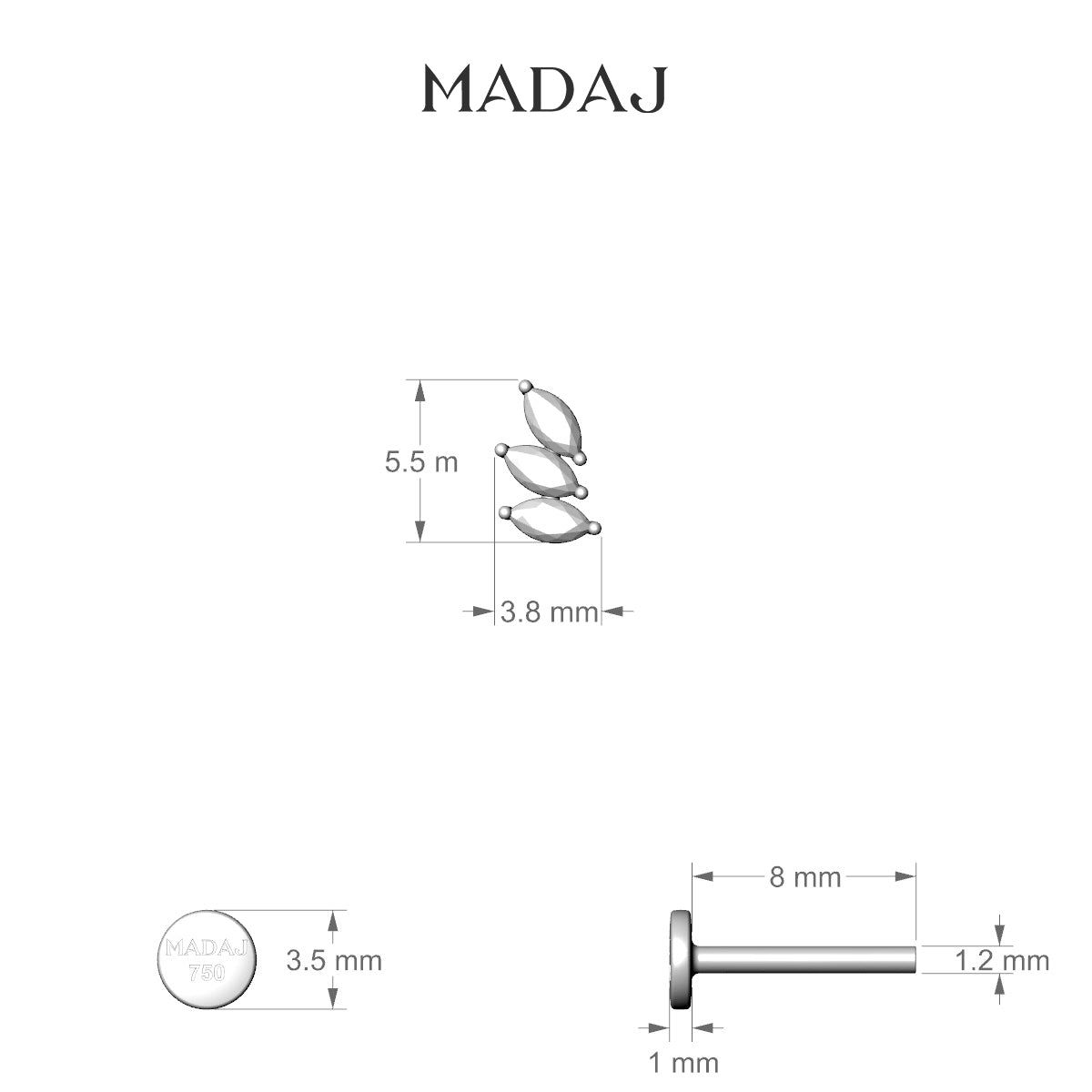
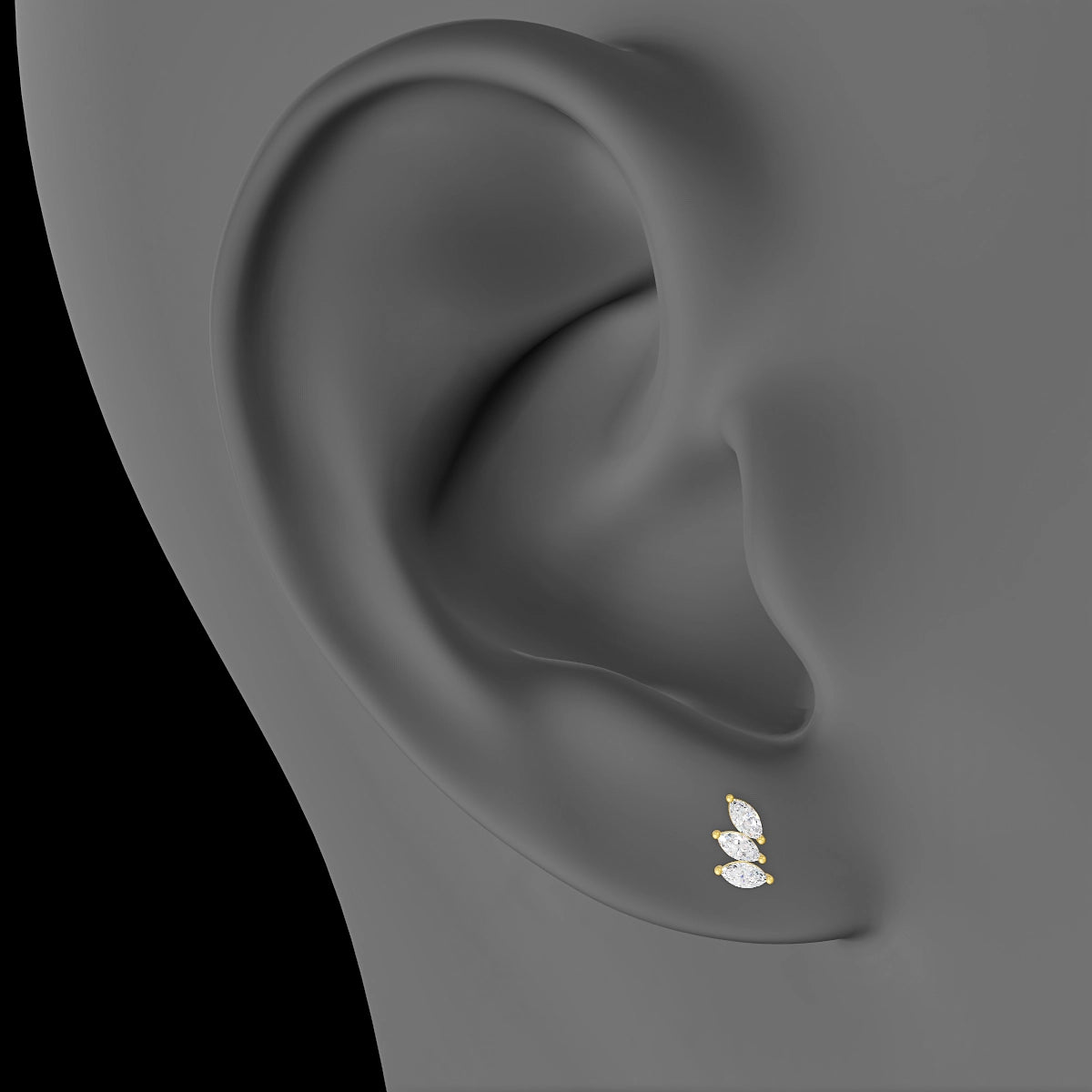
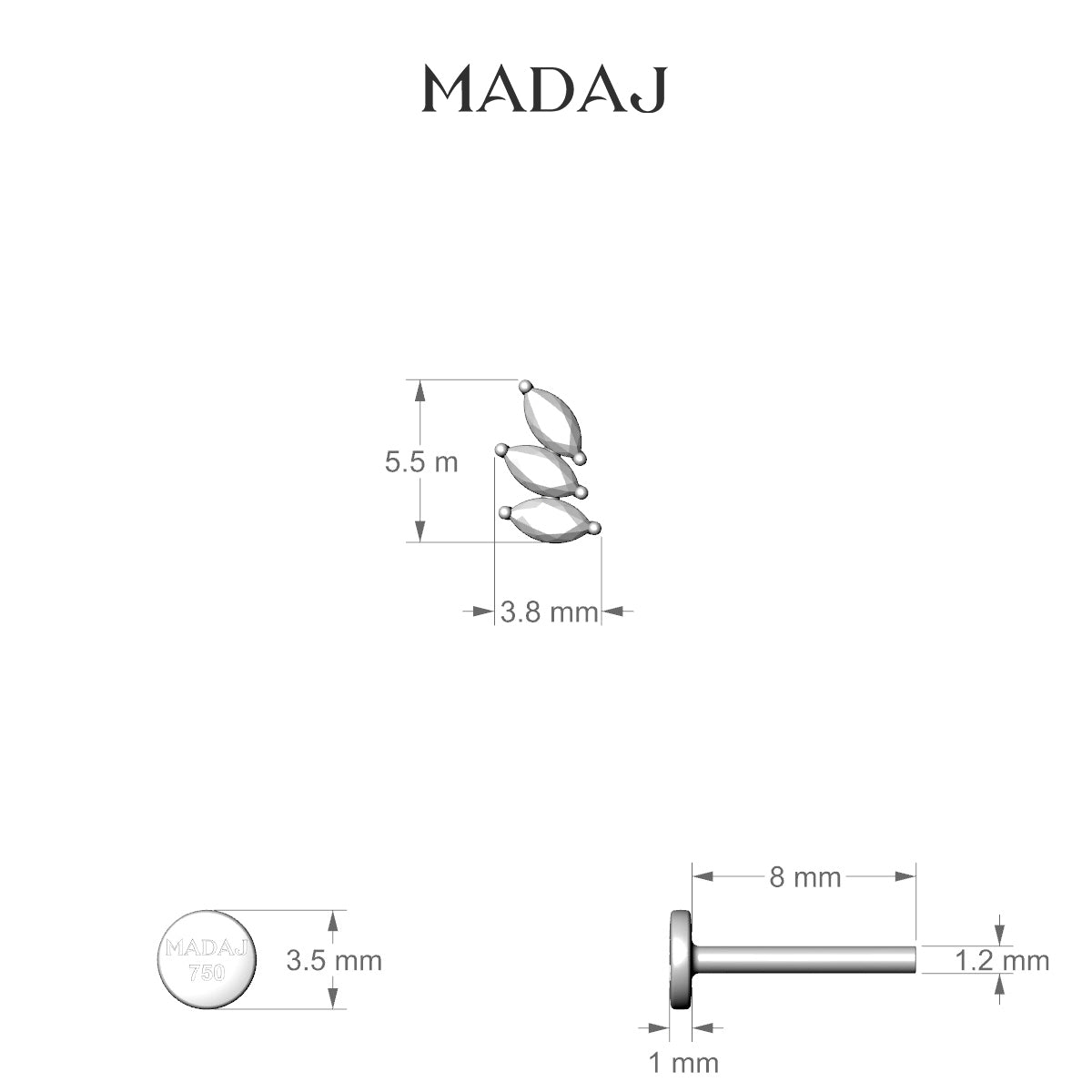
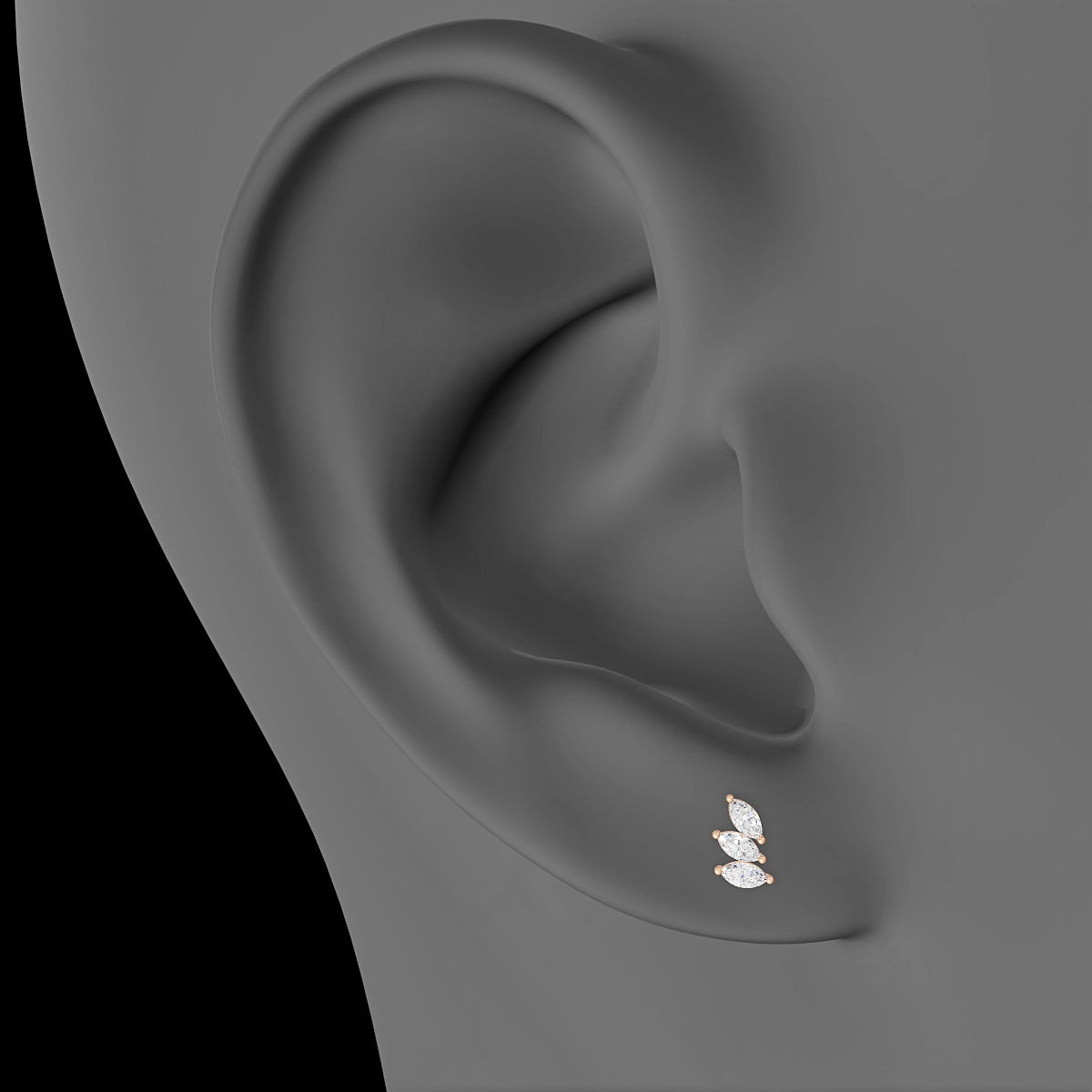
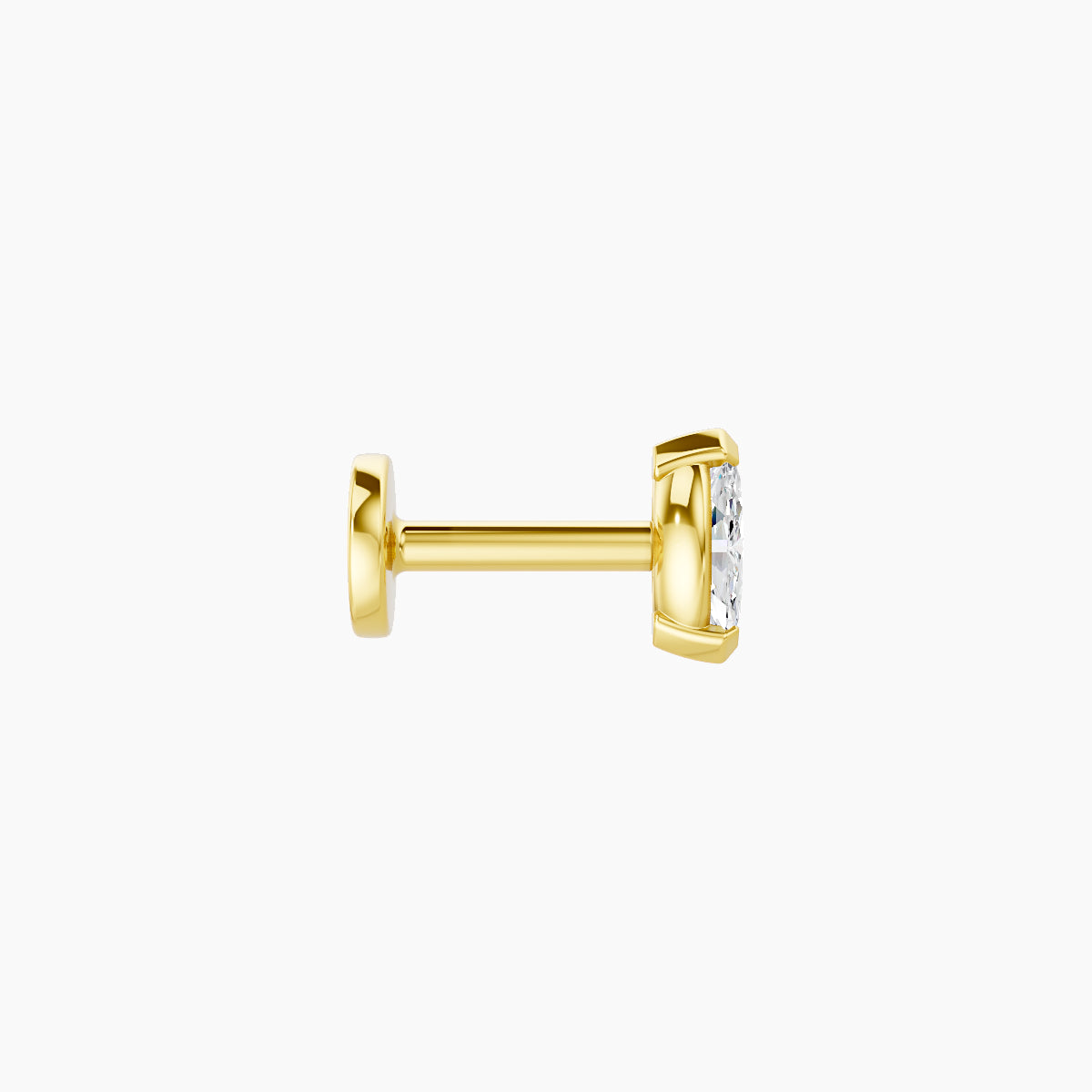
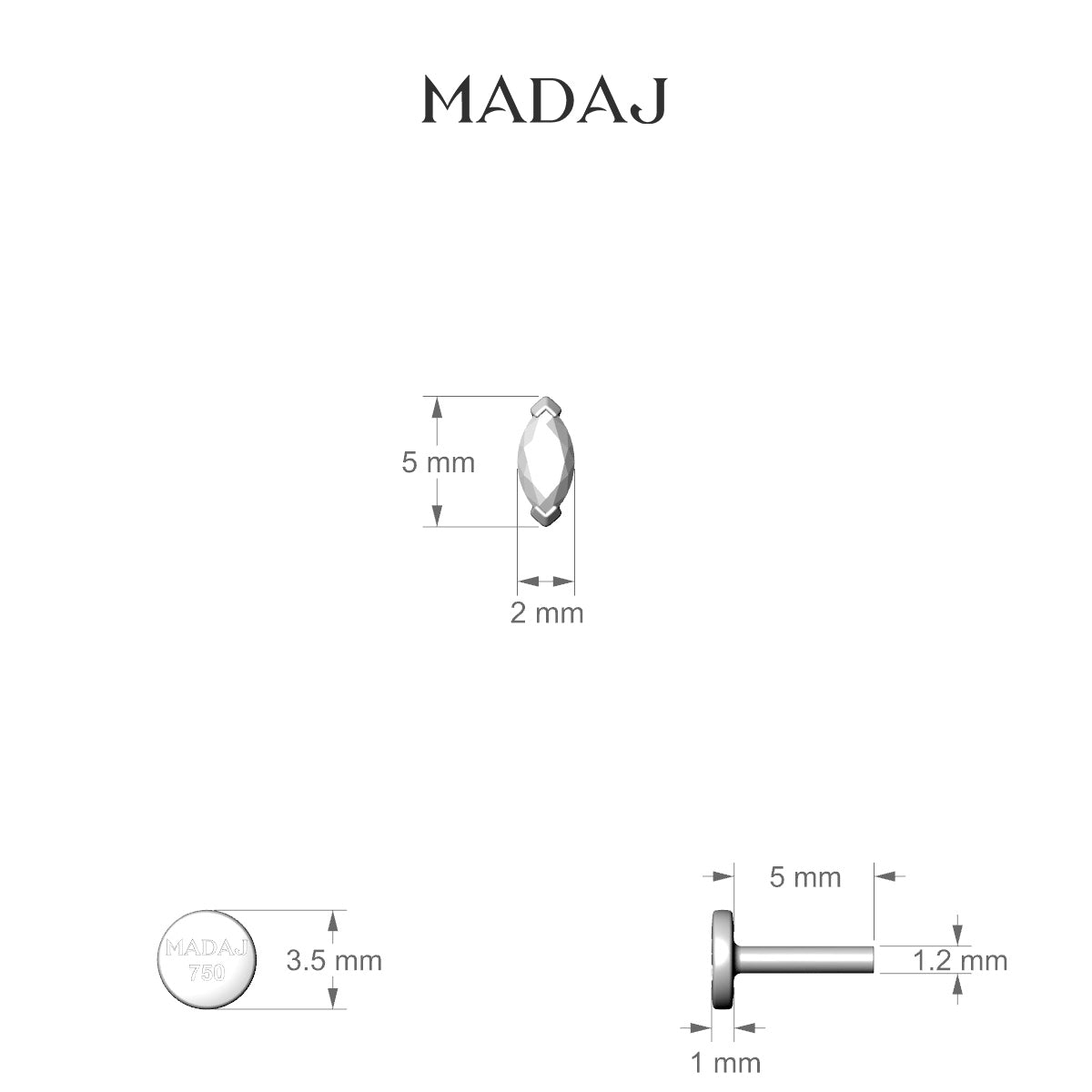
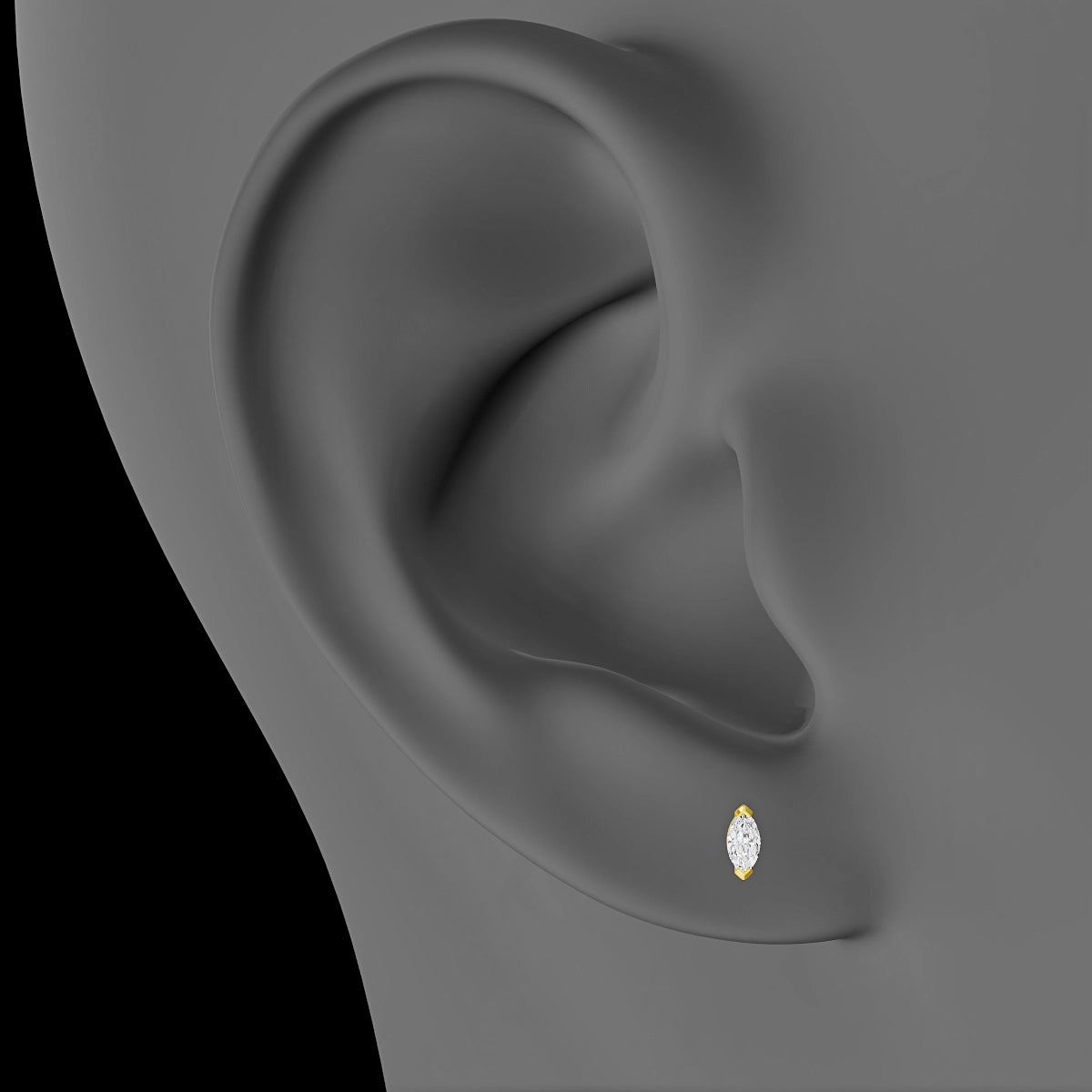
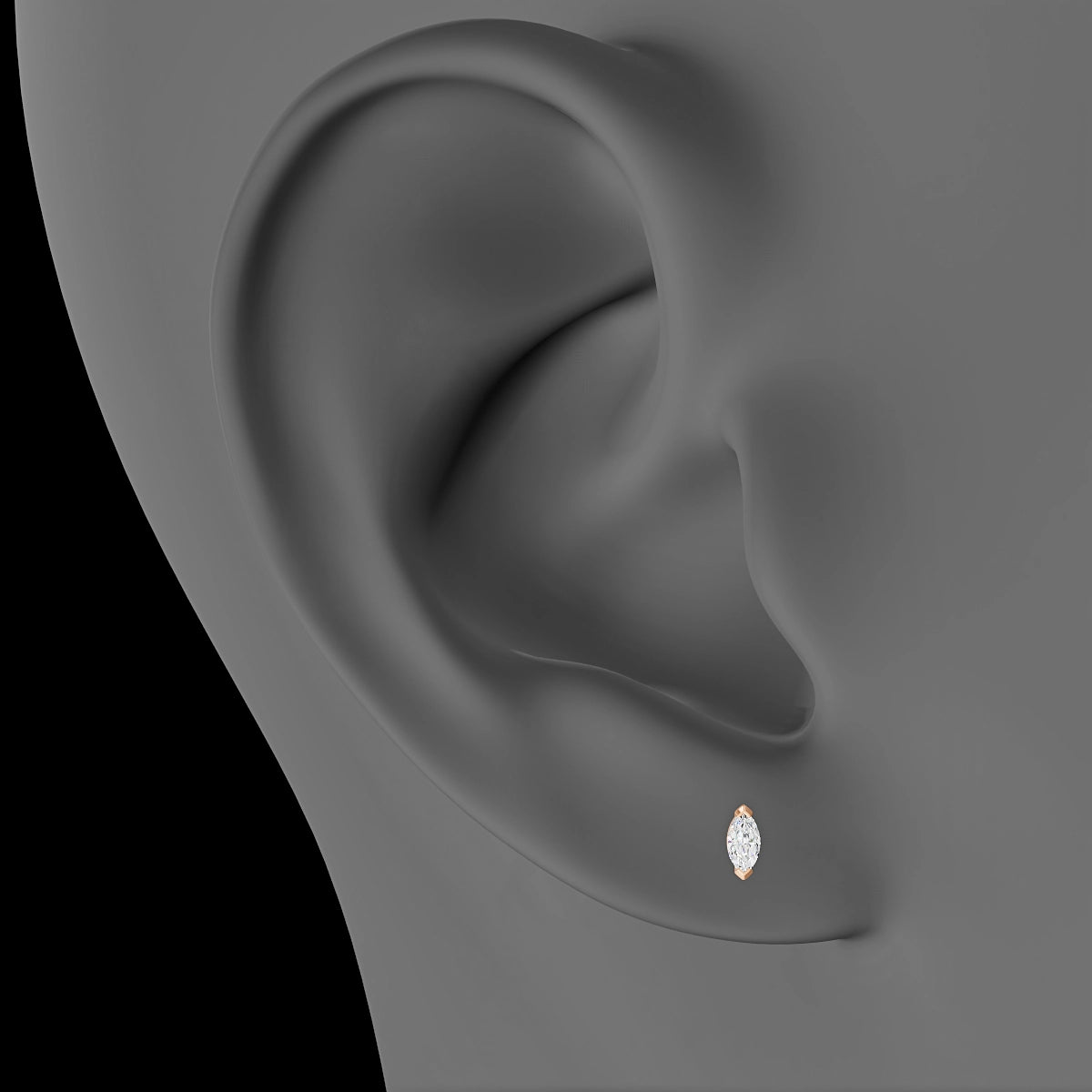
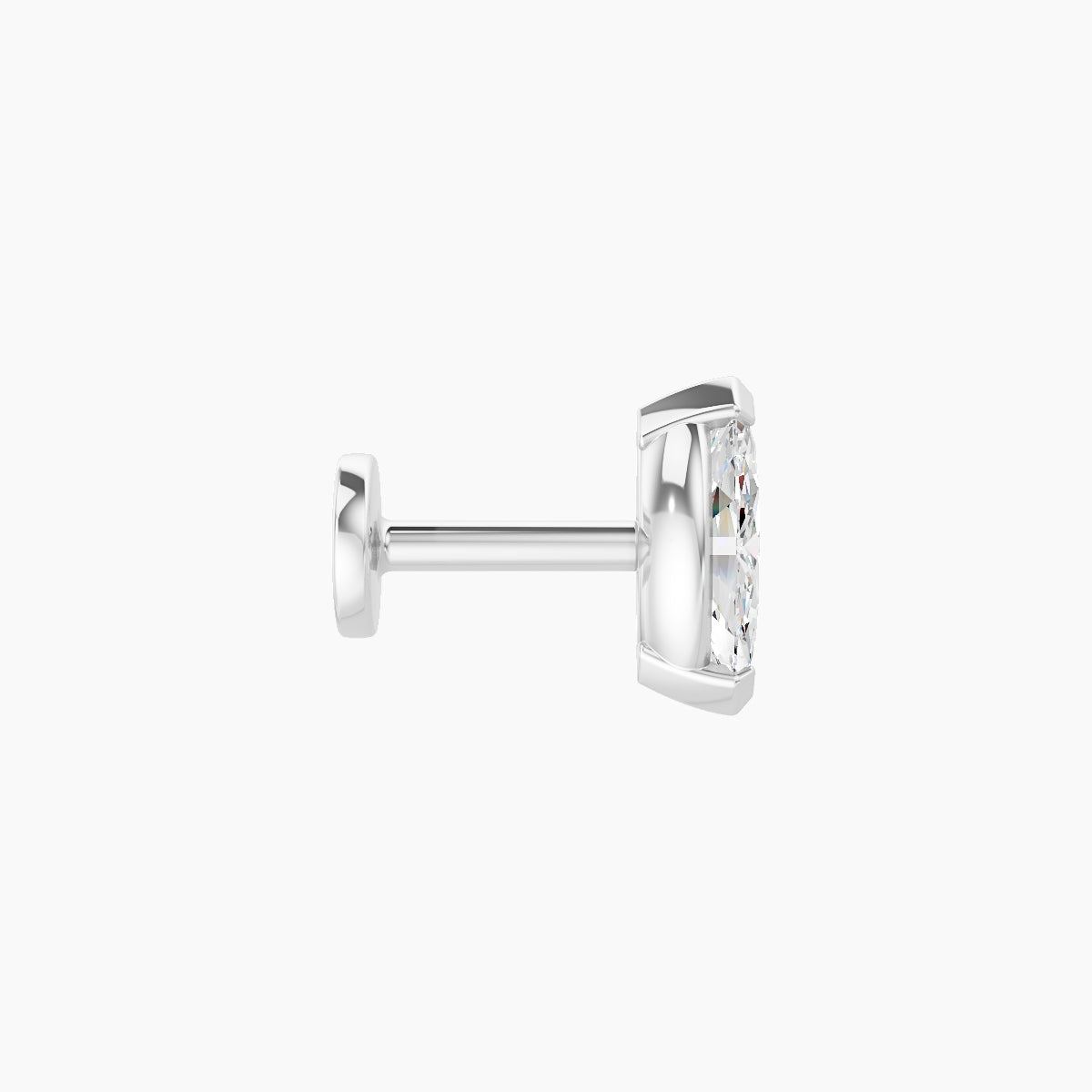
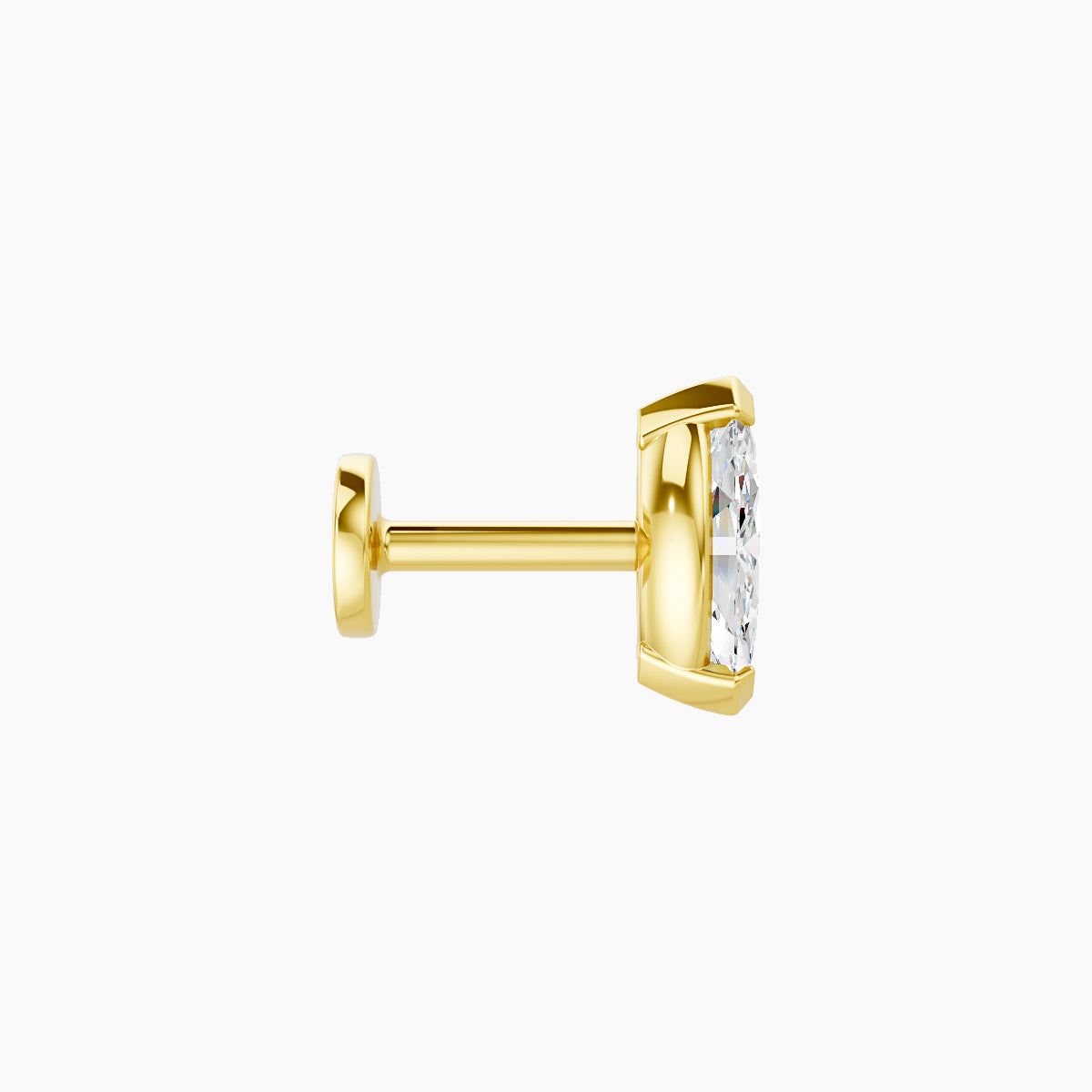
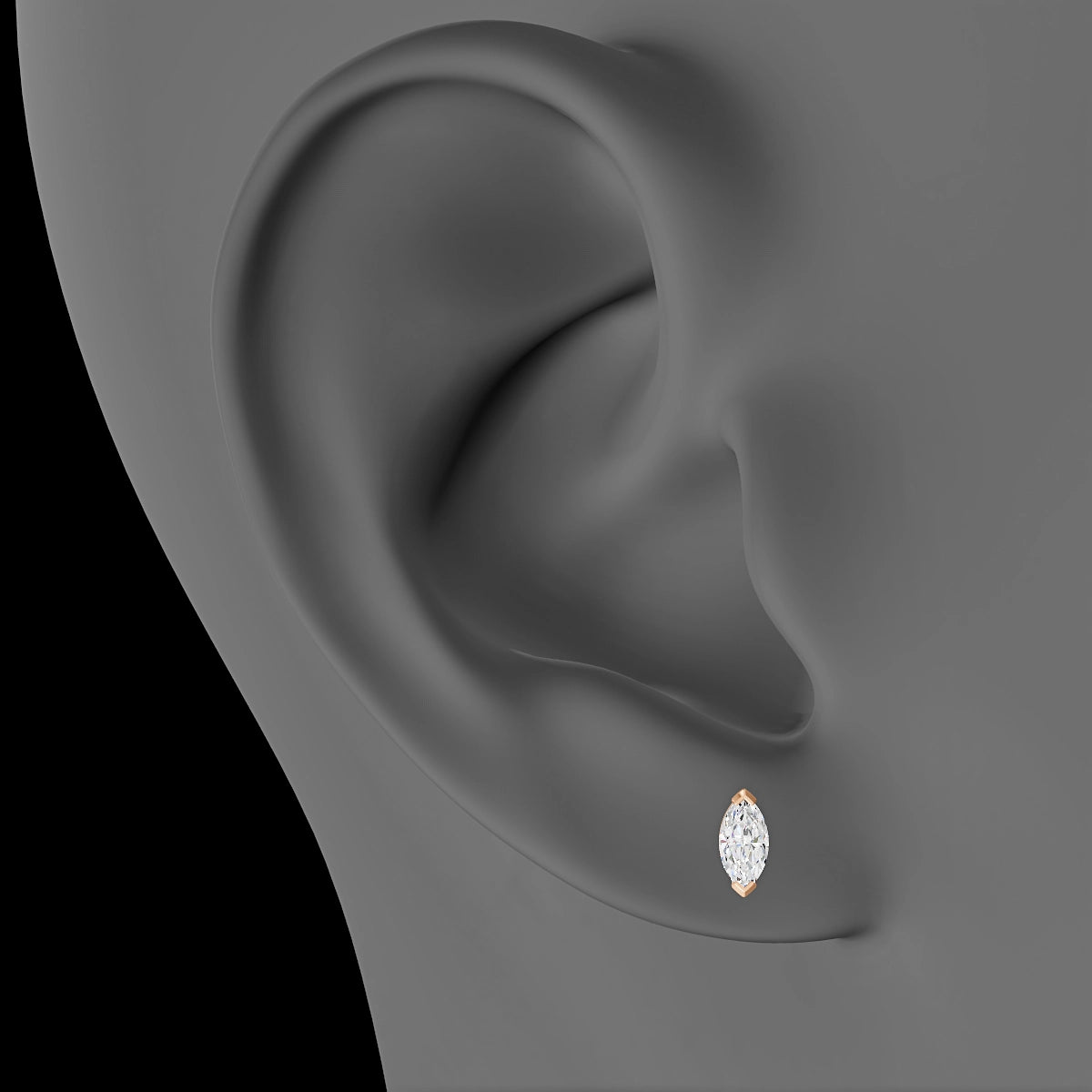
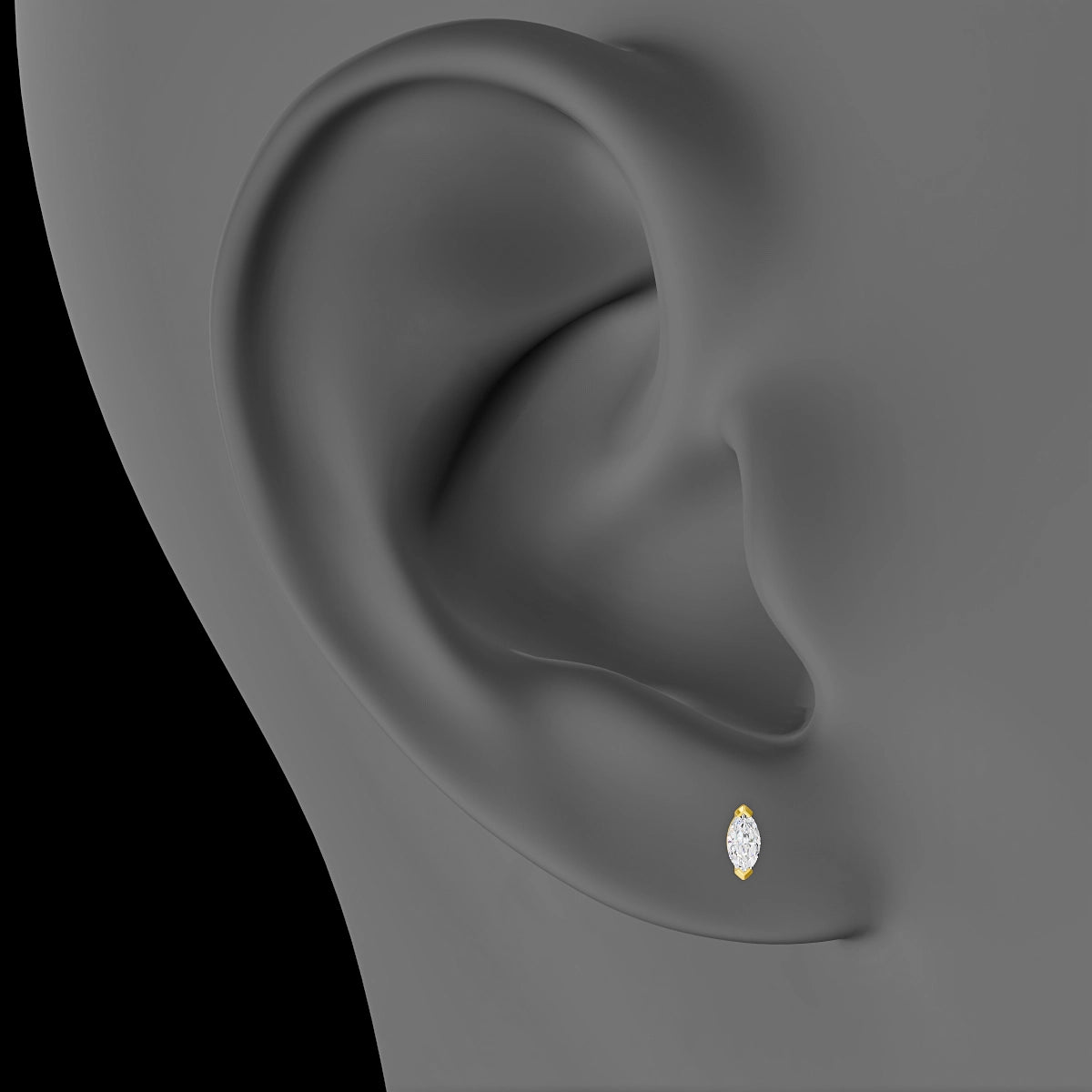
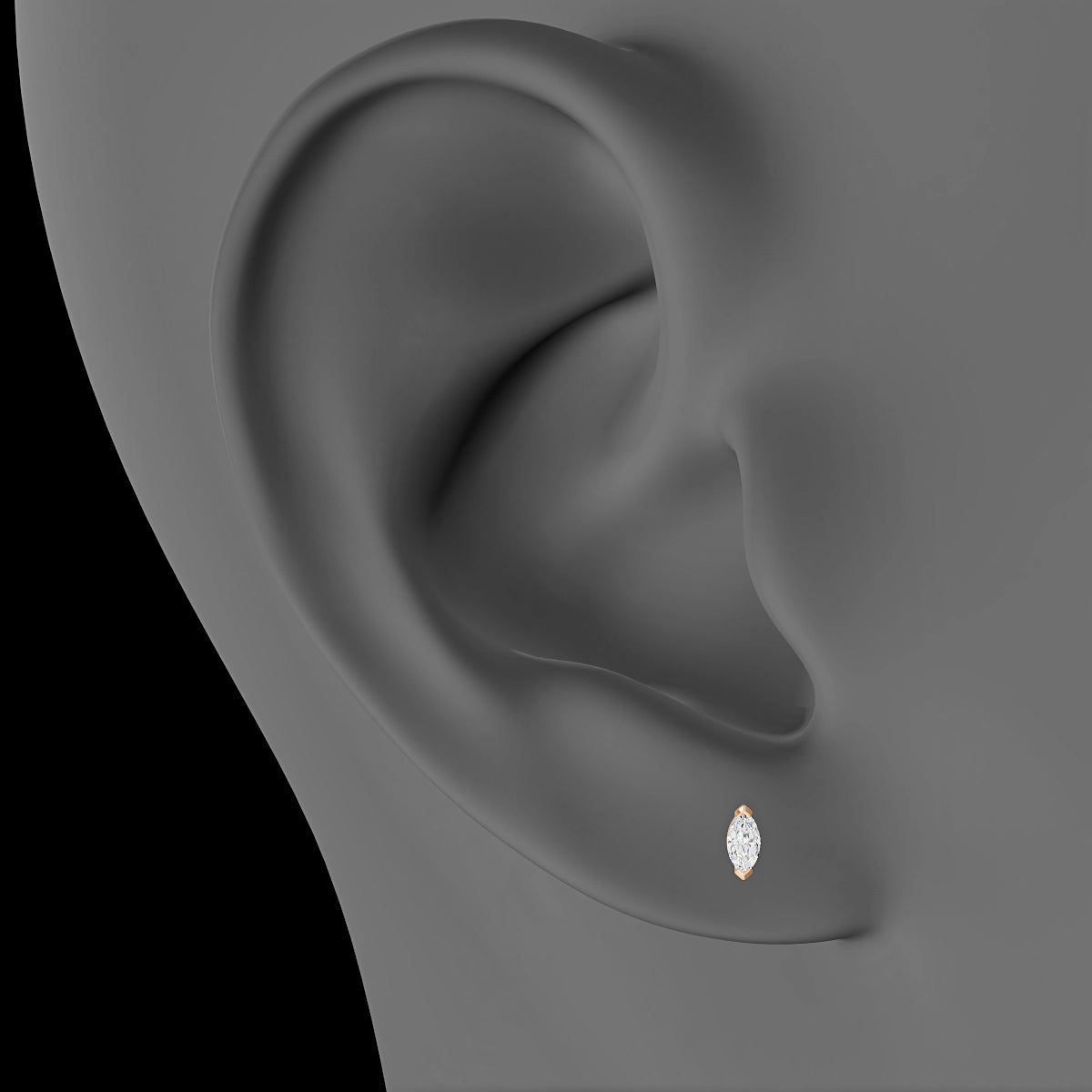
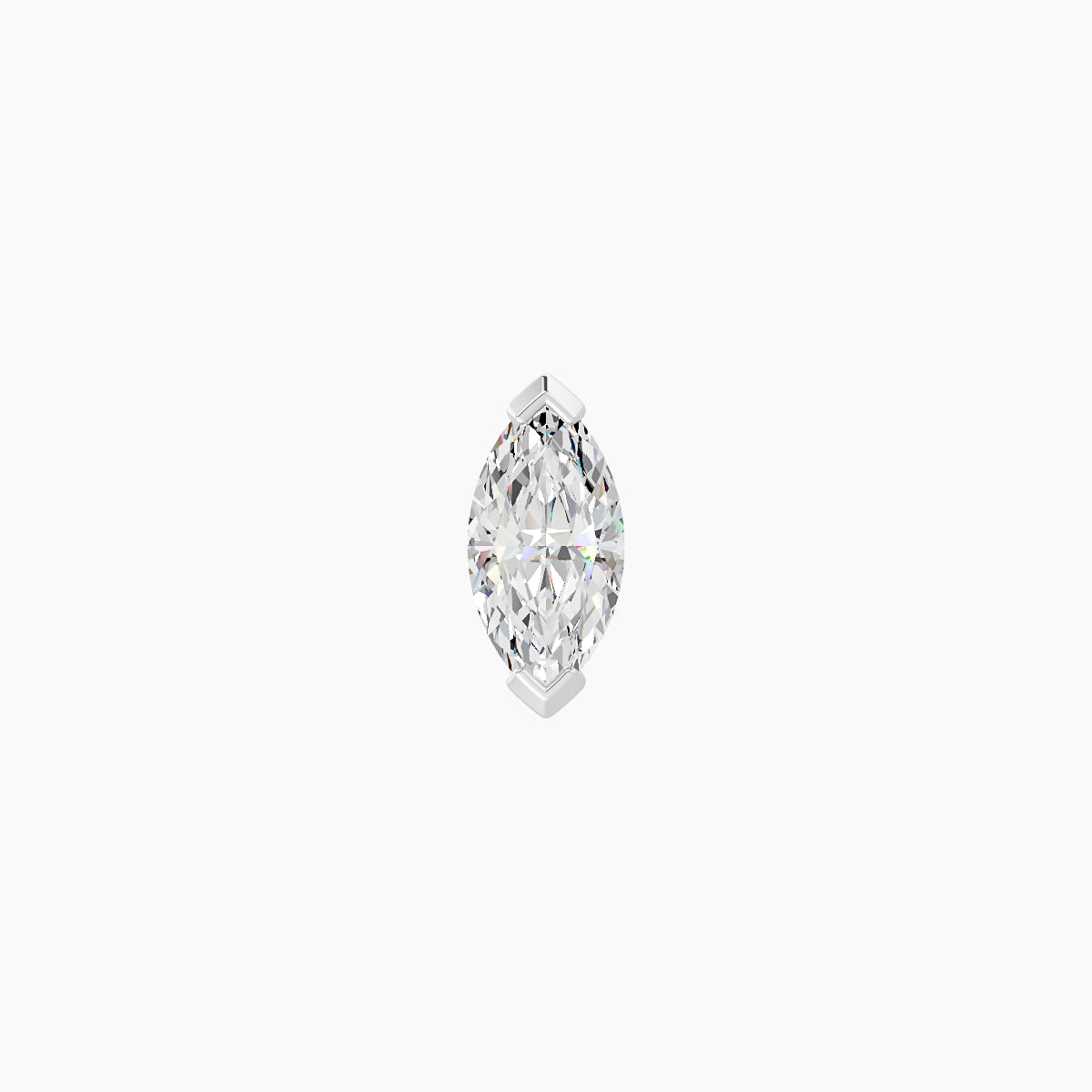
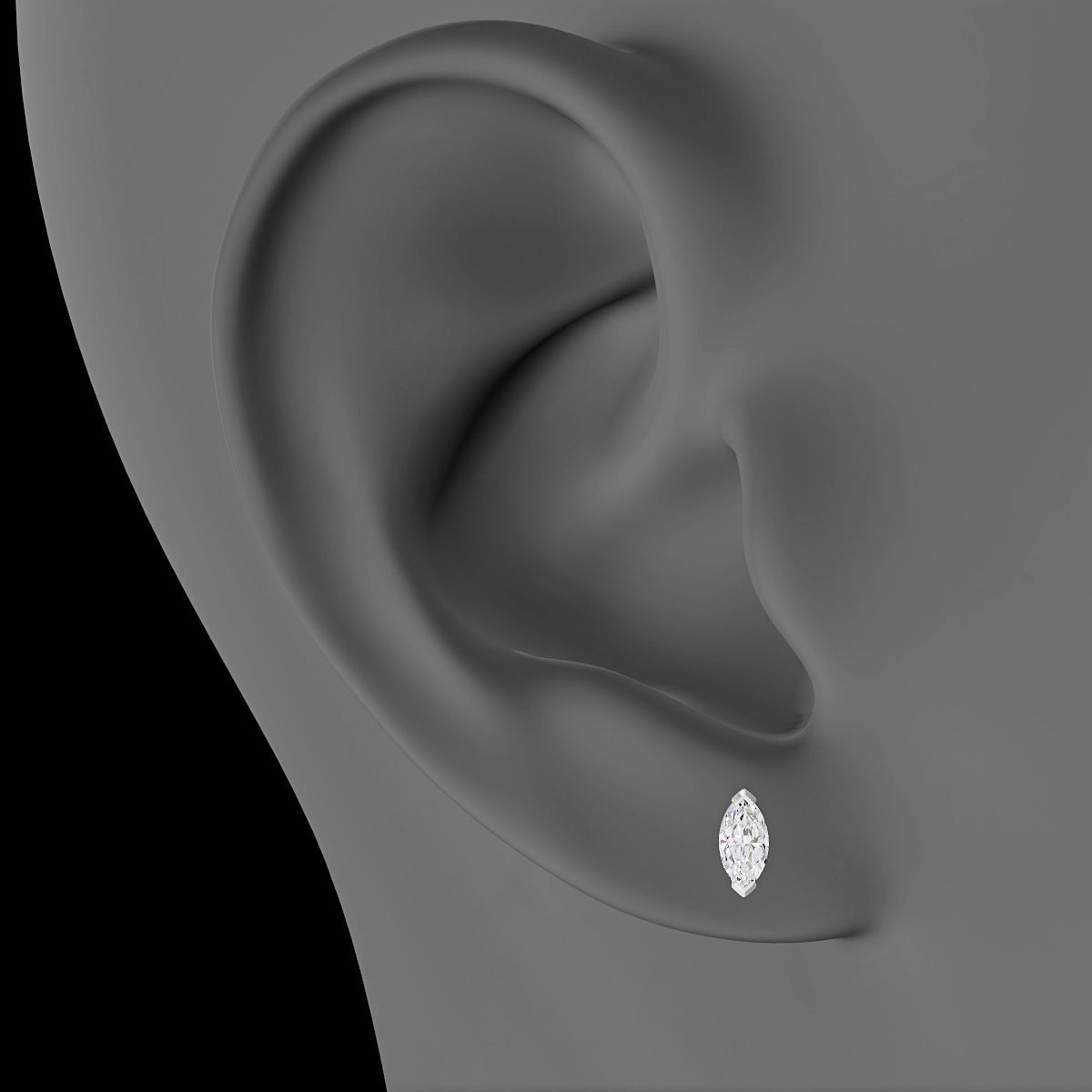
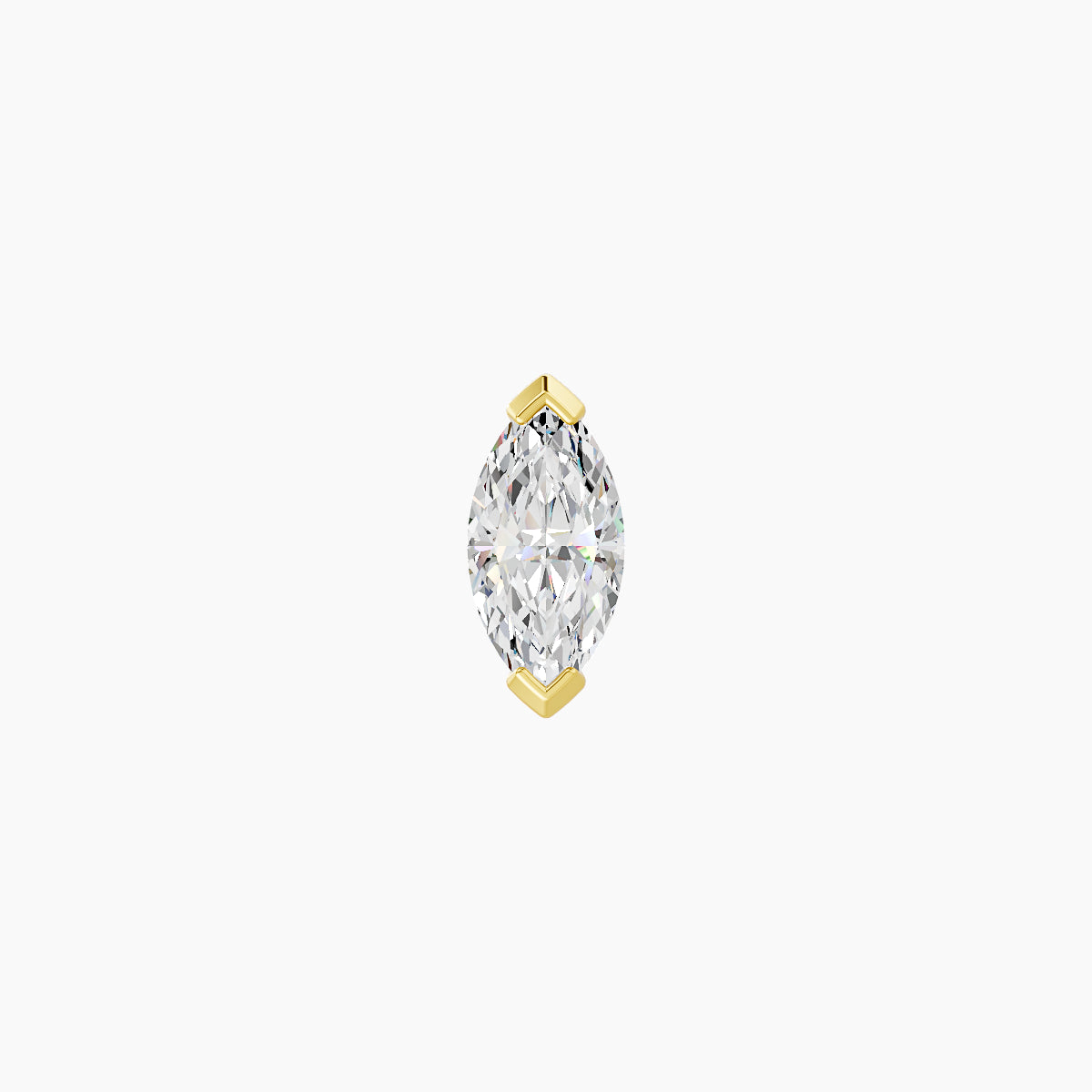
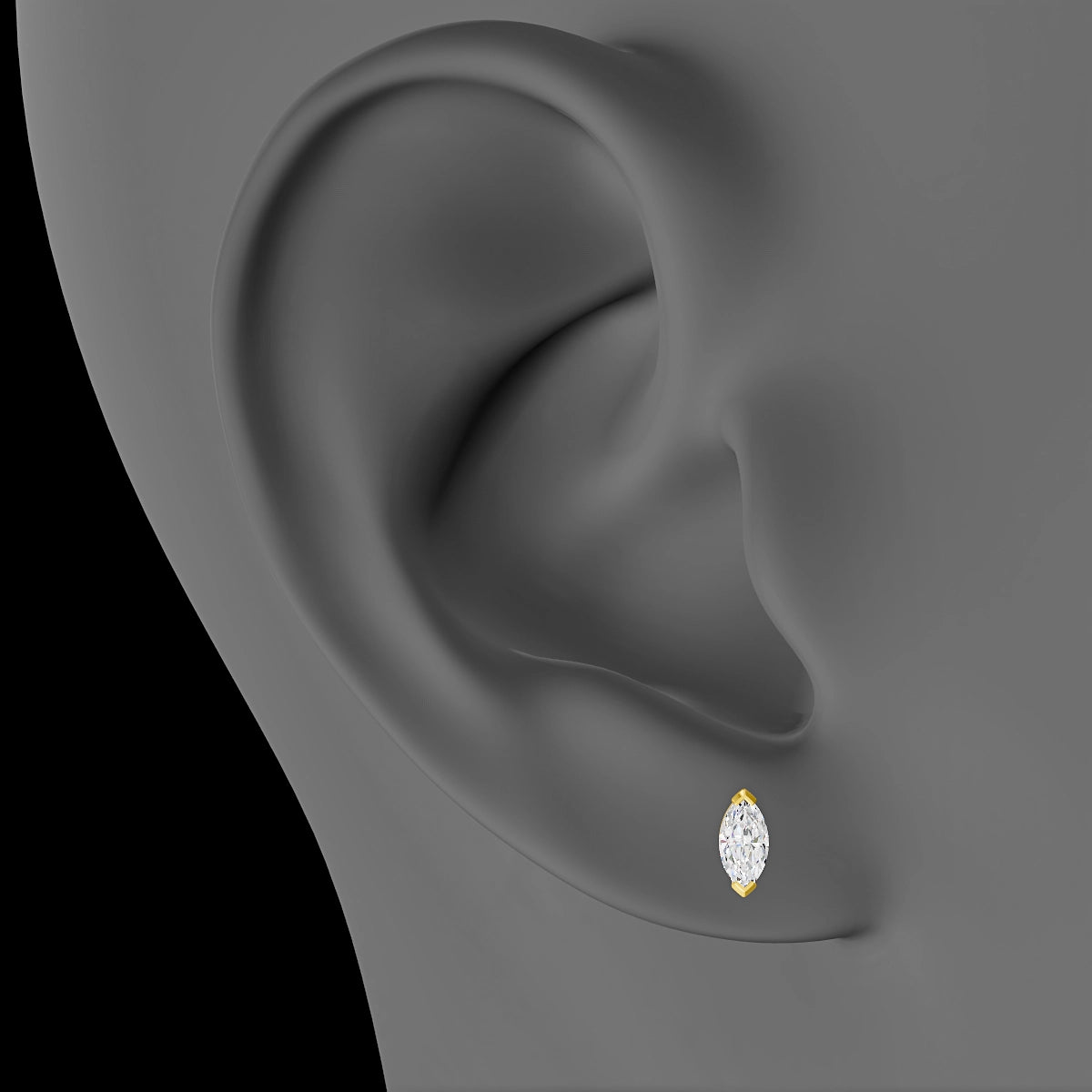
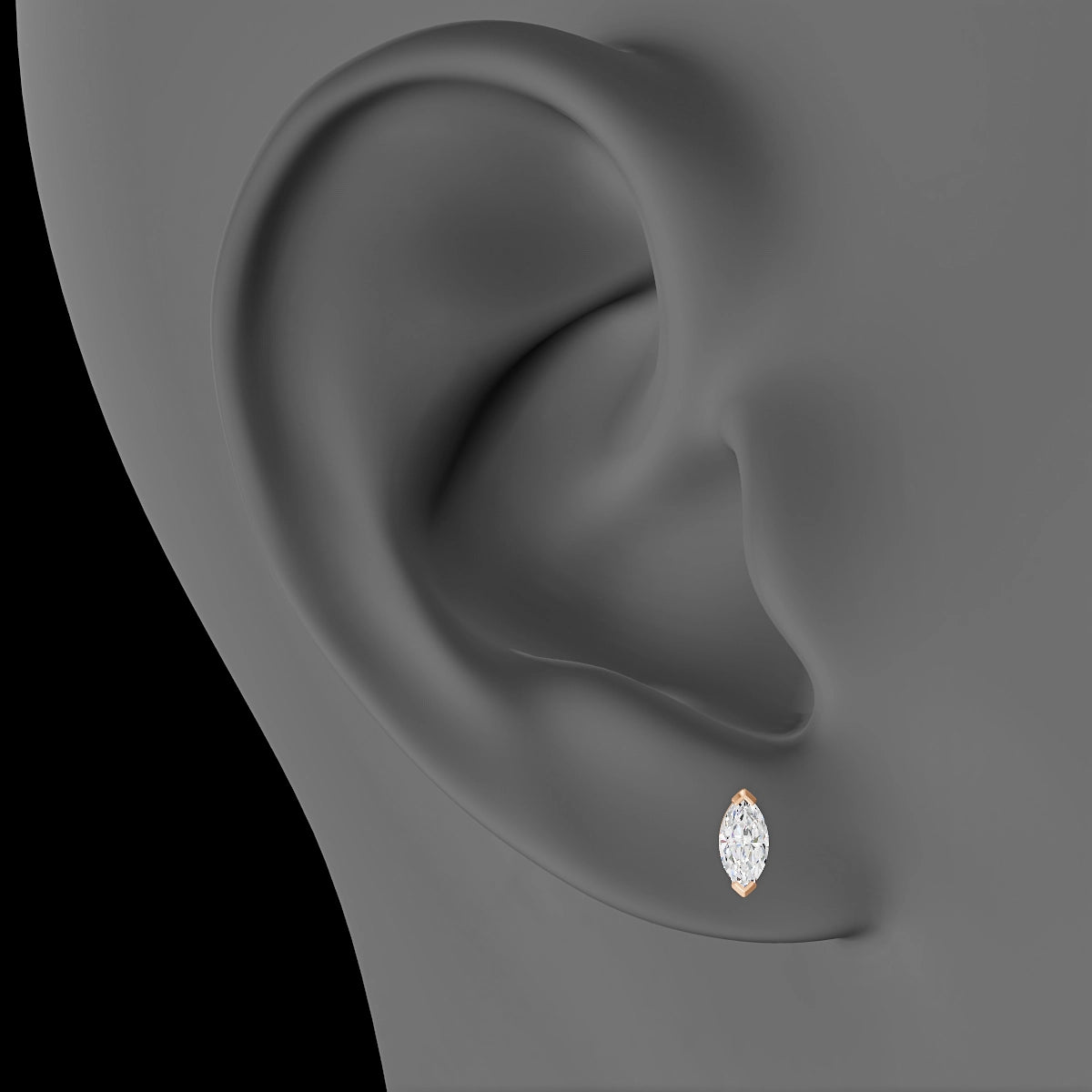
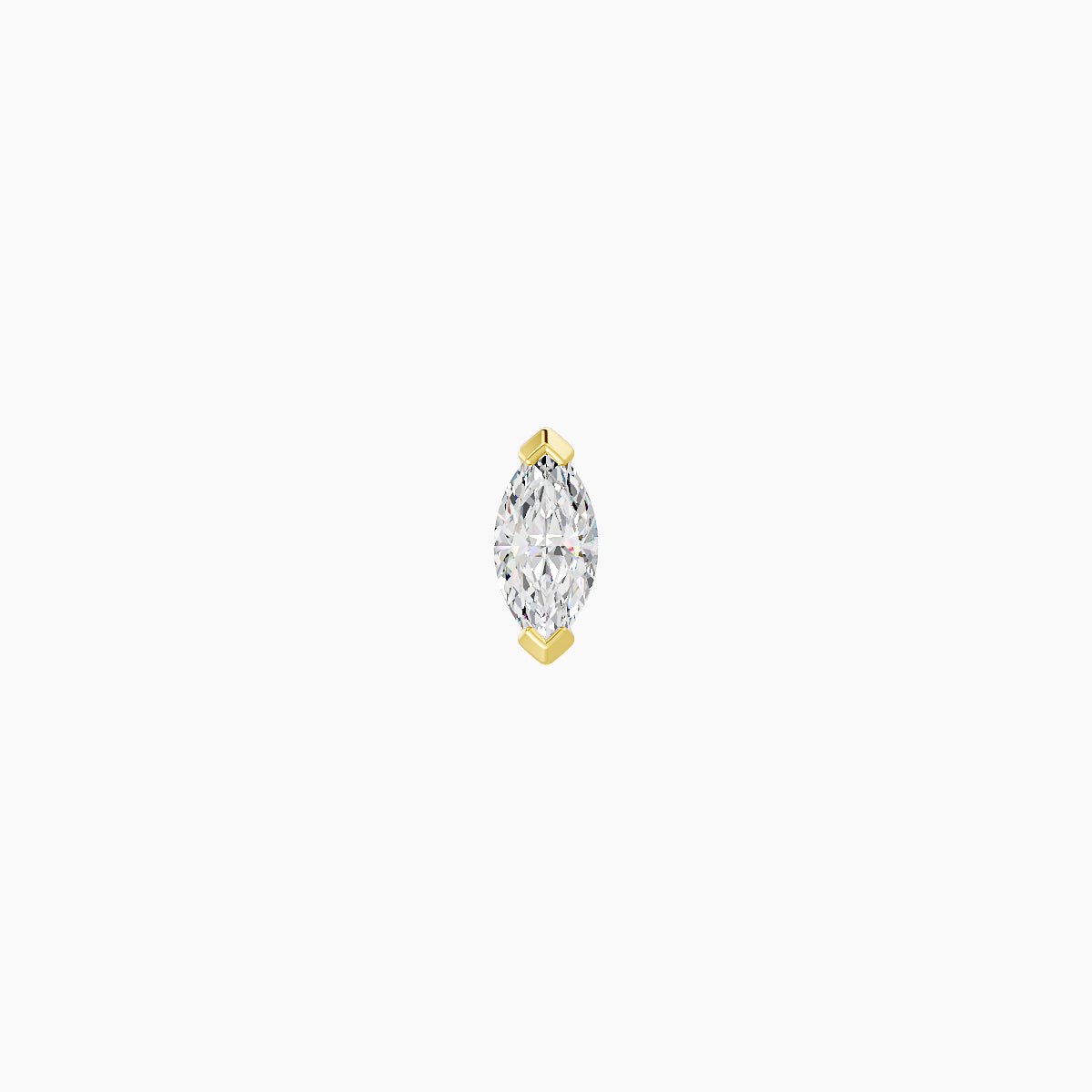
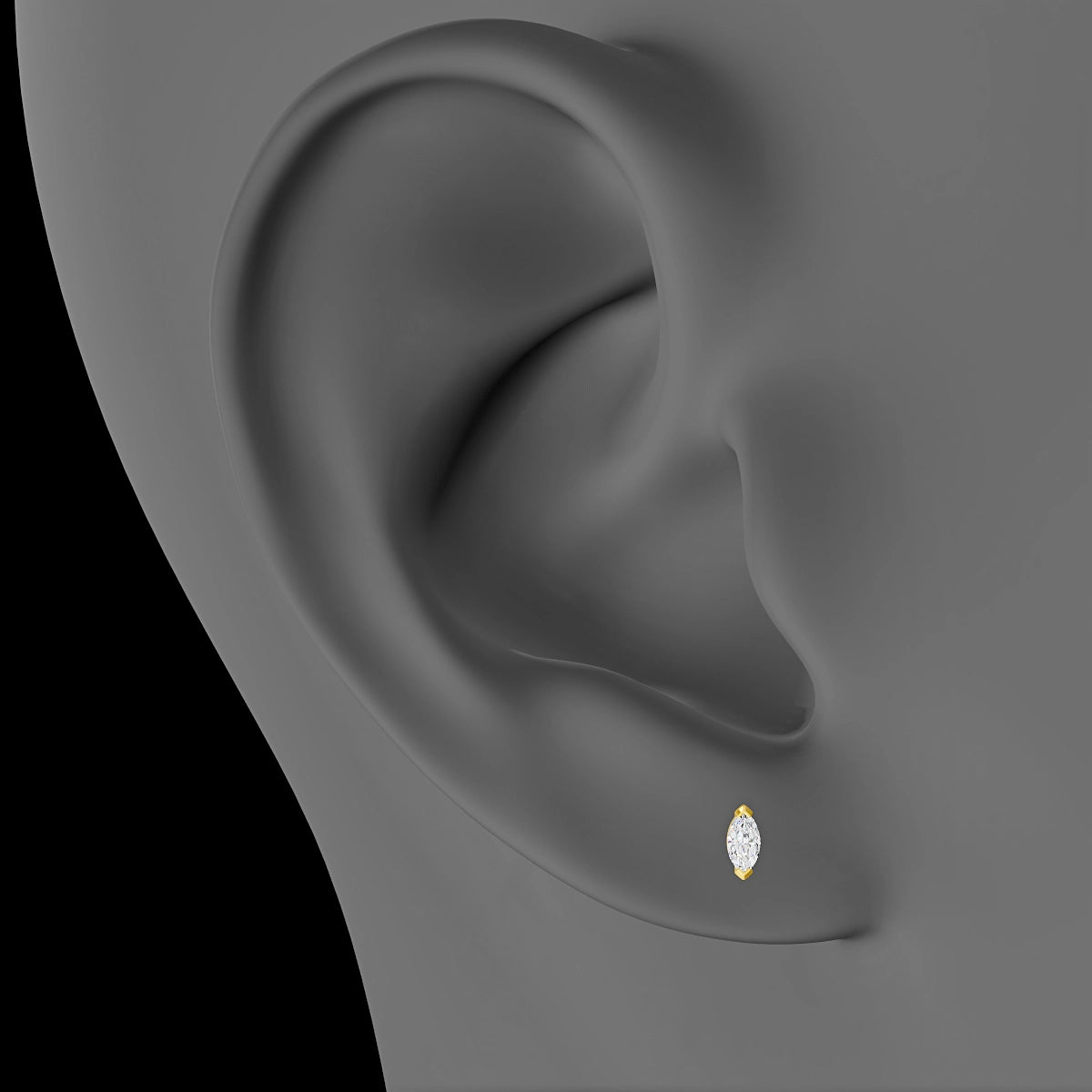
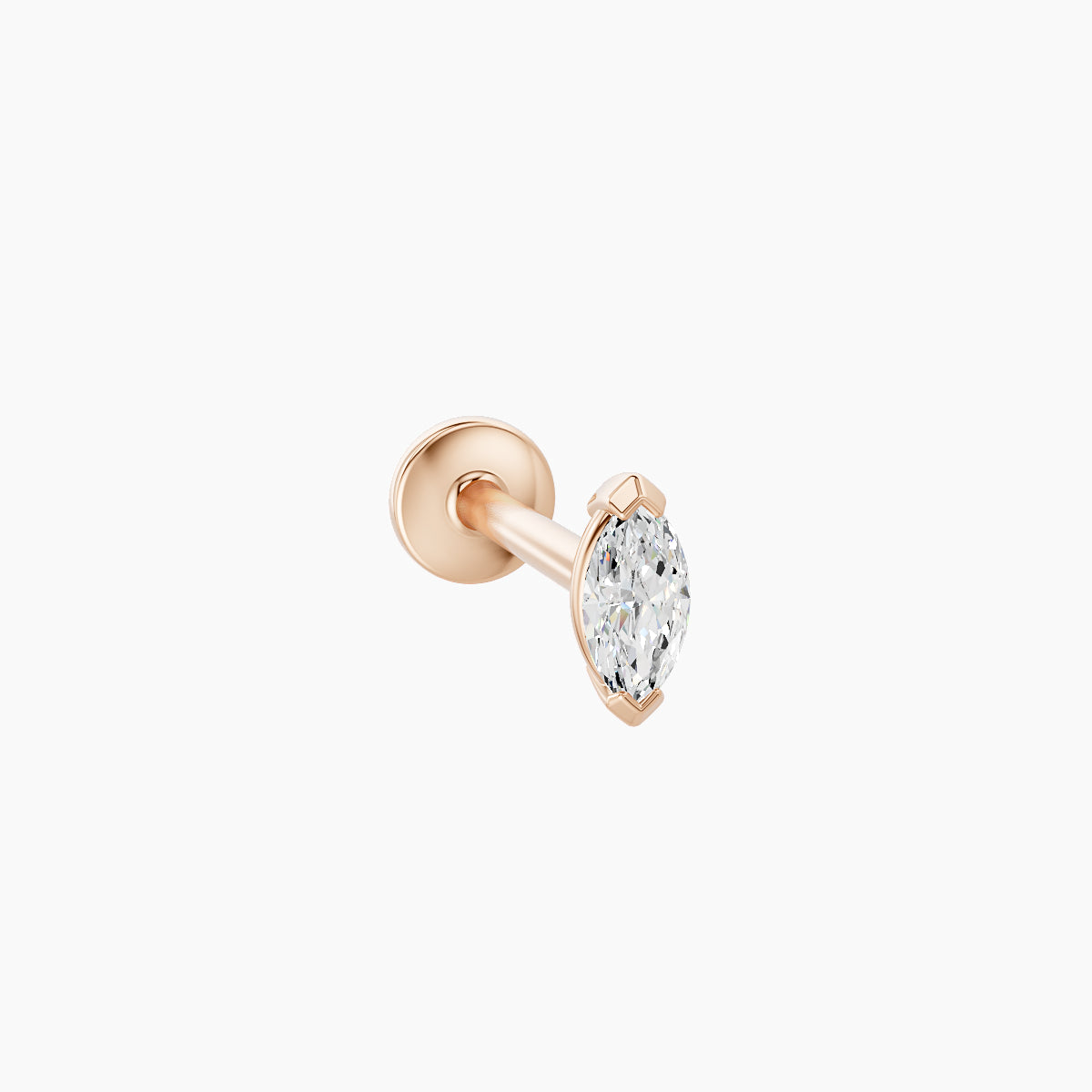
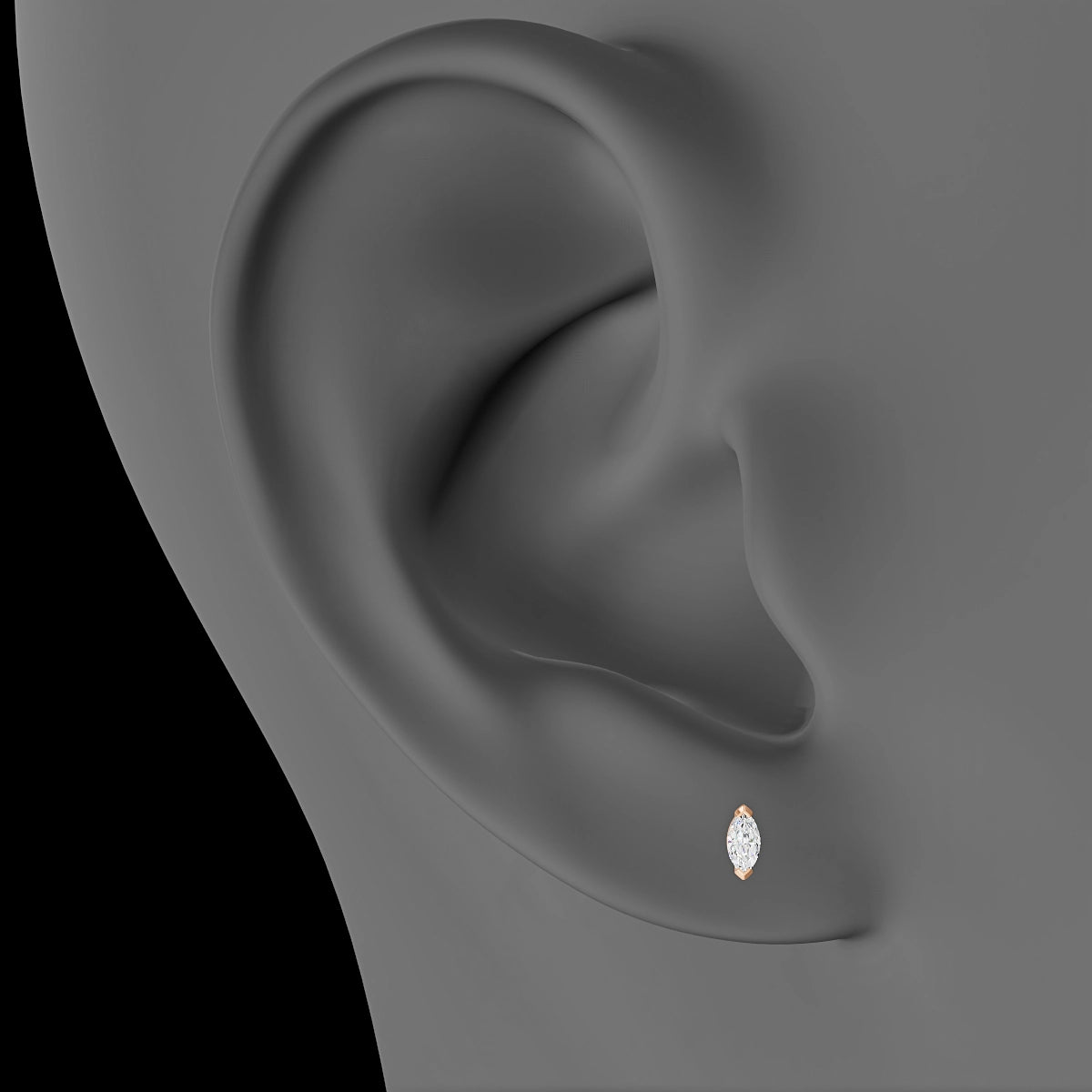
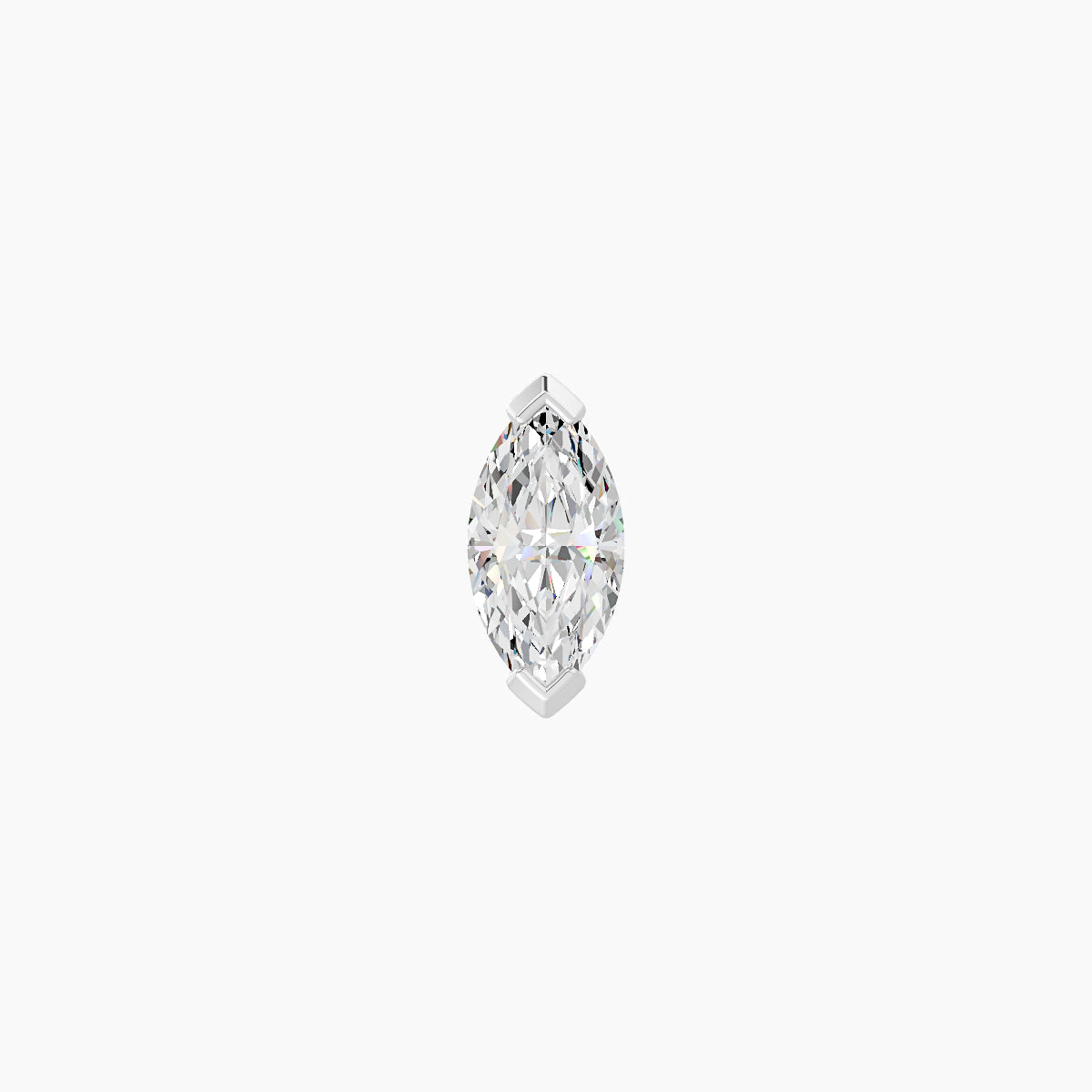
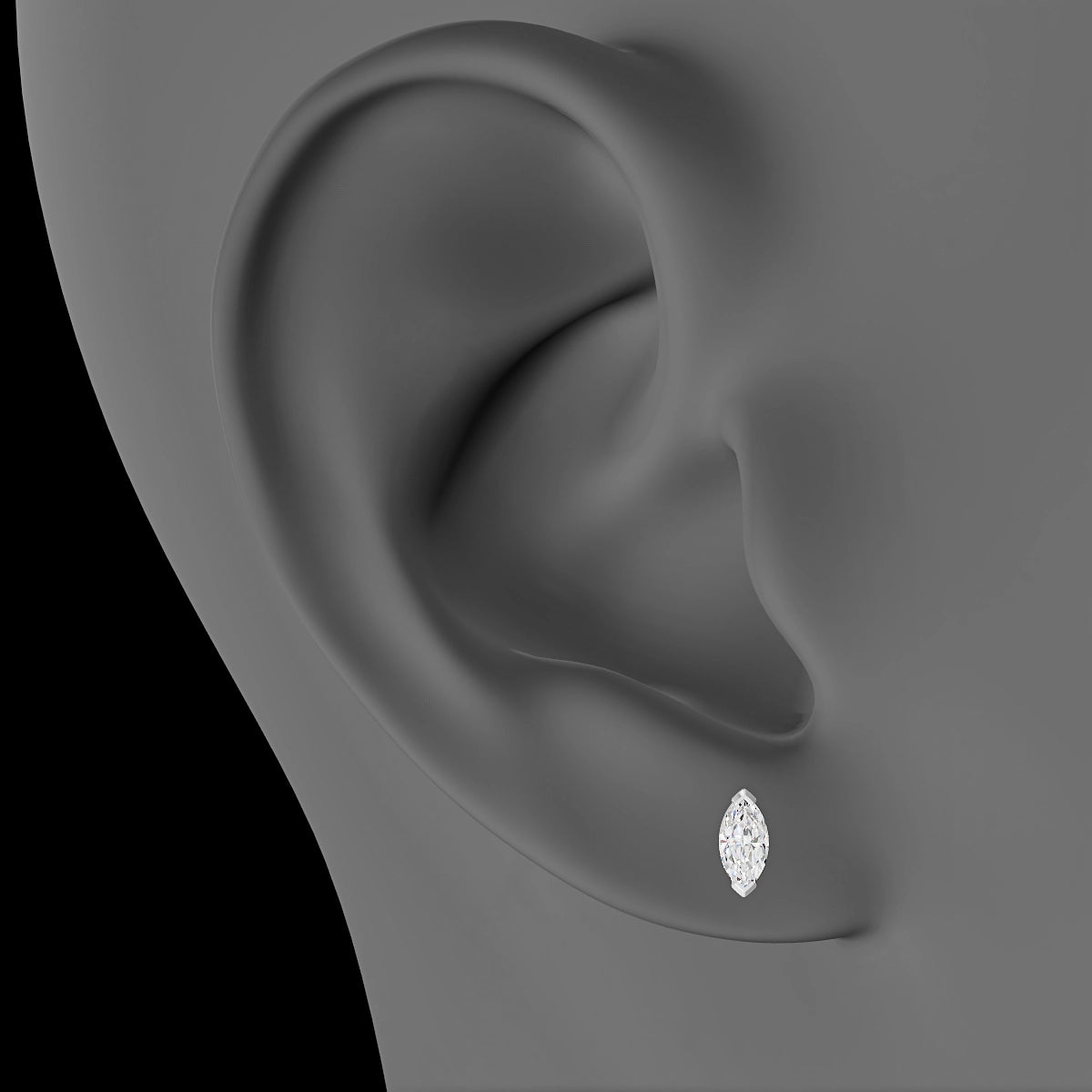
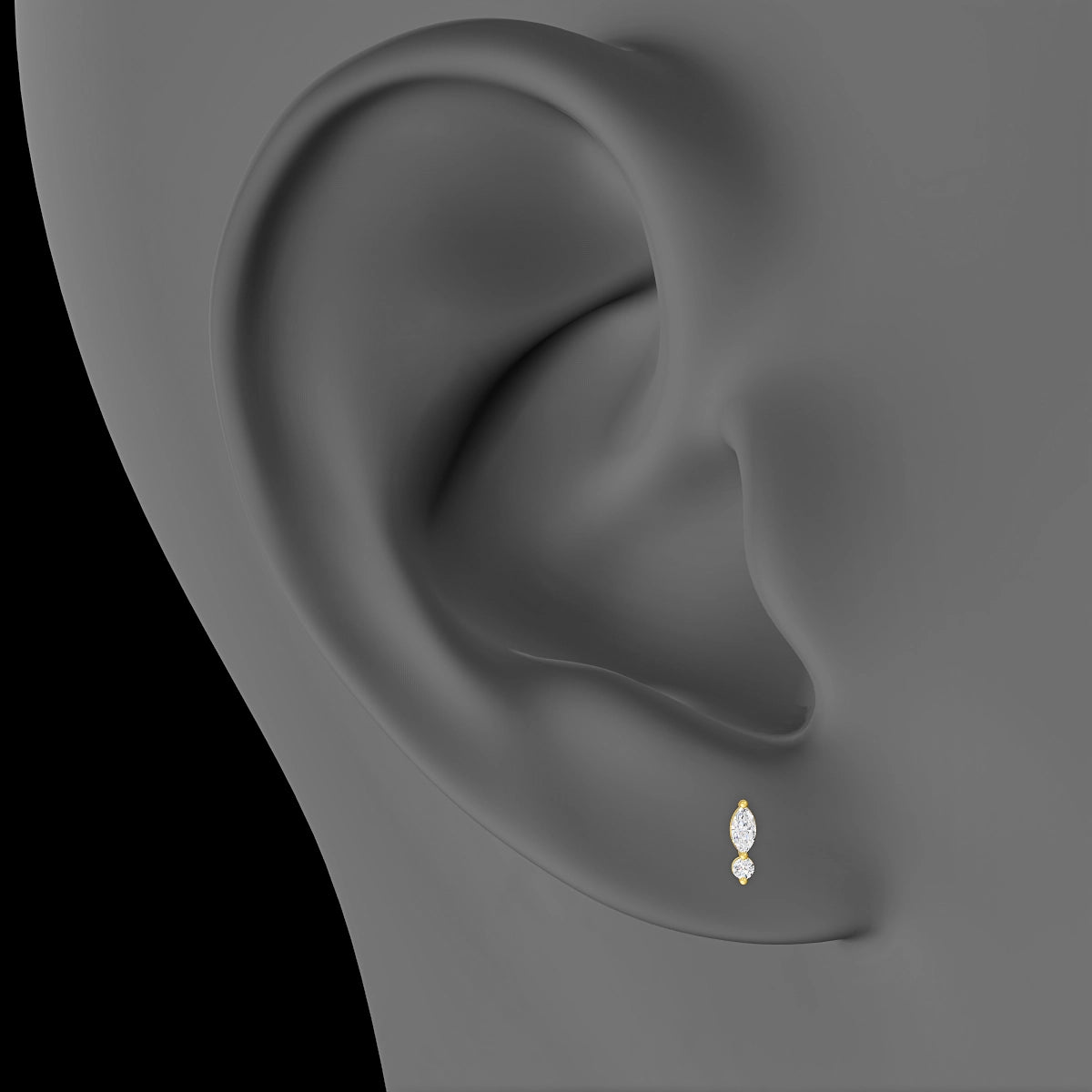
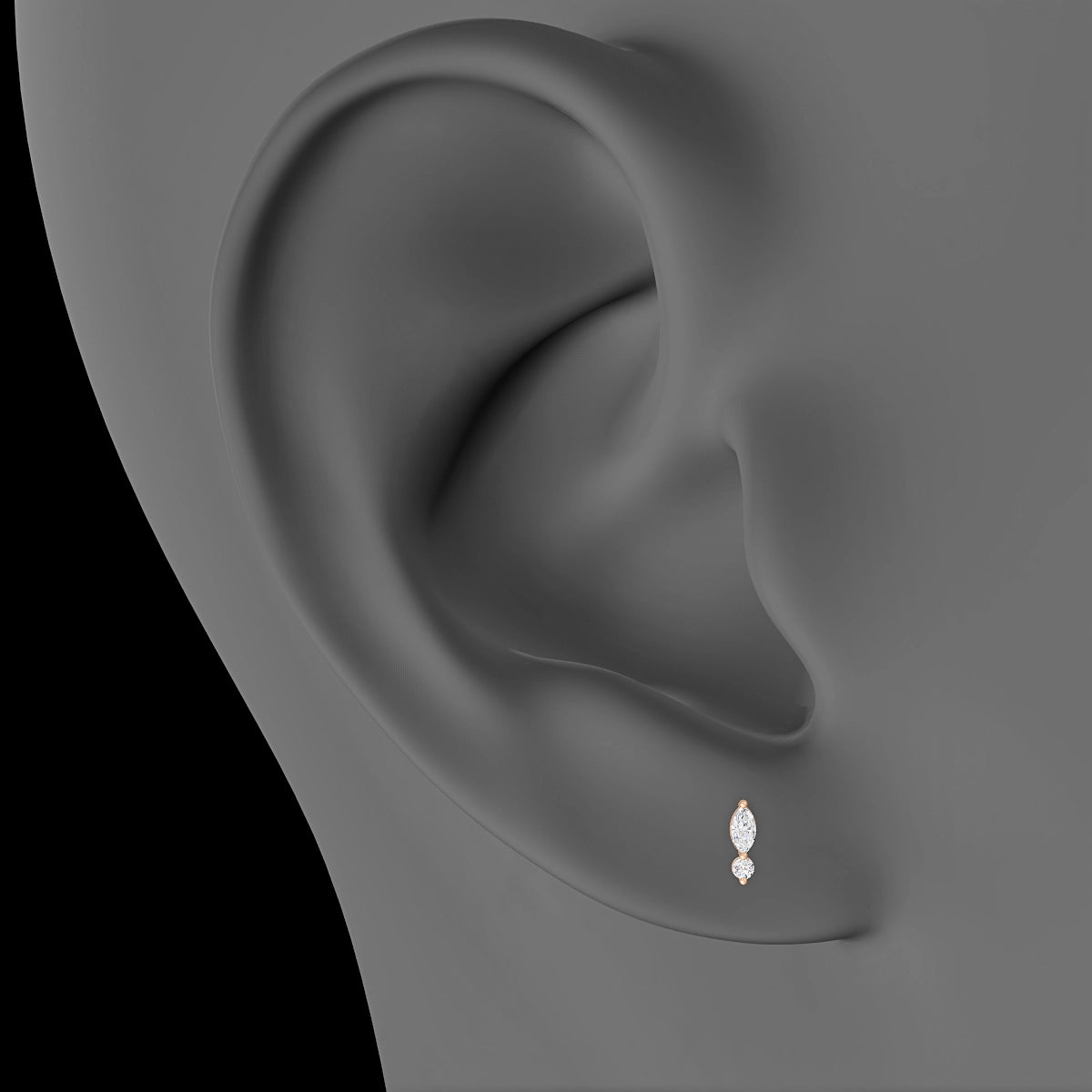
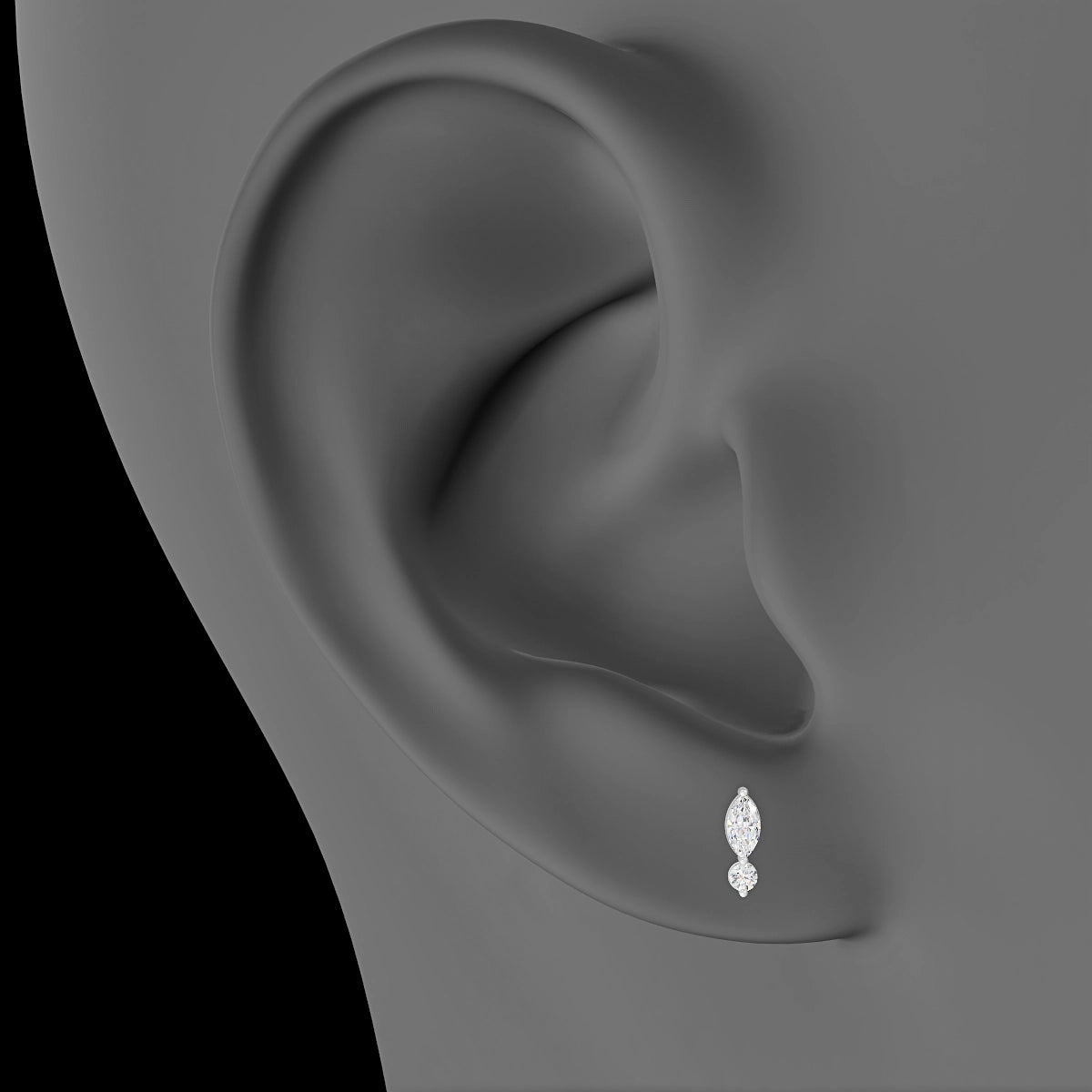
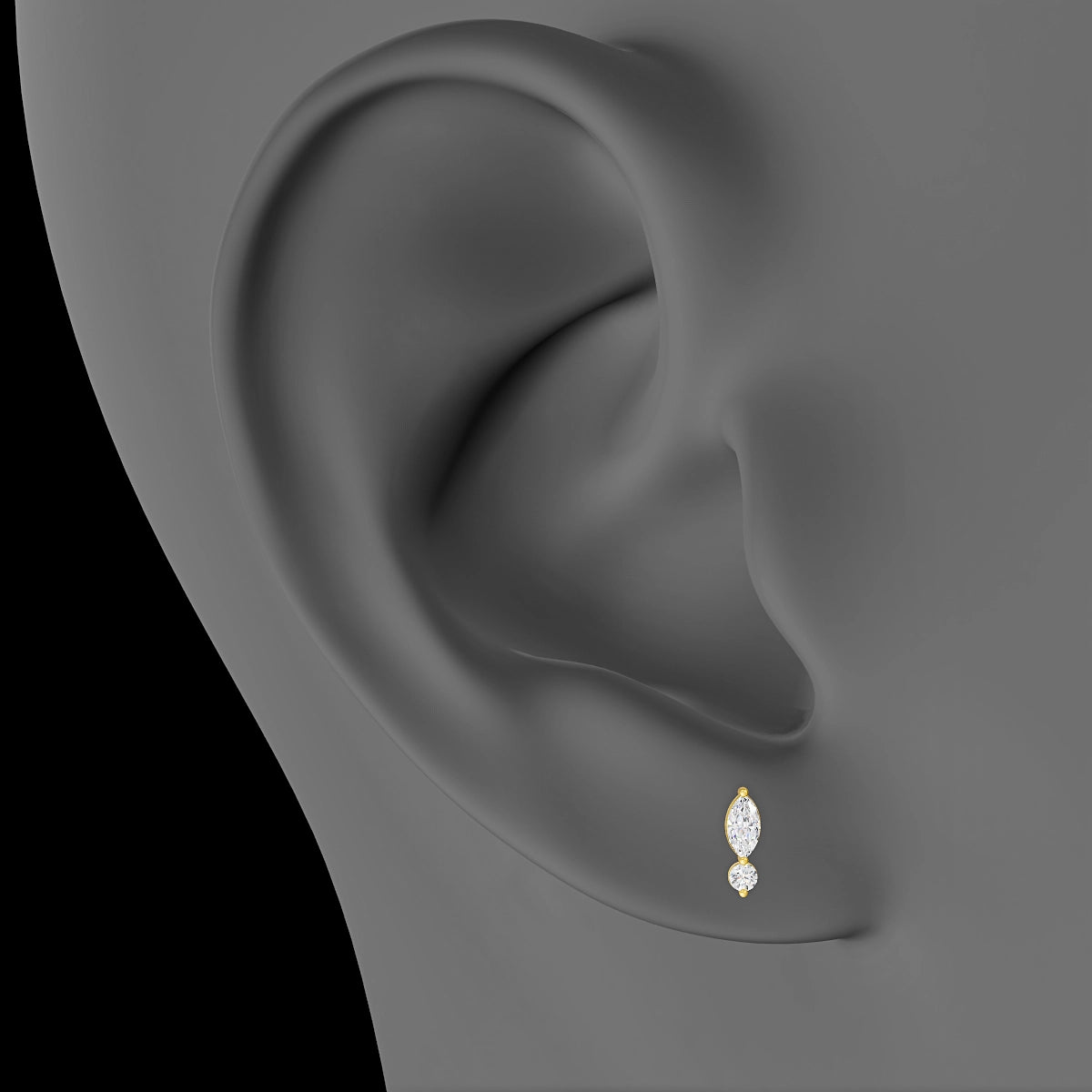
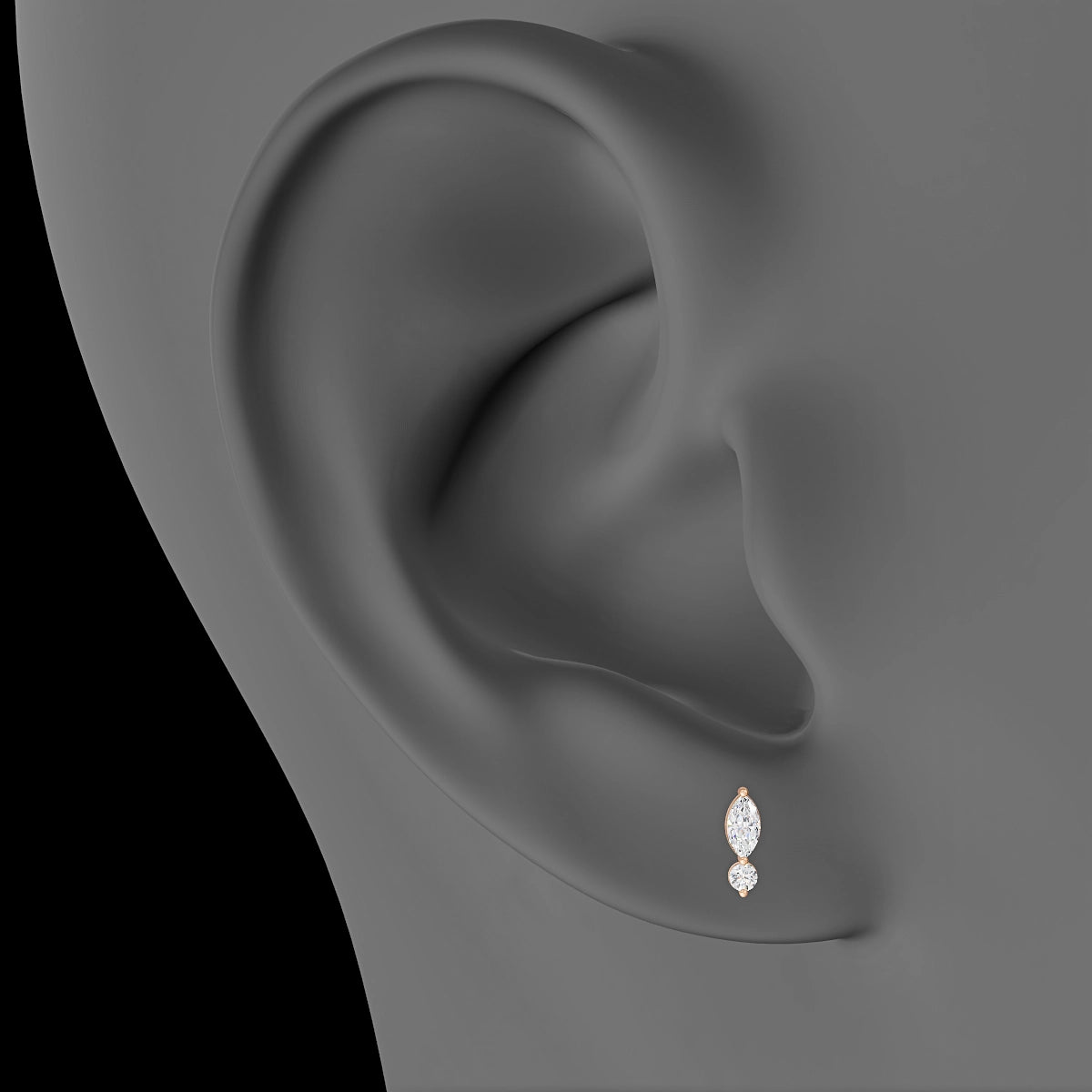
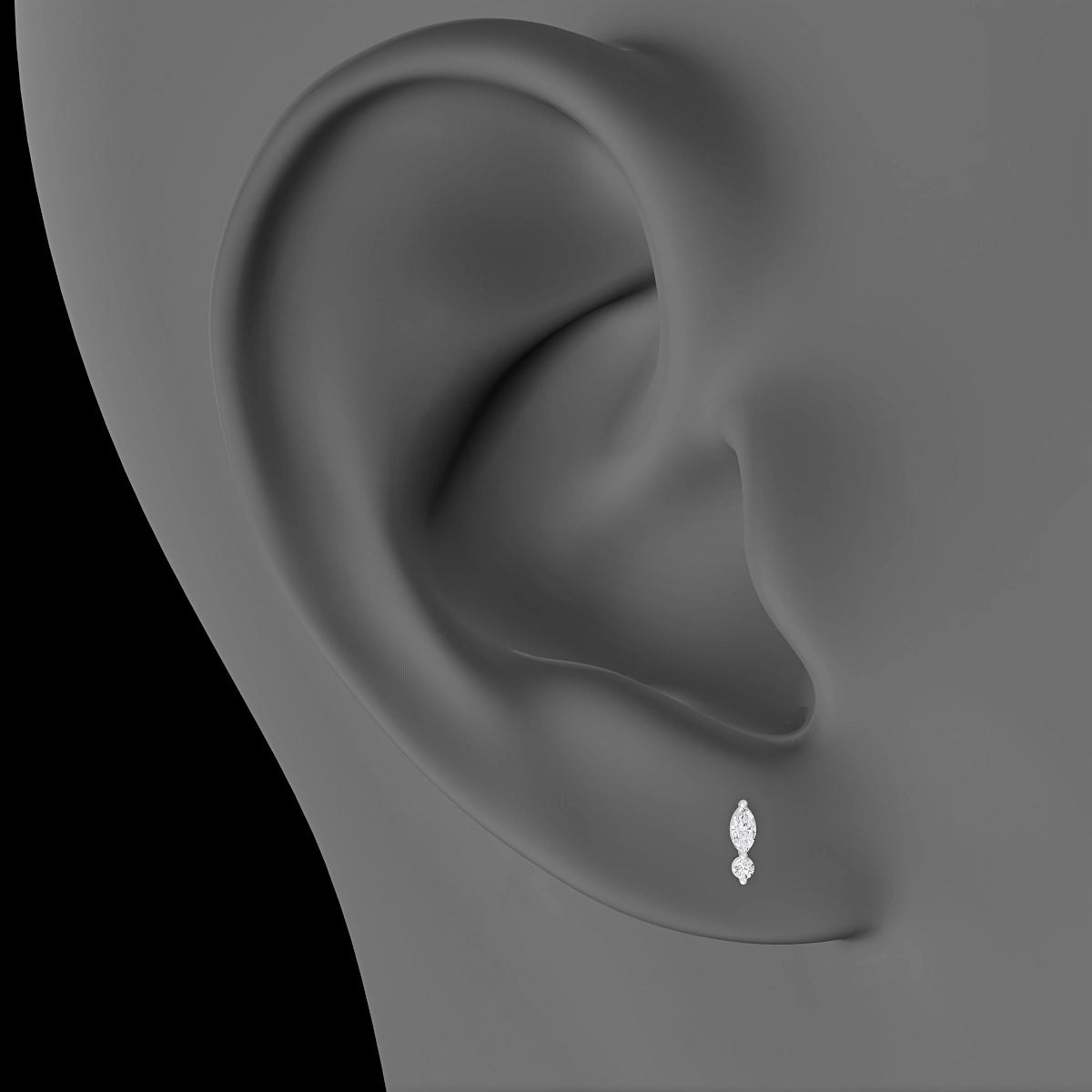
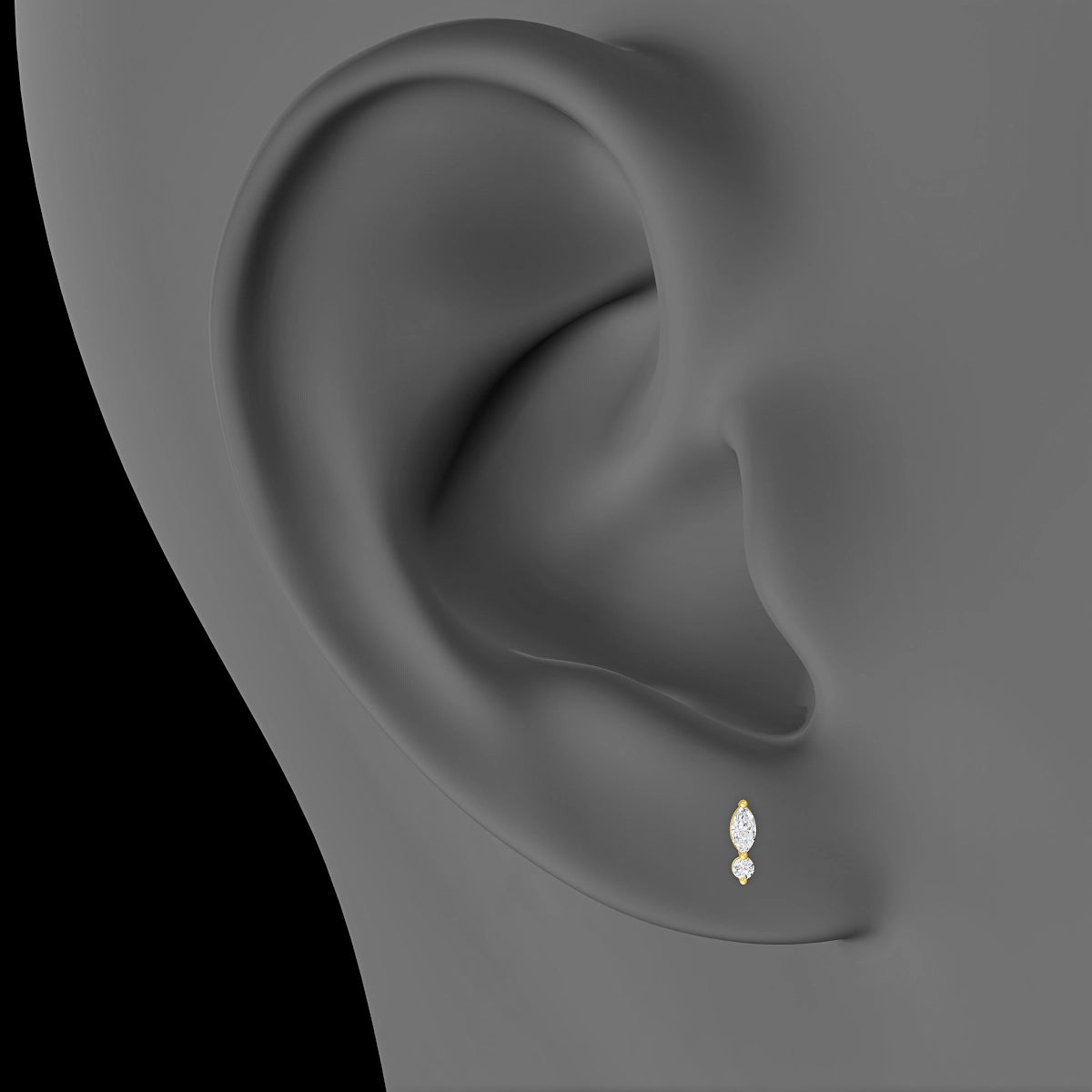
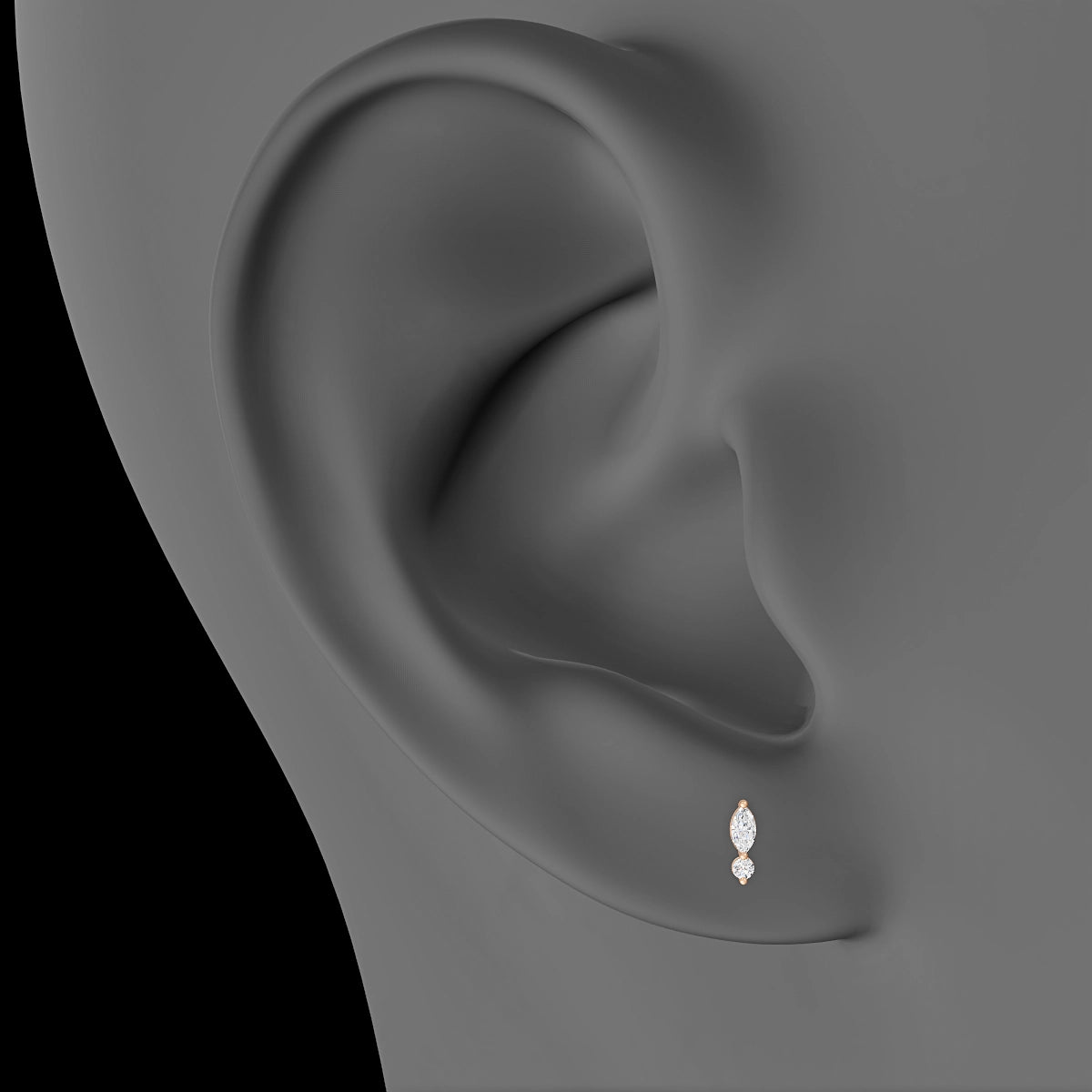
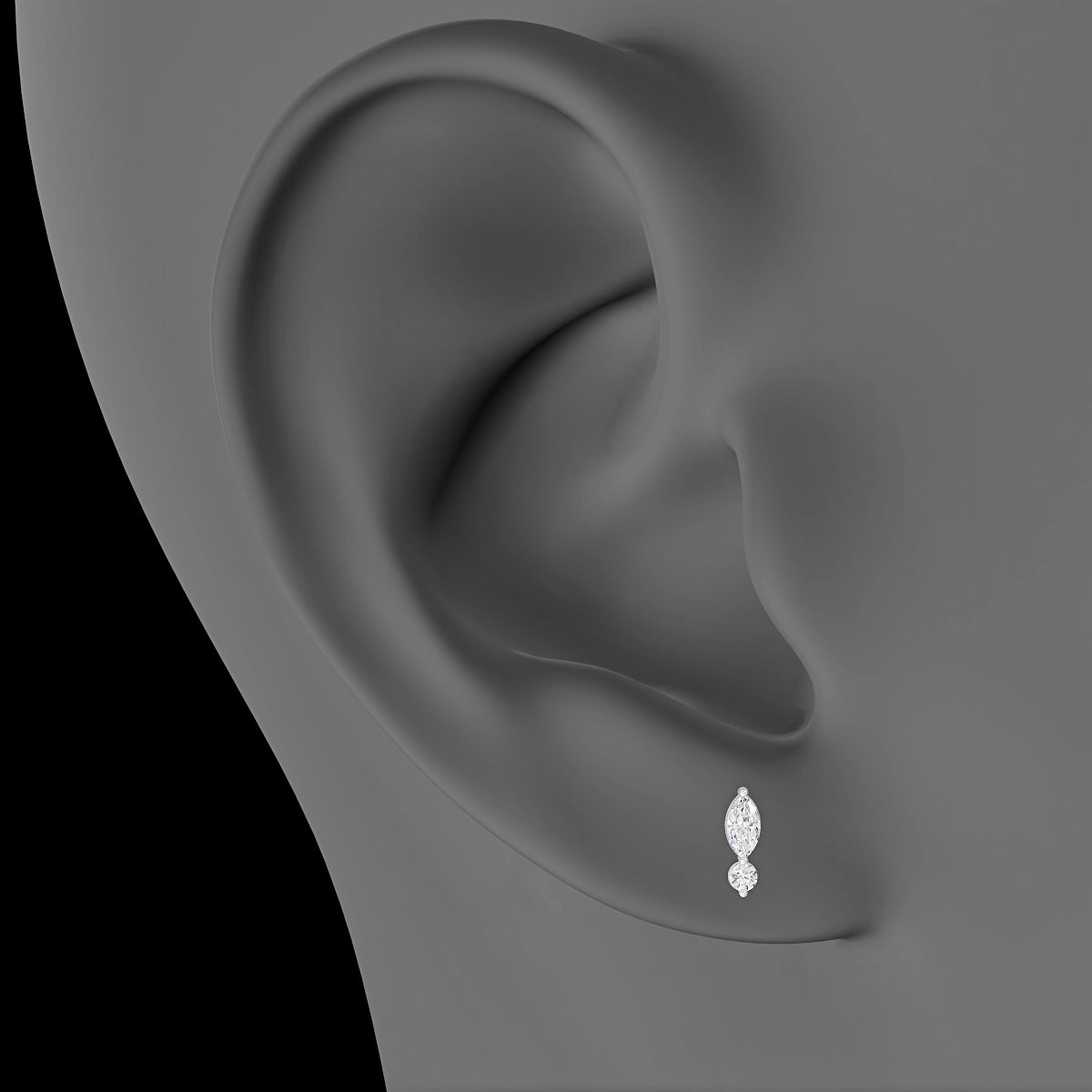
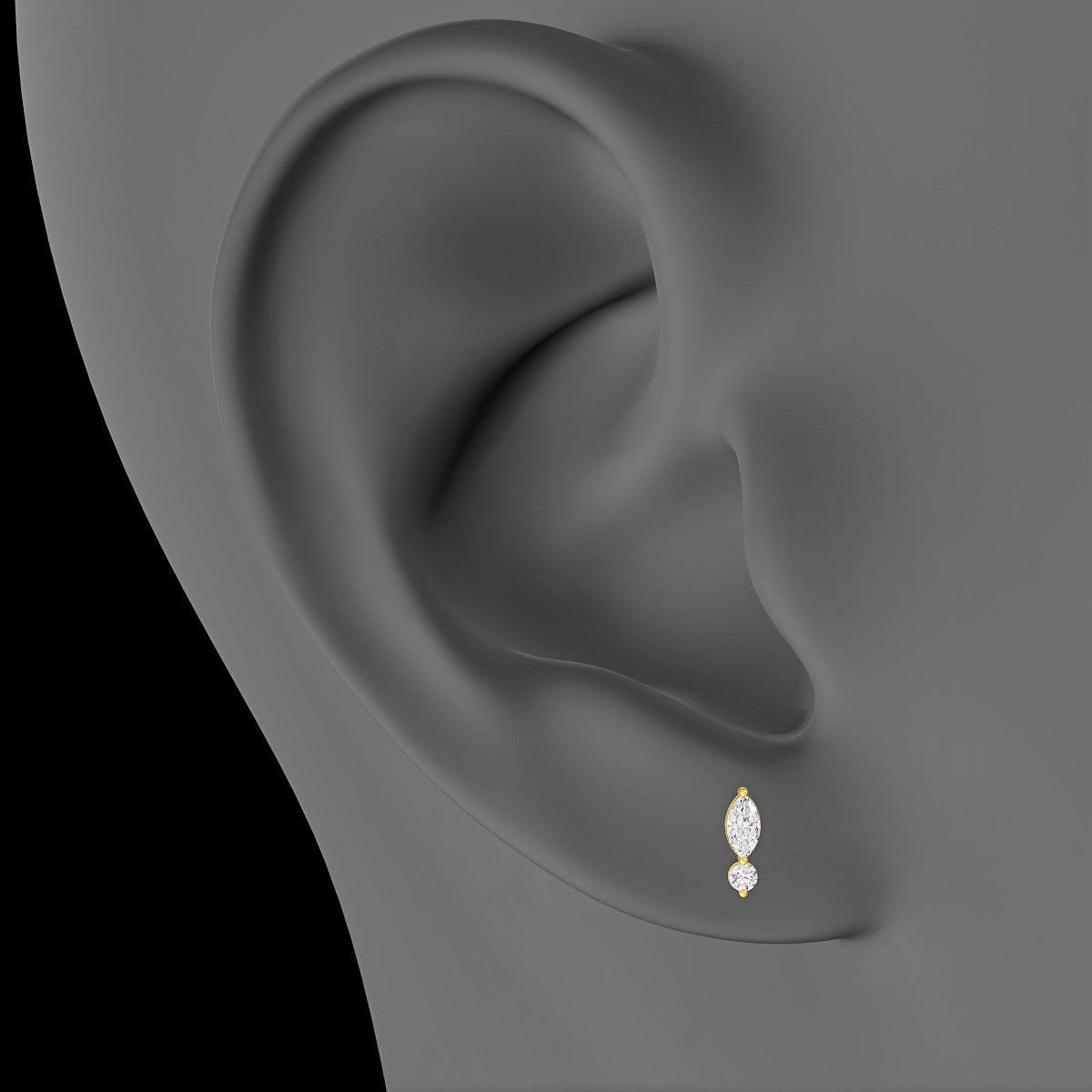
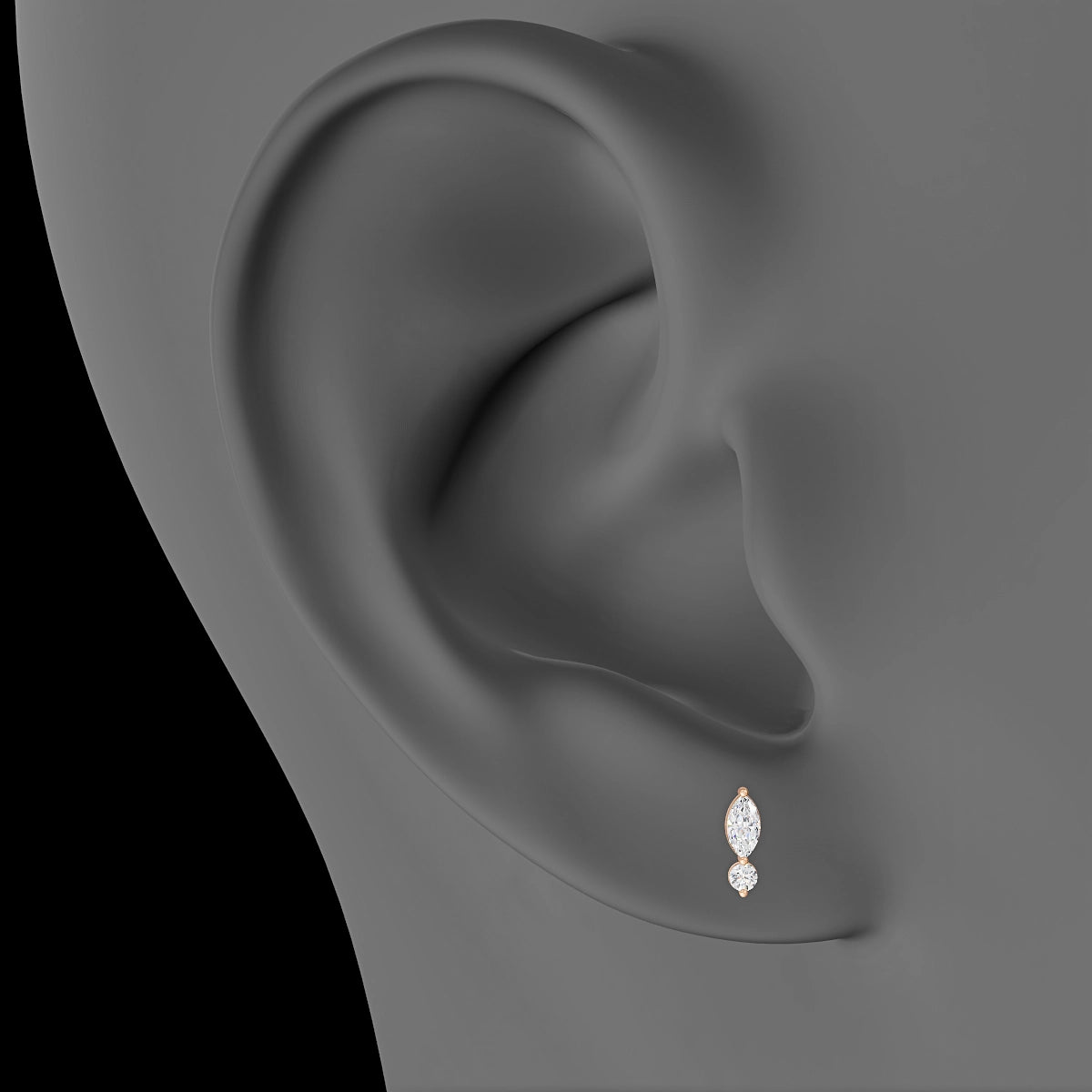
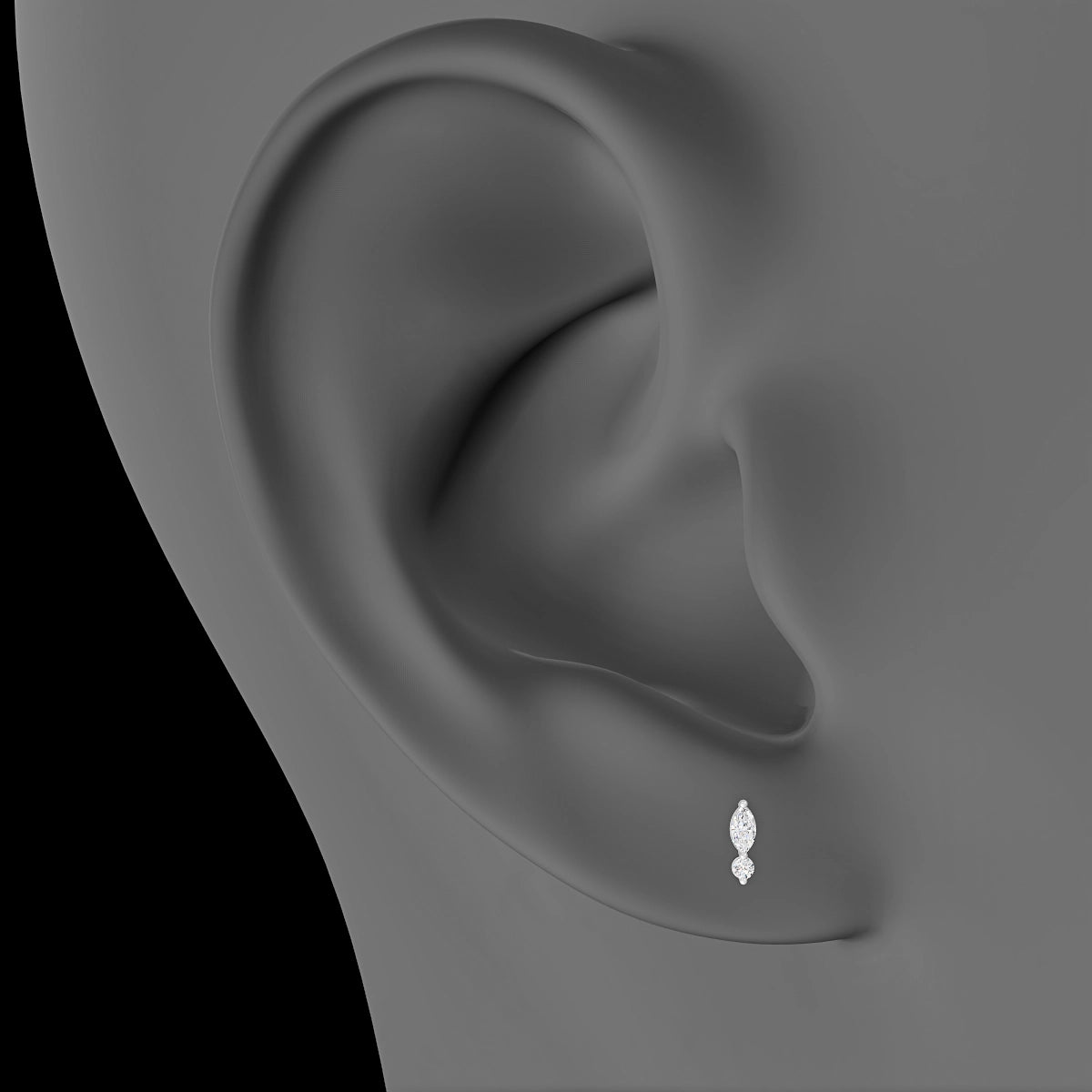
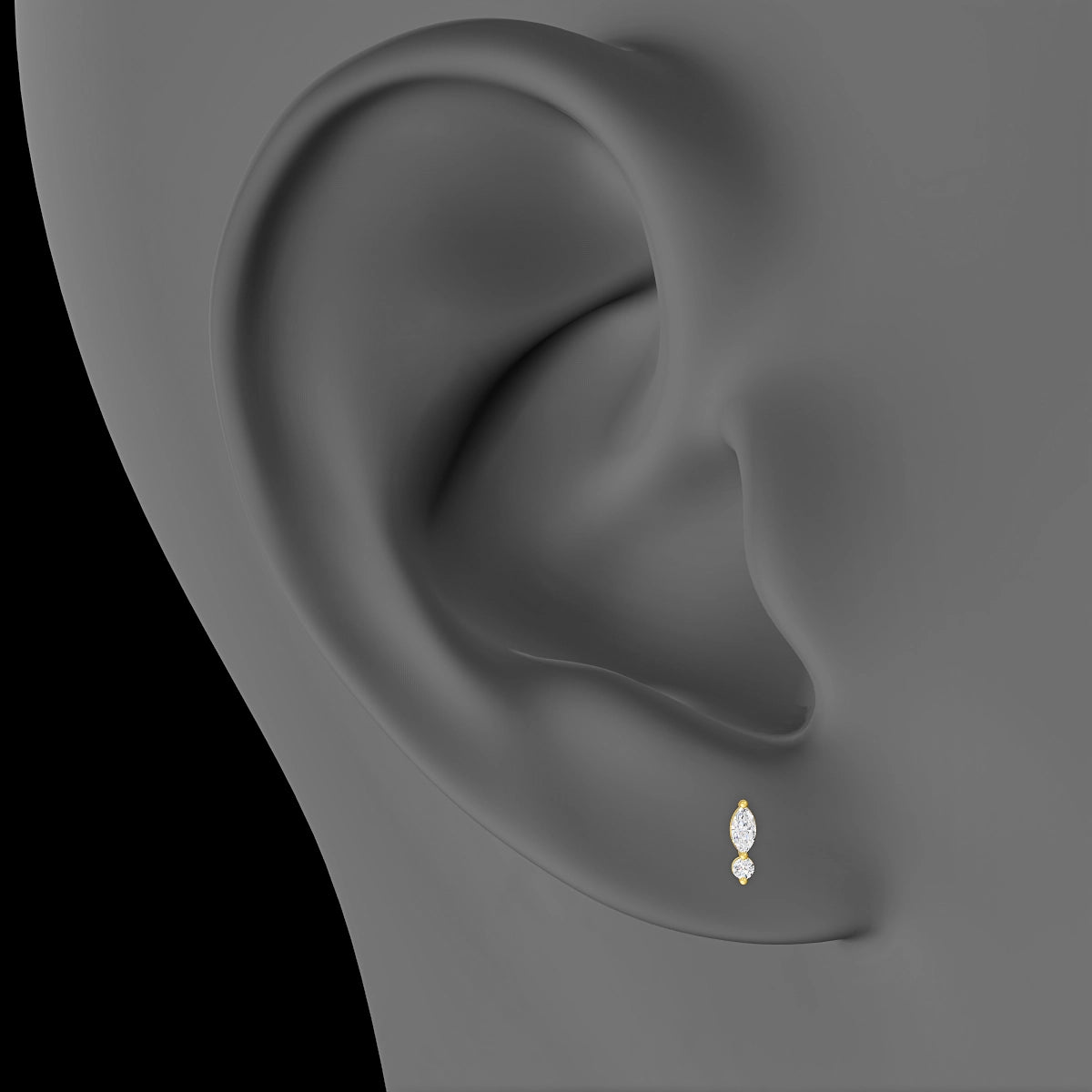
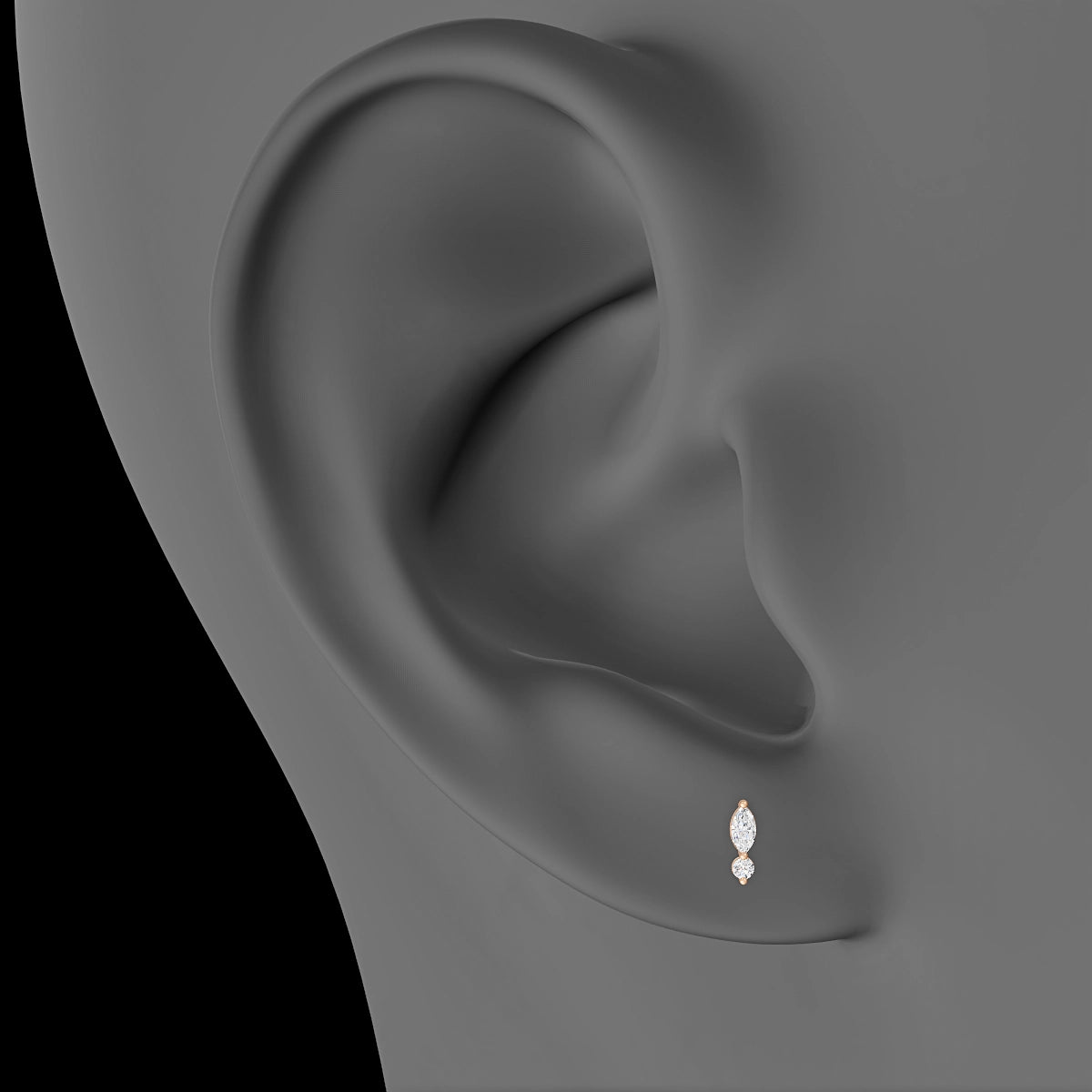
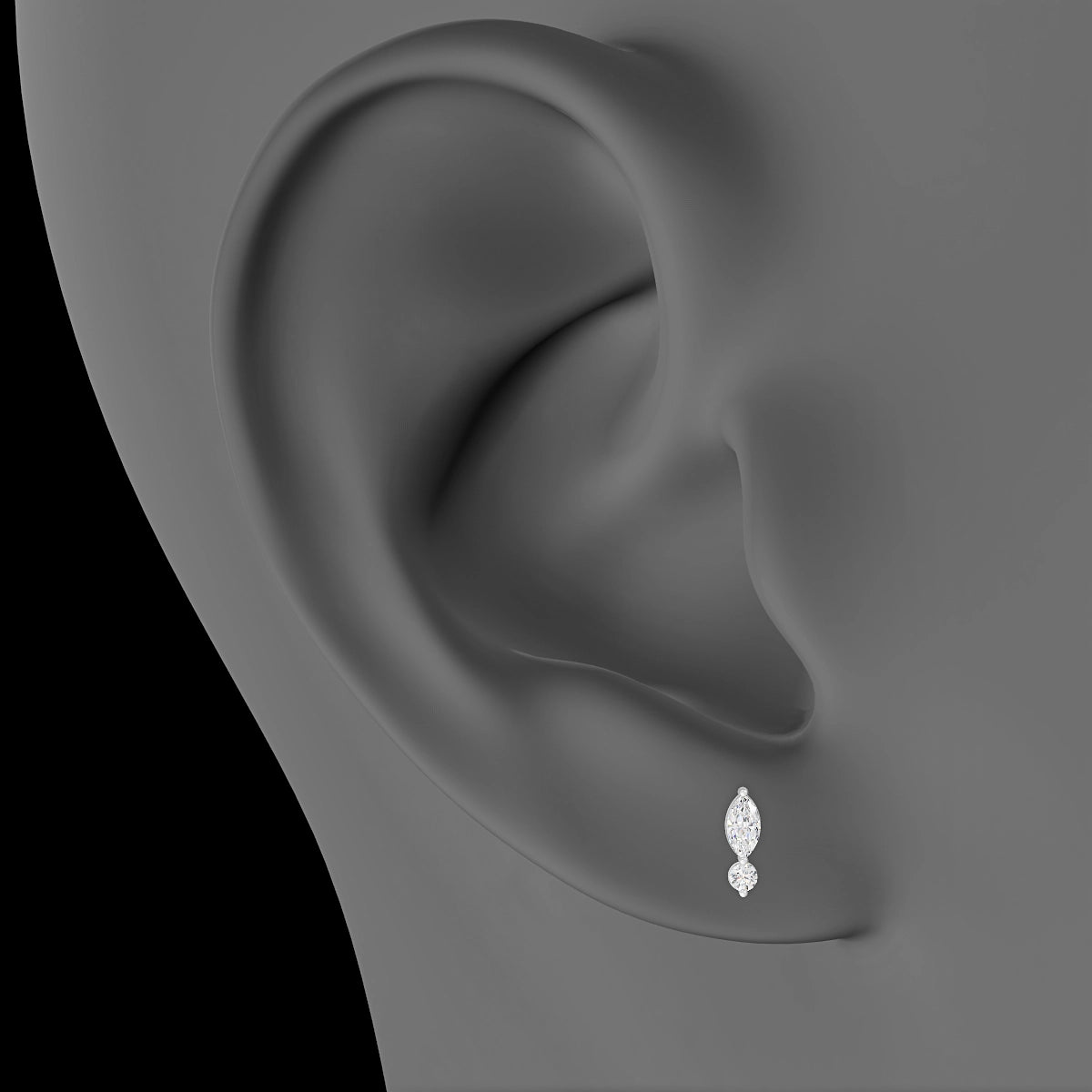
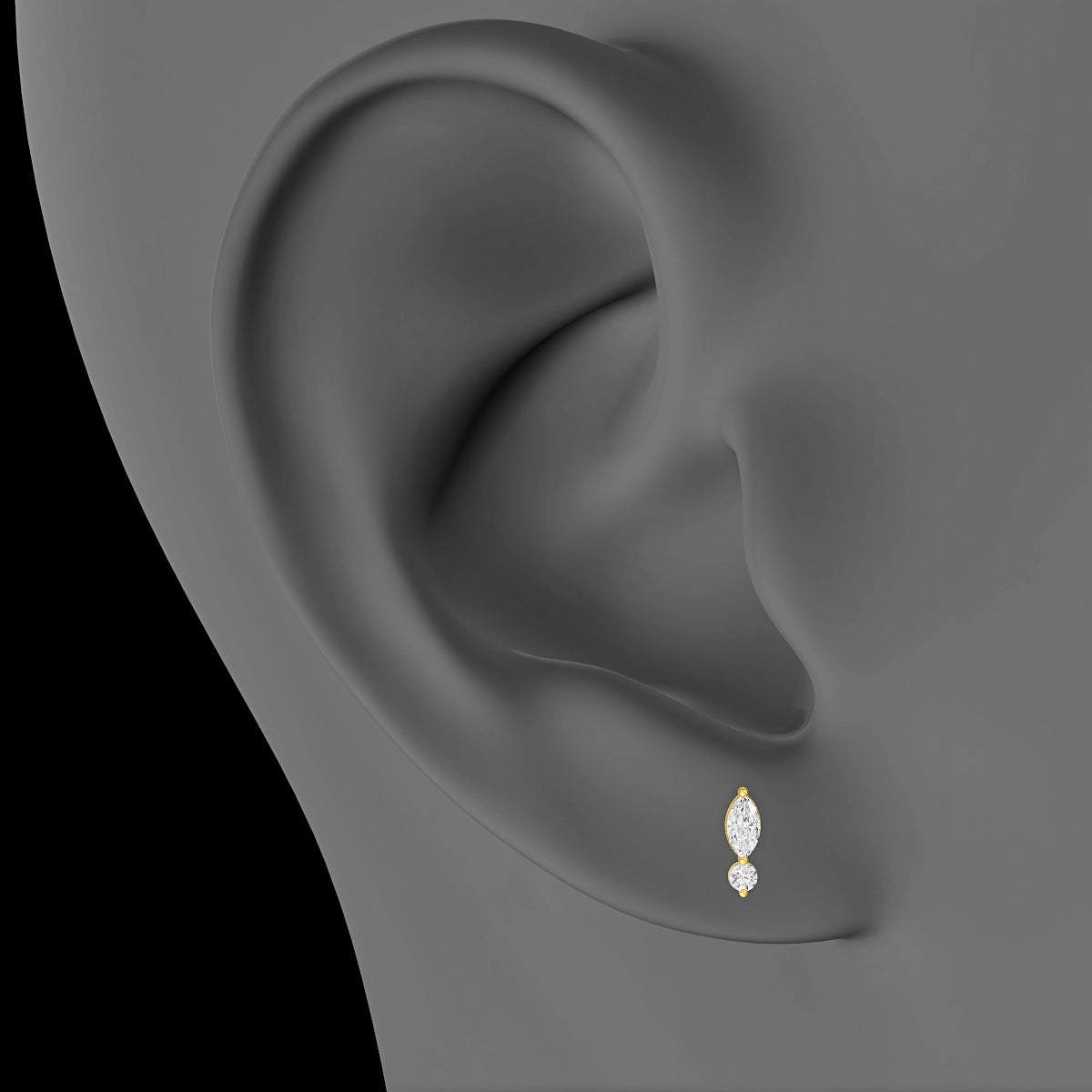
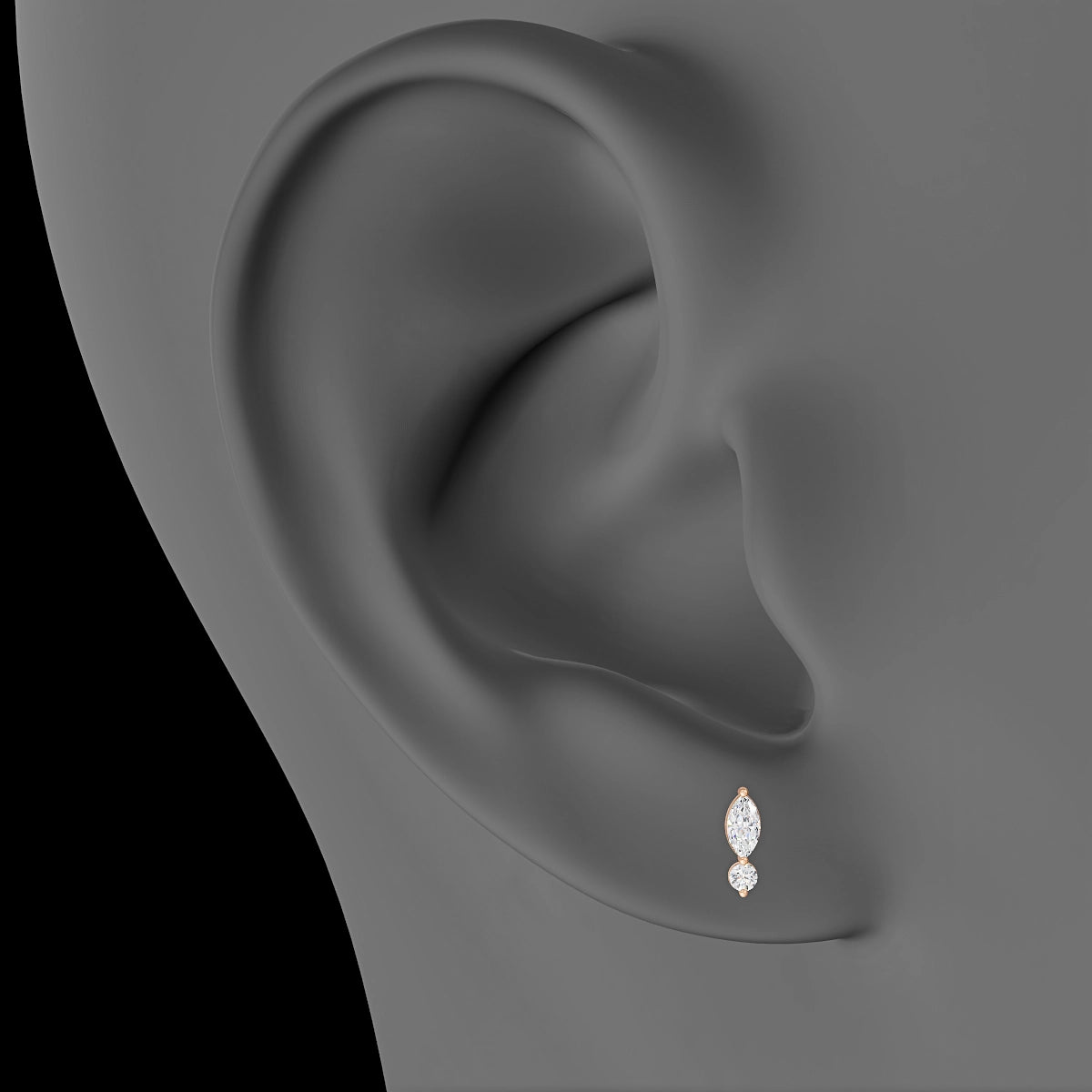
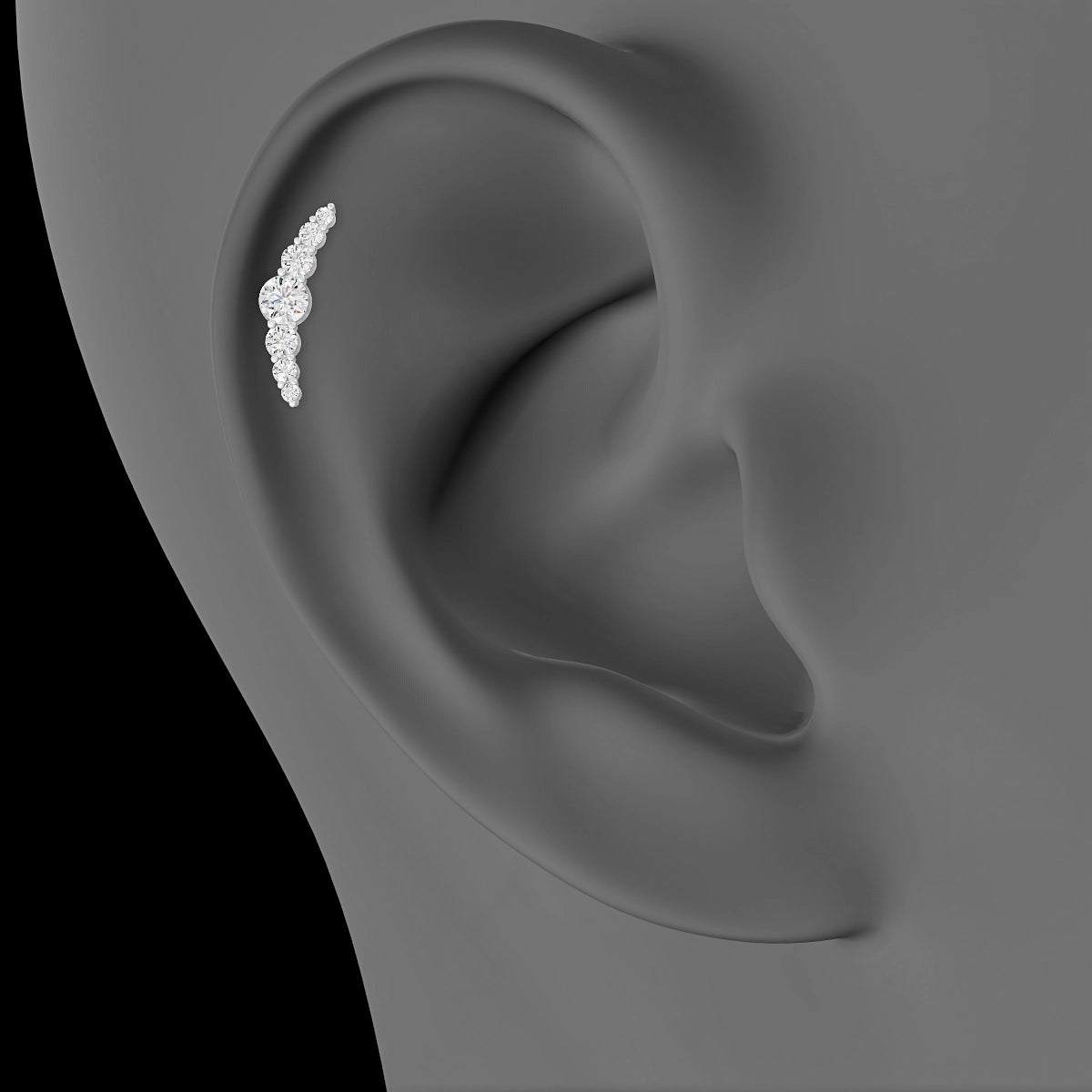
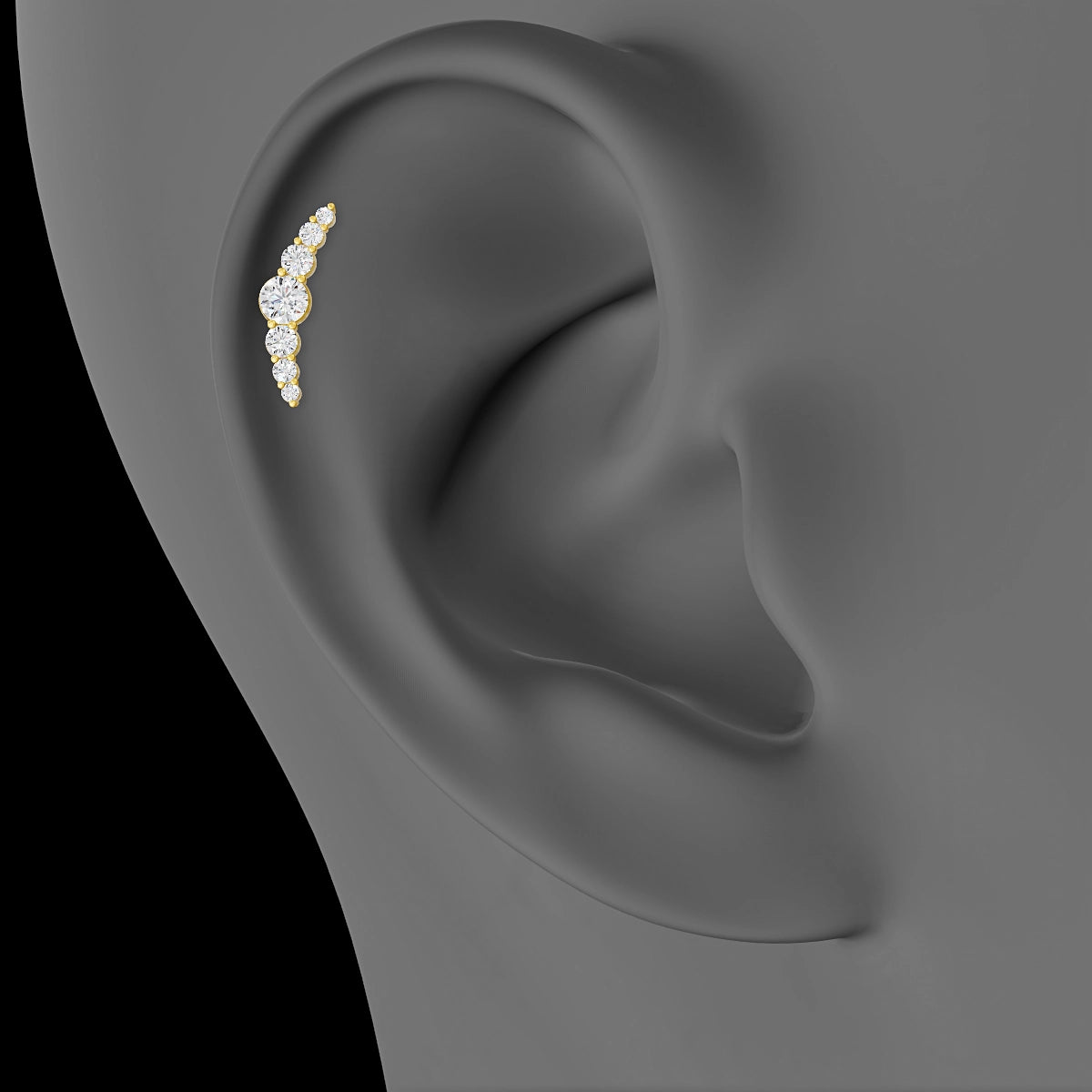
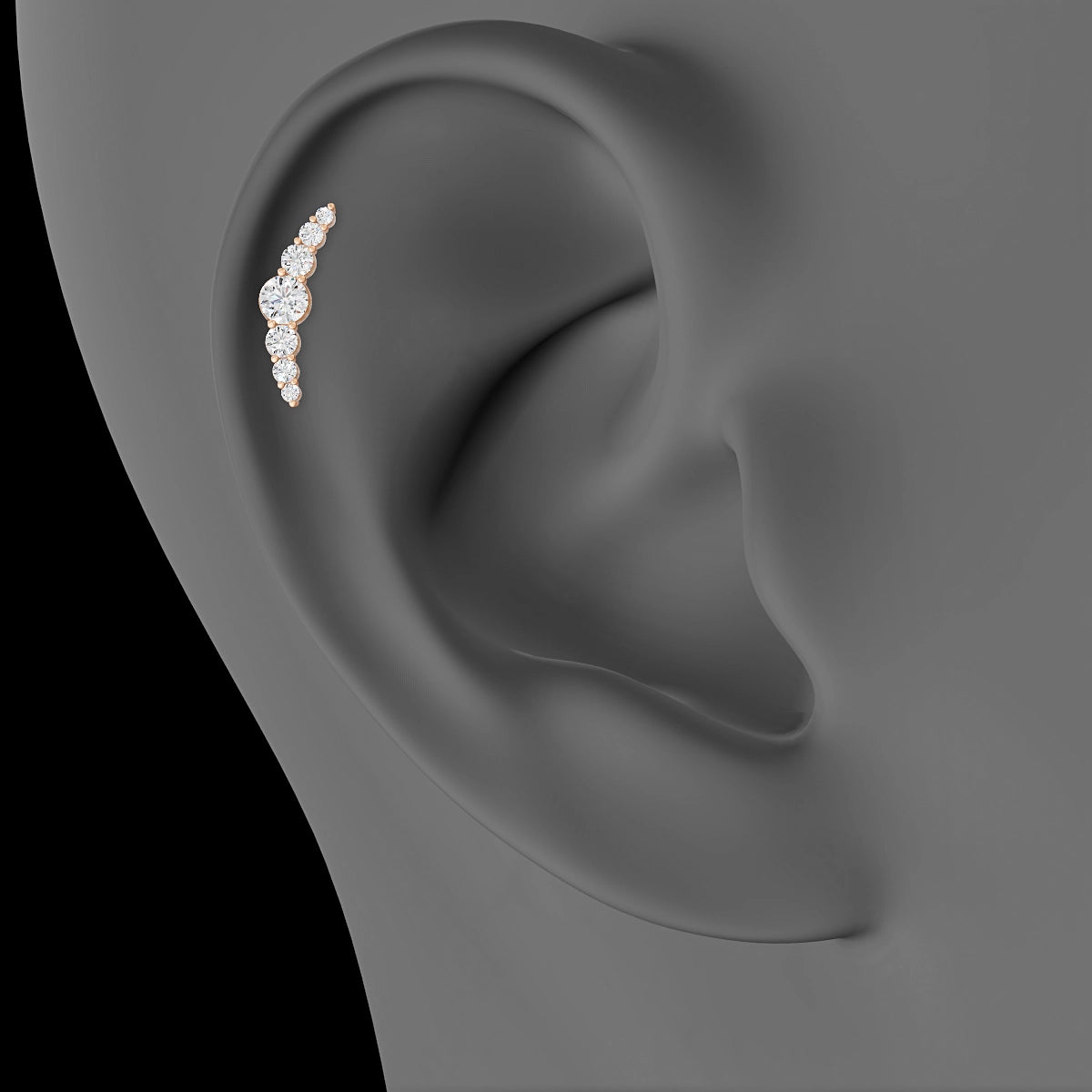
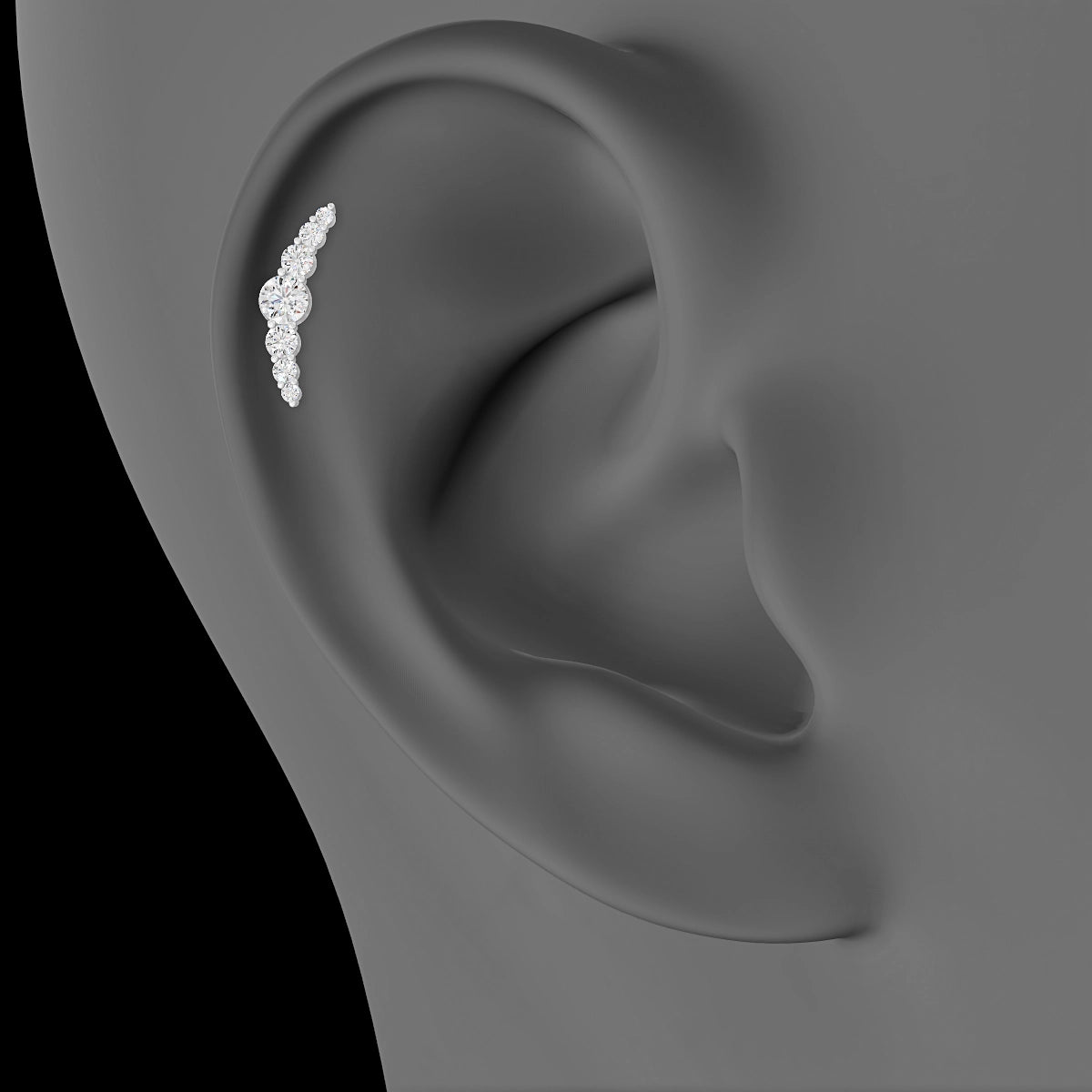
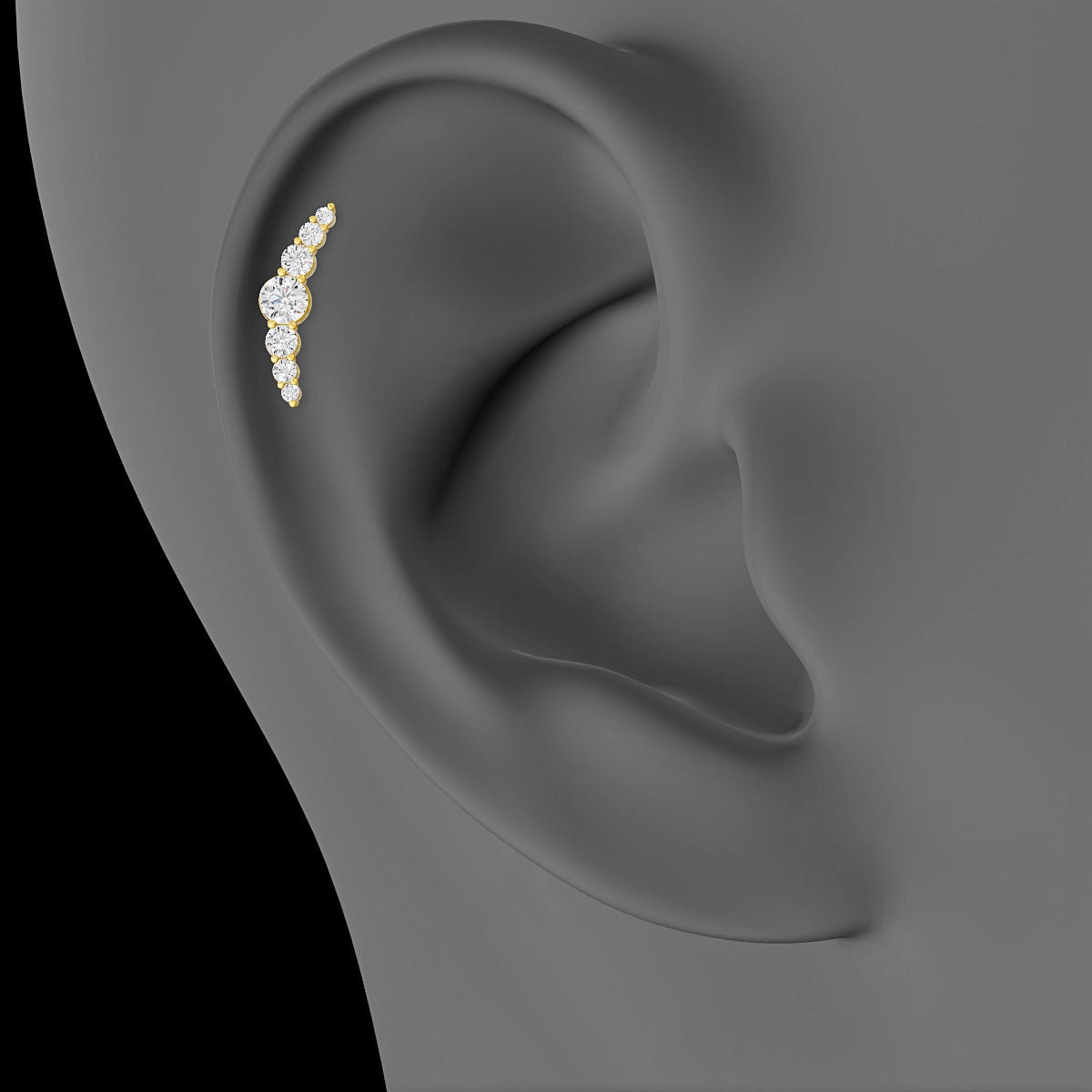
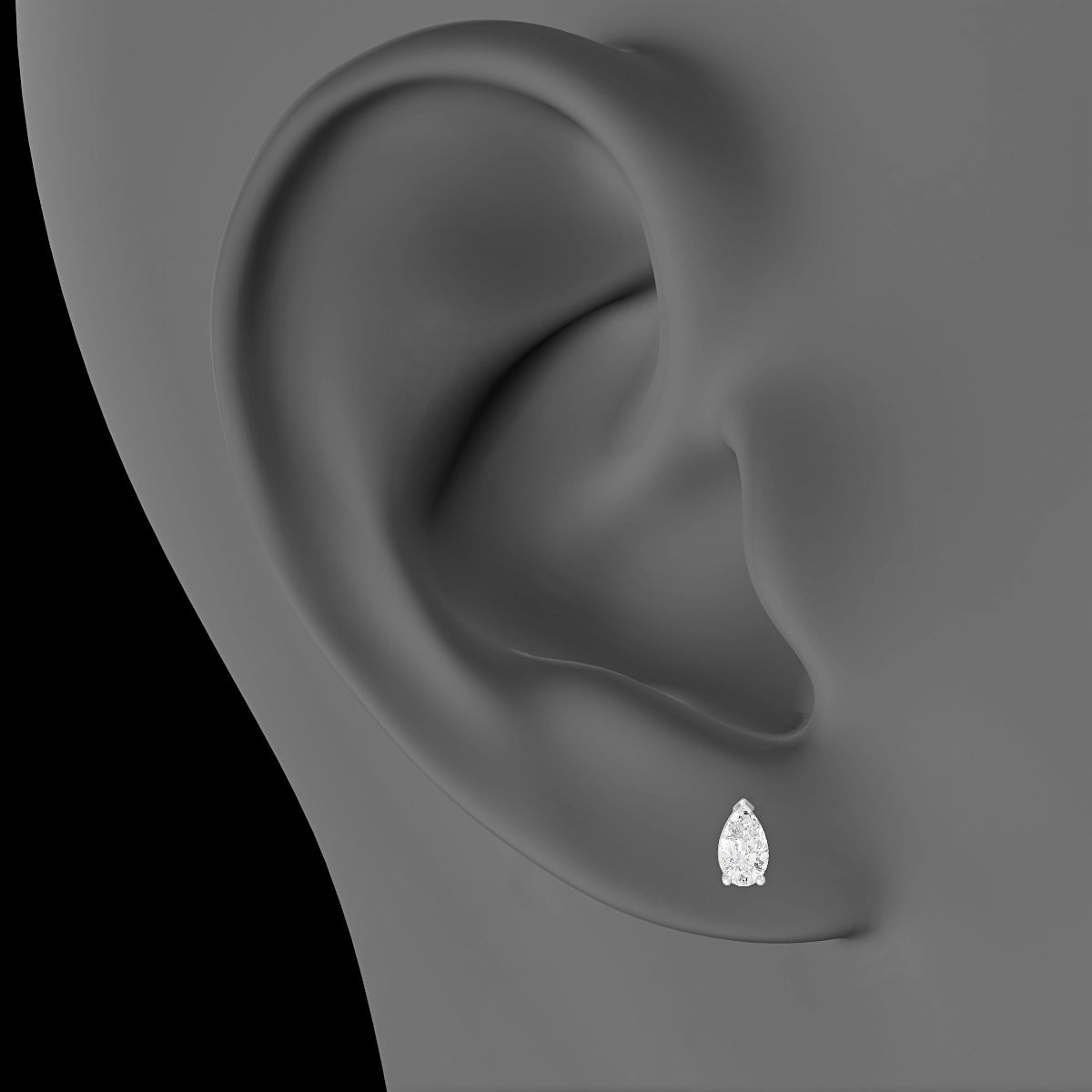
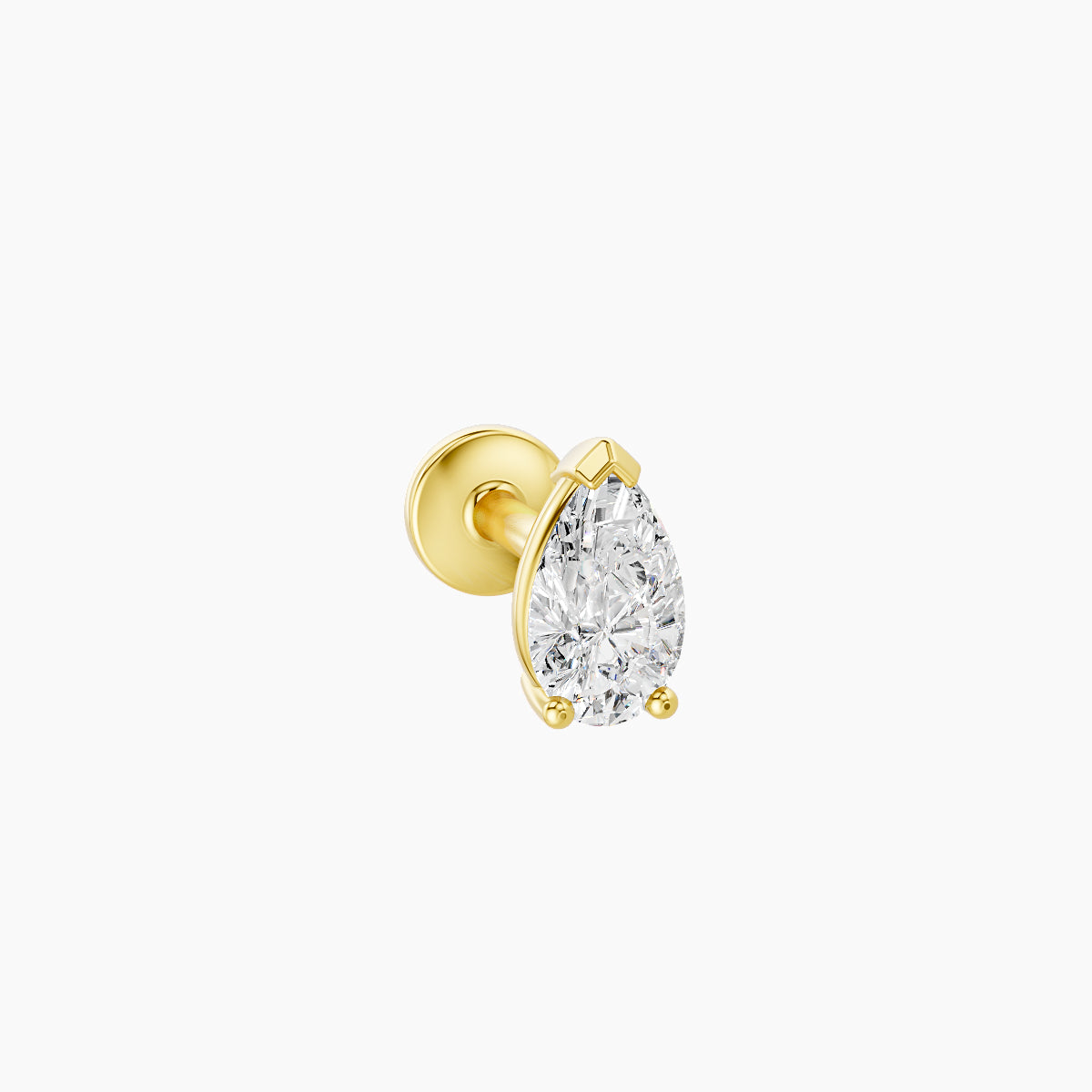
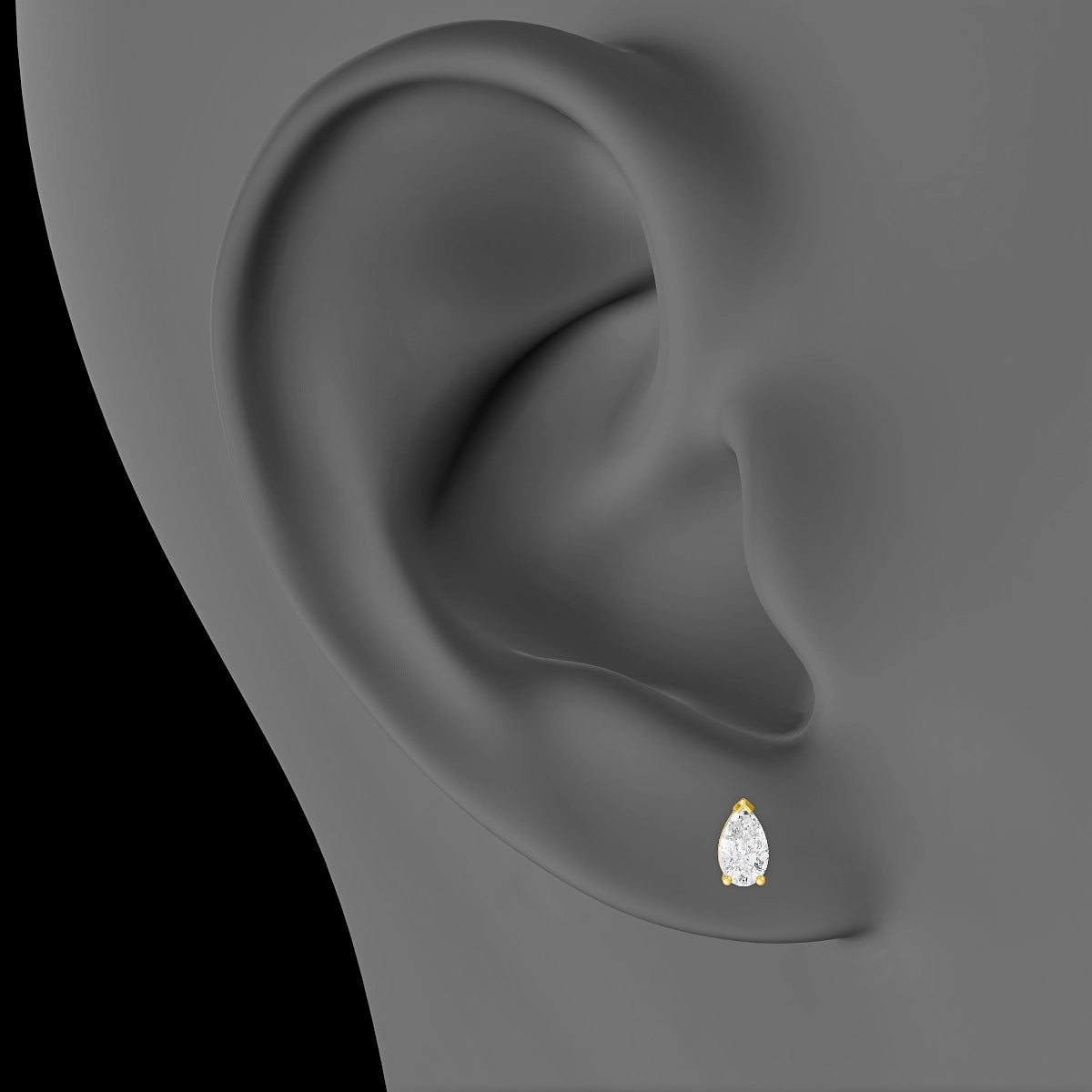
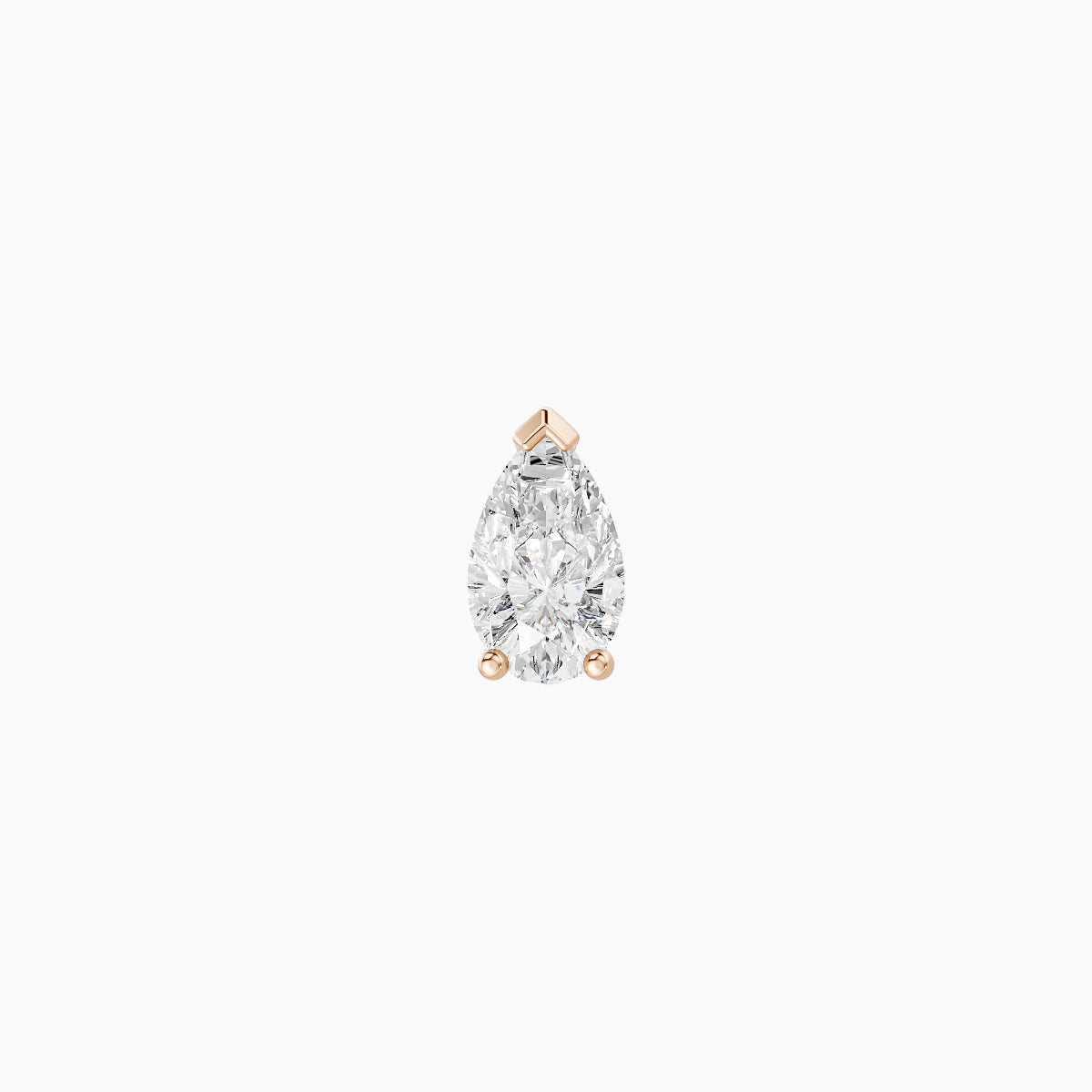
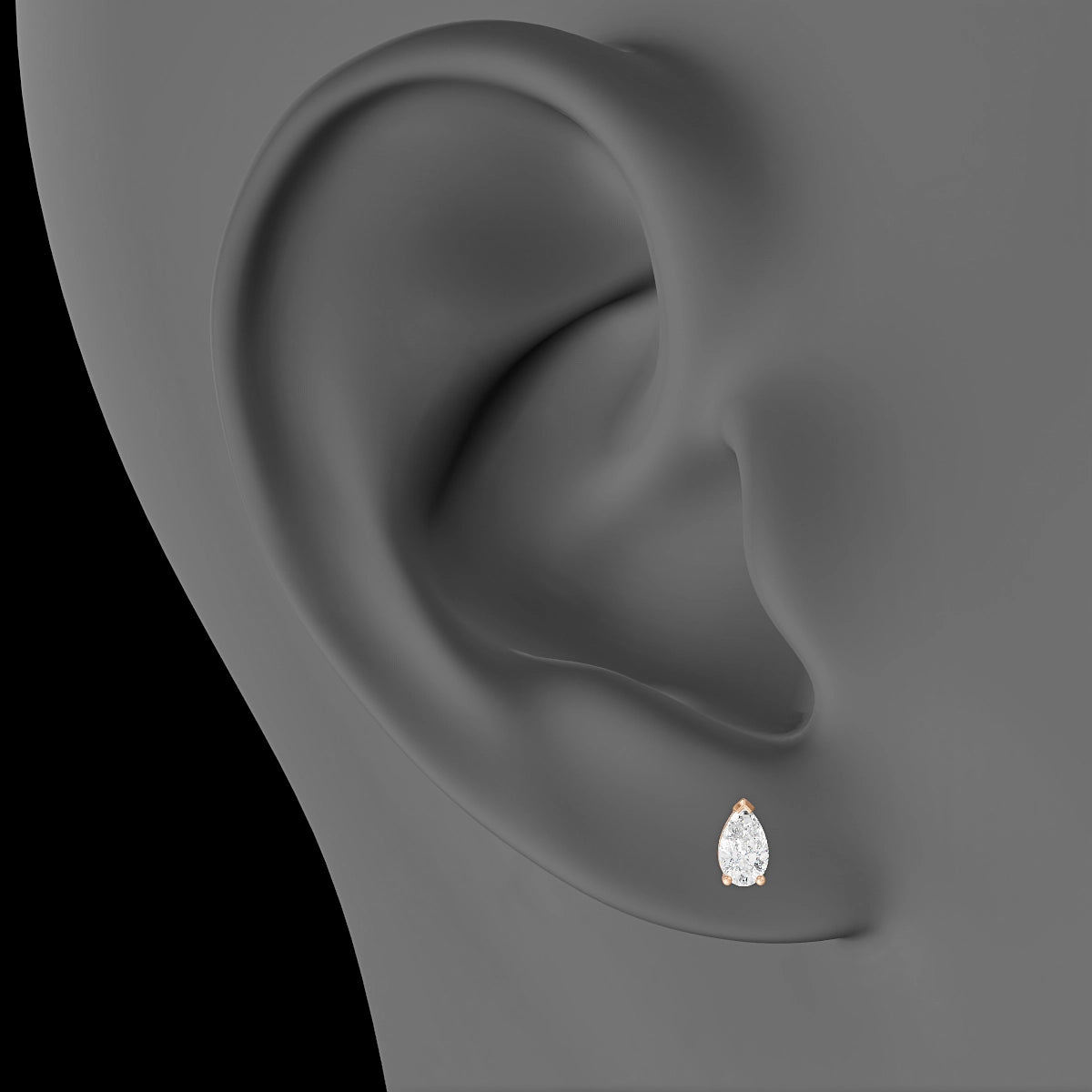
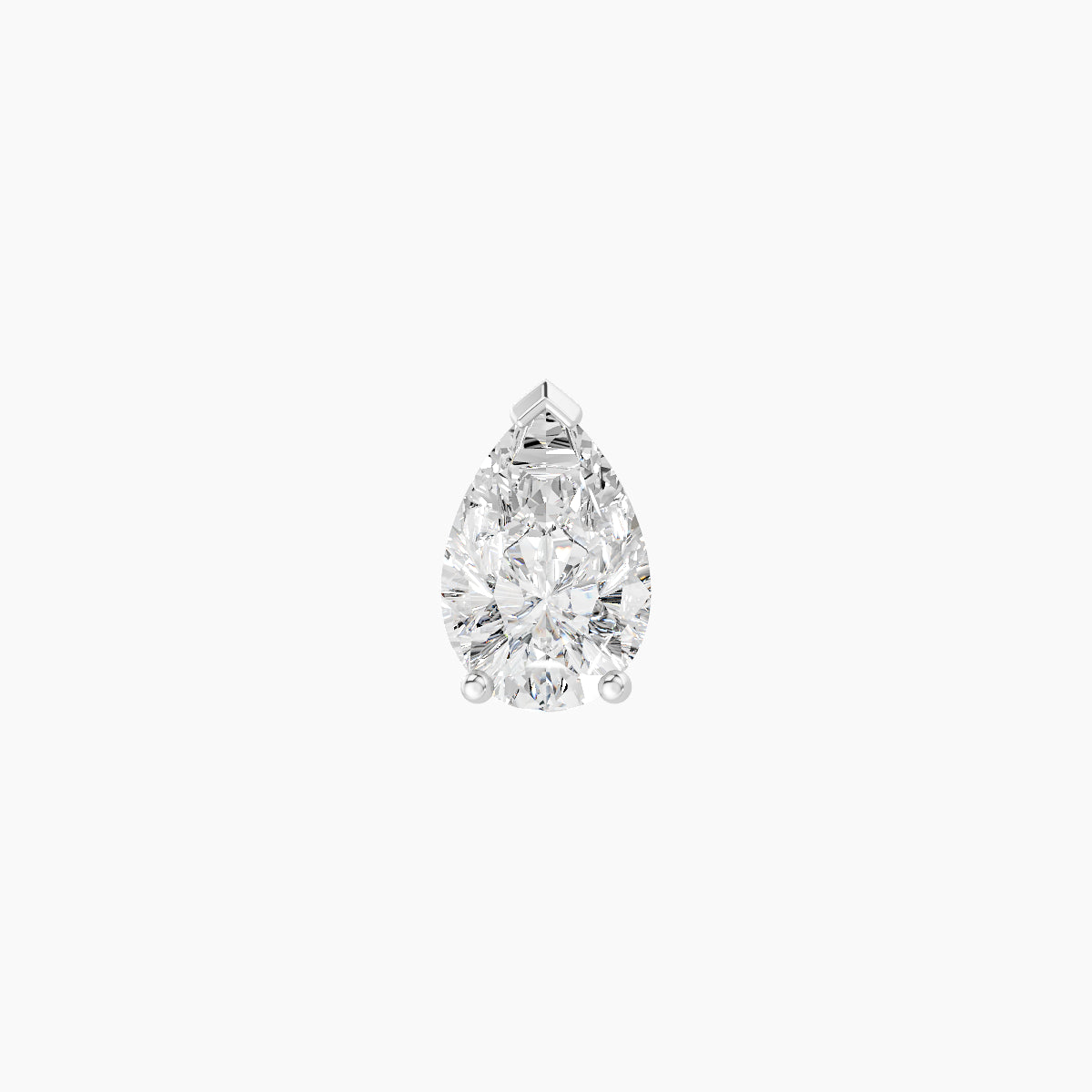
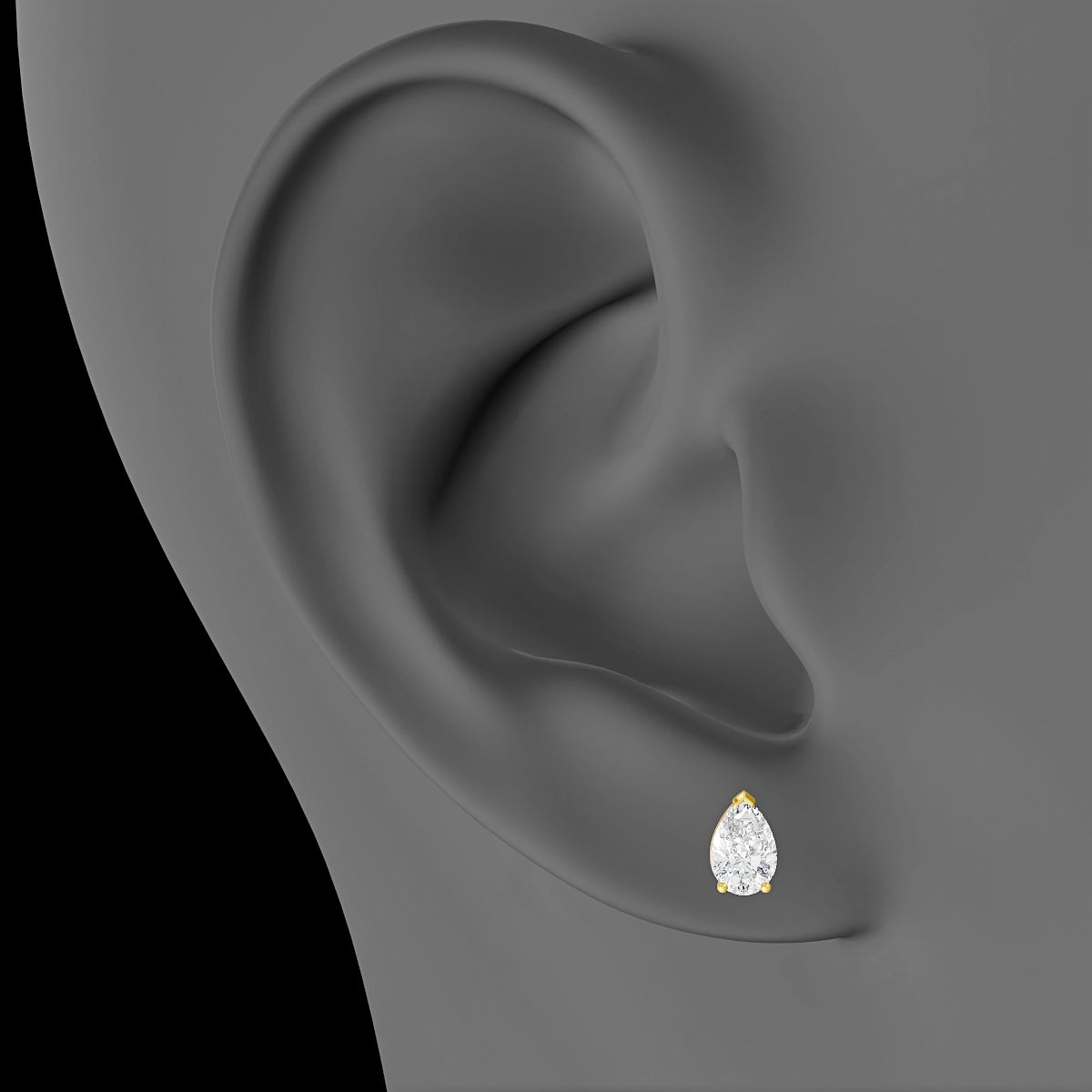
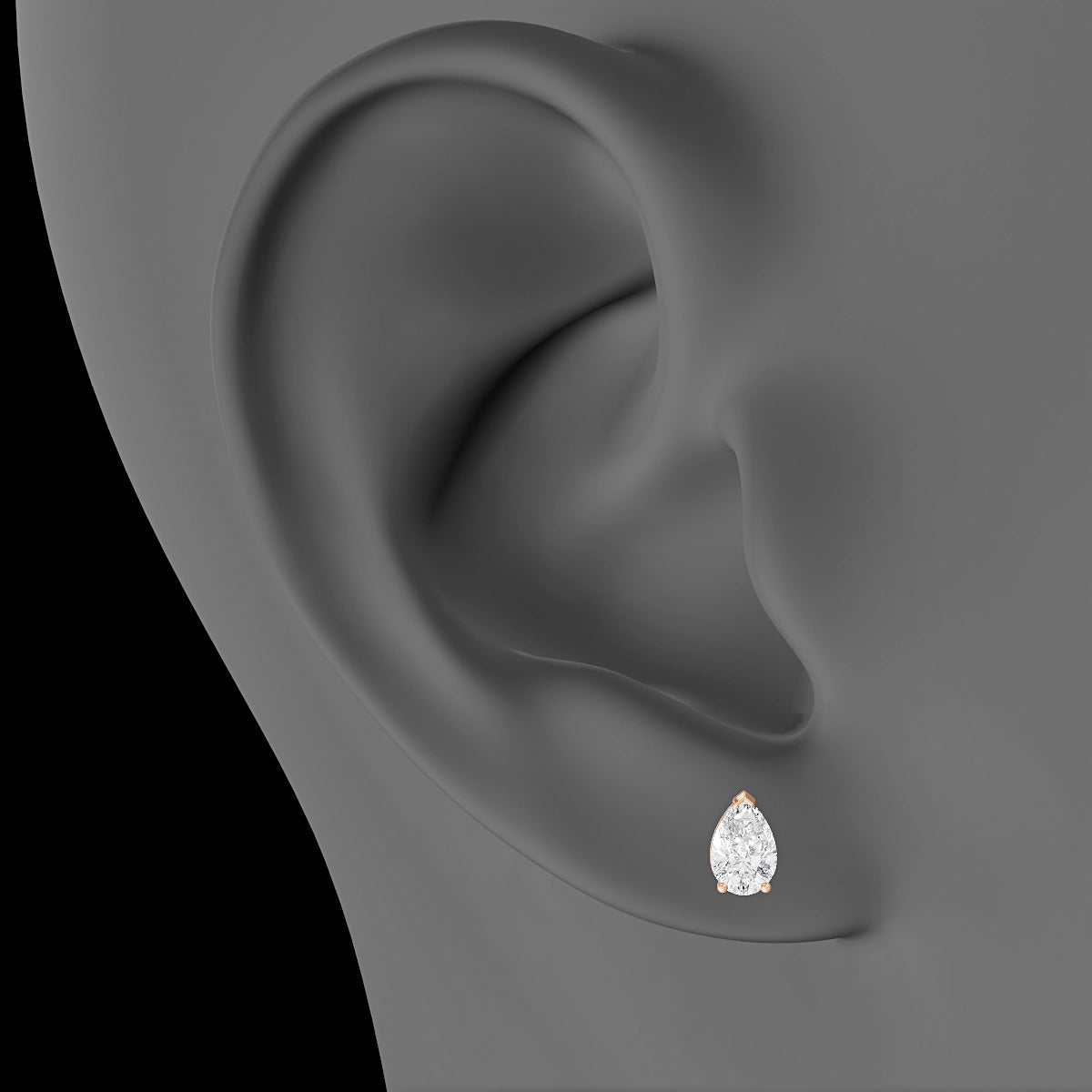
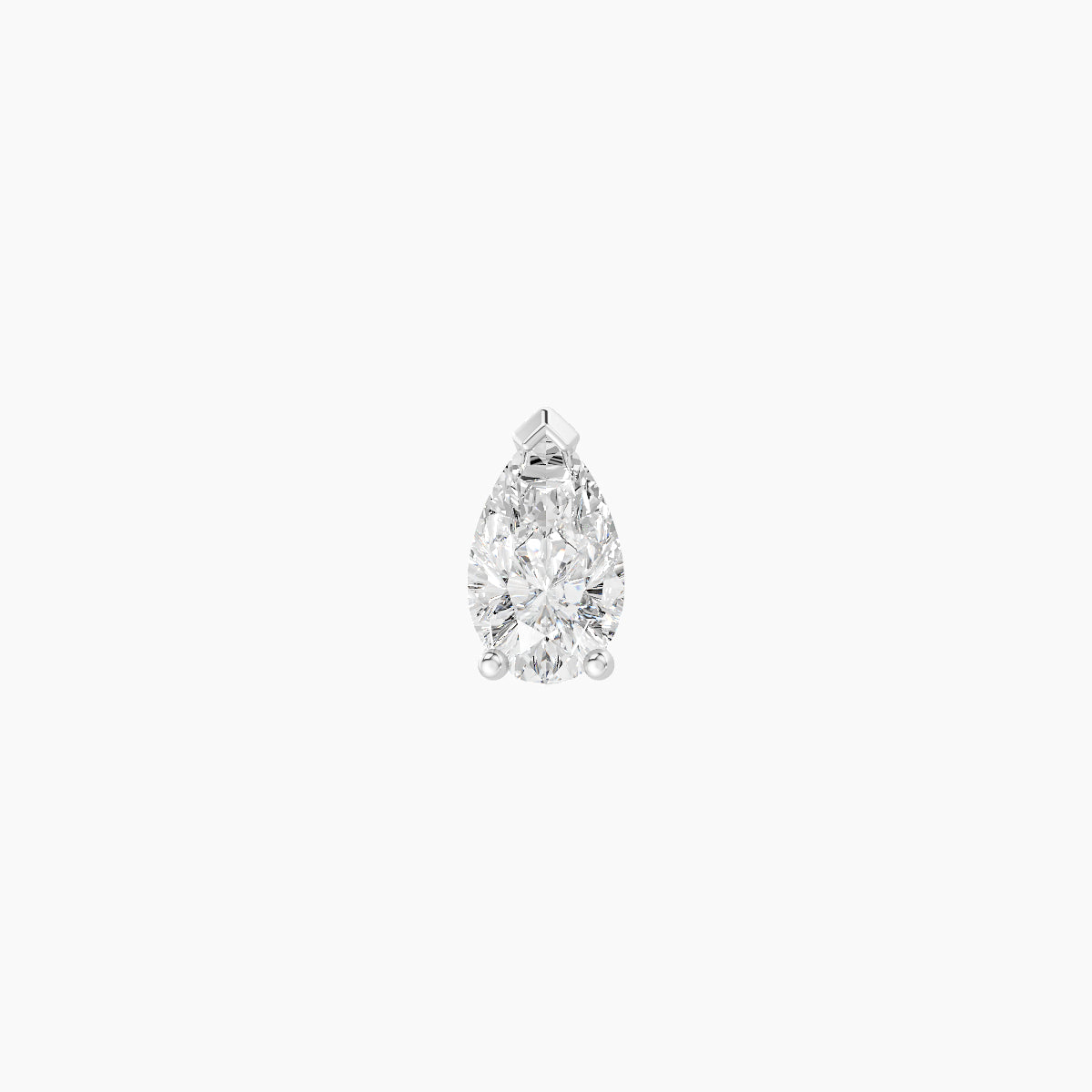
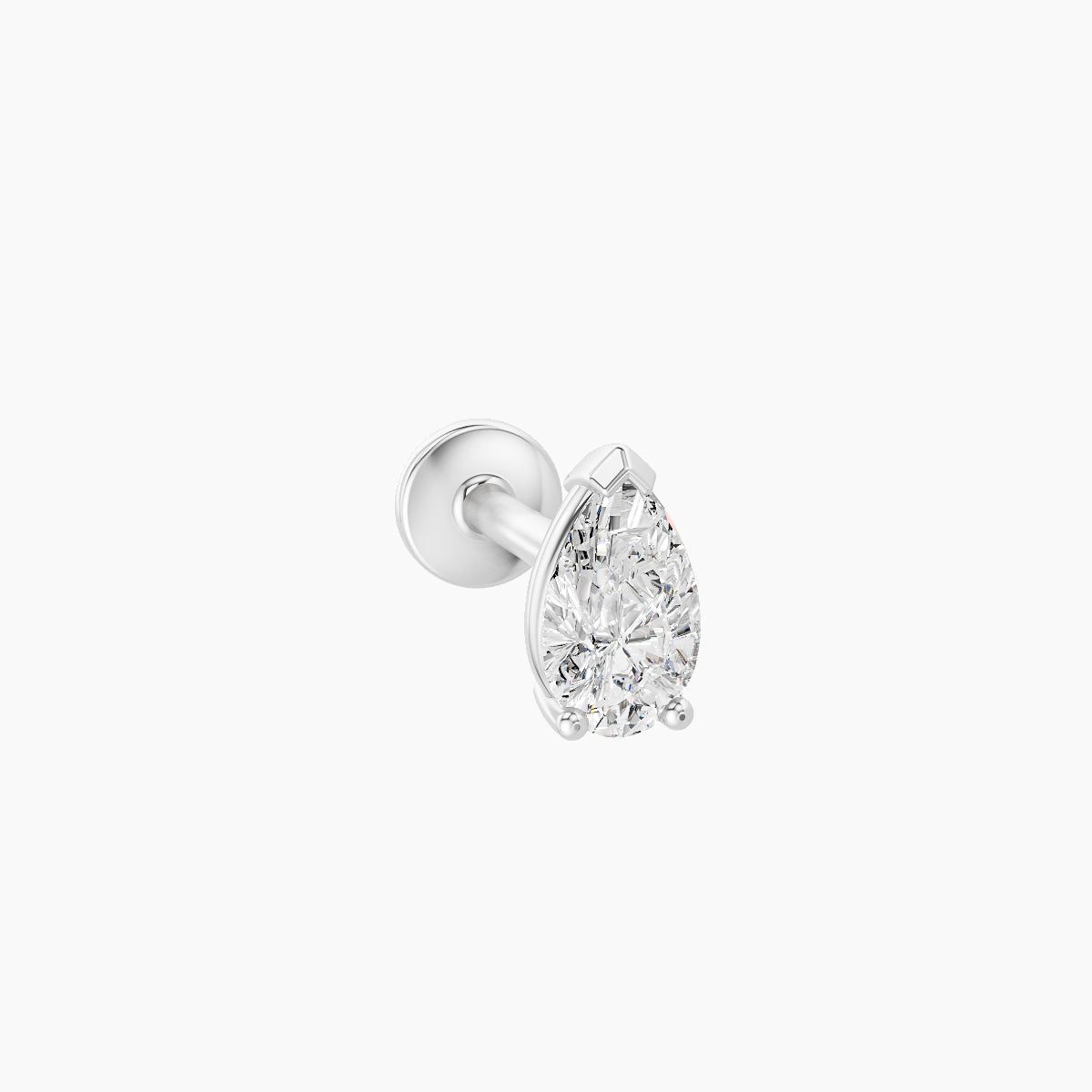
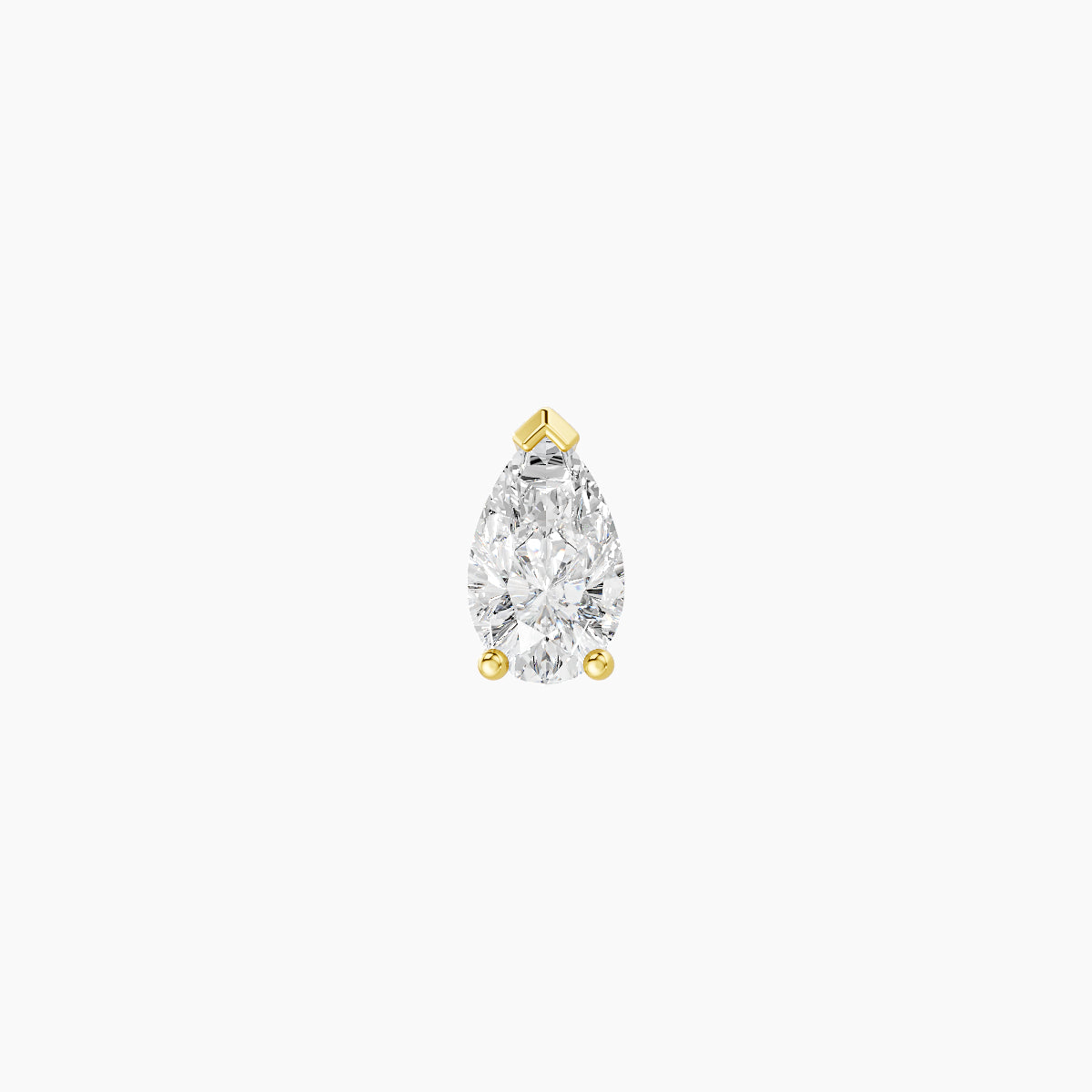
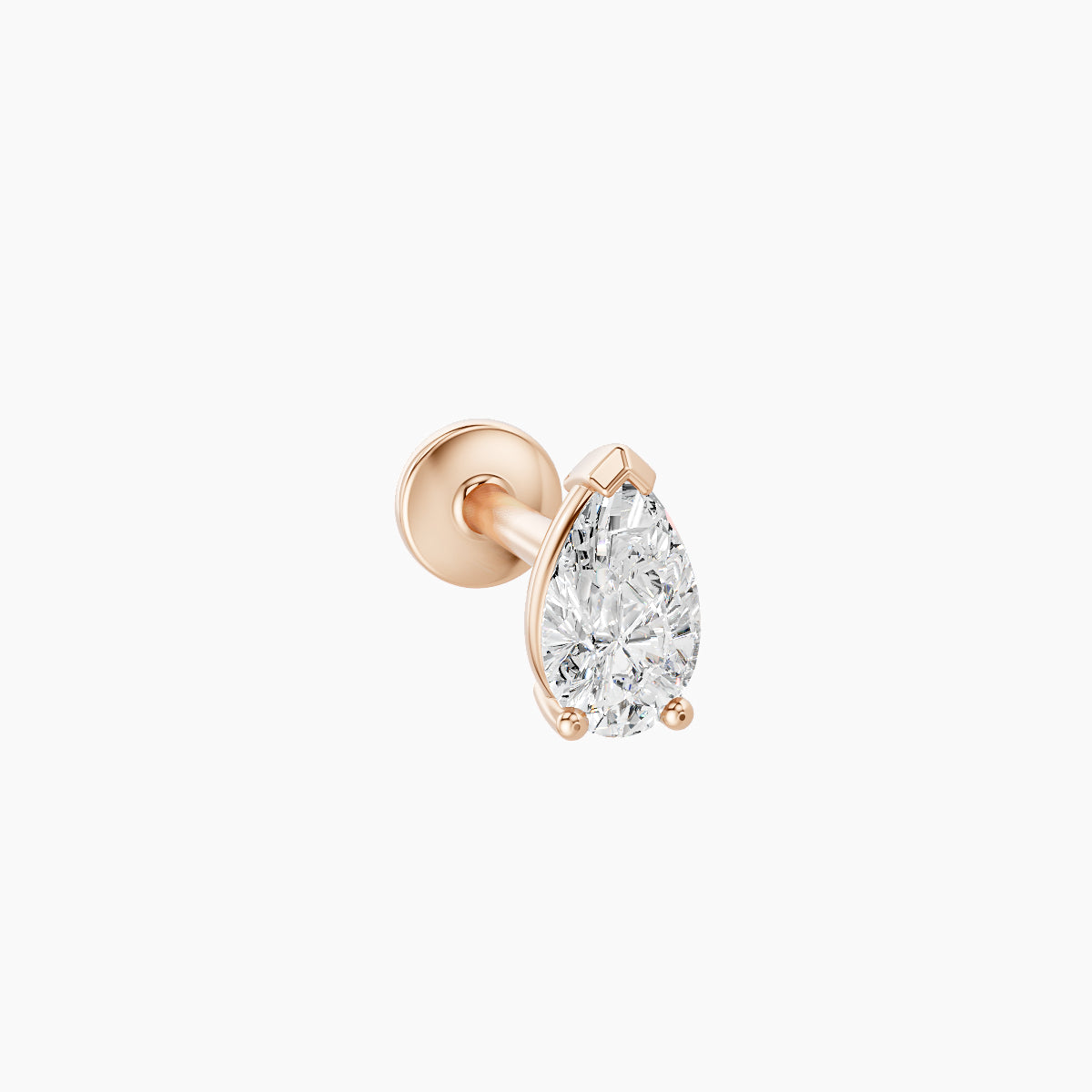
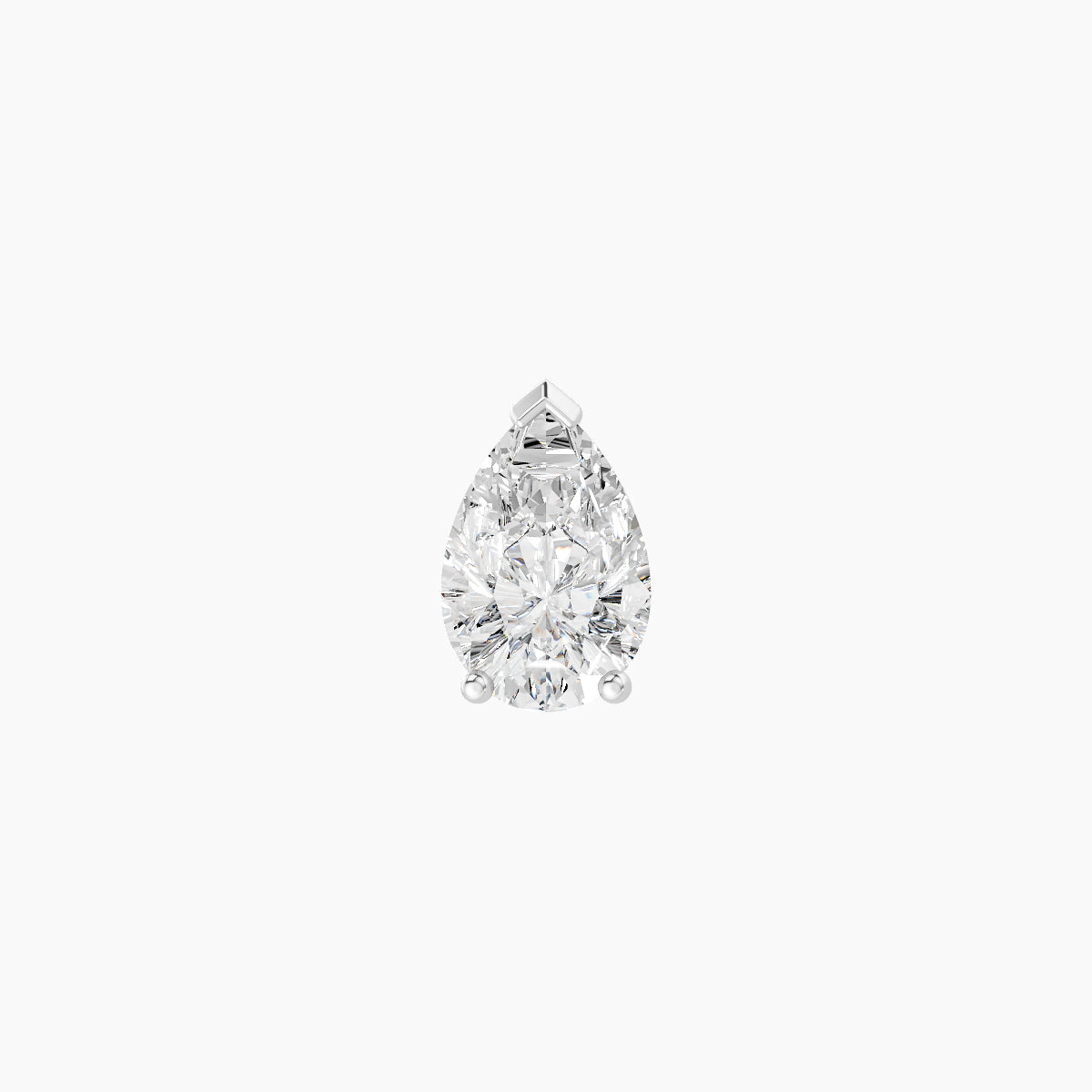
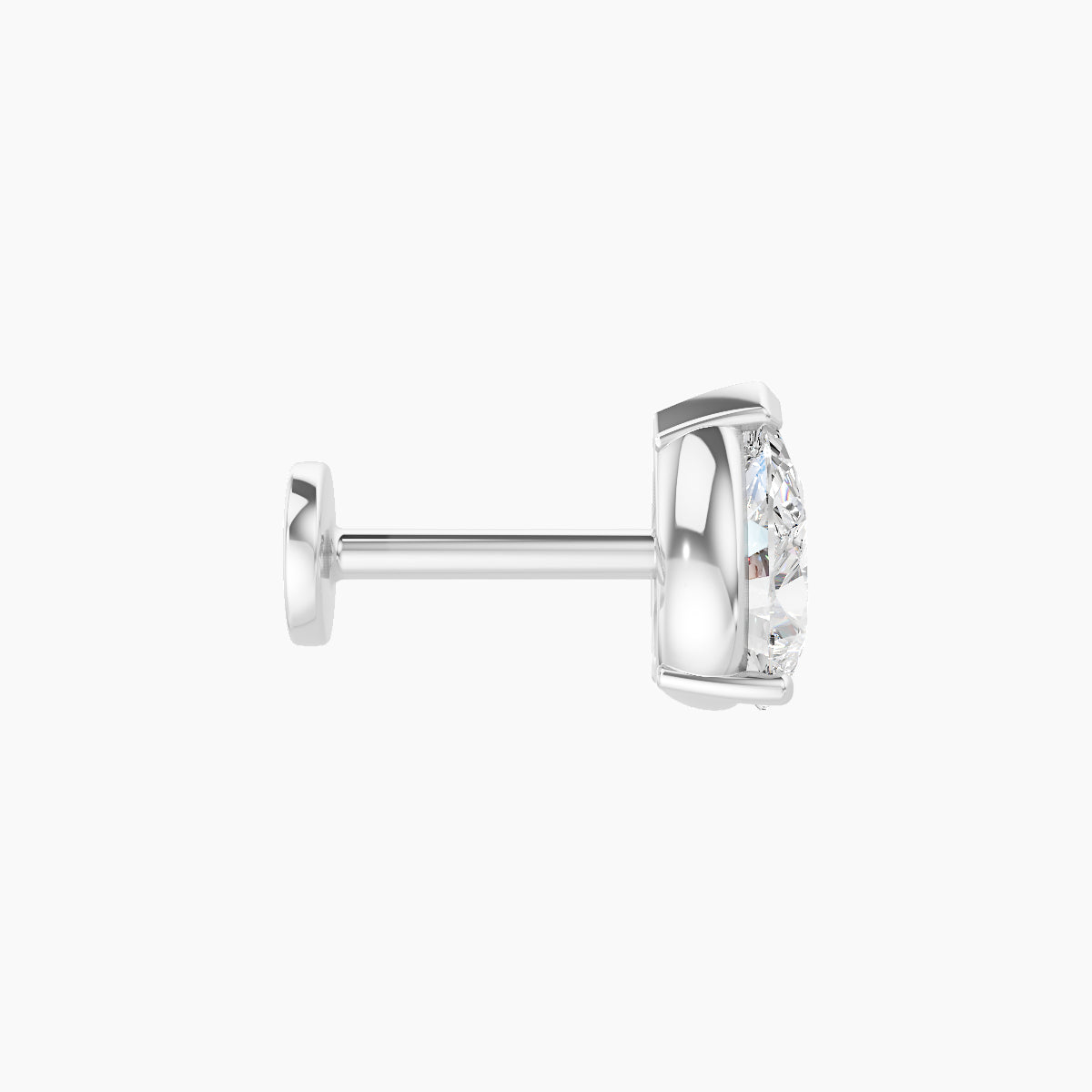
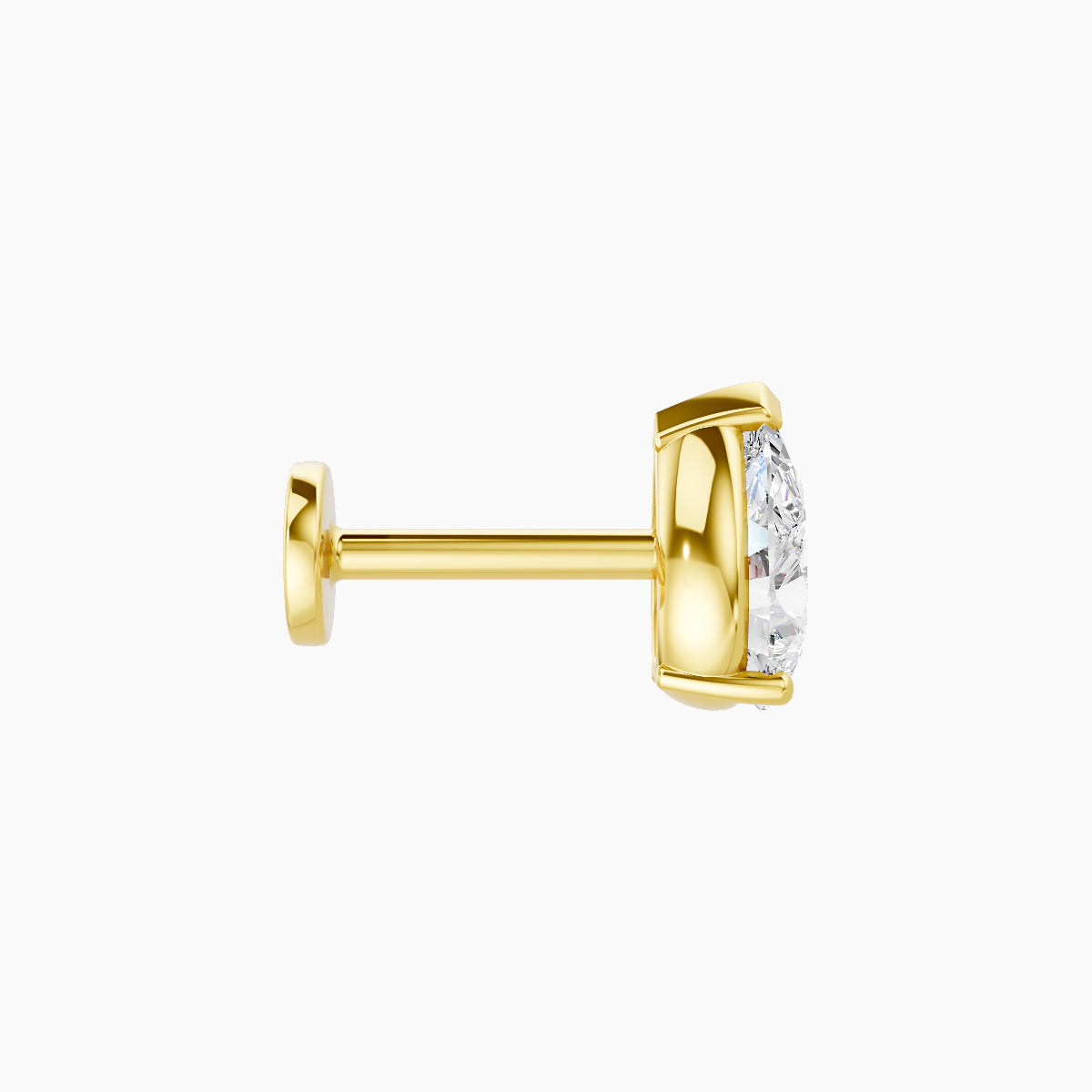
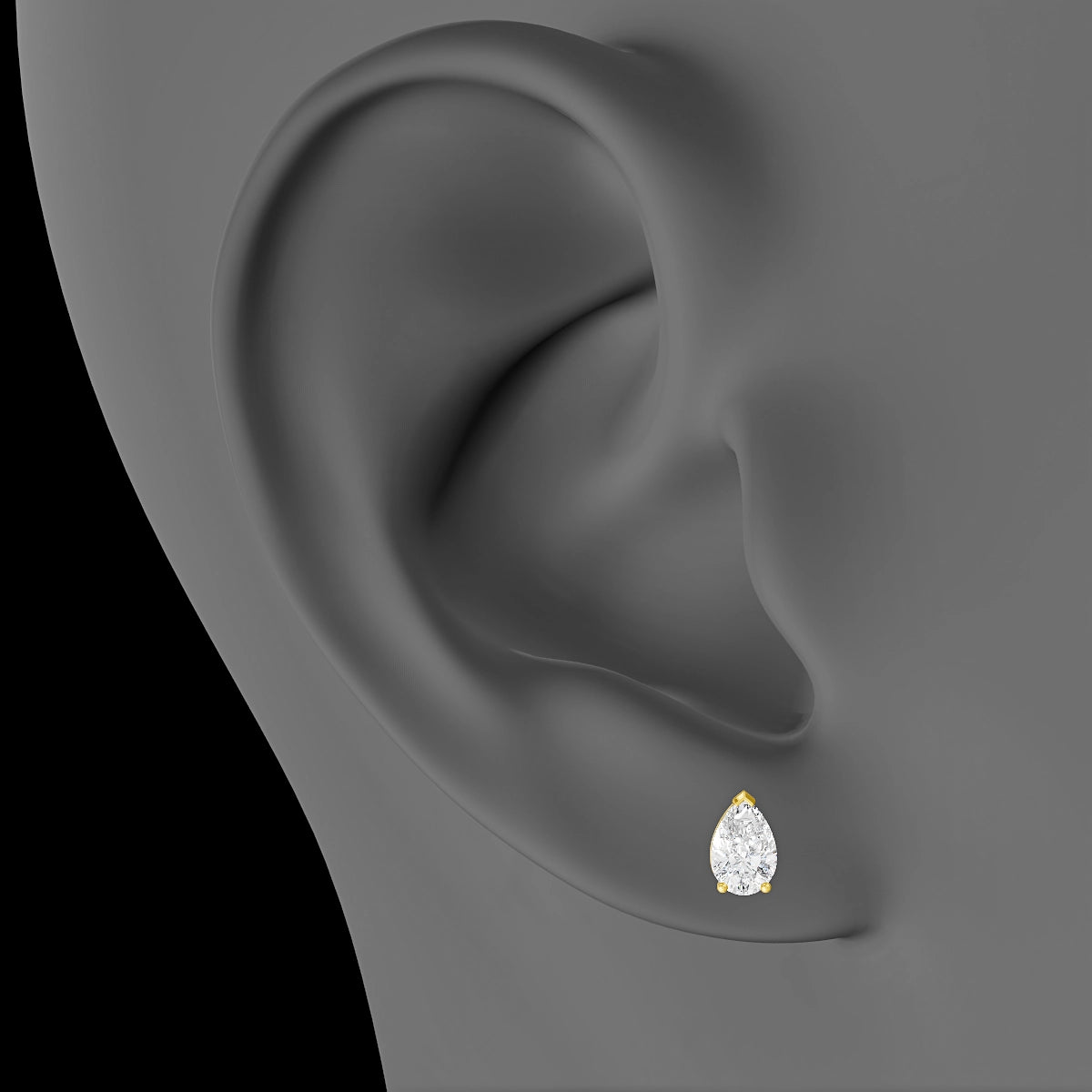
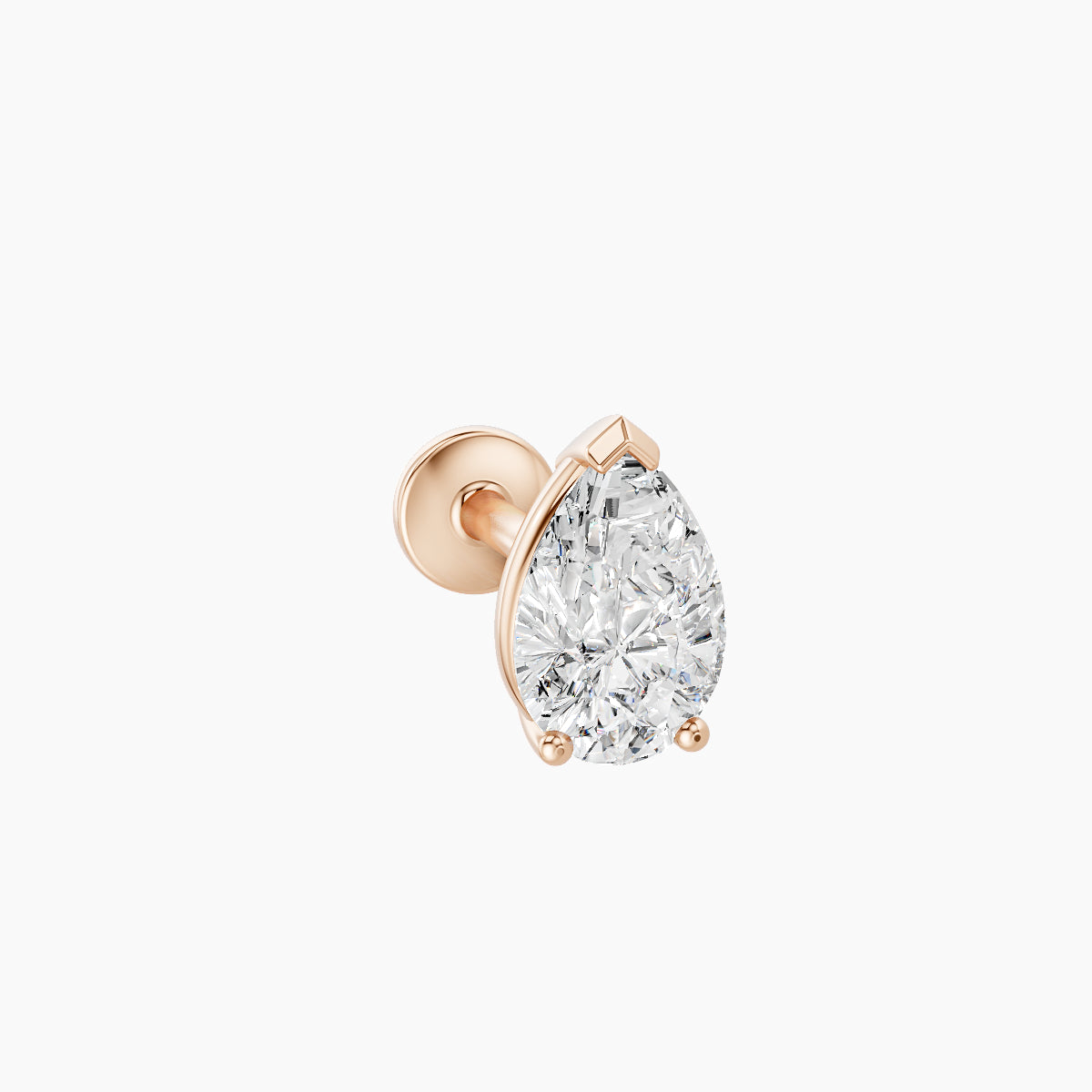
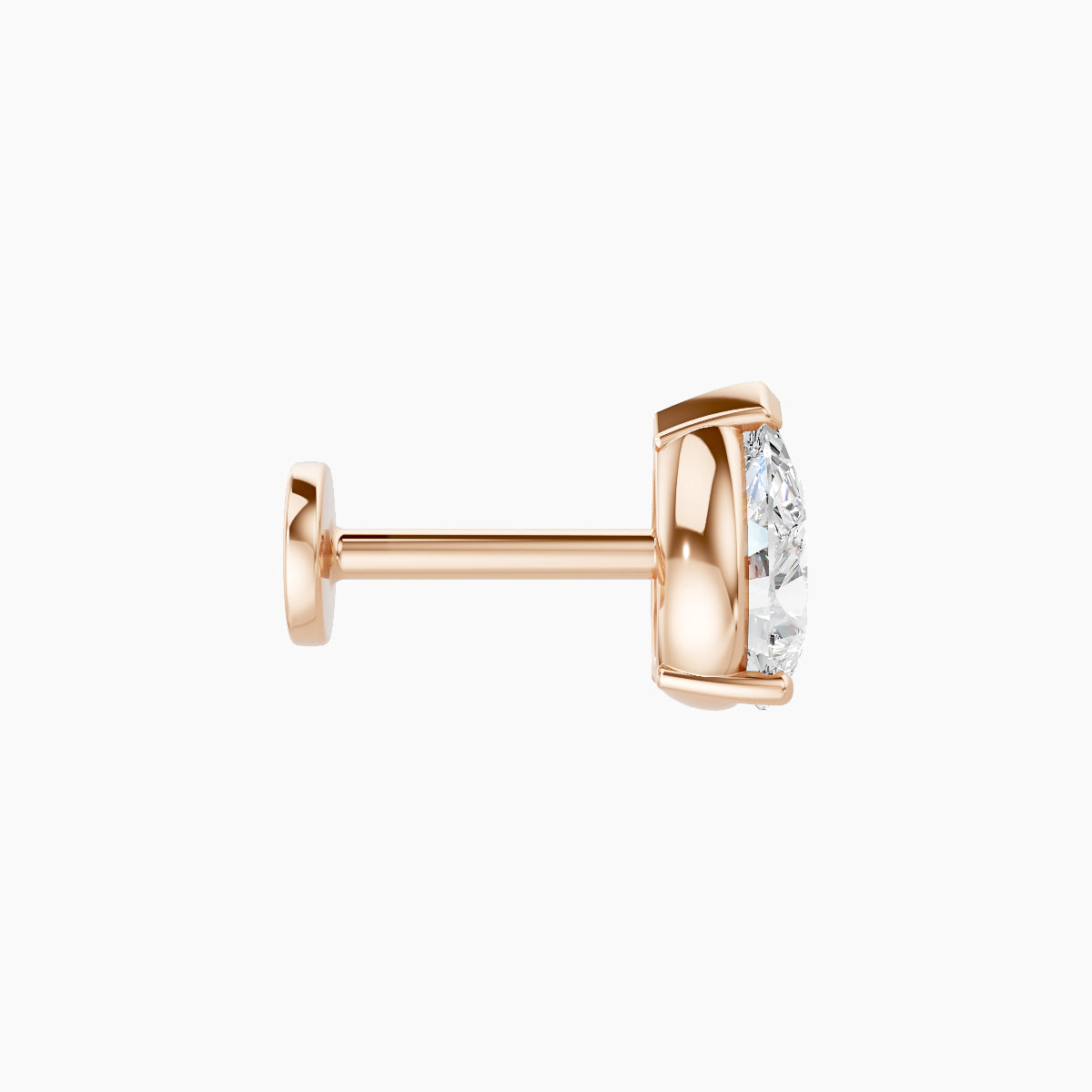
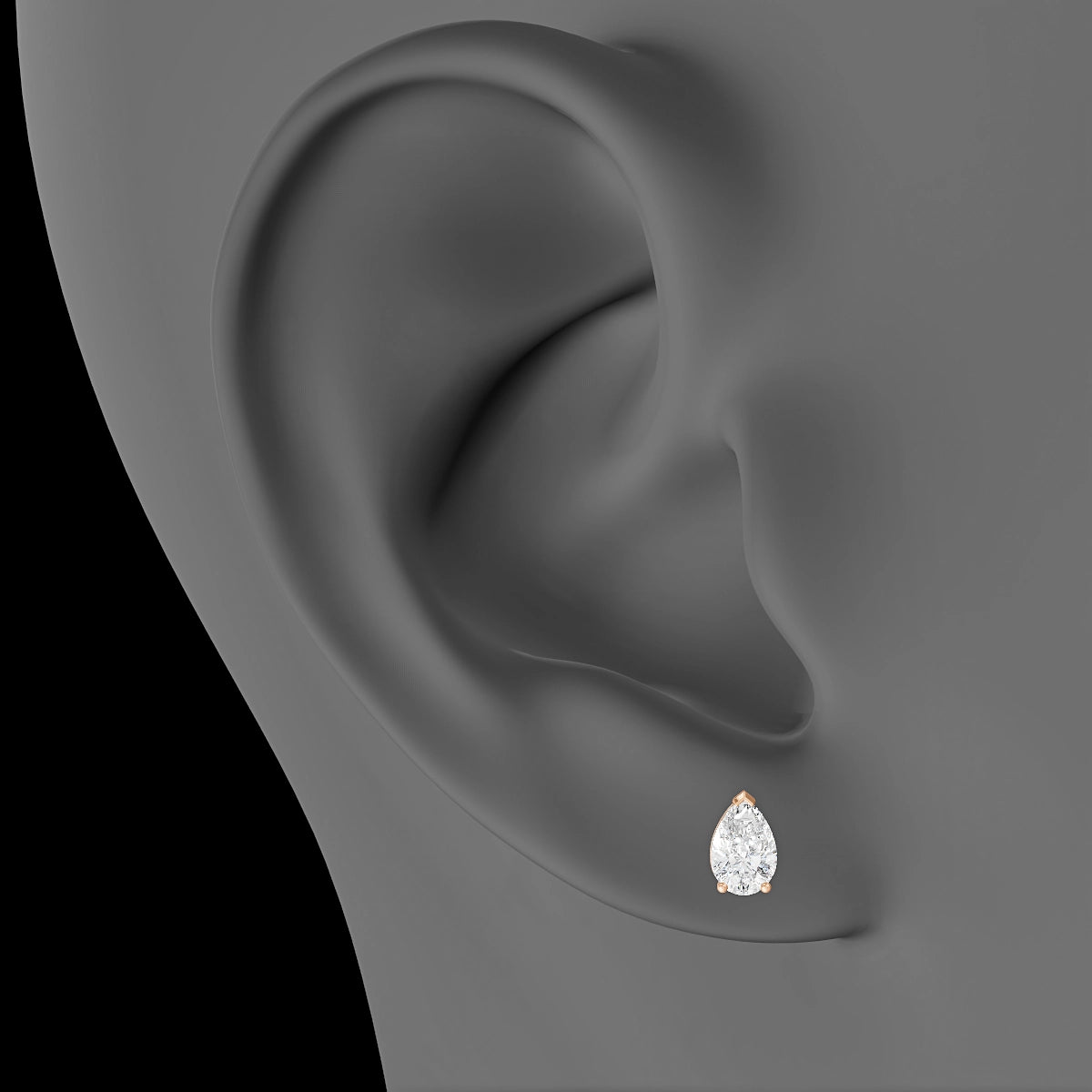
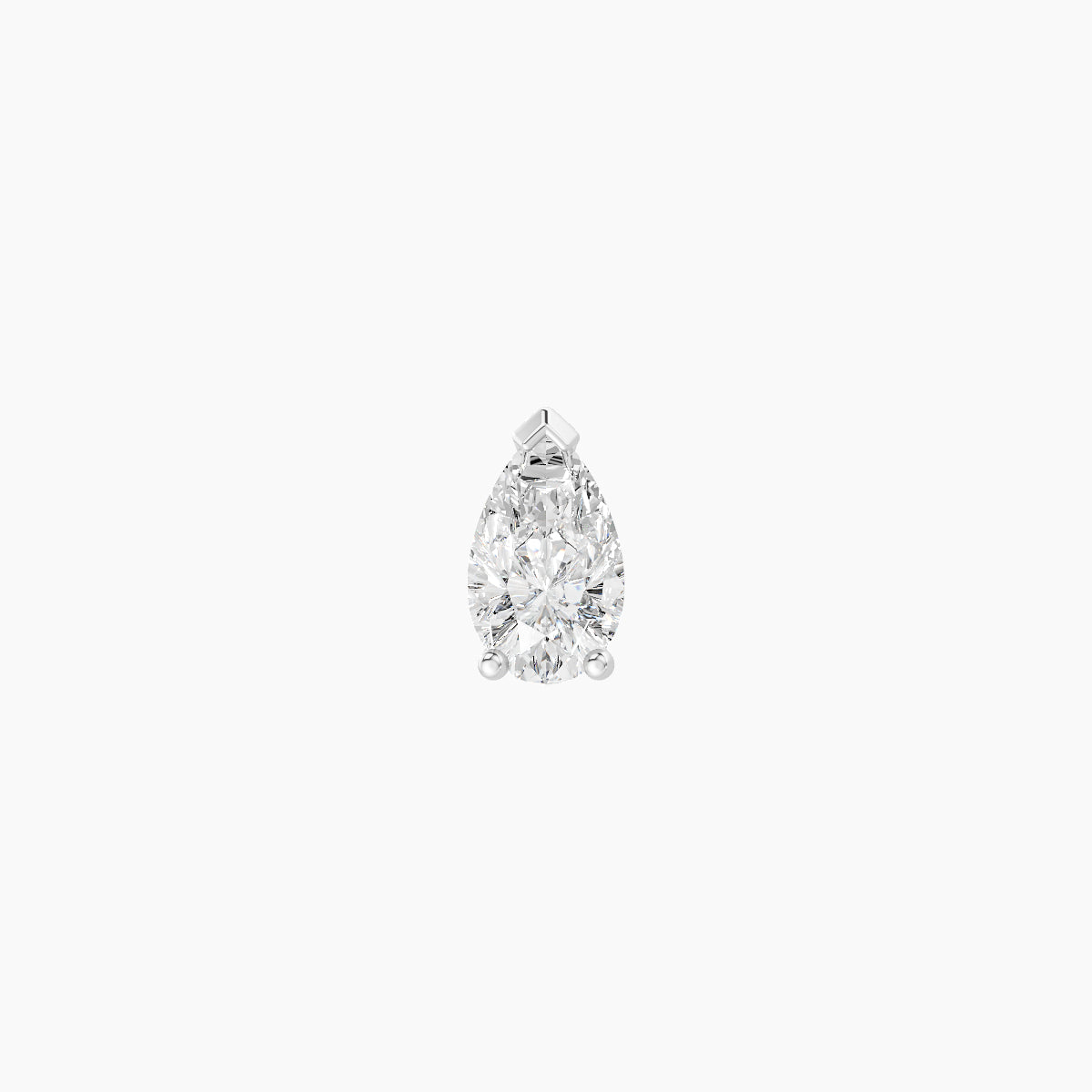
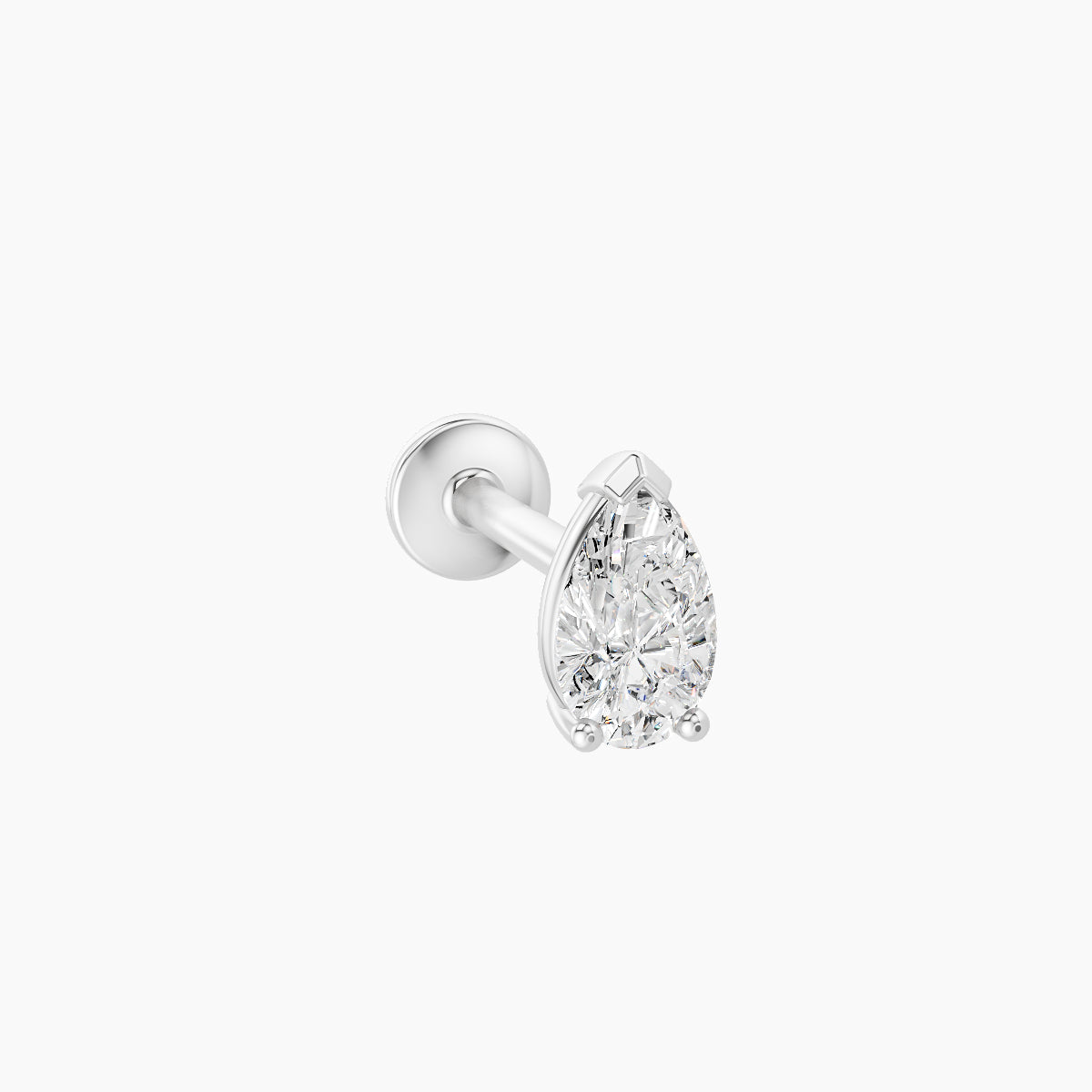
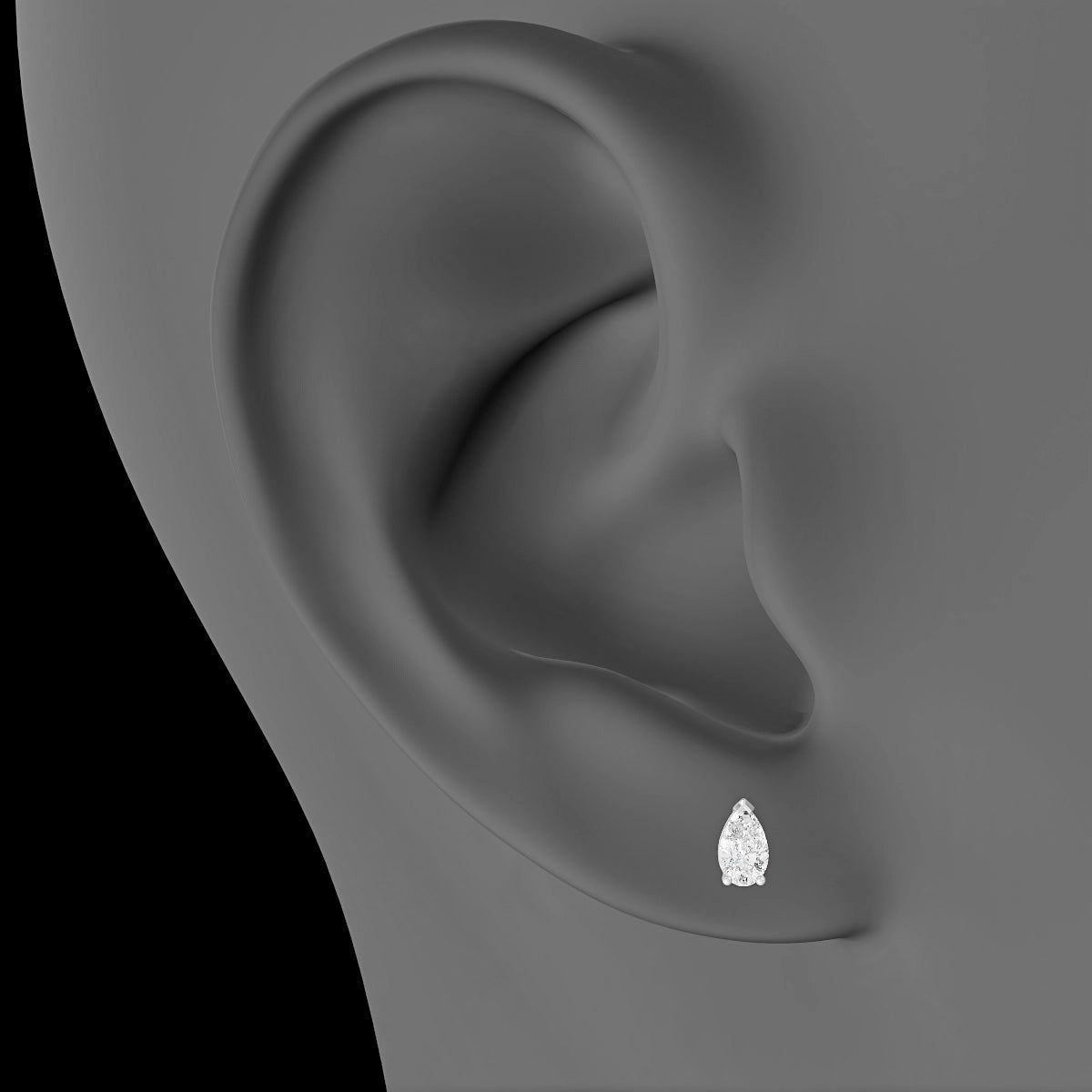
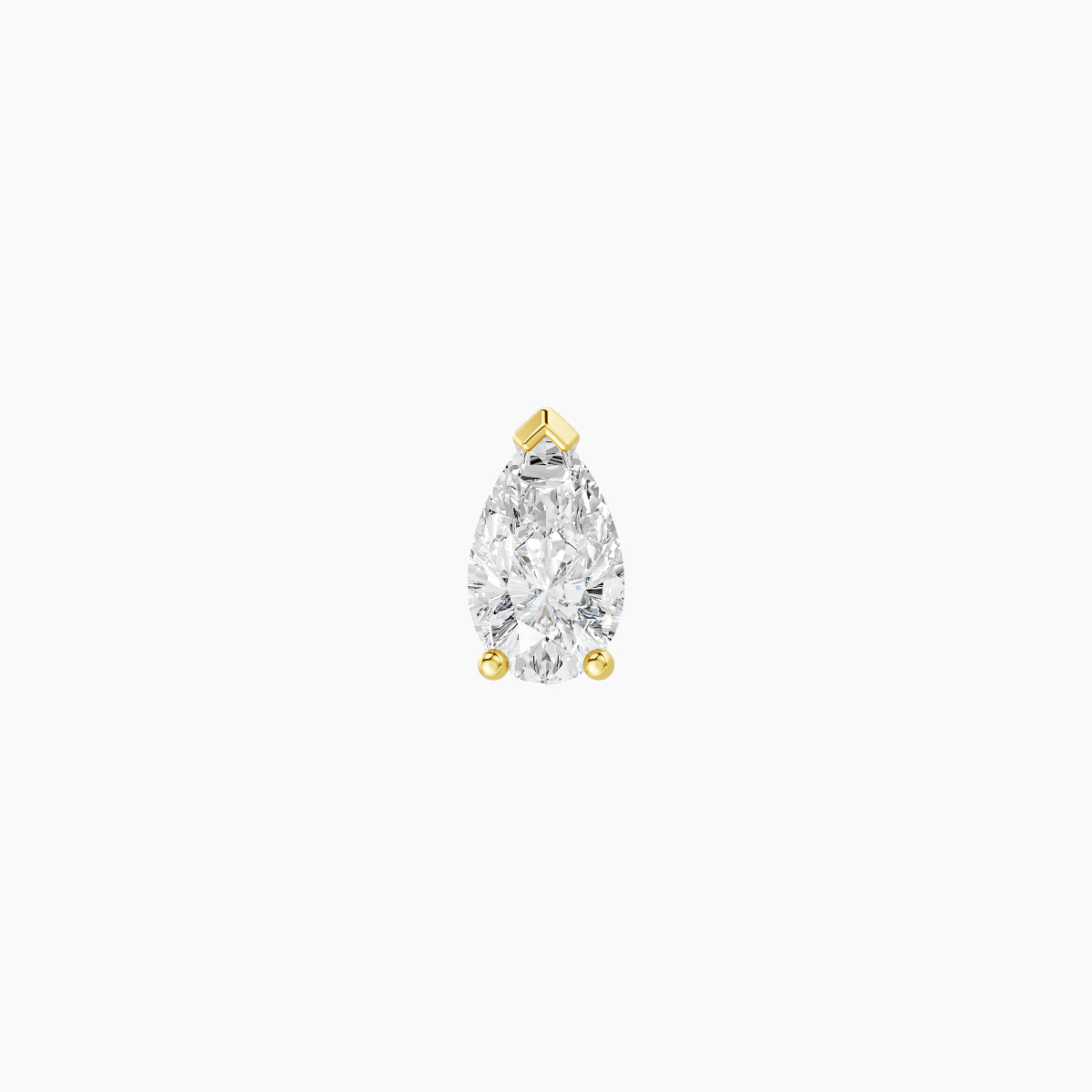
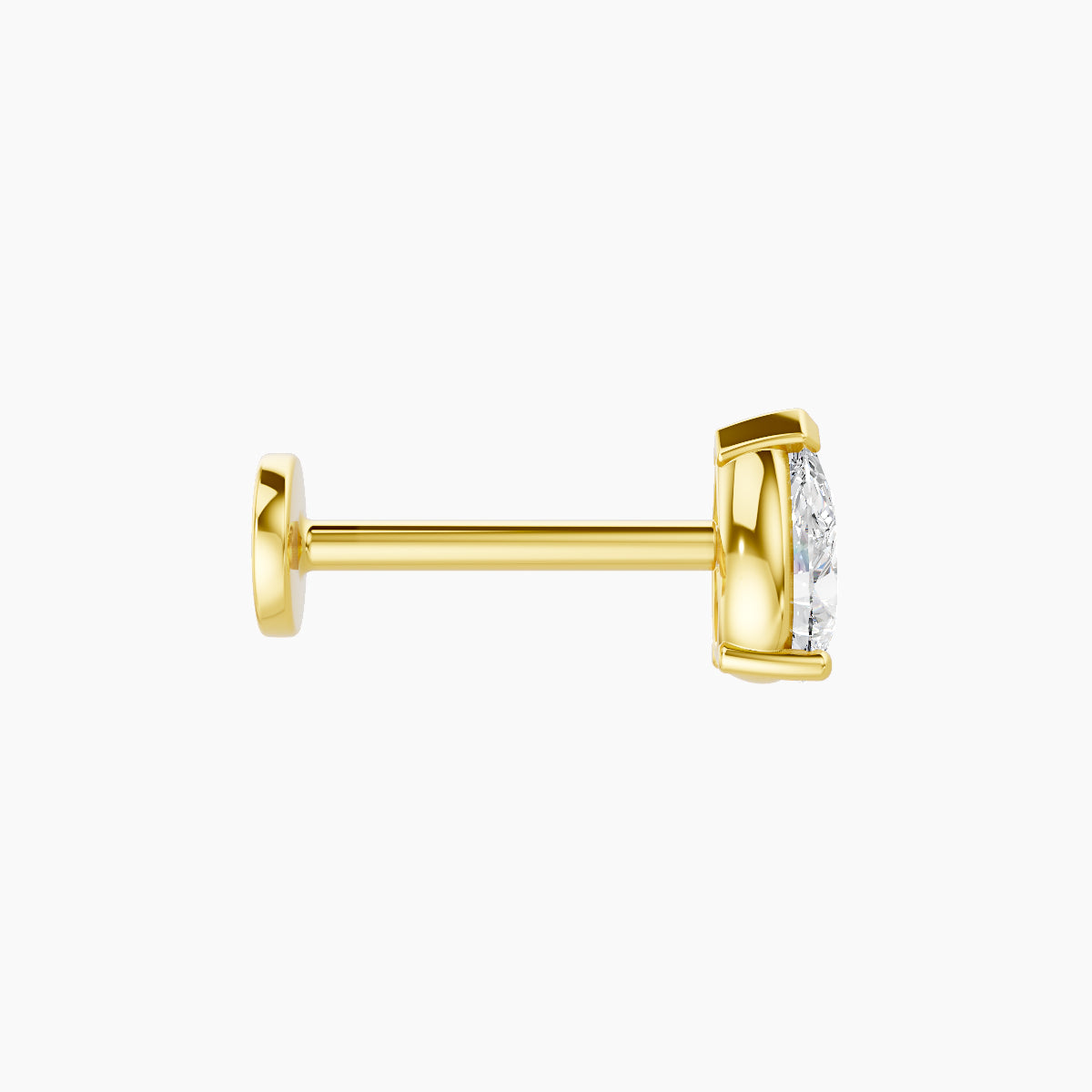
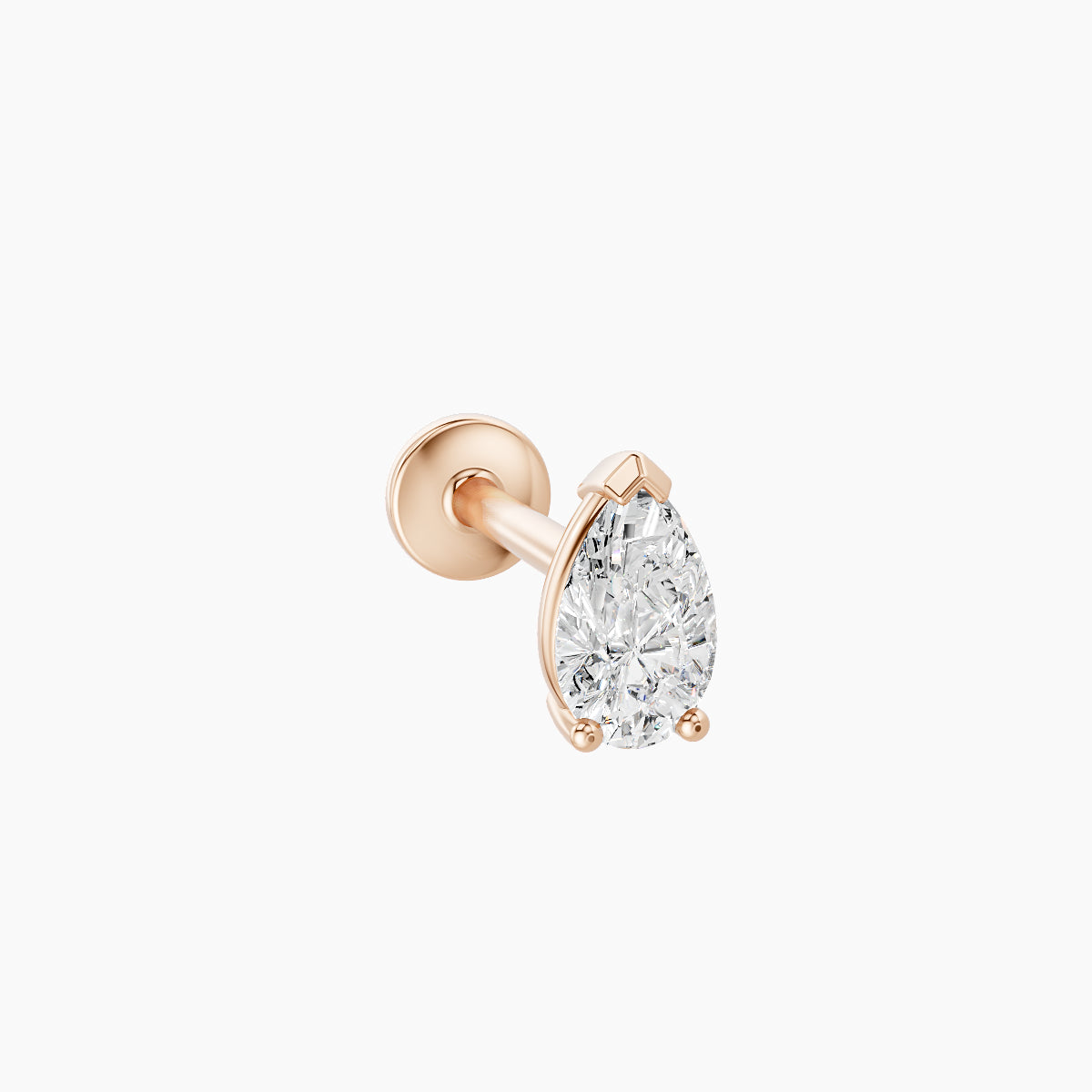
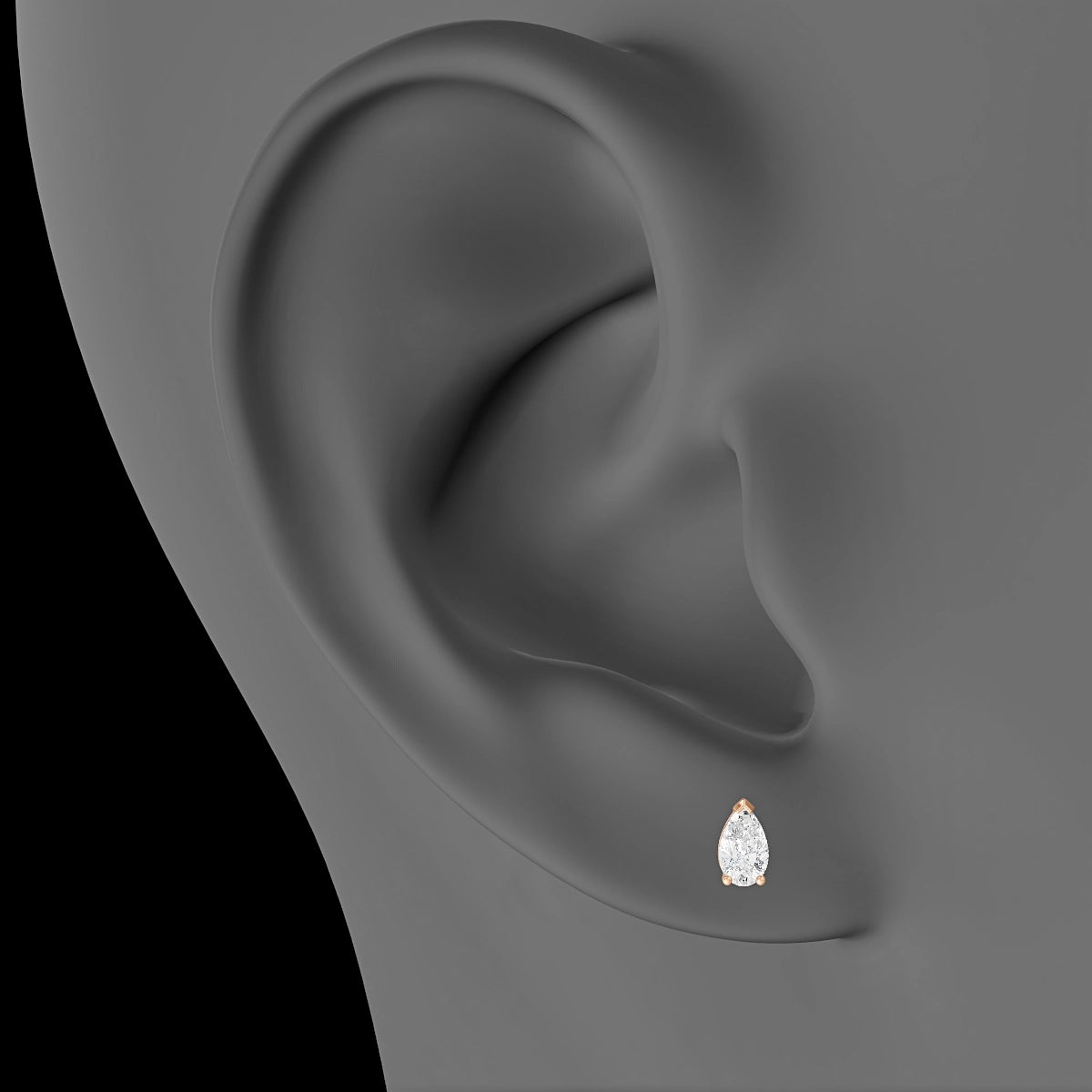
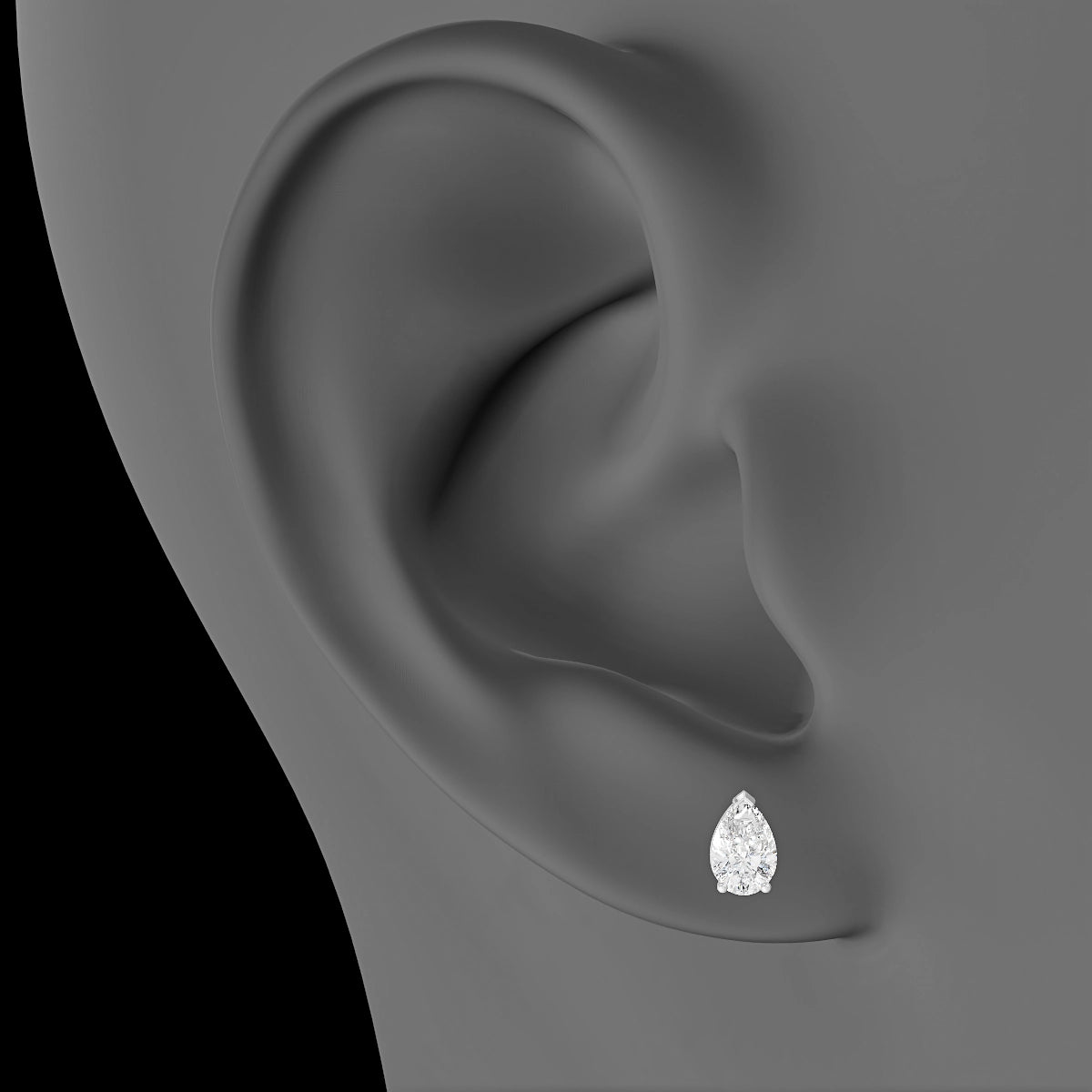
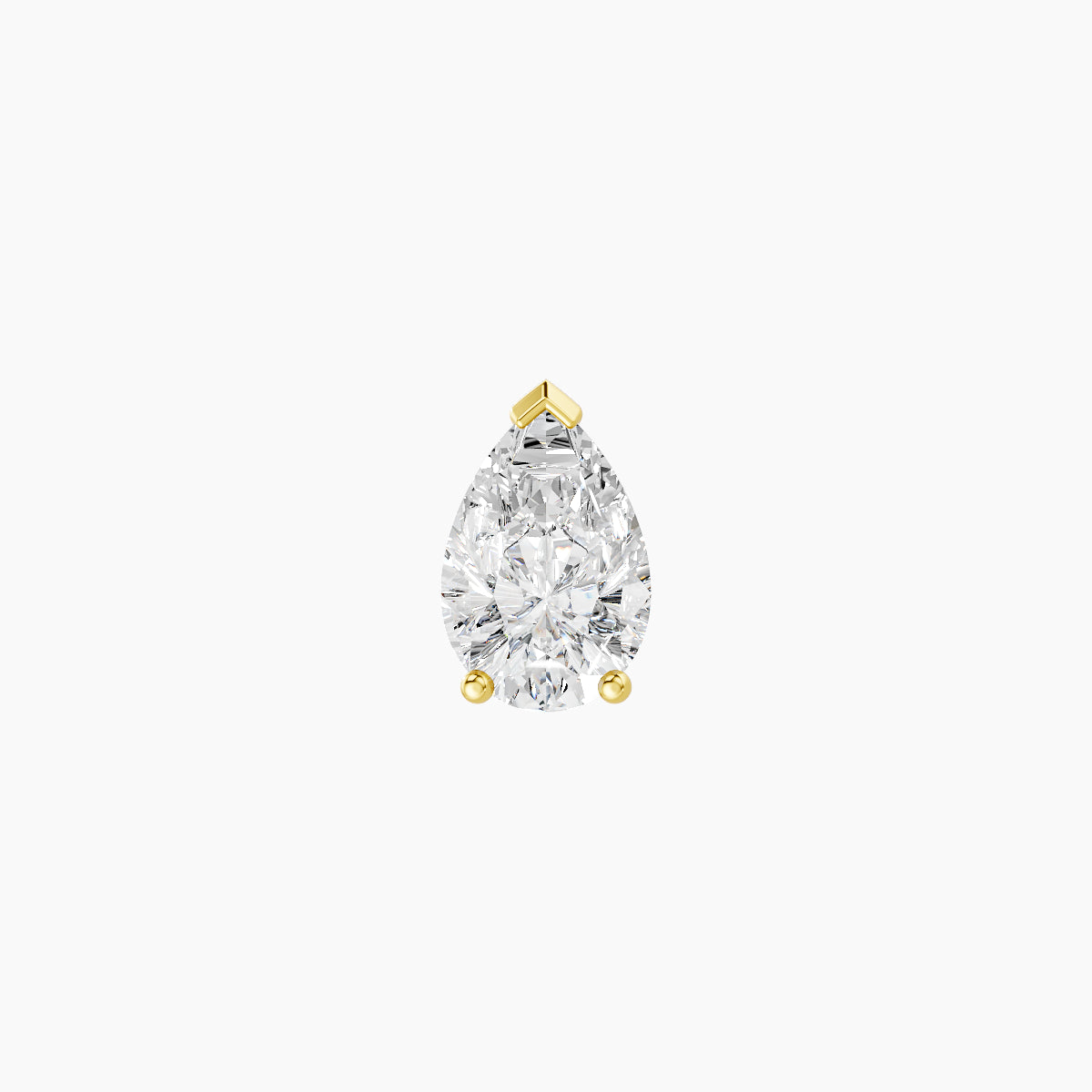
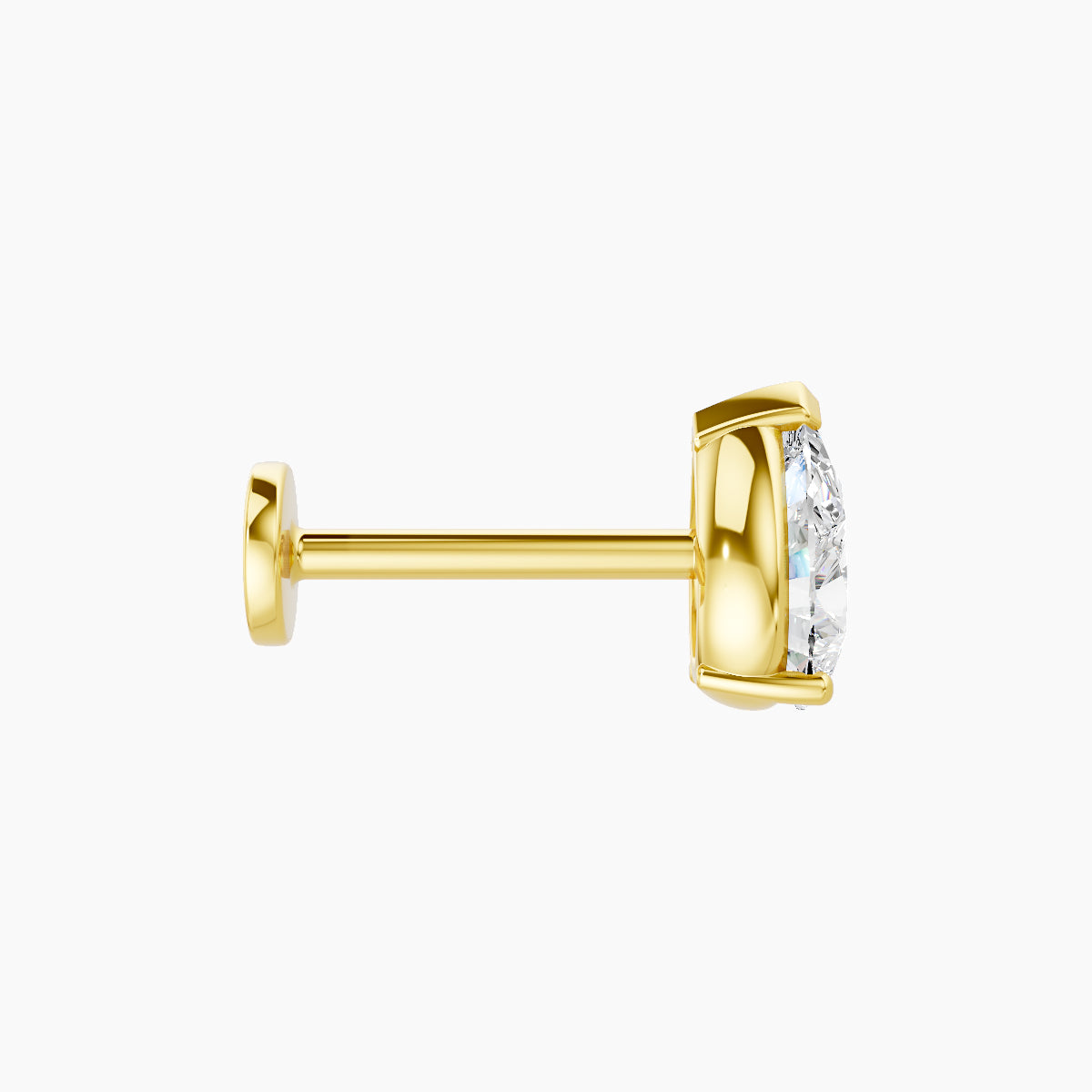
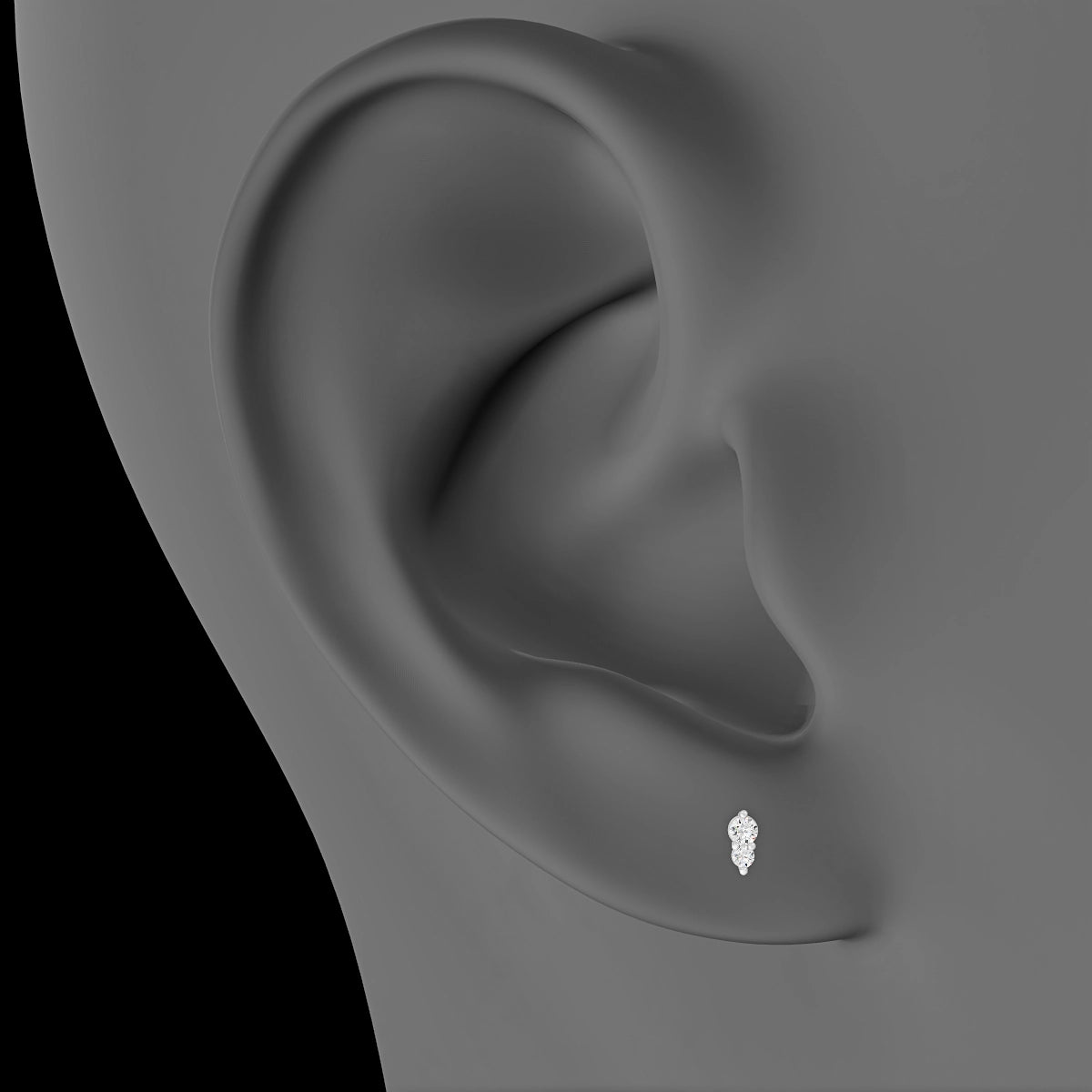
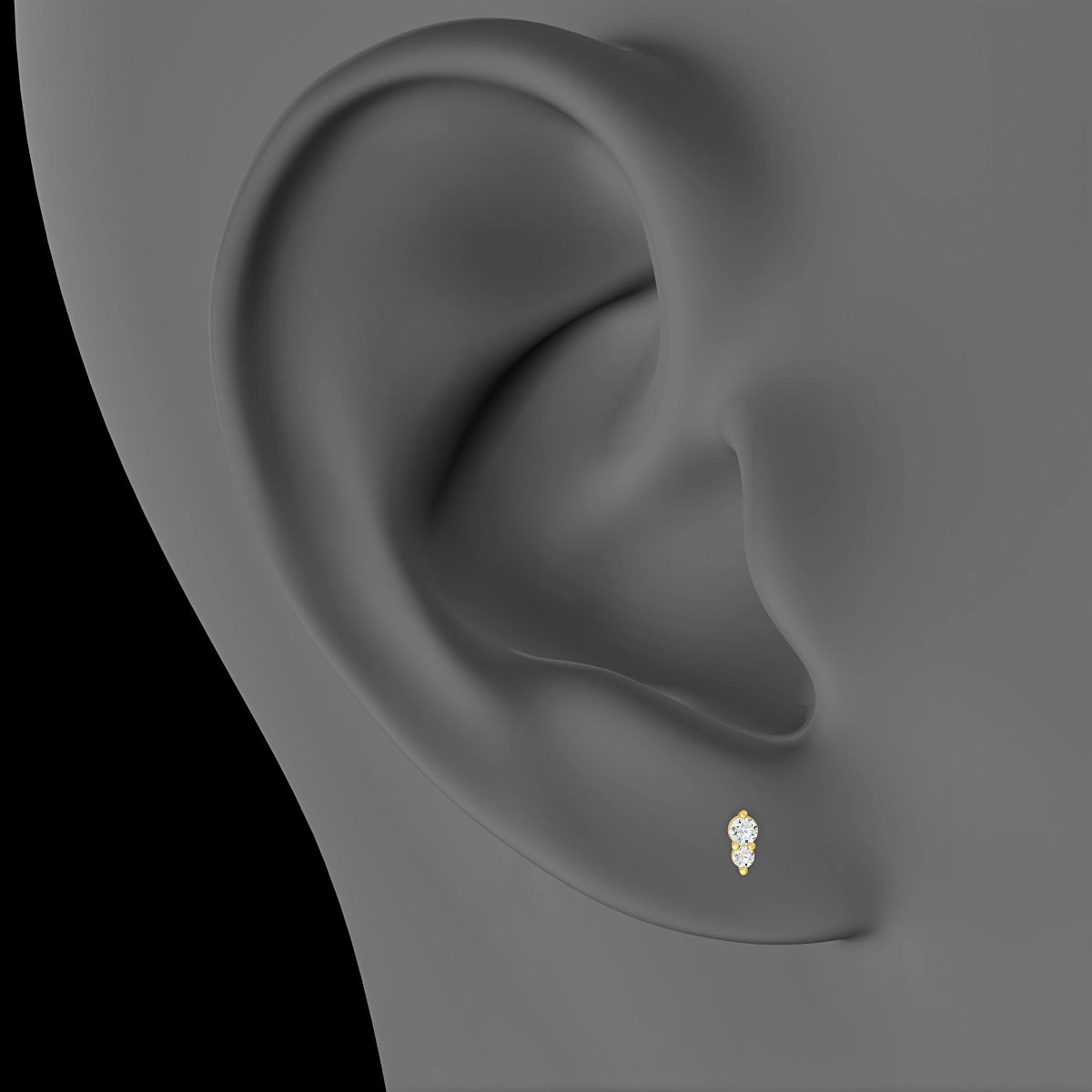
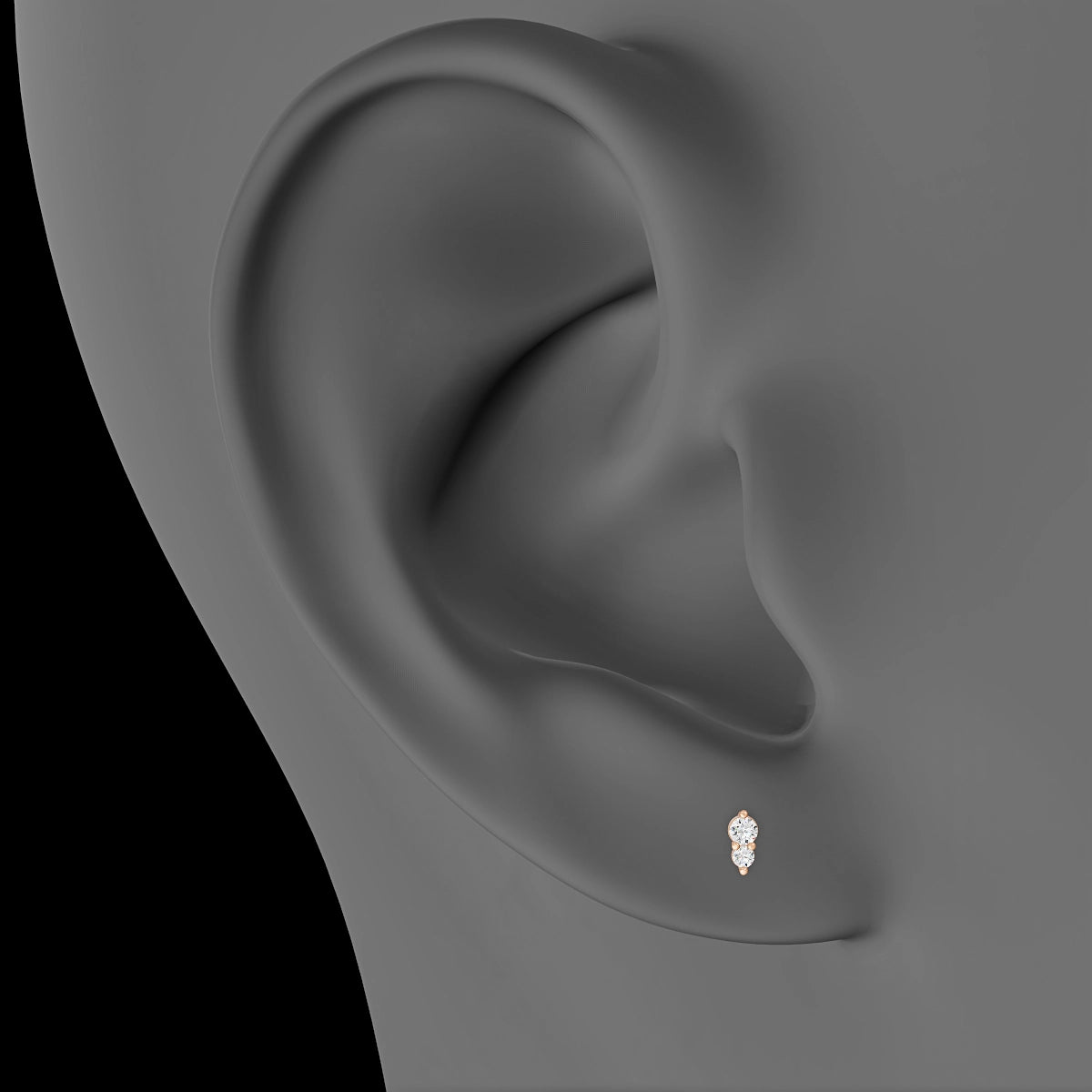
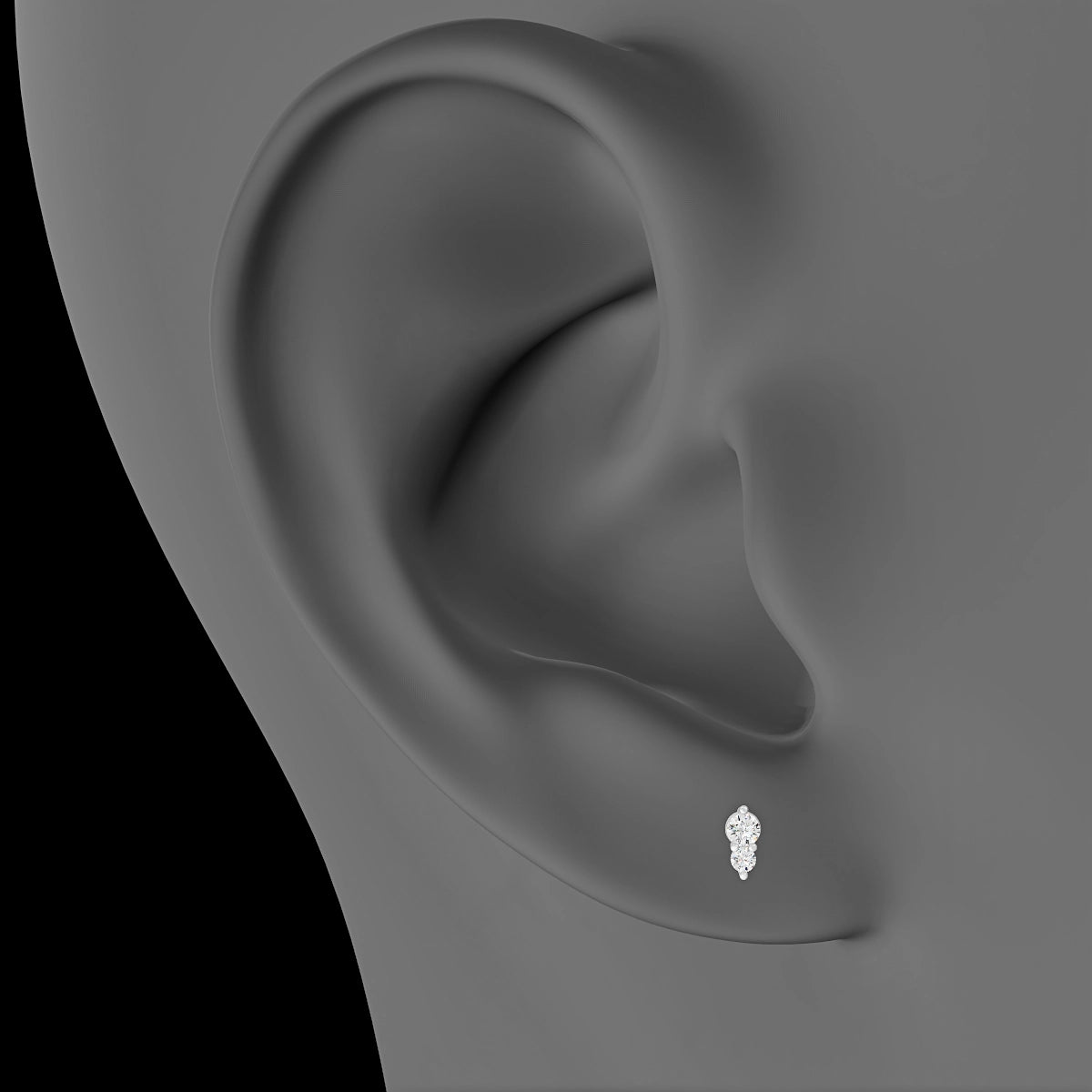
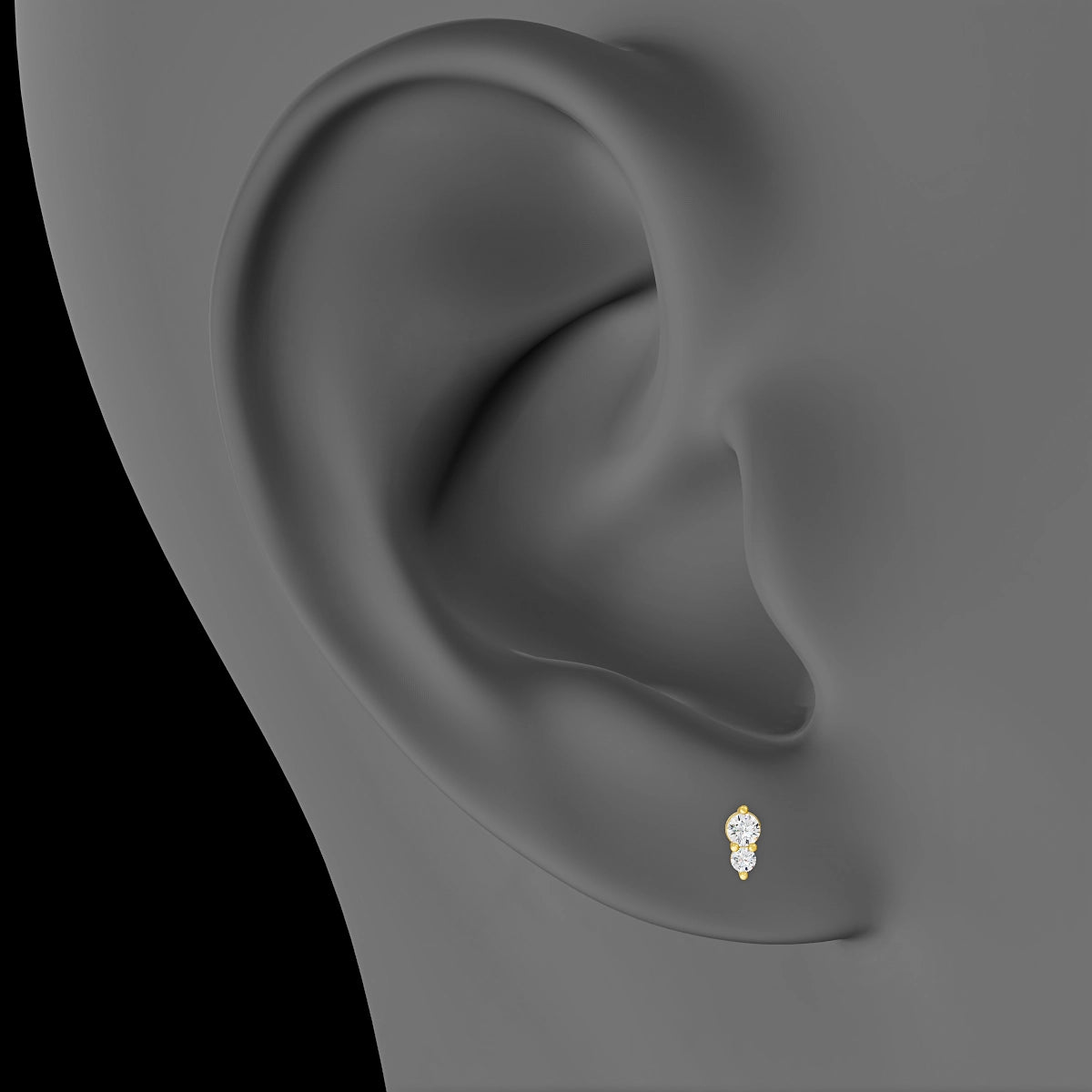
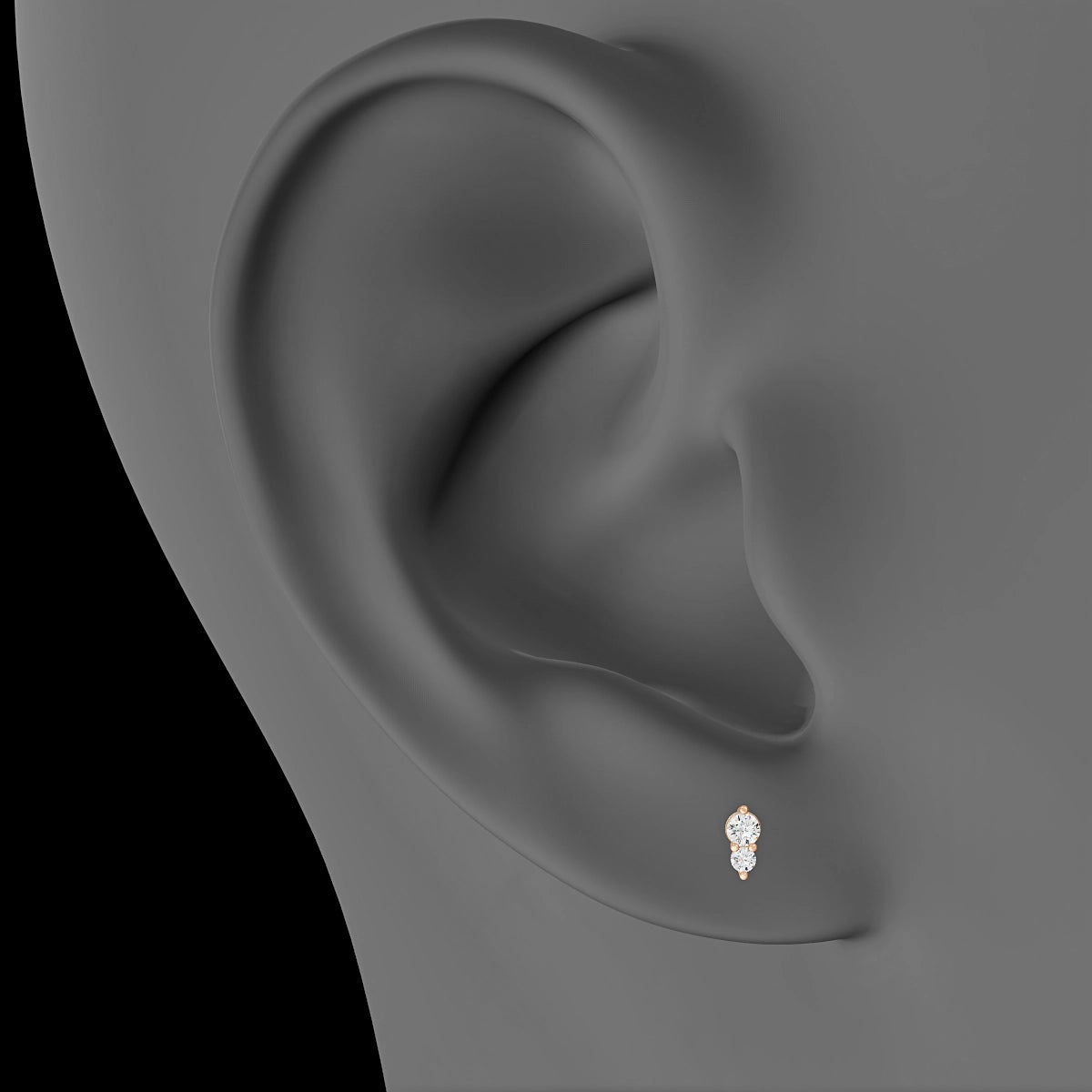
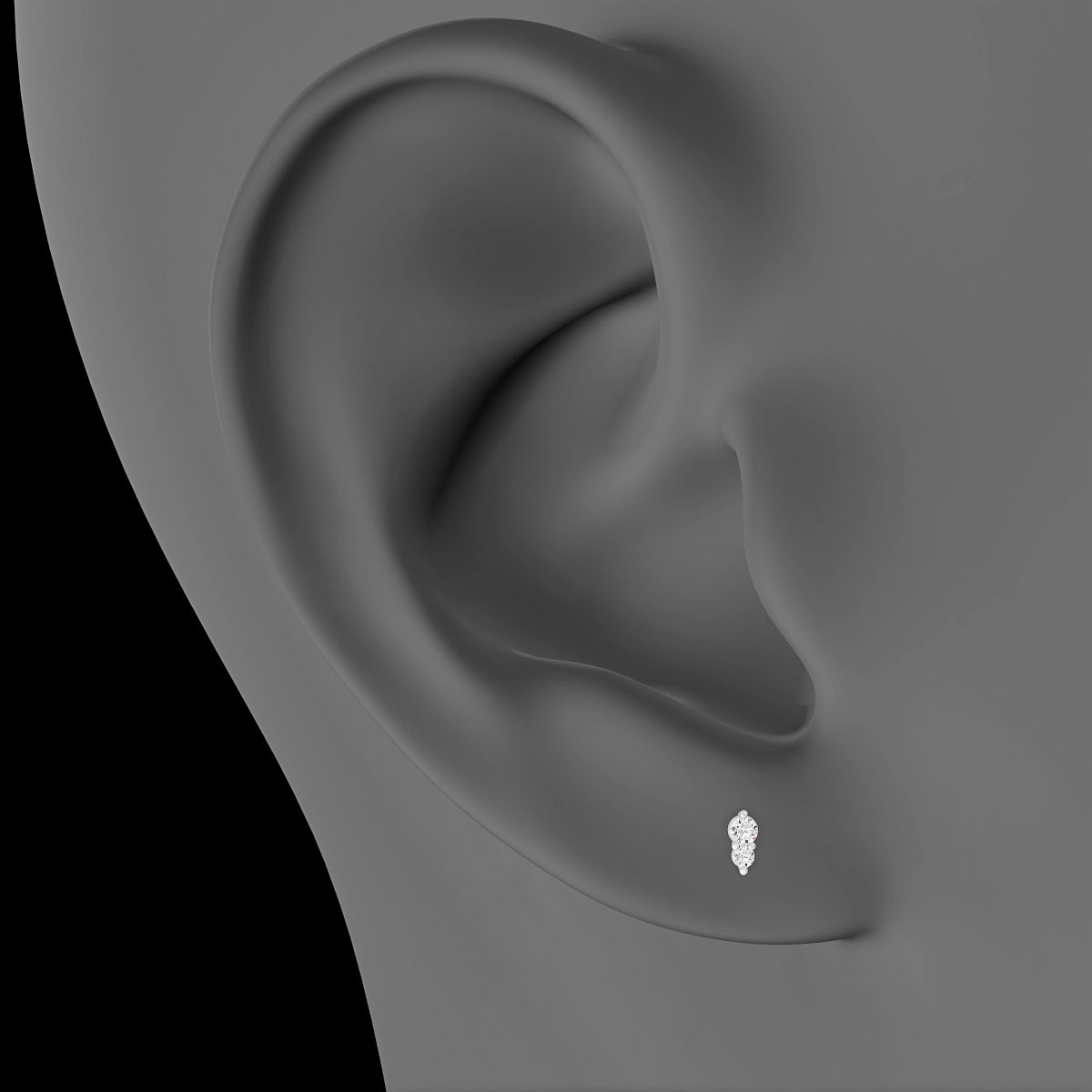
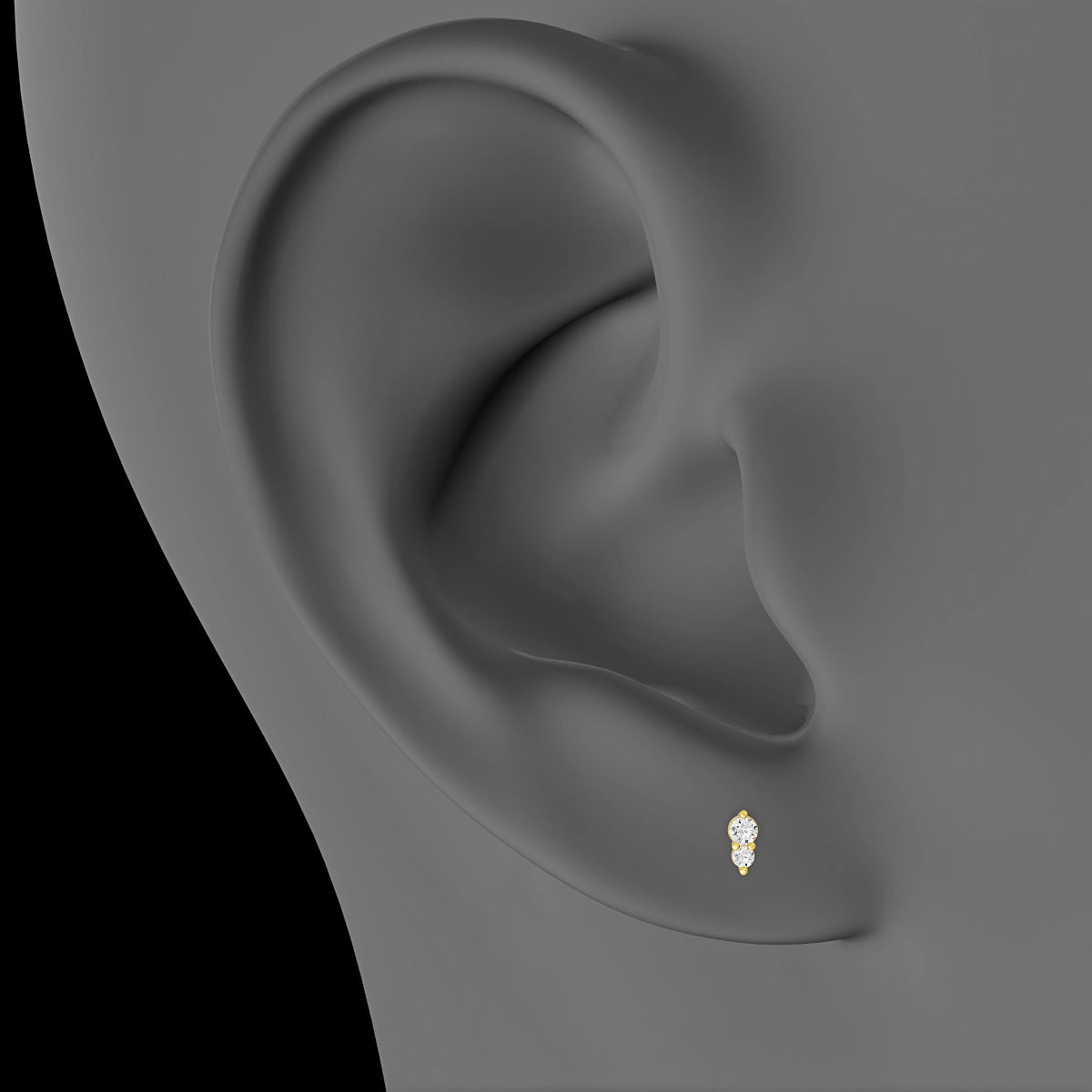
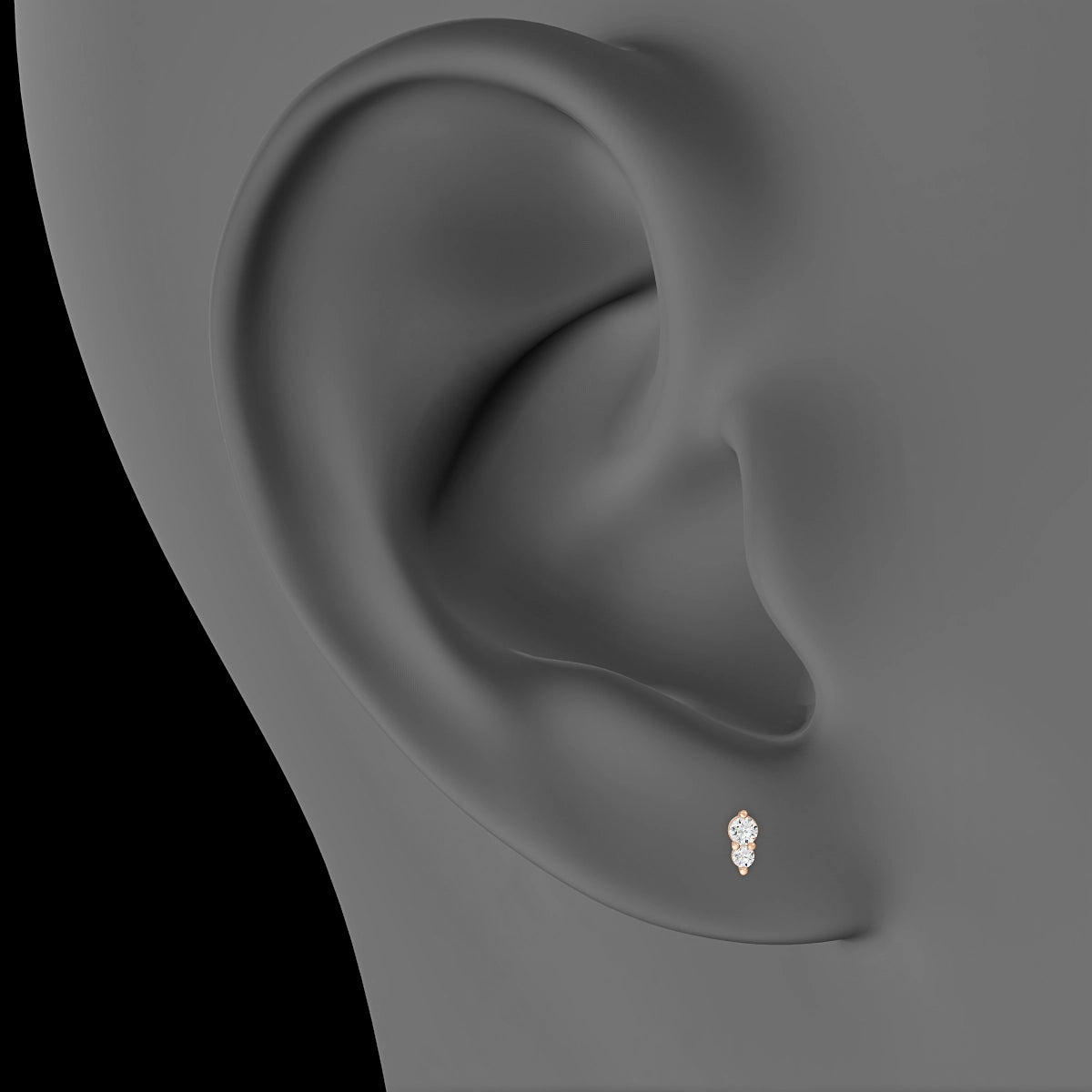
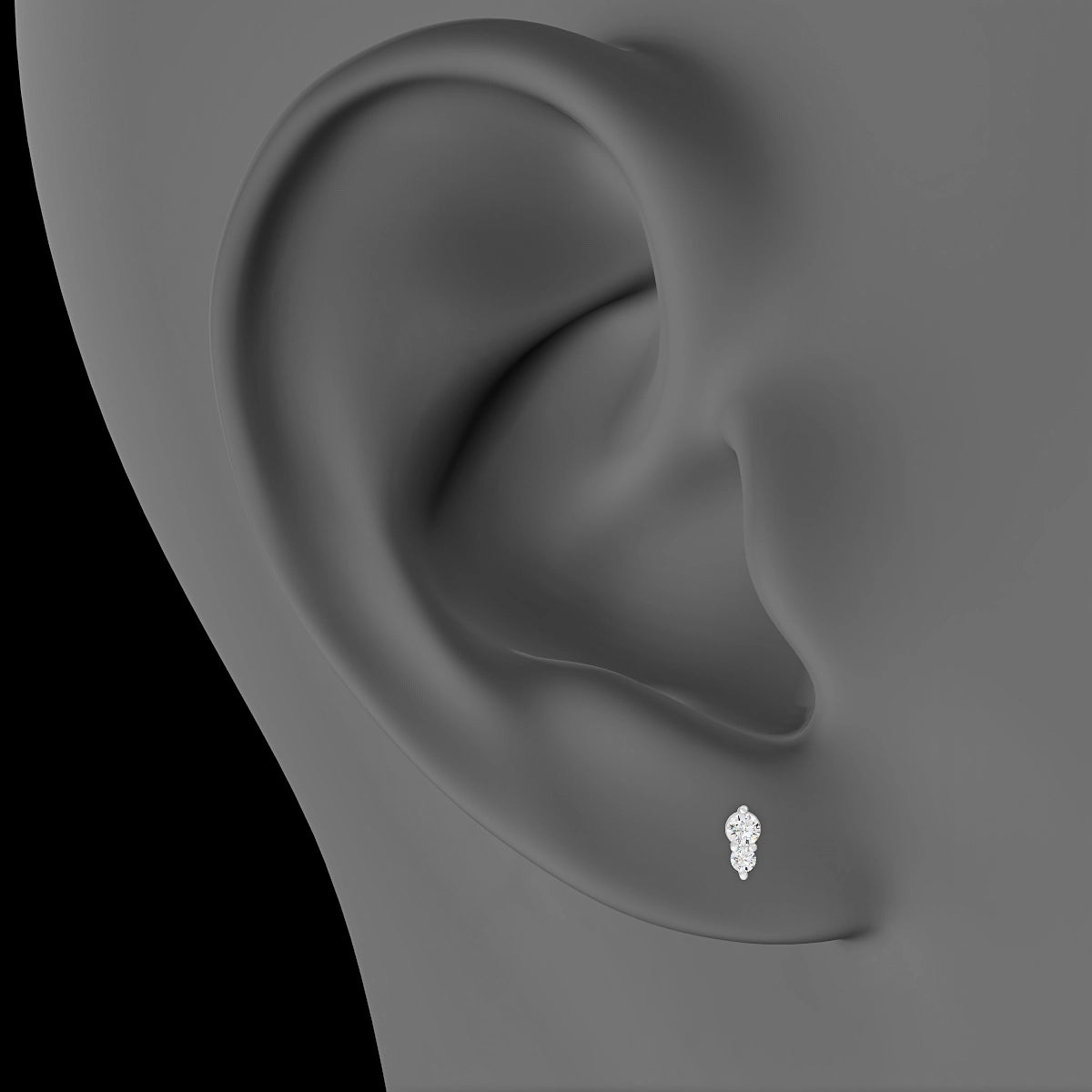
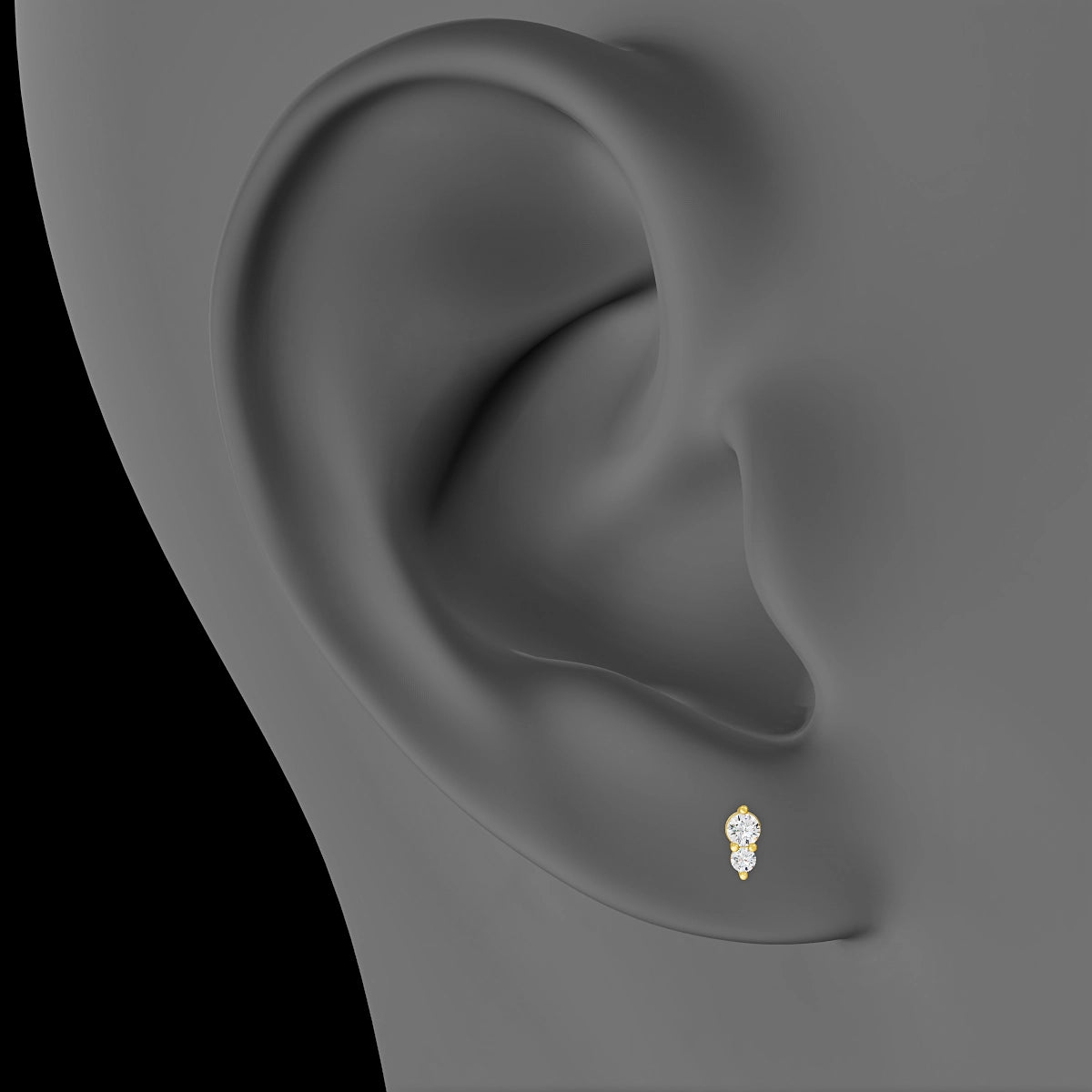
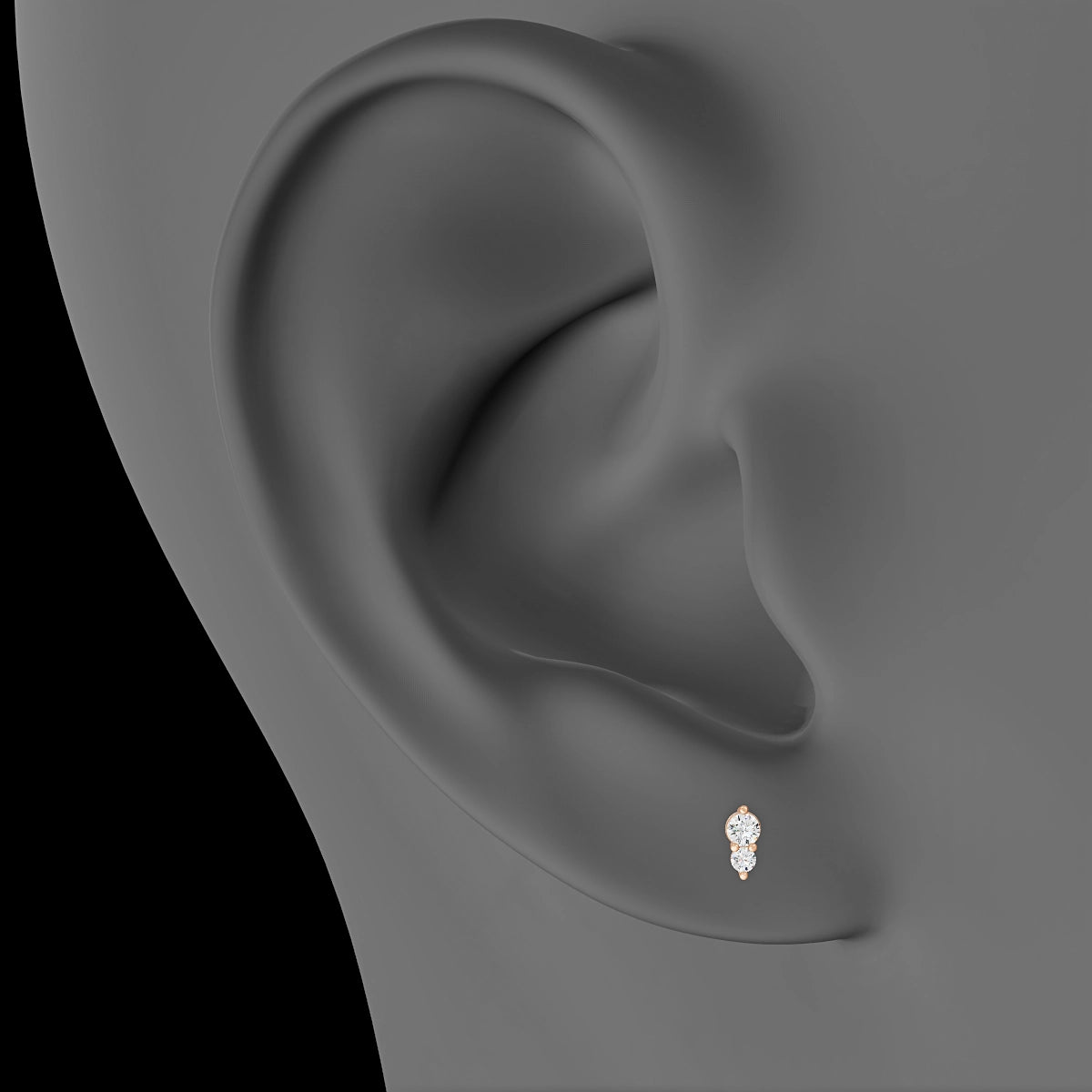
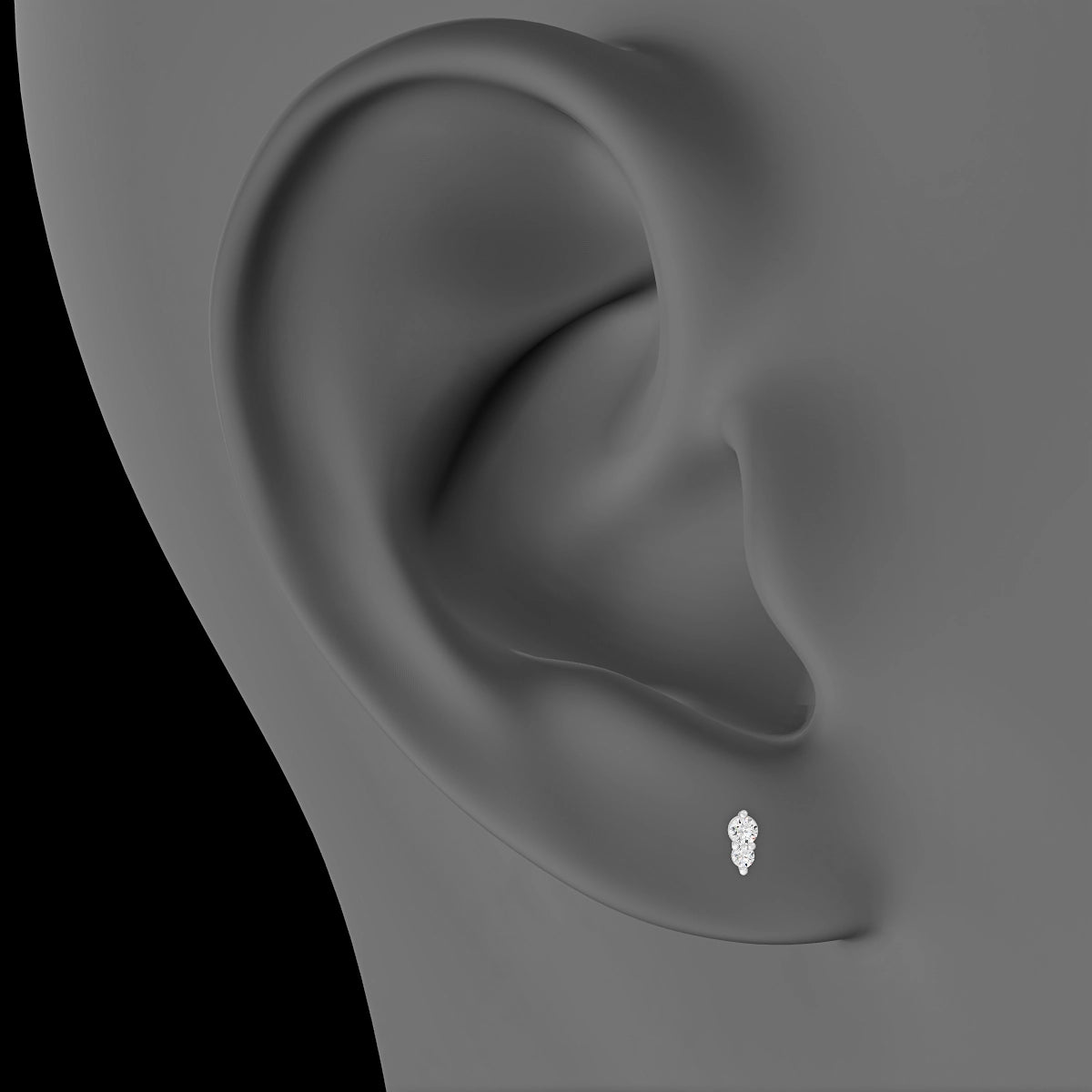
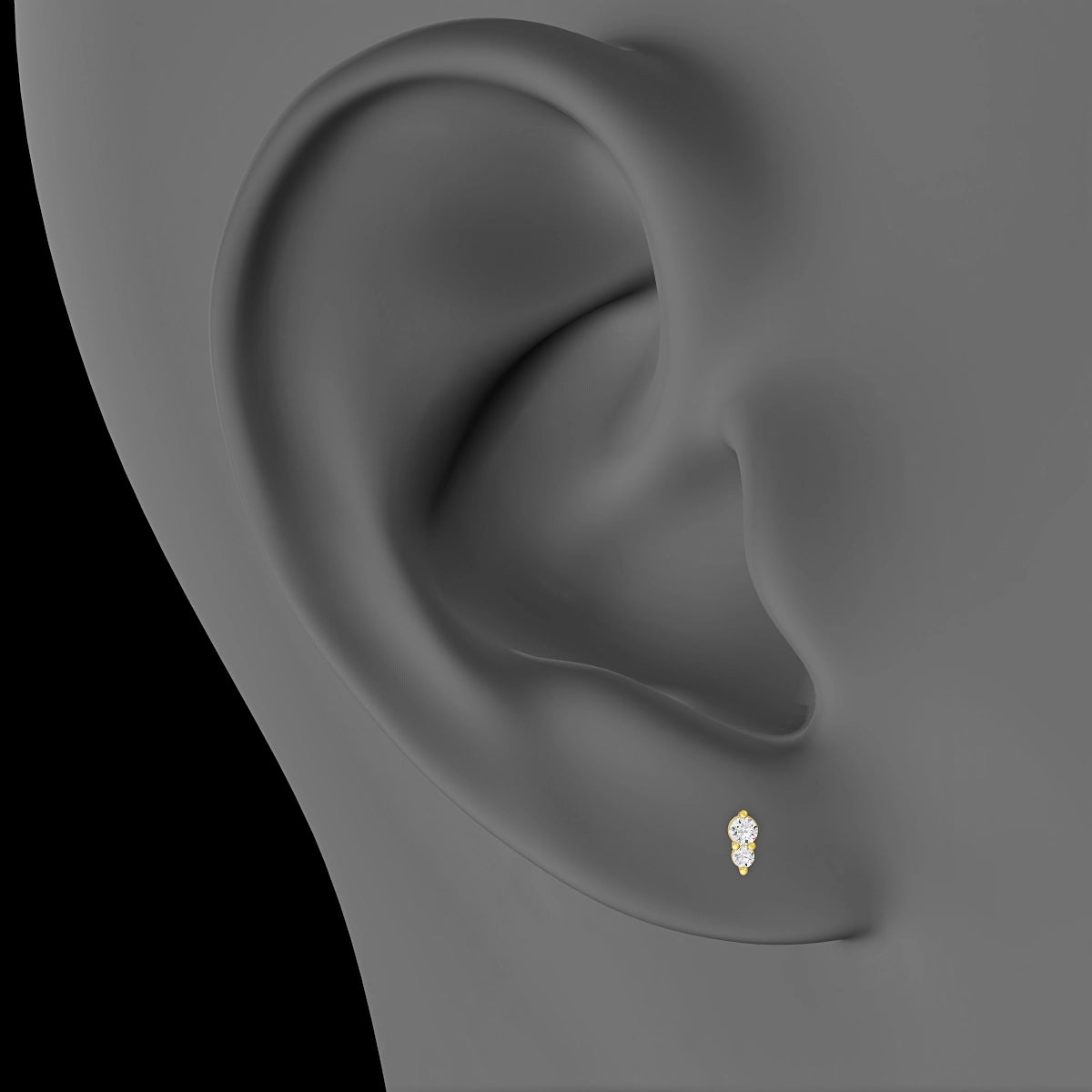
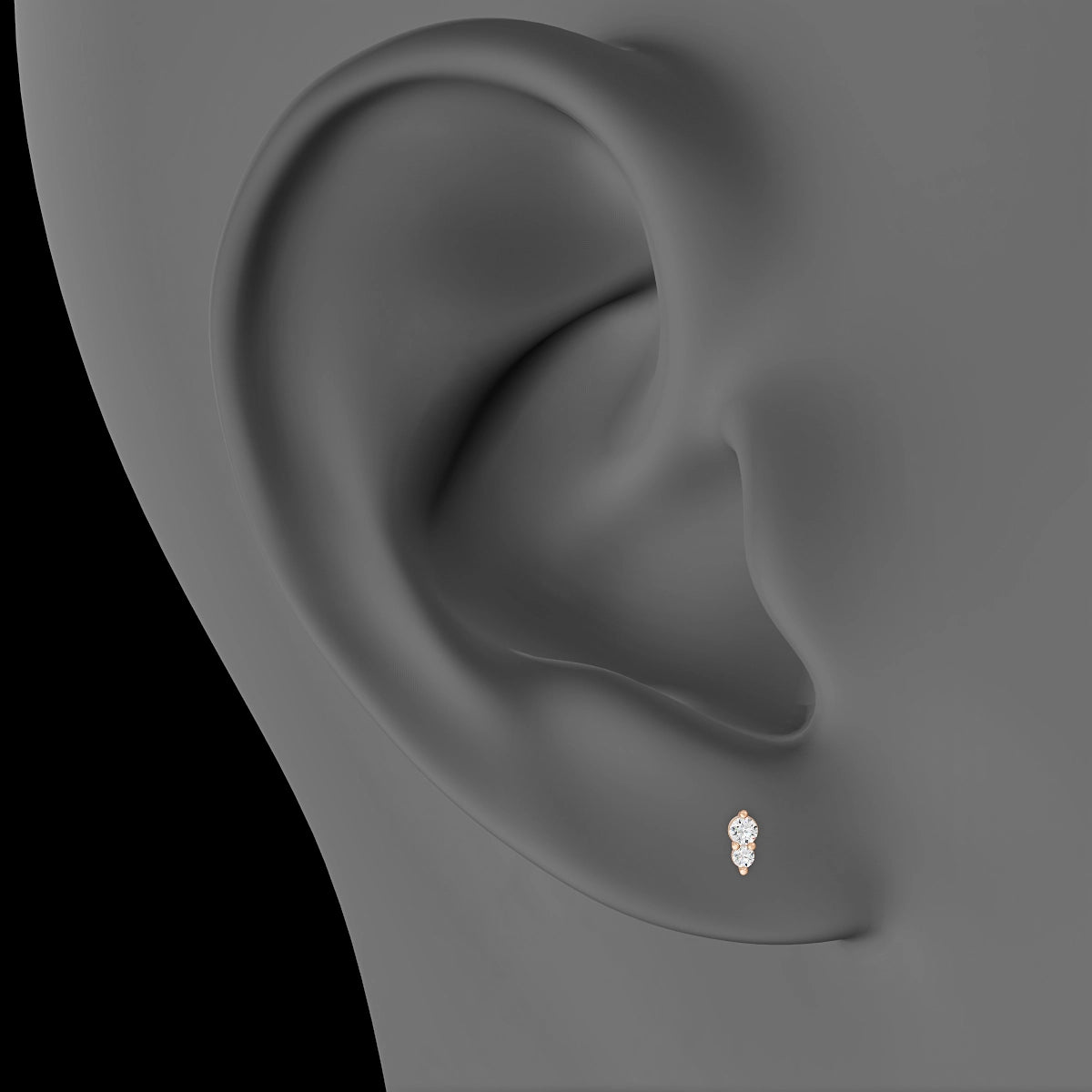
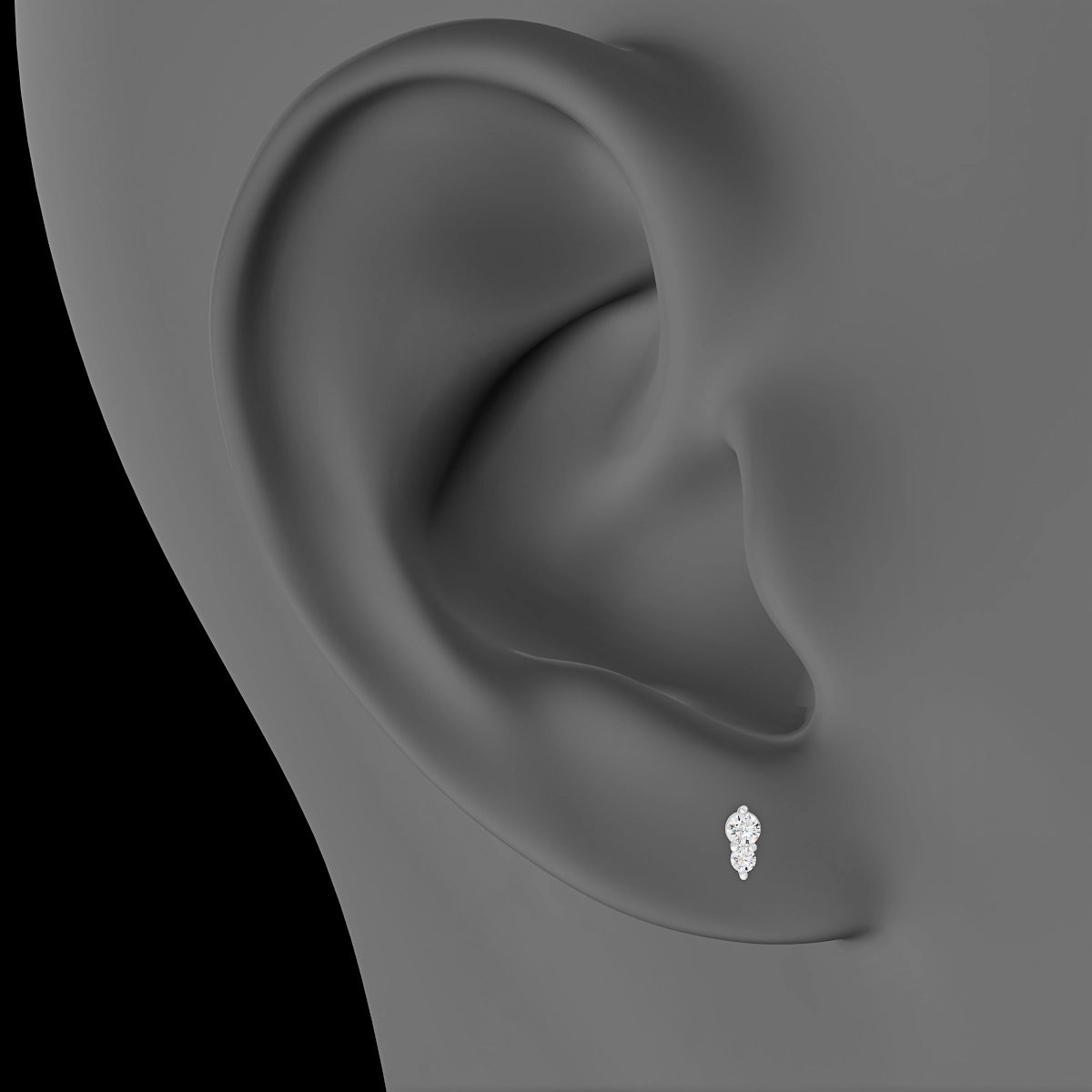
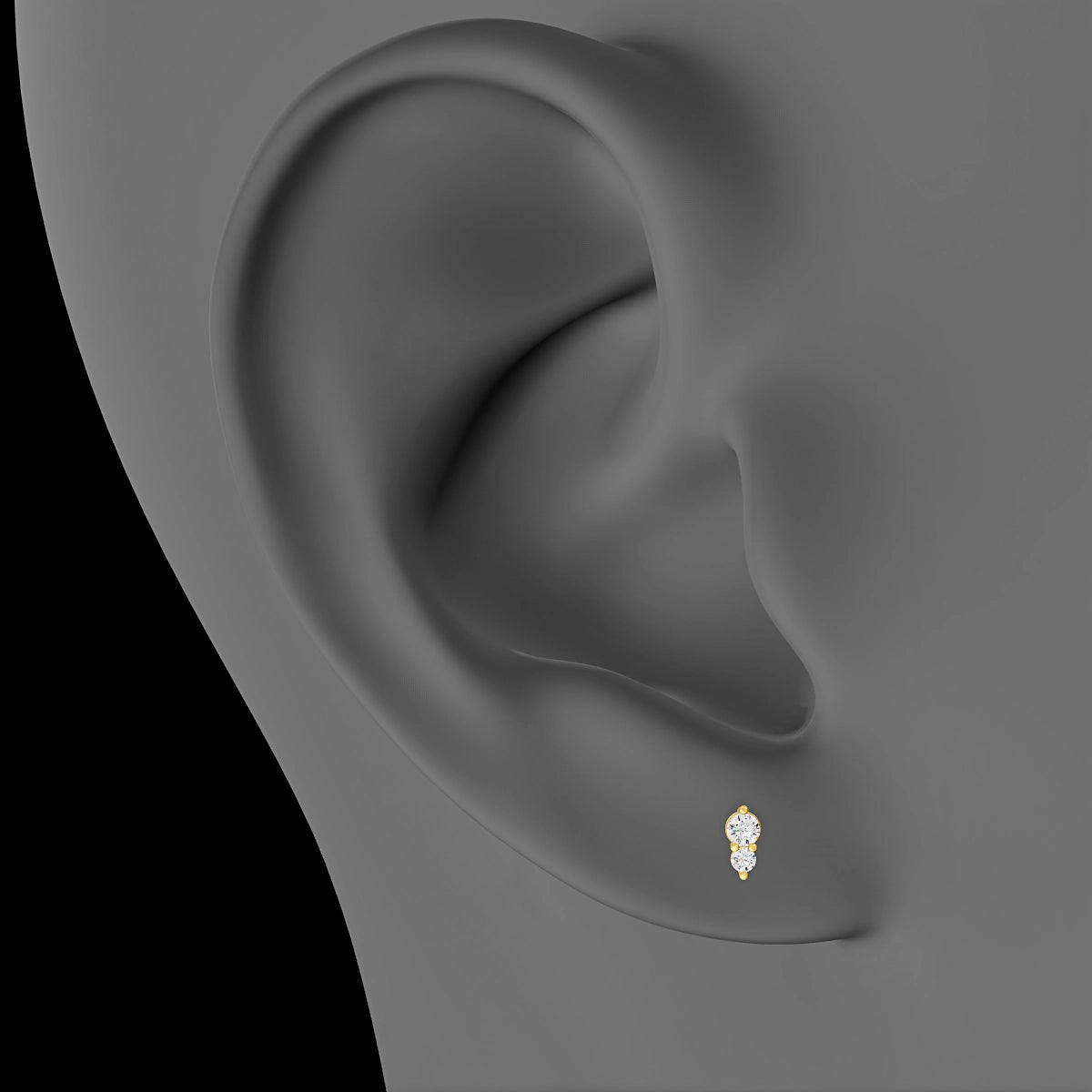
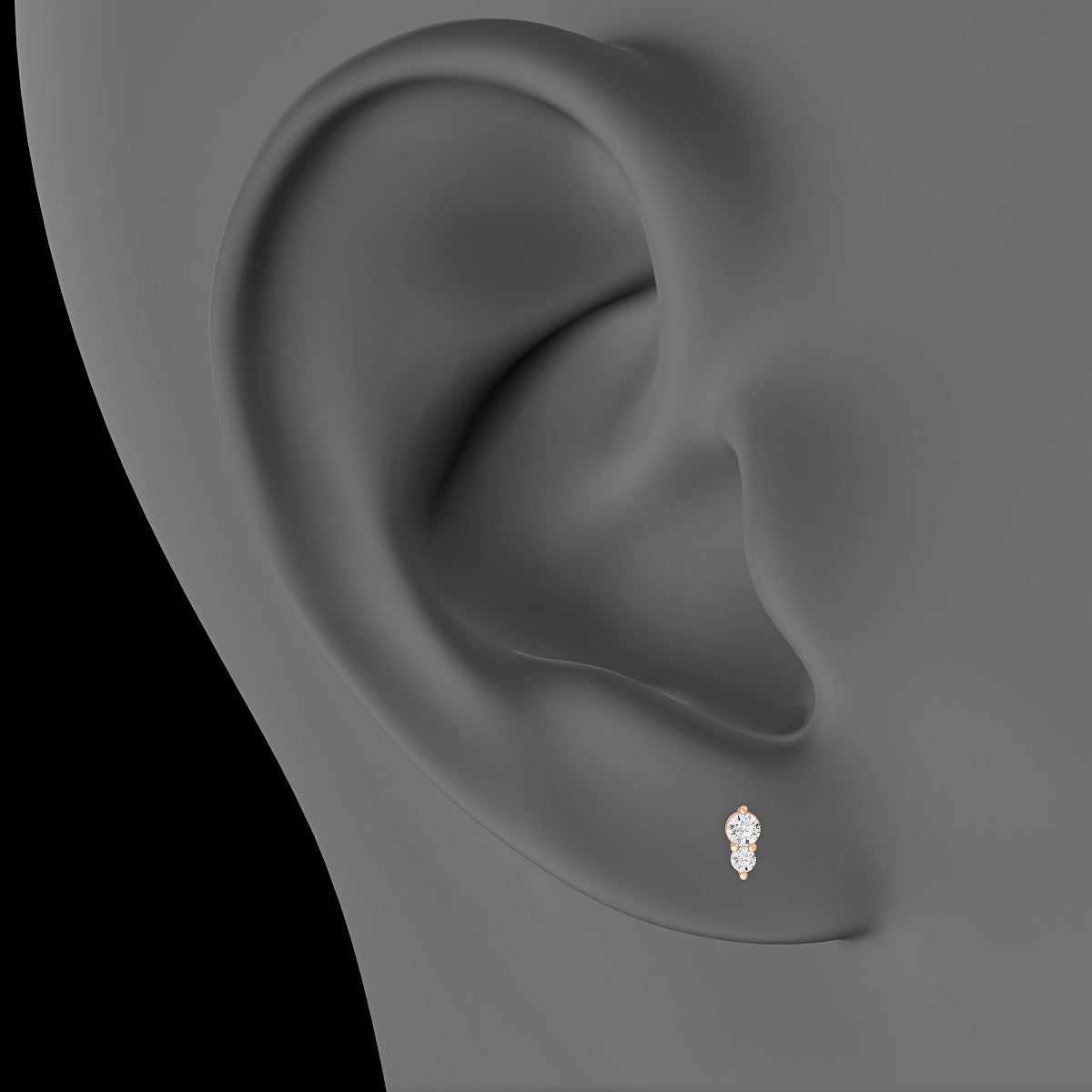
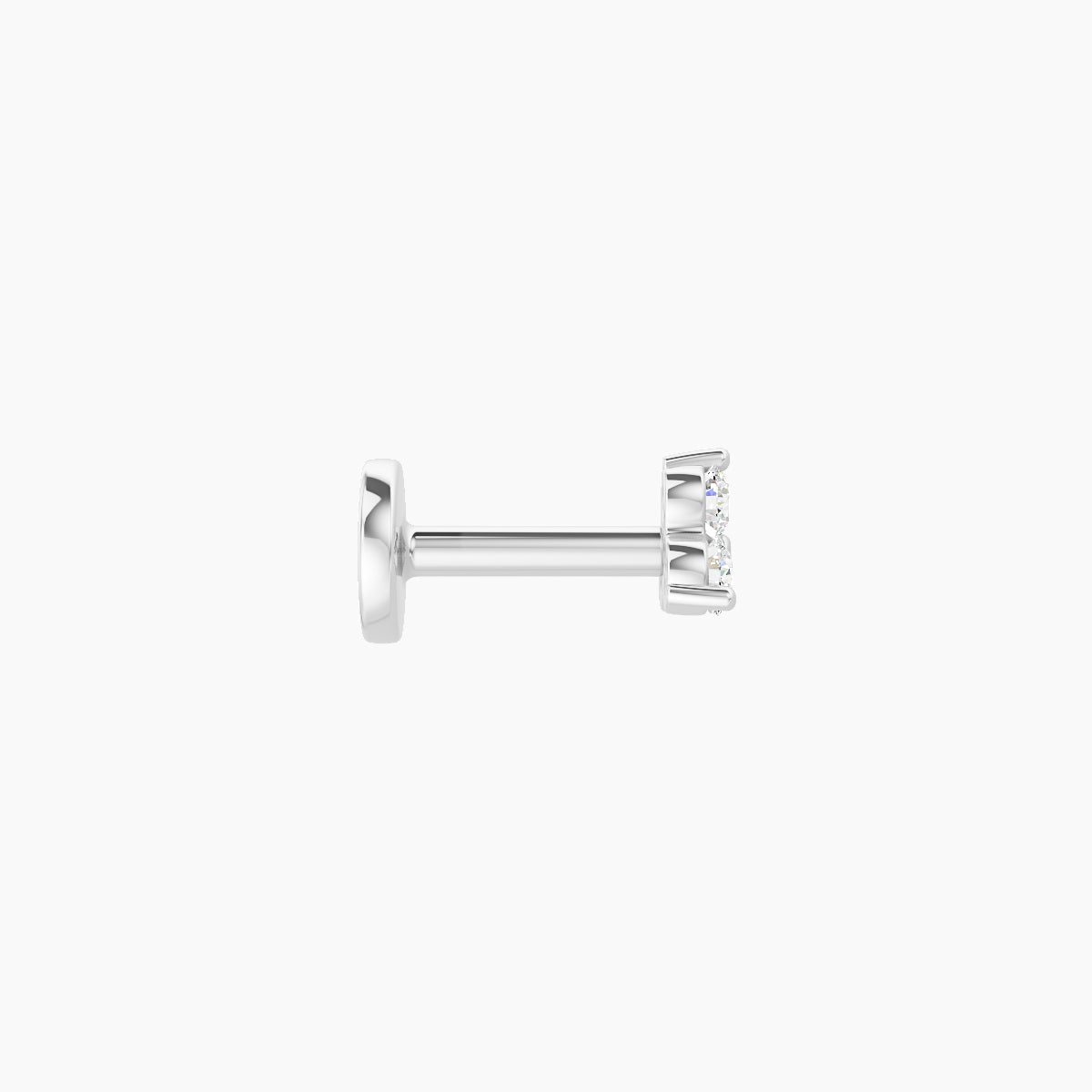
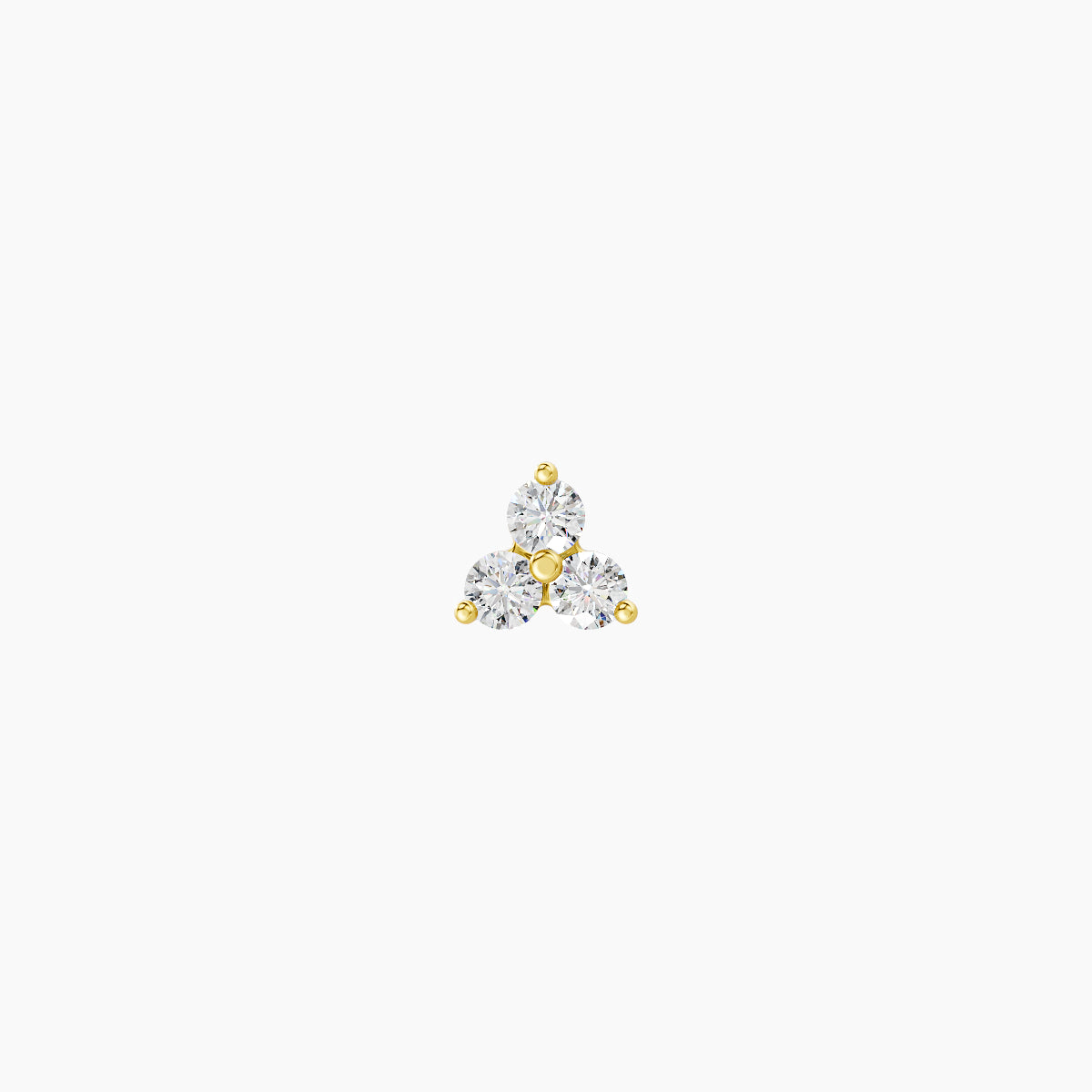
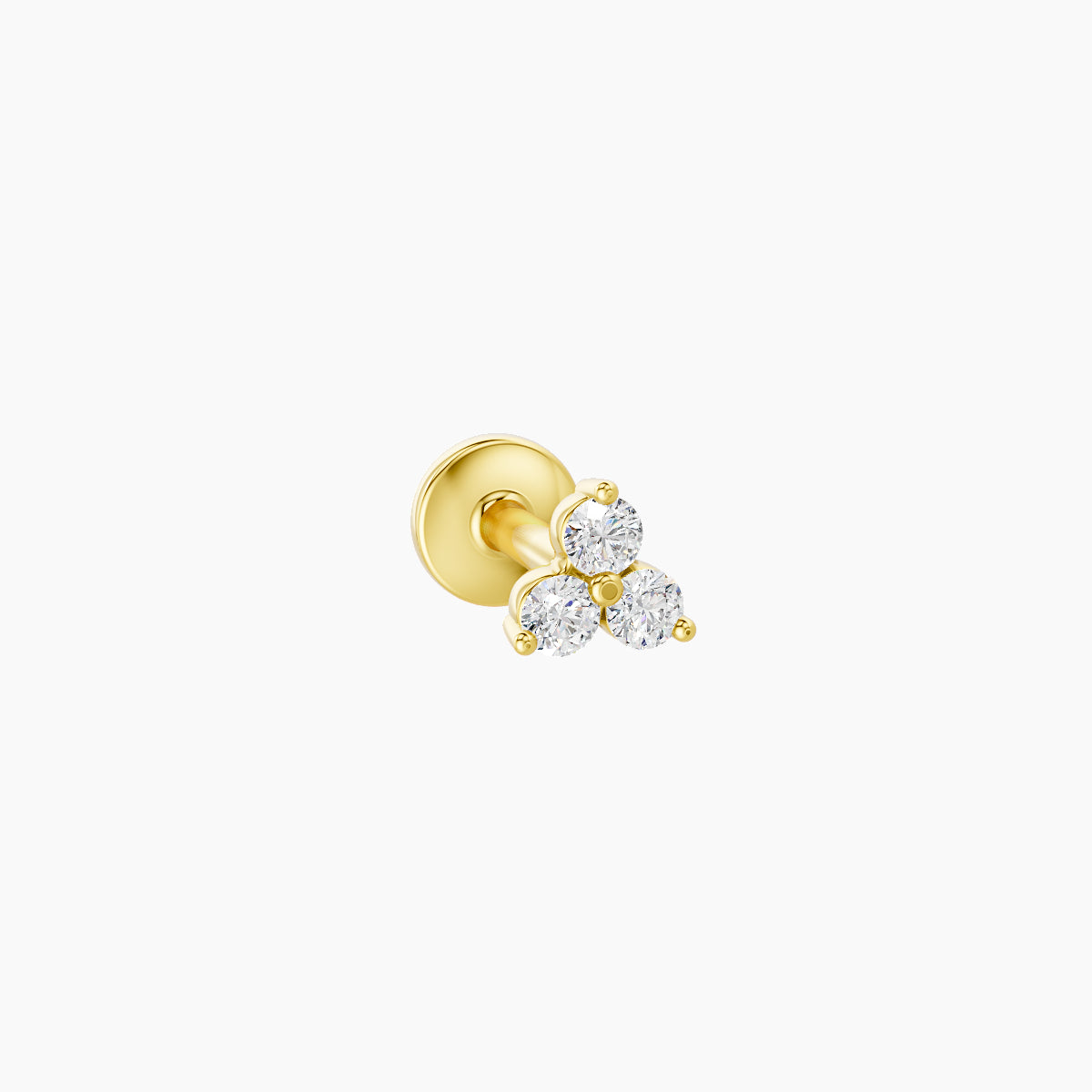
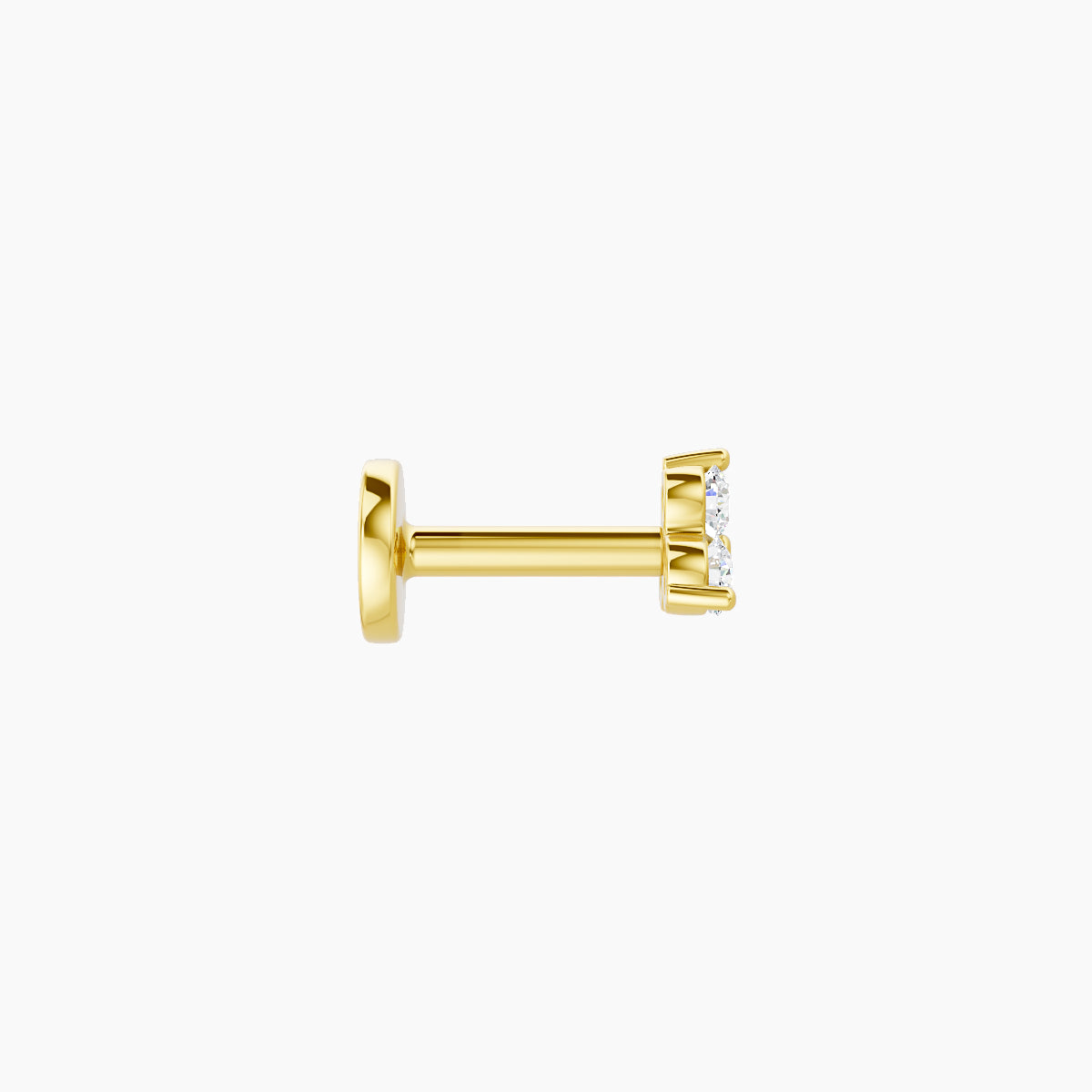
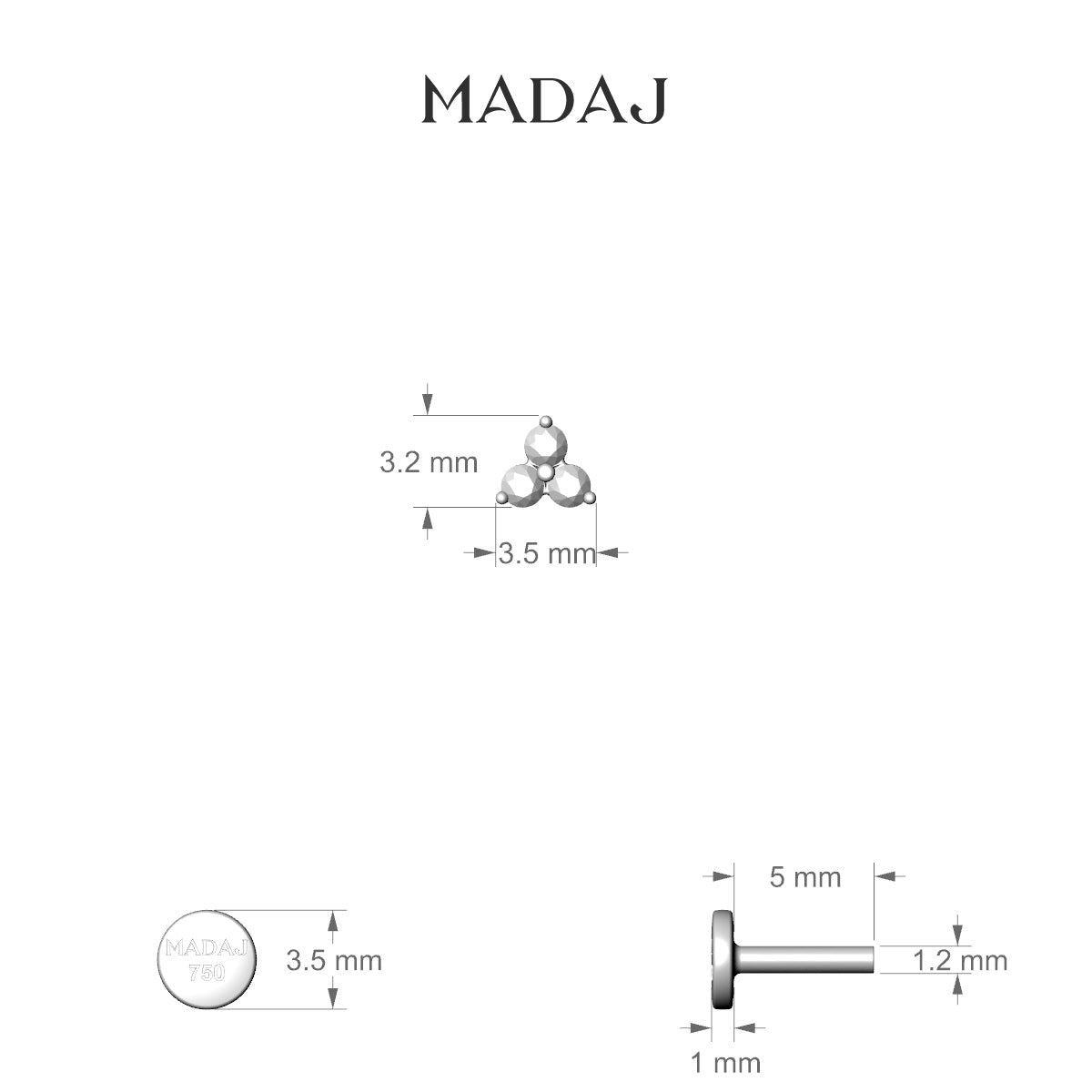
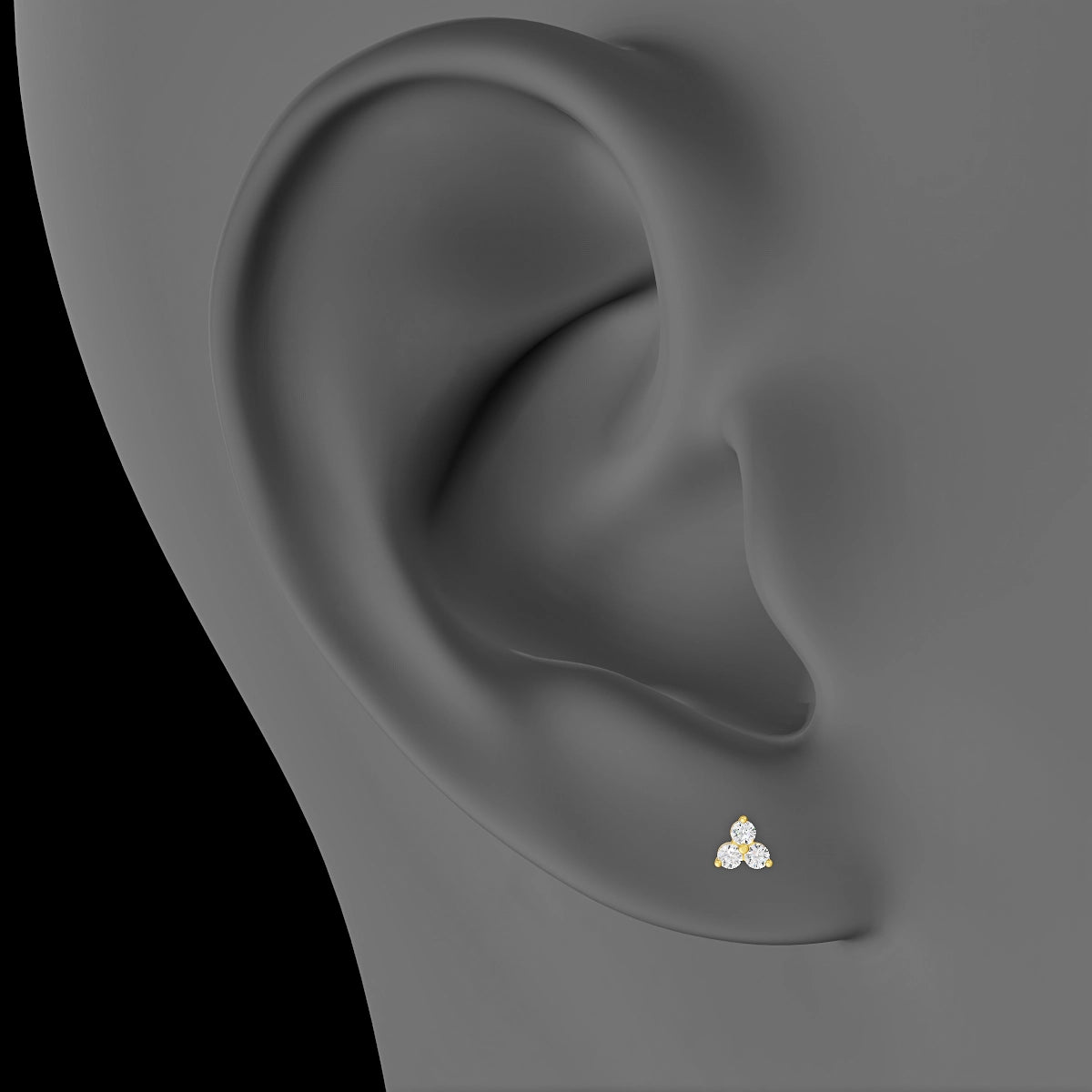
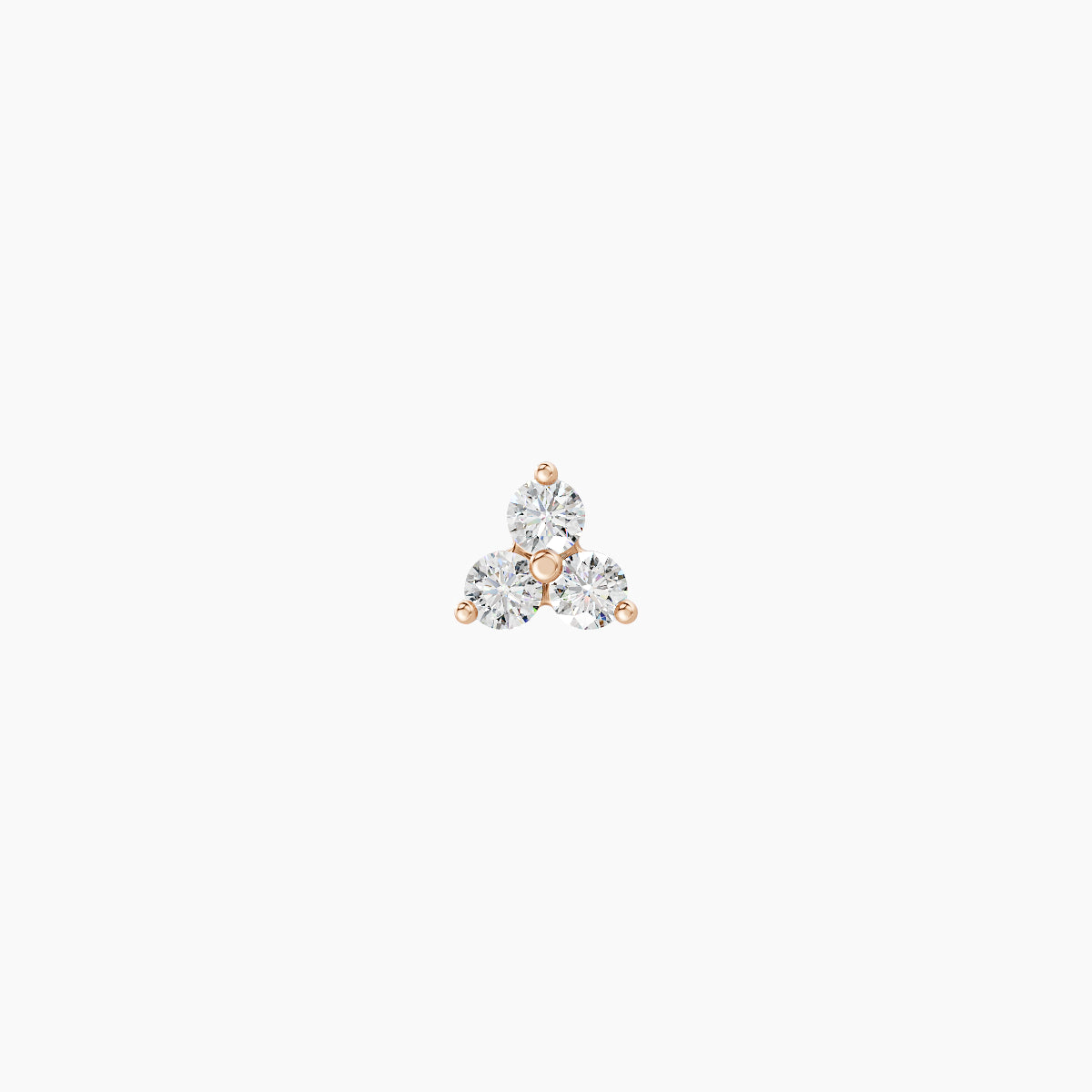
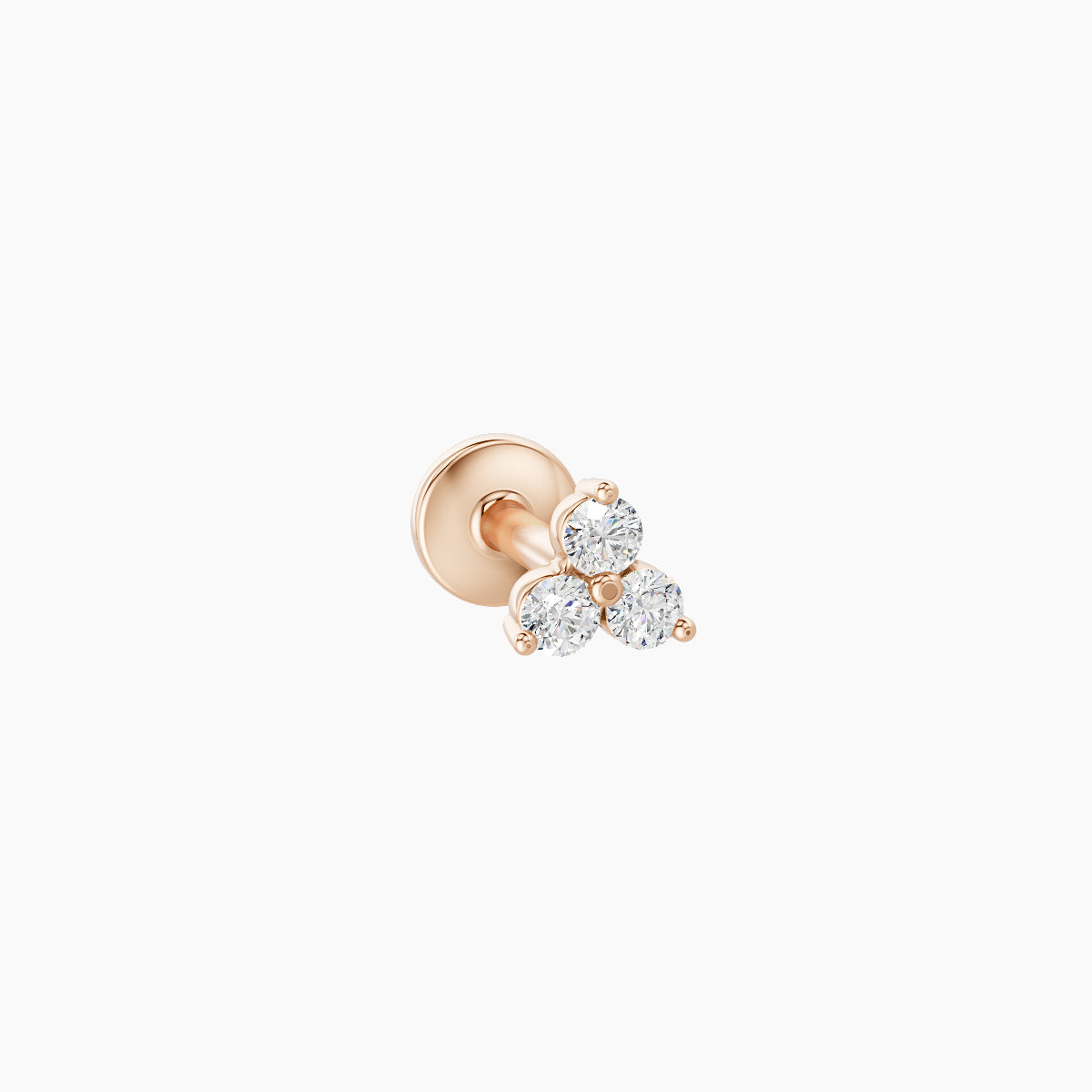
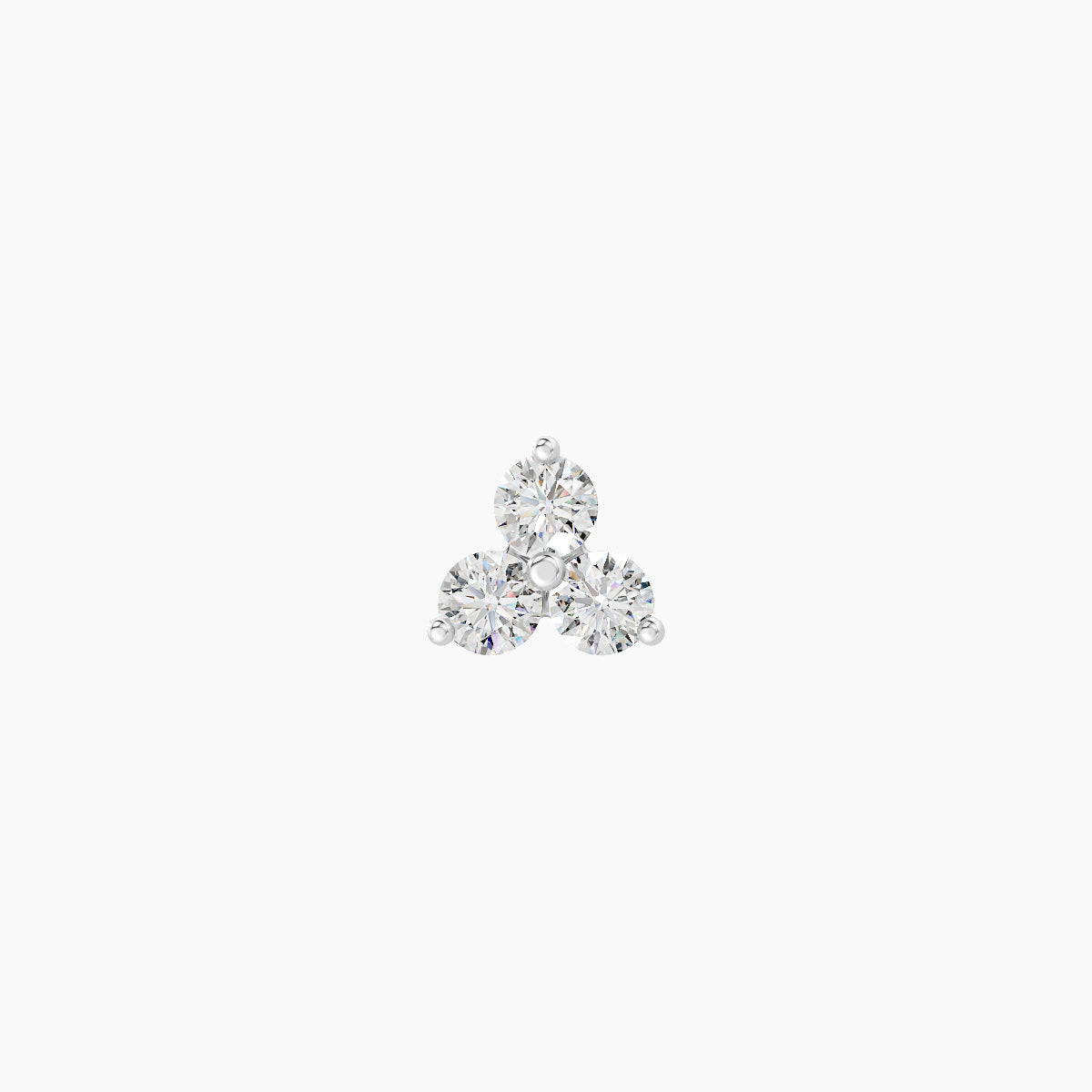
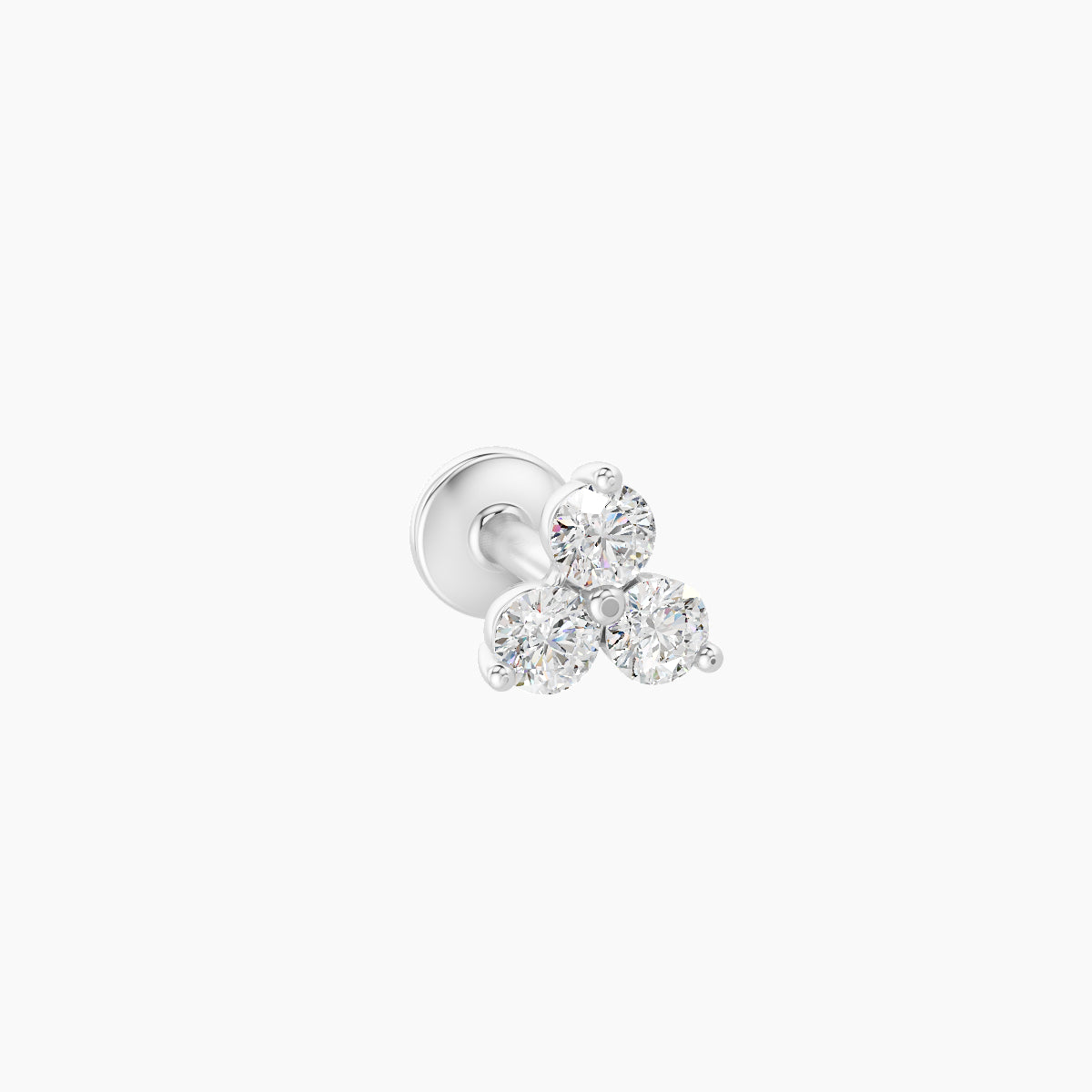
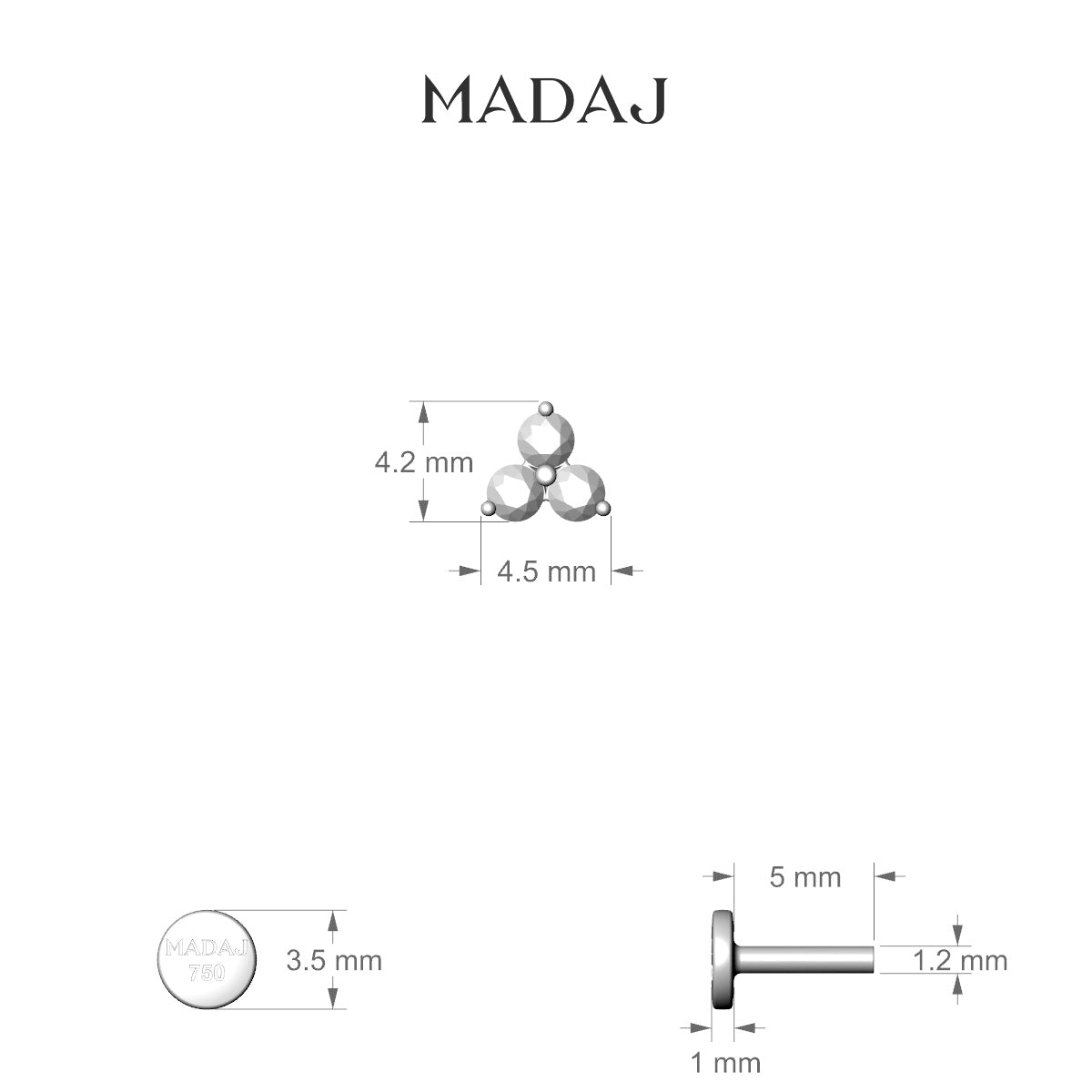
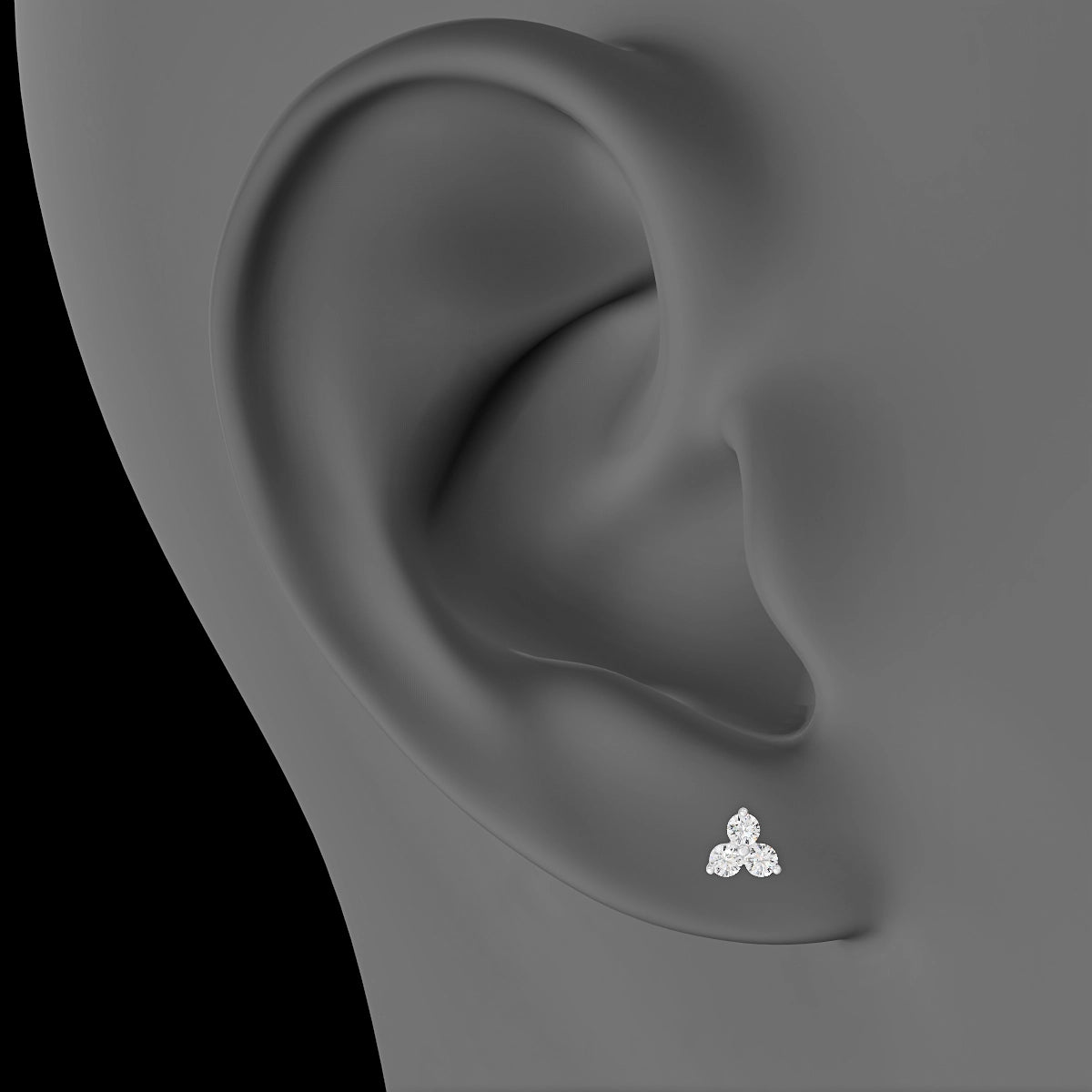
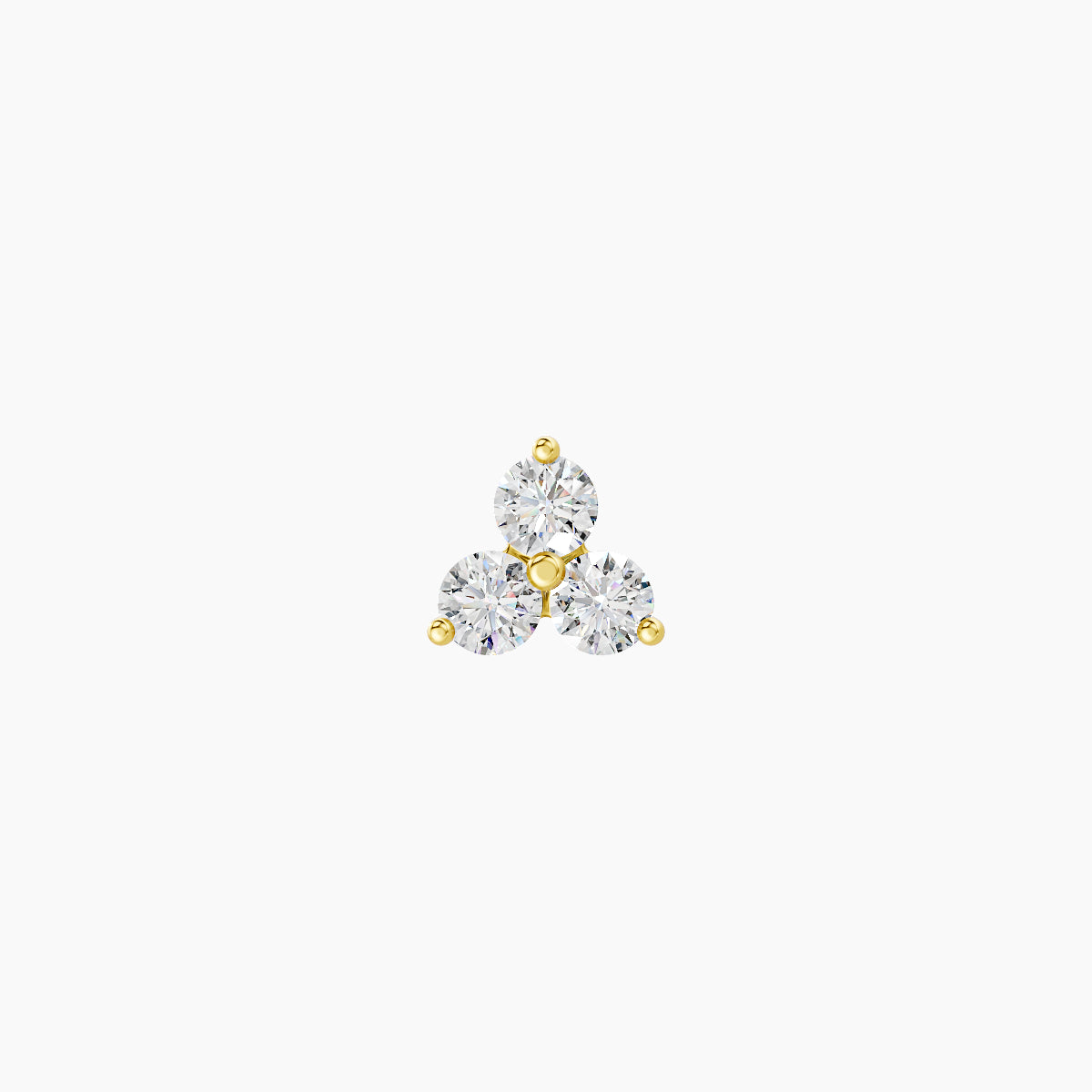
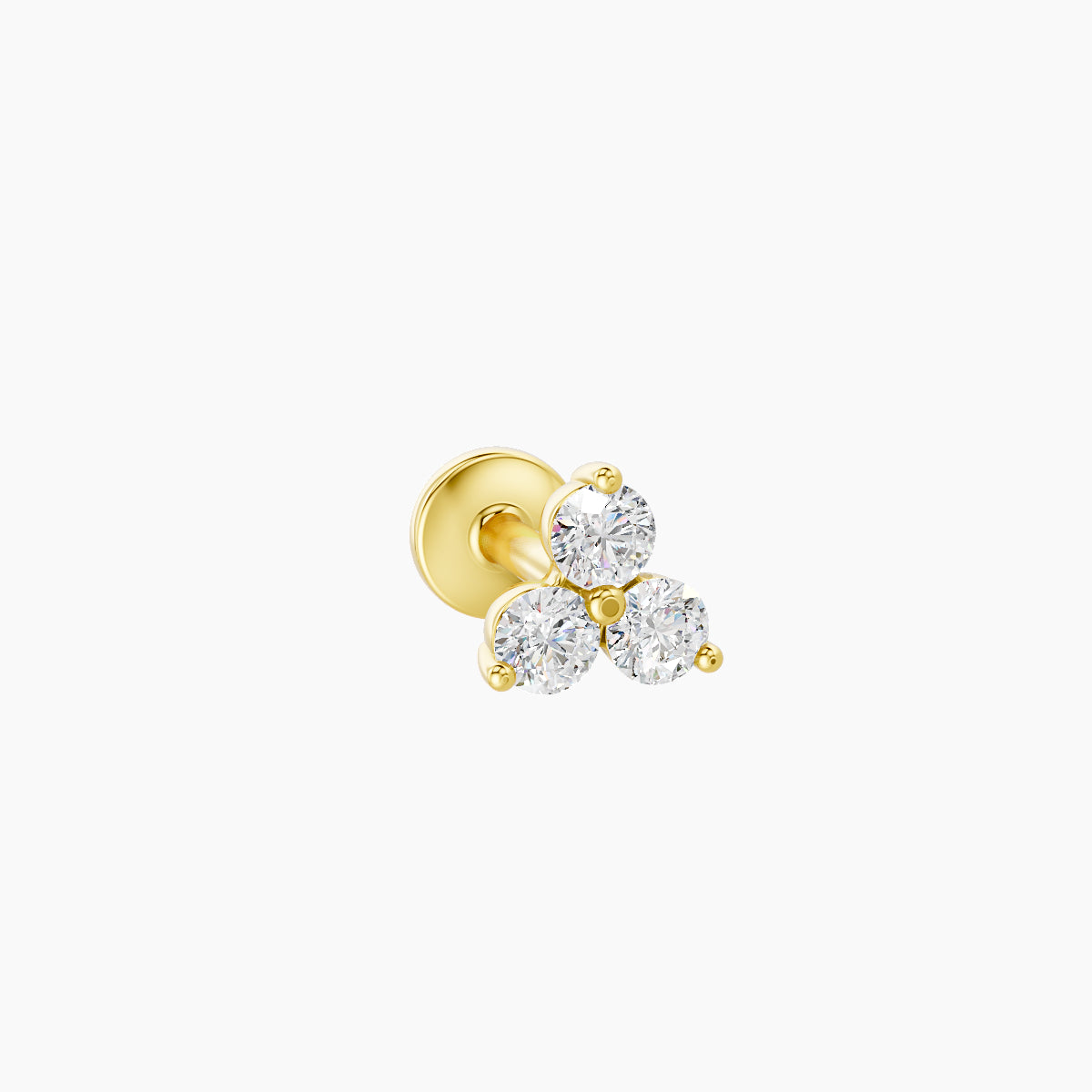
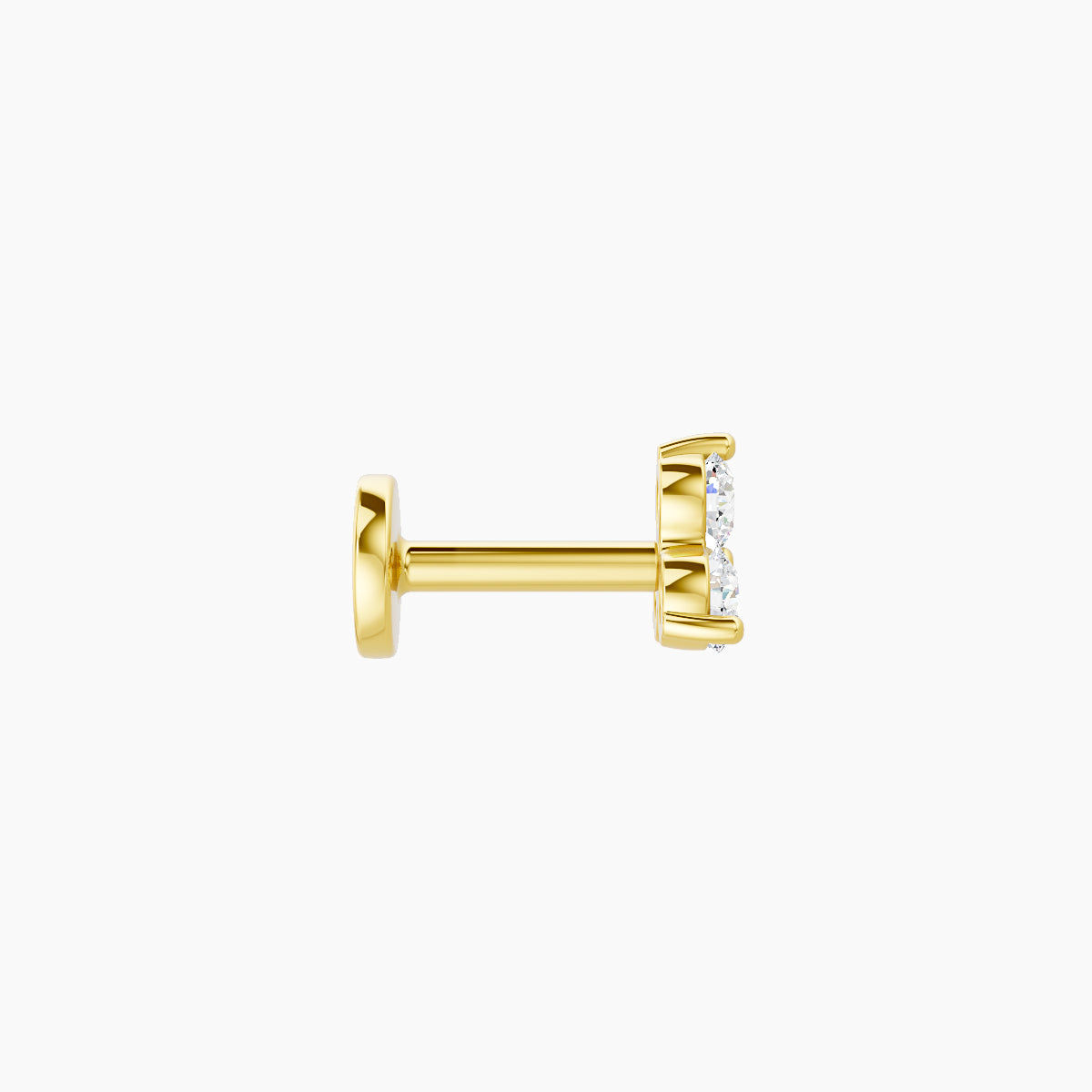
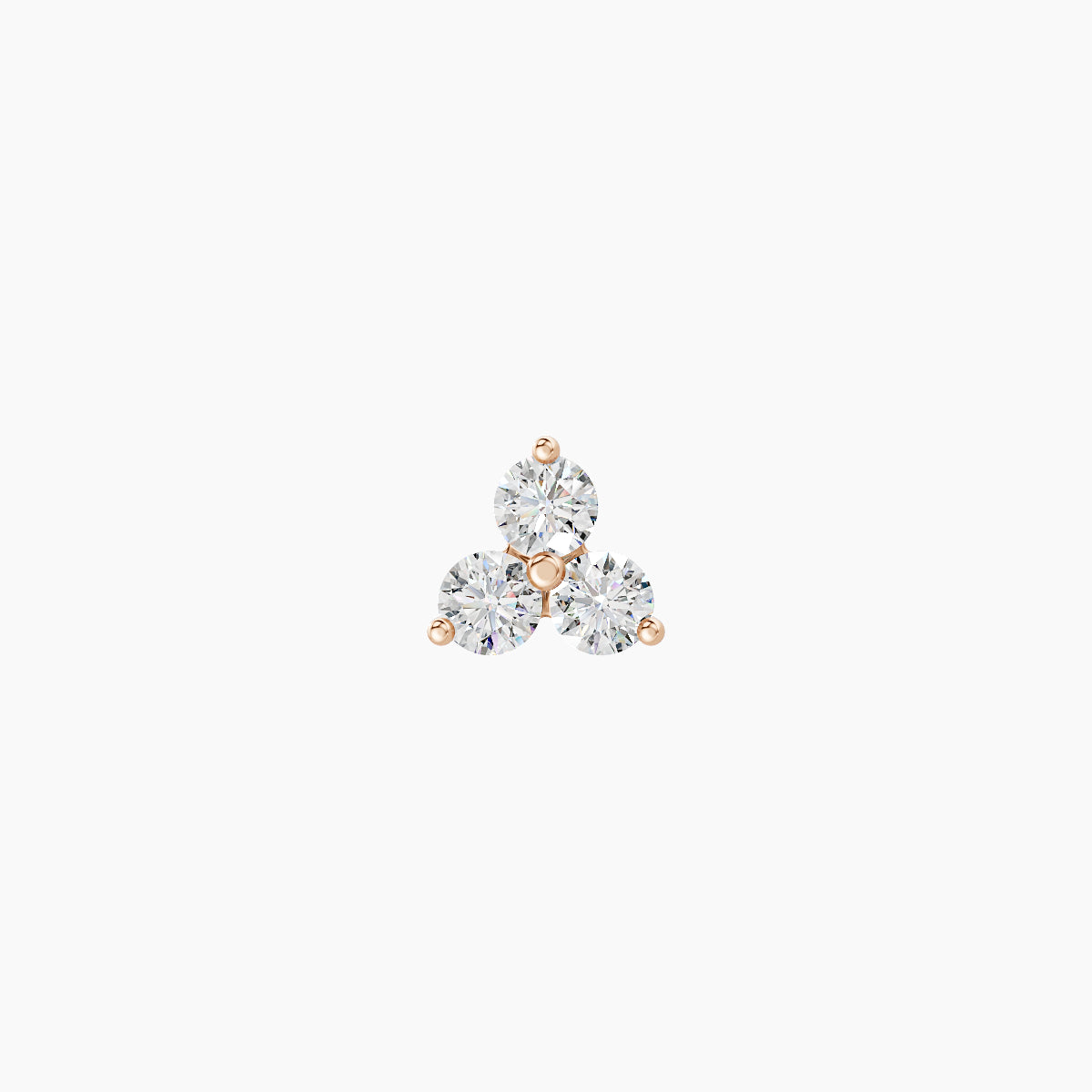
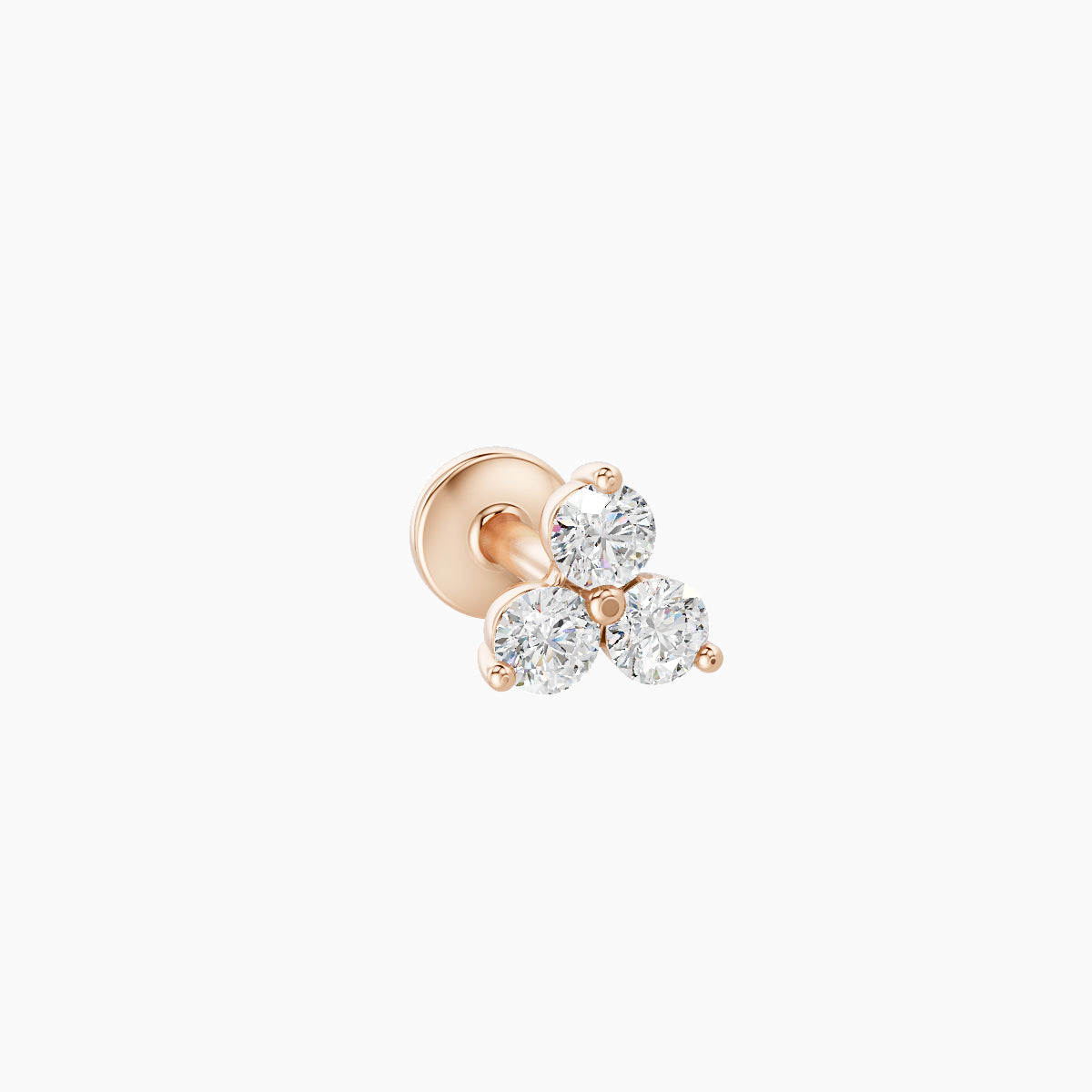
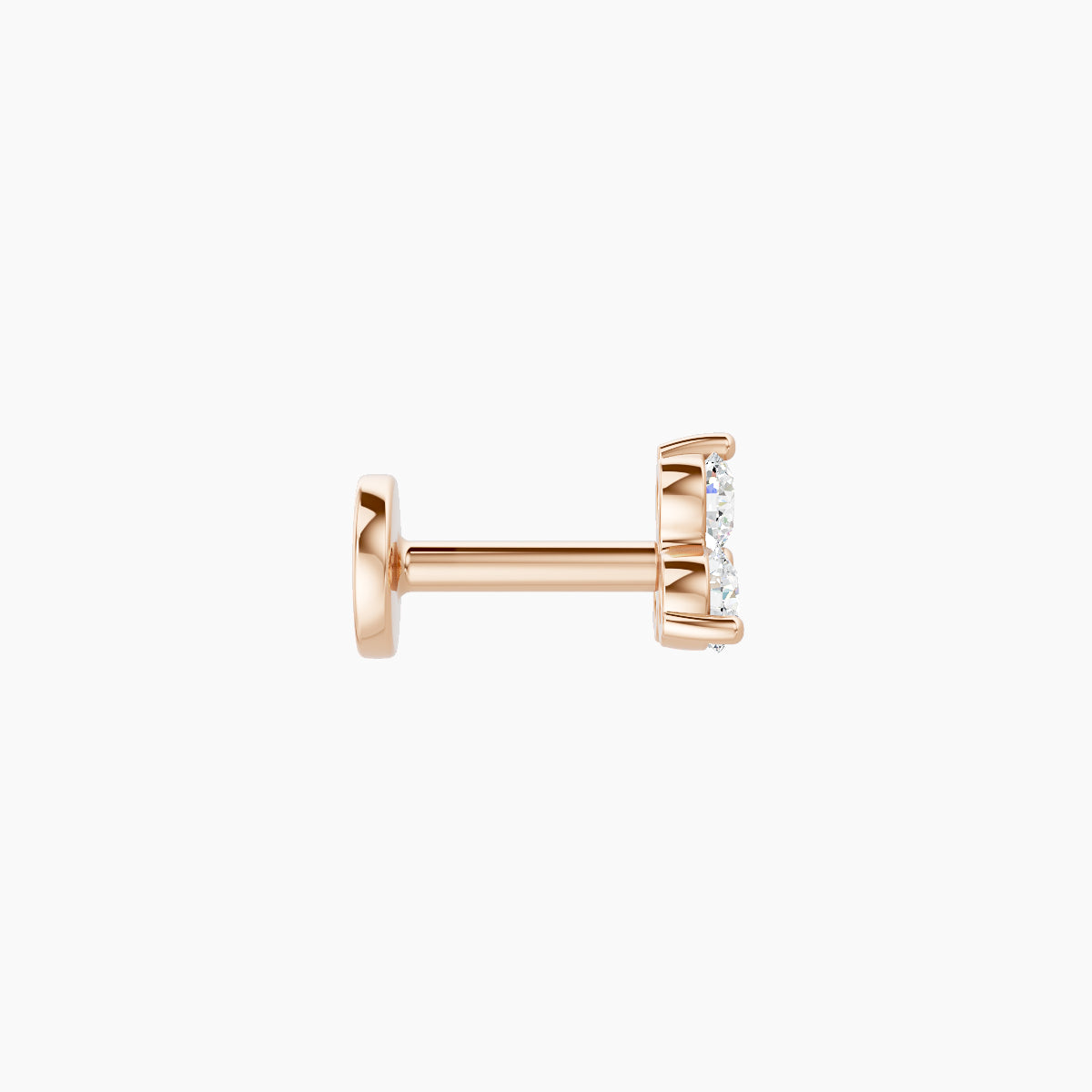
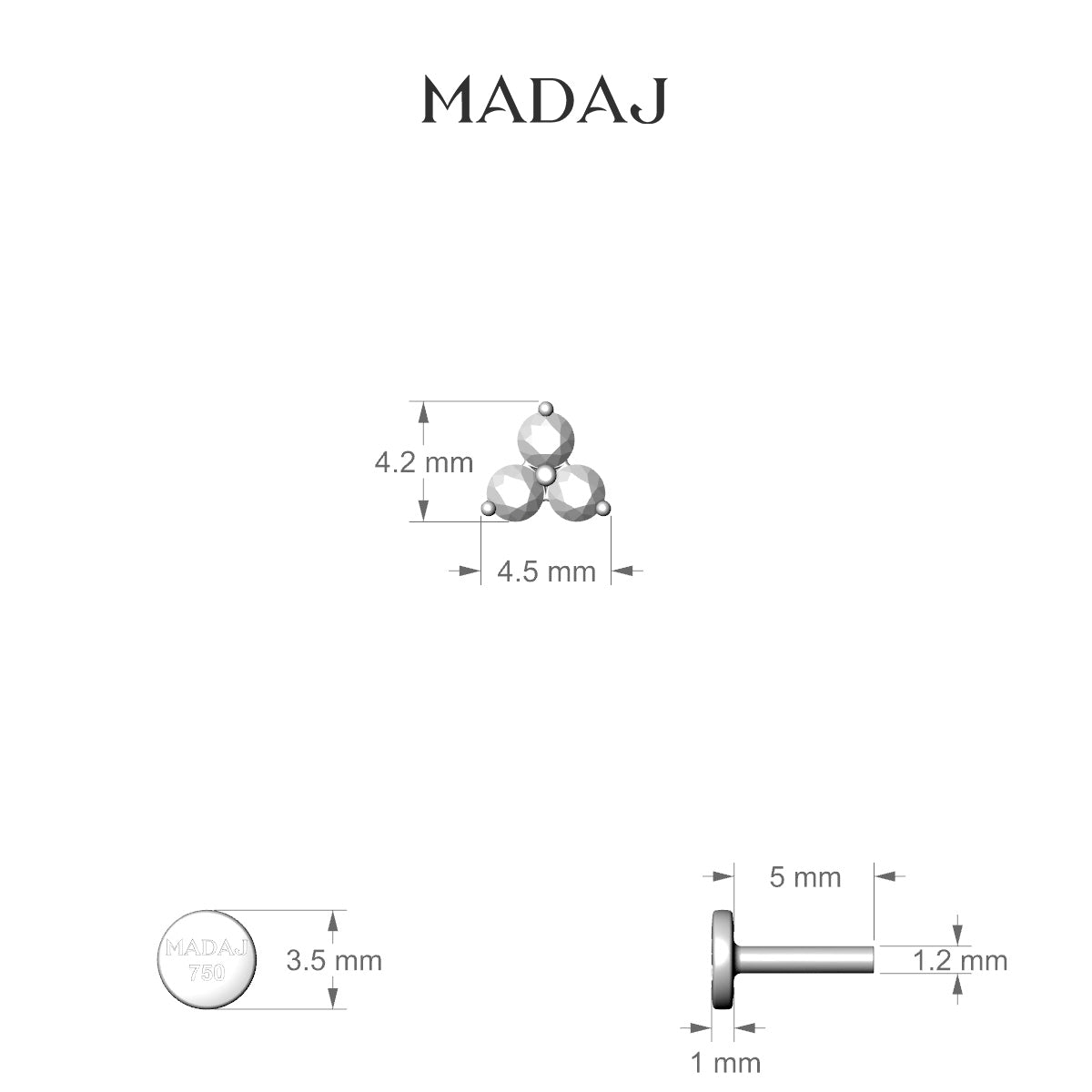
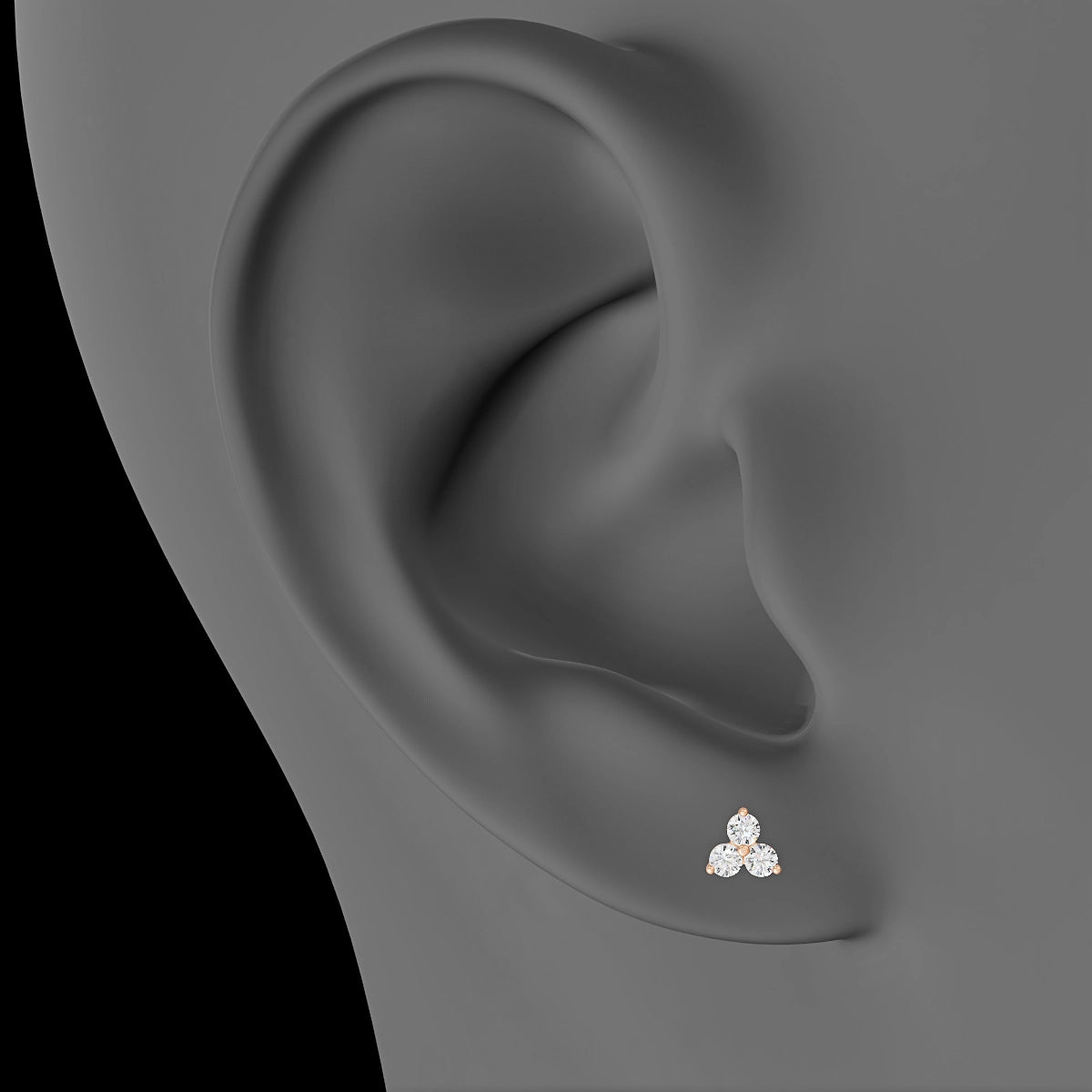
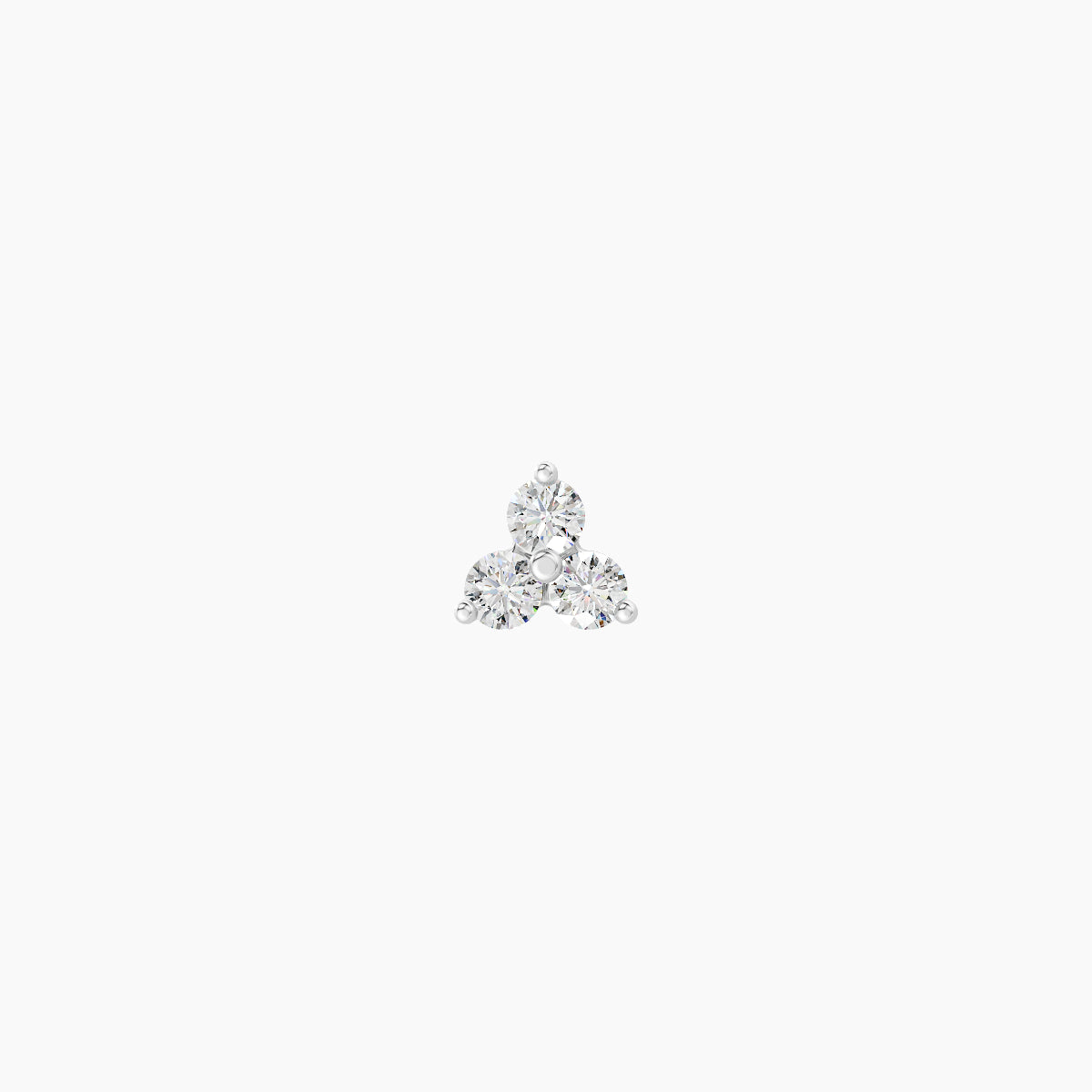
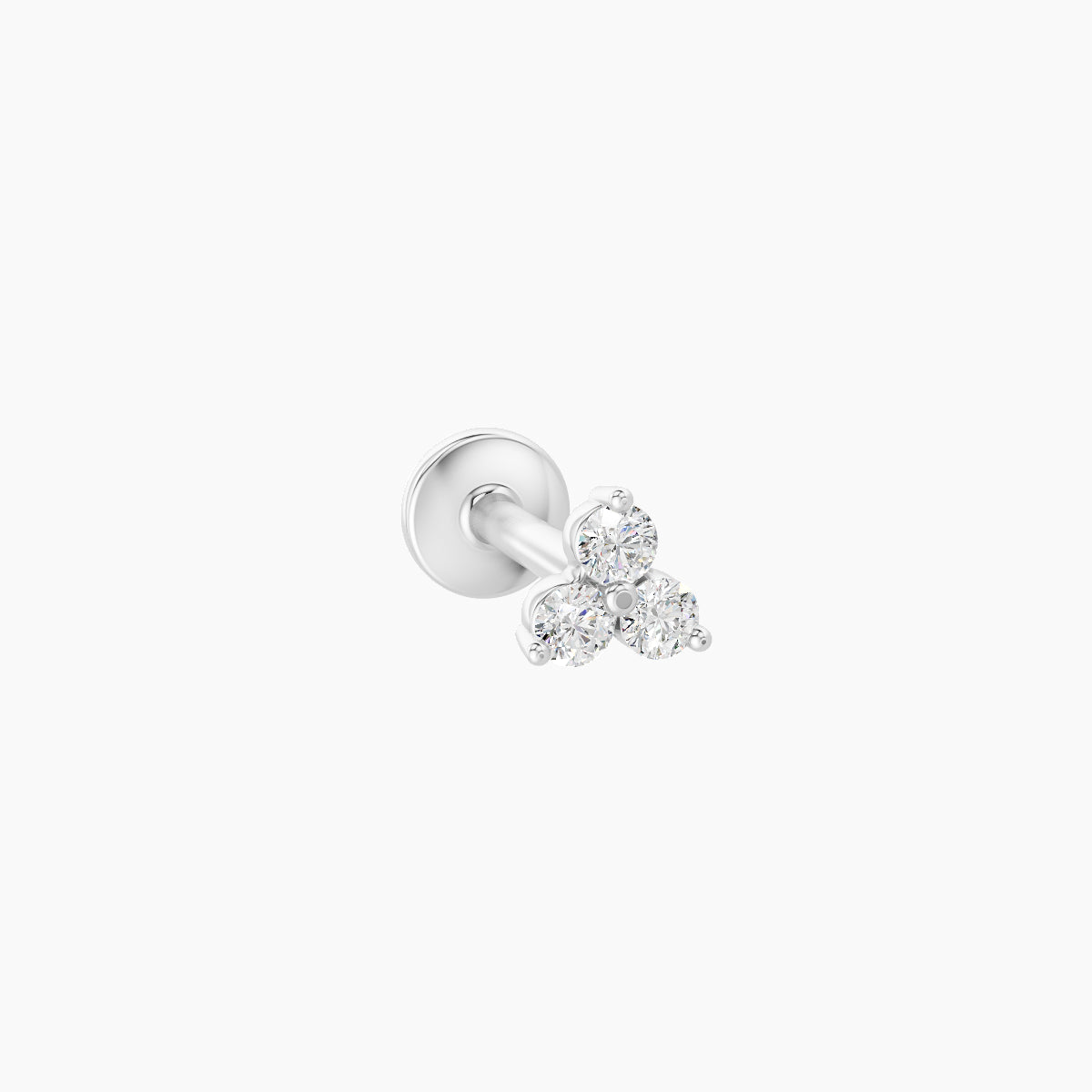
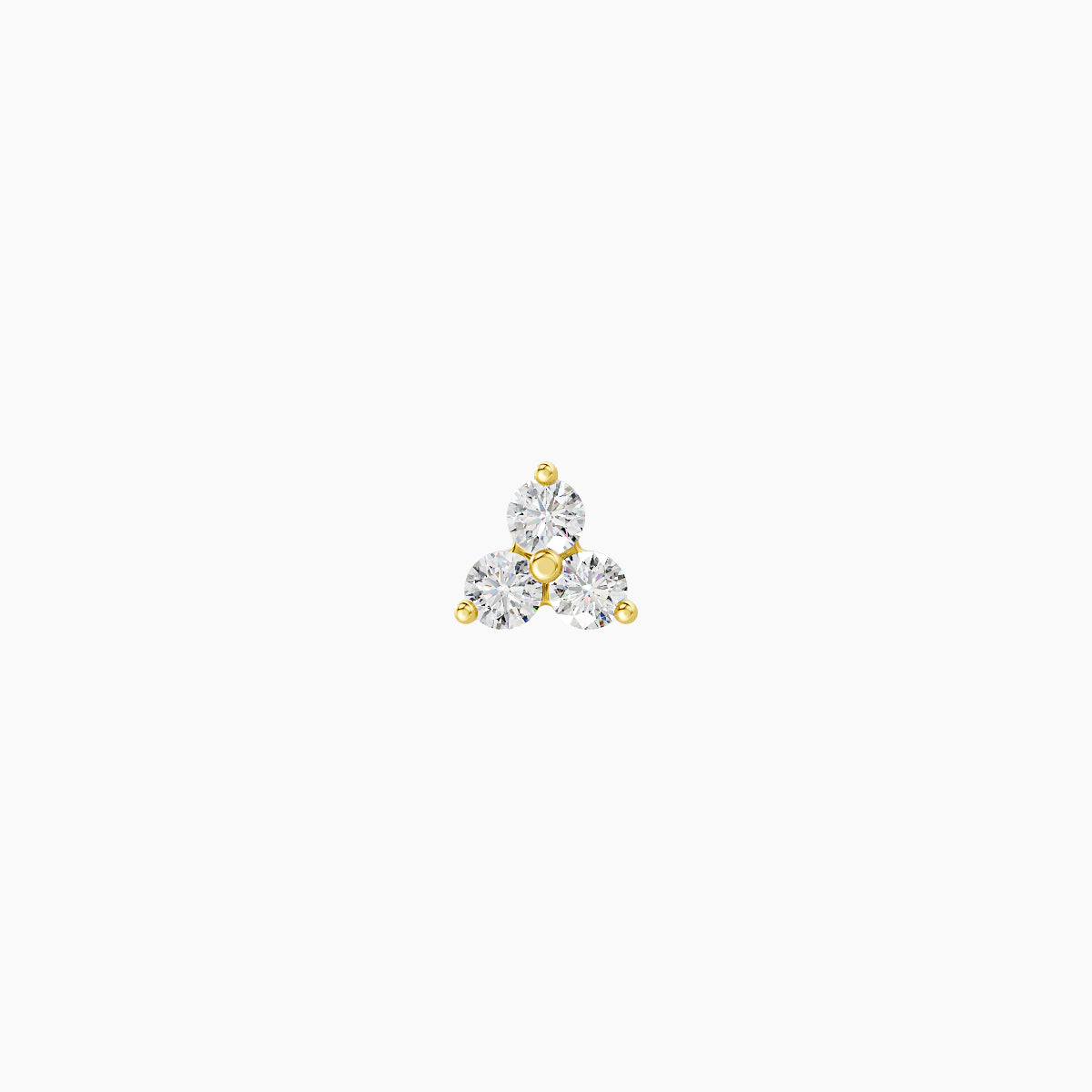
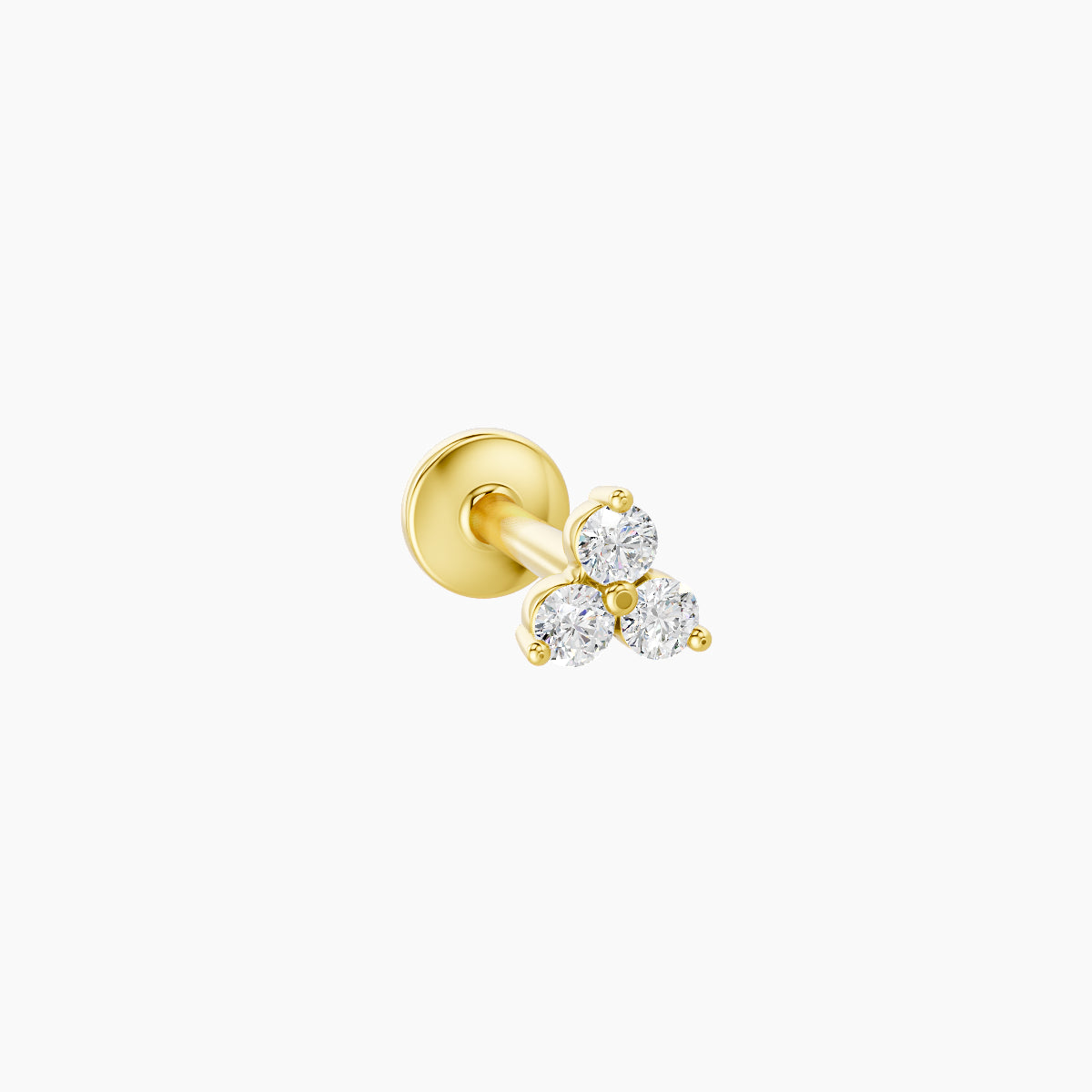
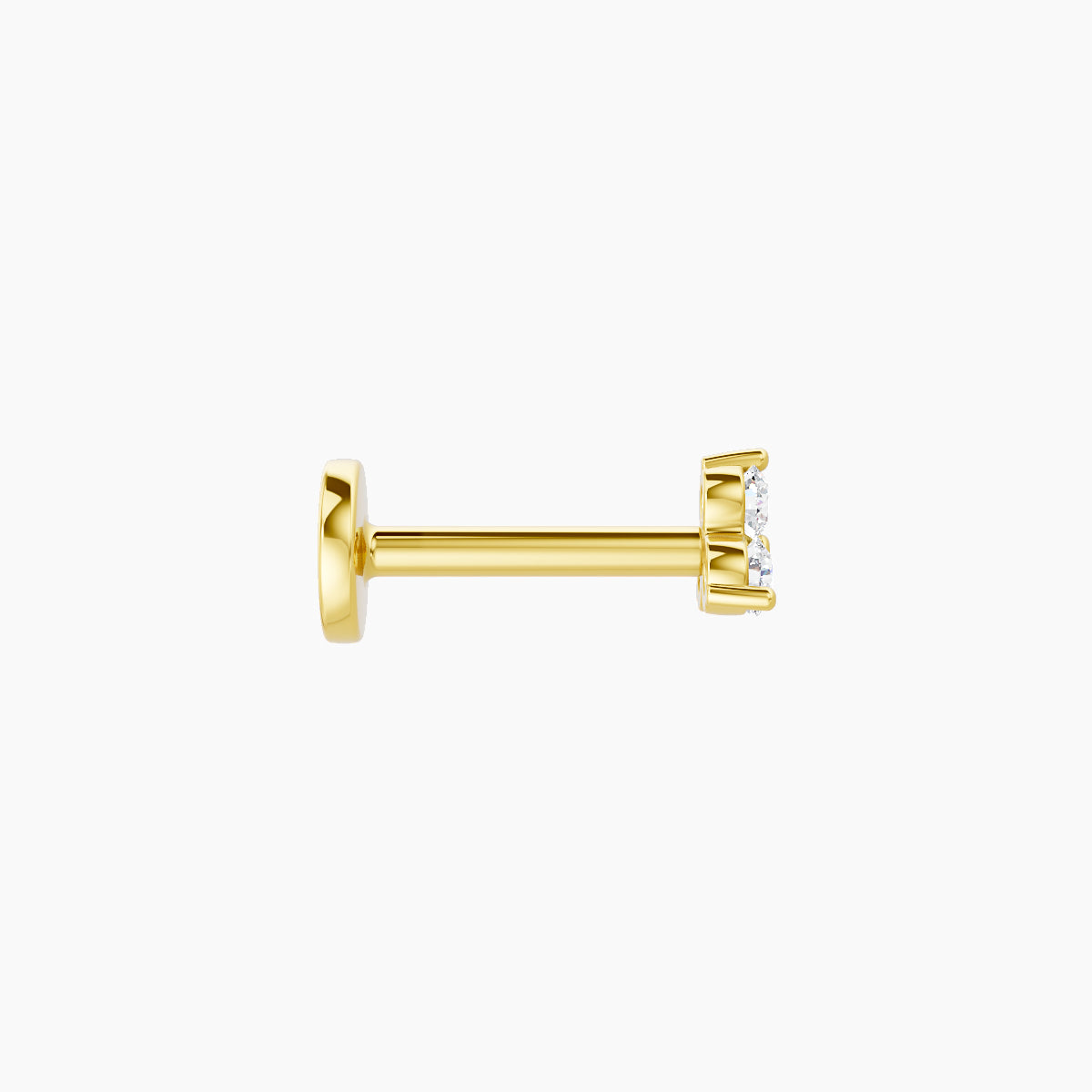
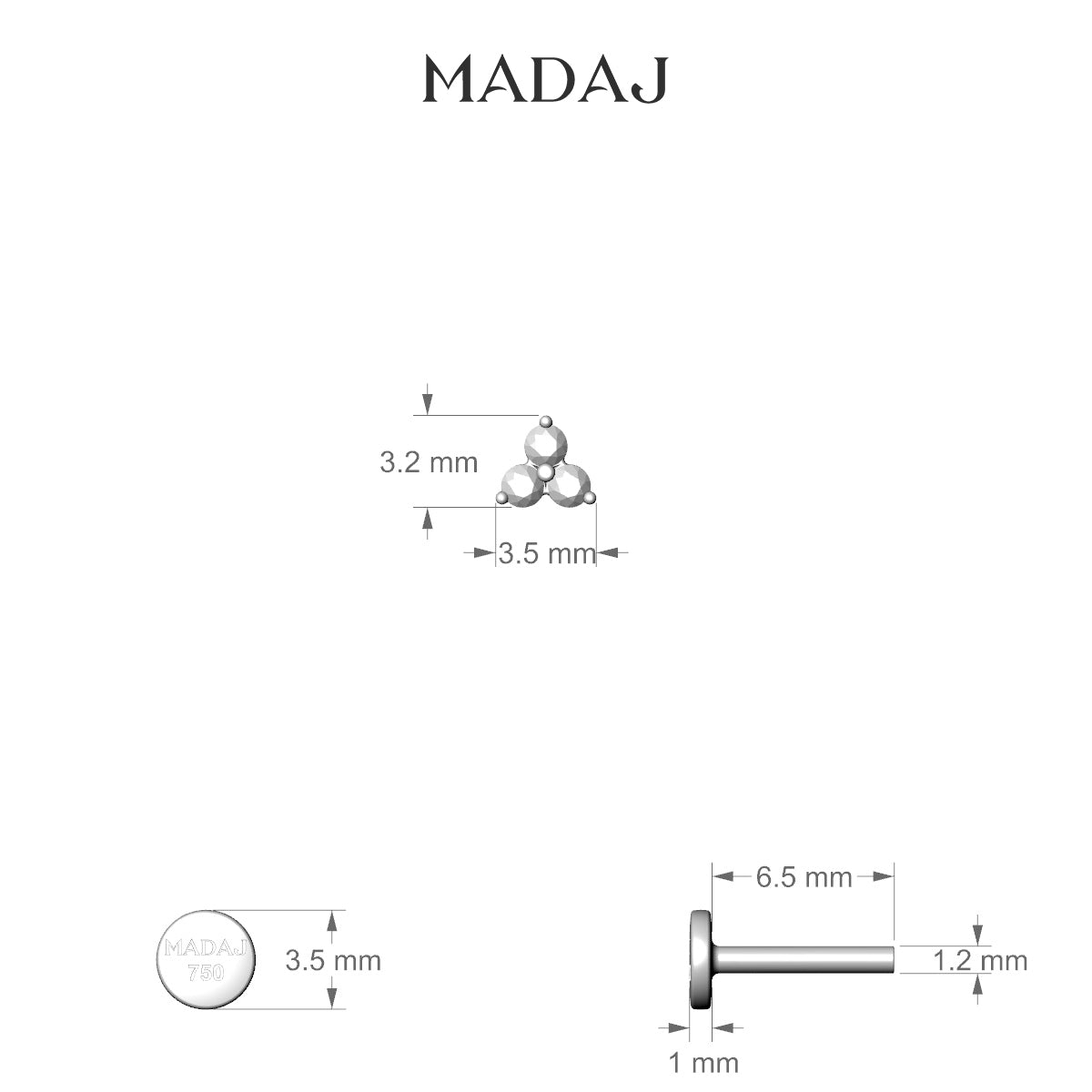
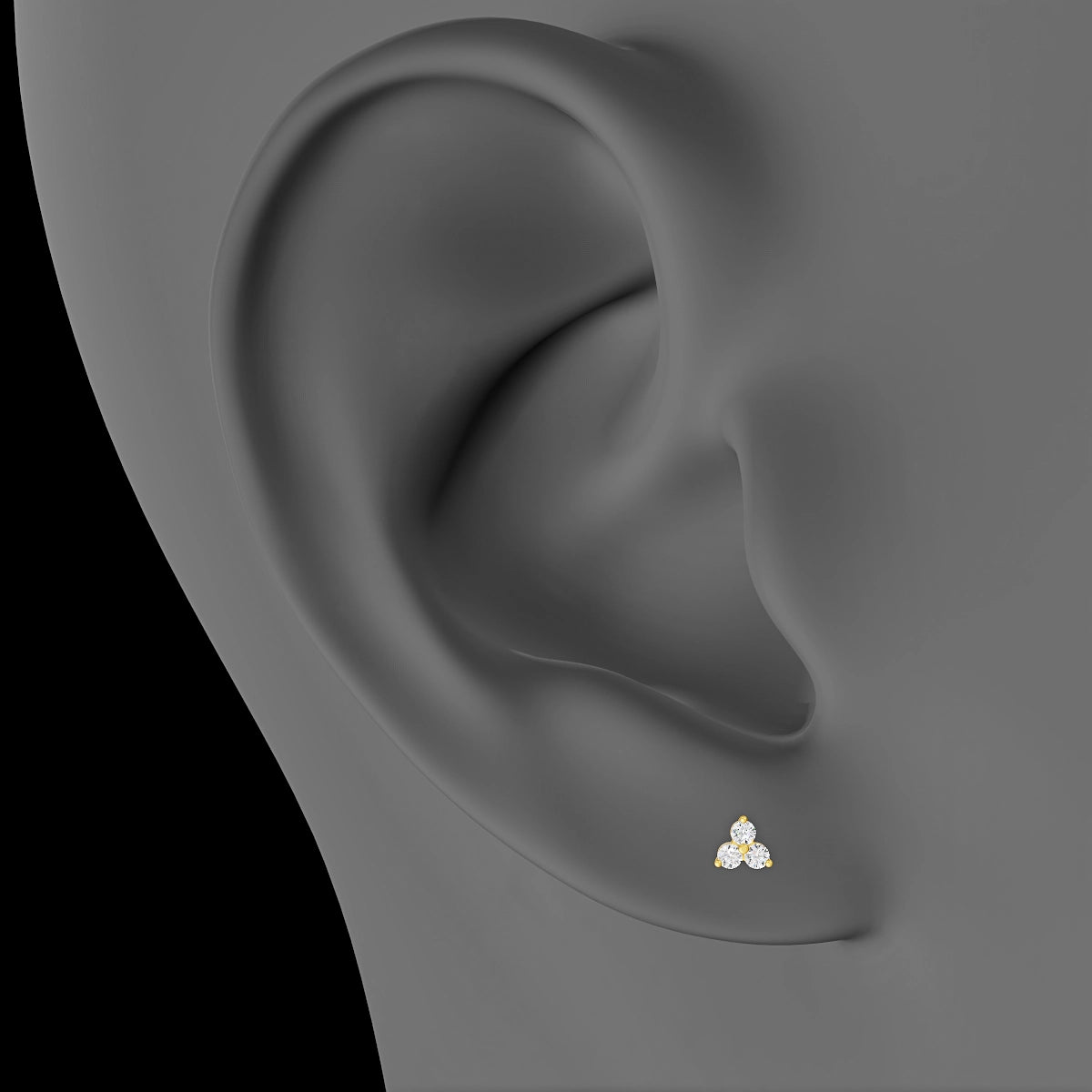
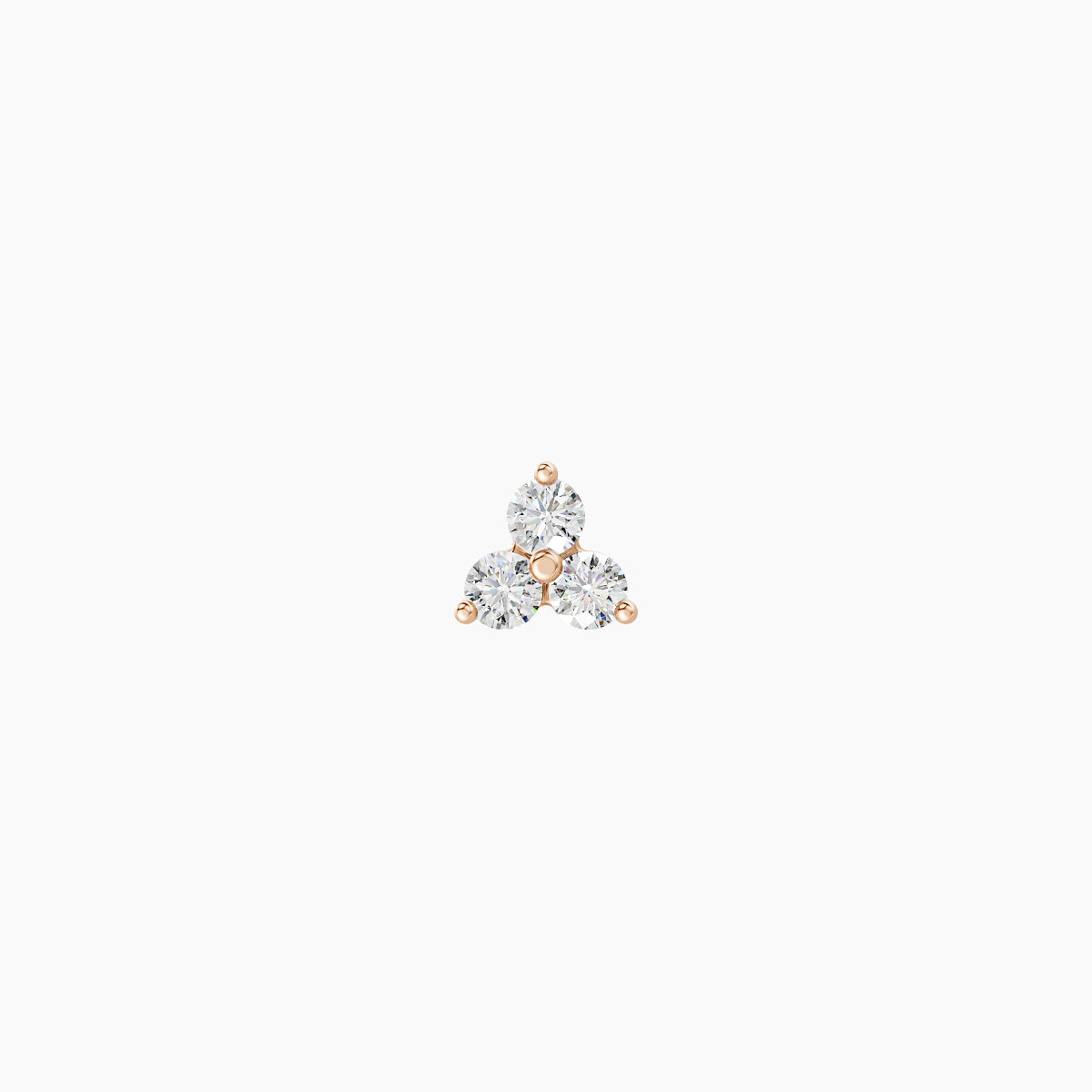
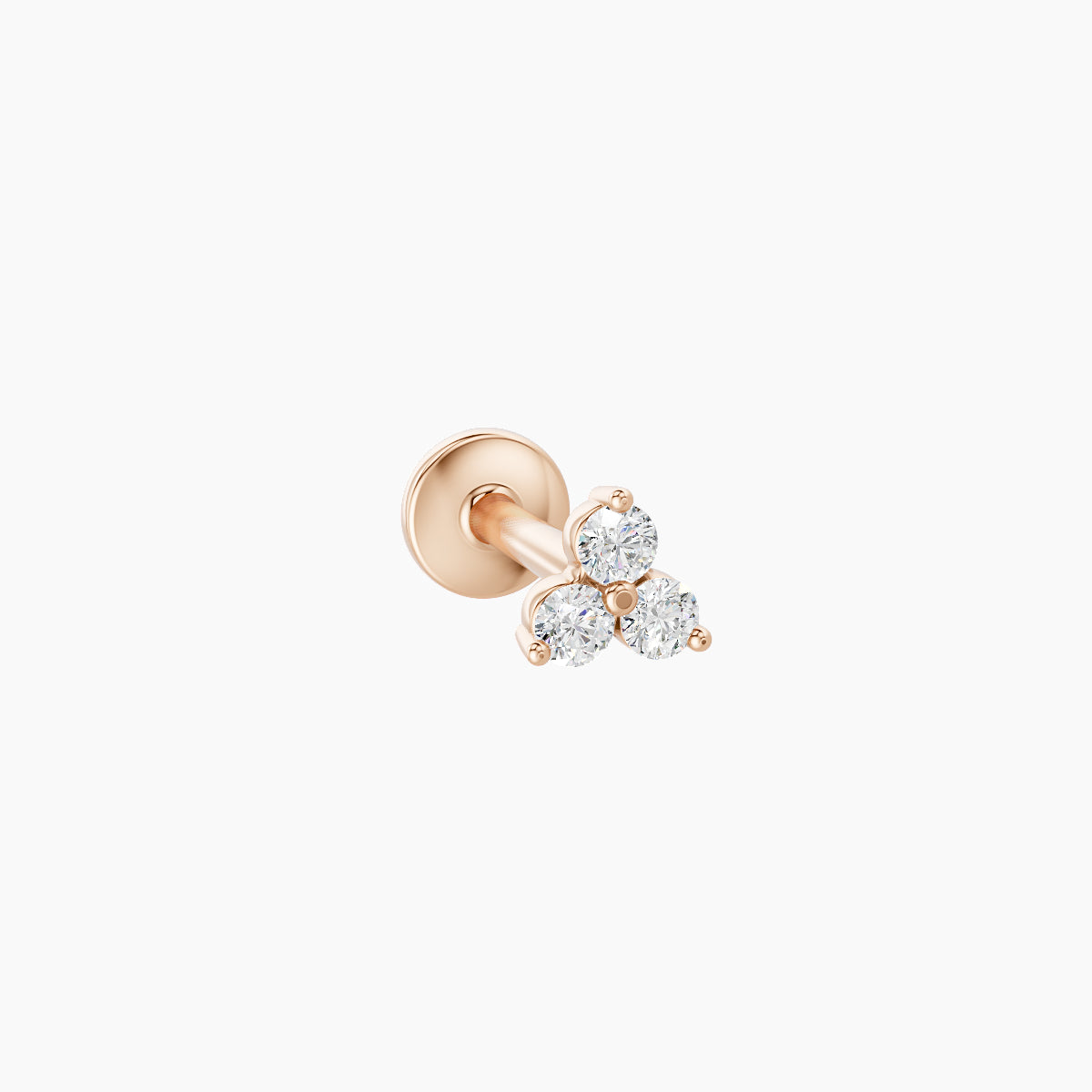
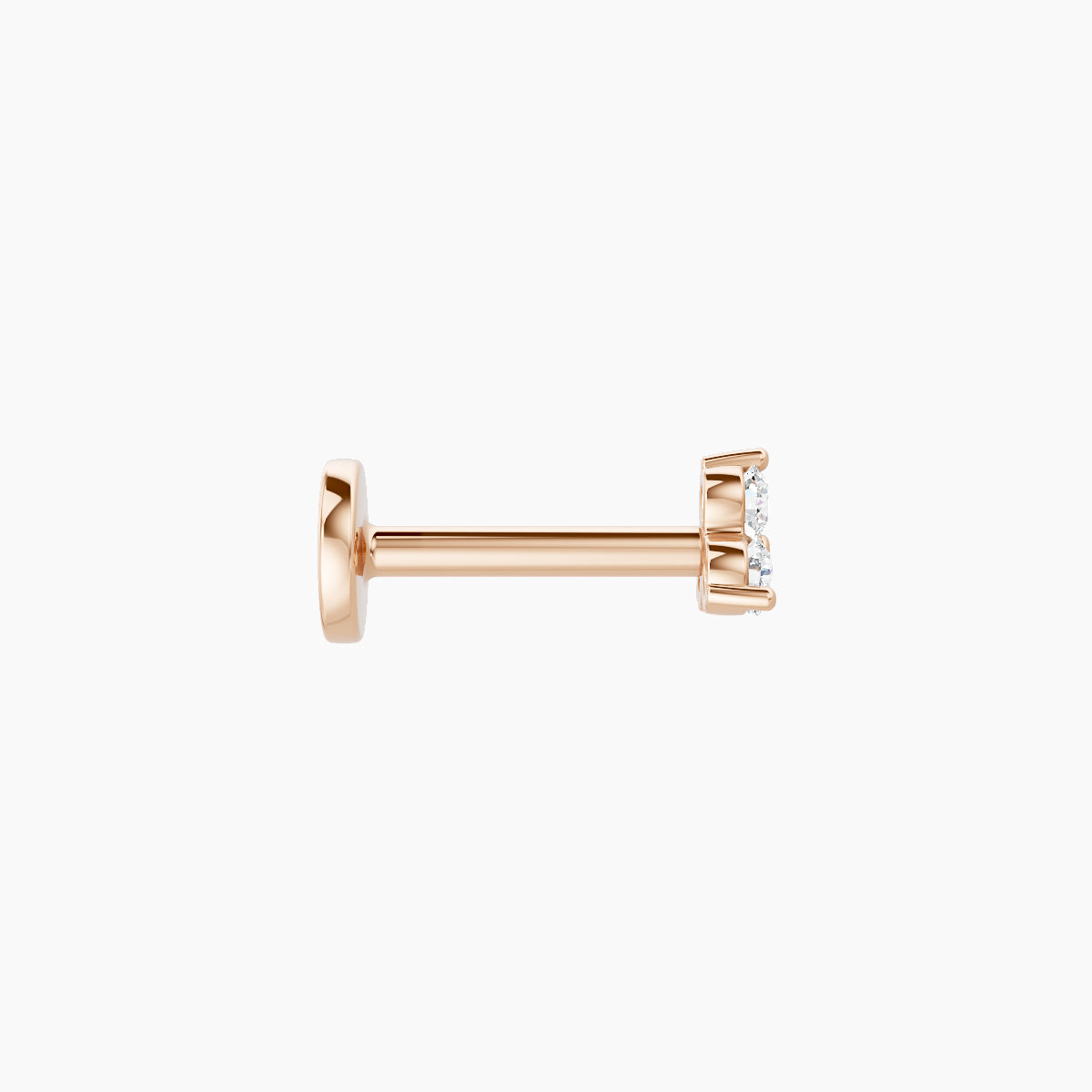
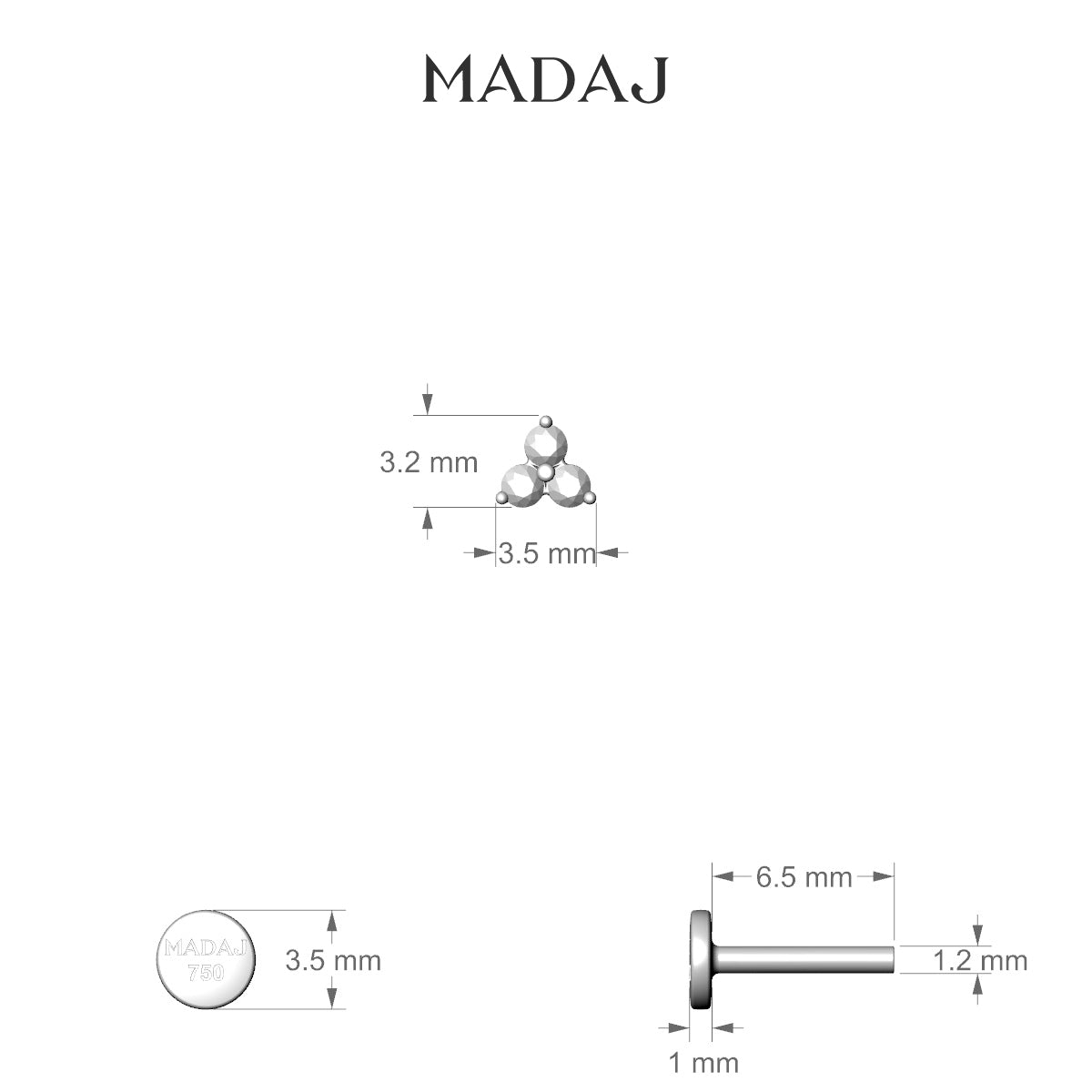
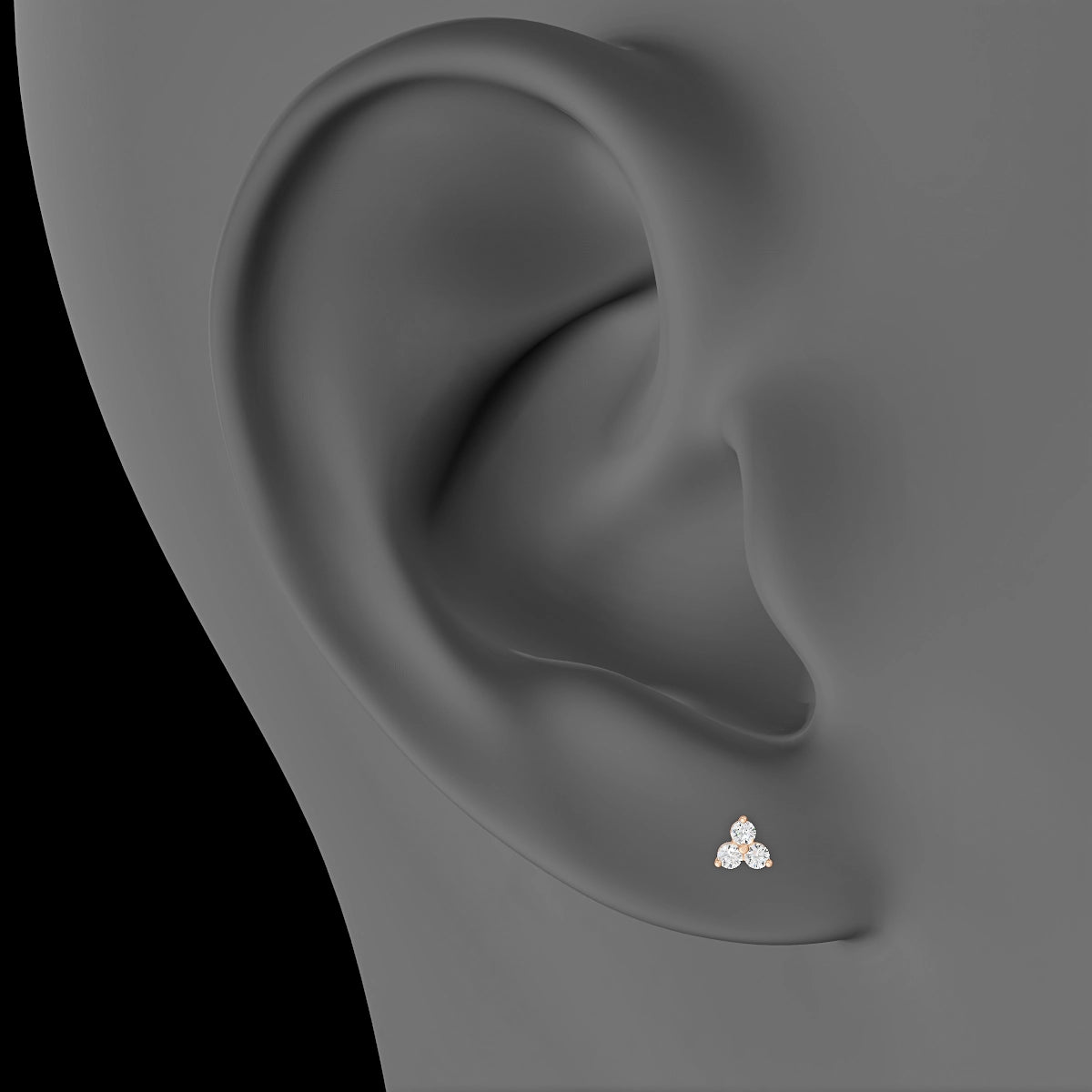
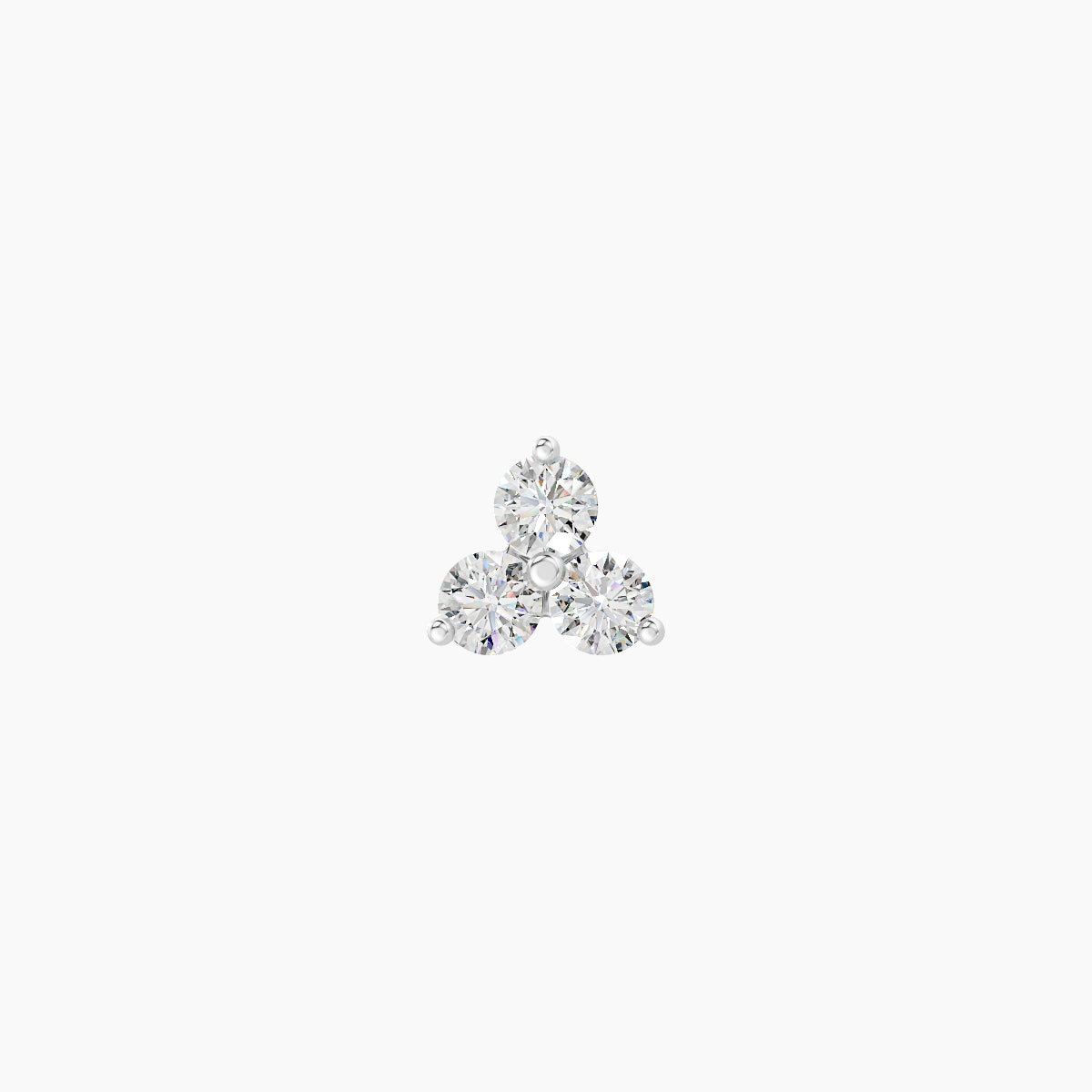
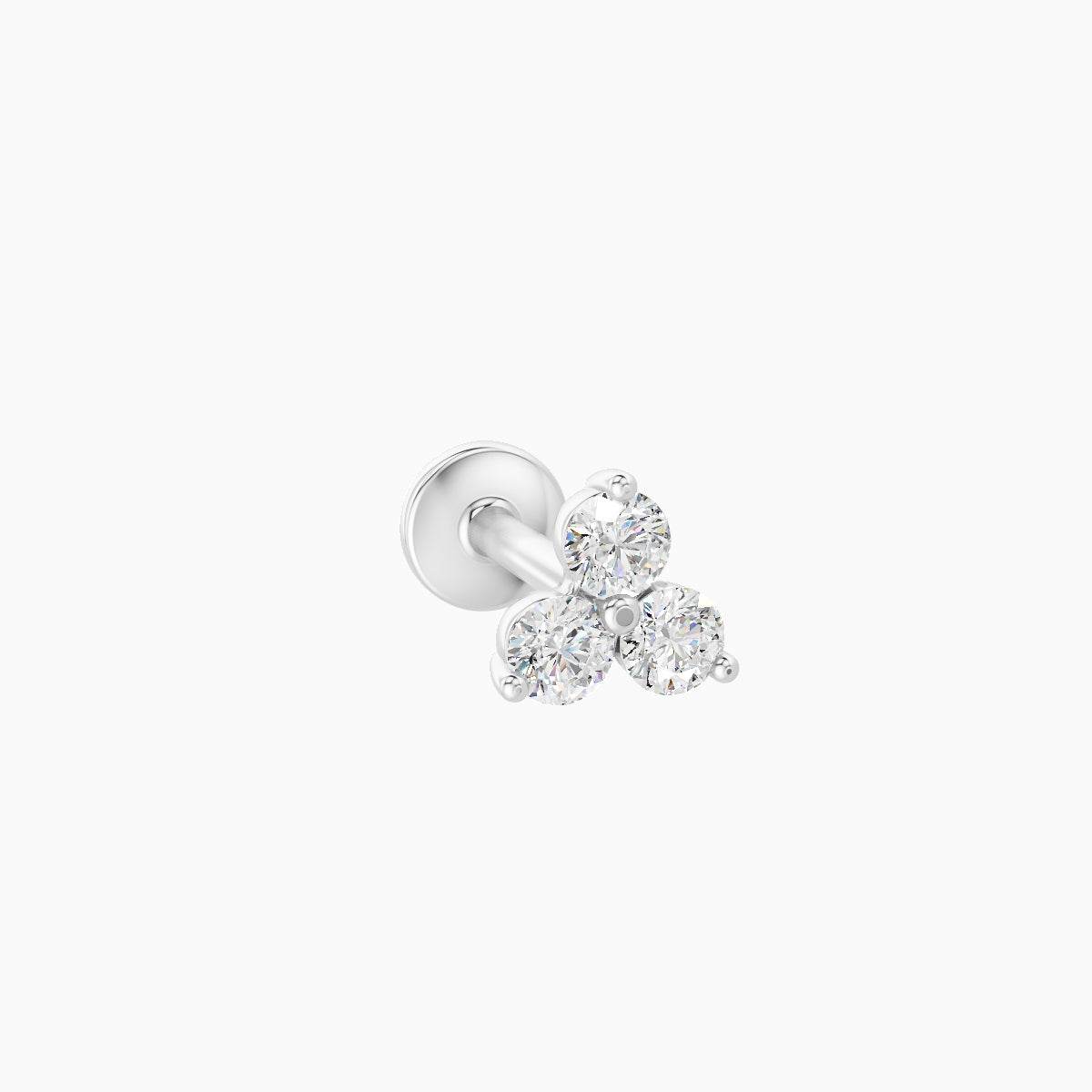
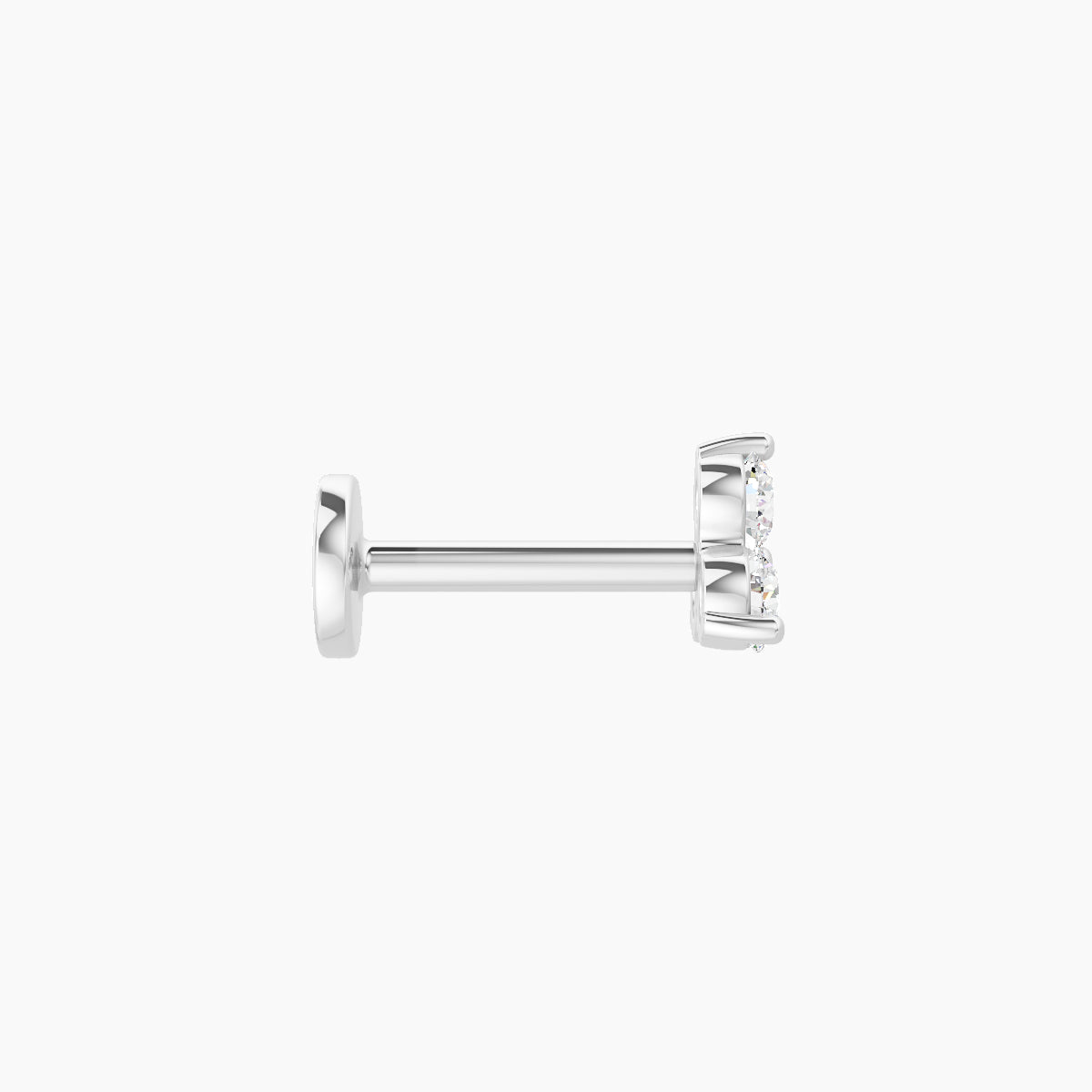
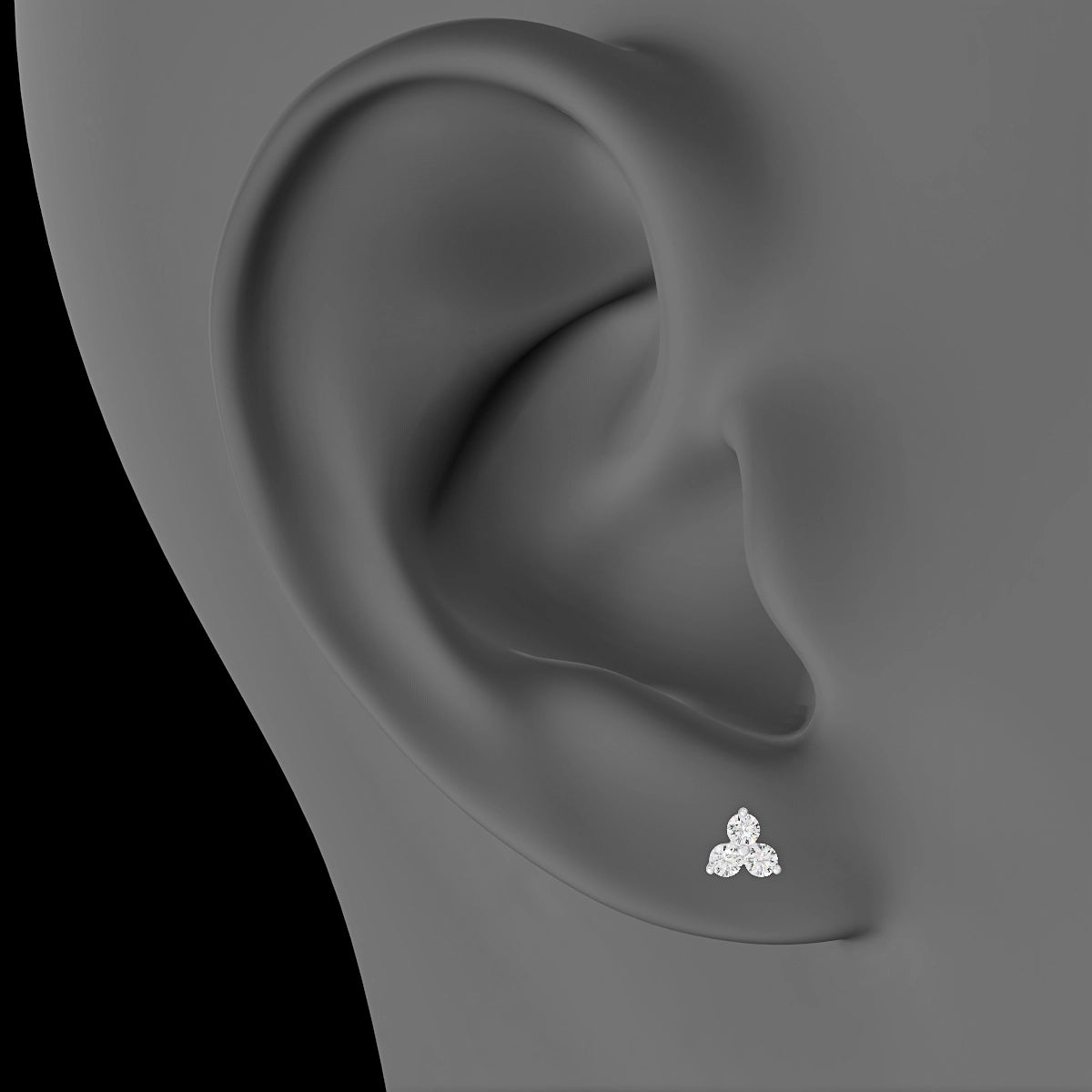
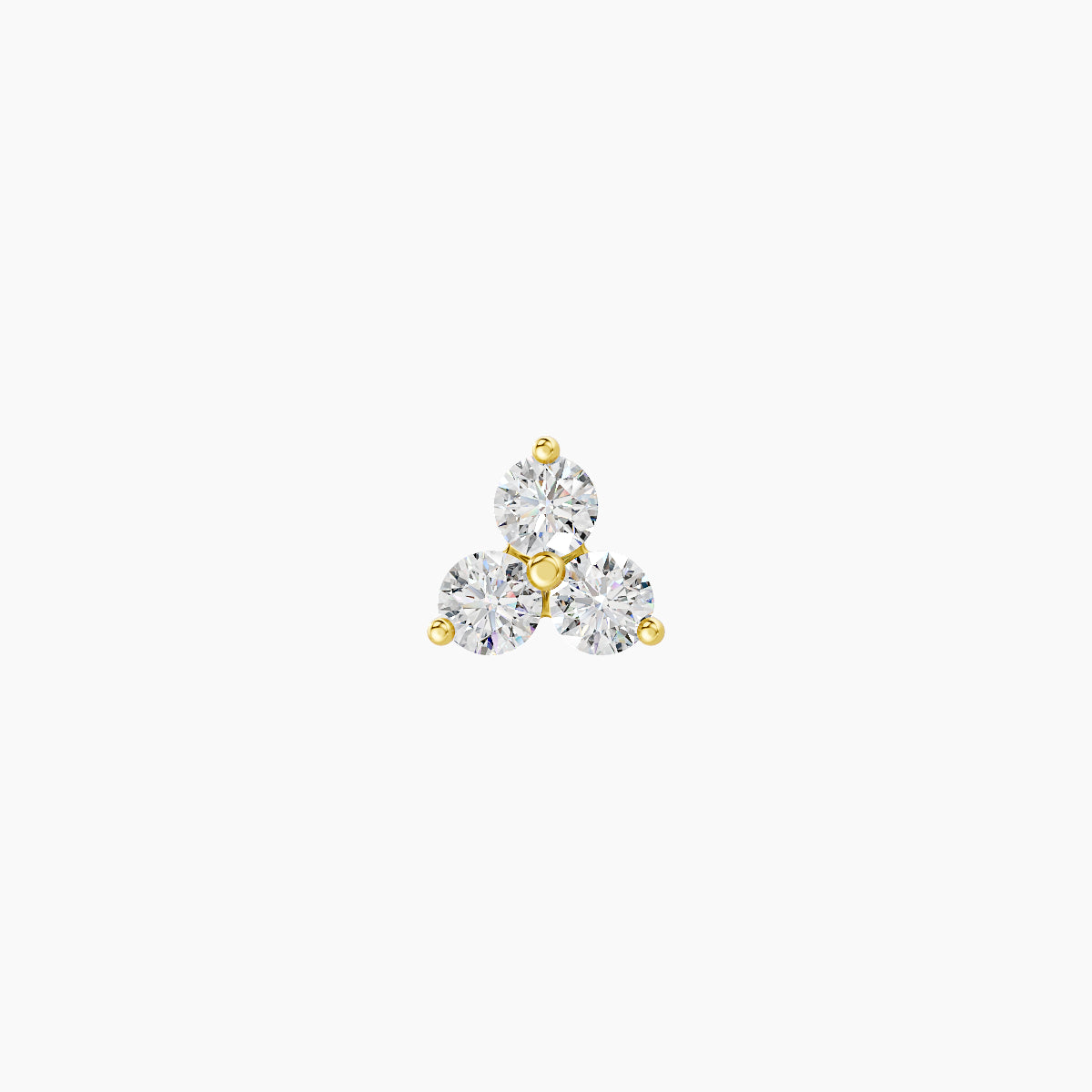
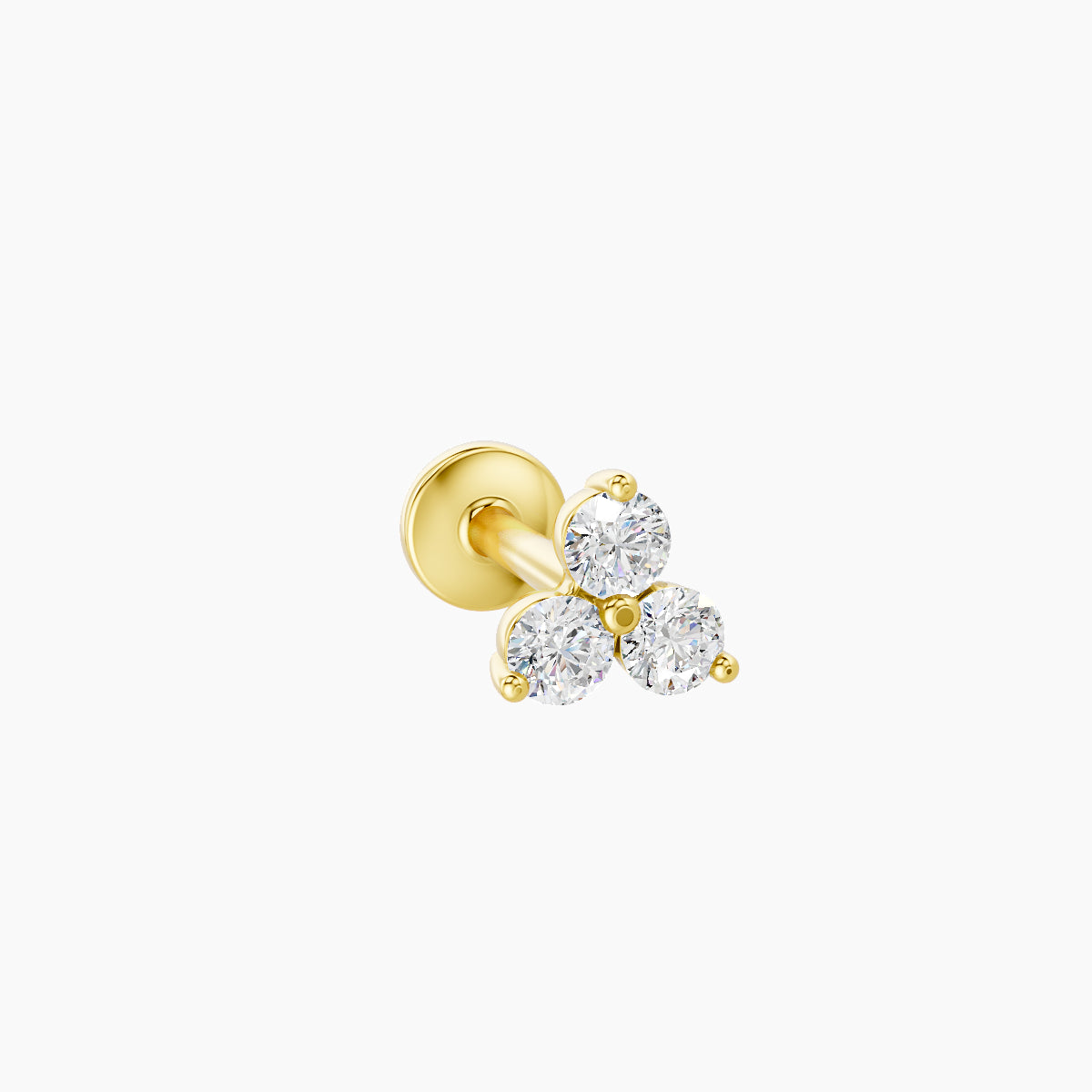
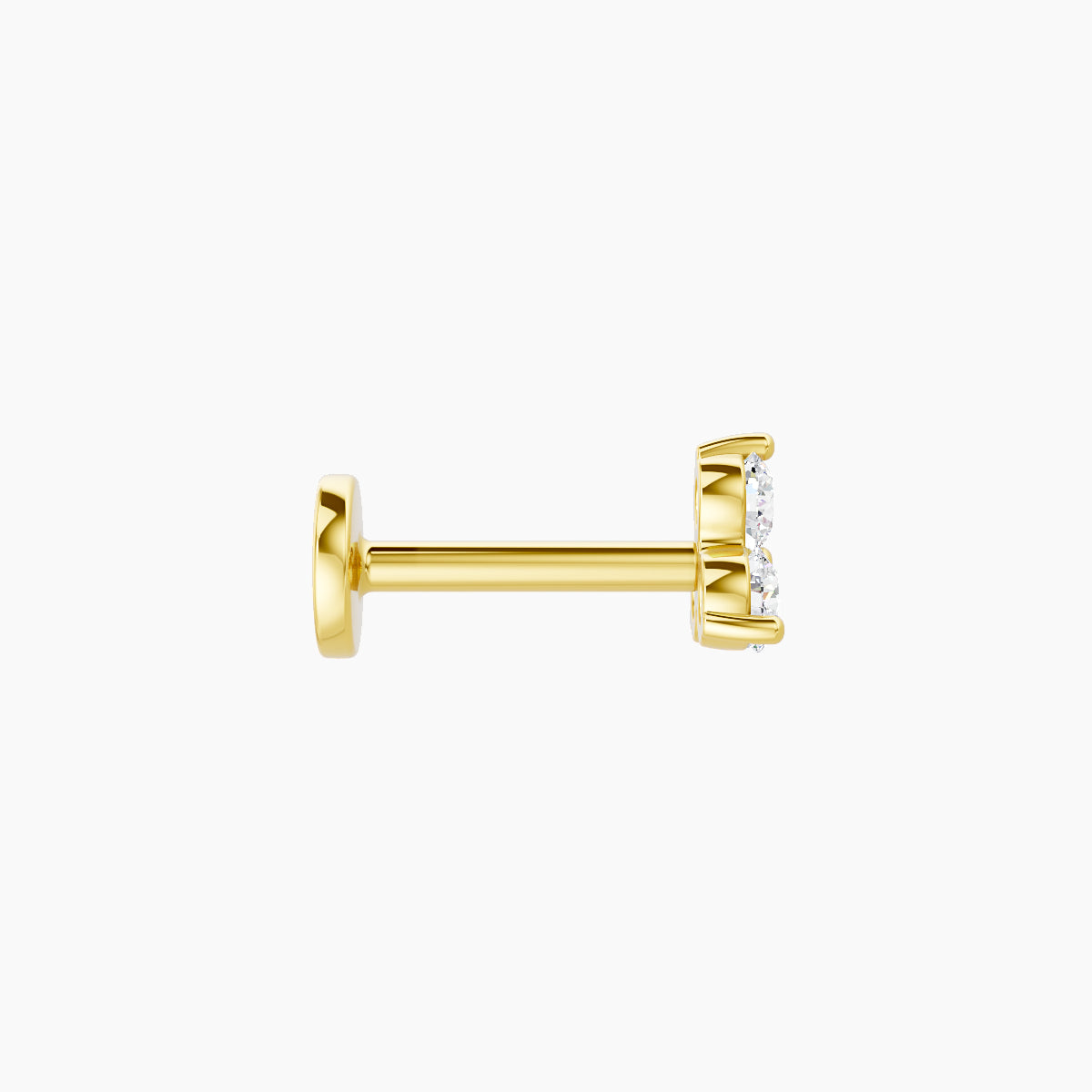
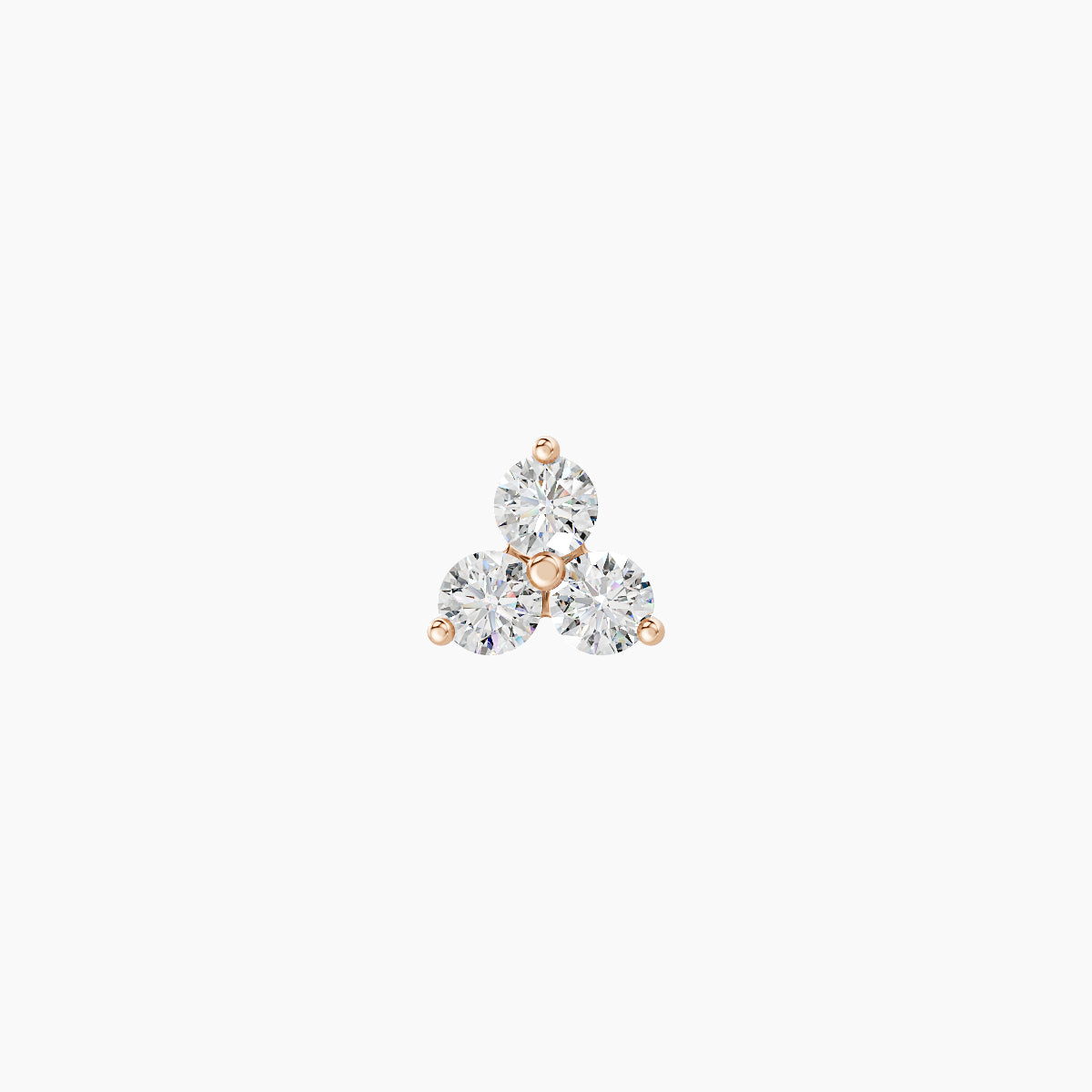
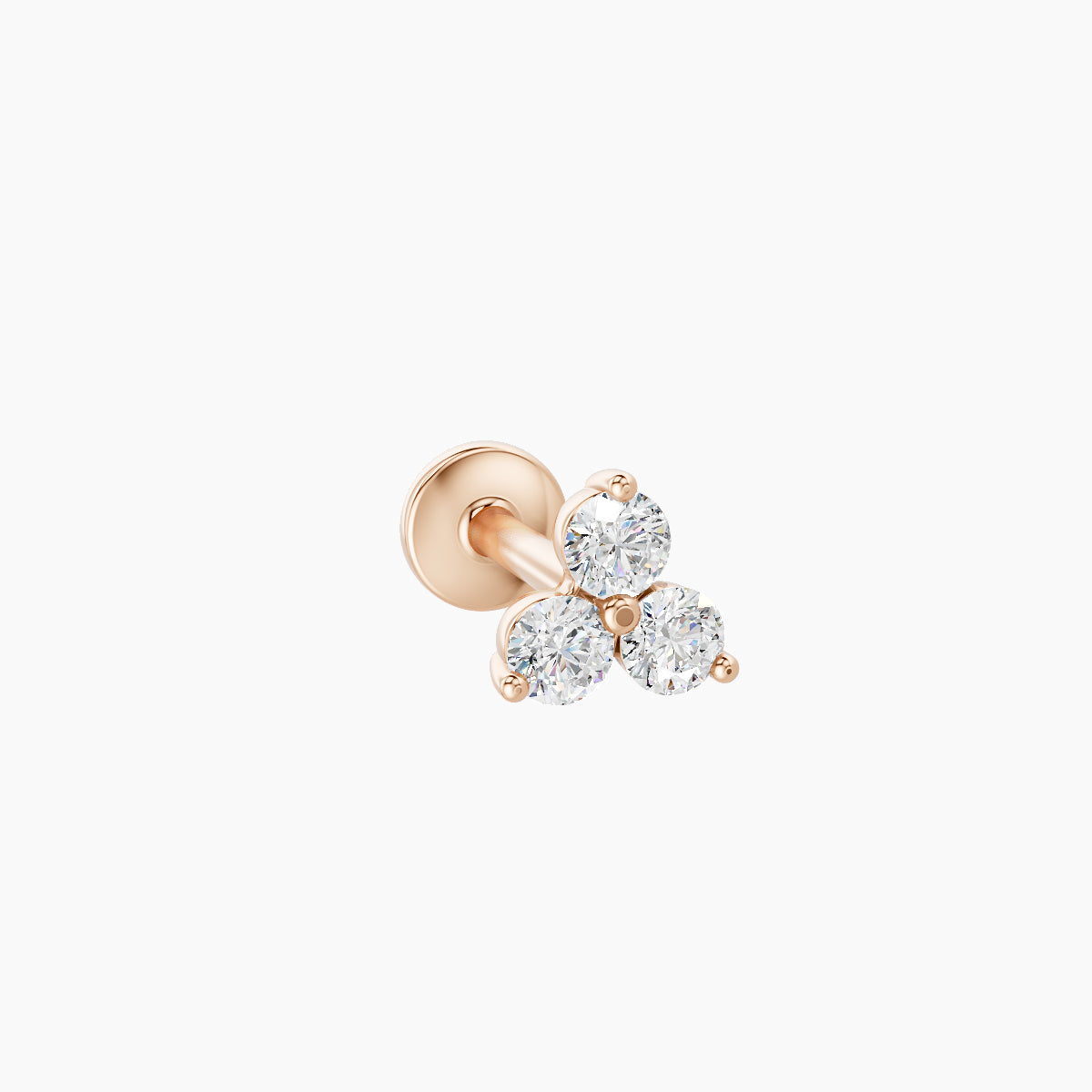
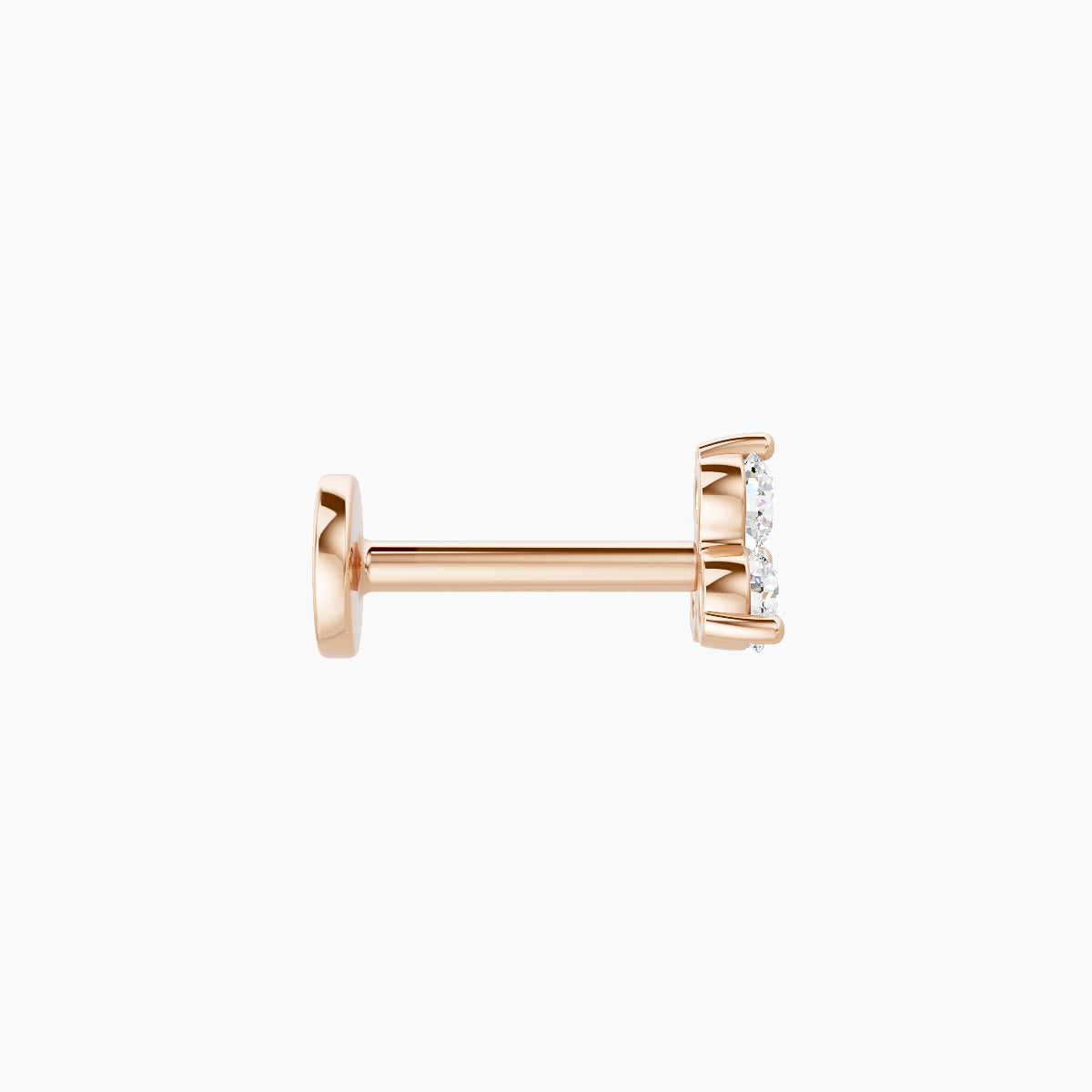
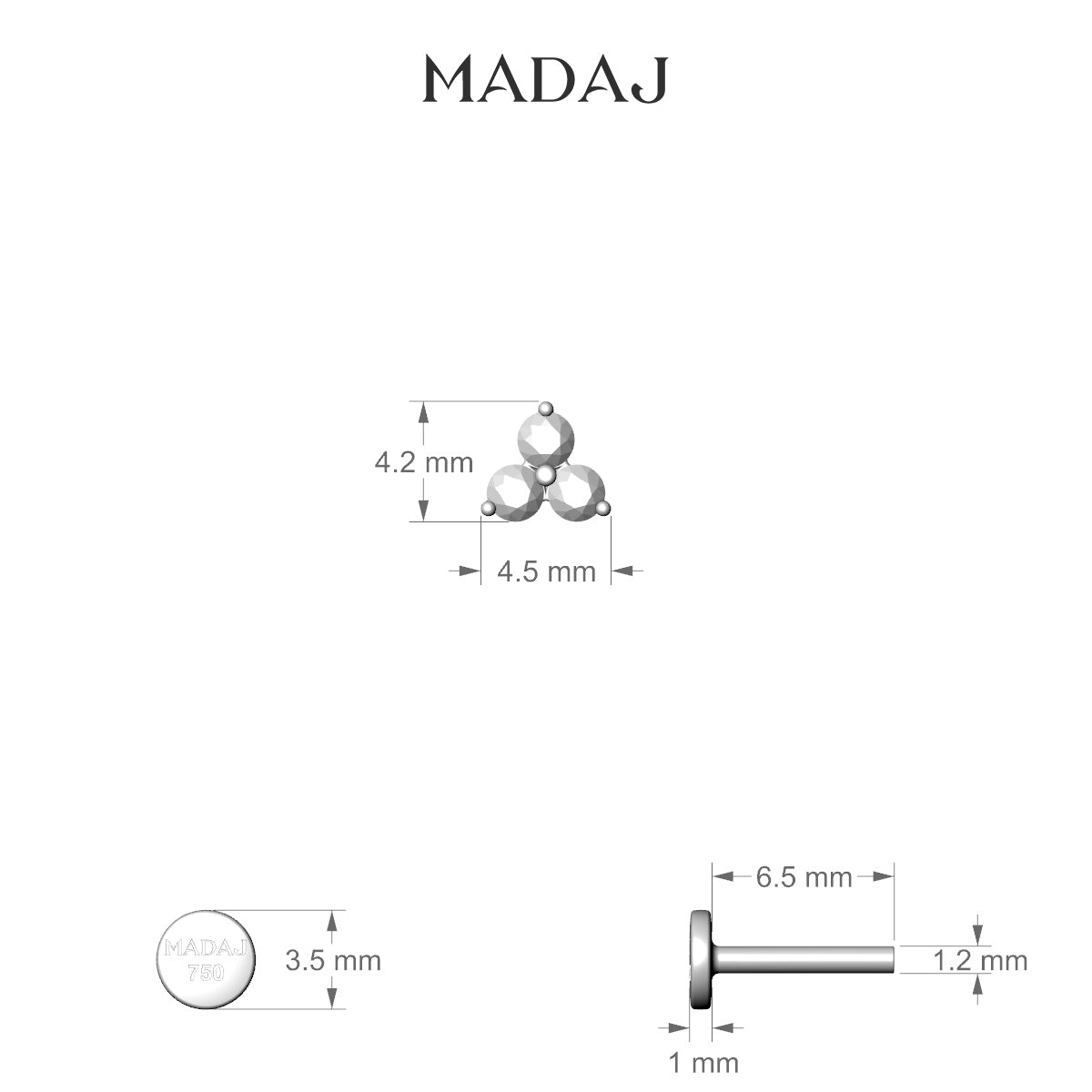
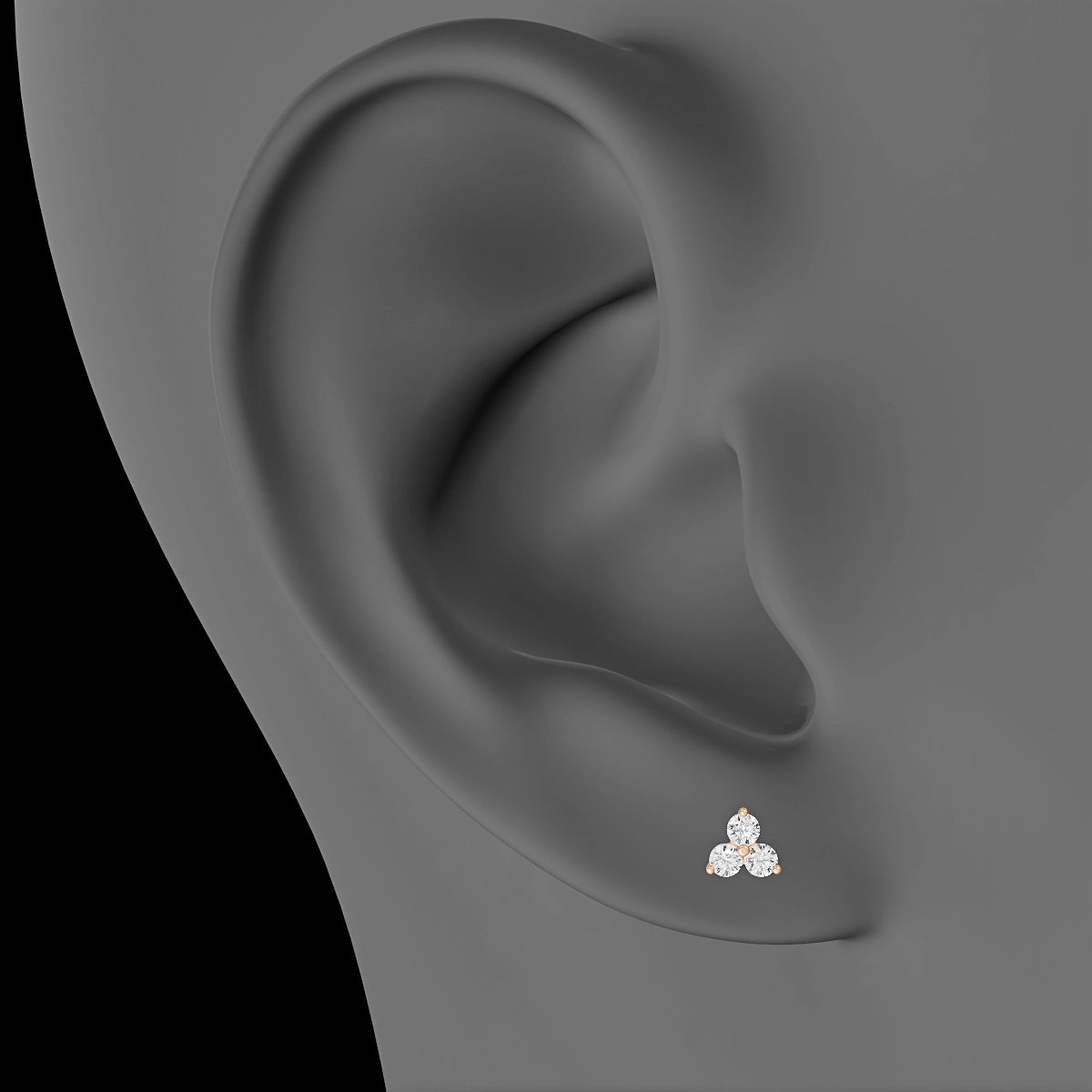
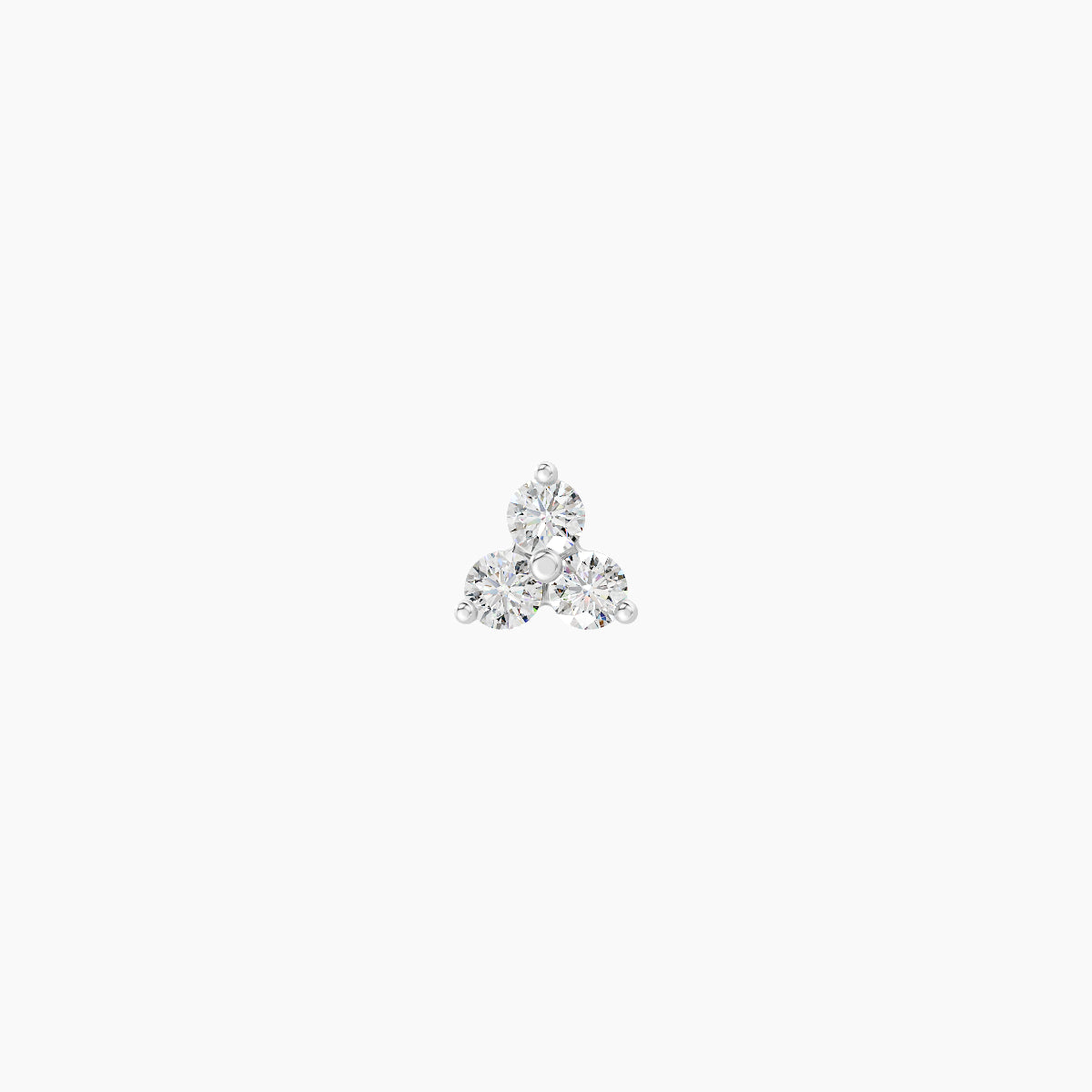
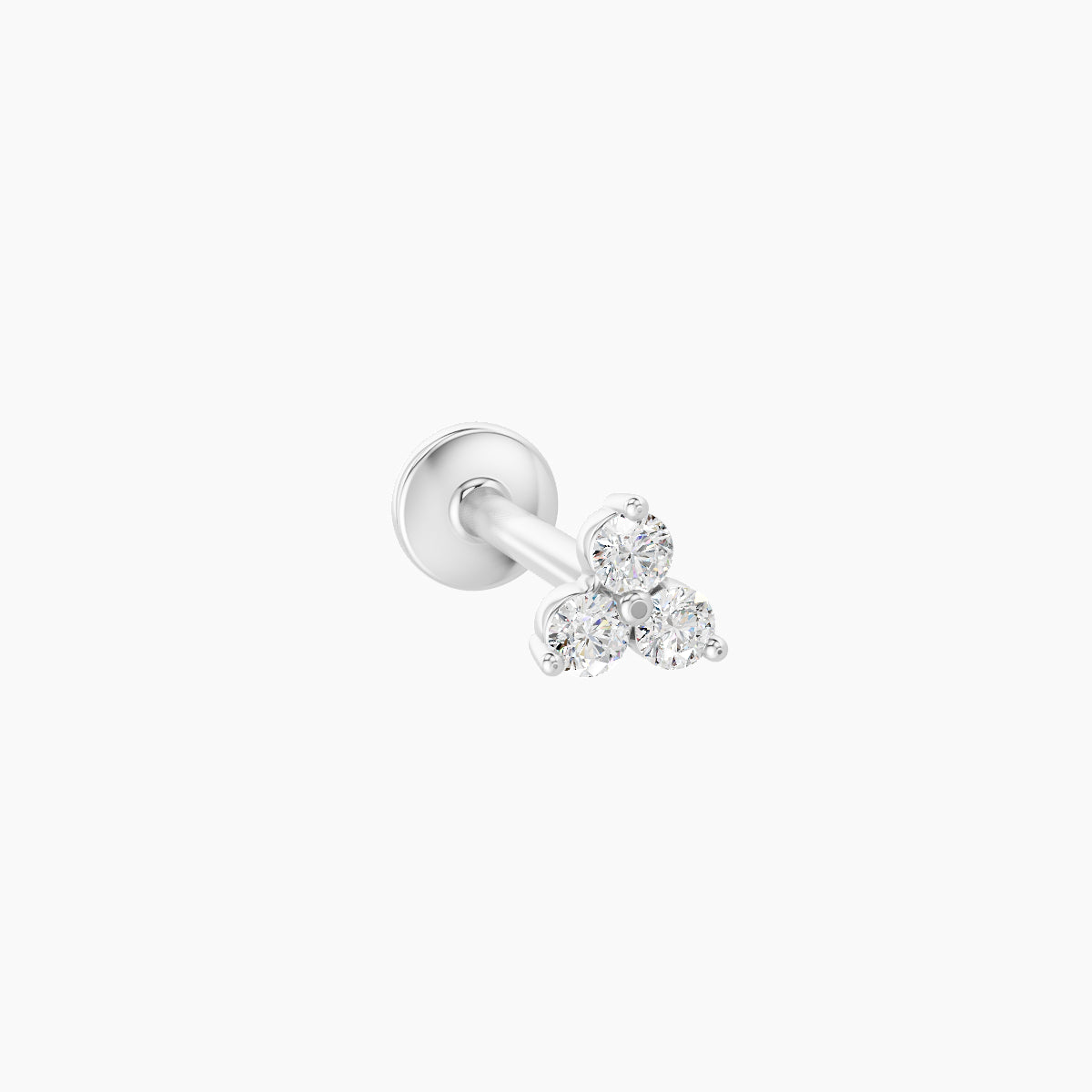
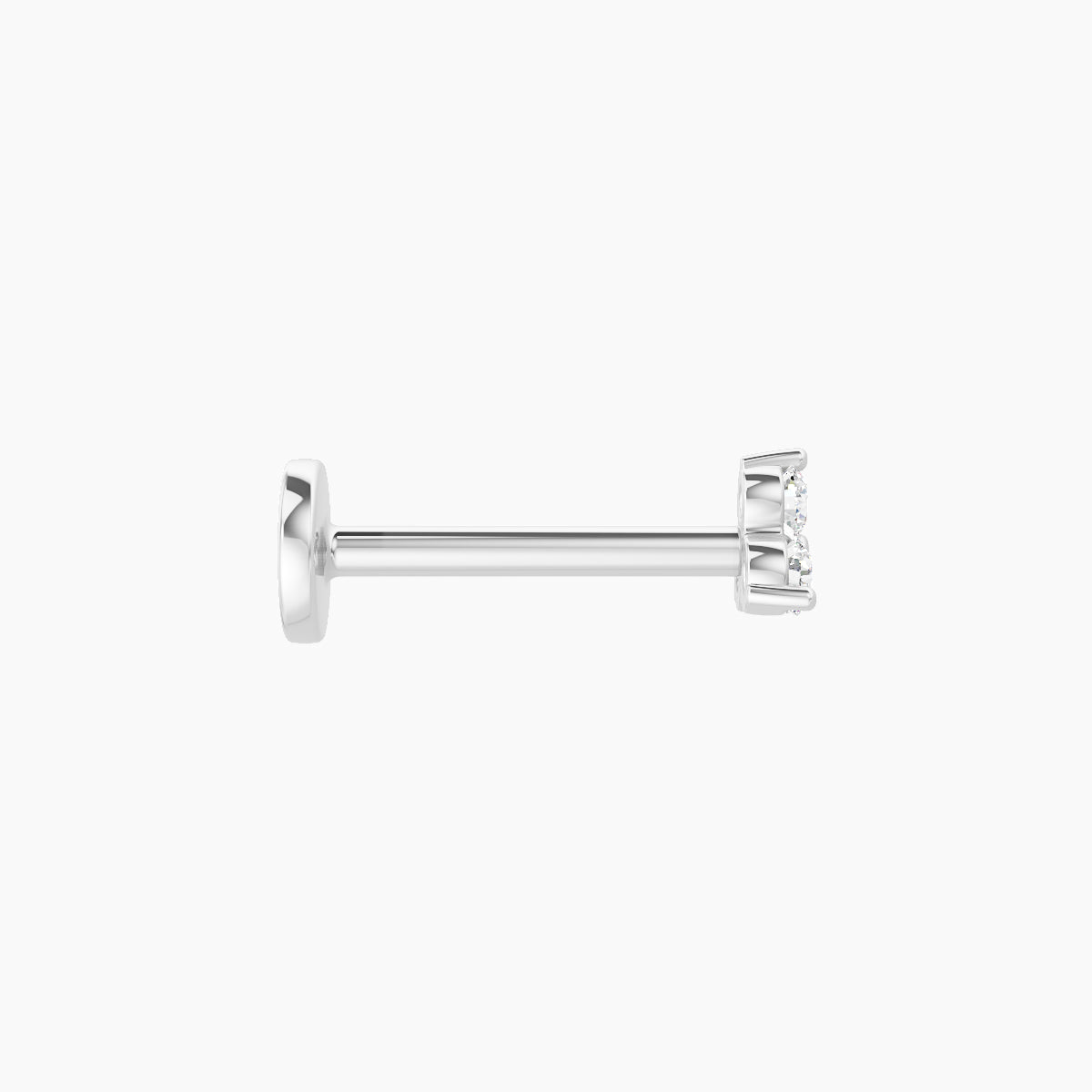
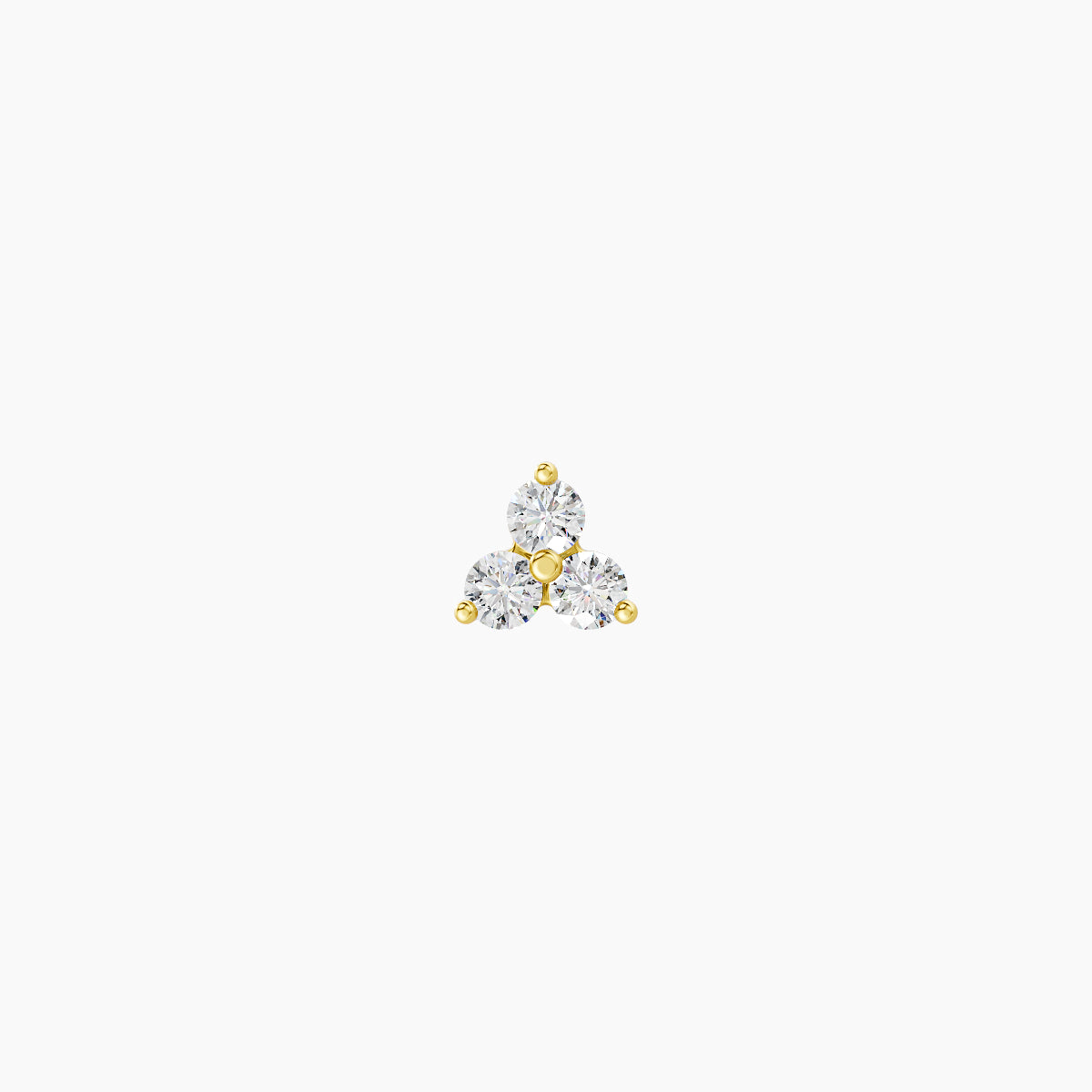
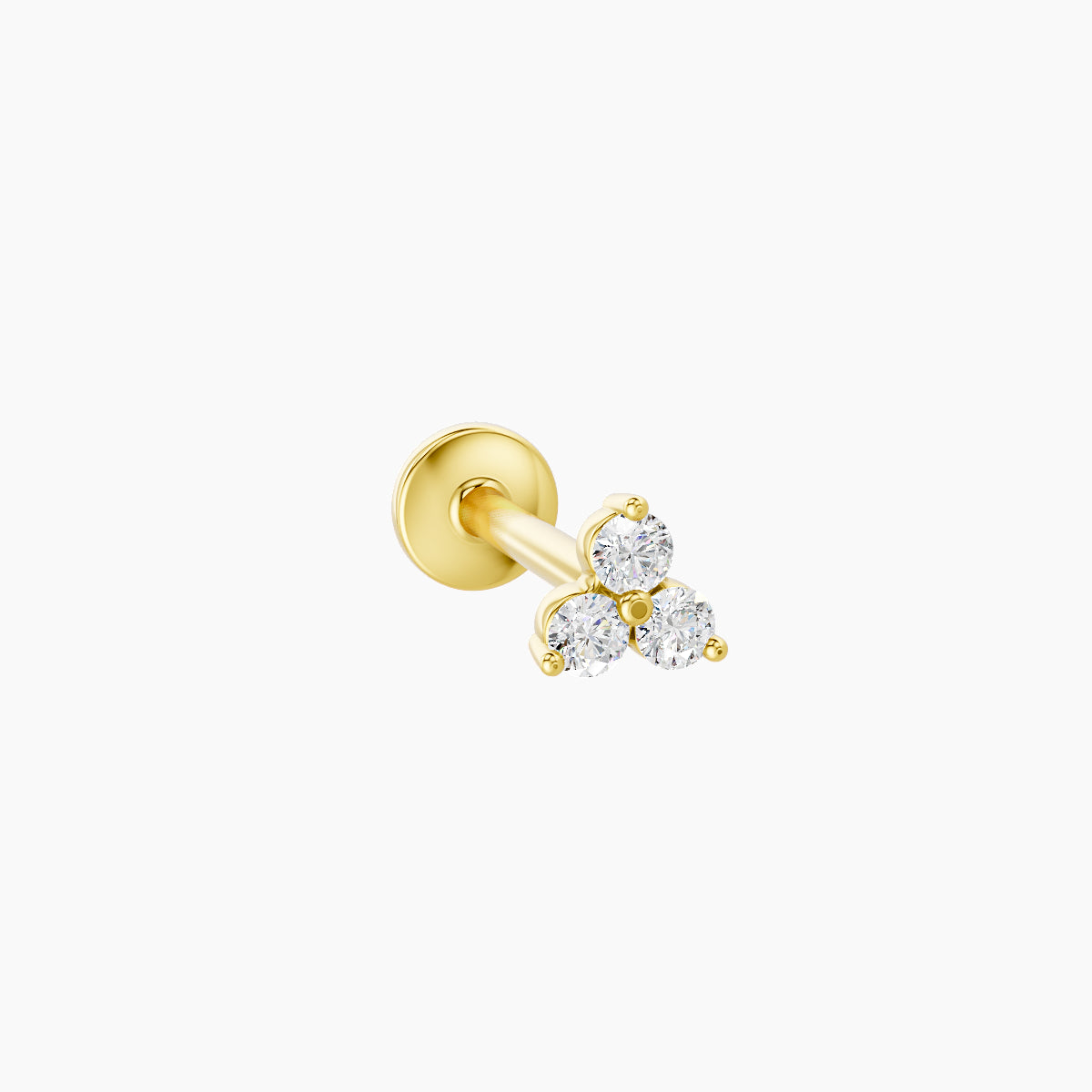
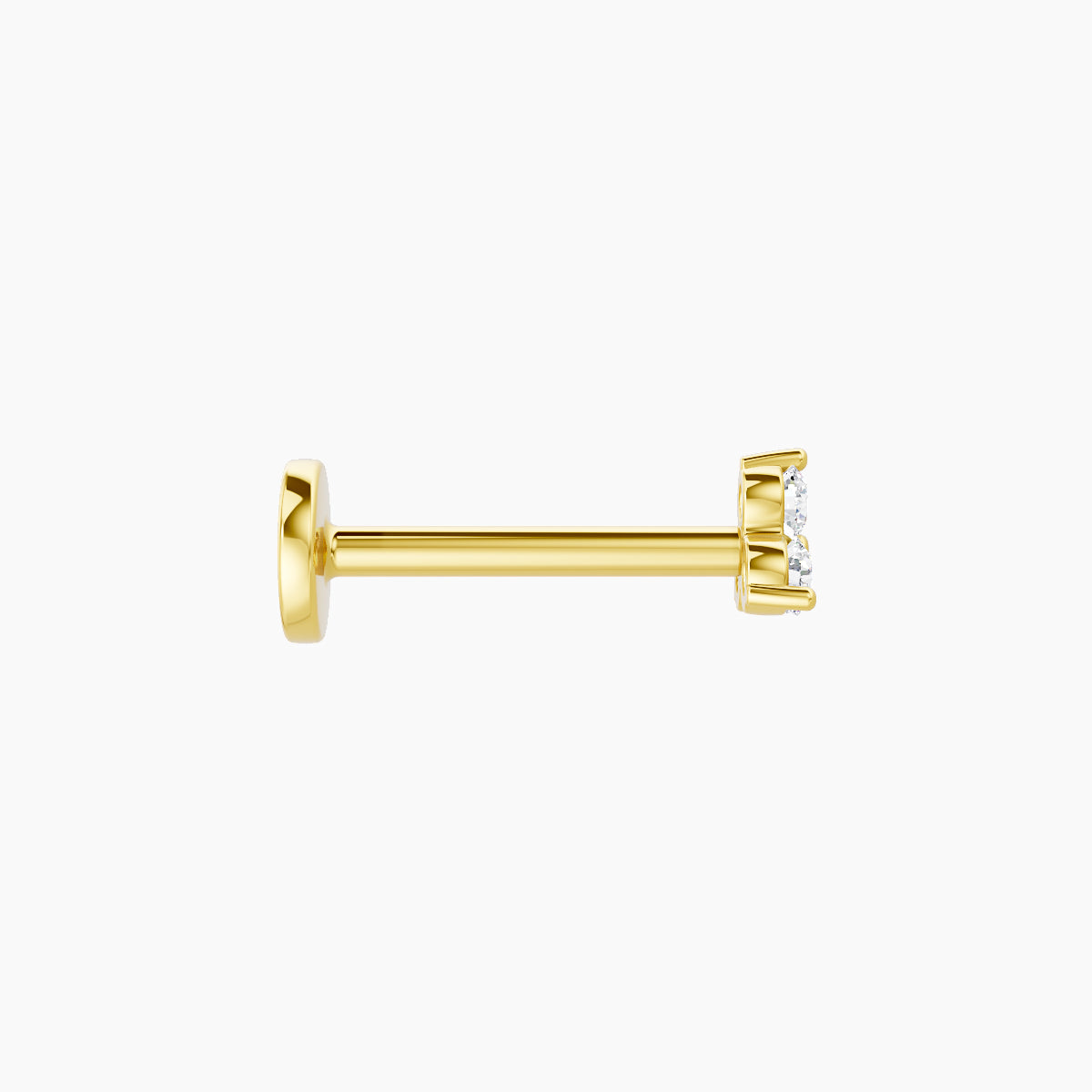
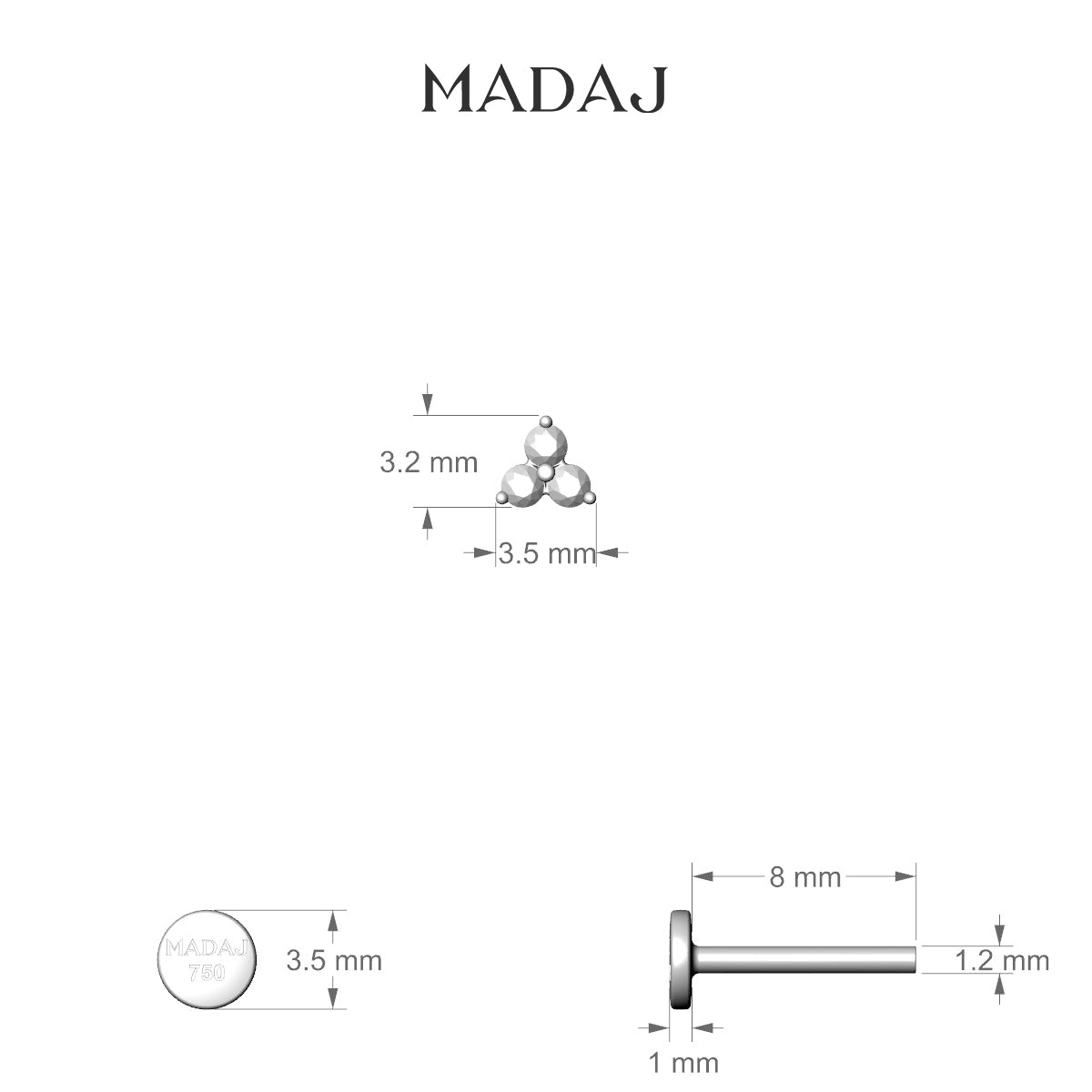
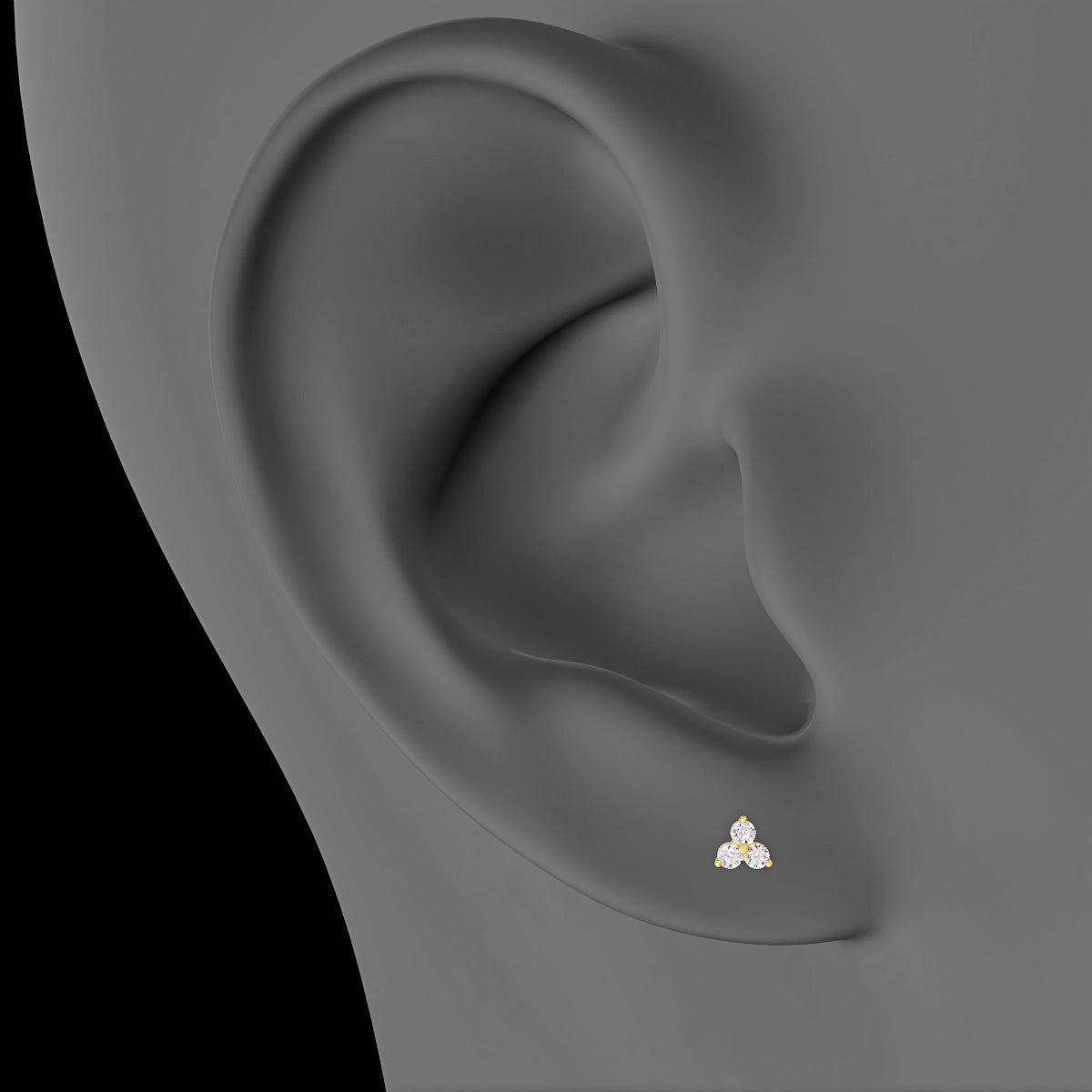
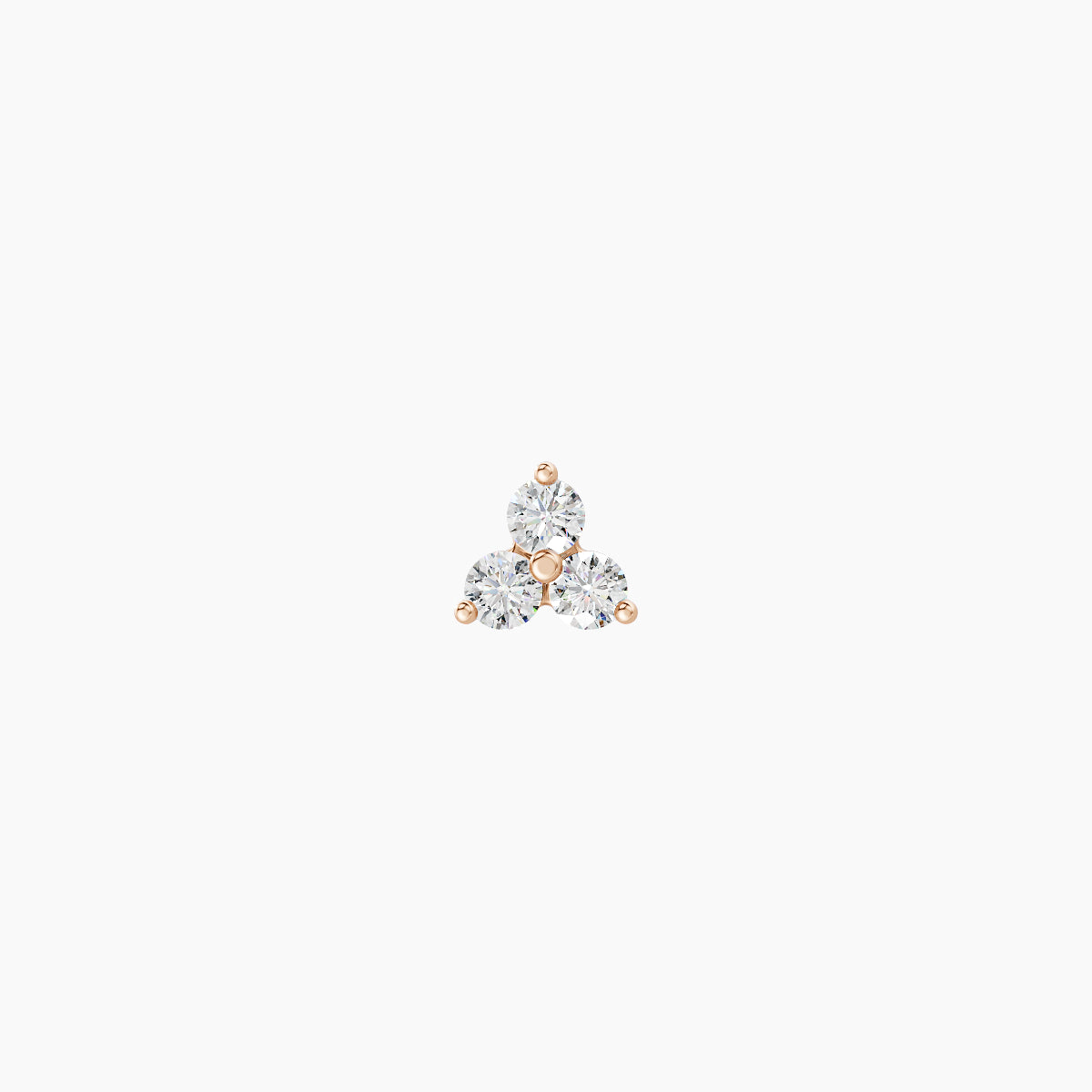
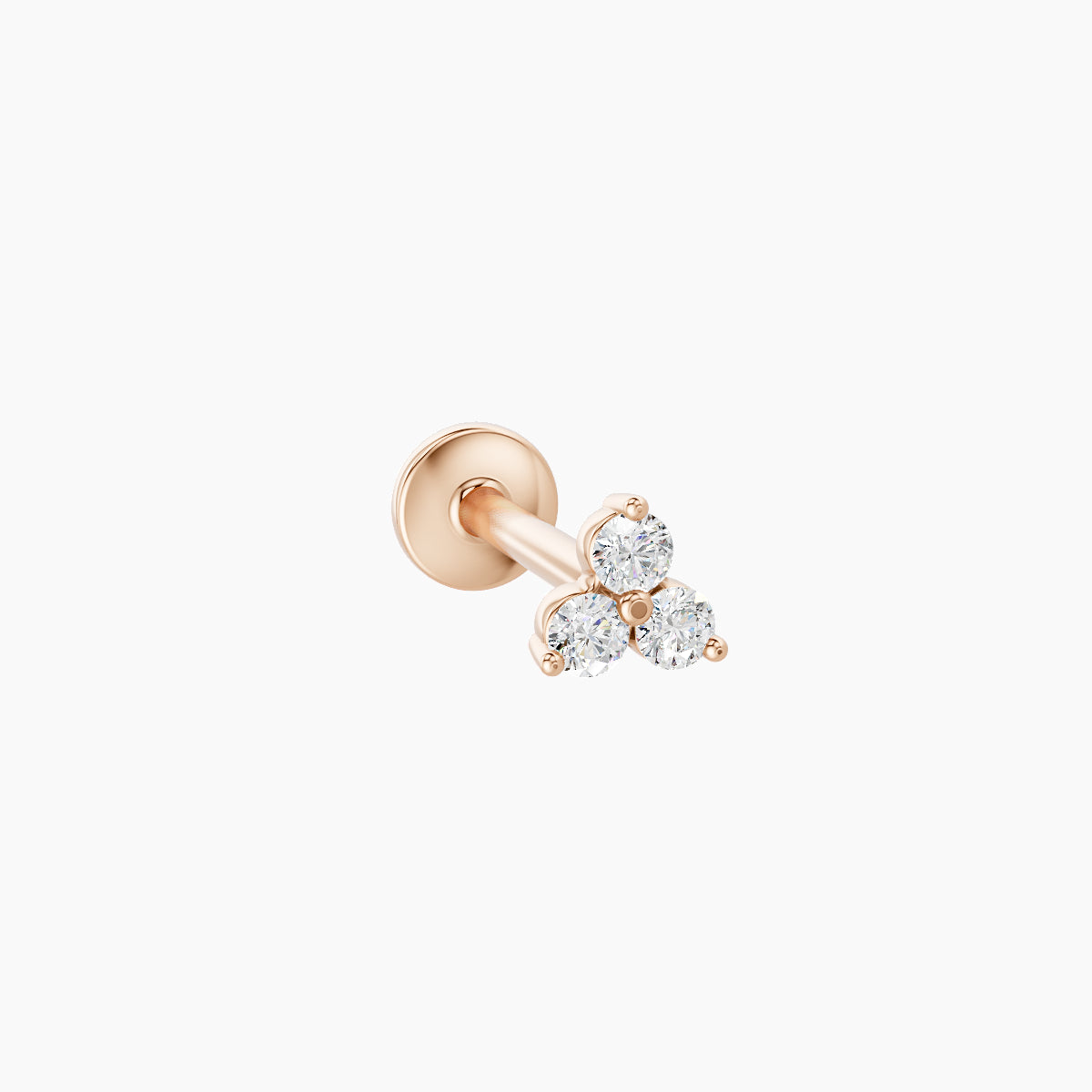
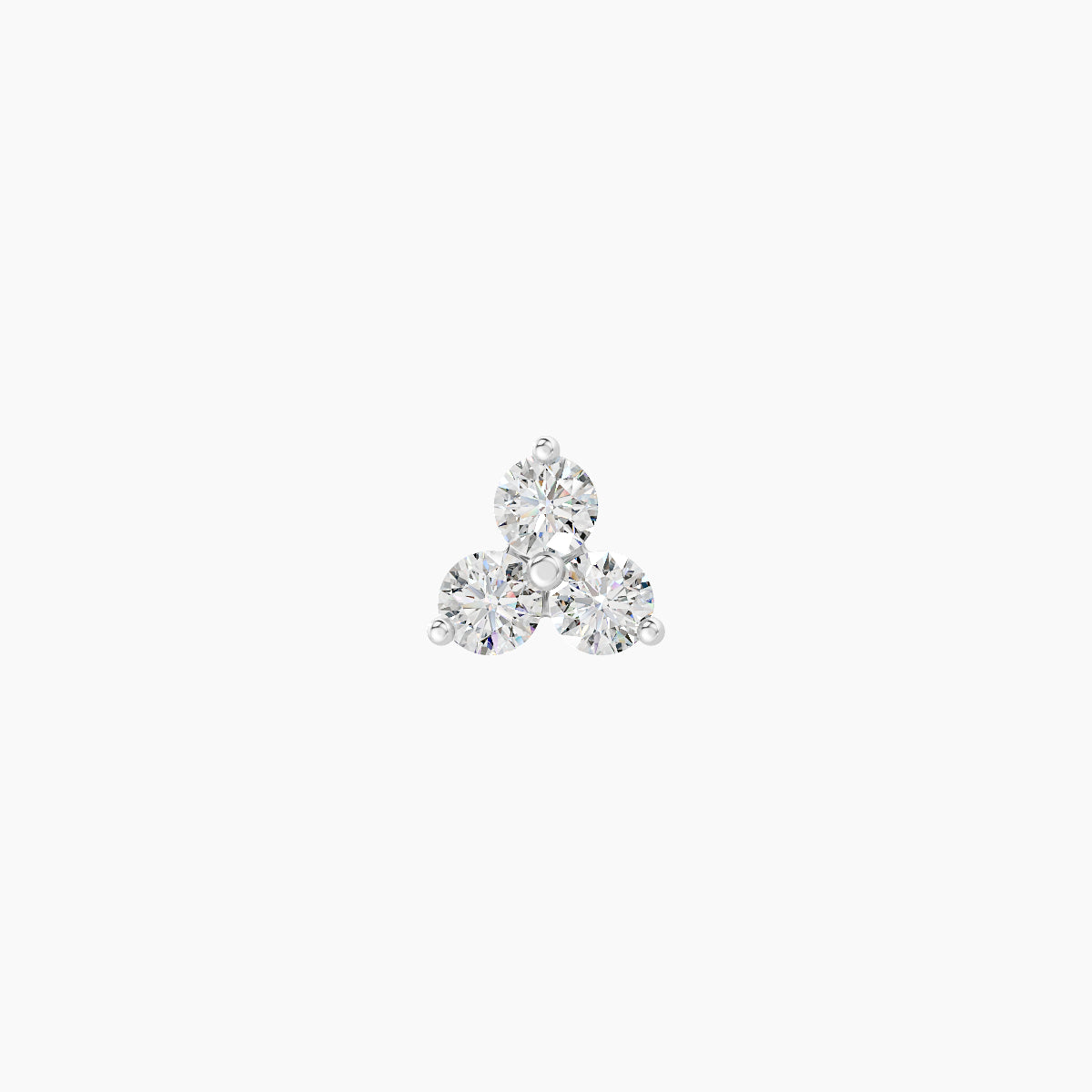
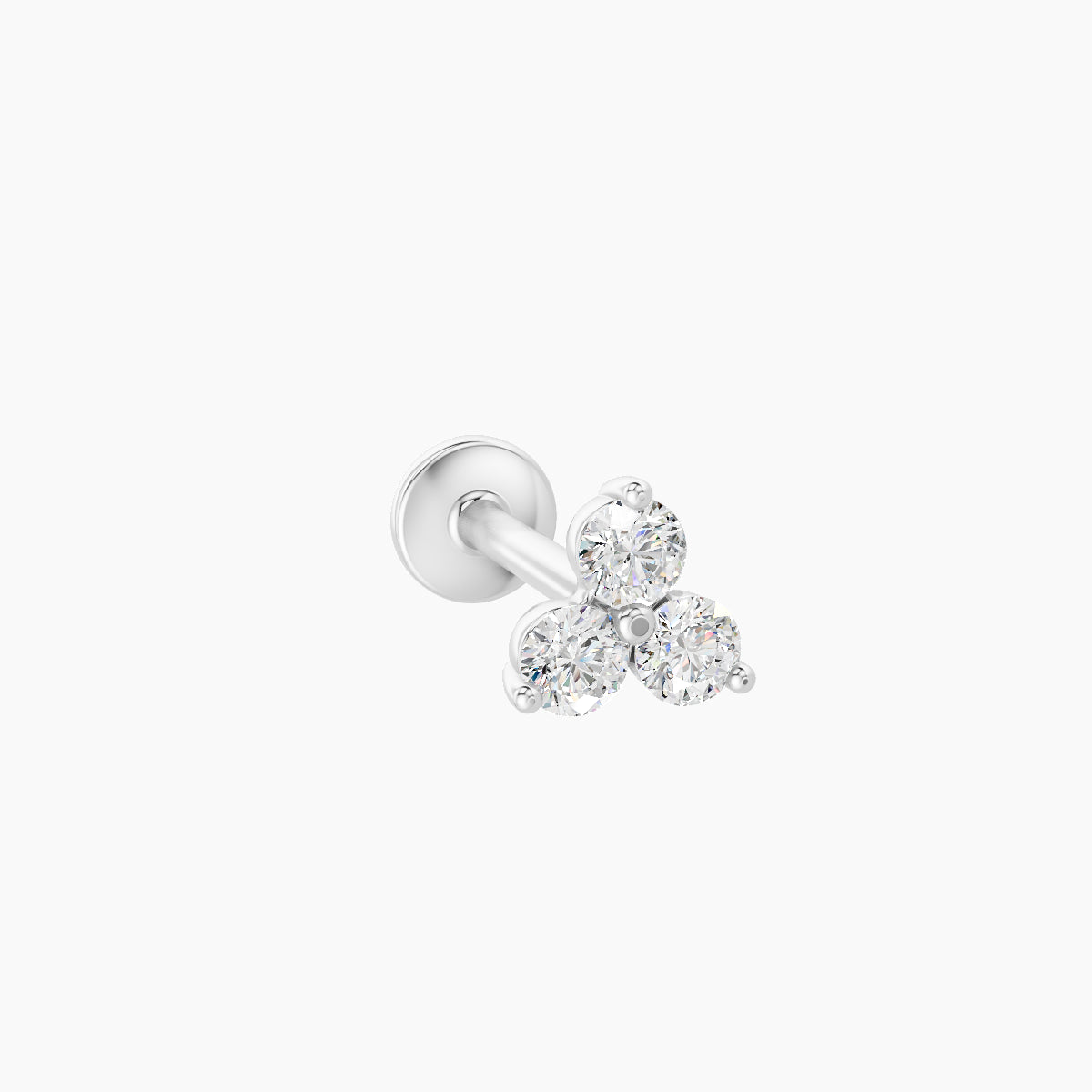
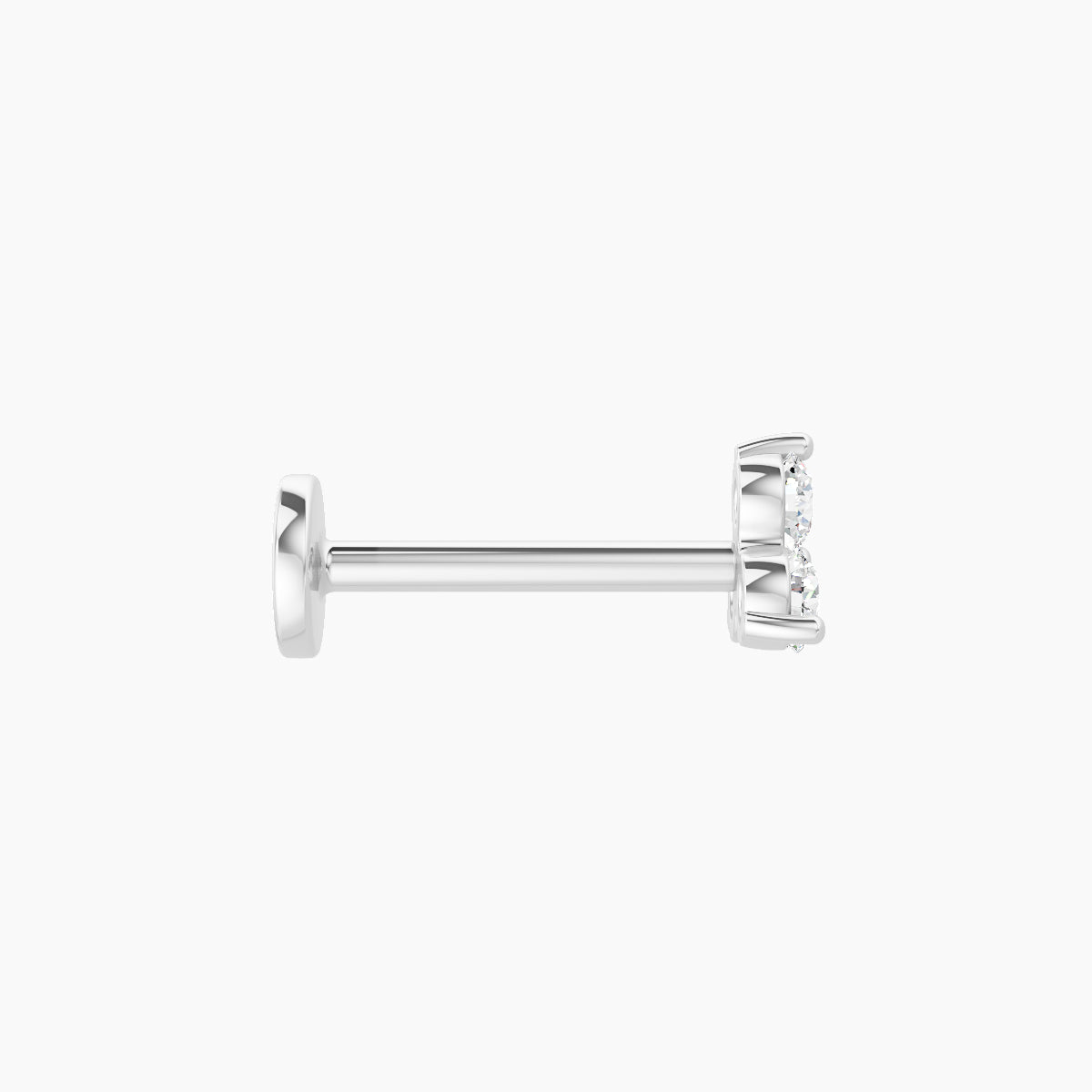
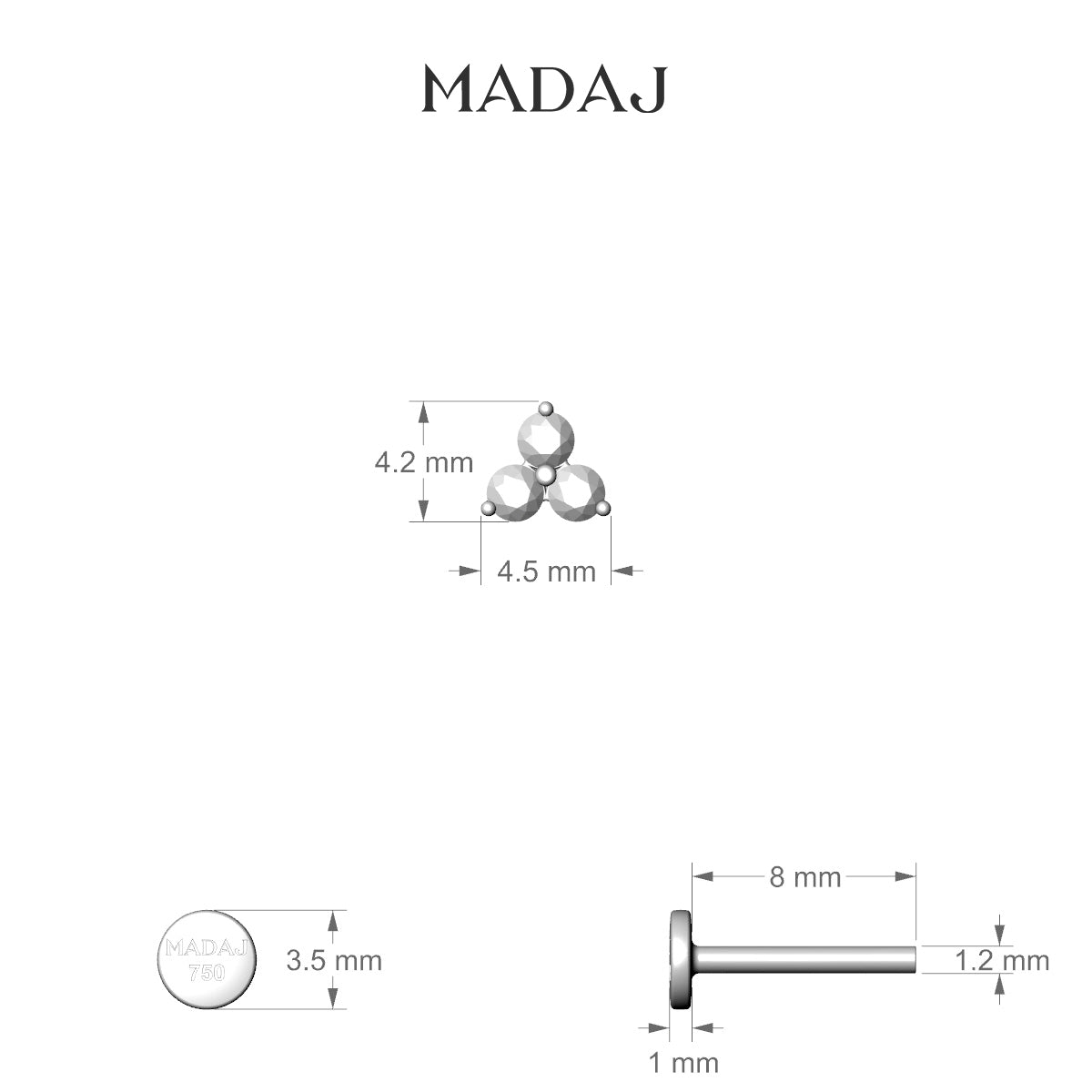
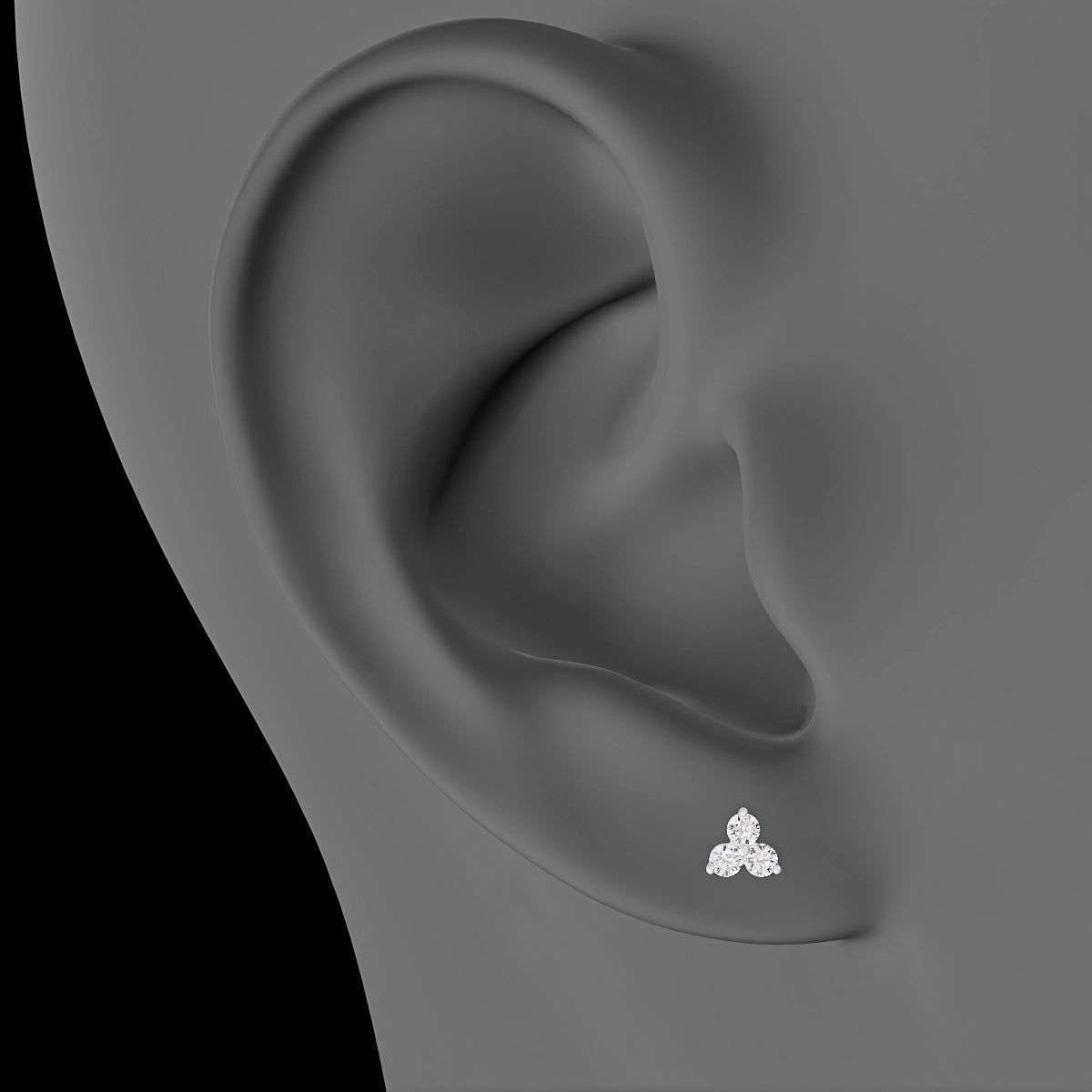
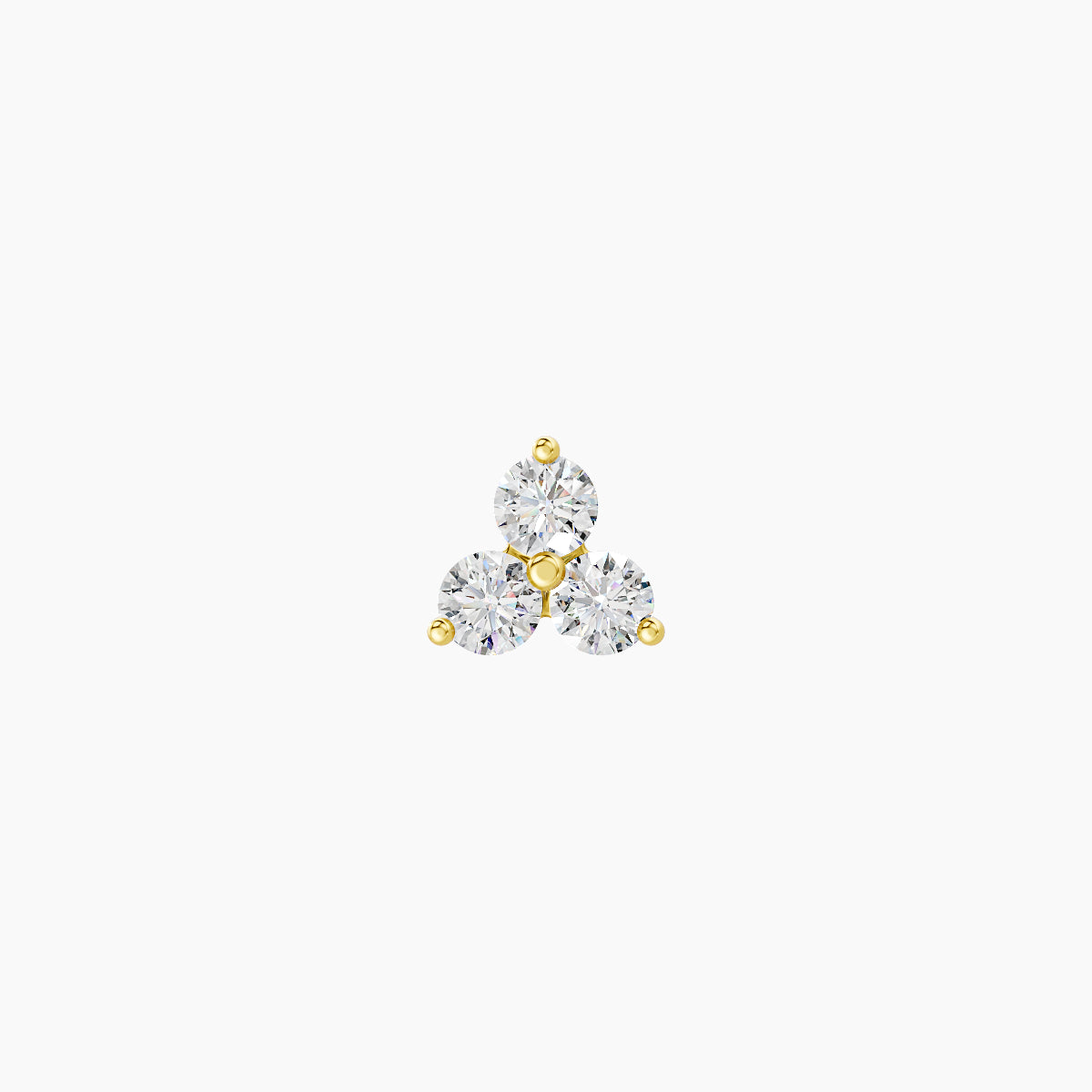
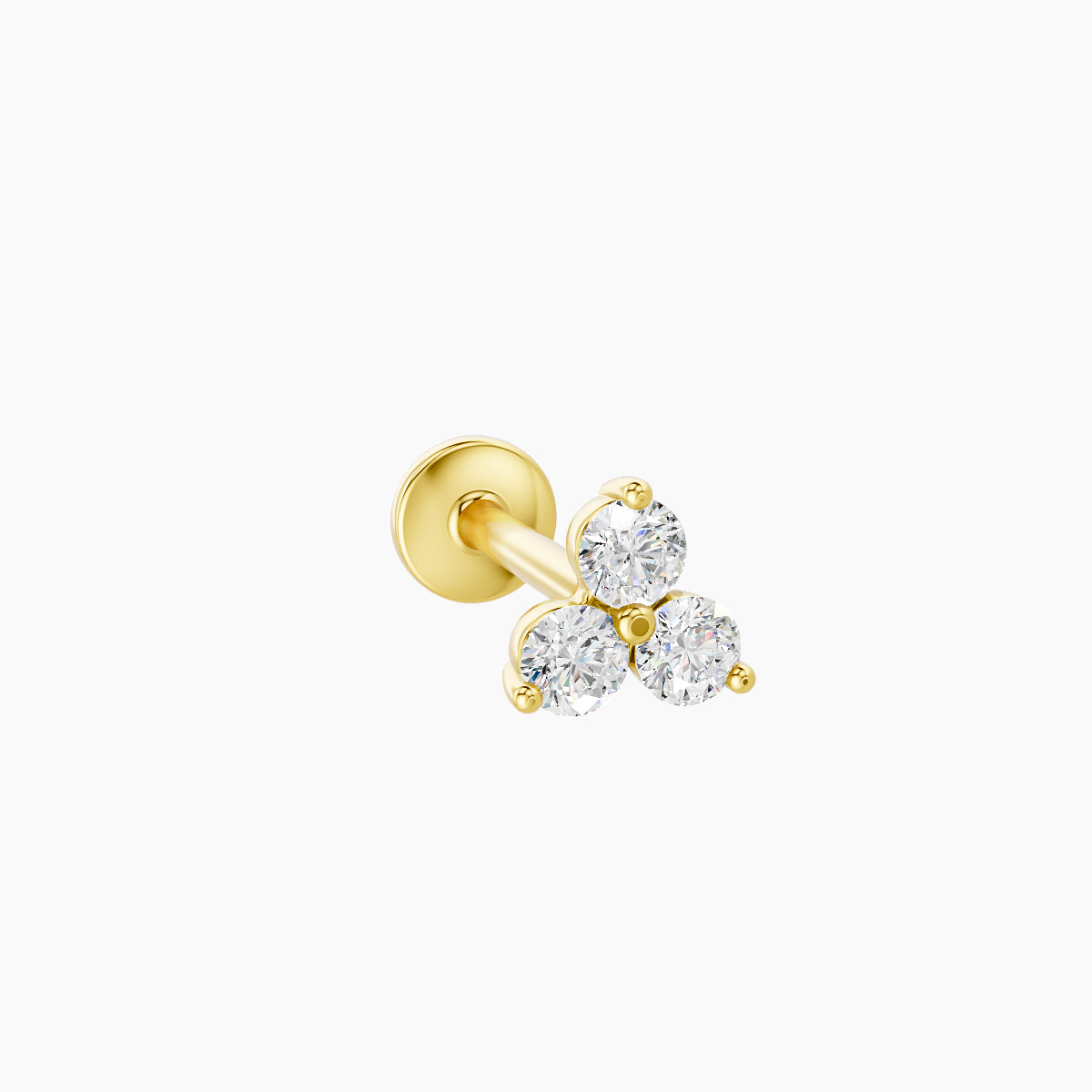
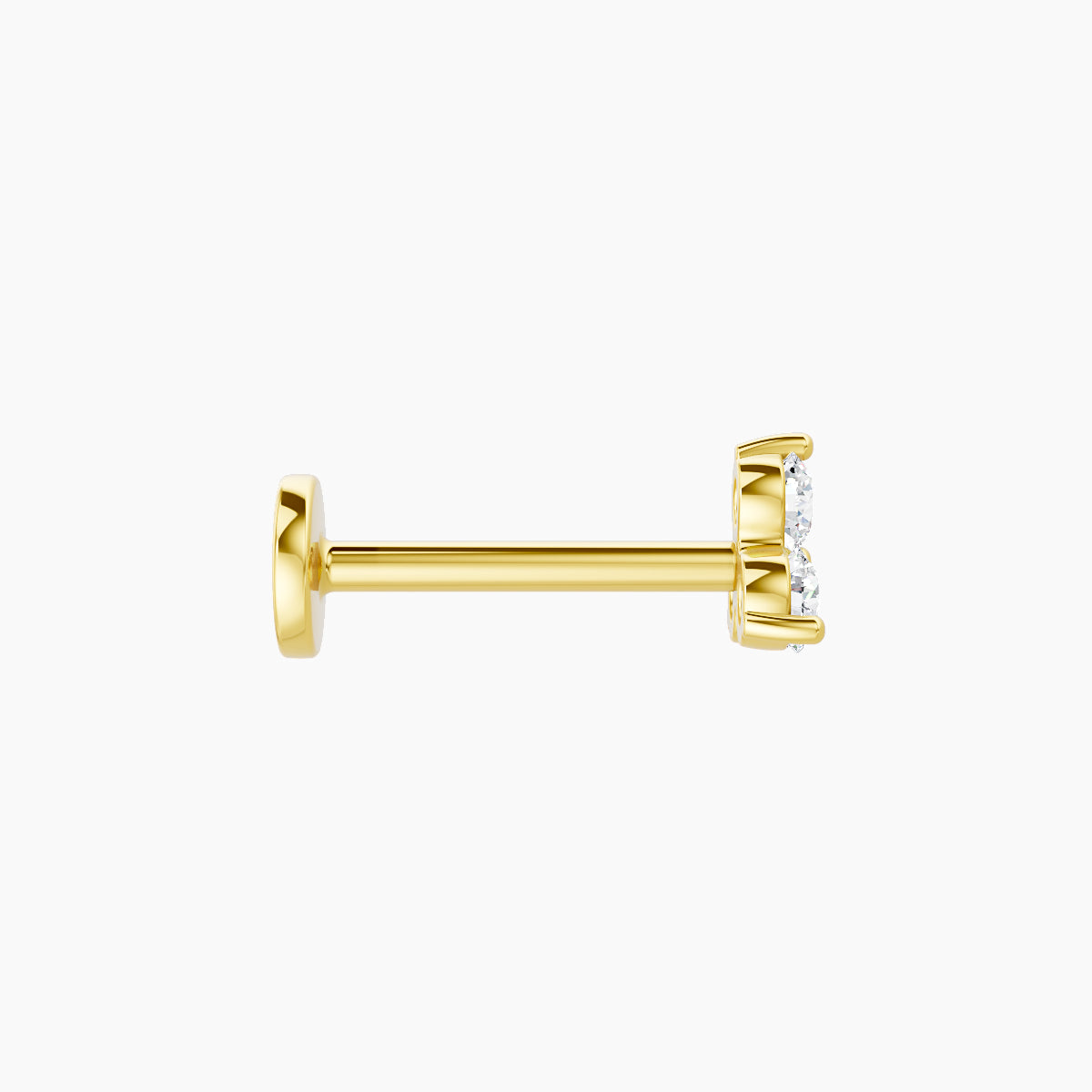
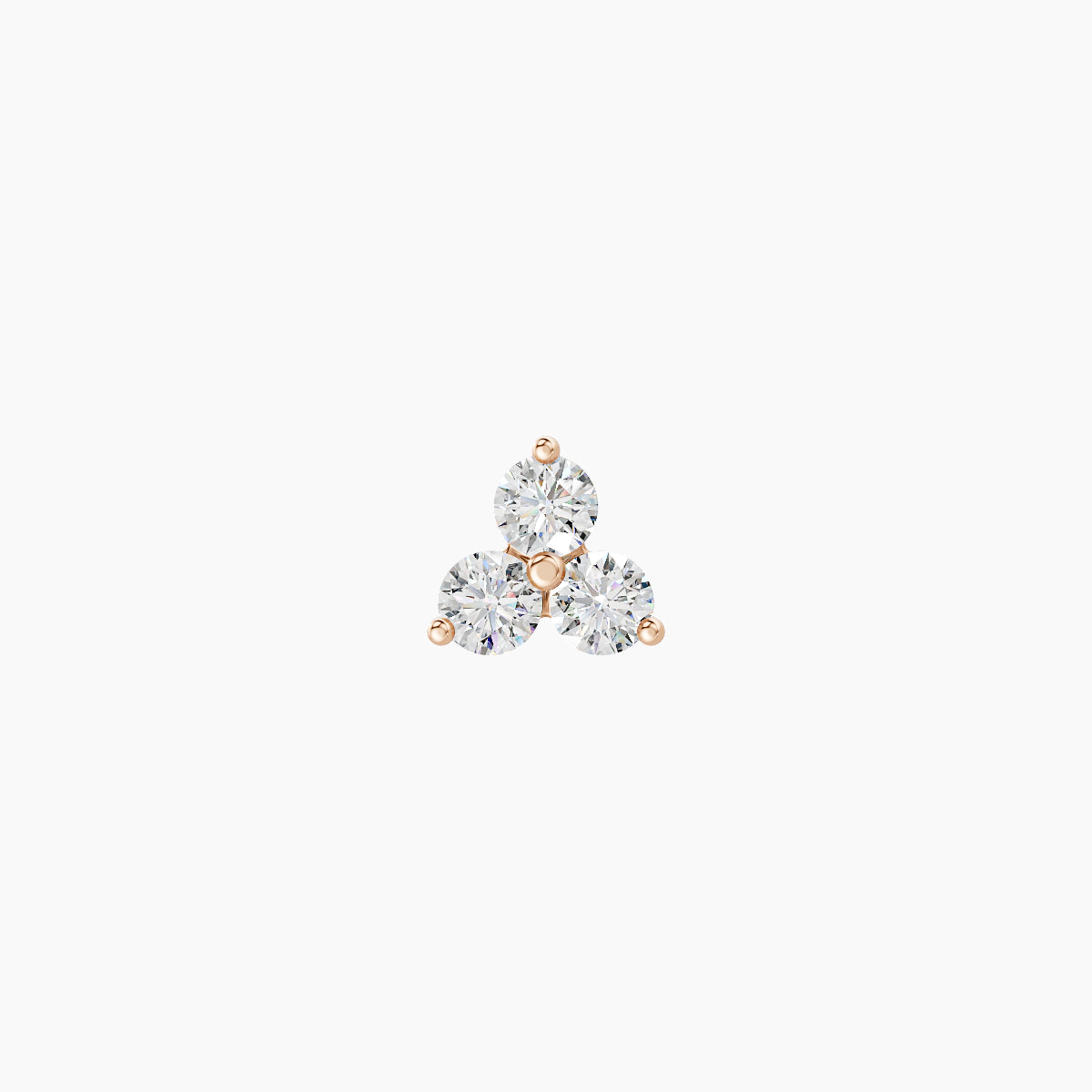
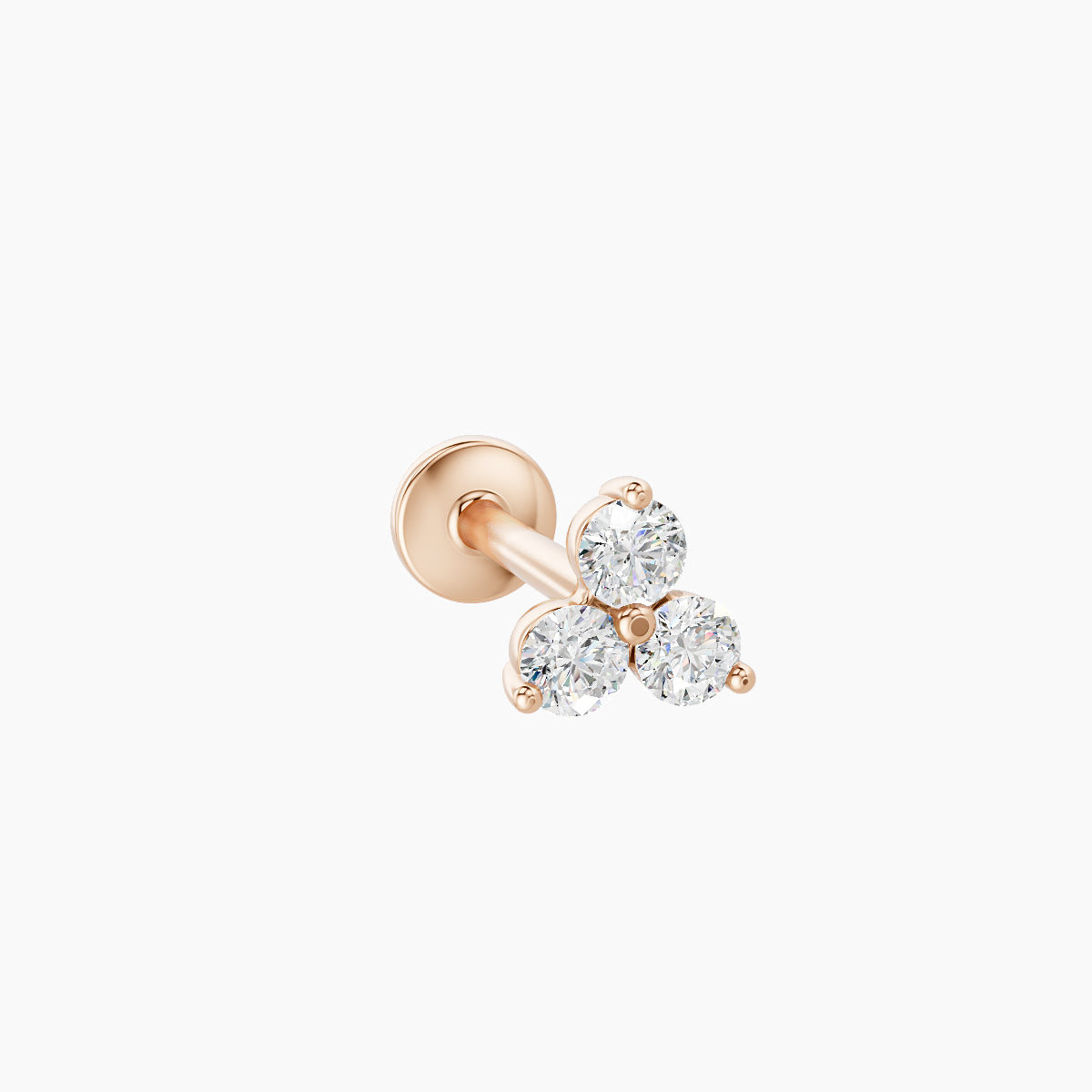
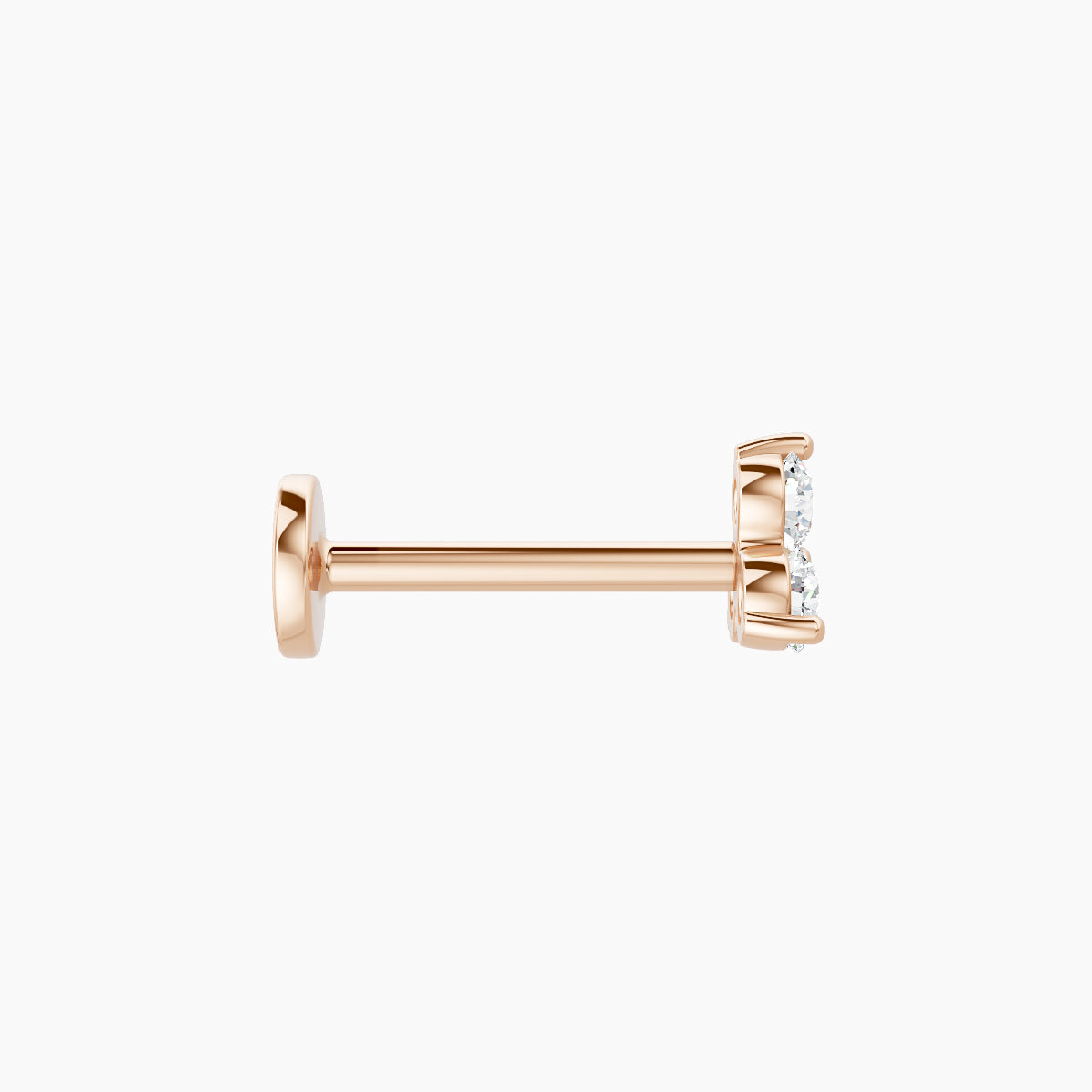
The MADAJ Felicity Long Diamond Piercing
TYPES
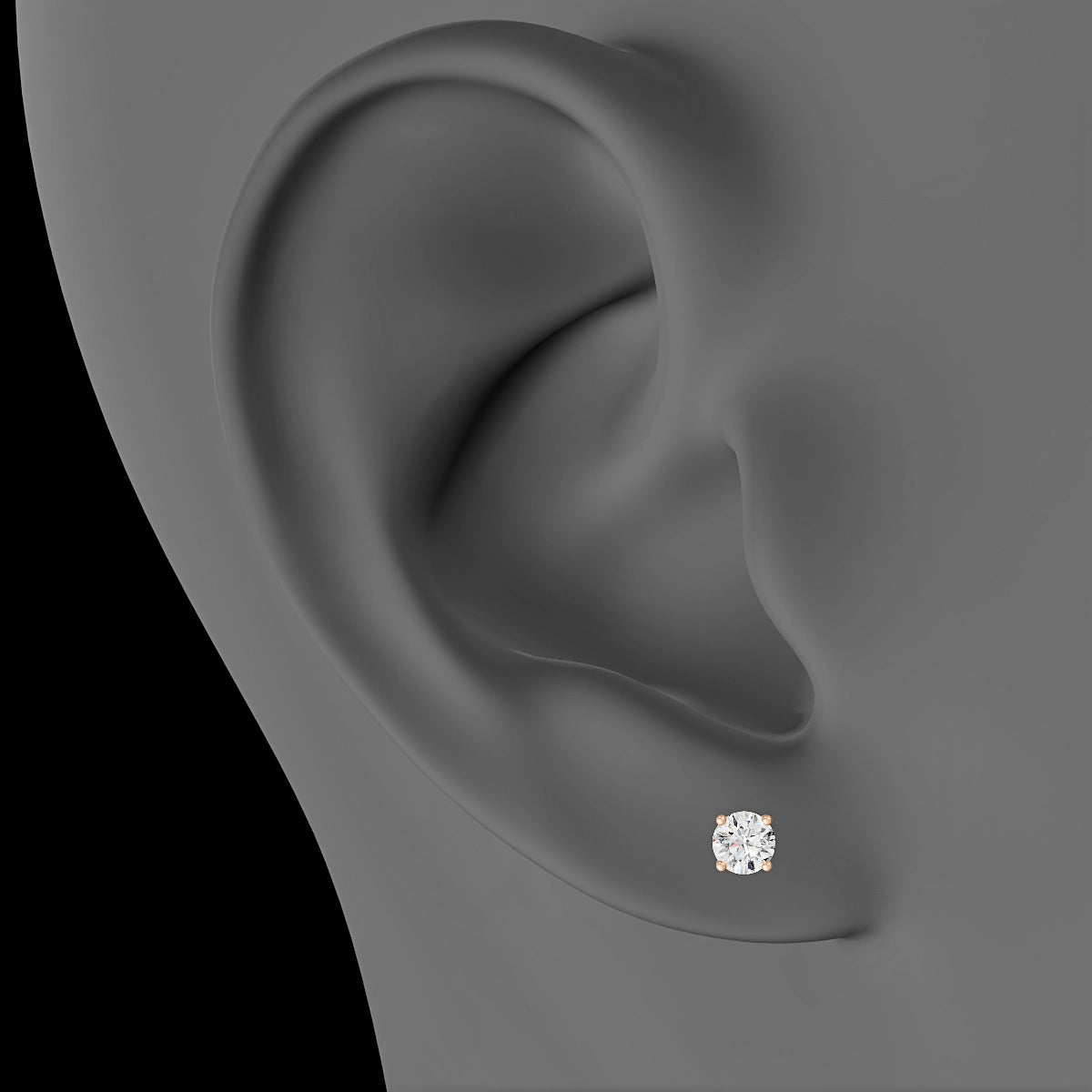
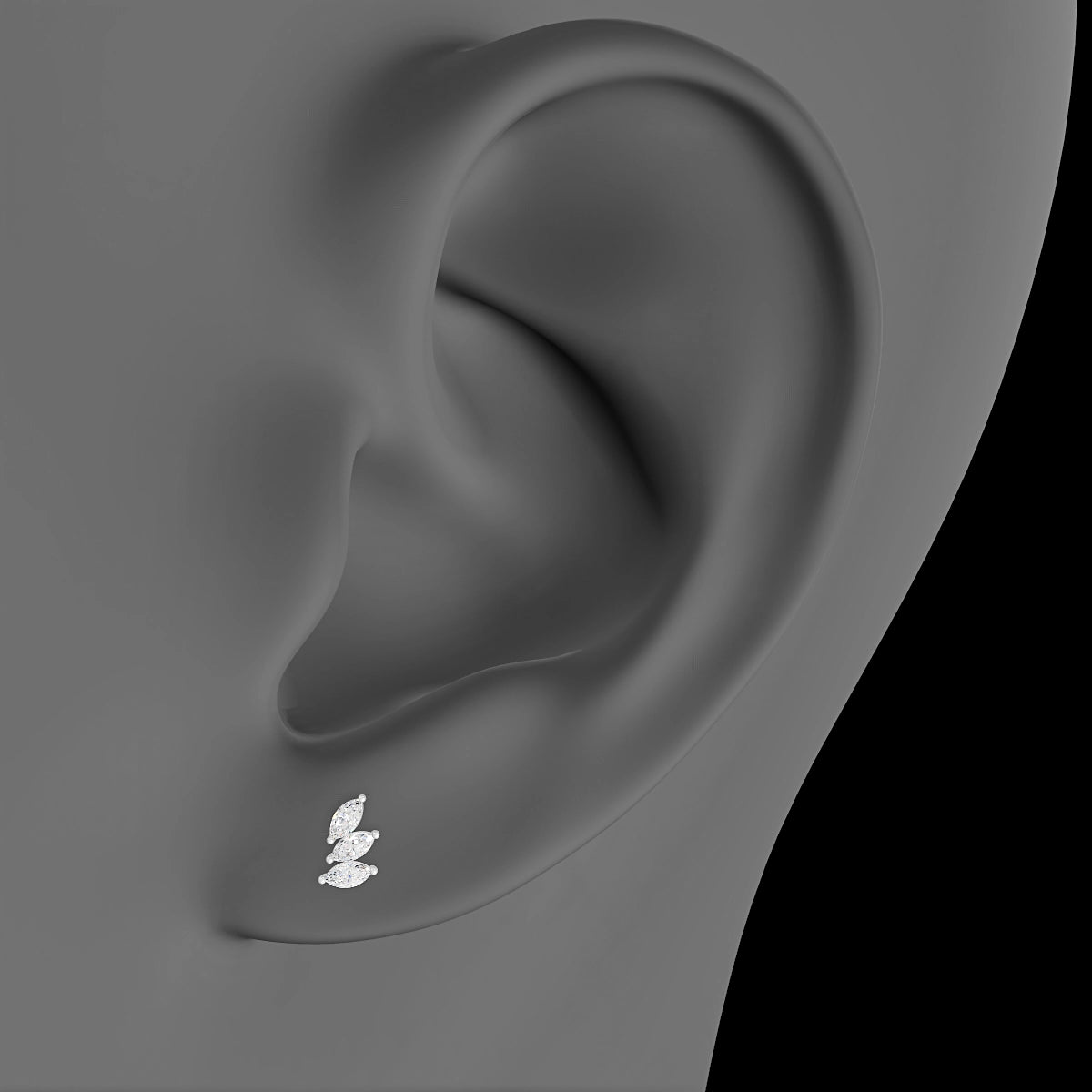
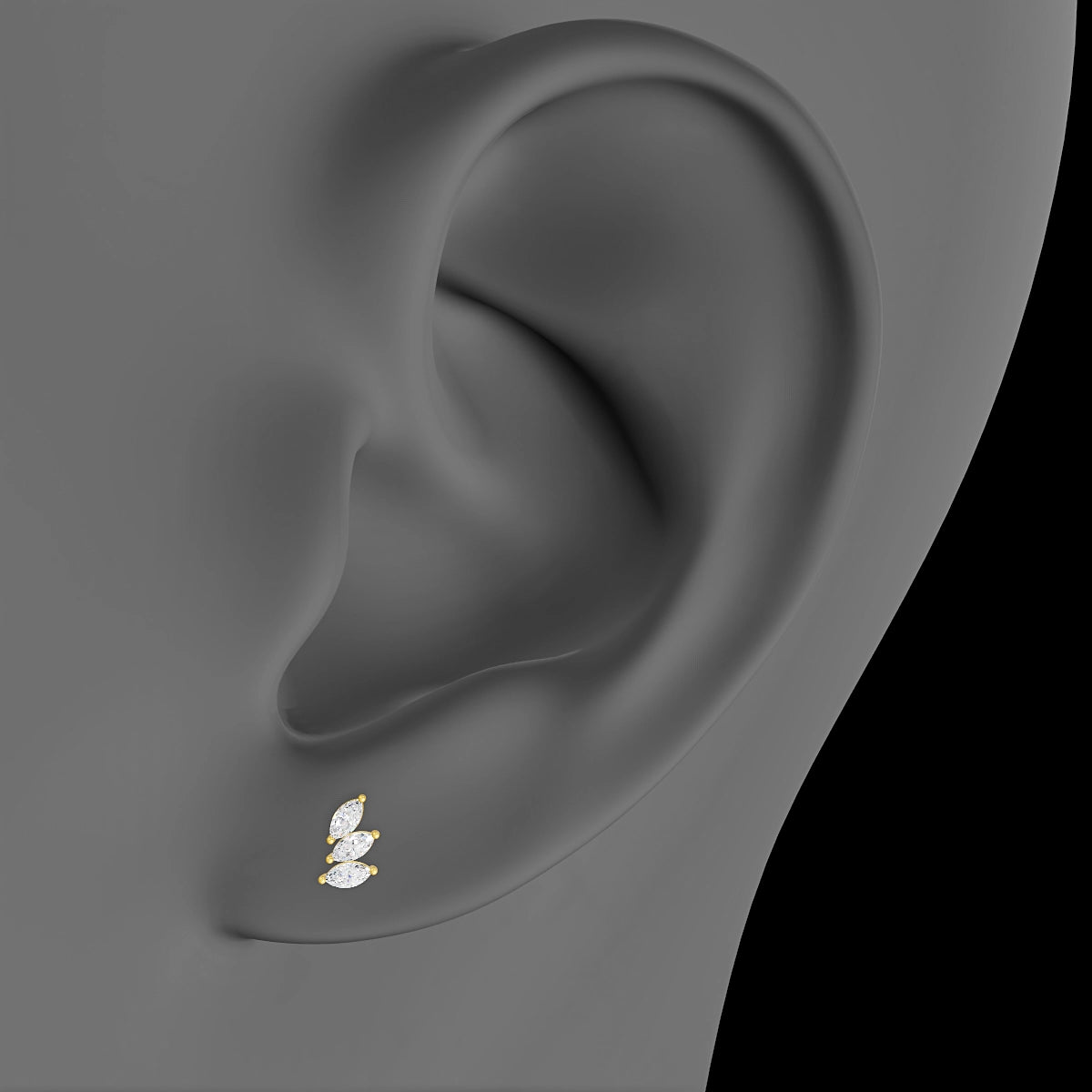
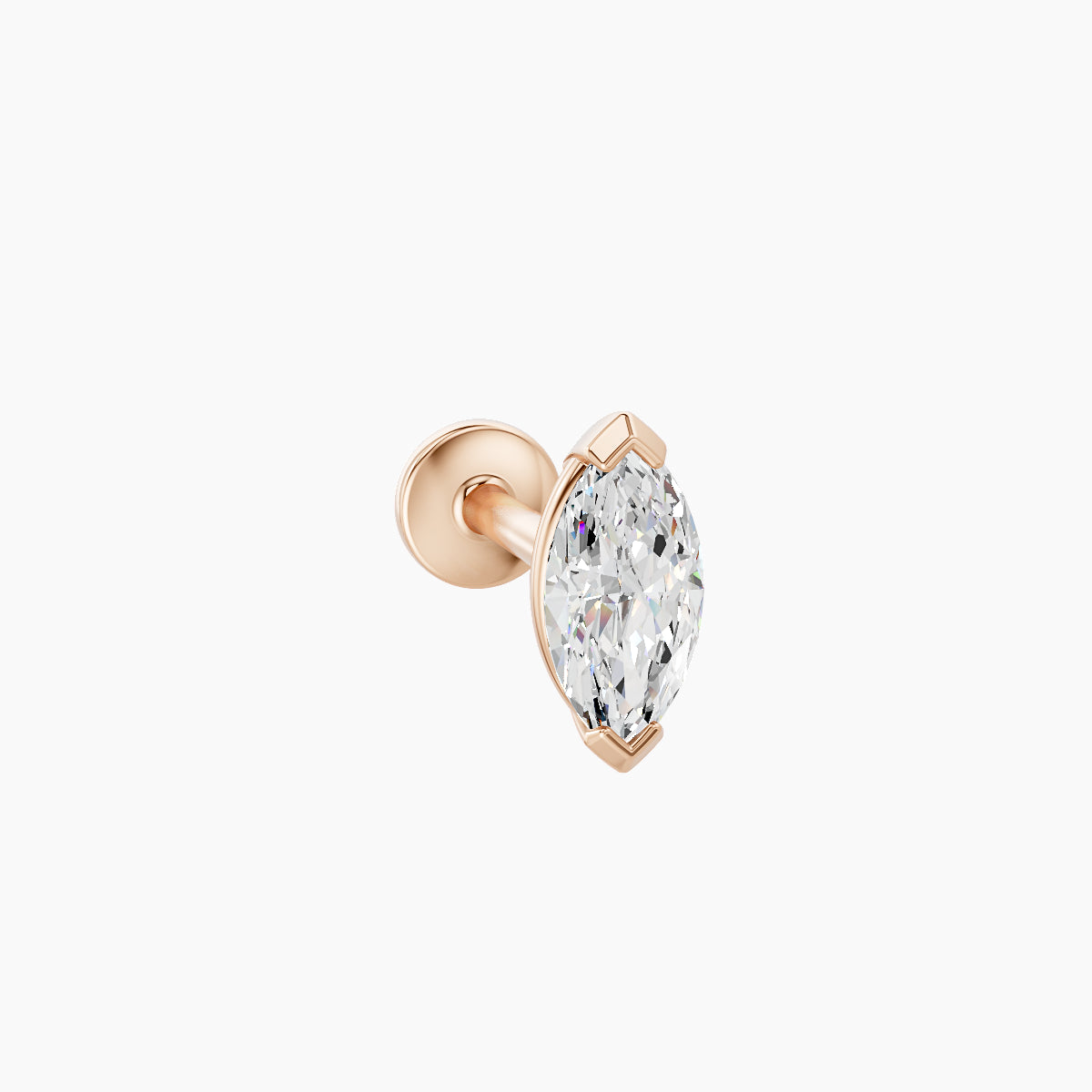
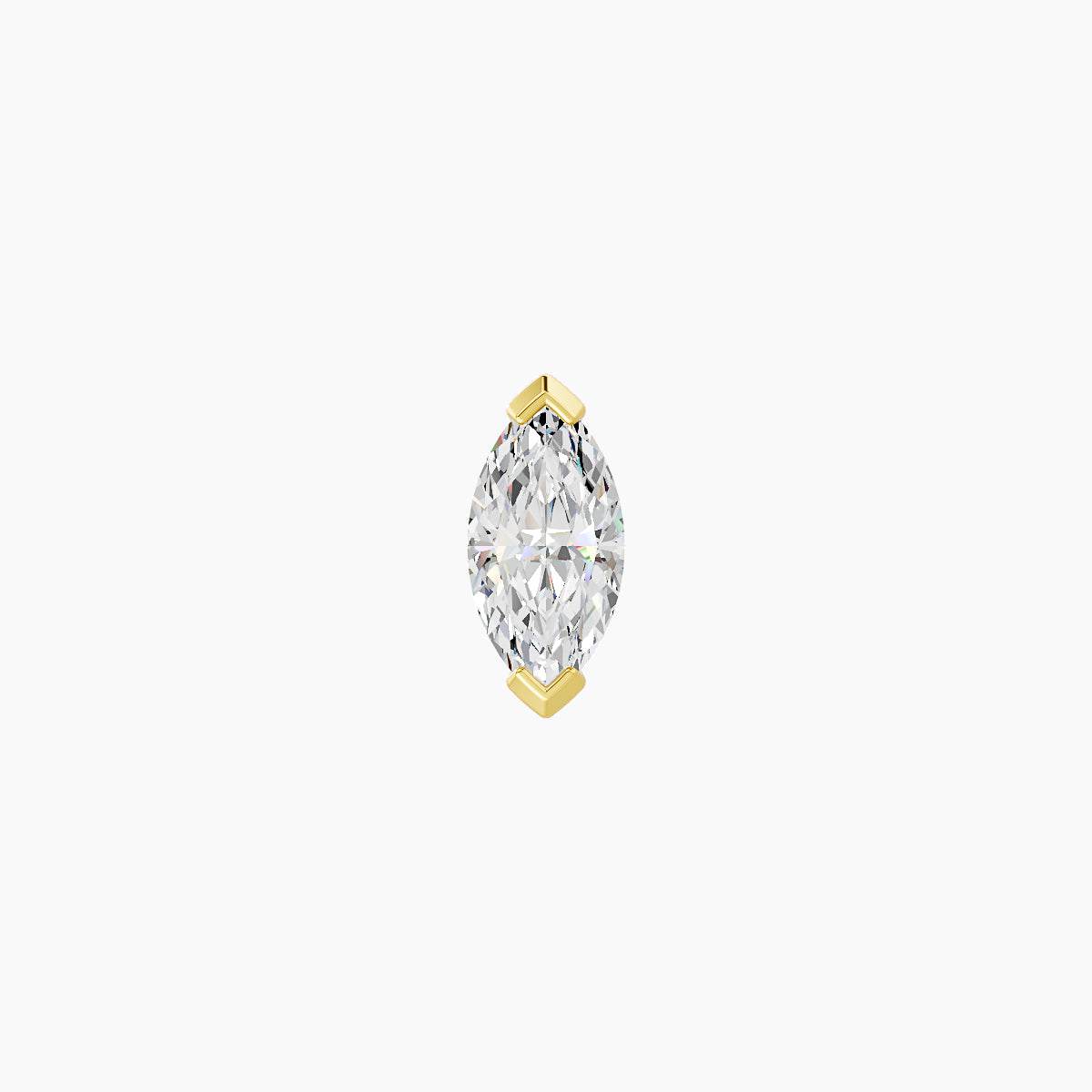
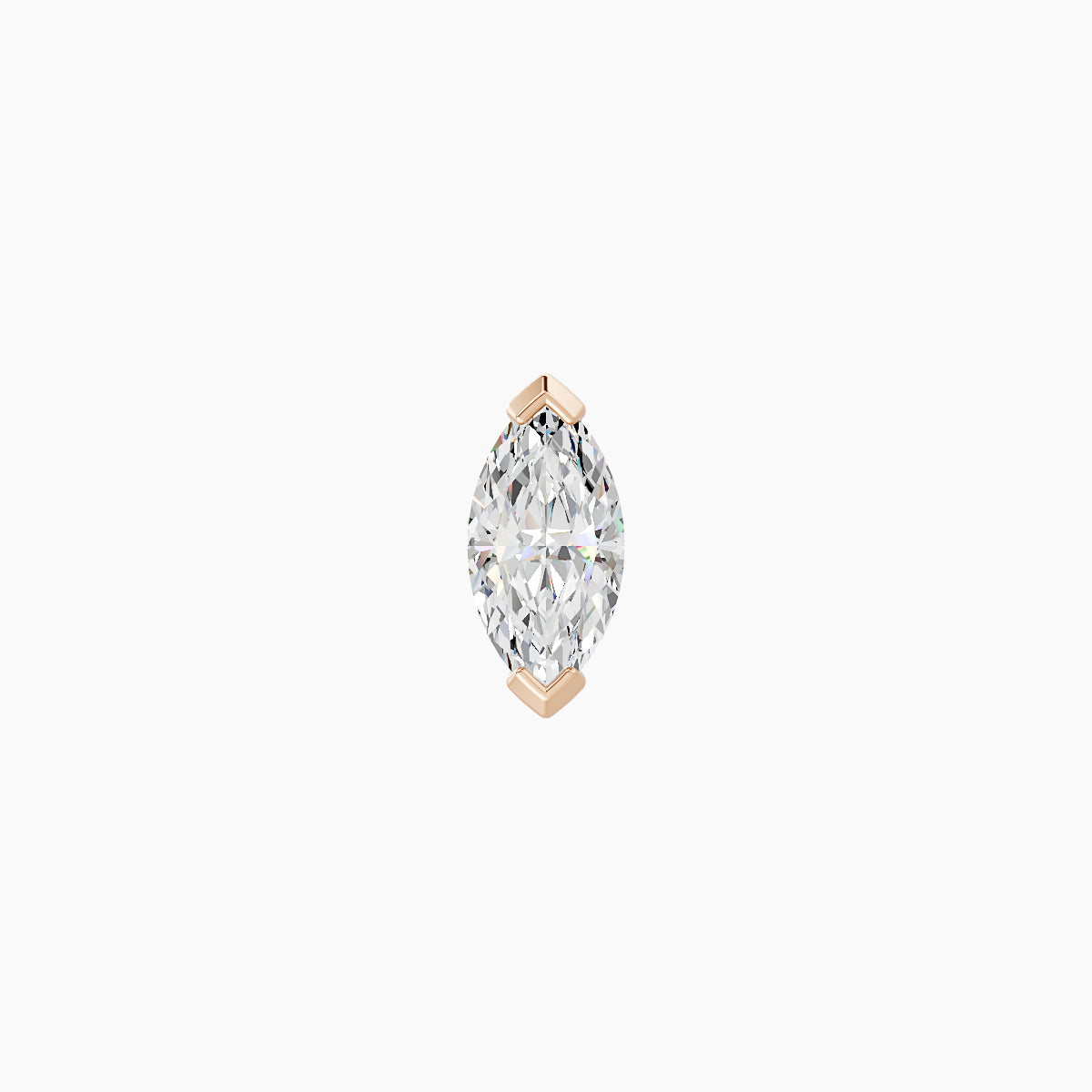
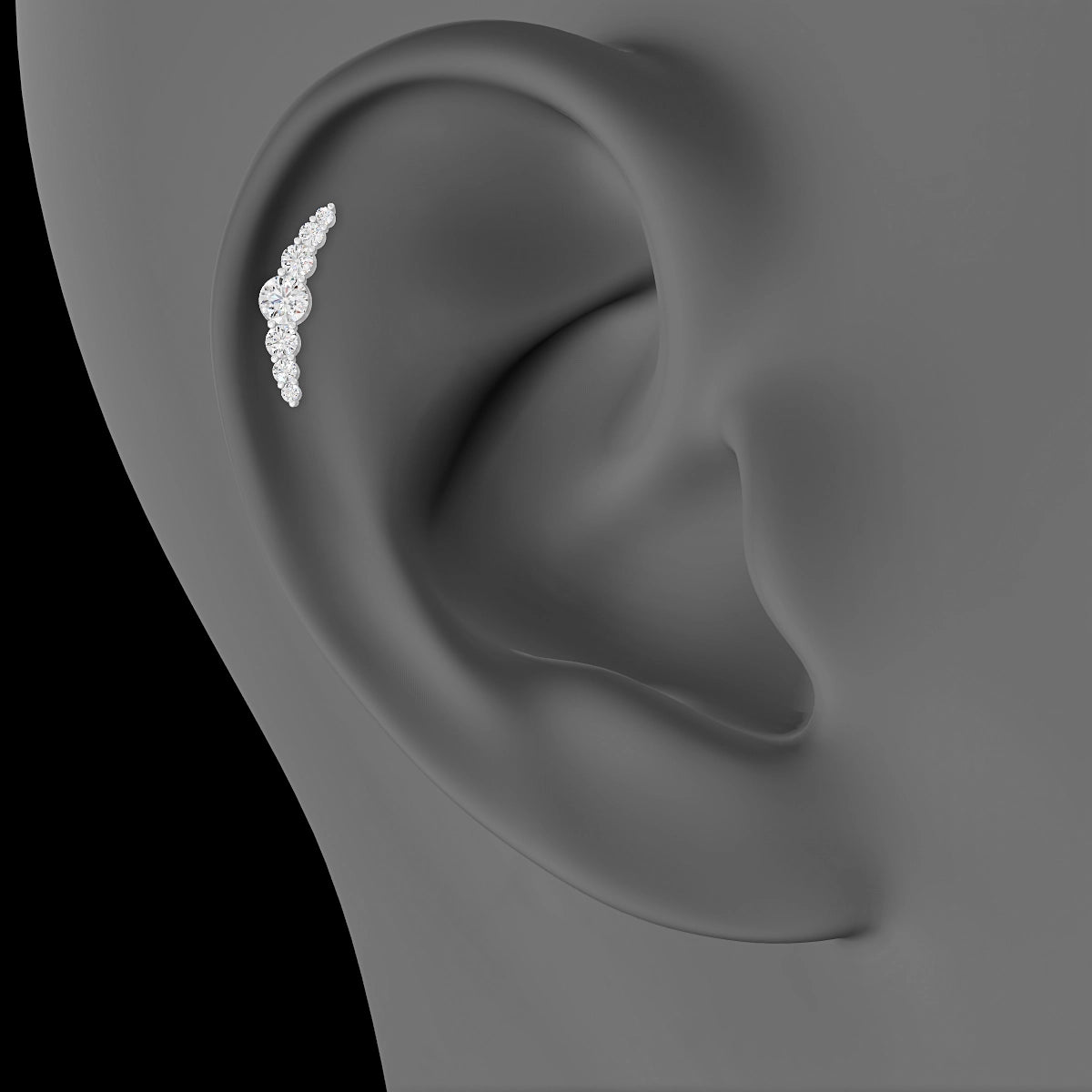
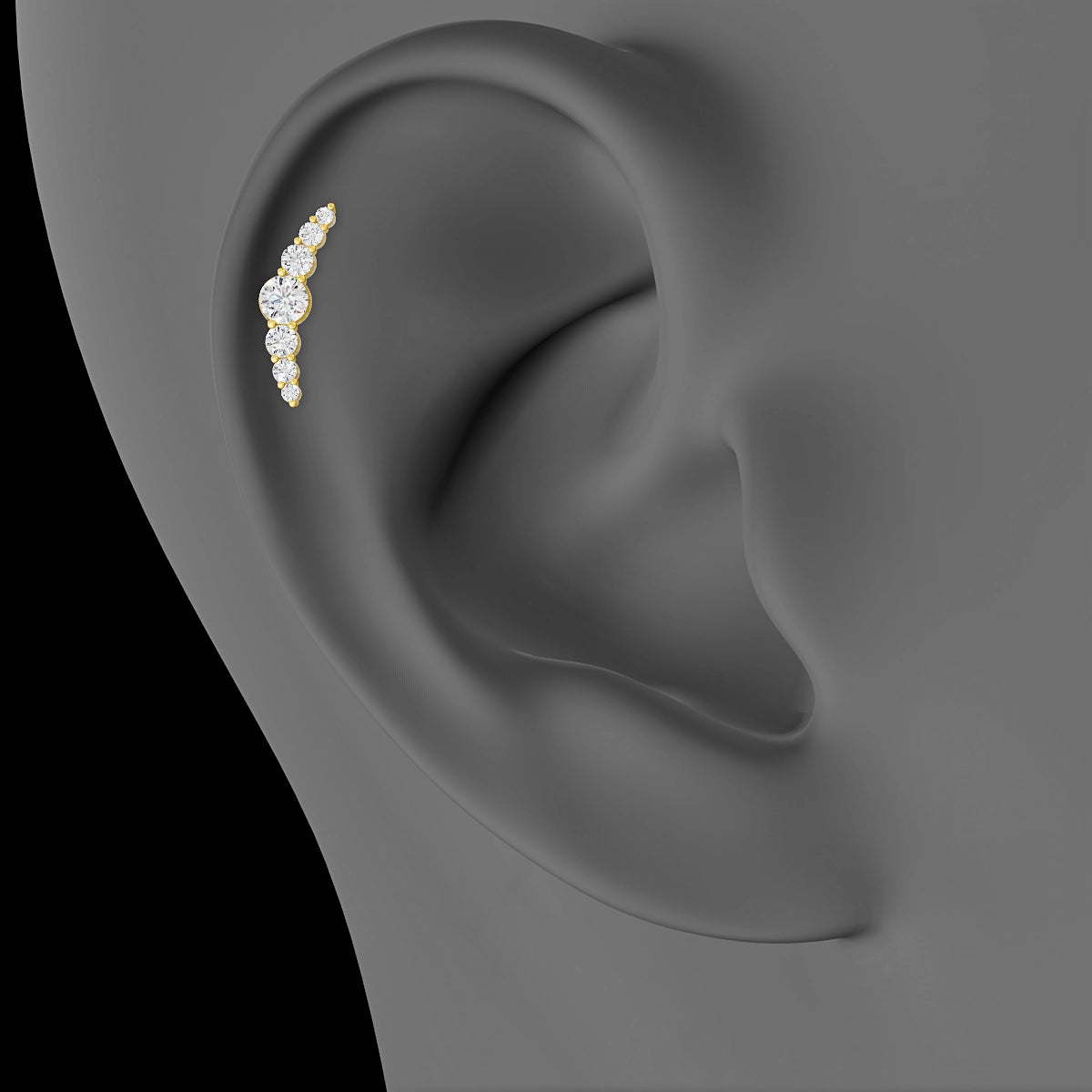
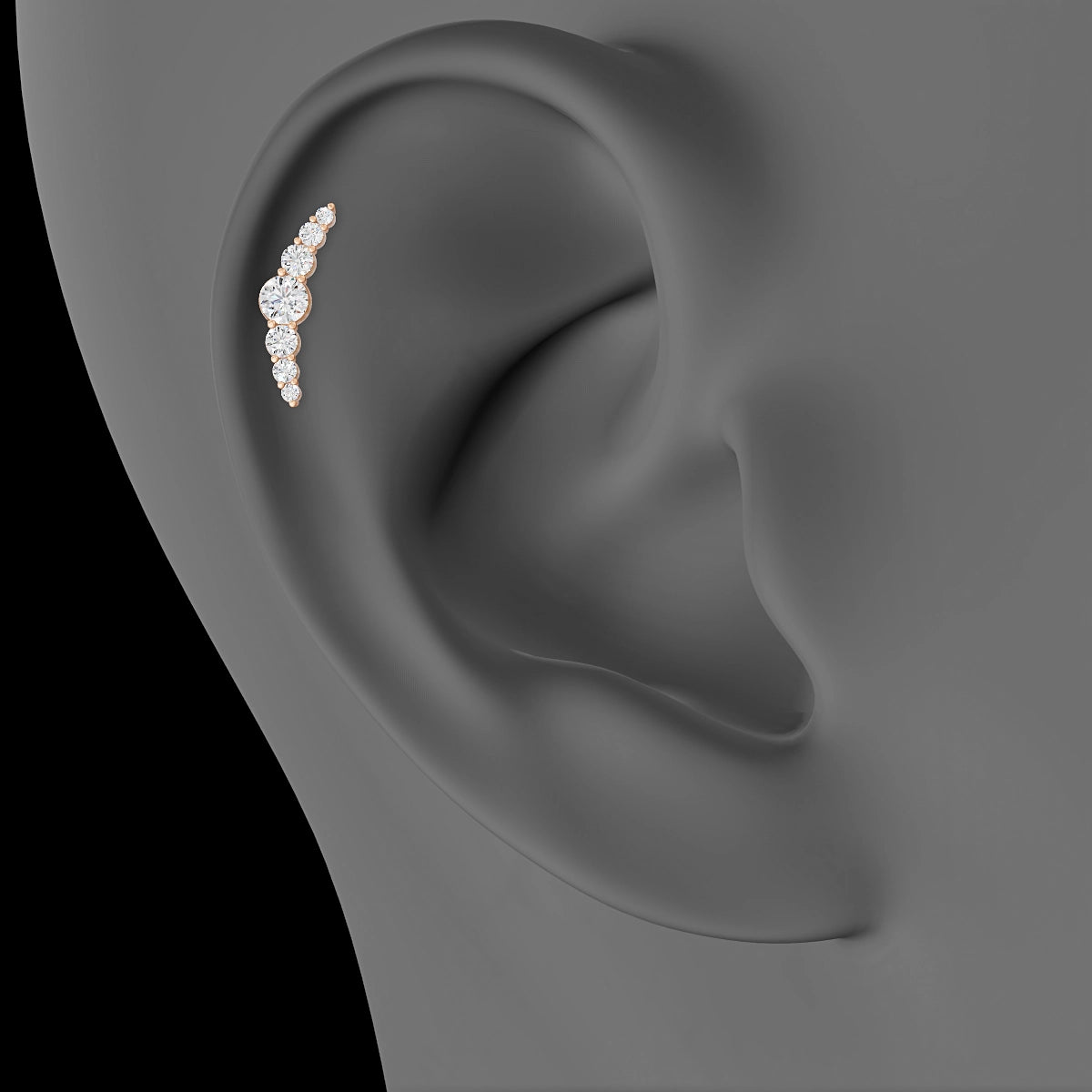
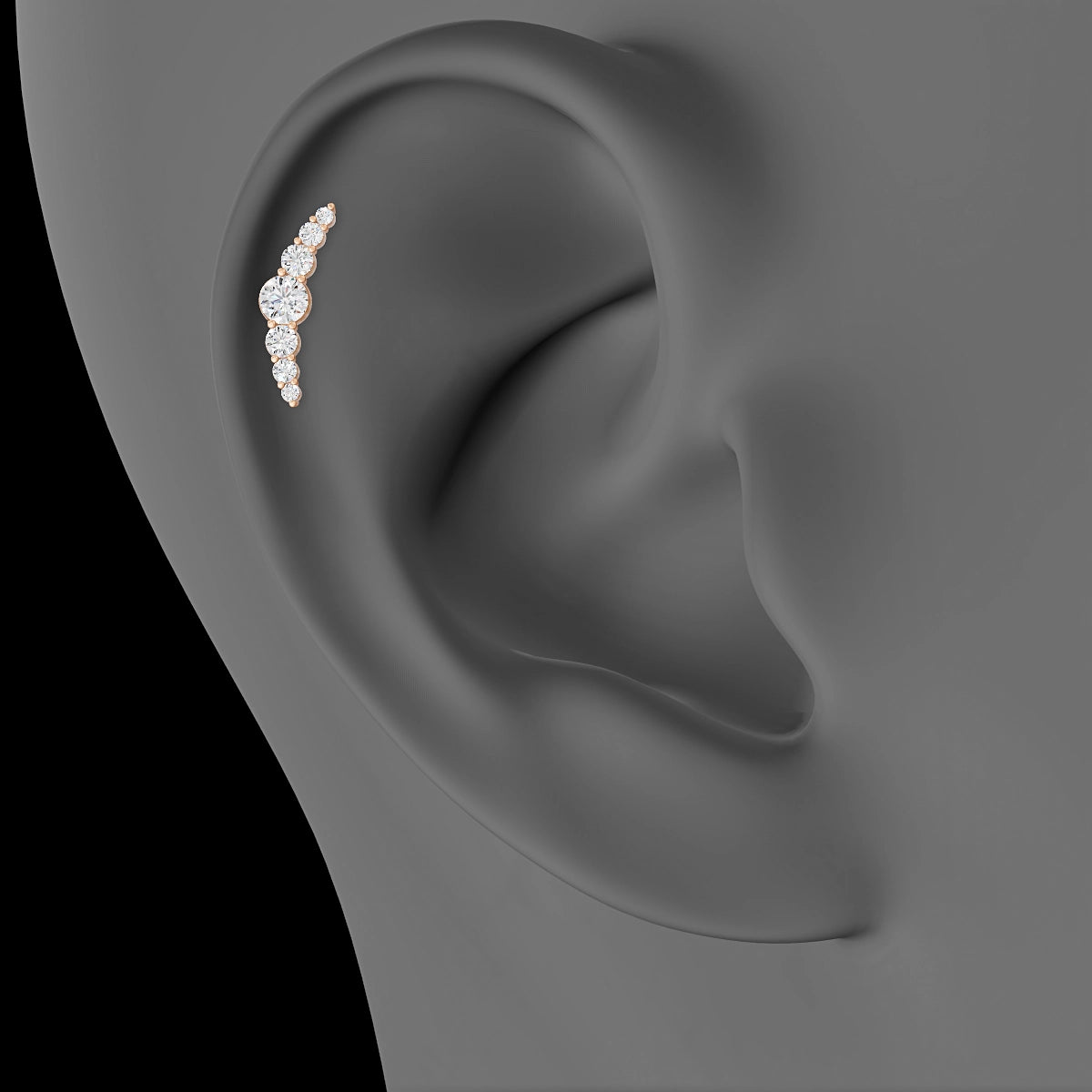
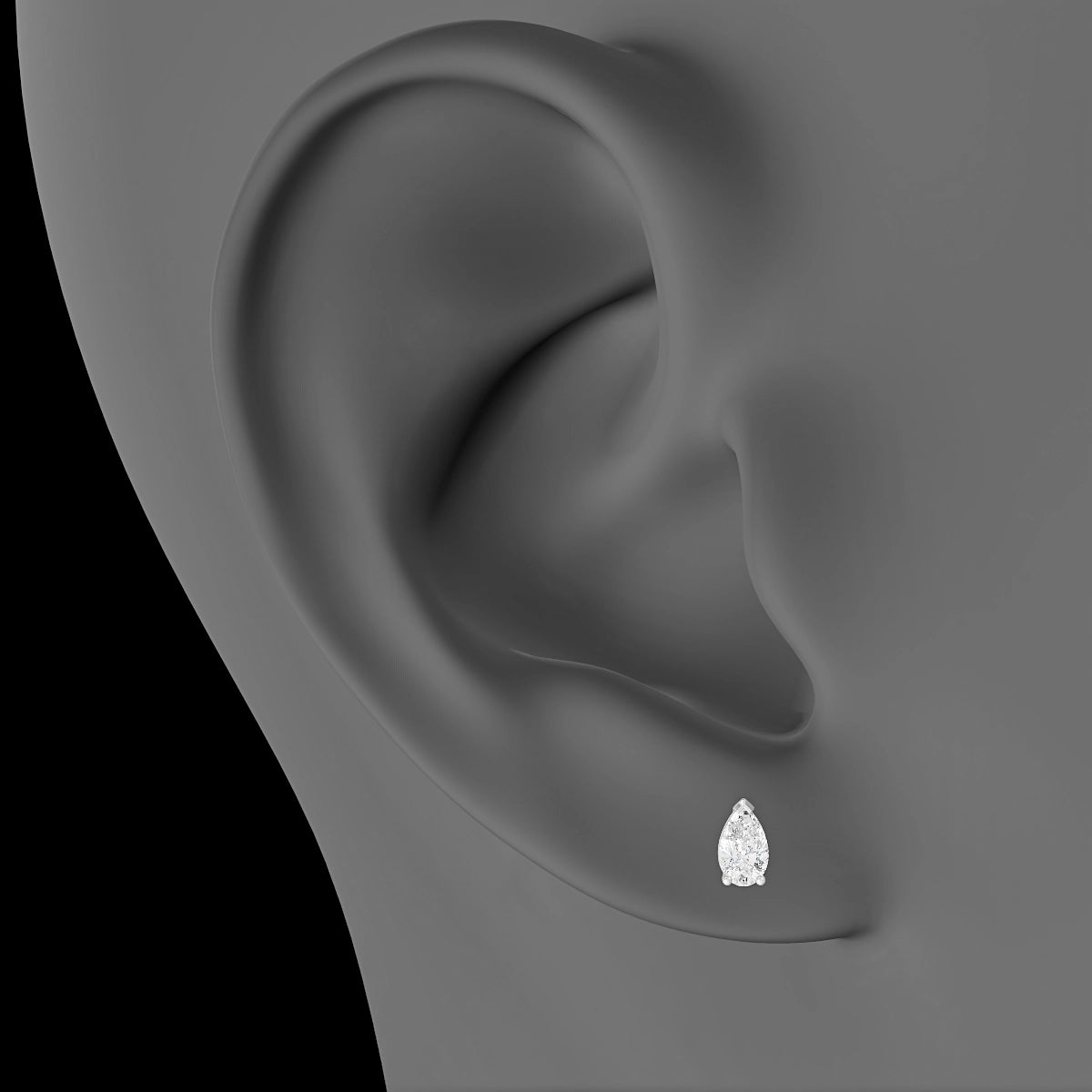
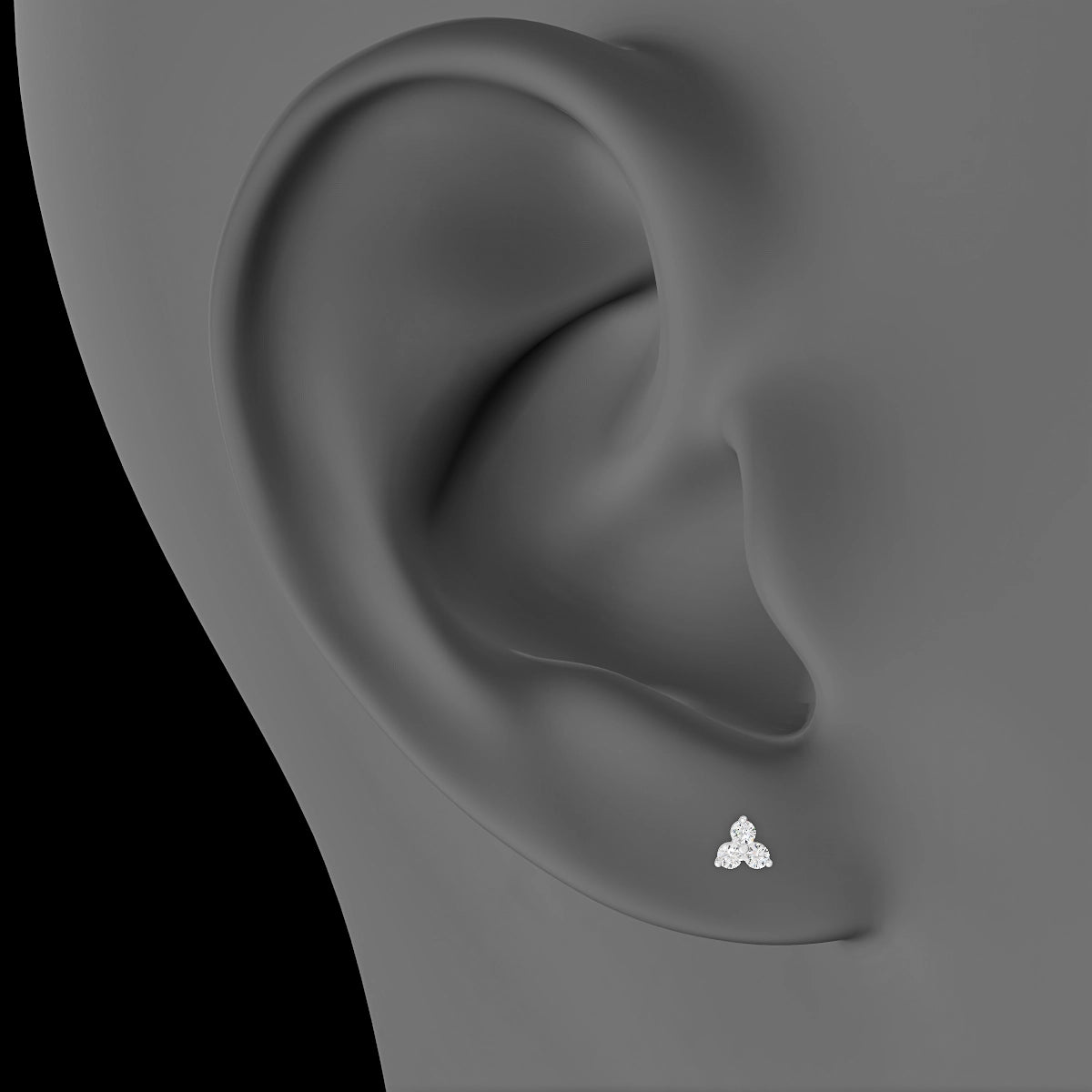
The flat area of the ear is broad and mostly straight, which makes it suited to jewelry that a curved placement can't easily support. MADAJ offers two options for the flat: a stud, which sits as a single fixed point, and an ear climber, which follows a line along the ear's surface.
SIZING
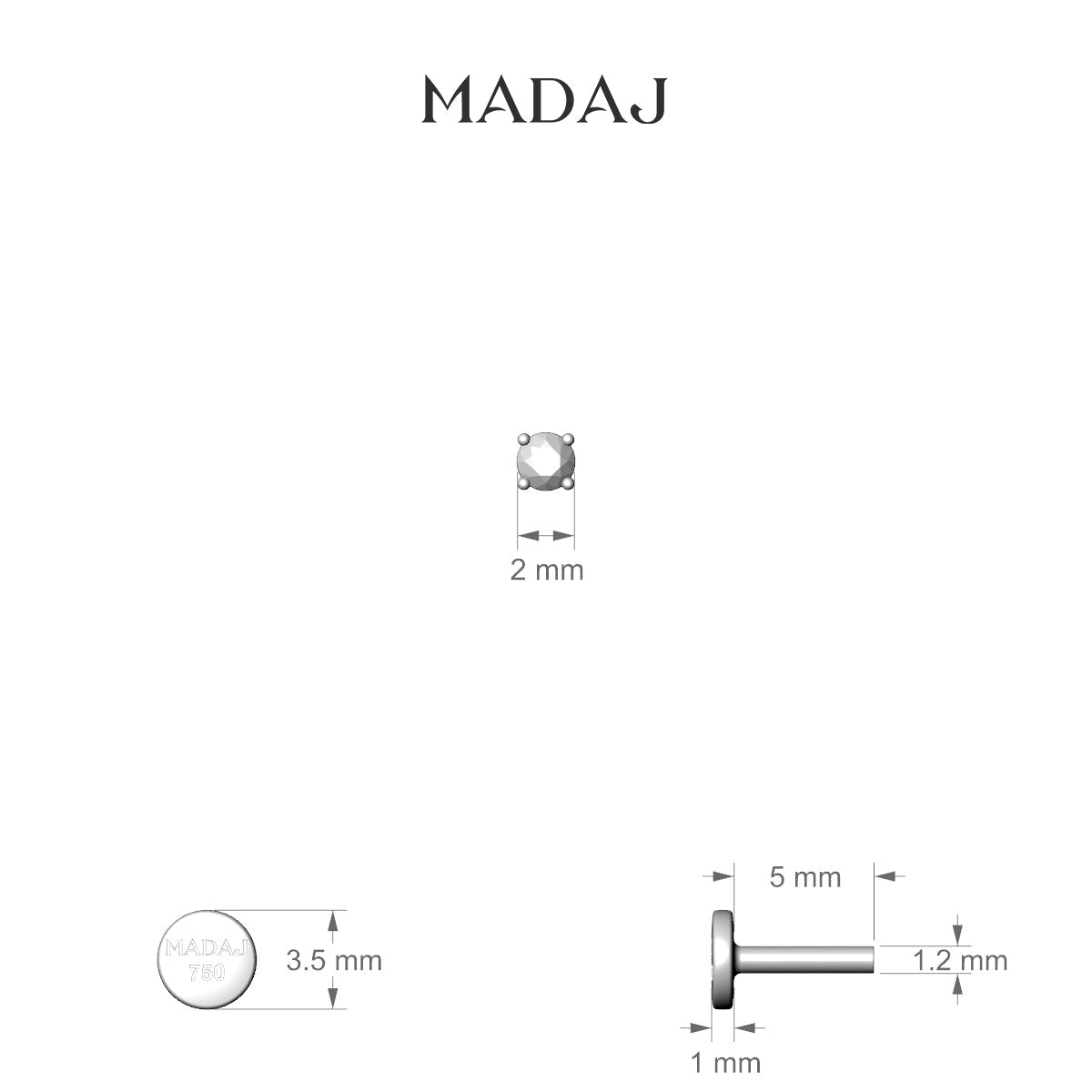
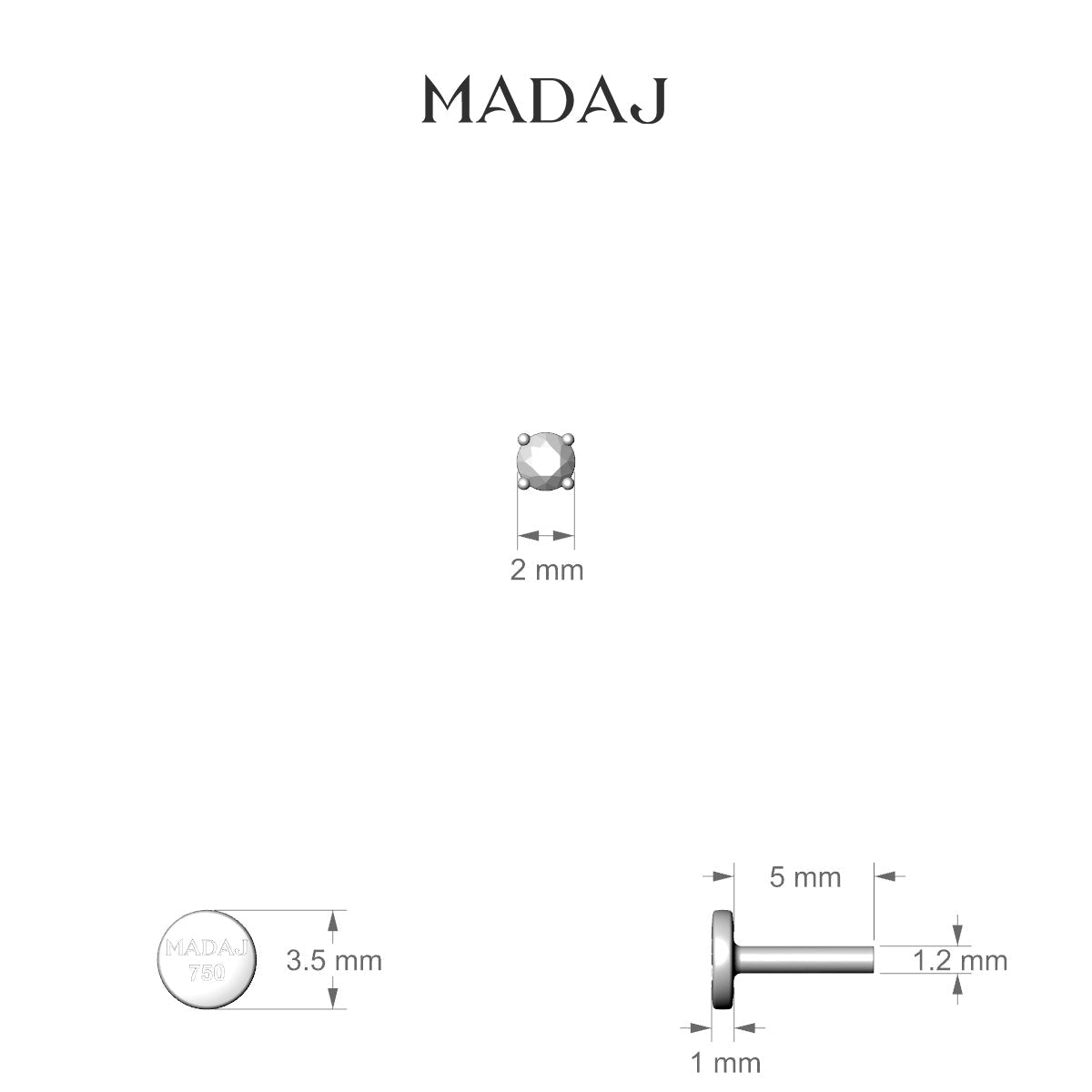
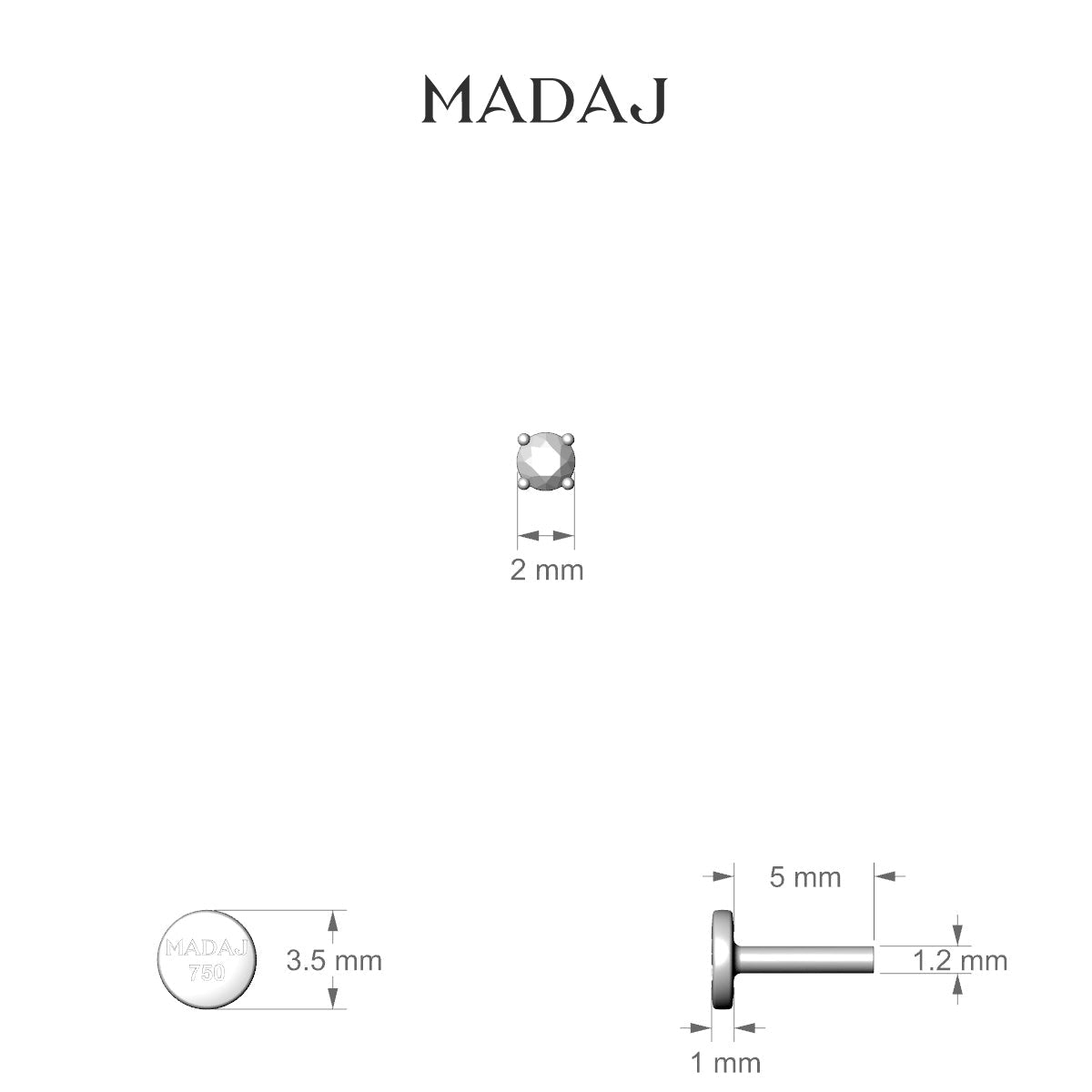
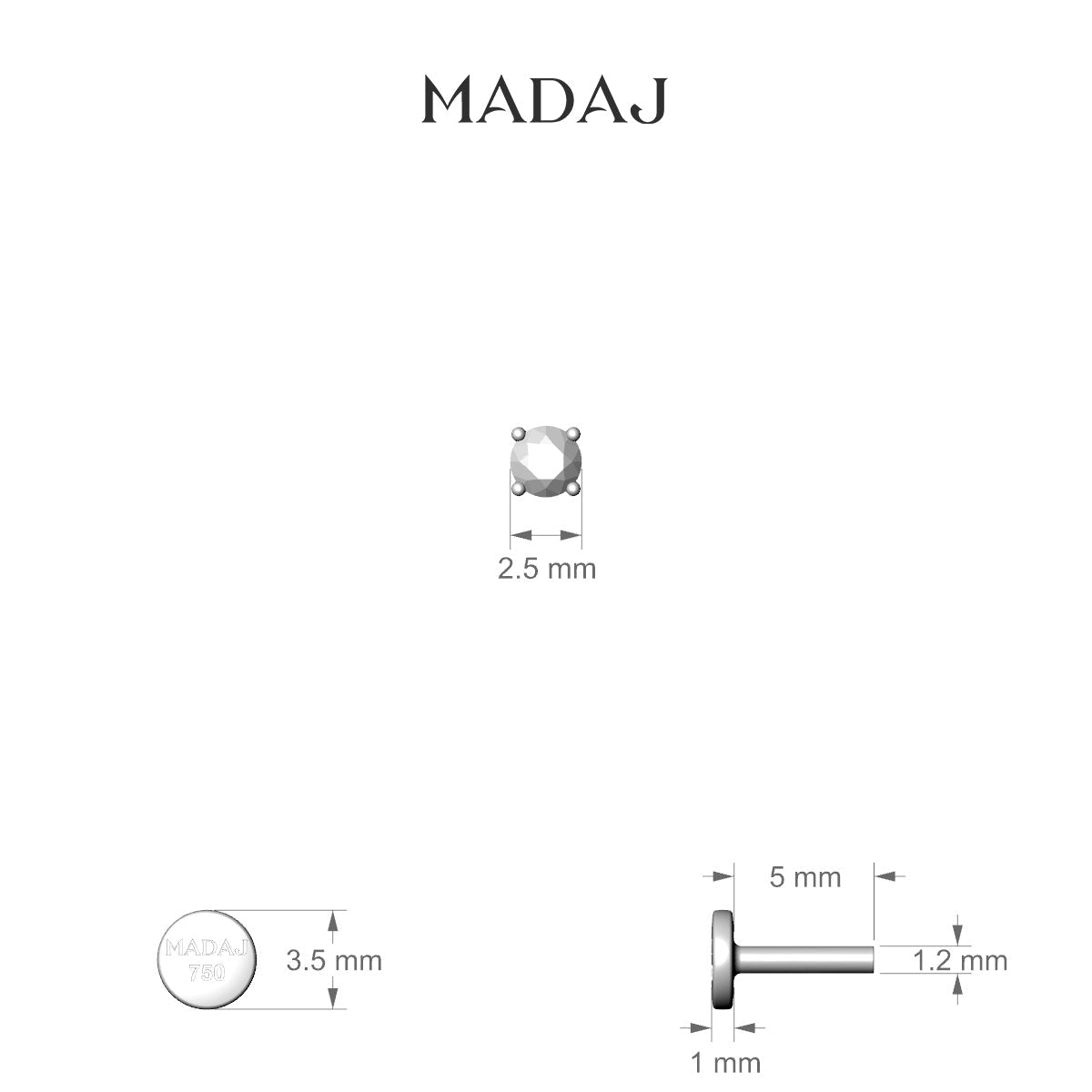
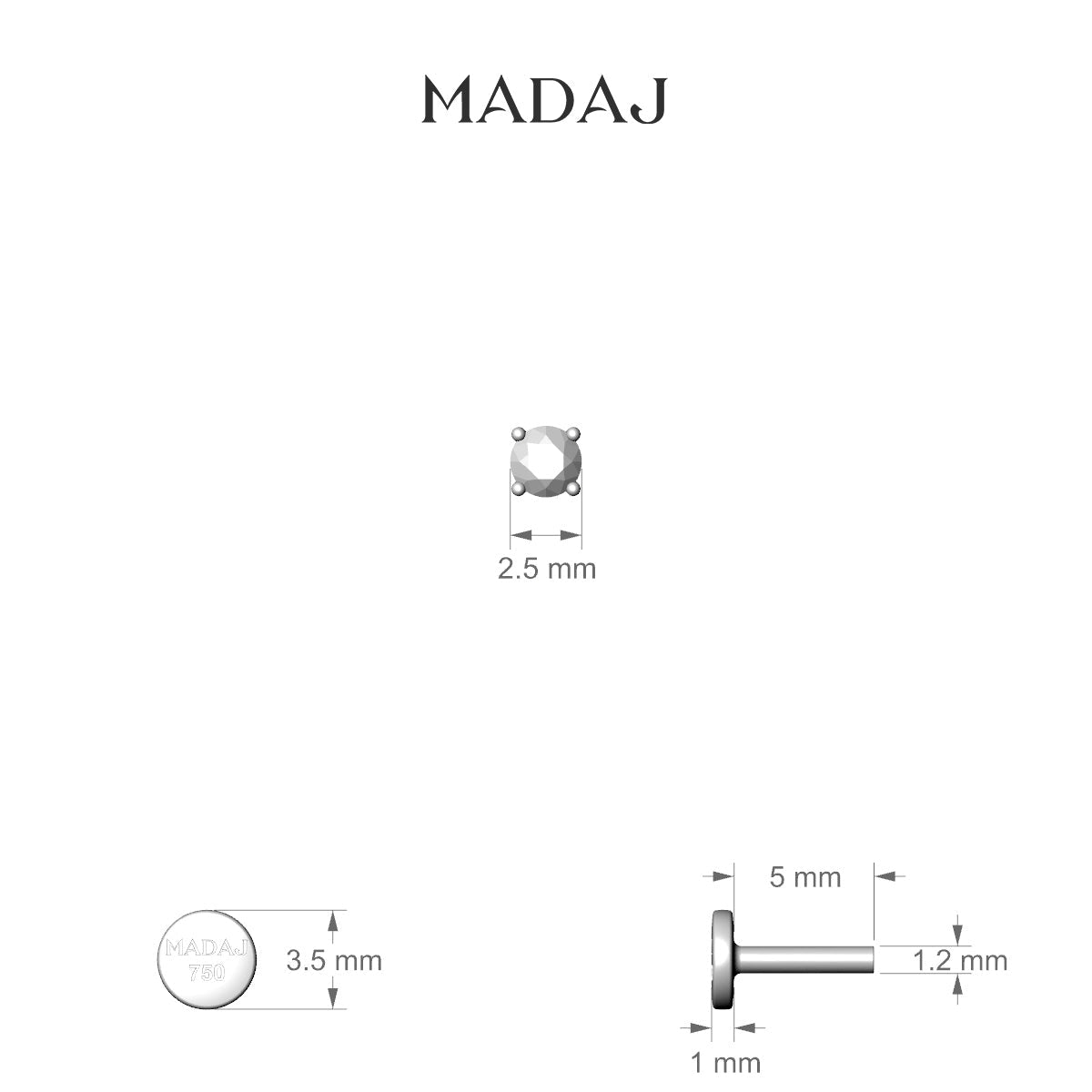
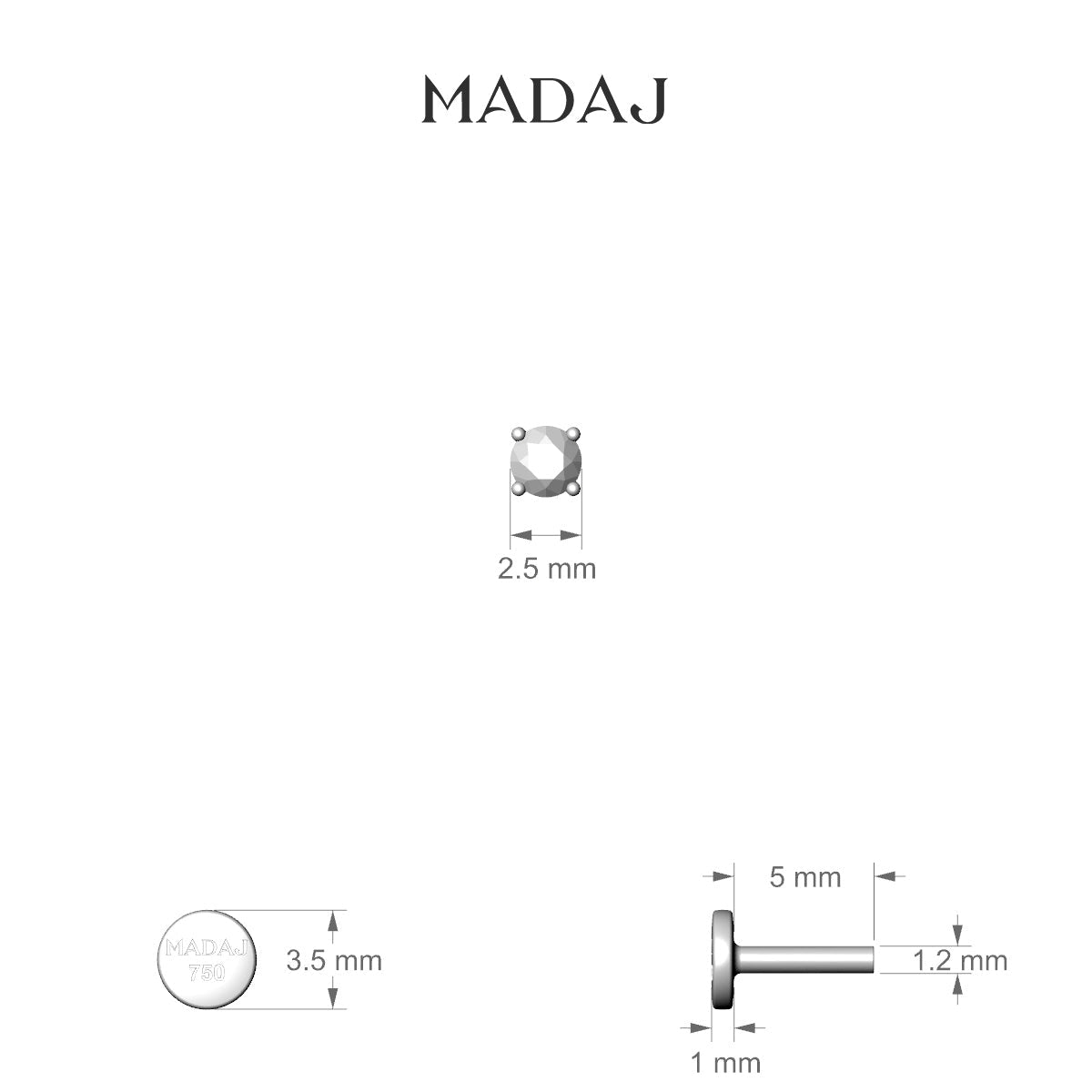
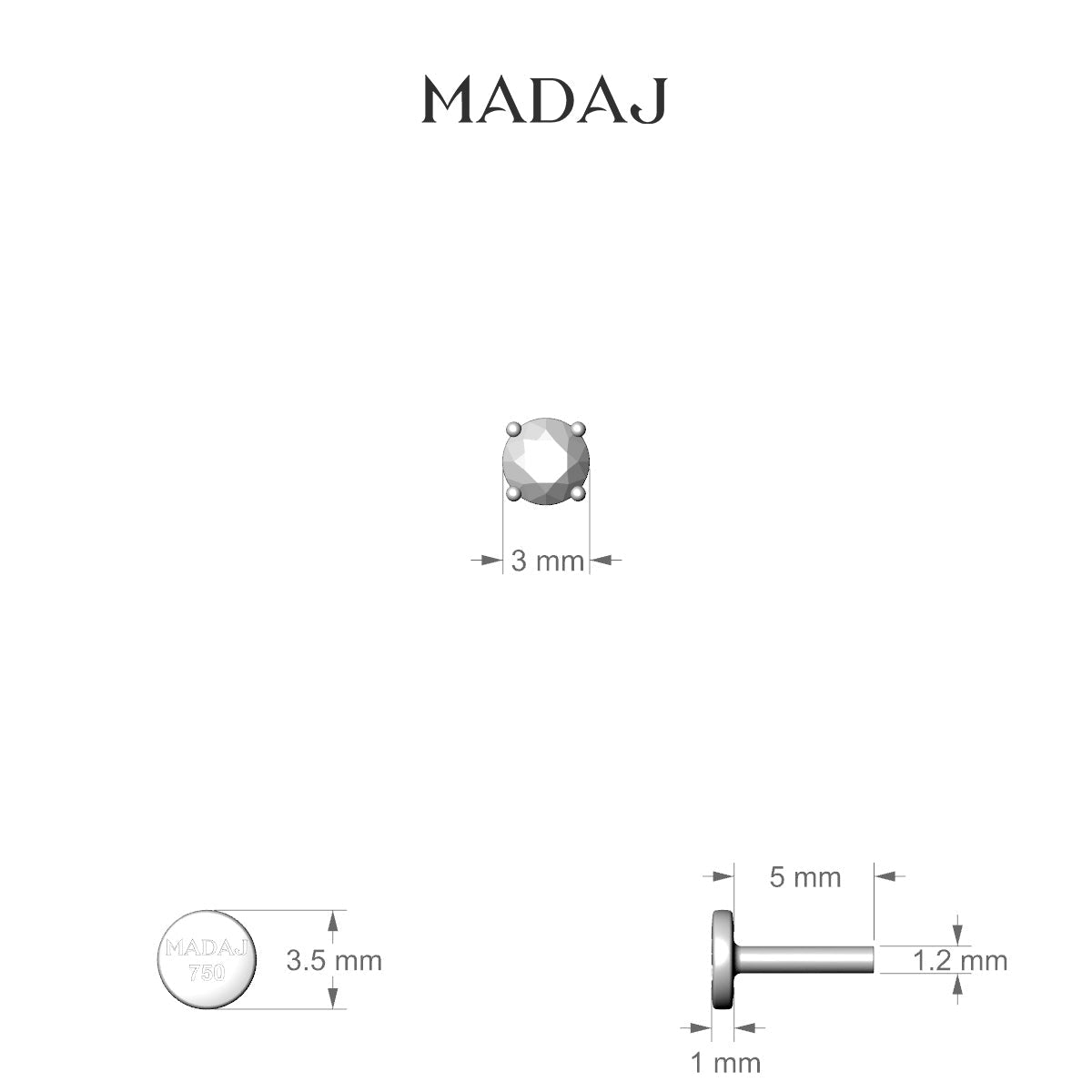
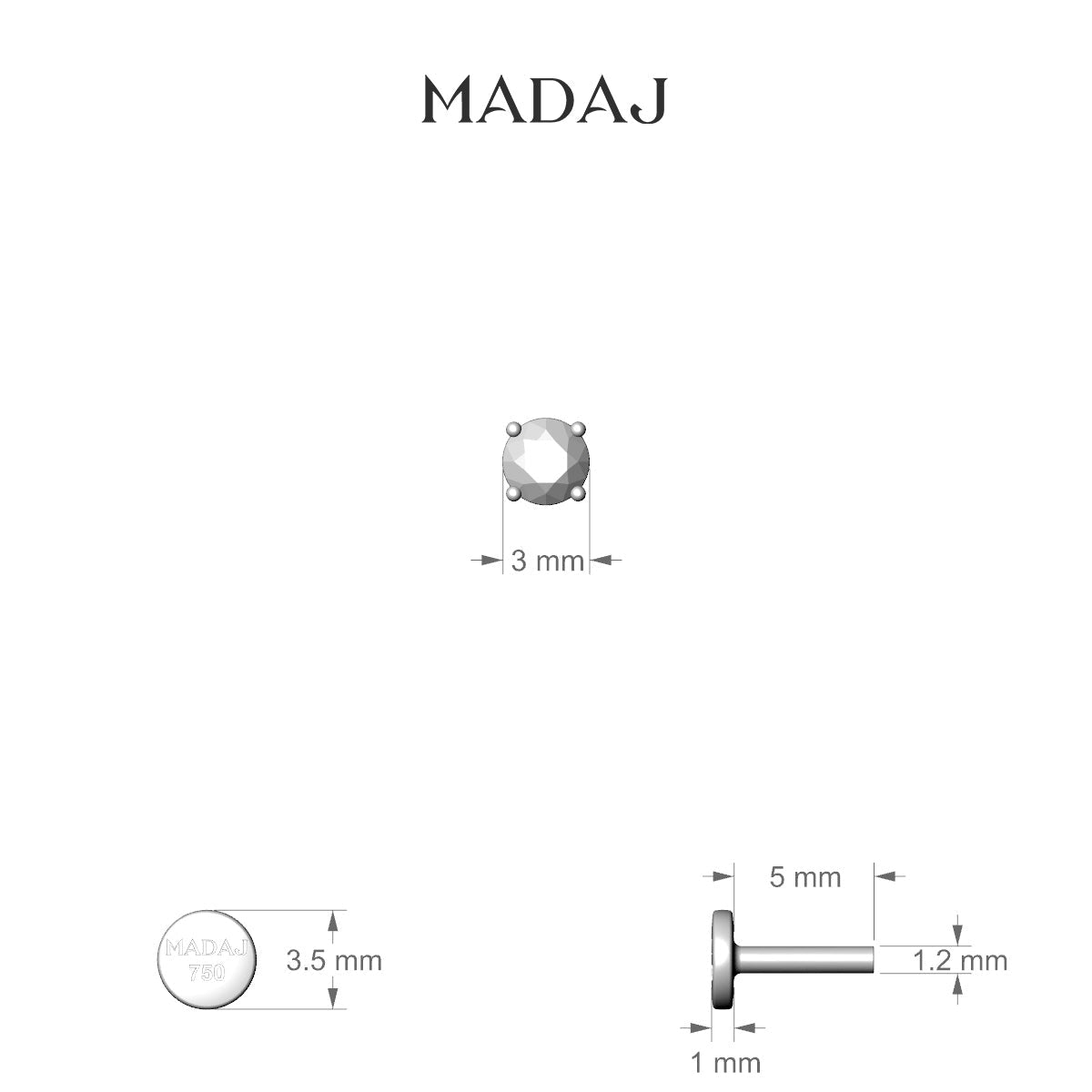
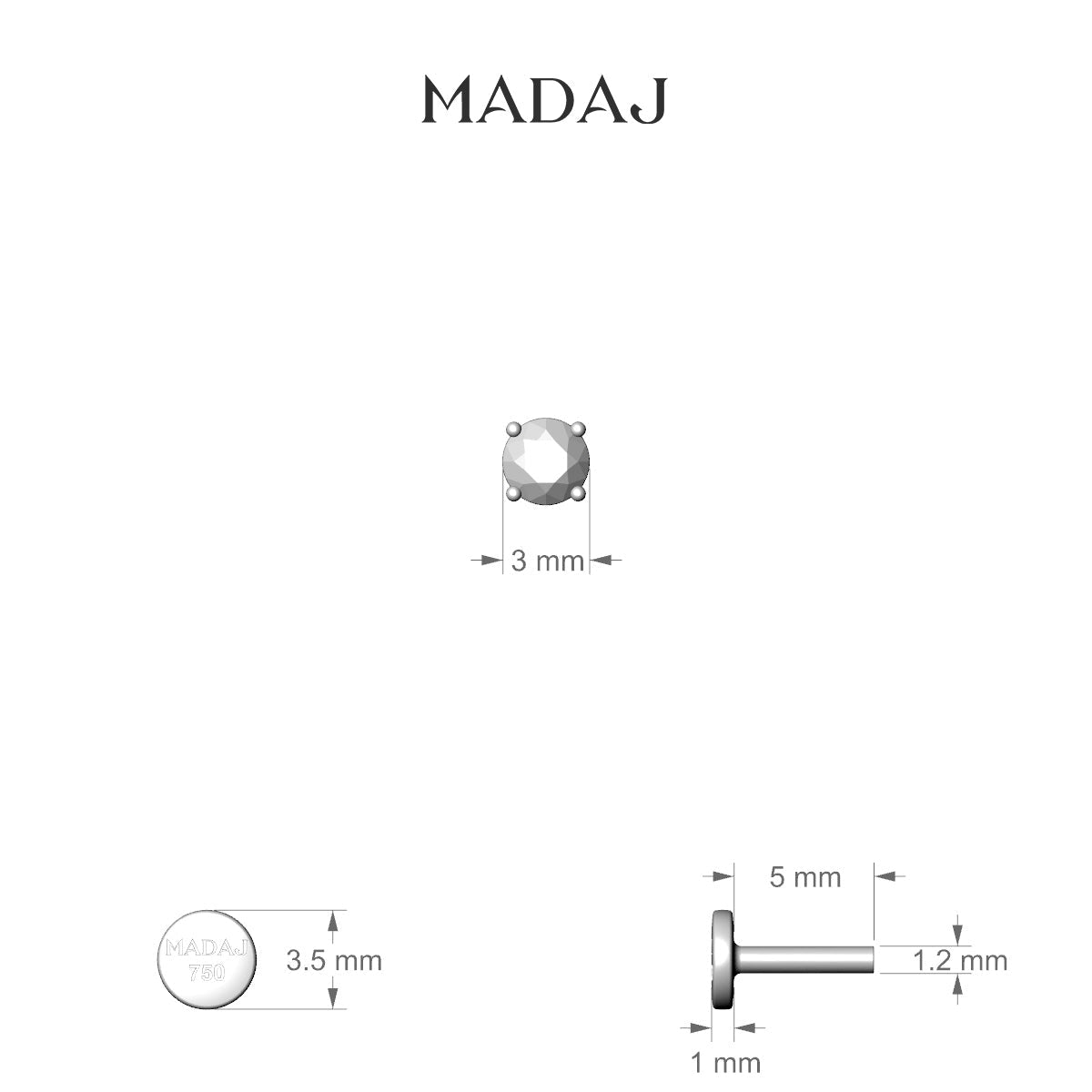
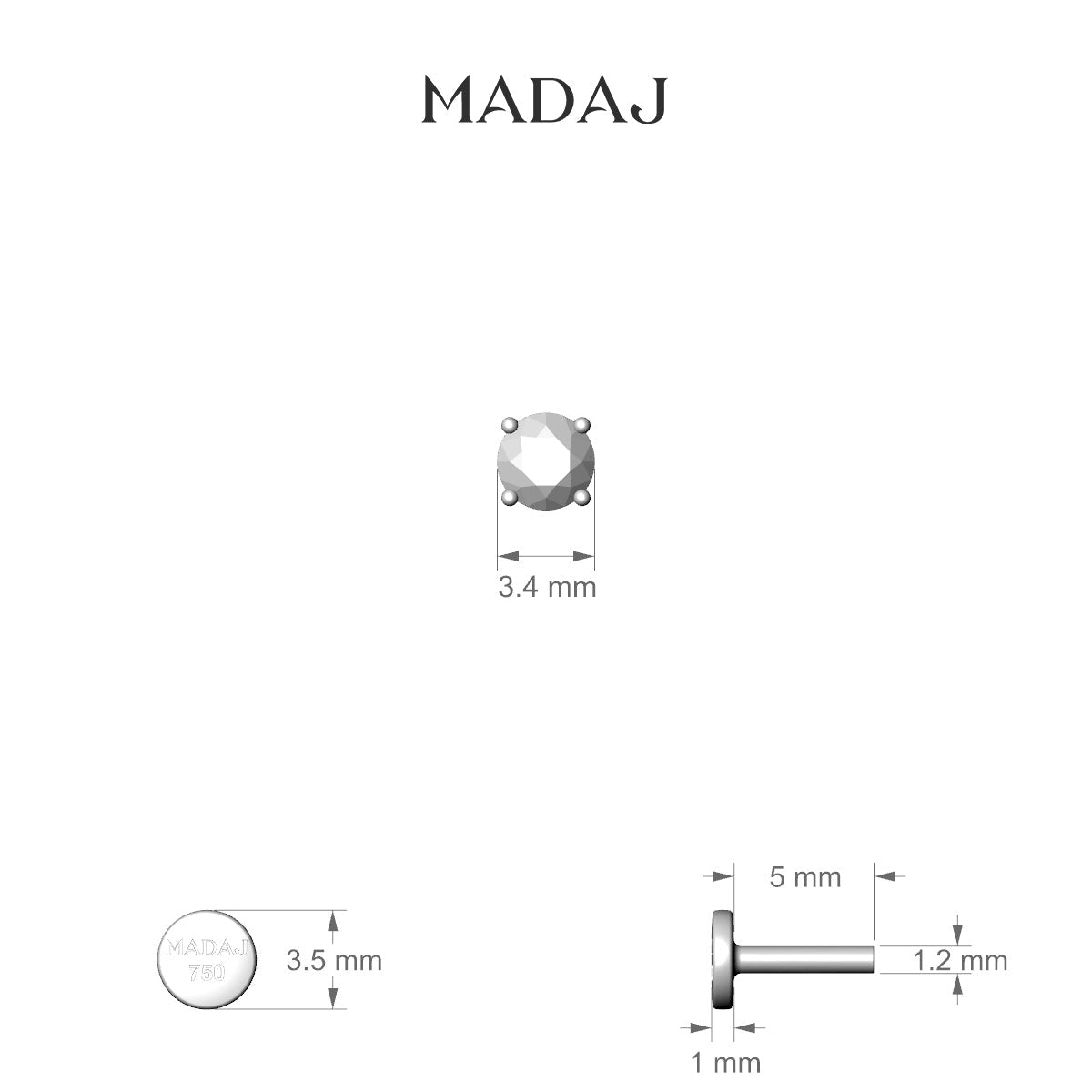
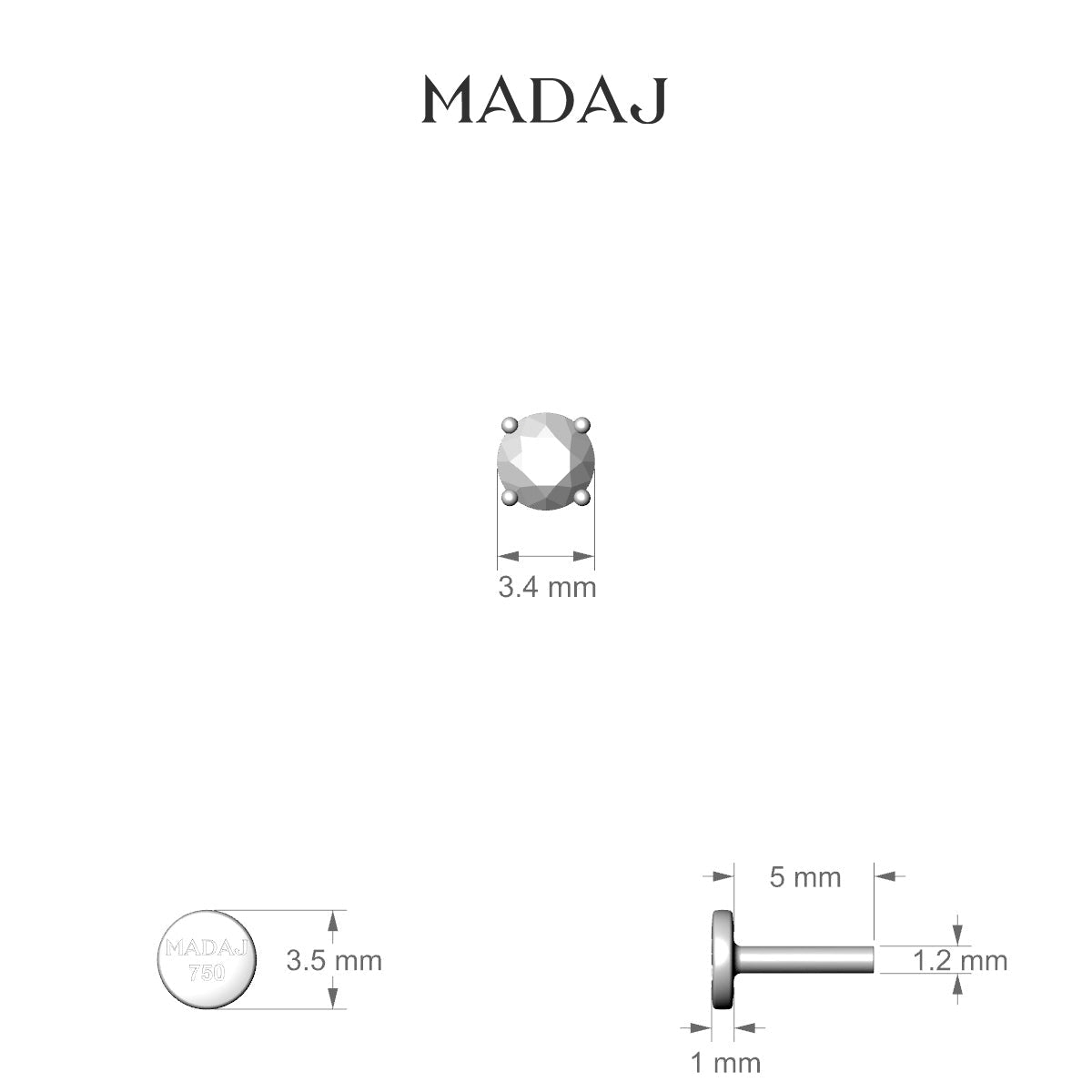
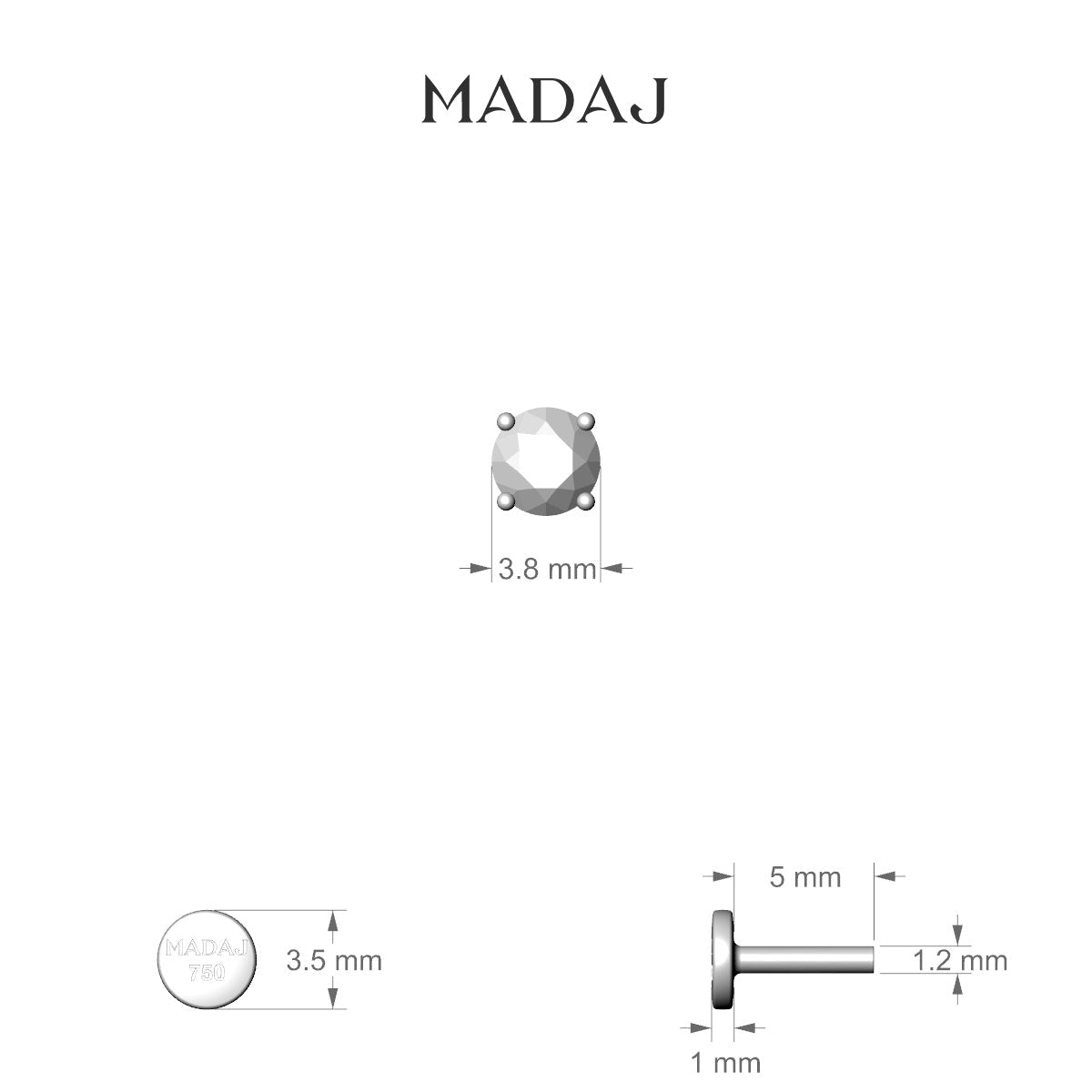
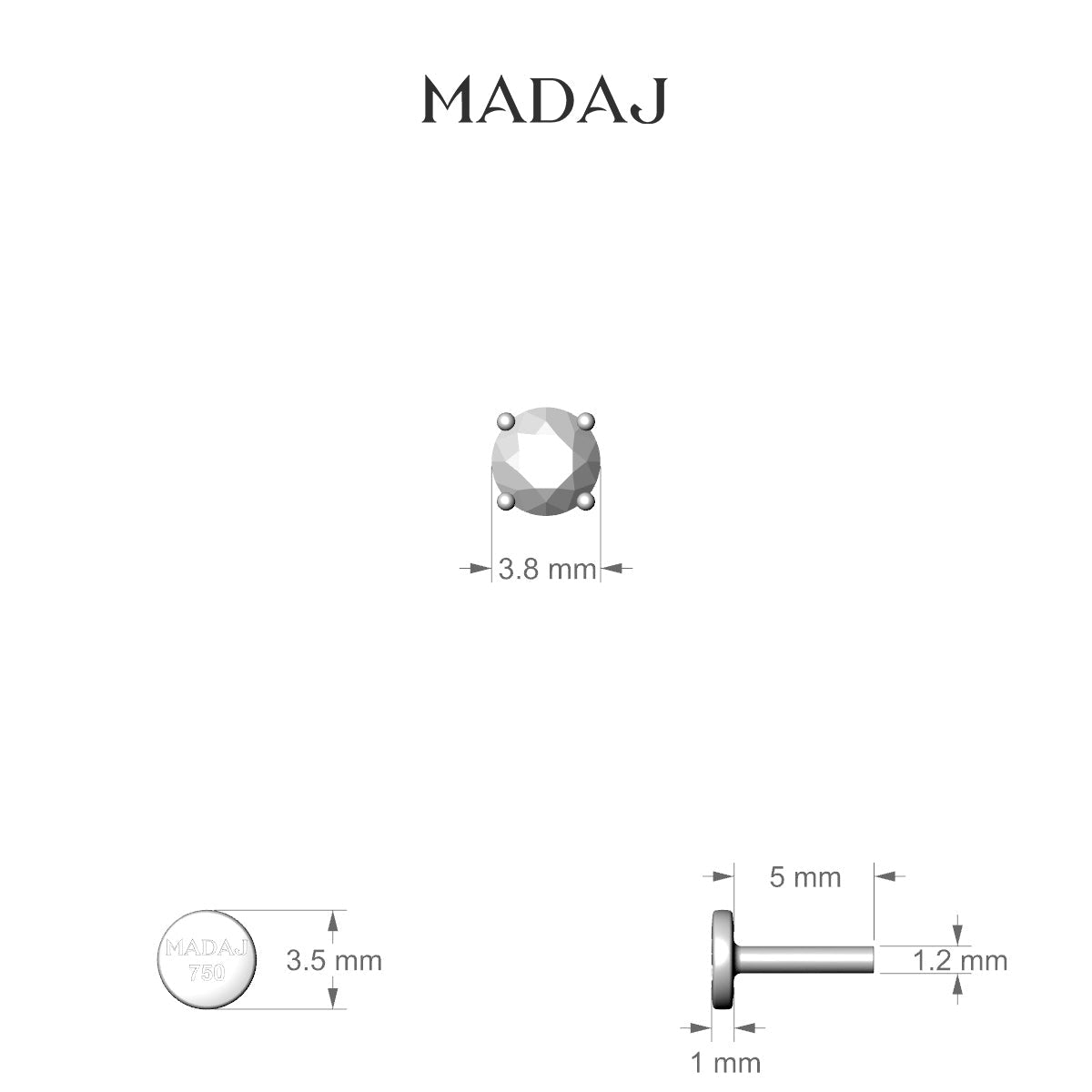
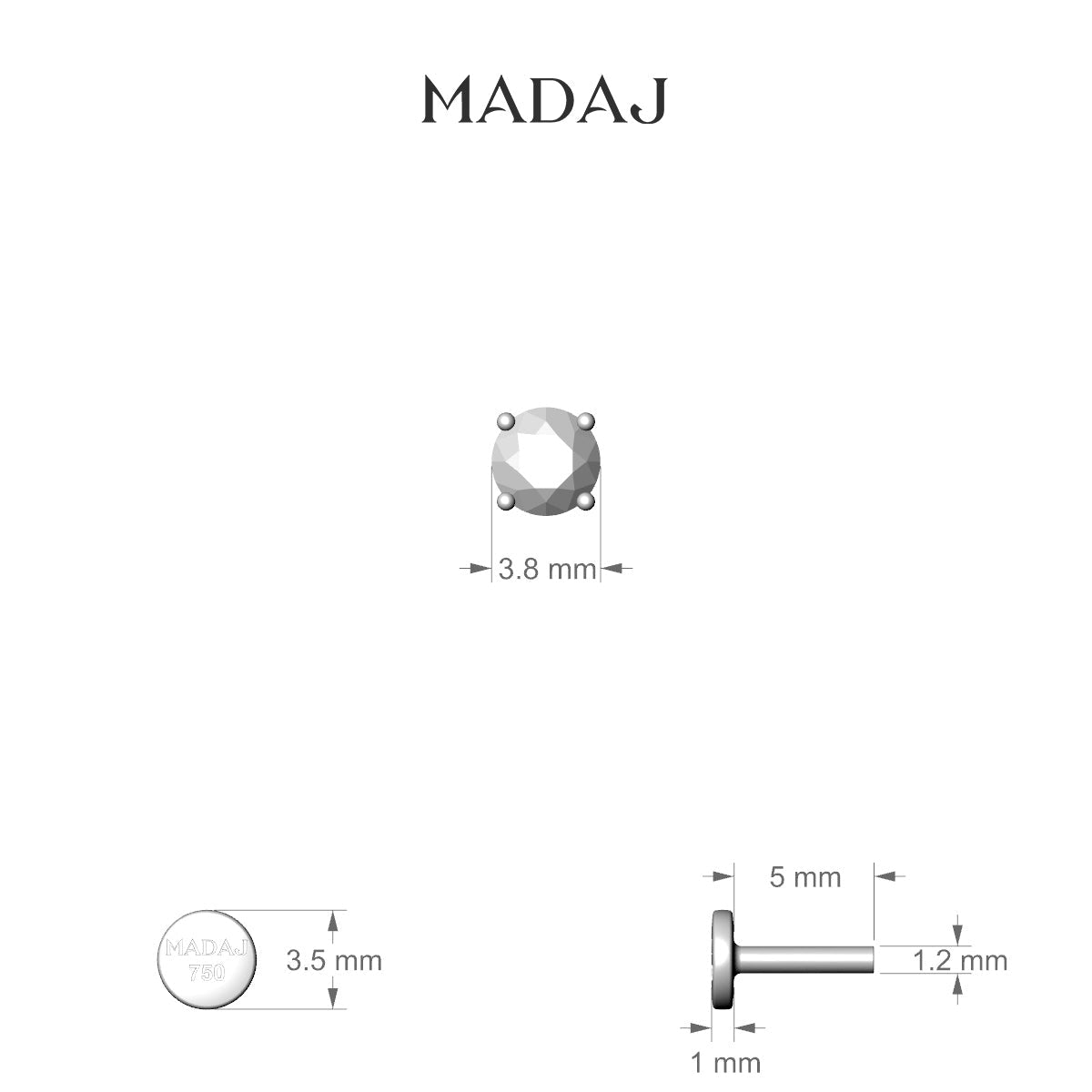
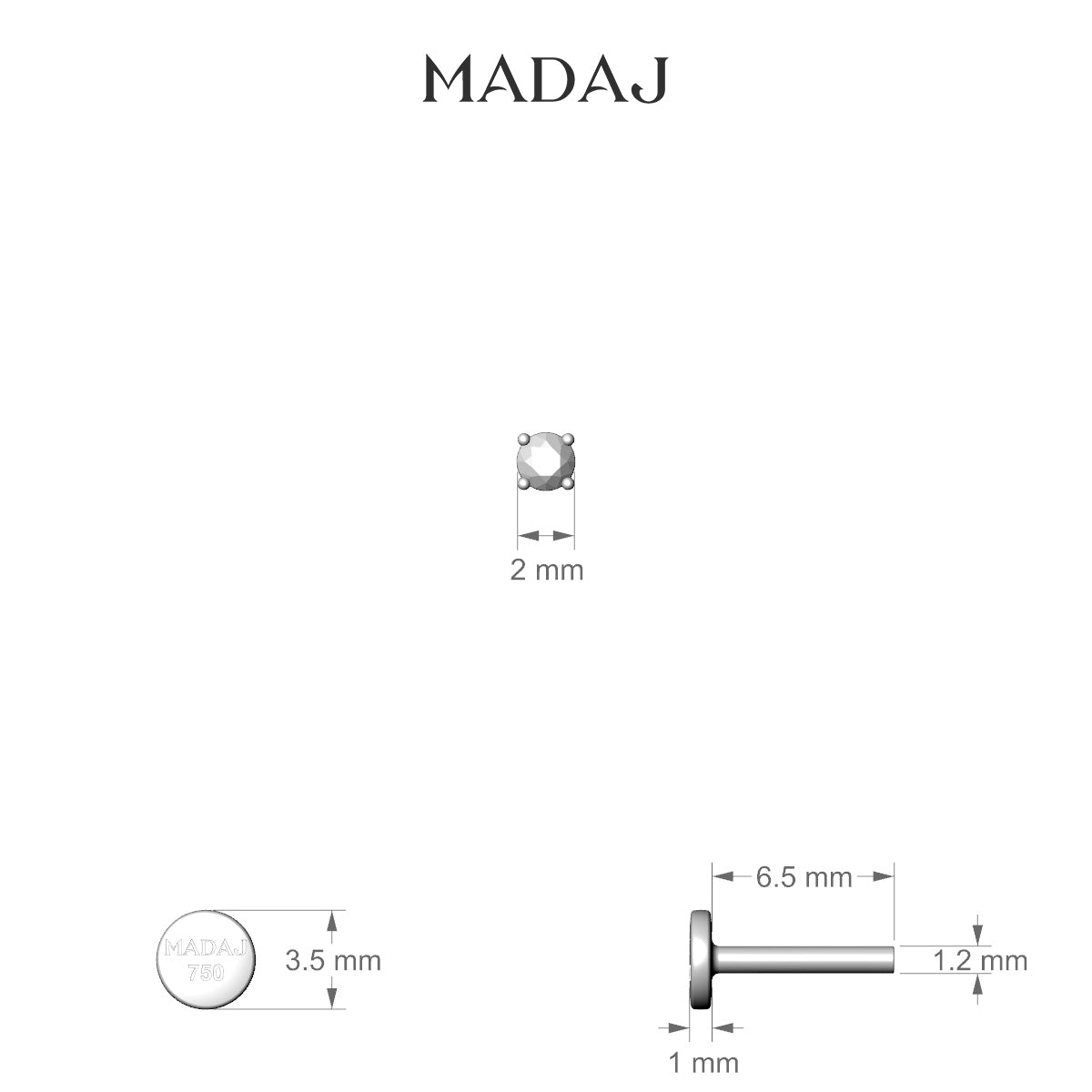
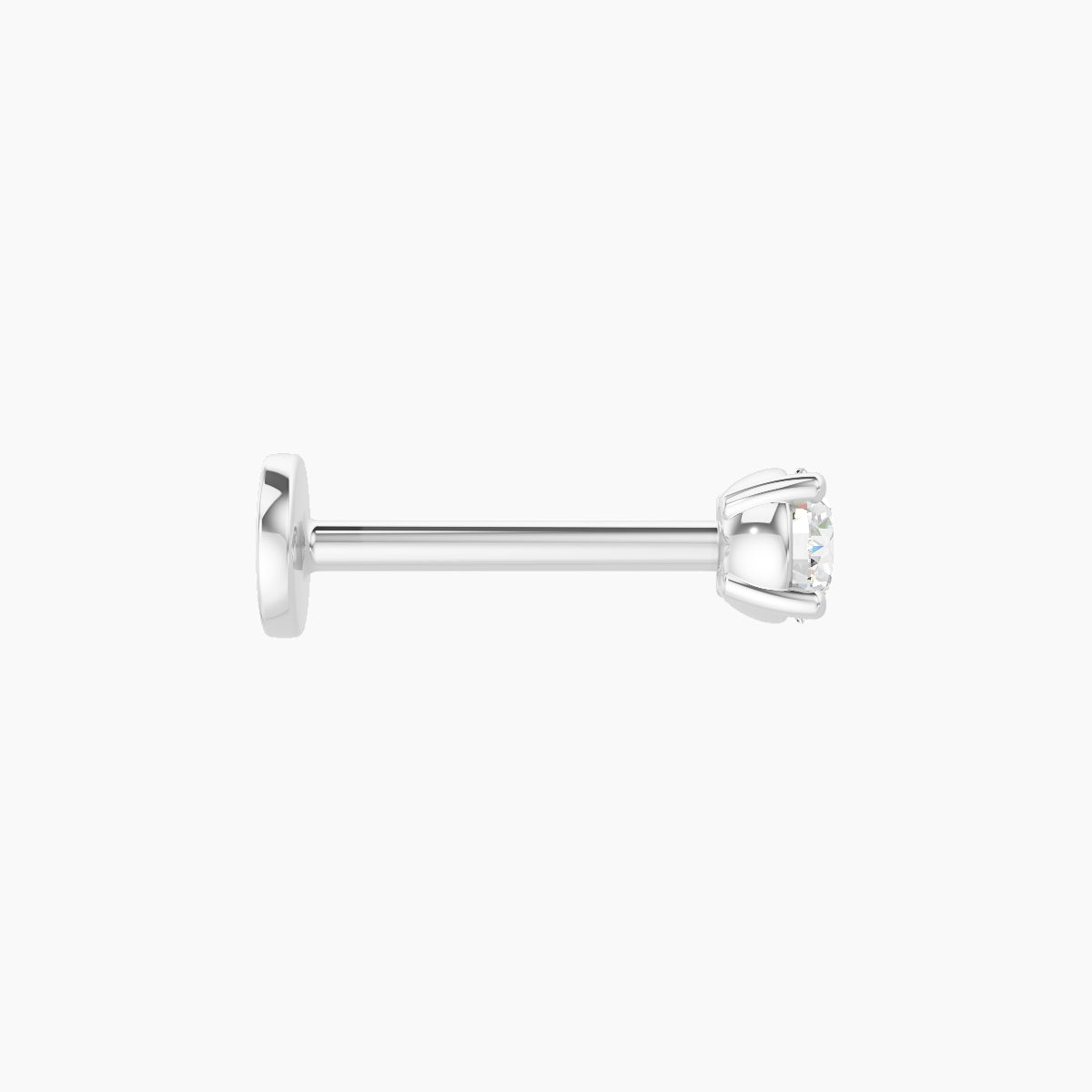
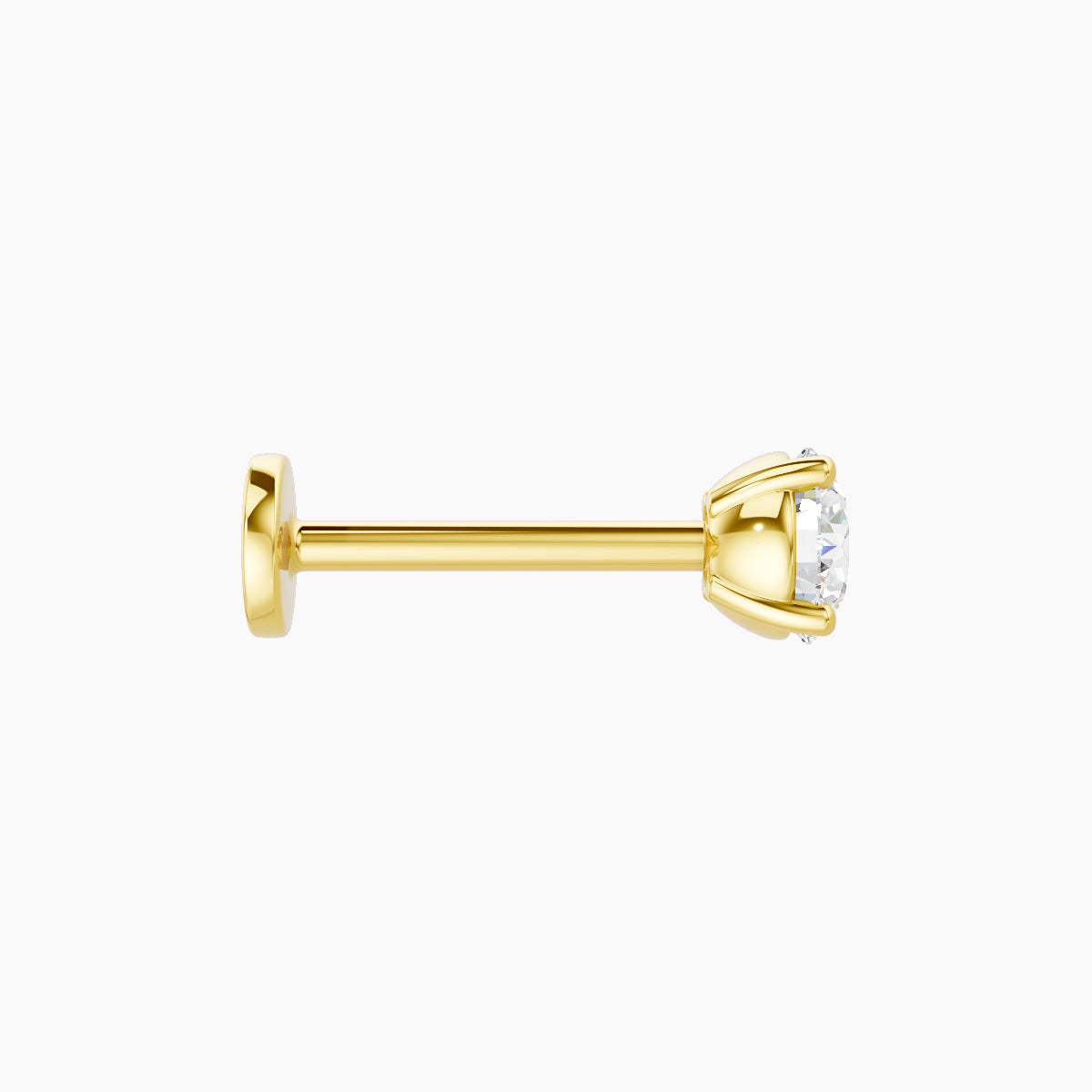
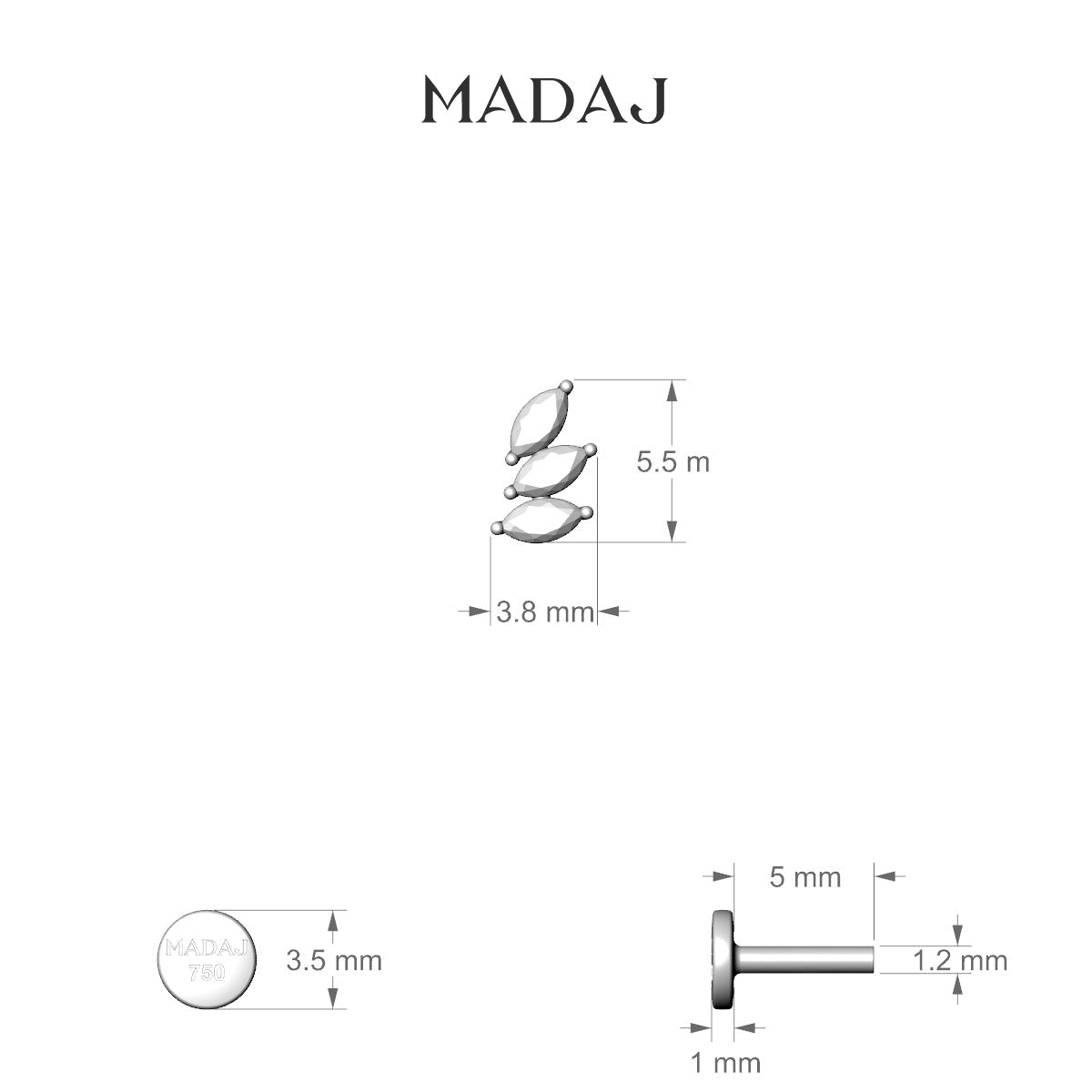
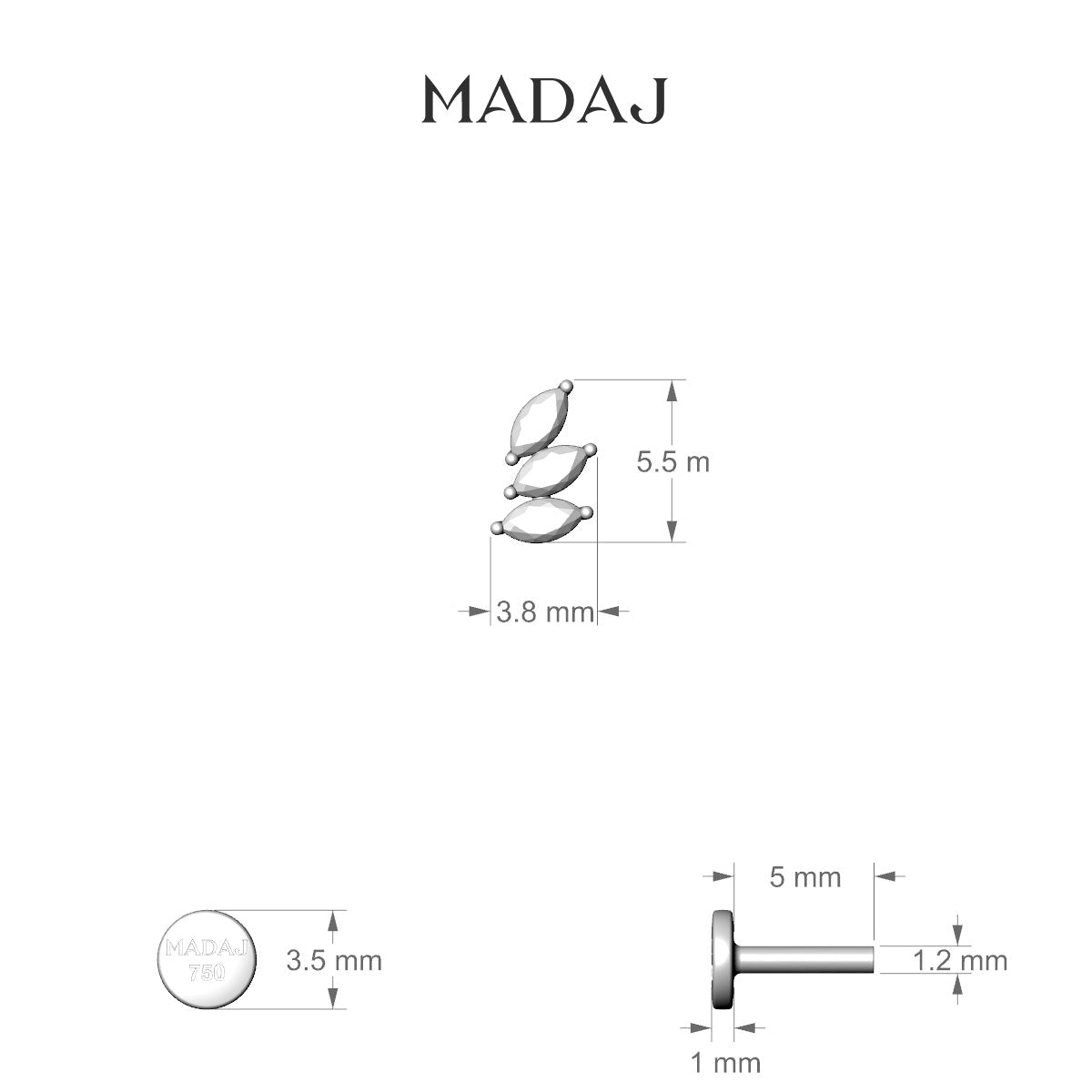
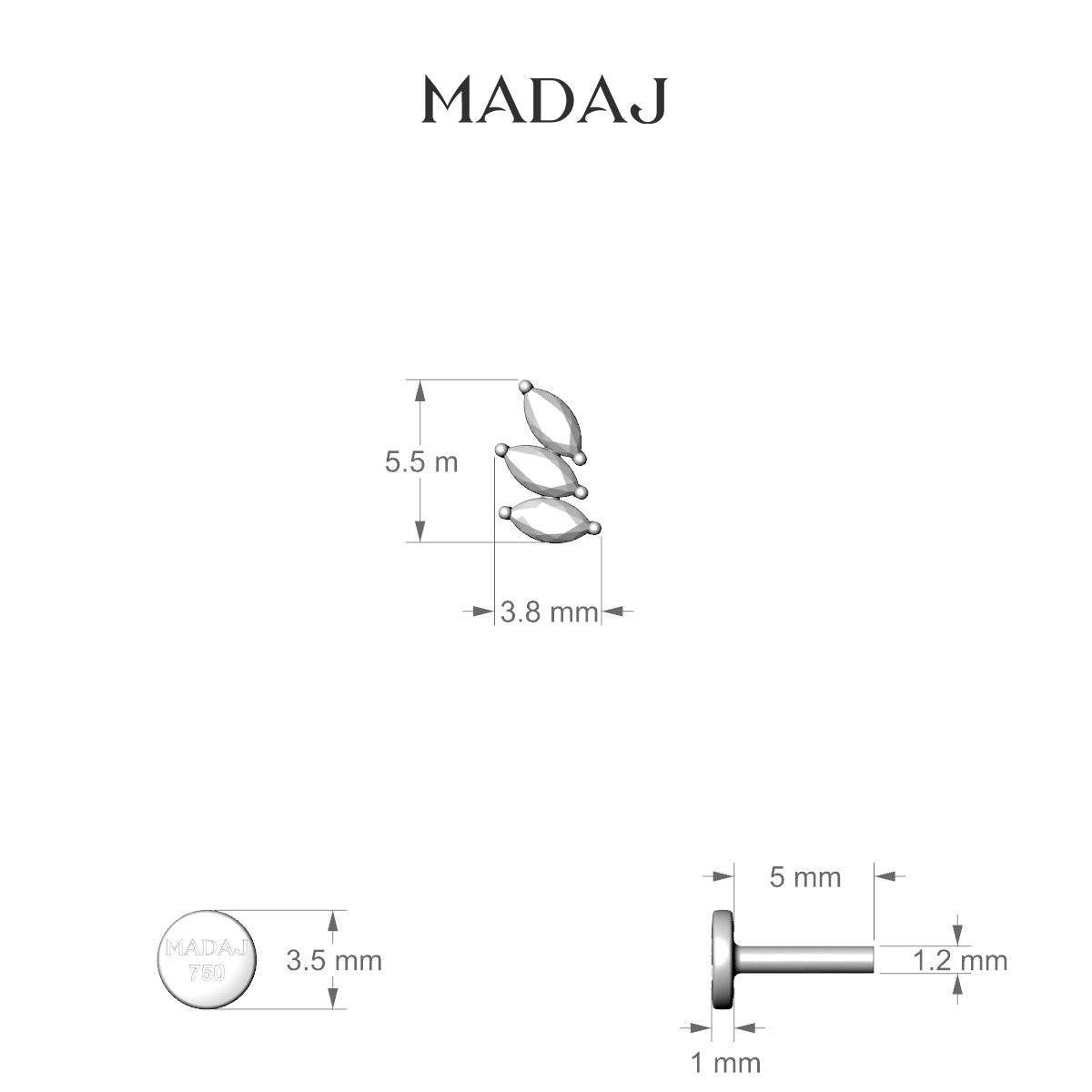
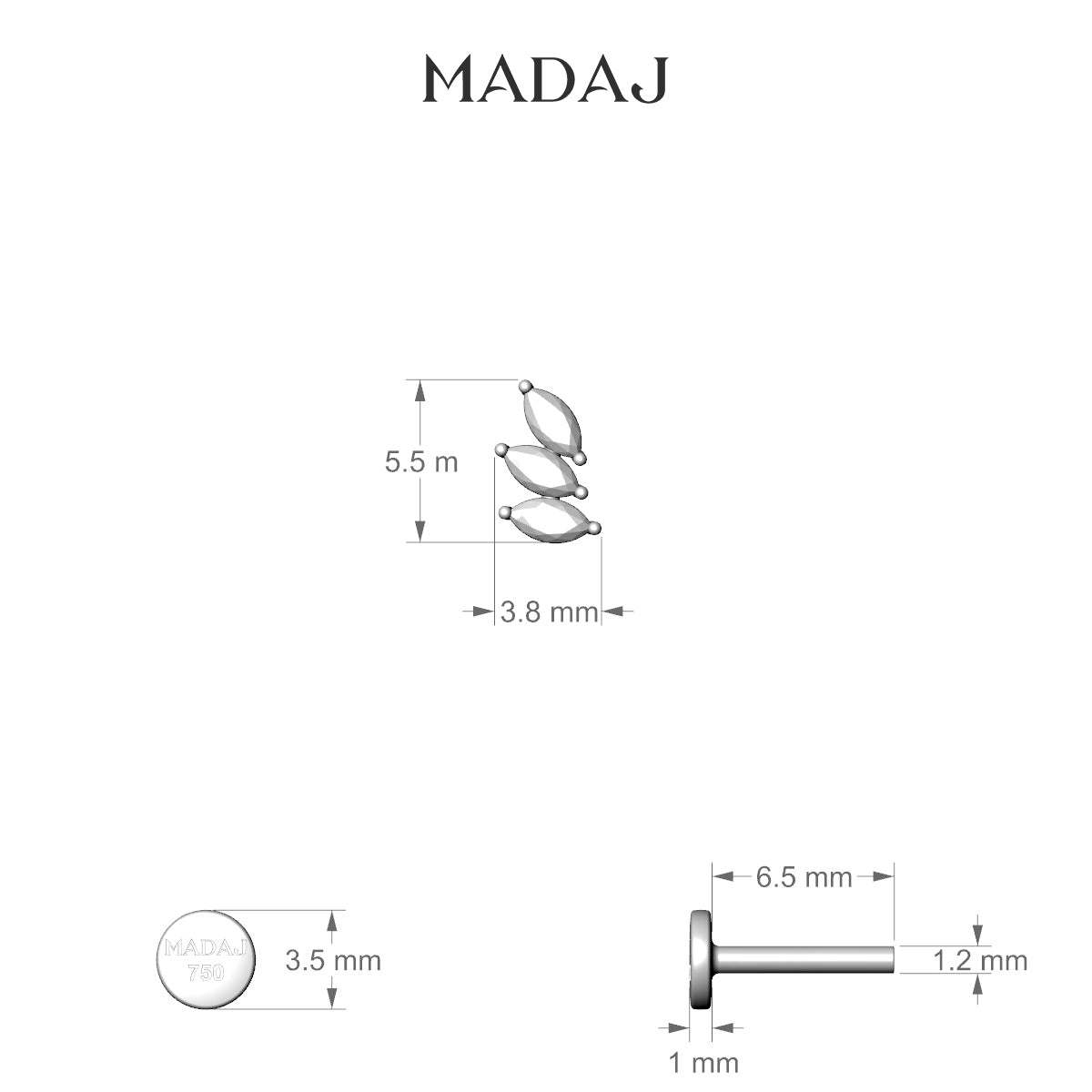
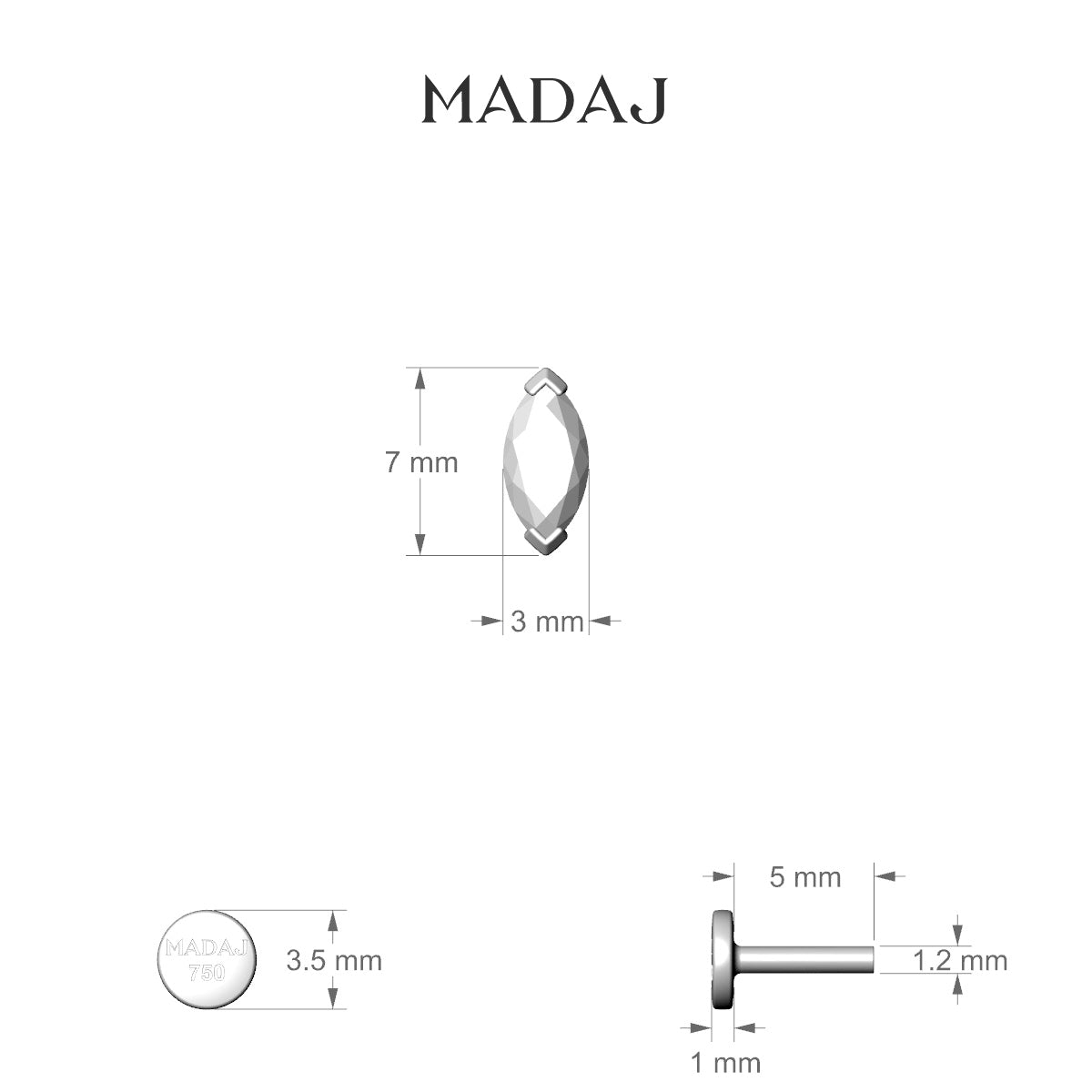
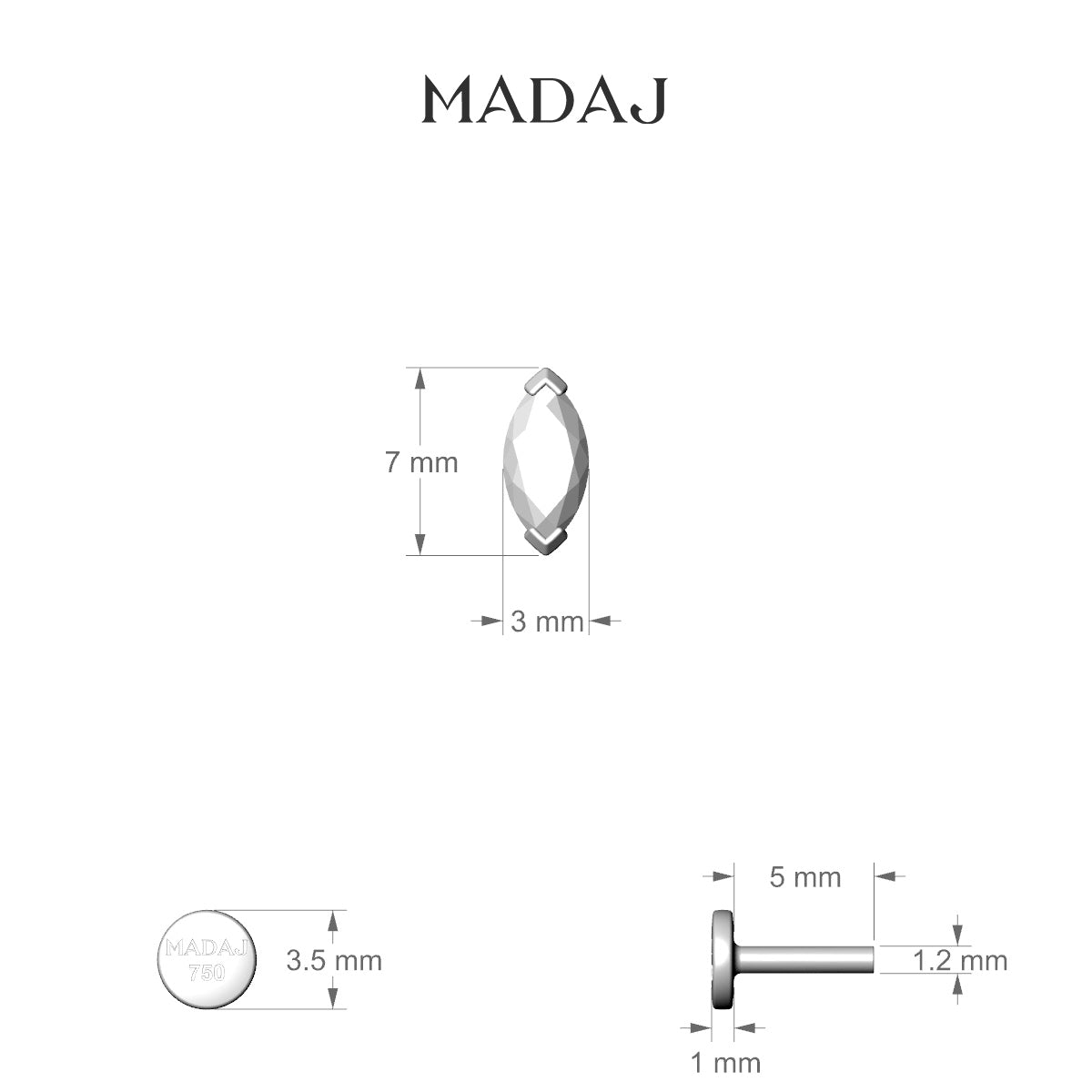
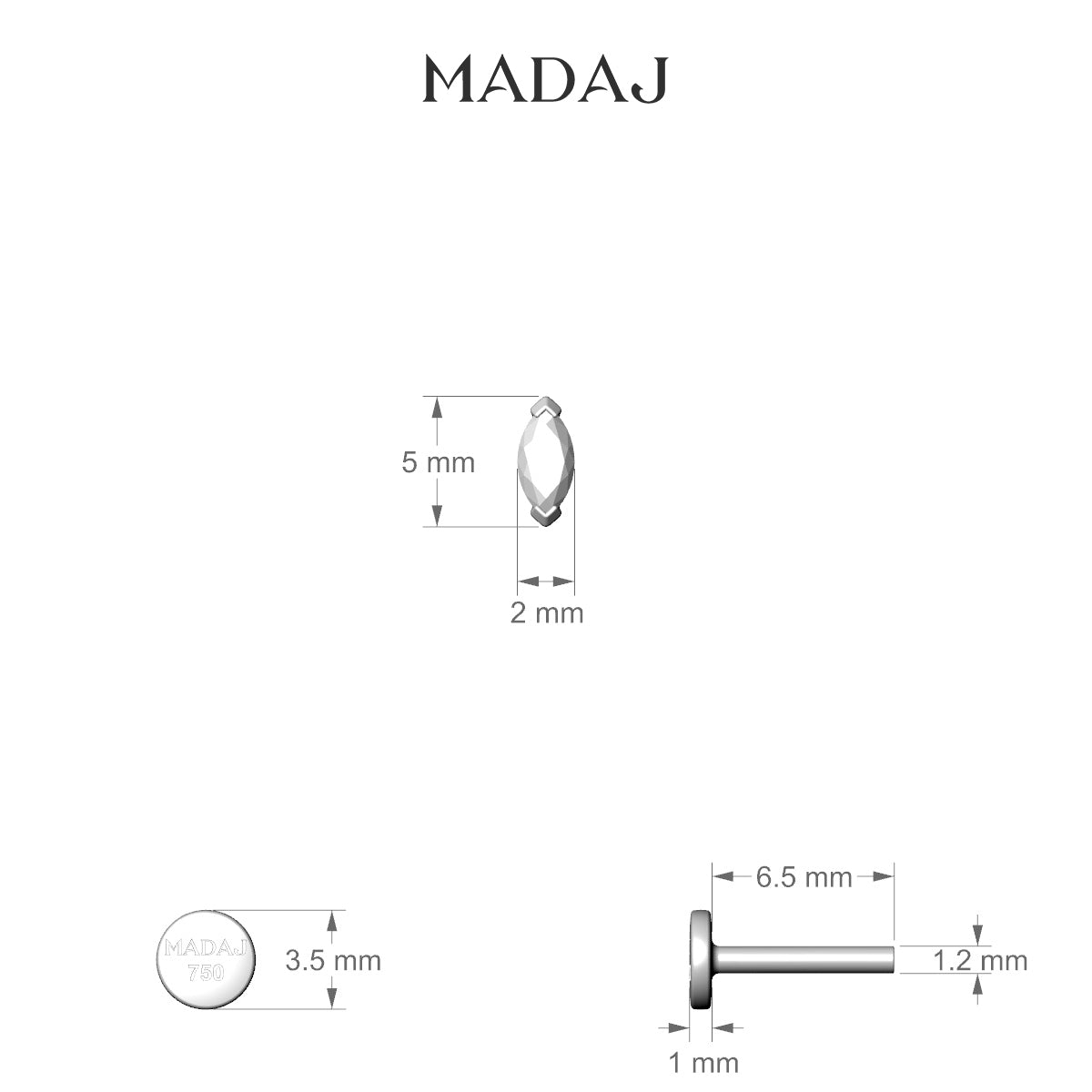
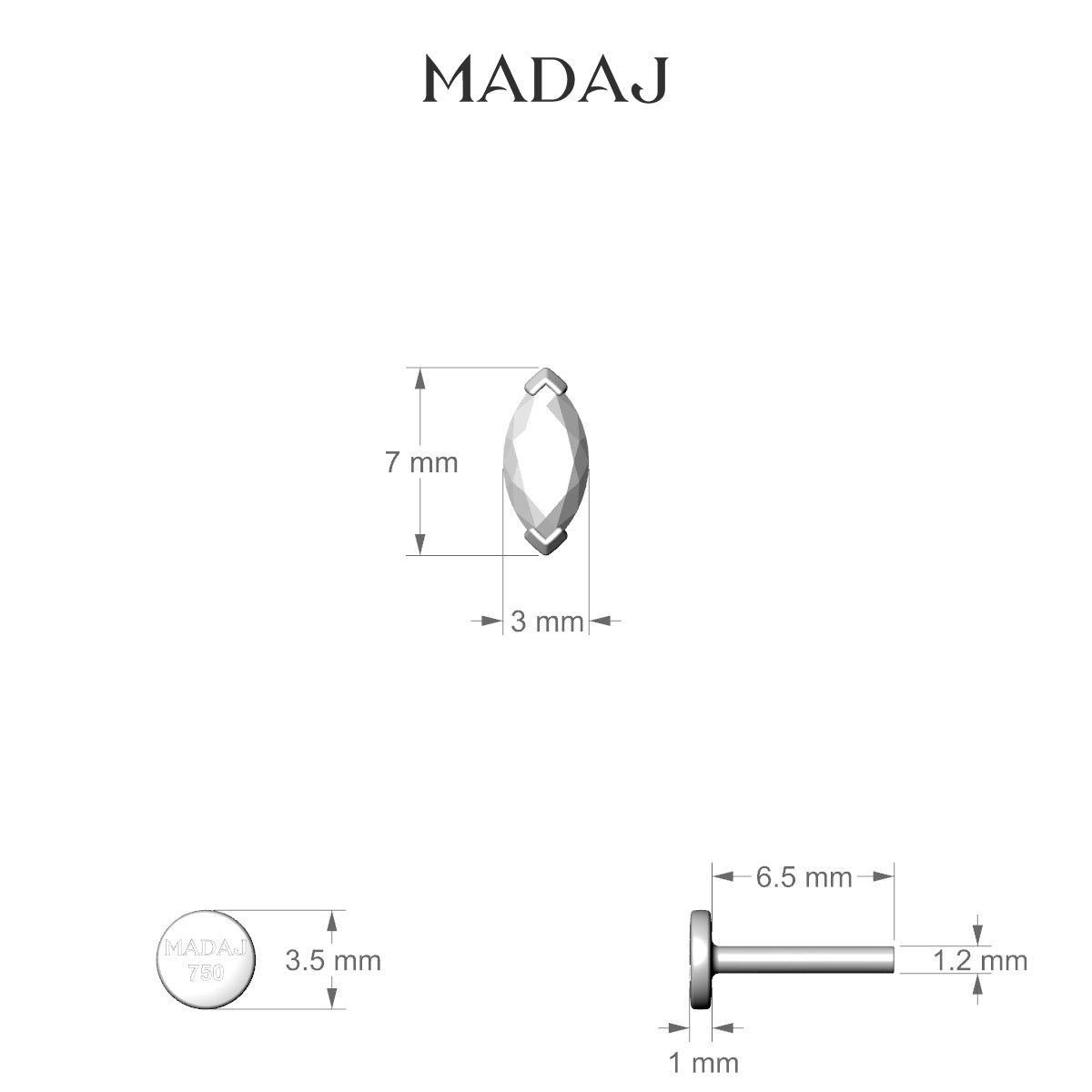
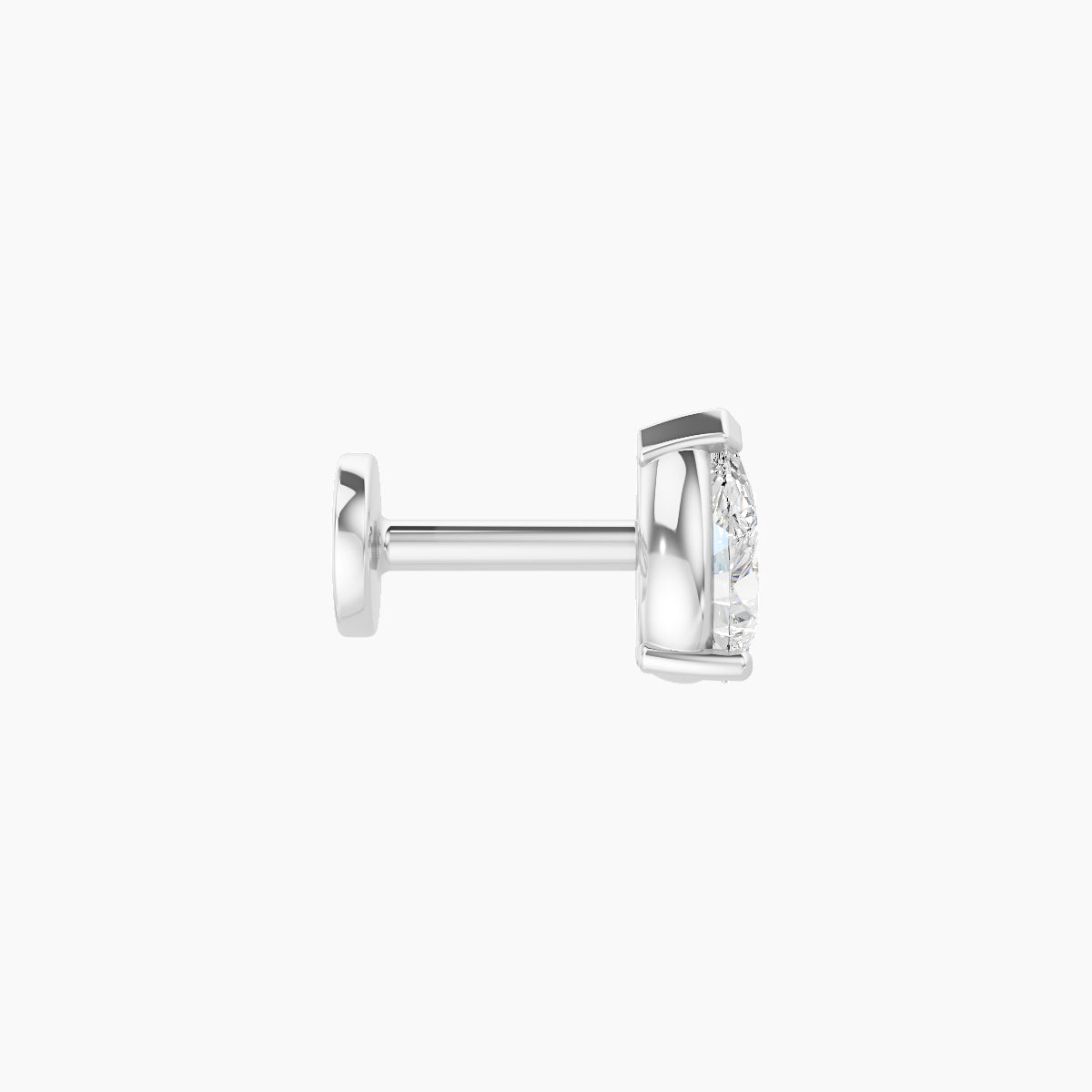
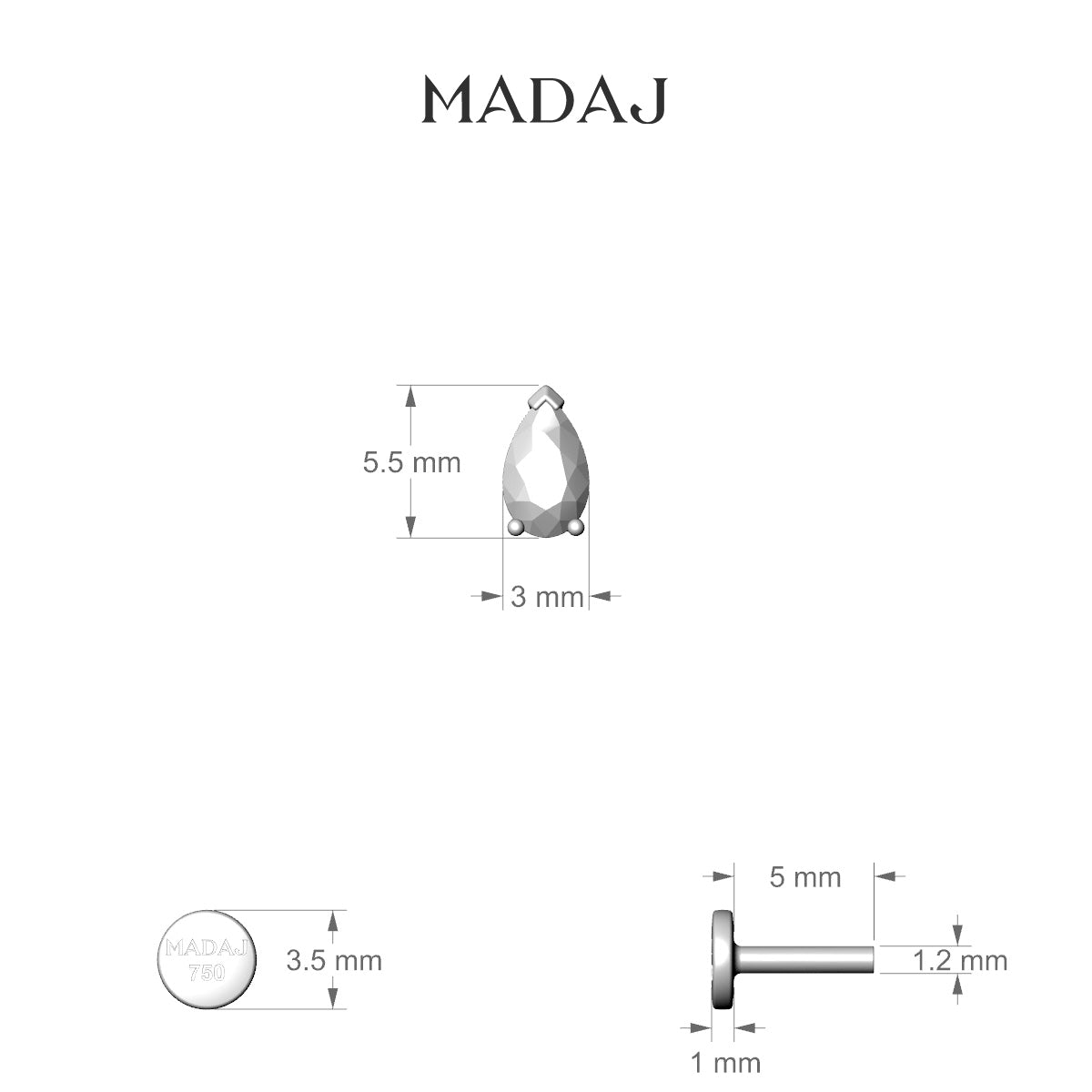
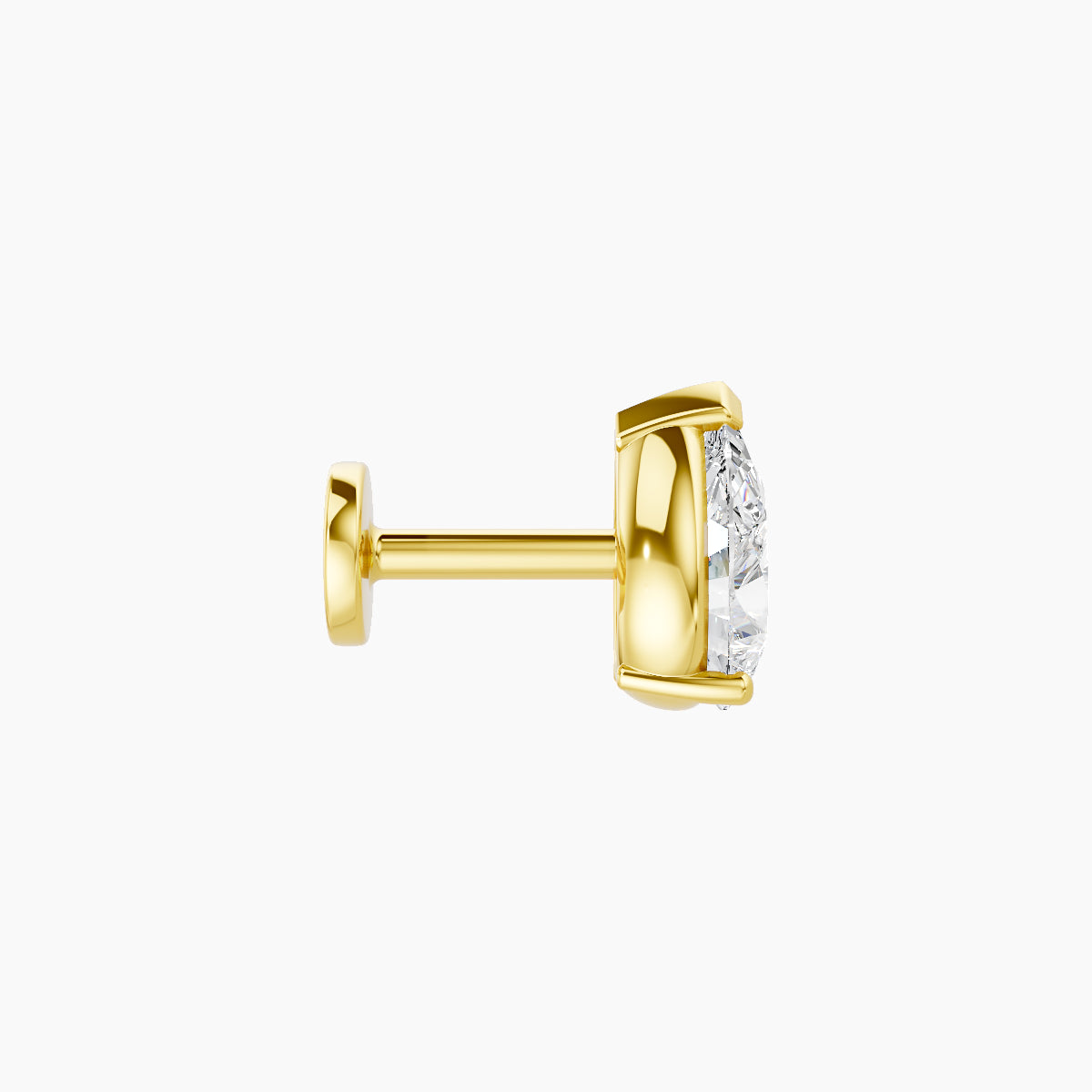
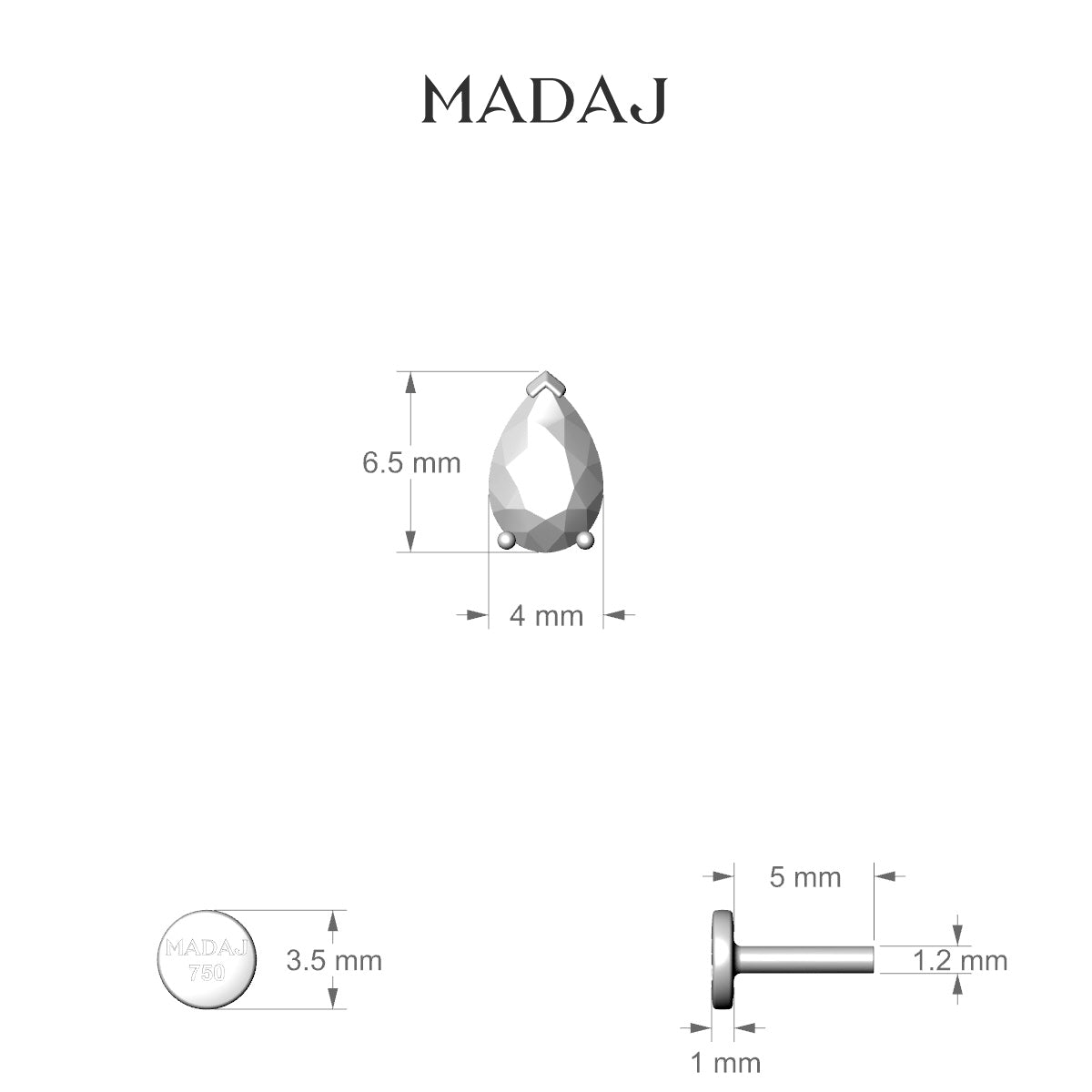
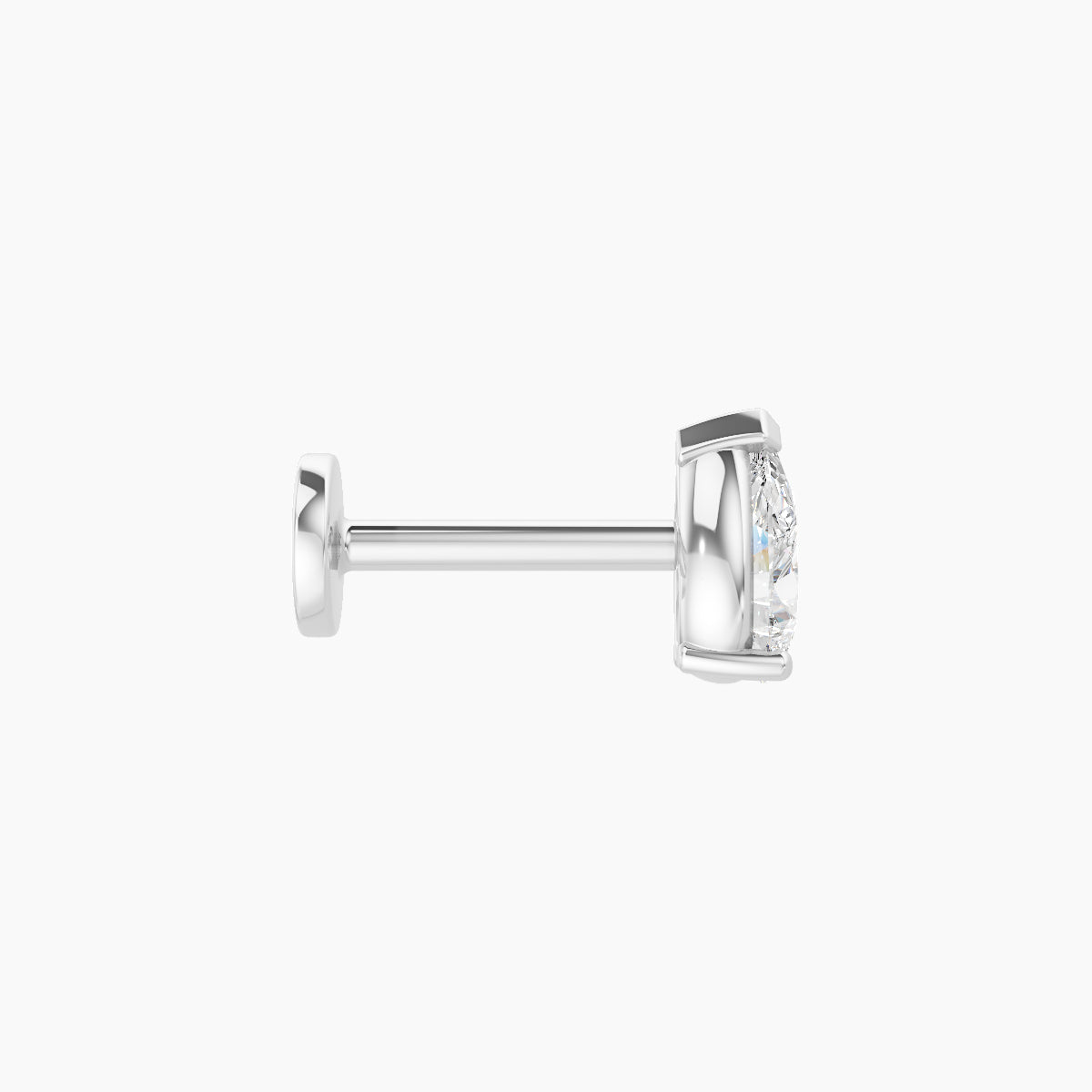
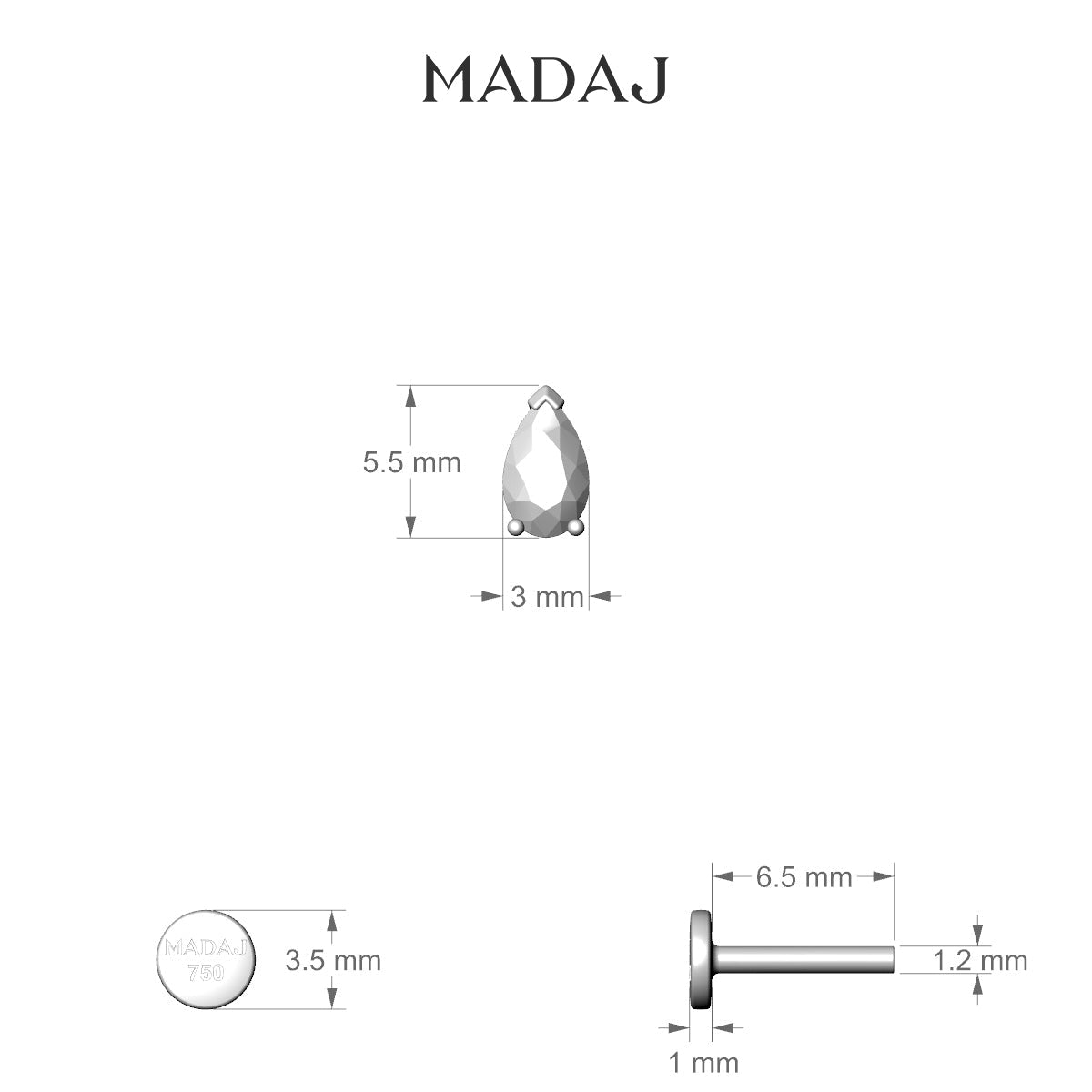
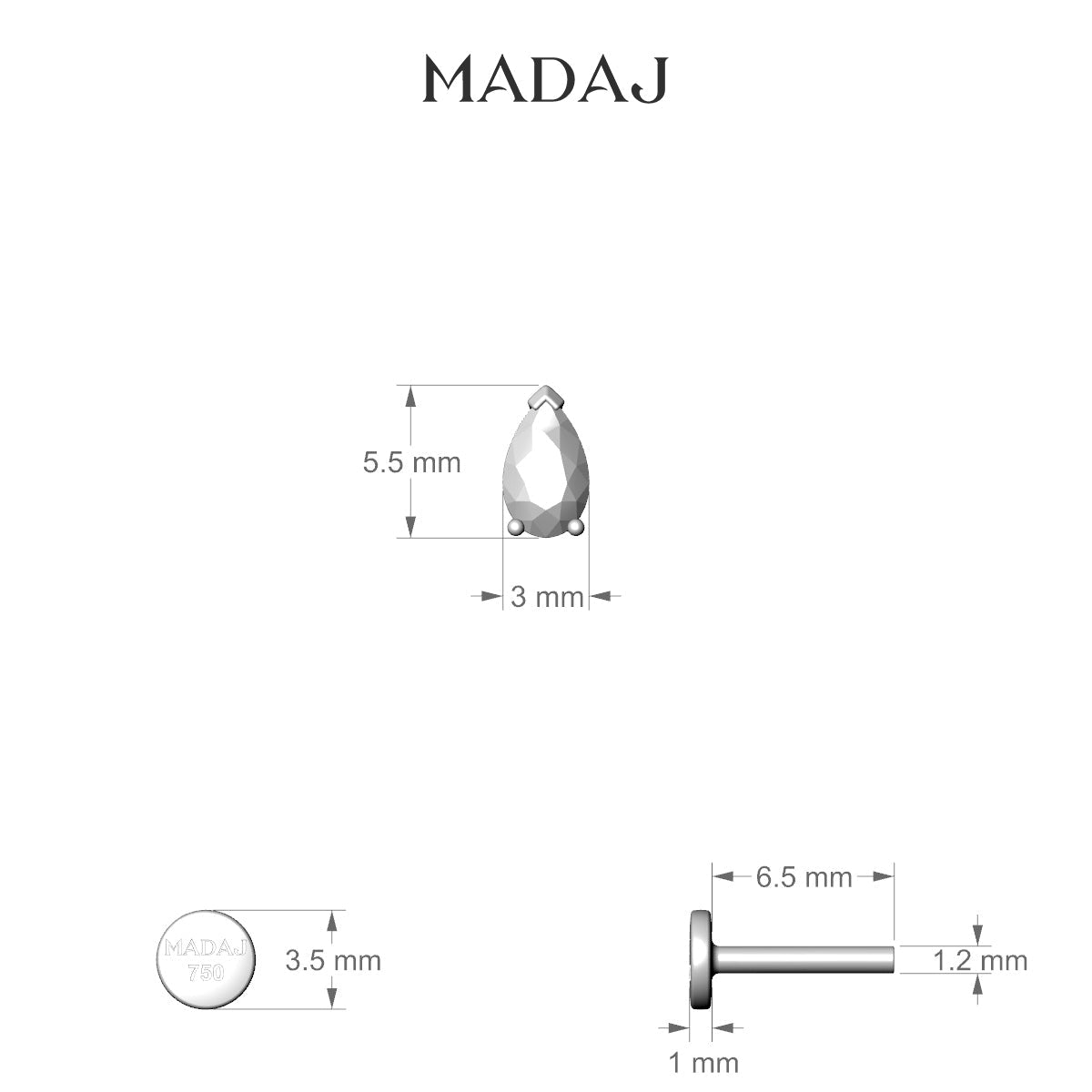
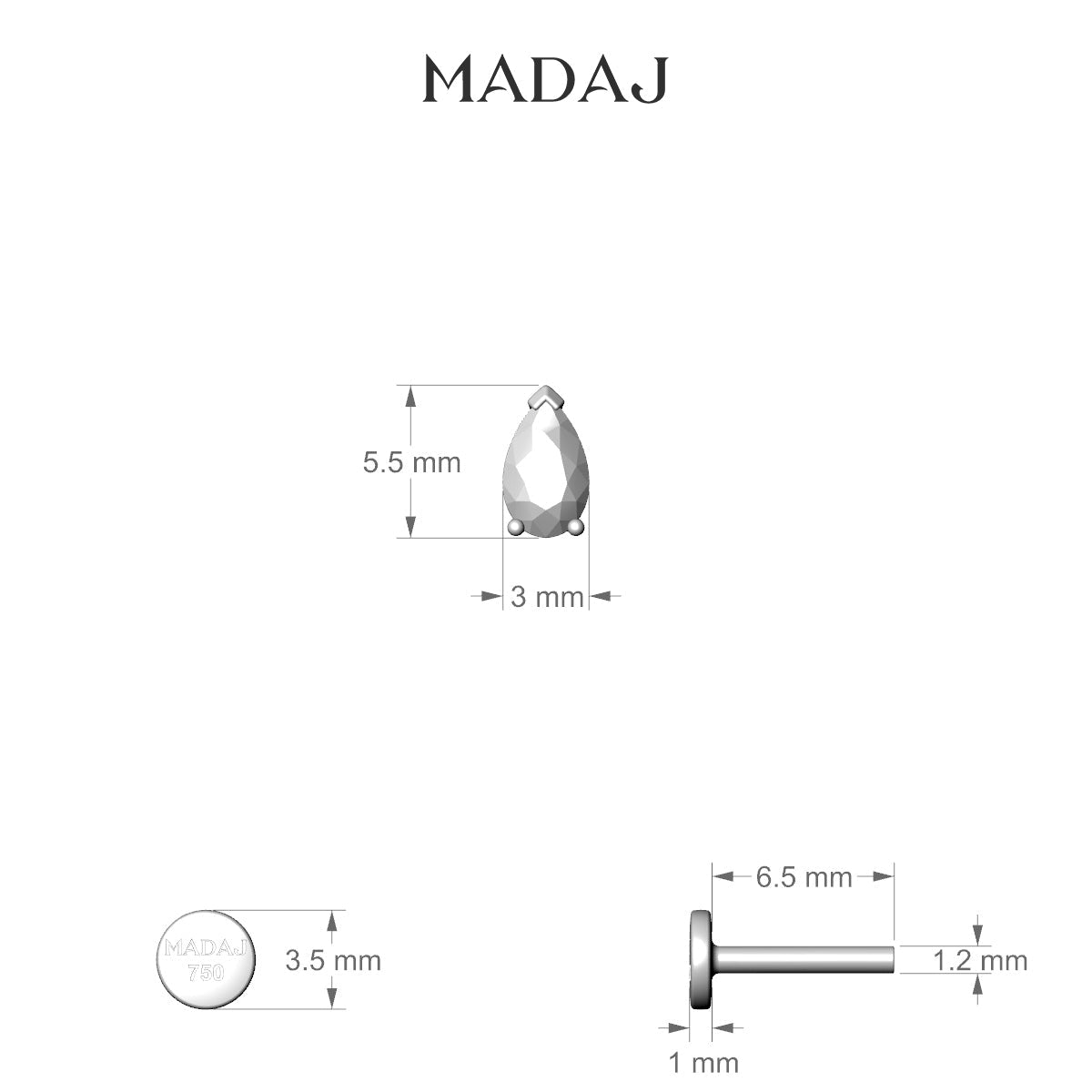
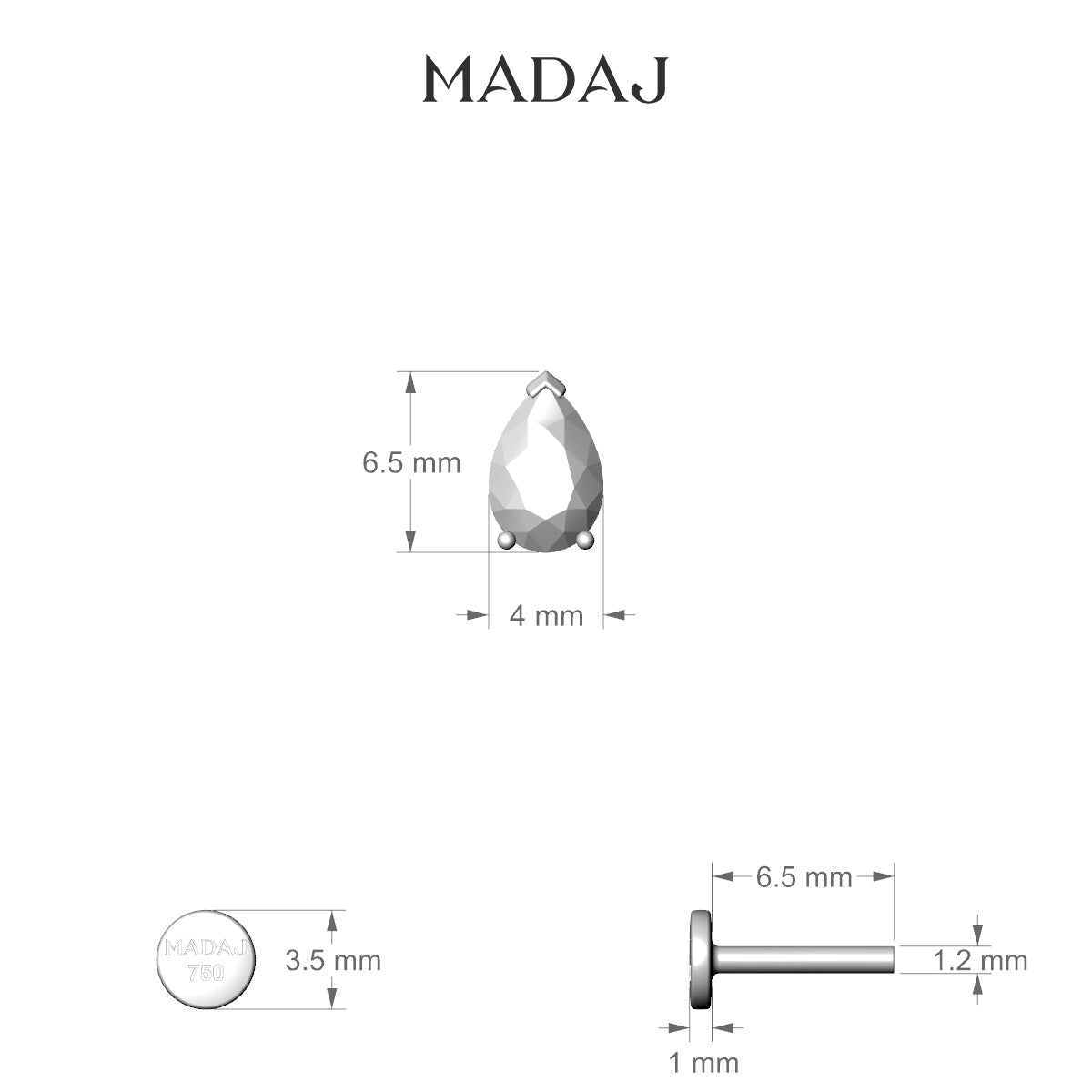
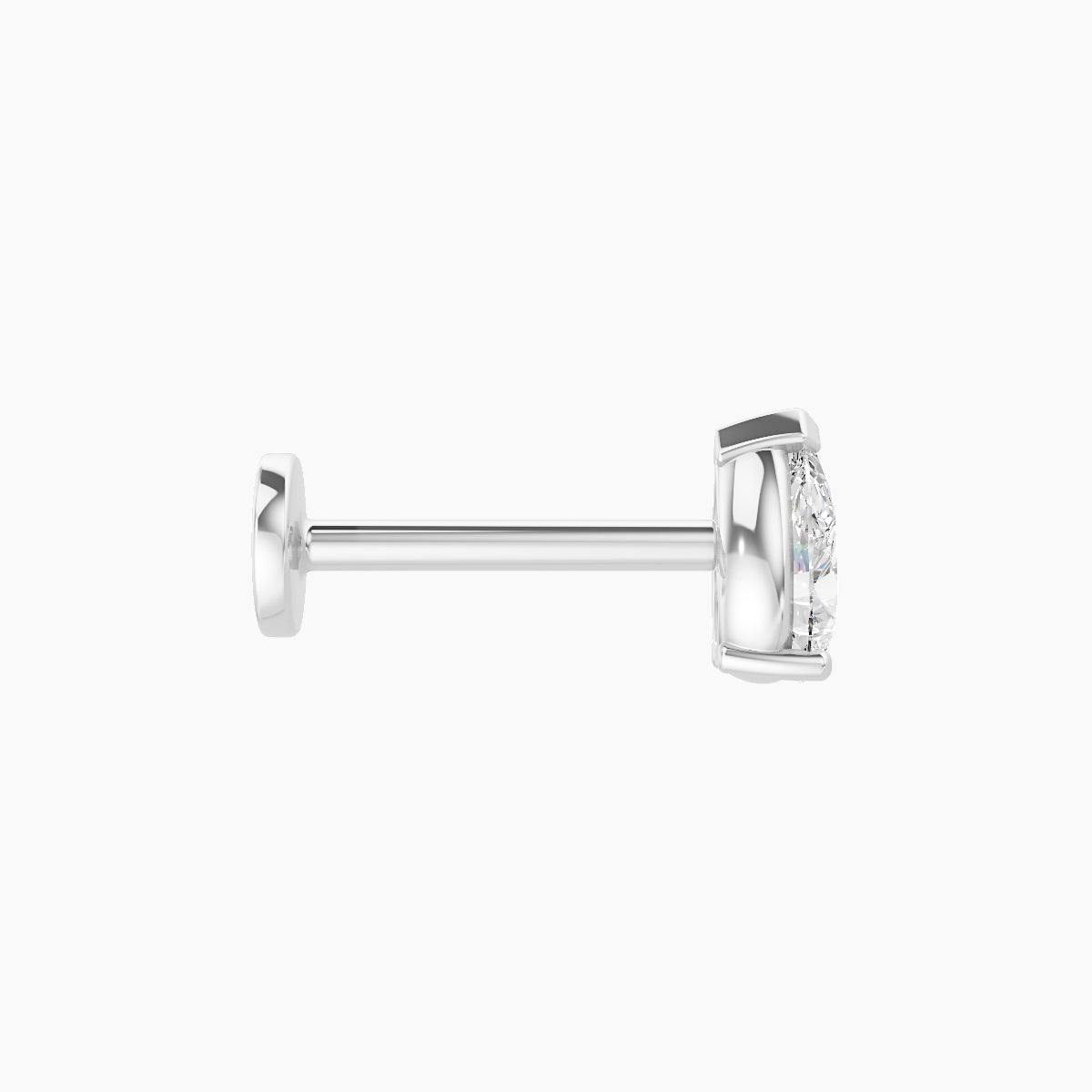
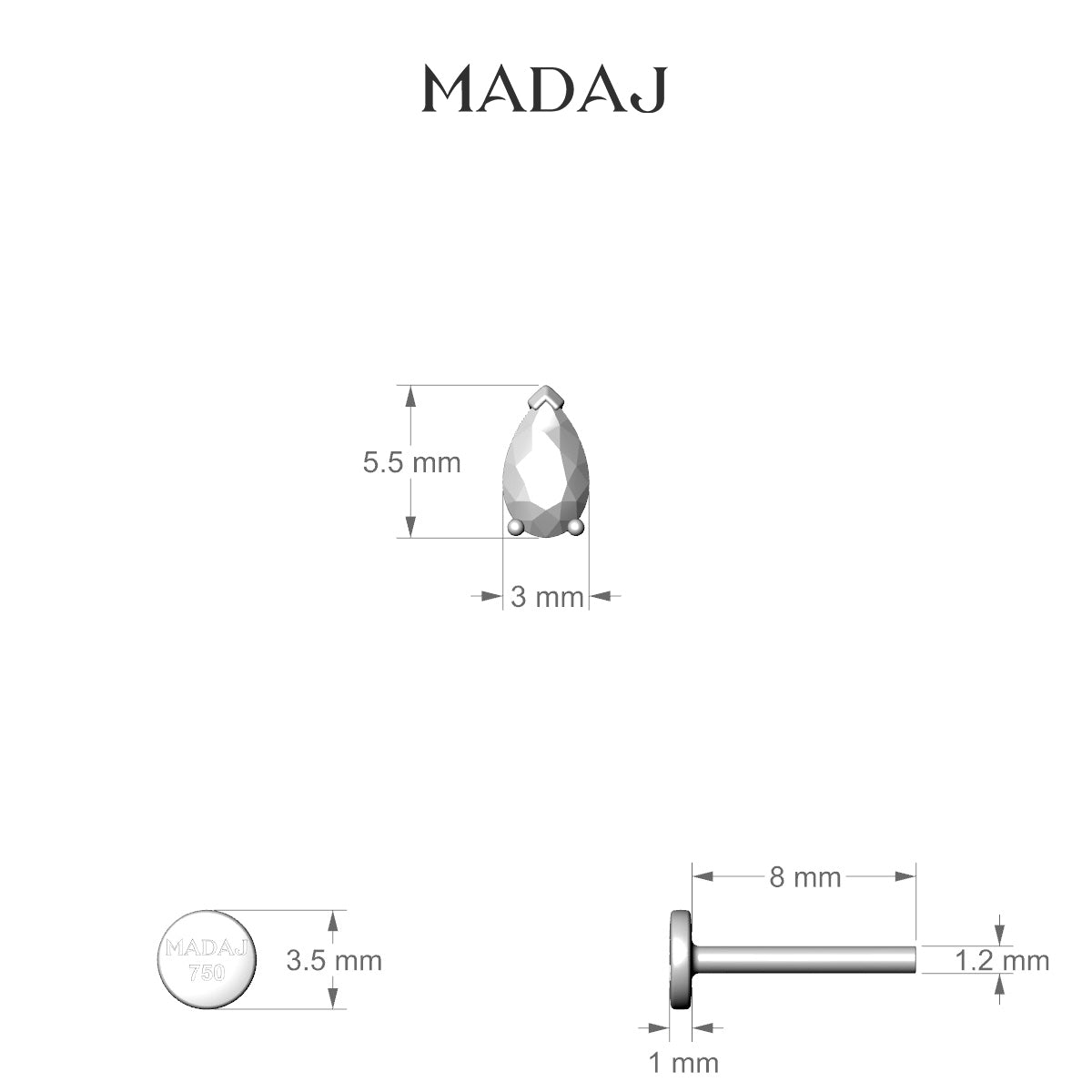
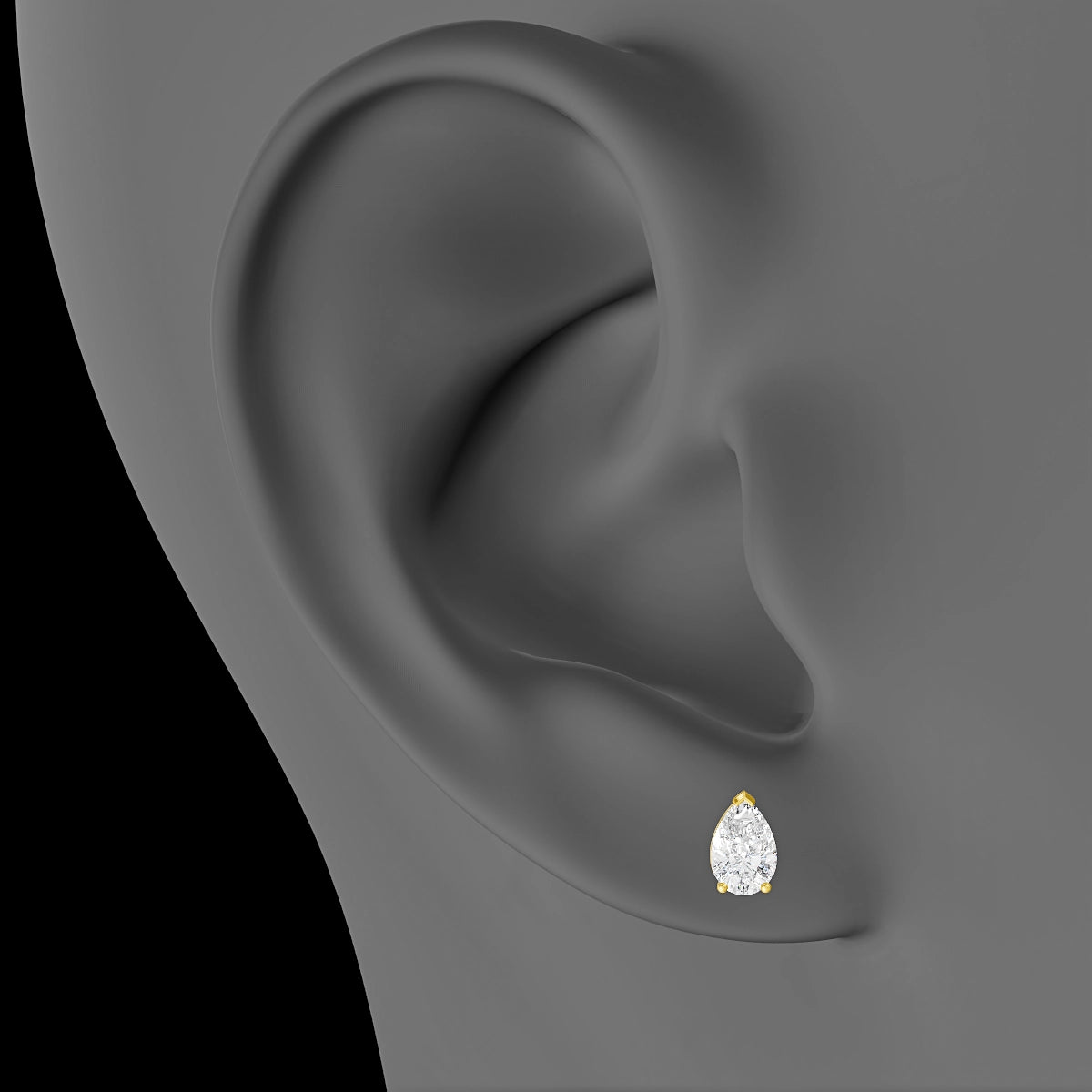
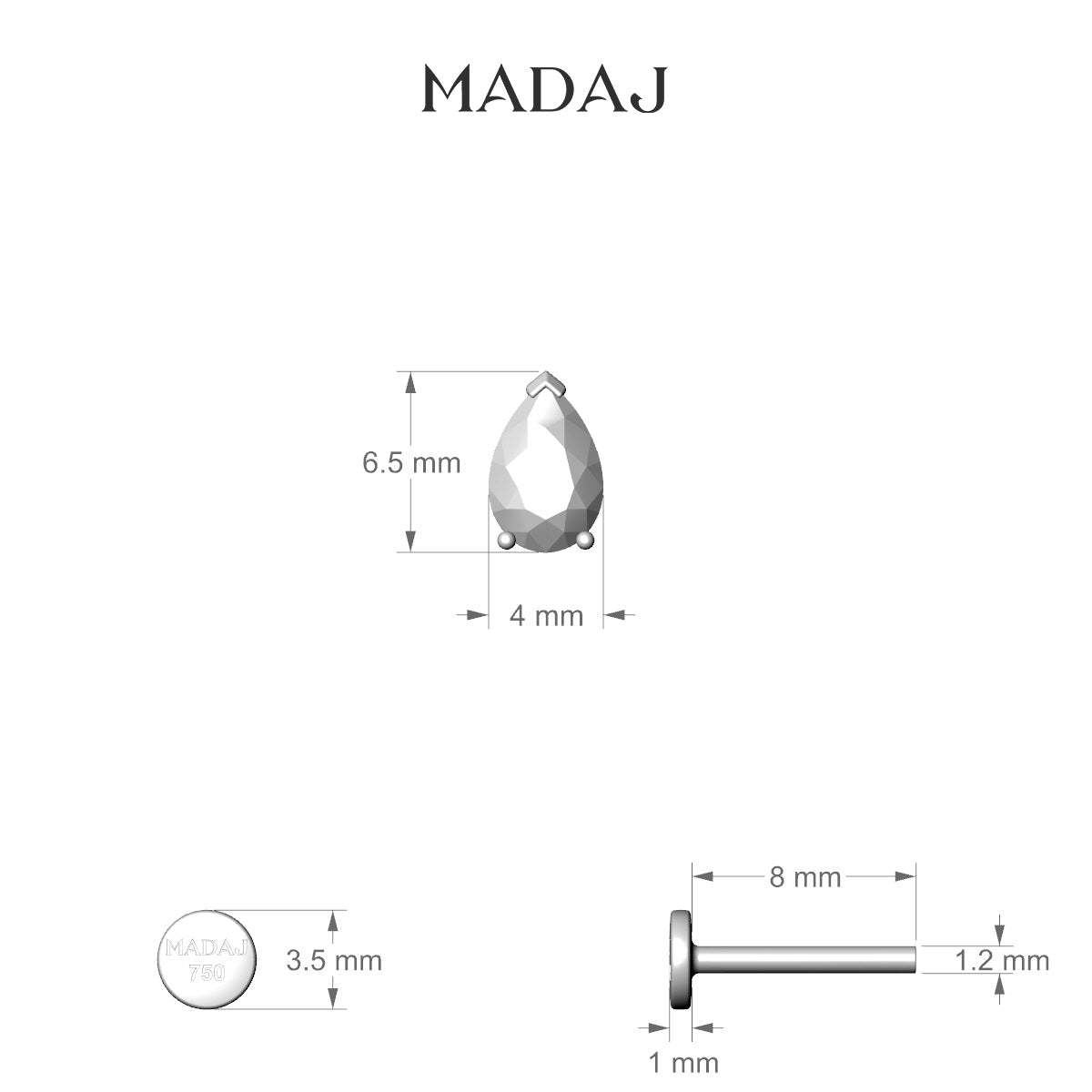
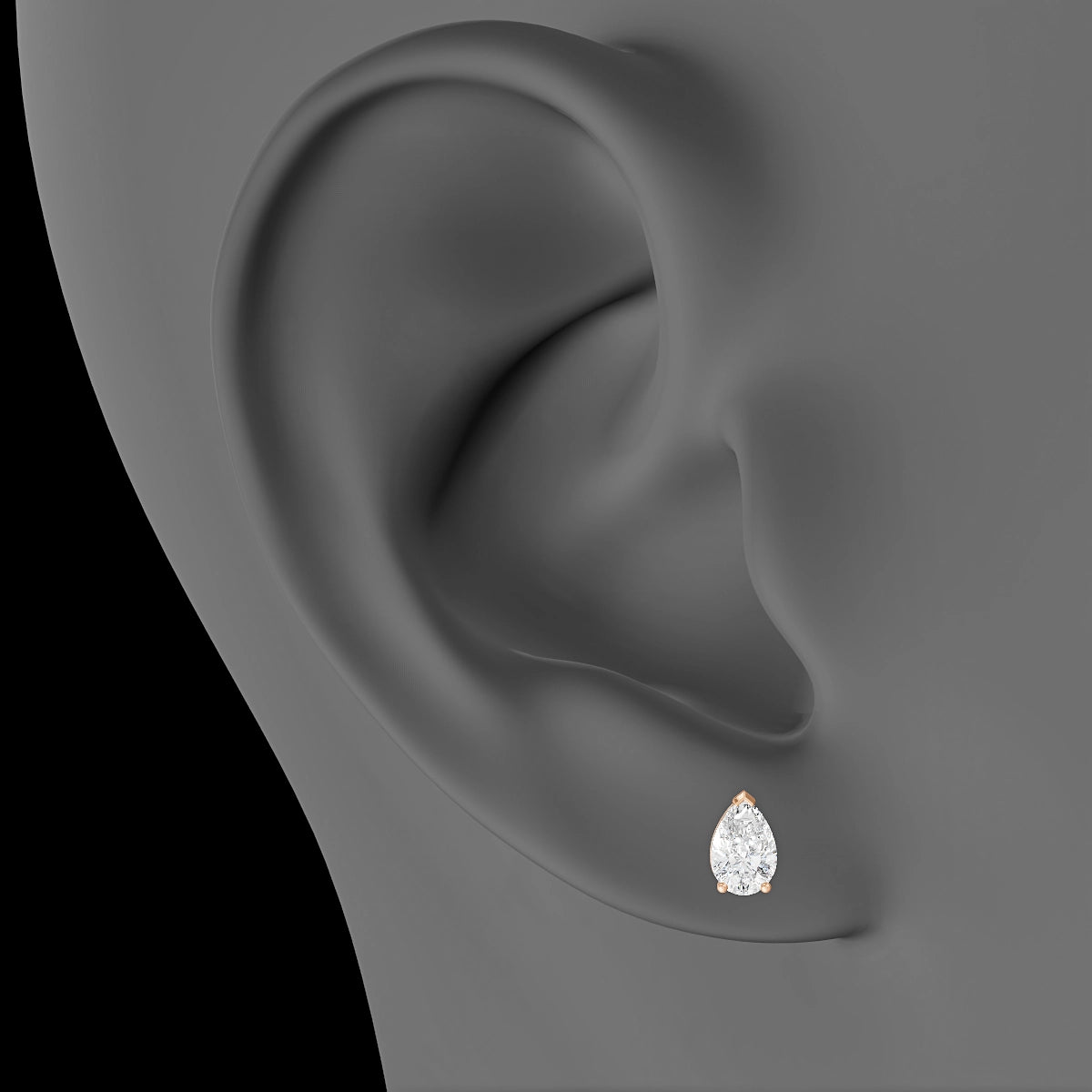
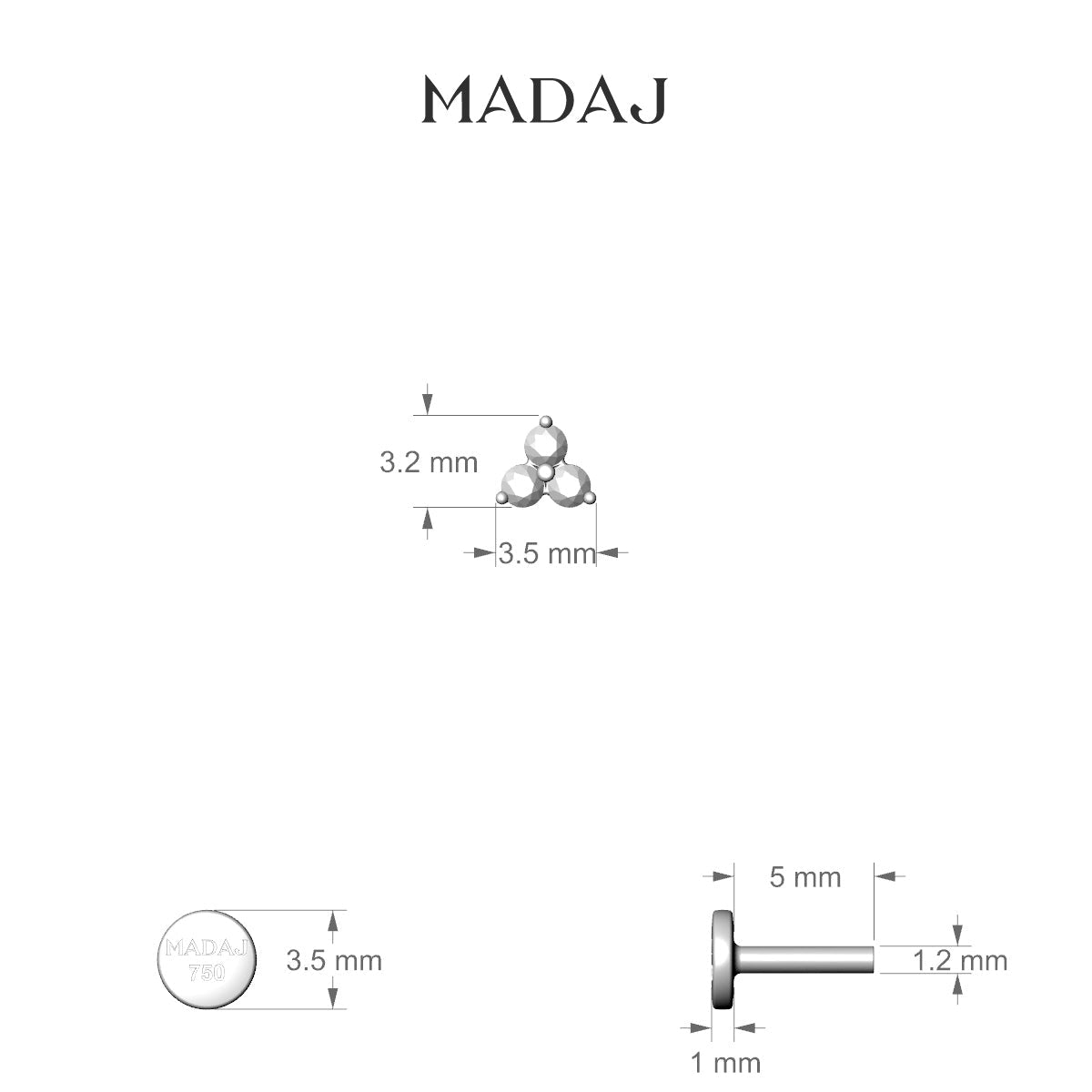
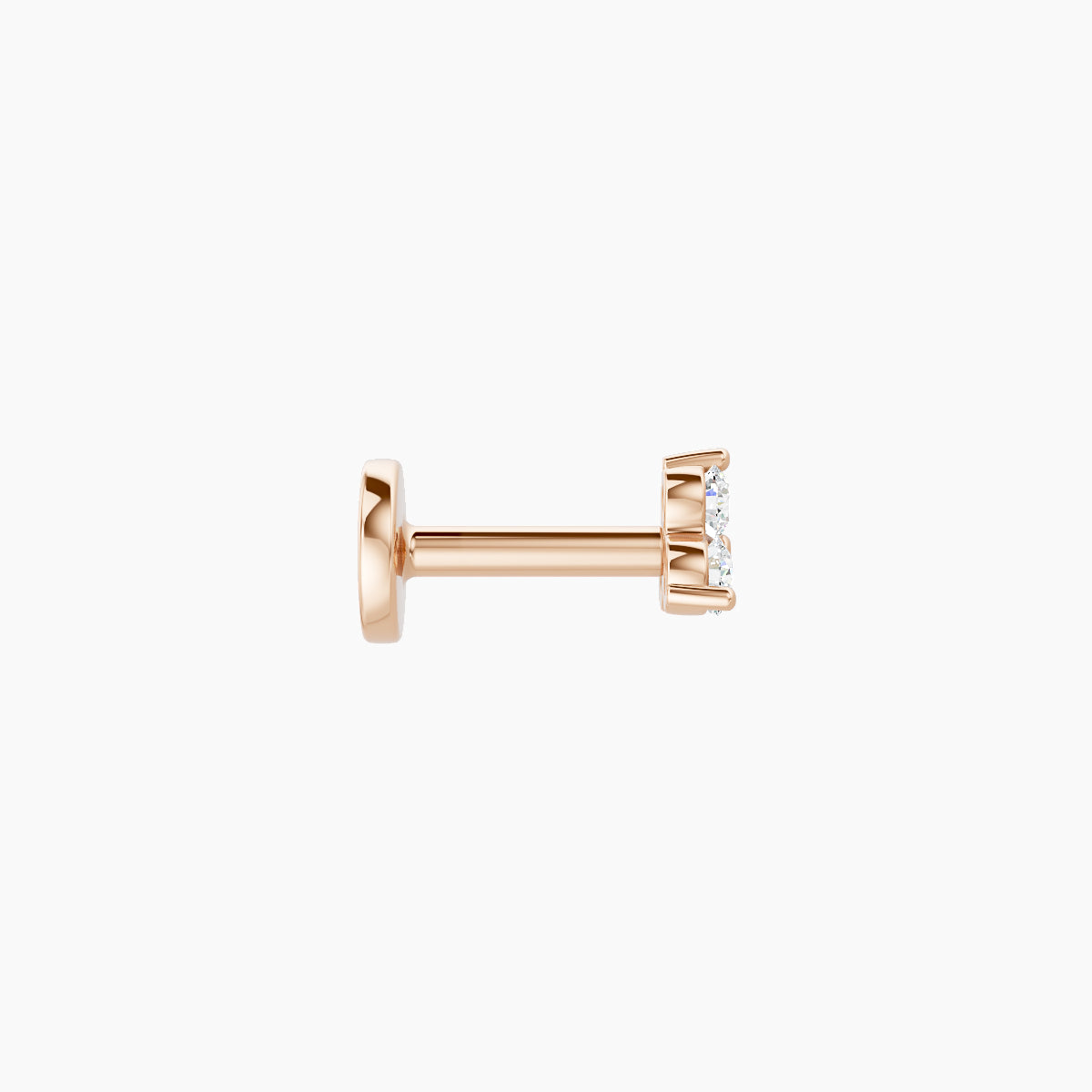
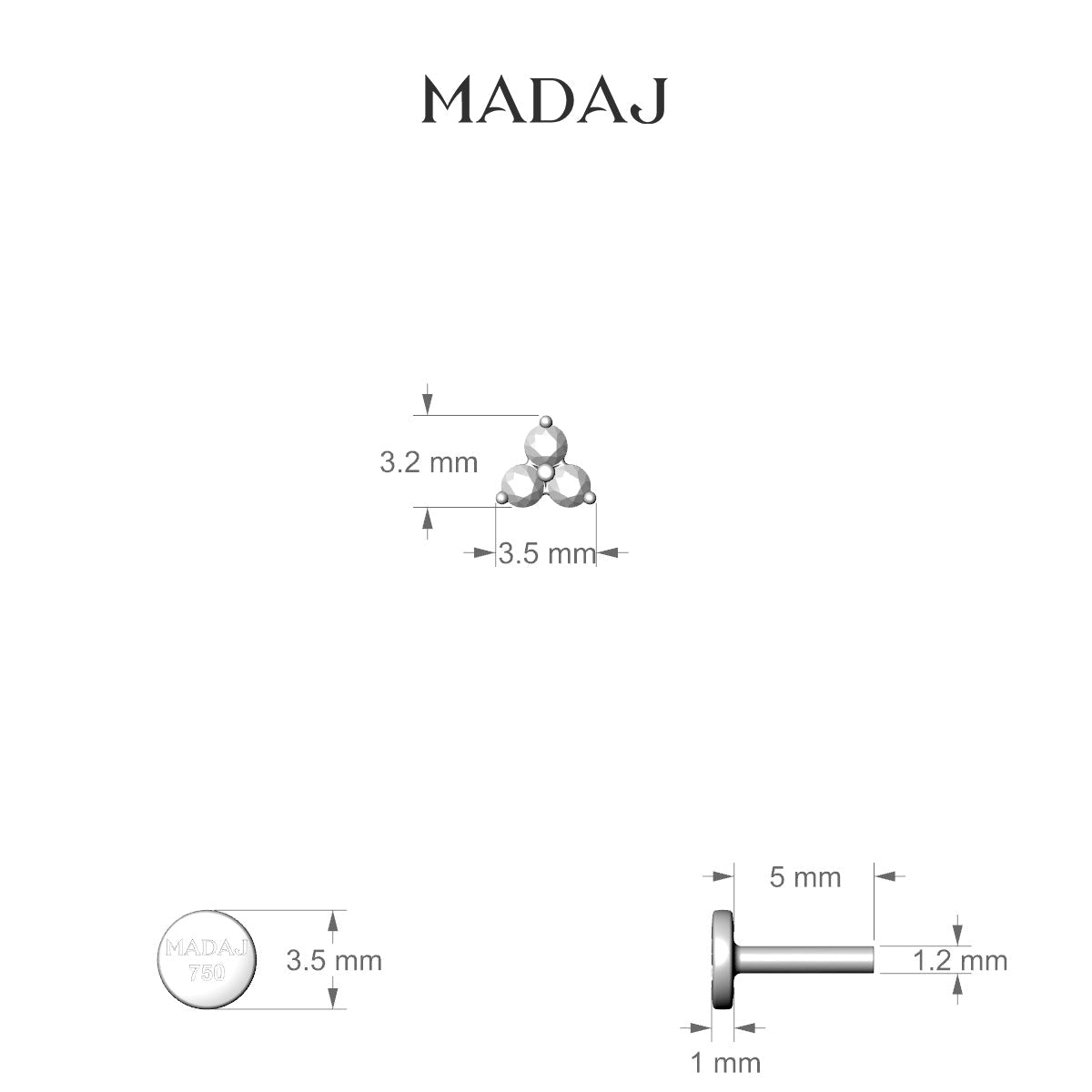
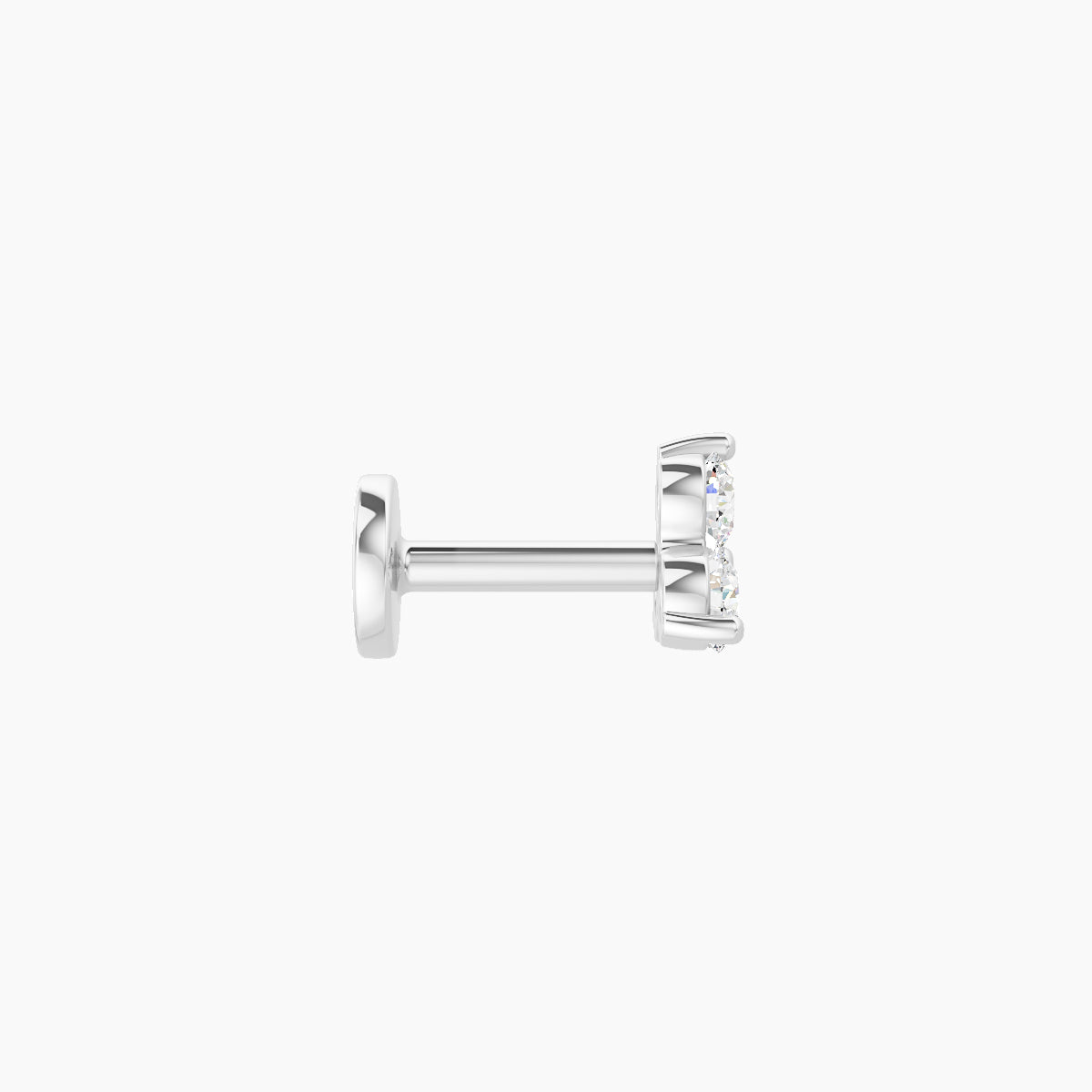
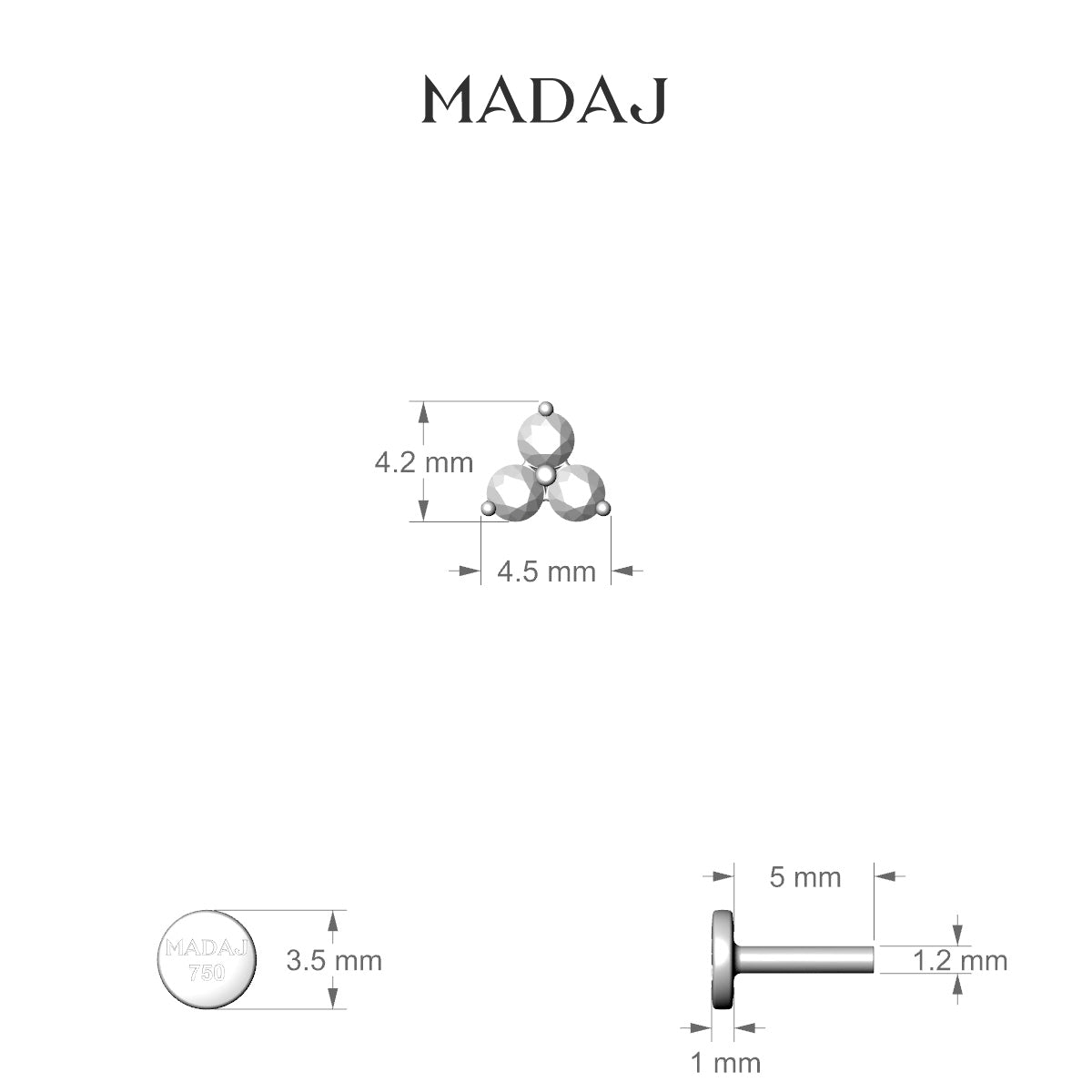
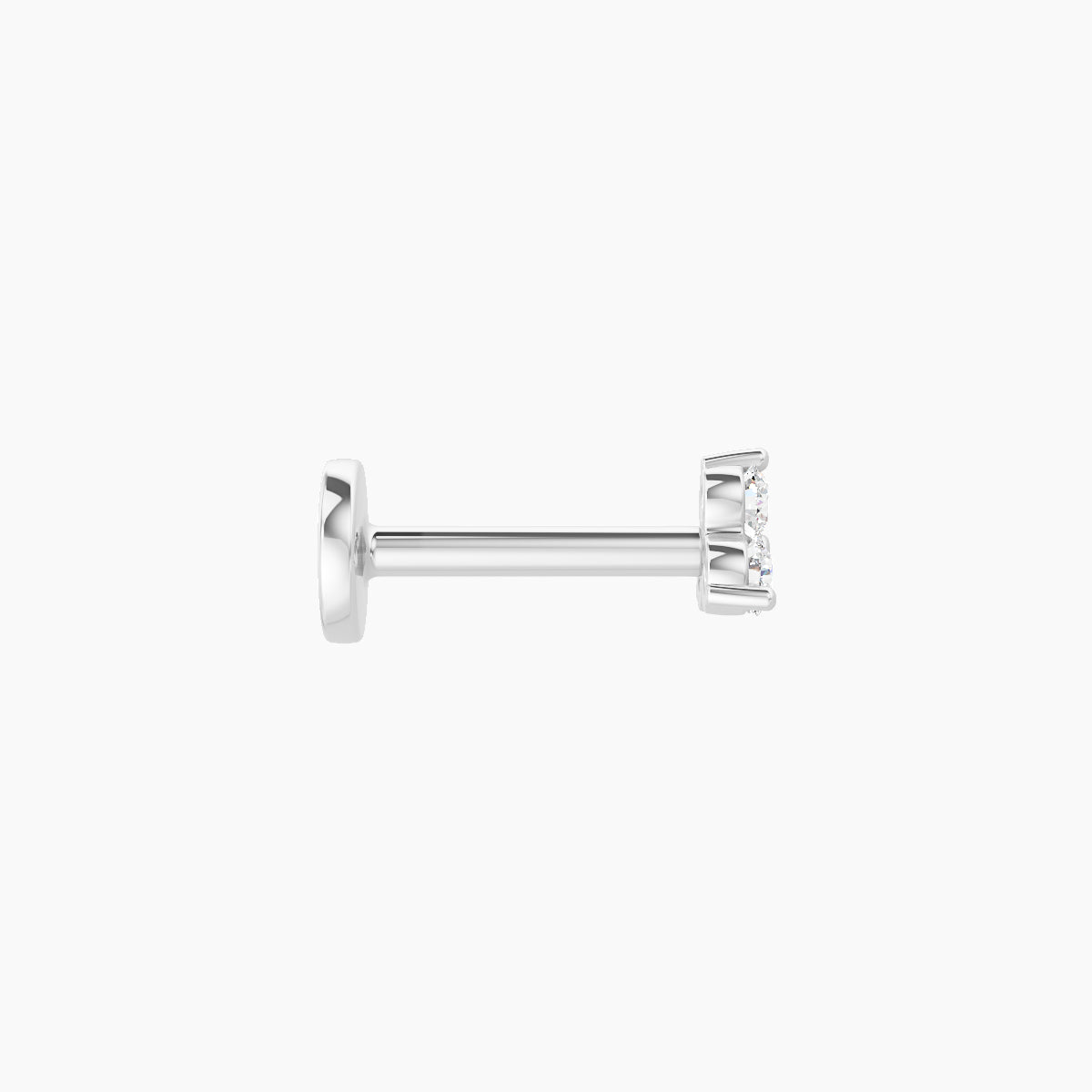
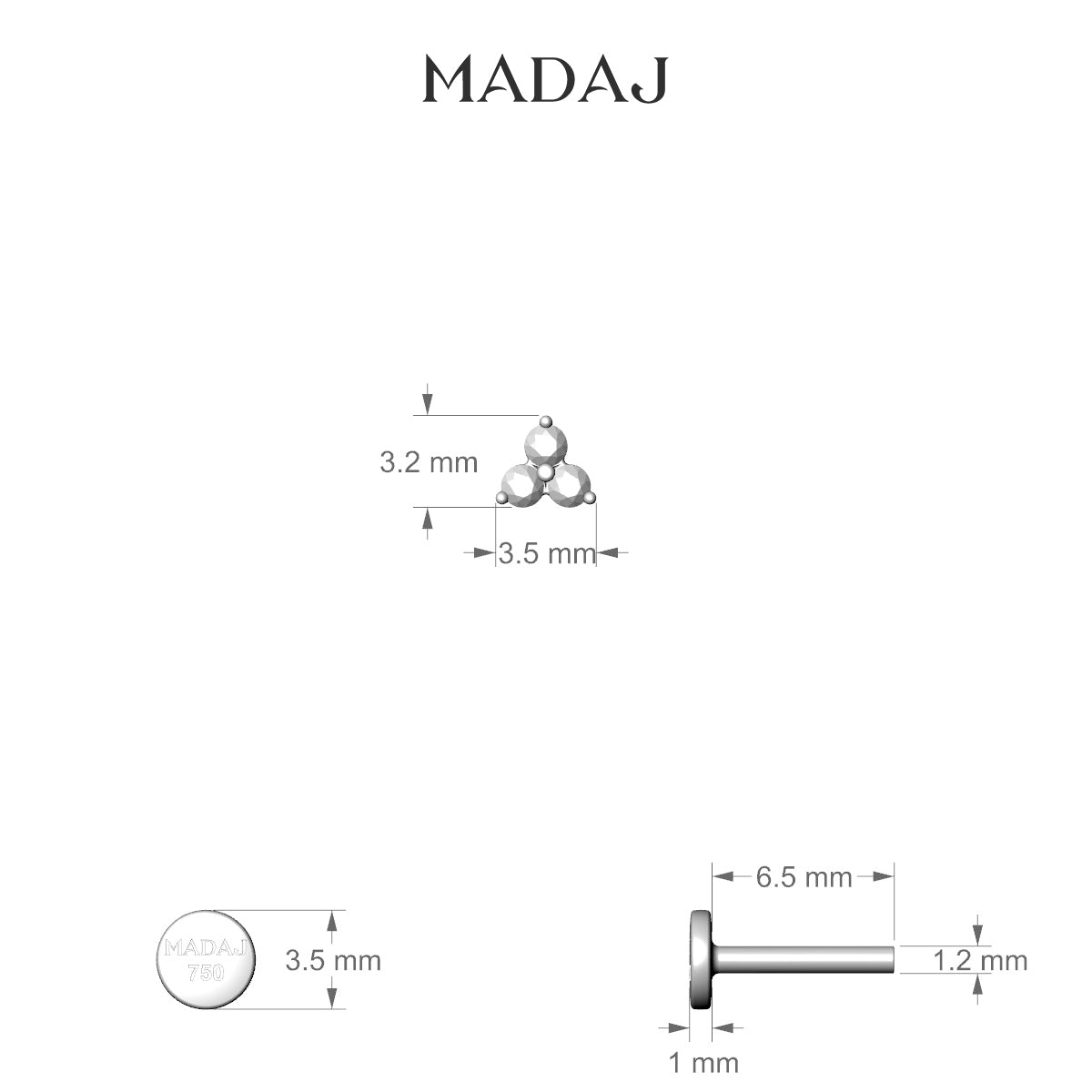
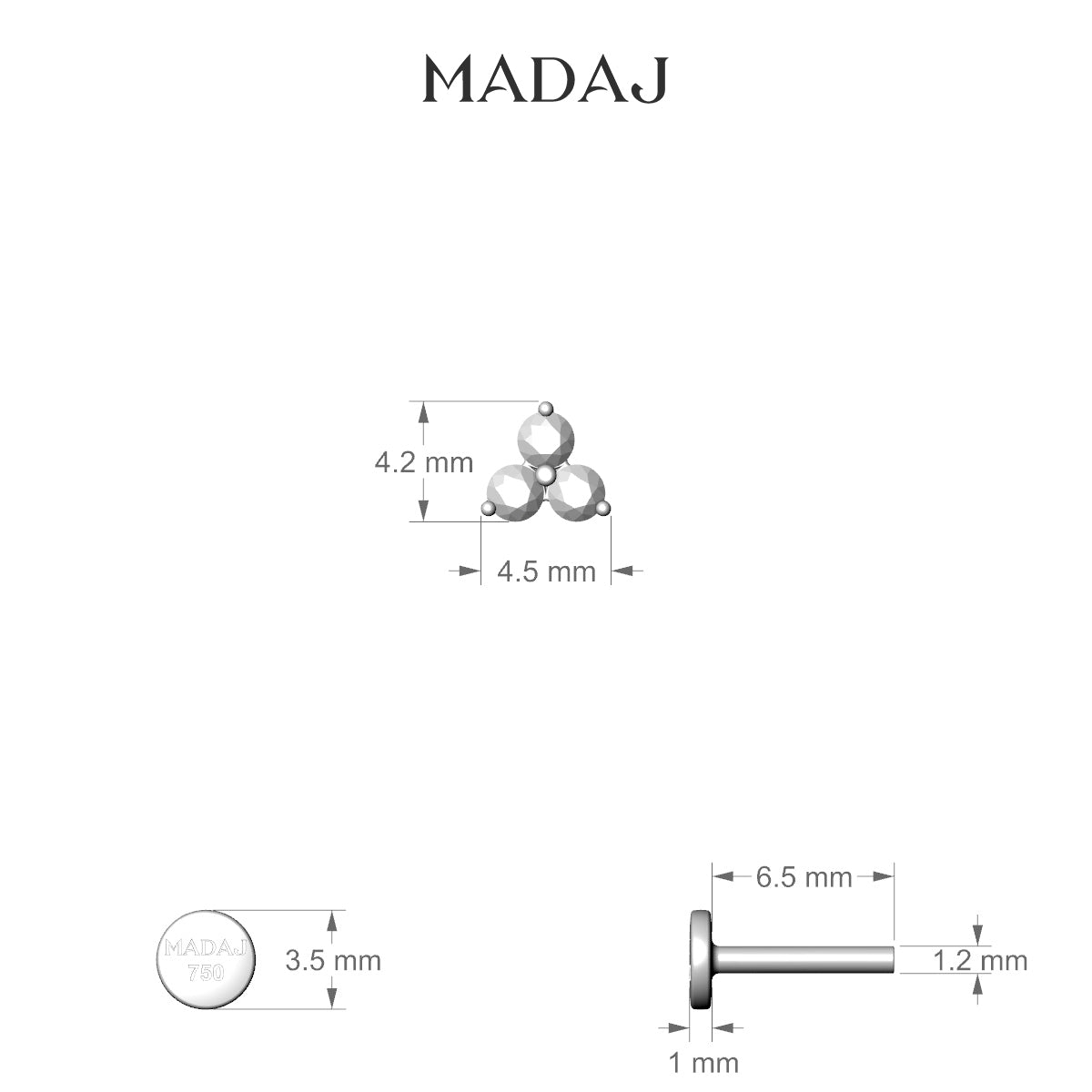
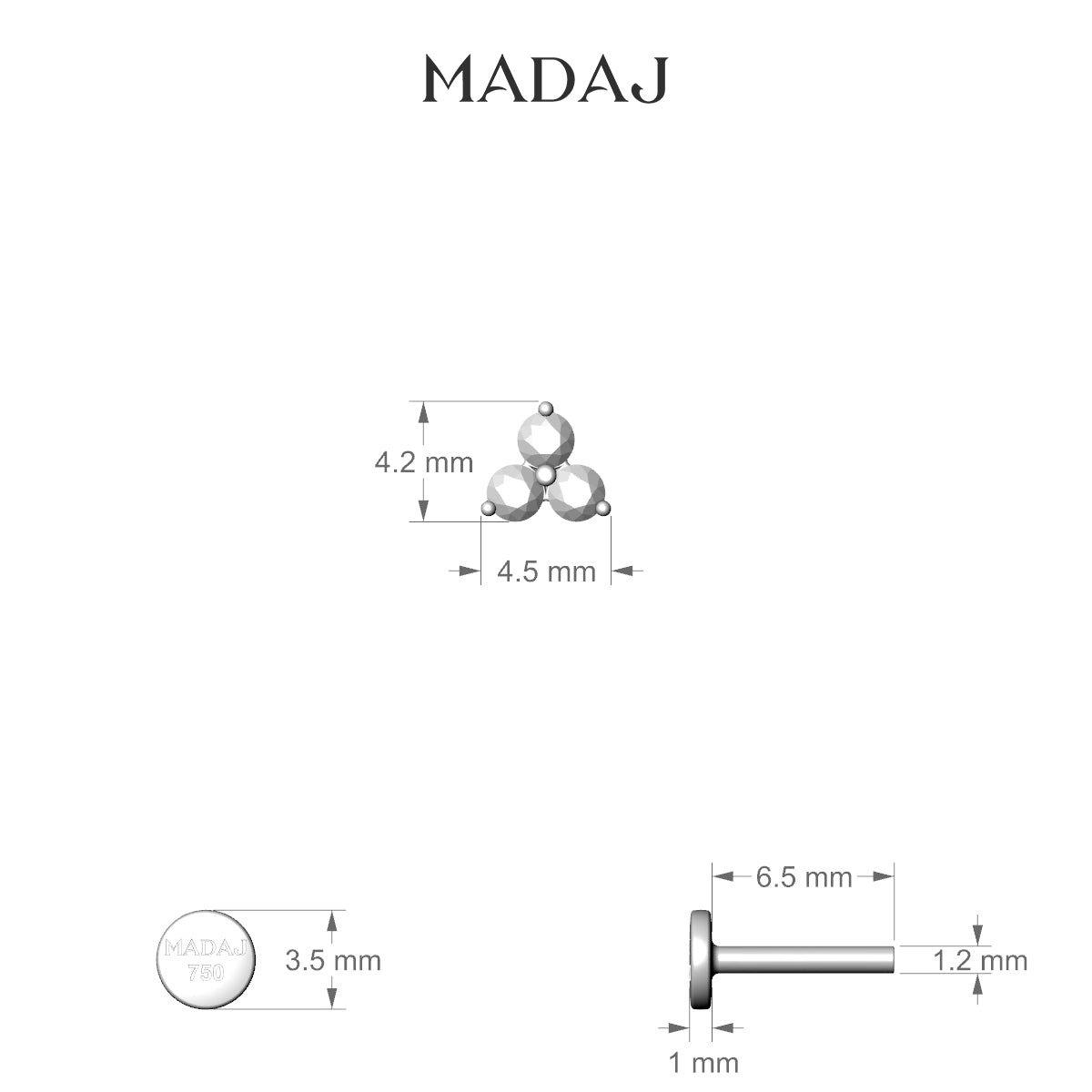
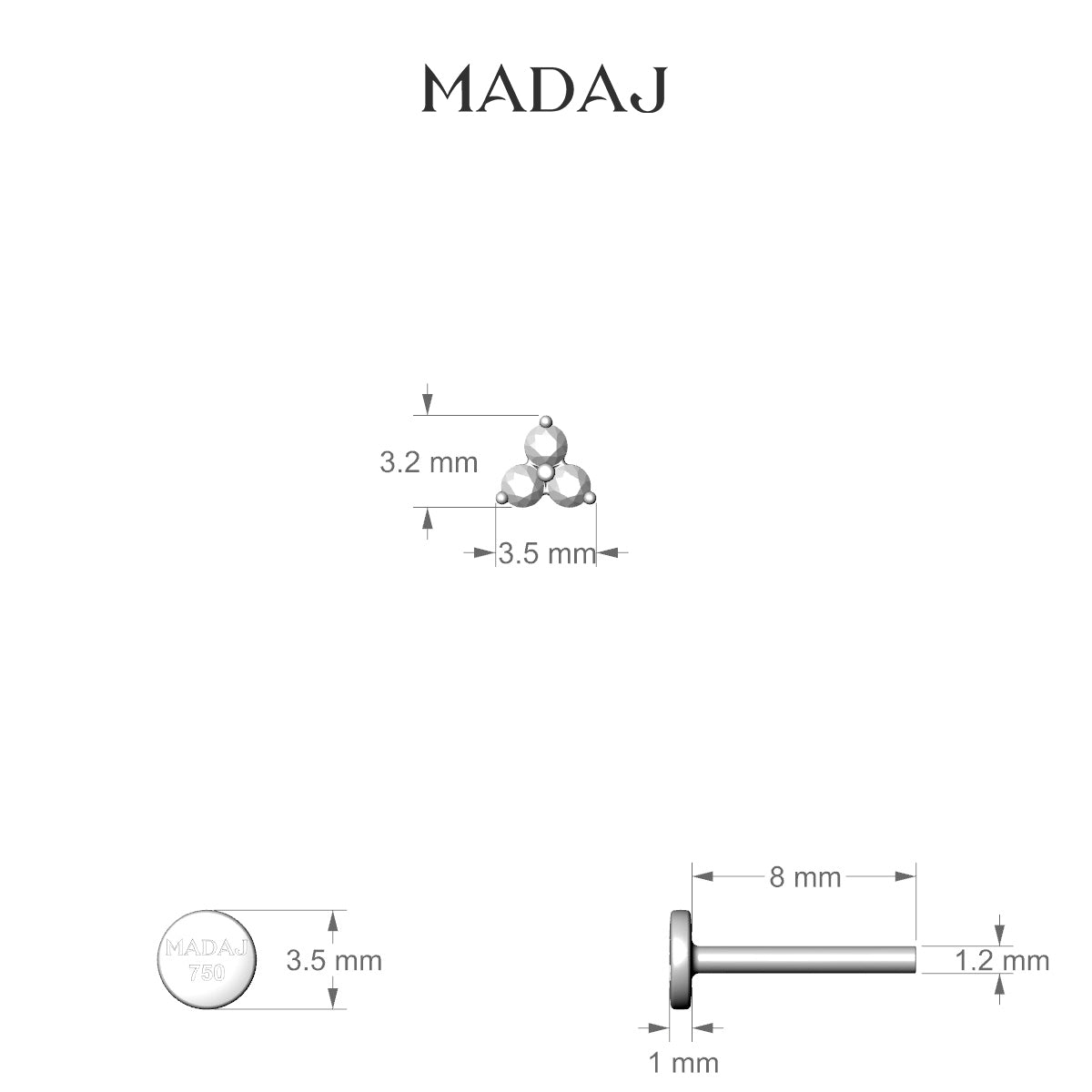
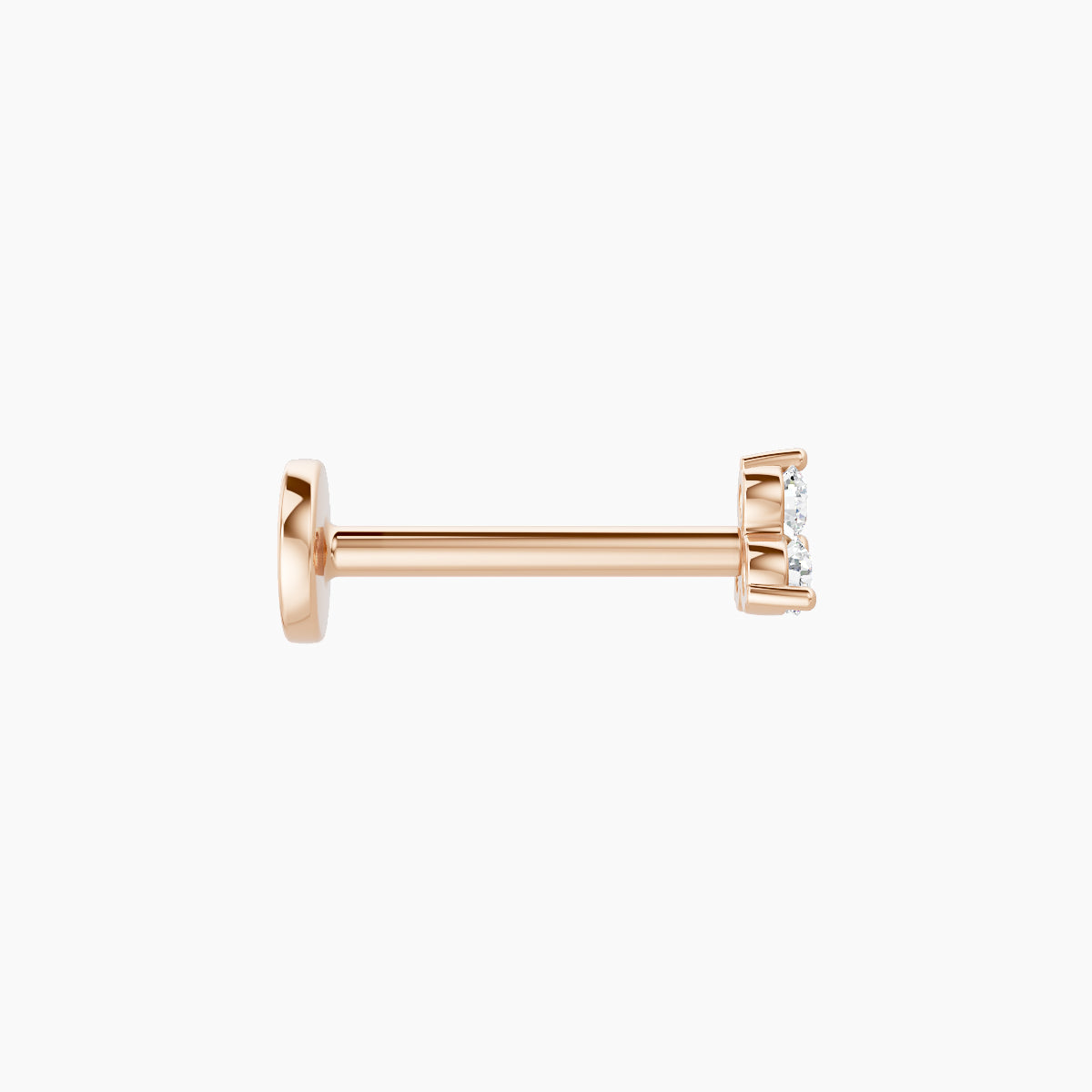
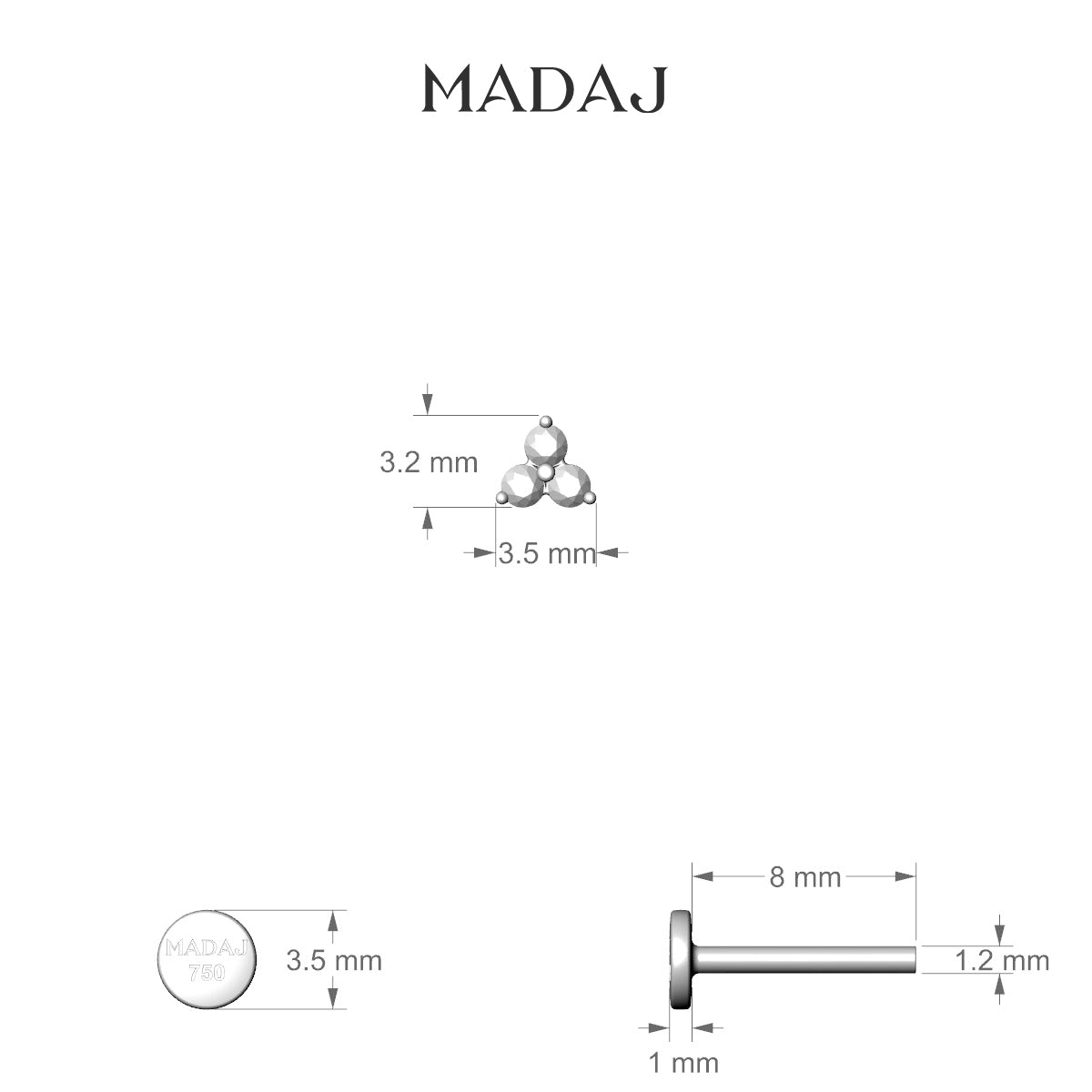
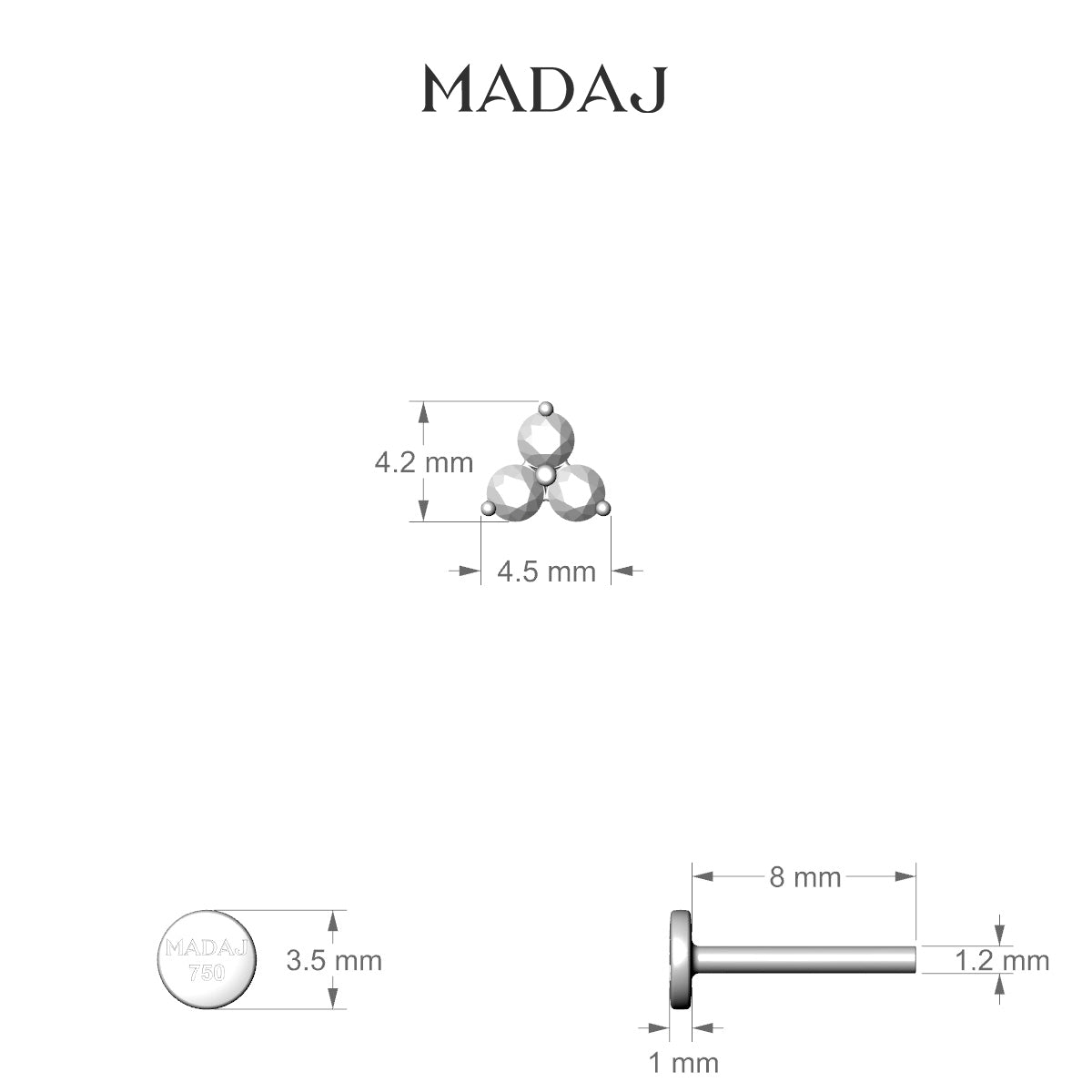
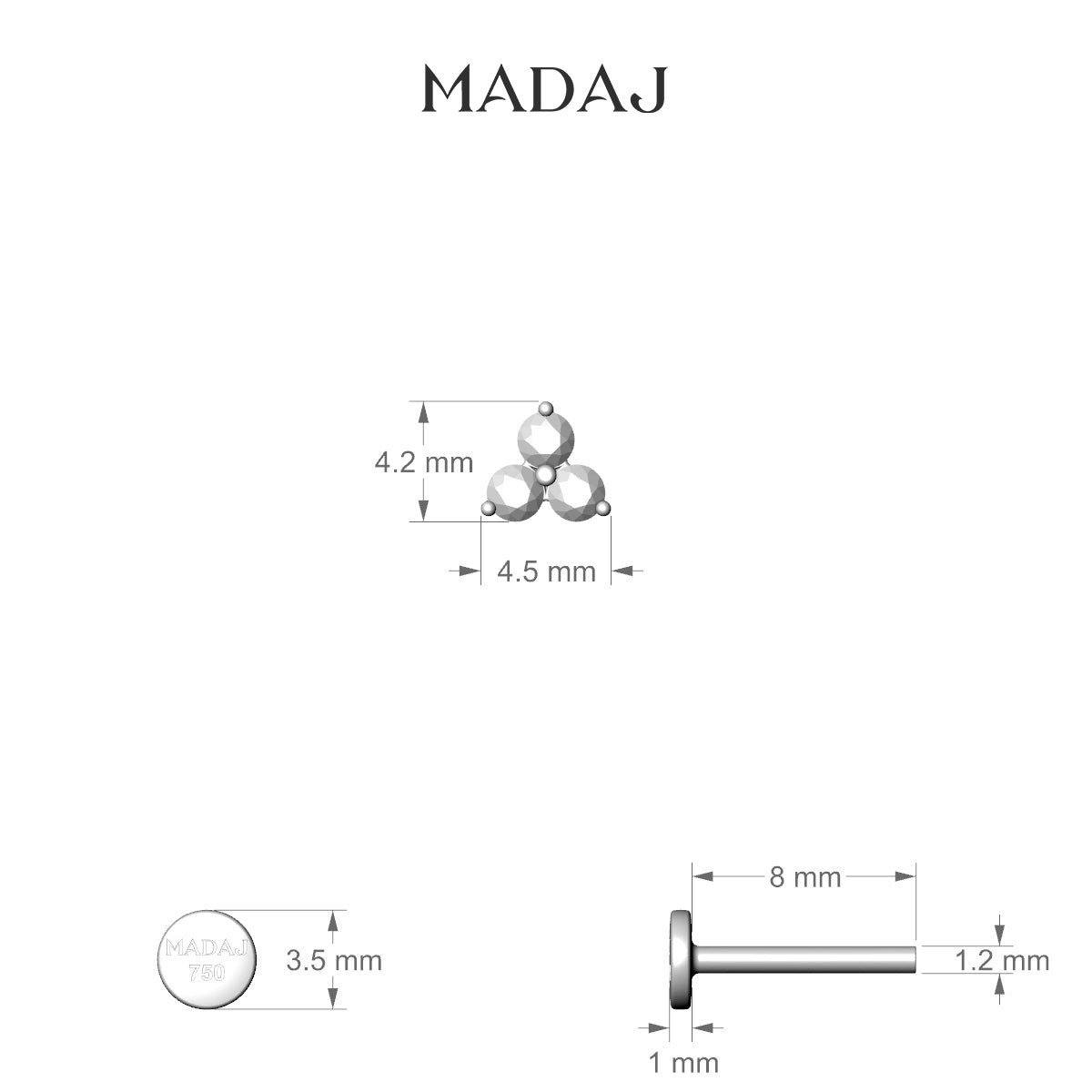
Flat studs from MADAJ come in three lengths, 5 mm, 6.5 mm, or 8 mm, built on a 1.2 mm (16 gauge) post and finished with a screw-back flat disc closure.
If the piercing is new, 8 mm gives the swelling that happens in the first few weeks somewhere to go without the jewelry feeling tight. Down the line, once the area has settled, most people find 5 mm or 6.5 mm sits closer and flatter against the skin. Everyone's ear is shaped a little differently though, so treat these lengths as a starting point and let your piercer weigh in on the final call.
MATERIALS
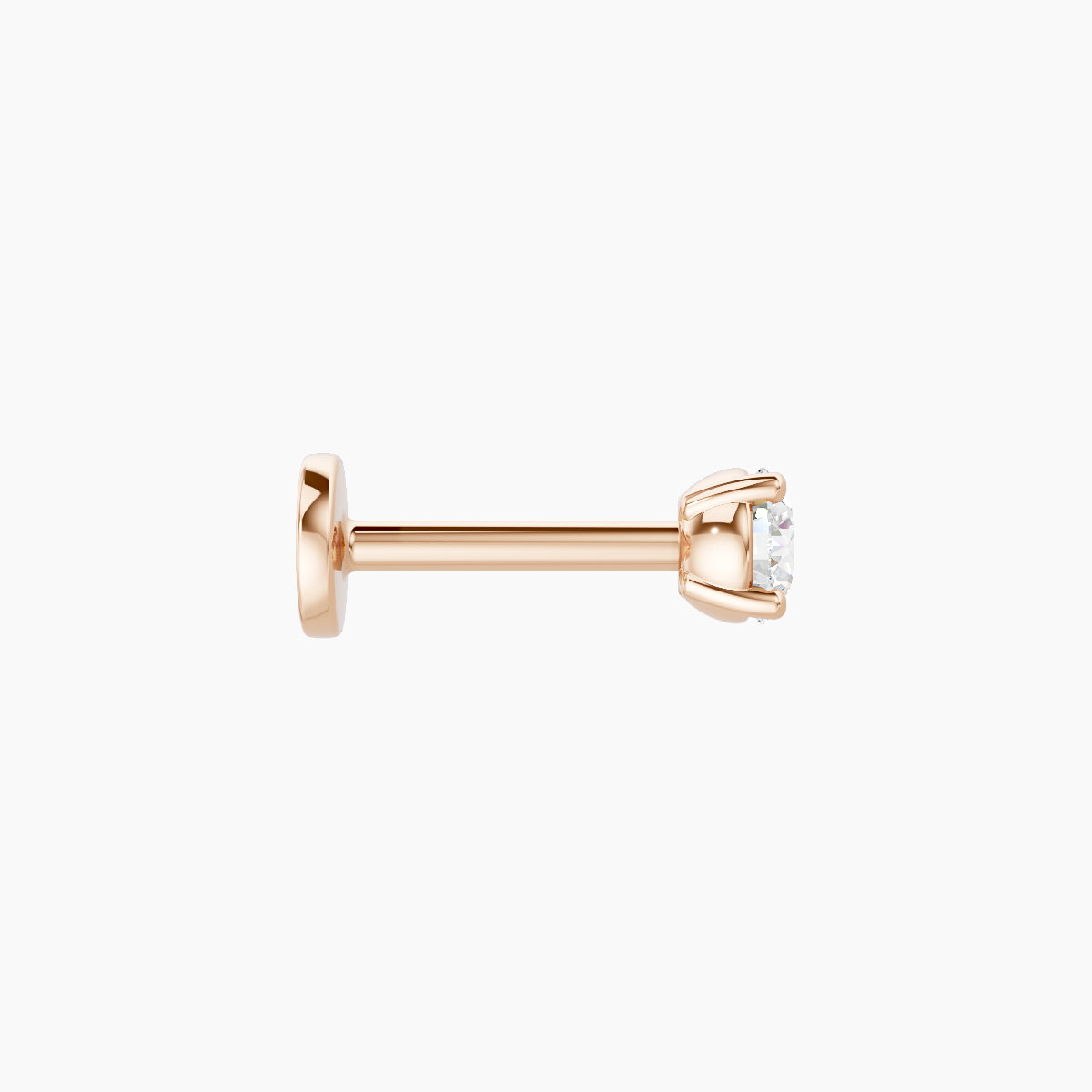
MADAJ makes every piece of flat jewelry to order, using nickel-free, hypoallergenic solid 18k gold in yellow, white, or rose, finished with your choice of diamond, ruby, sapphire, emerald, or black diamond. This is the one material we build with, because it holds up to daily wear for years without fading, and it's mild enough on the skin to suit a piercing that's still healing.
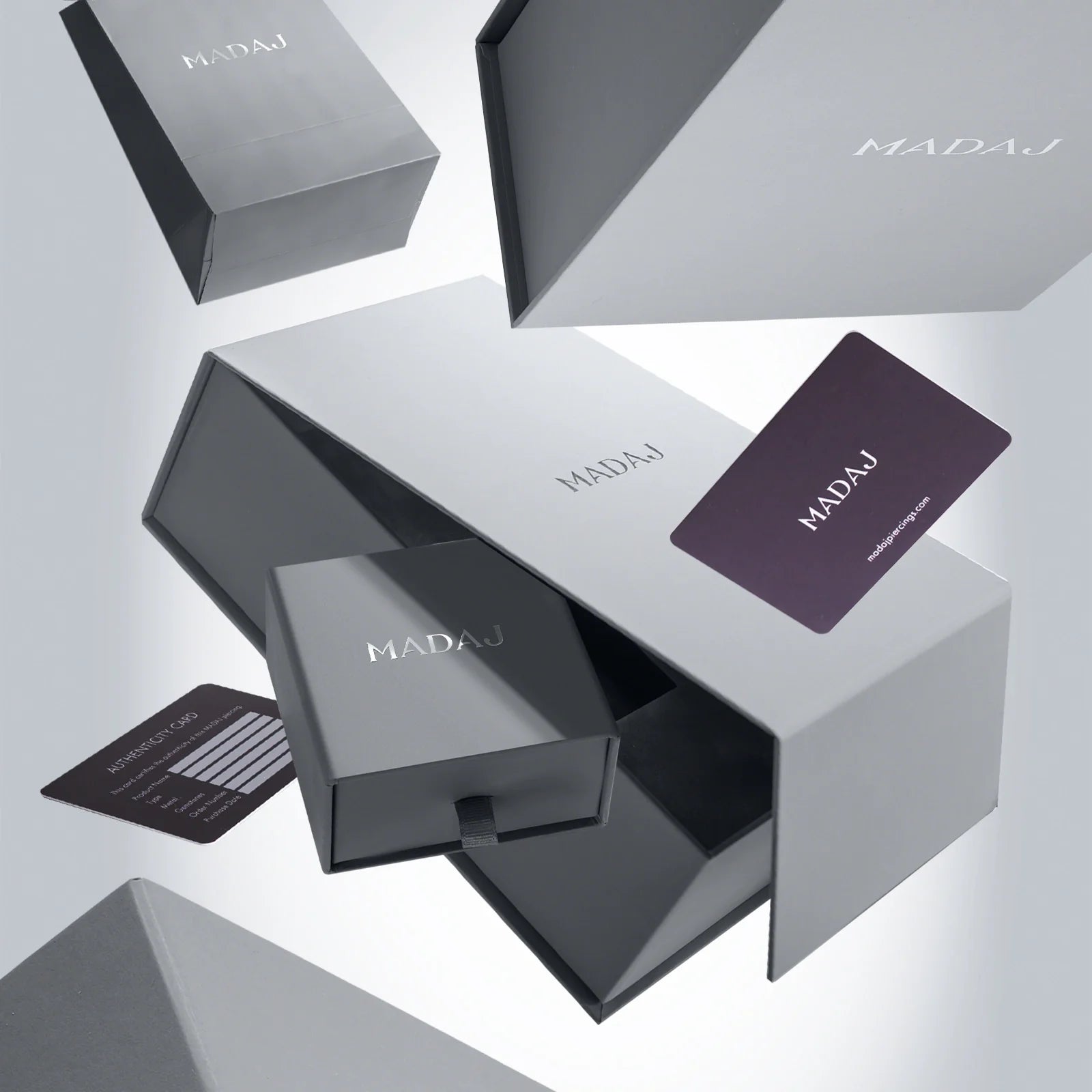
Stones are graded before they're set, G–VS for diamonds and AAA for colored gemstones, and a Certificate of Authenticity ships with each piece so you know exactly what you're wearing.
Ear climbers on a flat piercing
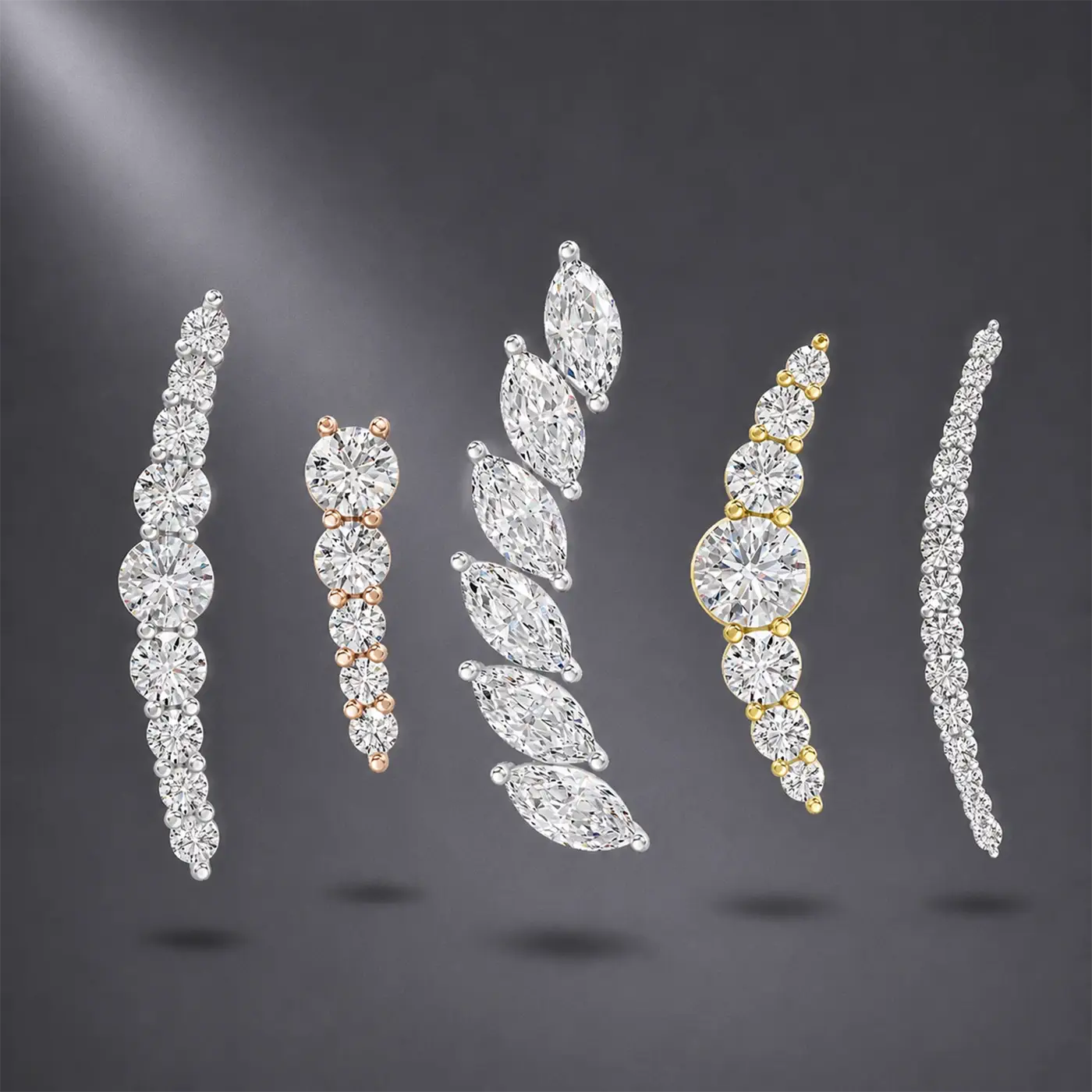
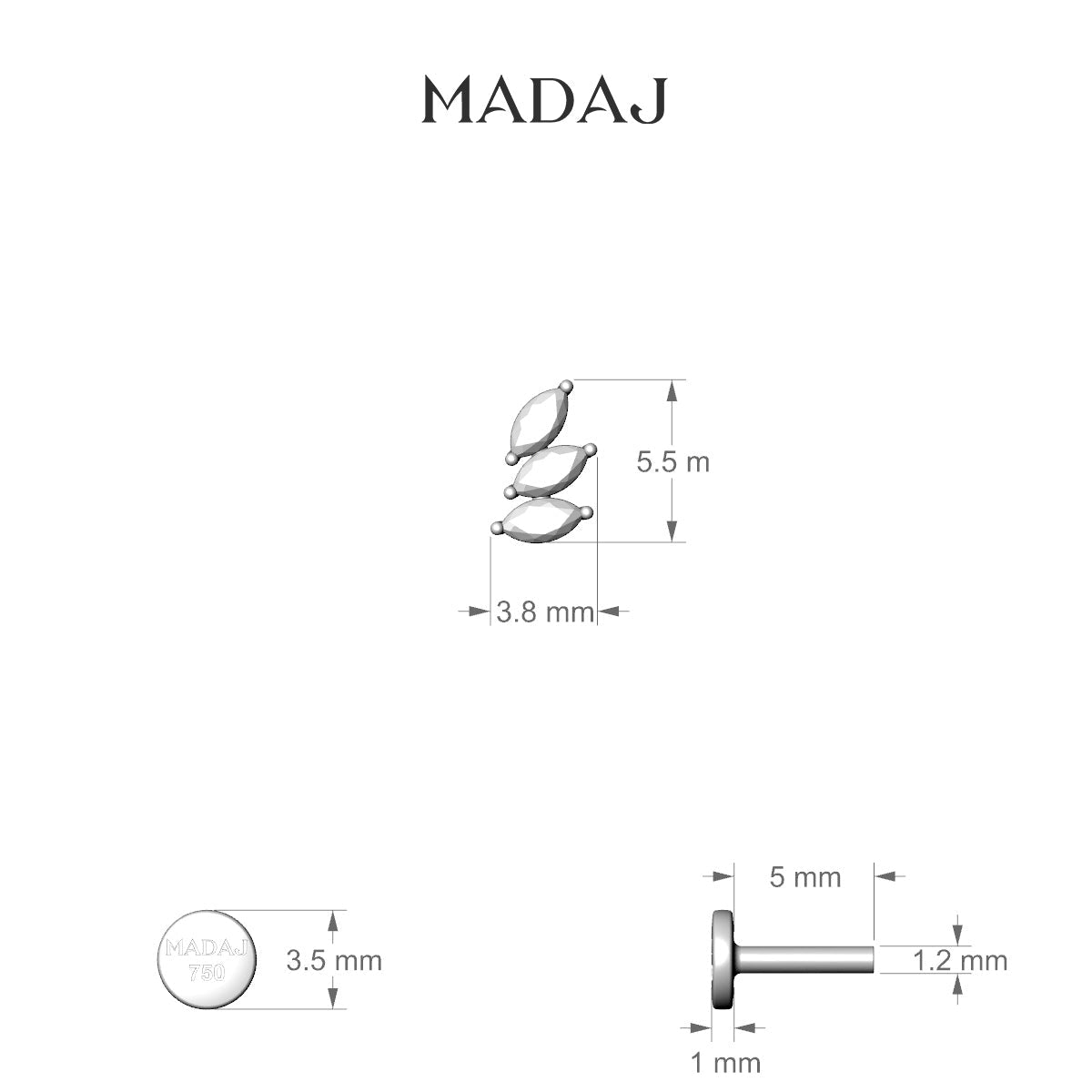
The MADAJ Diamond Ear Climbers
An ear climber, also called an ear crawler, is a piece of jewelry designed to sit flush against the ear and follow its curve upward, rather than hanging or projecting outward like a traditional stud. On a flat piercing, this style works particularly well: because the flat area doesn't curve, a climber can rest cleanly against the cartilage without gaps or awkward angles.
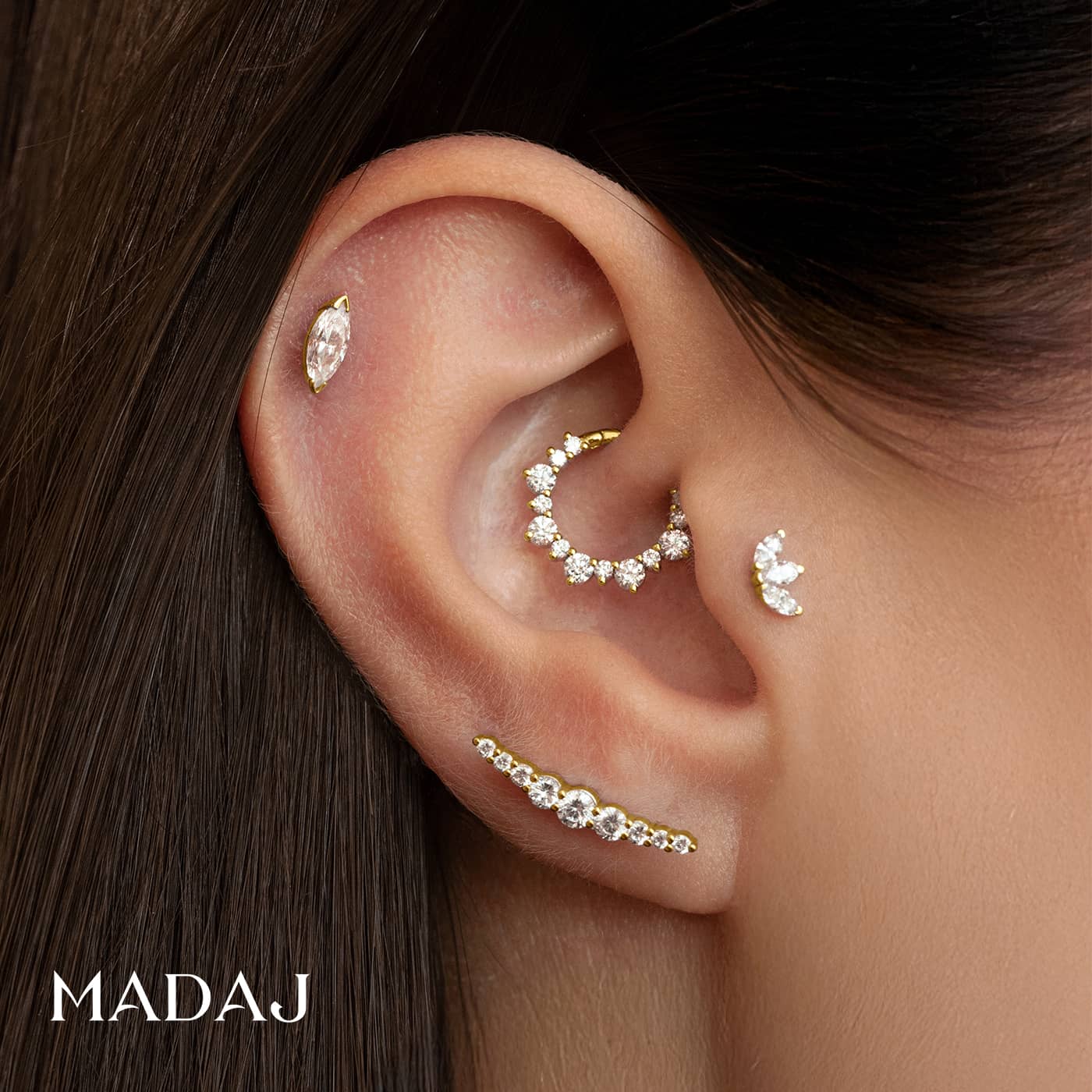
Ear climbers can often be worn as a first piece, especially on the flat. The flat is a wider placement, which lets the jewelry sit more stably, but suitability still depends on the specific climber design. Some clients prefer to wait until the piercing is fully healed for a closer, more settled fit. Their flatter profile sits close to the skin, making them a popular choice for people building a layered ear composition, since a climber on the flat area can visually connect a lobe piece below with a helix or forward helix piece above.
Flat piercing aftercare

Because the flat area sits high on the outer ear, it's constantly brushing up against hair, phones, headphones, and pillows, so a consistent flat piercing aftercare routine matters more here than for placements tucked further away. For general principles that apply to any cartilage piercing, see our Ear Piercings Procedure & Aftercare guide.
- Clean your flat piercing twice a day. Spray the front and back of the piercing with a sterile saline wound wash (0.9% sodium chloride, no additives), let it sit for a moment, then gently pat dry with a clean, disposable paper towel. Skip cotton balls and Q-tips, since loose fibers can catch on the jewelry and irritate the wound. Avoid alcohol, hydrogen peroxide, tea tree oil, and any ointments or creams unless a doctor prescribes them for an infection.
- Do not twist, rotate, or fiddle with the jewelry, even to "help it heal." This old advice has been debunked: moving the piece tears the delicate new tissue forming inside the piercing channel, introduces bacteria, and slows healing rather than speeding it up. Clean around it, but otherwise leave it completely alone.
- Keep hair tied back or tucked behind the pierced ear for the first few months. Loose strands are one of the most common sources of irritation for a flat piercing: they catch on the jewelry, tug at it, and carry conditioner, spray, or styling oil directly into the wound.
- Rinse the piercing with clean water right after washing your hair, before applying your saline spray. Shampoo and conditioner residue tends to collect around the flat area, and rinsing it away first stops product buildup from sitting against the piercing.
- Avoid over-ear headphones and holding your phone against that ear until the piercing has settled, since both press directly on this placement. Use speaker mode or switch to the other ear for calls where possible.
- Do not submerge the piercing in pools, hot tubs, lakes, or the ocean while it's healing. These all carry bacteria that a fresh wound is more vulnerable to than healed skin.
Watch for real warning signs
Some redness, mild swelling, and clear or pale yellow discharge are a normal part of healing and nothing to worry about. Contact your piercer or a doctor if you notice spreading redness, heat, thick yellow or green discharge, or pain that is getting worse instead of easing, rather than waiting to see if it resolves on its own.
Flat piercing healing times & stages
A flat piercing takes 6 to 12 months to heal fully.
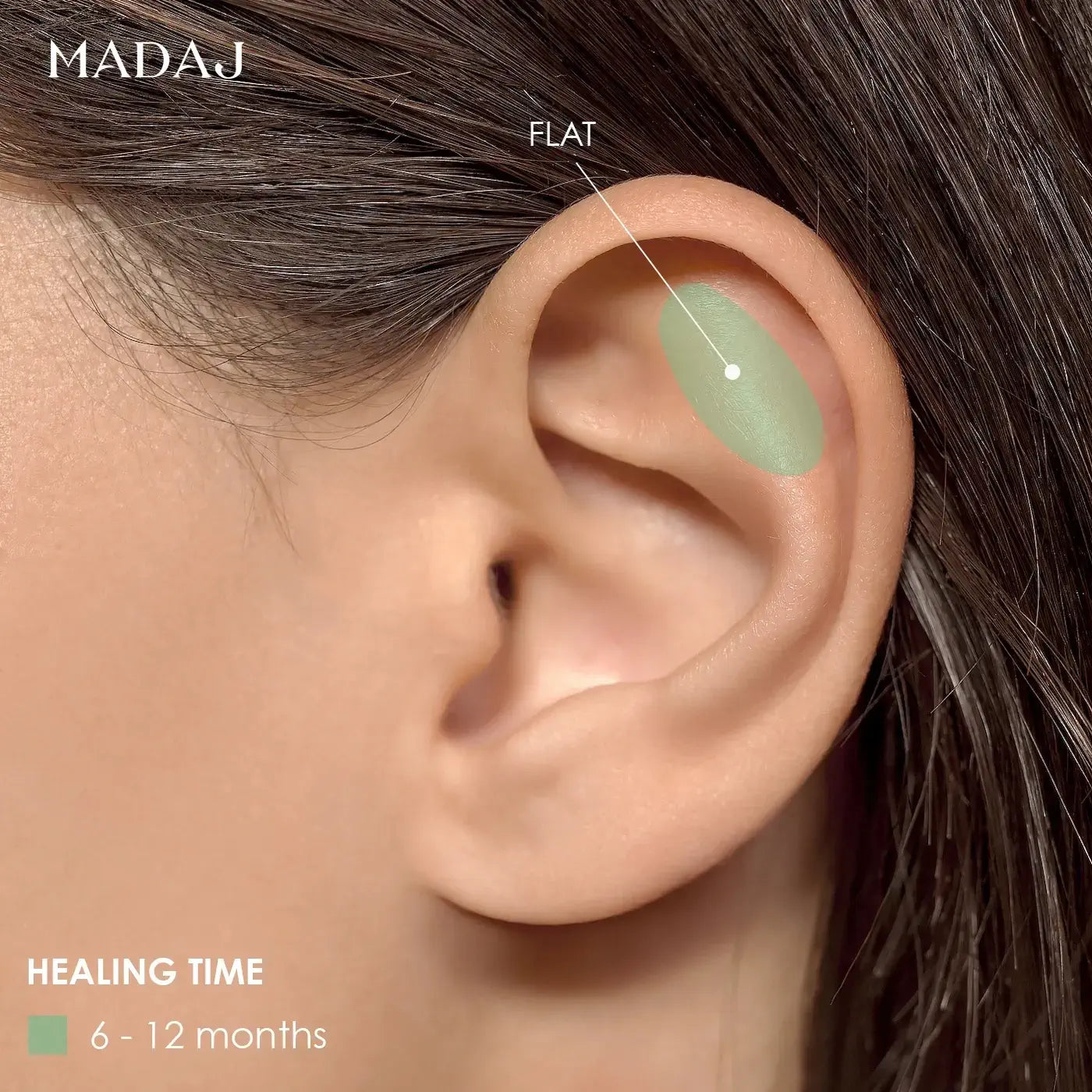
During the first few weeks, redness, mild swelling, tenderness, warmth, and light crusting around the jewelry can be normal. As the piercing heals, these symptoms should gradually reduce.
The piercing may look healed before the internal tissue has fully recovered. Continue cleaning it regularly and avoid changing the jewelry too early.
- Weeks 1–2: Redness, mild swelling, tenderness, and warmth are normal. You may also notice a little clear or pale yellow fluid that dries into light crusts. This is lymph, not pus. The longer bar is fitted to allow room for swelling.
- Weeks 3–8: Swelling should slowly reduce, and pain should become occasional tenderness. Around weeks 4–6, visit your piercer to downsize to a shorter post. This helps with comfort and can reduce irritation.
- Months 3–6: Your piercing may look healed, but the inside is still recovering. Keep cleaning it daily and do not change the jewelry yourself until your piercer says it is ready.
- Months 6–12: Some piercings take up to a year to fully heal. If it still gets red or sore after sleeping on it, it is not fully healed yet. Be patient and avoid unnecessary changes.
Frequently Asked Questions
Not always. The flat area of the ear needs to be wide enough for the jewelry to sit securely. If the area is very narrow, a professional piercer may recommend a different placement.
It's rated 5 out of 10: a firm, steady pressure followed by a brief sharp pinch. It's slightly more noticeable than a tragus or helix piercing, but still moderate compared to placements like the conch or rook.
No. The helix follows the curved outer rim of the ear, while the flat piercing sits on the smooth, non-curved section just inside that rim. They're pierced through different cartilage and often paired together in the same ear composition.
Over-ear headphones can press directly against the flat area and irritate the piercing during healing, so it is best to avoid them, or use them with caution, until fully healed.
A flat piercing usually takes 6 to 12 months to heal. Even if it looks healed from the outside, the internal tissue may still be healing.
It's best to avoid sleeping on the pierced side during healing. Pressure from a pillow can irritate the area, slow healing, and increase the risk of the jewelry catching on bedding.
It is best to wait until your flat piercing is fully healed before changing jewelry. Your piercer may also recommend downsizing the initial post once swelling has reduced, usually after the early healing stage.
Discover our
FLAT PIERCING COLLECTION