


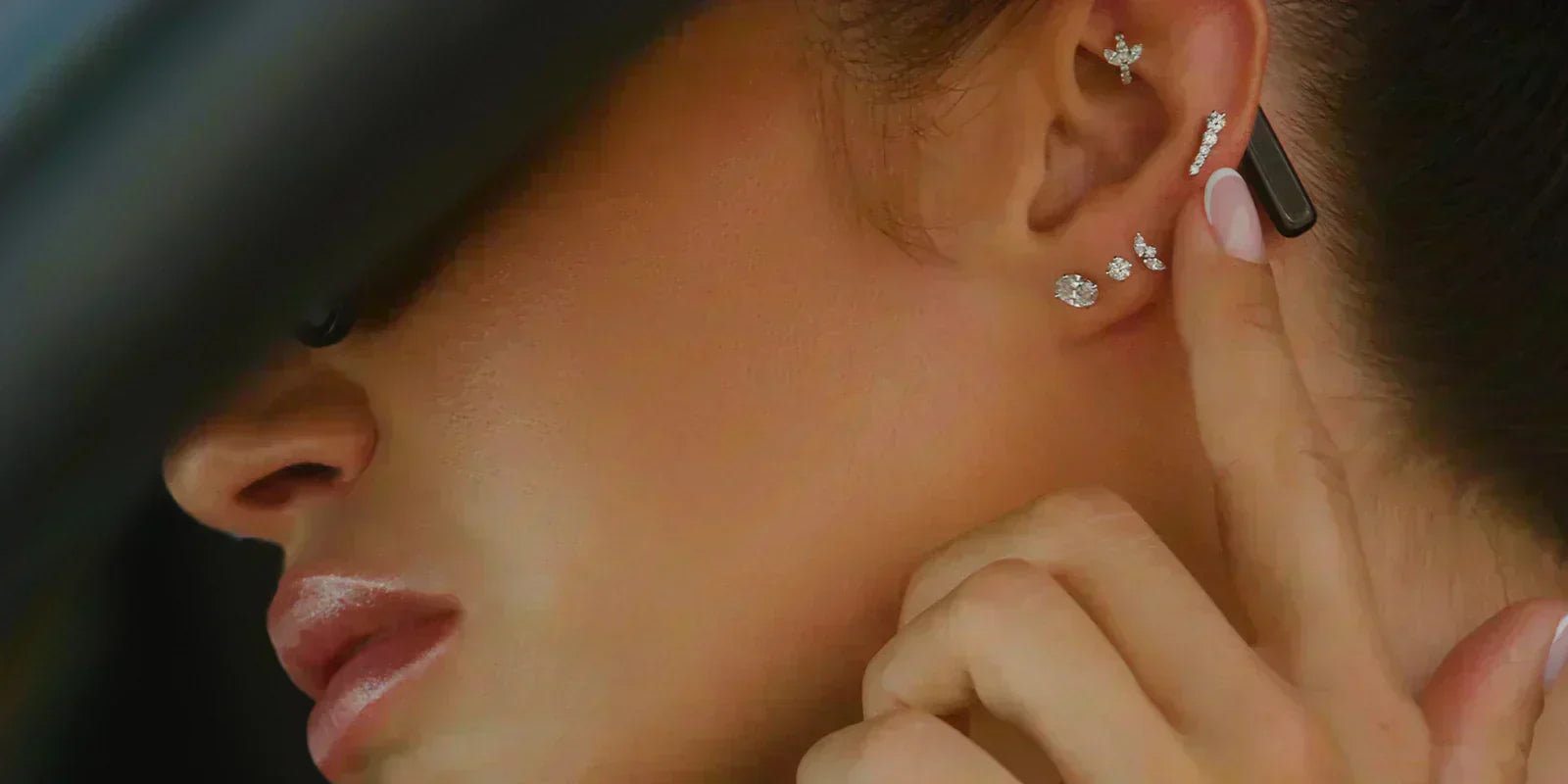
Ear Piercing: 5 Common Mistakes to Avoid for Faster Healing
One of the most popular and easiest ways to elevate your style is having an ear piercing. Ear piercings are a classic way to show your style and easy to personalize, but the healing process can be tricky. Whether it’s your first piercing or a new addition to your collection, proper care is key to fast healing. Even small mistakes during aftercare can cause irritation, infection, or slow down the healing process. From choosing the right jewelry to maintaining good hygiene, every step matters. In this guide, we’ll walk you through the 5 most common ear piercing mistakes to avoid so your piercing heals quickly, stays healthy, and looks flawless
5 Common Mistakes to Avoid for Faster Healing
1. Touching Your Piercing
It can be very tempting to touch or adjust your new piercing, but every touch can introduce bacteria and increase the risk of irritation or infection. Even hands that look clean may carry germs that can harm your healing piercing.
Here’s what you can do:
-
Always wash your hands thoroughly with antibacterial soap before touching.
-
Only touch your piercing when necessary, such as for cleaning or adjusting jewelry
2. Skipping or inconsistent wound cleaning
It is essential to clean your piercing regularly. Skipping this important step in healing your piercing can build up bacteria and cause irritation or infection. Avoid using alcohol, hydrogen peroxide and ointments because it is too aggressive. Take note that too much cleaning is not good either. It can dry out the skin and slow the healing.
Here’s what you can do:
-
Clean it twice a day using a sterile saline solution since it is gentle, safe and doesn't sting.
-
Dry the wound by using a disposable tissue or cotton pad to prevent moisture buildup.
Read Ear Piercing Procedure and Aftercare
3. Sleeping directly on your piercing
Sleeping on the side where your new piercing is located can put constant pressure on the wound which may cause pain, swelling and inflammation. This pressure can slow healing and increase the risk of infection.
Here’s what you can do:
-
Sleep on the opposite side of the new piercing whenever possible. If you have piercings on both ears, try to avoid side sleeping as much as possible to prevent irritation.
-
Use a travel pillow or any soft pillow with holes. Make sure to change linens often and use a clean pillowcase to prevent bacteria transfer.
4. Changing Piercing Jewelry Too Soon
It can be tempting to swap your new earrings for your favorite pair, but changing jewelry before your piercing has fully healed can cause irritation, swelling, or even reopen the wound. Early removal or switching can increase the risk of infection, scarring, and delayed healing.
Here’s what you can do:
-
Wait for the recommended healing time before changing your jewelry. You can check our Ear Piercings Healing Time guide to know more about the healing time of every kind of piercing.
- Consult your piercer before making any changes. An experienced professional can check whether your piercing has healed enough to safely switch jewelry, preventing unnecessary damage to fragile tissue.
5. Ignoring Red Flags!
Ignoring early signs of infection can lead to complications, slow healing, and in some cases, scarring or more serious infections, including keloid formation. A keloid is a type of raised scar that can develop after a piercing when the body keeps producing collagen even after the wound has healed. It usually appears months later as a firm, noticeable bump and may cause itching or discomfort.
Know more about Keloids and How to protect your Piercing
Watch out for warning signs like unusual swelling, redness, bumps, discharge, or ongoing pain. Taking action early can help prevent piercing infections, reduce the risk of keloids, and keep your piercing healing safely.
Here’s what you can do:
-
If your piercing isn’t getting better 24 to 48 hours with proper cleaning, or if they worsen, seek professional advice.
-
Ask your piercer, they can check your piercing and guide you with what to do next.
-
See a doctor if needed. If the infection is serious, you might need medical treatment.
Taking care of your ear piercing the right way is key to fast healing and avoiding infection or irritation. Follow proper hygiene, be patient with jewelry changes, and watch for warning signs to ensure a smooth recovery and a piercing that stays healthy and beautiful.
At Madaj, we prioritize the safety and satisfaction of every client. Our goal is to provide only the best piercing experience while helping you avoid complications and heal with confidence.
If you have any questions or inquiries, you can contact us at contact@madajpiercings.com or call +971 50 851 2919.


Leave a comment
This site is protected by hCaptcha and the hCaptcha Privacy Policy and Terms of Service apply.