


Piercing Gun vs Needle: Why the Method Matters as Much as the Jewelry
Most people spend more time picking their earrings than thinking about how they go in. Understandable. But the tool used to pierce your ear determines how your tissue heals, how long you're stuck with starter jewelry, and whether you end up with clean results or months of setbacks.
The method is the first decision. Here's what's actually happening when you sit in that chair.
Gun vs. Needle: What's the Real Difference?
It comes down to what happens to your tissue.
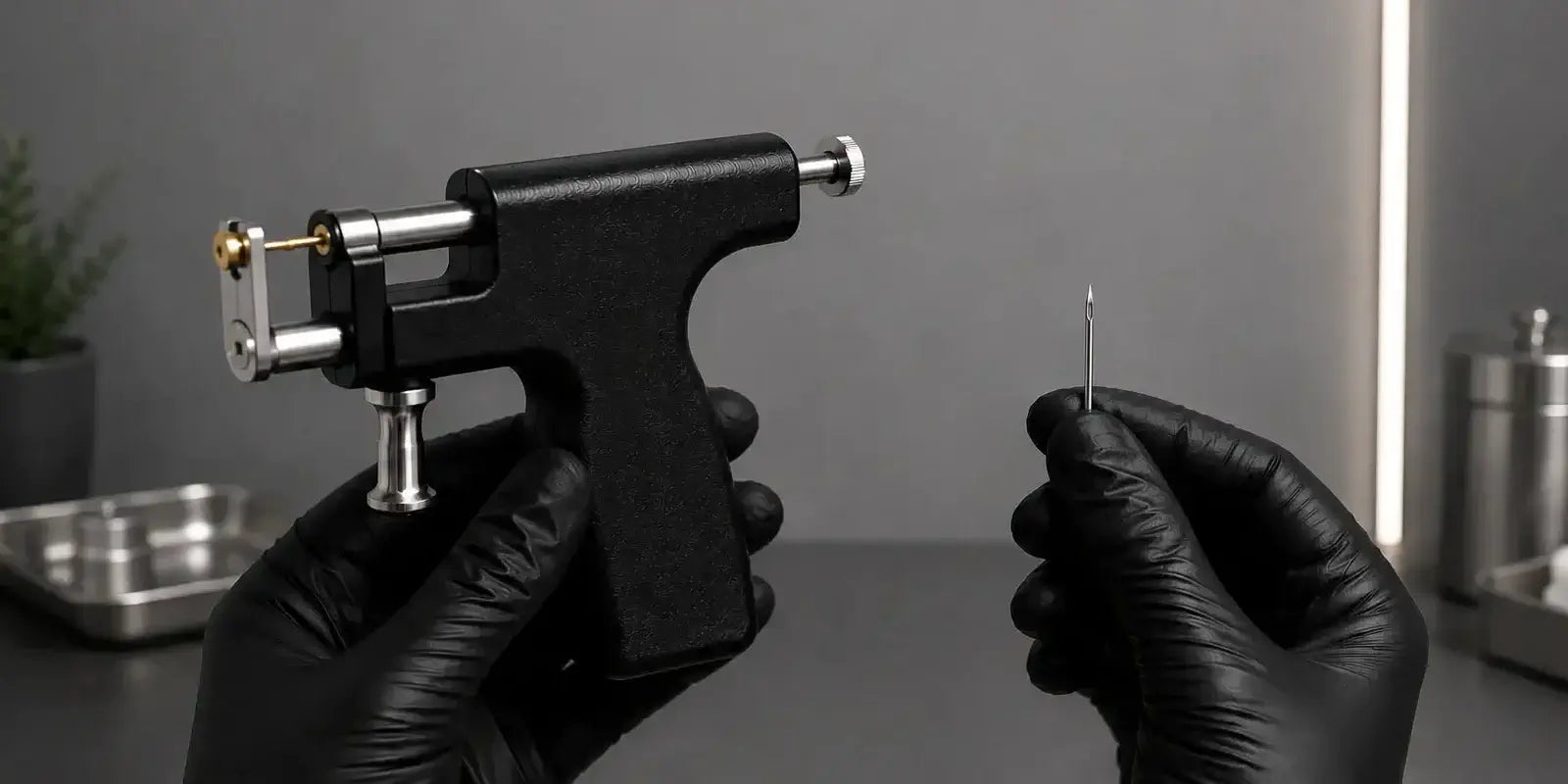
PIERCING NEEDLE VS PIERCING GUN

A piercing gun drives a solid stud through your earlobe by force. Nothing is removed. Your tissue gets pushed aside, compressed, and packed around the jewelry. It feels quick. The trauma isn't.
A piercing needle is hollow with a beveled tip. It removes a precise cylinder of tissue, a clean, correctly sized channel for the jewelry that follows. Controlled wound. Defined edges. A starting point your body can actually work with.
Crushed tissue takes longer to repair and triggers a stronger inflammatory response. A clean channel heals faster, more quietly, and more predictably. That single mechanical difference is what everything else flows from.
Healing: Faster Isn't Always What They Tell You
Studios that use guns will often tell you six weeks. The realistic figure for a gun-pierced lobe is closer to six to twelve months, not until it looks healed on the surface, but until the tissue inside has actually reorganized itself.
A needle piercing on the same placement: two to four months, often less with good aftercare and the right jewelry.
The practical consequence is straightforward. With a gun piercing, you're committed to the starter jewelry for far longer. Change it too early, which most people do, and you're disrupting tissue that was already compromised from the start. With a needle, the window to wear what you actually want comes sooner, and the healing in between is usually far less reactive.
Check our Ear Piercings Healing Time guide to know more about the healing time of every kind of piercing.
Scarring: What Those Bumps Are Telling You
Hypertrophic vs Keloid vs Blowouts

Hypertrophic scars are the small raised bumps that appear around piercings. These are your body's overreaction to a wound it registers as serious. Blunt trauma triggers more inflammation. More inflammation means a higher chance of excess scar tissue forming around the channel.
For people already prone to keloid scarring, a gun piercing meaningfully increases the risk. Blowouts where tissue gets pushed backward through the channel, creating a visible flap at the back, are also far more common when the starting wound was irregular and the jewelry gauge wasn't matched to the anatomy.
None of this is guaranteed. But the risk profile of a gun piercing is measurably higher than a needle, and for certain placements, there's no margin for error.
Know more about Keloids and How to Protect Your Piercing→
Cartilage: This One Isn't A Debate
For soft tissue, a standard lobe, a gun piercing can heal without major complications. For cartilage, the answer is categorically different.
Cartilage has no direct blood supply. Nutrients reach it by diffusion through surrounding tissue, which means it heals slower and tolerates trauma far less than a lobe. A gun delivers concentrated impact force to a rigid structure with no give. The documented risk, not rare, not theoretical, is cartilage shattering on impact. Even when it doesn't shatter, blunt trauma to avascular tissue creates a wound the body is structurally less equipped to repair.
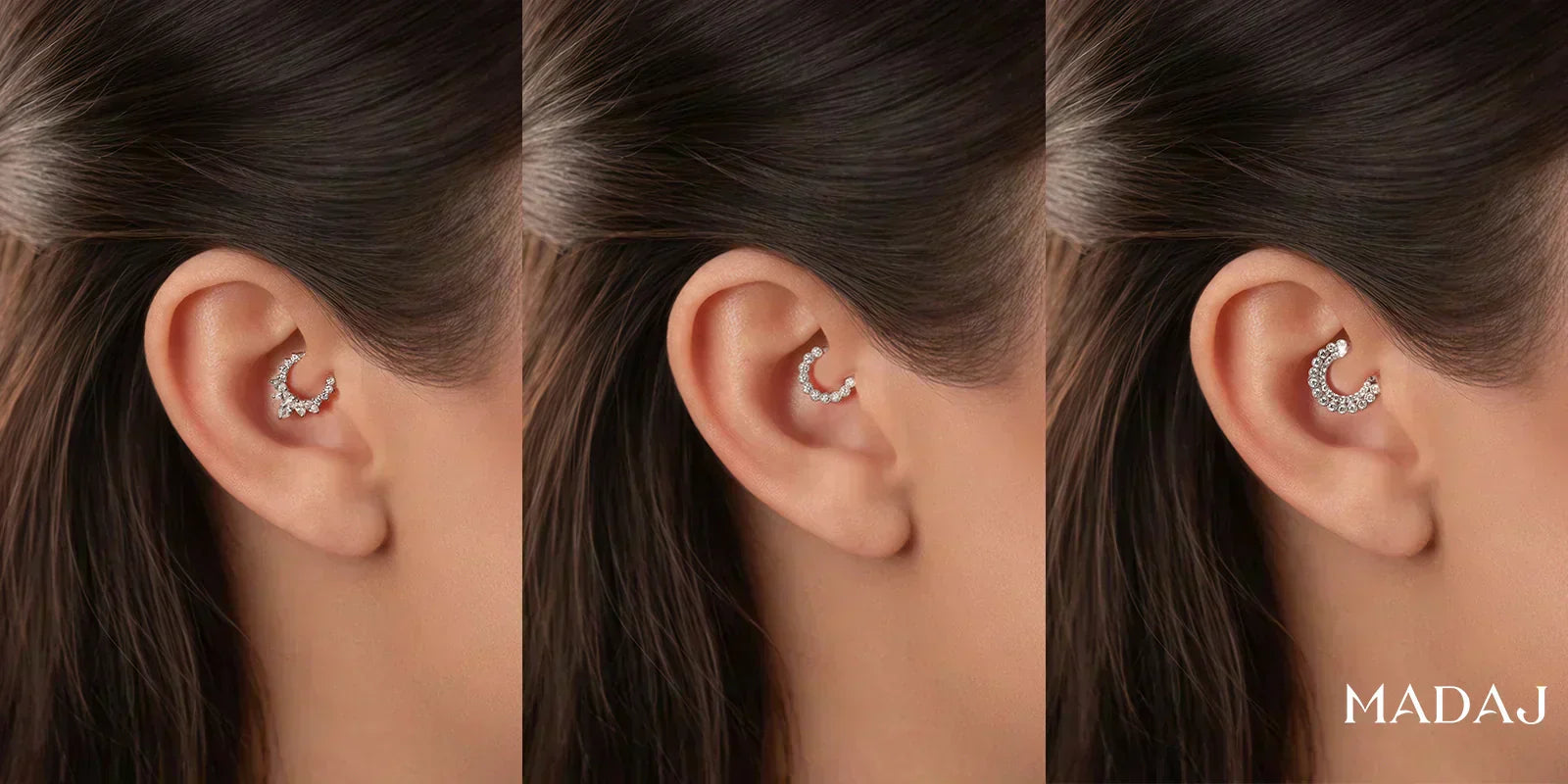
This applies to every cartilage placement. Helix, tragus, conch, daith, each one carries significantly higher stakes than a lobe piercing, and none of them should be anywhere near a gun.
For any cartilage piercing: a professional, using a single-use hollow needle, is the only responsible option. Not a preference.
Jewelry Compatibility: The Method Shapes Your Options
Here is where the method decision becomes directly relevant to what you can actually wear.
A piercing gun uses a fixed gauge which is typically 20G set by the mechanics of the device. Your anatomy, your jewelry preferences, and your long-term goals have no bearing on that number. You get 20G regardless, and that narrow, standardized channel limits what will sit correctly once you are healed.
Needle piercings work the other way around. A good piercer gauges the channel to match the jewelry you intend to wear and different pieces require different gauges.
At MADAJ, our piercings are sized as follows:
Jewelry |
Type |
Post Length/Diameter Suggested |
| Navel | 14G | 8 mm |
| Daith | 16G | 8 mm |
| Stud | 16G | 5 mm | 6.5 mm |
| Septum | 16G | 8 mm |
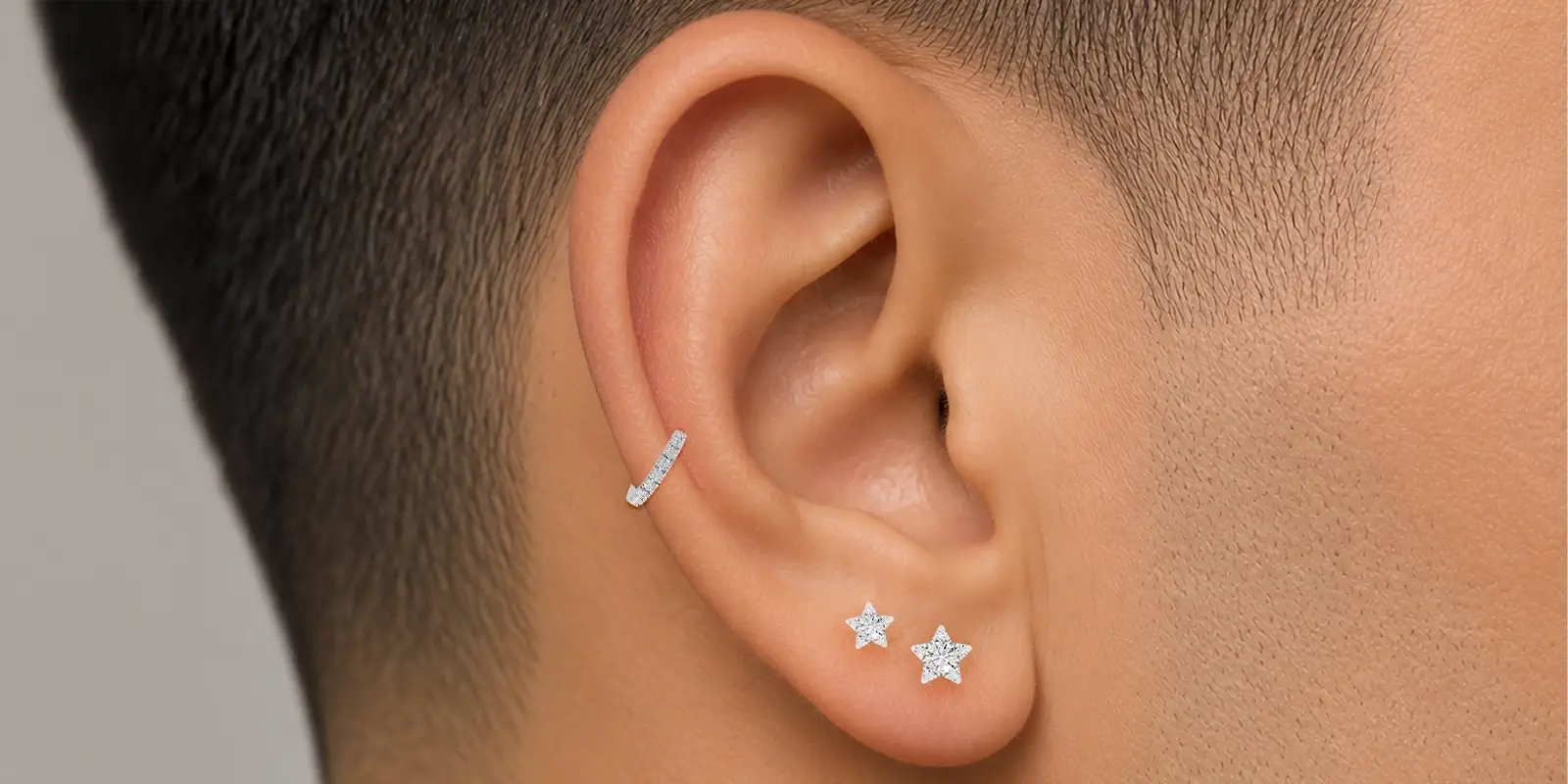
| Hoop | 20G | 5 mm | 6.5 mm | 8 mm | 9.5 mm | 11 mm |
| Nose Ring | 20G | 8 mm |
Please note: Keep in mind that individual belly button, ear, and nose anatomy varies, so these sizes may differ slightly for each person.
This matters more than it sounds. If you want to wear a stud or a daith piercing long-term, you need a 16G. A navel piercing requires 14G. A gun cannot deliver either, it locks every client into 20G by default, which means the channel may never properly accommodate the piece you actually want to wear. With a needle, the channel is built around the jewelry from the start.
Material during healing matters just as much. Nickel-free hypoallergenic solid 18k gold and implant-grade titanium are the two materials that allow tissue to heal without interference. Plated jewelry which is common in gun studio starter sets, introduces a base metal at the exact moment your tissue is most vulnerable.
A well-healed needle piercing, correctly gauged and started in the right material, gives you the full range of options when you are ready. The channel is the foundation. Everything you wear after is built on it.
Things to Know Before Getting Your Ear Pierced
A few things that often get skipped in the research phase, and matter more than most people expect.
Your anatomy determines your options. Not every placement works on every ear. A tragus that is too small, a conch that is too shallow, or a flat with insufficient surface area can make certain piercings inadvisable regardless of how much you want them. A professional piercer will tell you this upfront. One who doesn't is worth walking away from.
Do not pierce when your immune system is under stress. Active illness, recent surgery, or a period of poor sleep all slow the healing response. Timing matters, a piercing done on a compromised body takes longer and reacts more than the same piercing done in good health.
Eat before your appointment. Low blood sugar makes the physical experience harder than it needs to be. It is a small detail with a disproportionate effect on how you feel in the chair and immediately after.
Wear hair up and clothing that won't catch. For ear piercings especially, anything that pulls across the fresh placement in the first hour increases irritation before you have even left the studio.
3 Things to Ask Your Piercer Before Getting Pierced
You don't need a checklist. You need three answers:
Are the needles single-use and opened in front of me? Yes is the only acceptable answer.
How is the jewelry sterilized? Autoclave, pressurized steam sterilization. Alcohol is cleaning. It's not the same.
What material is the starter jewelry? Implant-grade titanium or Nickel-free hypoallergenic solid 18k gold. If the answer is "hypoallergenic" without specifics, ask again. Hypoallergenic is not a regulated term.
A piercer worth trusting will have straightforward answers to all three.
Aftercare
The method gets you a clean starting point. Aftercare determines whether it stays that way.
Saline solution, twice a day. A sterile wound wash spray, sodium chloride 0.9%, applied morning and night is the standard recommendation from professional piercers. Nothing else is needed on a healthy healing piercing. Antiseptics, tea tree oil, and alcohol-based products all disrupt the healing environment more than they help it.
Do not rotate the jewelry. This advice persists from an earlier era of piercing and is wrong. Rotating a healing piercing introduces bacteria and disrupts tissue that is trying to form a stable channel. Leave it alone.
Do not touch it with unwashed hands. The most common cause of piercing complications is not the studio, it is the two weeks after, when curiosity and irritation make hands-on checking feel necessary. It is not.
Sleep position matters. For ear piercings, avoid sleeping directly on the fresh placement. A travel pillow with a hollow center, or simply switching sides, removes a source of pressure that compounds over eight hours every night.
If redness, swelling, or tenderness increases after the first week rather than gradually improving, see your piercer, not a pharmacist, before making any changes to the jewelry.

Leave a comment
This site is protected by hCaptcha and the hCaptcha Privacy Policy and Terms of Service apply.