


Daith vs Rook Piercing: Which One Fits You?
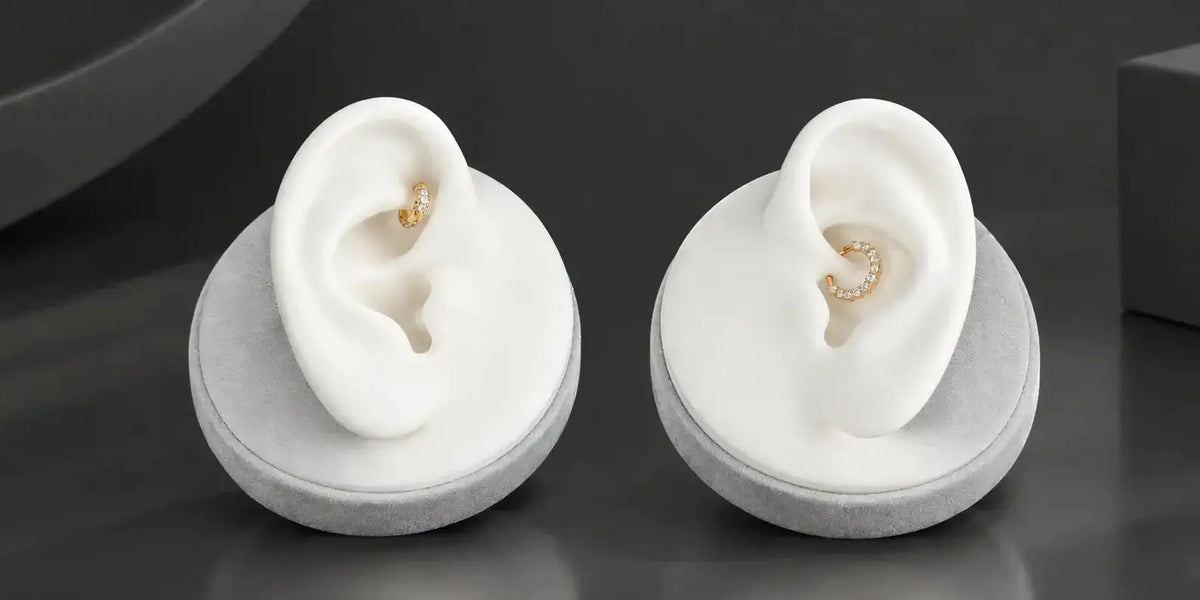
A daith piercing and a rook piercing sit only a short distance apart on the ear, yet they behave completely differently once jewelry is in. The daith vs rook piercing decision usually comes down to two questions: which fold of cartilage your ear can actually support, and which of the two effects, an inner ring or a higher ridge accent, fits the rest of your ear.
The daith passes through the innermost fold above the ear canal. The rook passes through the antihelix, higher up and further from the canal. Both are cartilage placements, so the comparison below covers what changes across anatomy, jewelry, visibility, healing, and styling.
Table of Contents:
-
What Is a Daith Piercing?
-
What Is a Rook Piercing?
-
Daith vs Rook Piercing: Which Placement Is More Visible?
-
What Jewelry Does MADAJ Use for Daith and Rook Piercings?
-
Which Placement Works Better in a Curated Ear?
-
Does Anatomy Decide Between a Daith and a Rook?
-
Daith vs Rook Piercing: Pain and Healing
-
How Should You Choose Between a Daith and a Rook Piercing?
- FAQs
What Is a Daith Piercing?

A daith piercing runs through the small fold of cartilage directly above the ear canal opening. The fold is compact, but because MADAJ's daith jewelry is built around hinged clicker rings, the finished piece has enough shape to be noticed from the front and at an angle, not just up close.
Not every ear has a fold developed enough to support a daith. This is the first thing a piercer checks, before any conversation about design, since the placement depends on the fold providing enough depth and space for the ring to sit correctly.
Because the daith sits at the center of the ear, it tends to function as an anchor. A curved ring here can carry the whole composition even when everything else on the ear is a simple stud.
What Is a Rook Piercing?

A rook piercing passes through the antihelix, the raised ridge of cartilage between the tragus and the inner conch. It sits higher and more vertically than a daith, which changes the line it creates across the ear.
The antihelix needs enough depth for the jewelry to sit without pressure on either side. Some ears don't have that depth, which is why a rook, like a daith, gets assessed in person rather than chosen from a photo.
A rook works well when the lower ear already carries visual weight. Several lobe piercings or a conch piece can make the lower half feel finished; the rook then adds one more detail higher up instead of competing for the same space.
Daith vs Rook Piercing: Which Placement Is More Visible?

Visibility comes down to shape more than size. A daith ring reads as a complete curve inside the ear, which gives it presence even in a simple stack. A rook piece tends to read as a smaller accent along a ridge, part of the ear's structure rather than a shape of its own.
Neither placement is more refined or more subtle by default. A daith suits anyone who wants a clear inner-ear focal point. A rook suits anyone who wants height and detail without pulling attention to the center of the ear.
What Jewelry Does MADAJ Use for Daith and Rook Piercings?
This is where the two placements diverge in practice, not just in theory. MADAJ's current daith collection is built entirely around hinged clicker rings, available in 18k white, yellow, and rose gold, with natural diamonds as well as black diamond, emerald, ruby, and sapphire options across the wider placement range.
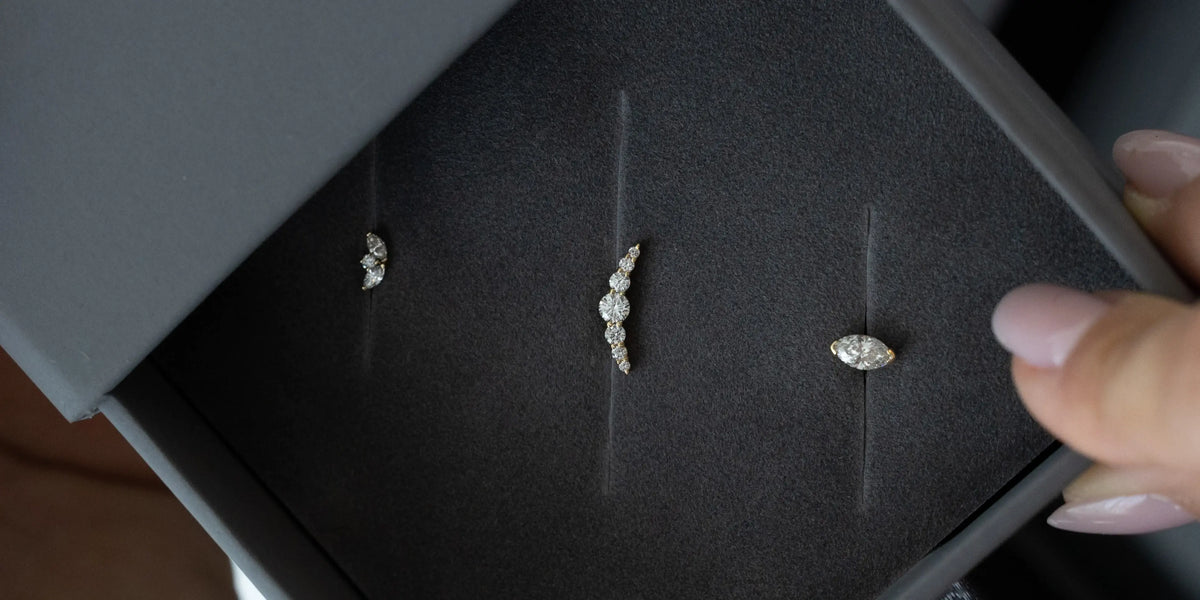
The rook range offers two formats: hoop designs, including diamond and colored-gemstone hoops in the same three gold tones, and our new rook curved barbell. The curved barbell is a design new to MADAJ. Instead of the plain ball ends found on most curved barbells, both ends carry a motif: one sits on top of the bar, while the motif below is connected with two small links, so it swings freely and creates a subtle dangle effect. It uses an internally threaded closure, where the end screws securely into the bar.
In short, the daith stays focused on one format, the hinged clicker ring, while the rook gives you a choice between a classic hoop and a curved barbell with movement. If you prefer a clean, ring-shaped look, both placements can be styled with hoops or clickers. If you want something different for your rook, the curved barbell offers a two-motif design with a swinging drop that a ring-shaped piece can't replicate.
Which Placement Works Better in a Curated Ear?
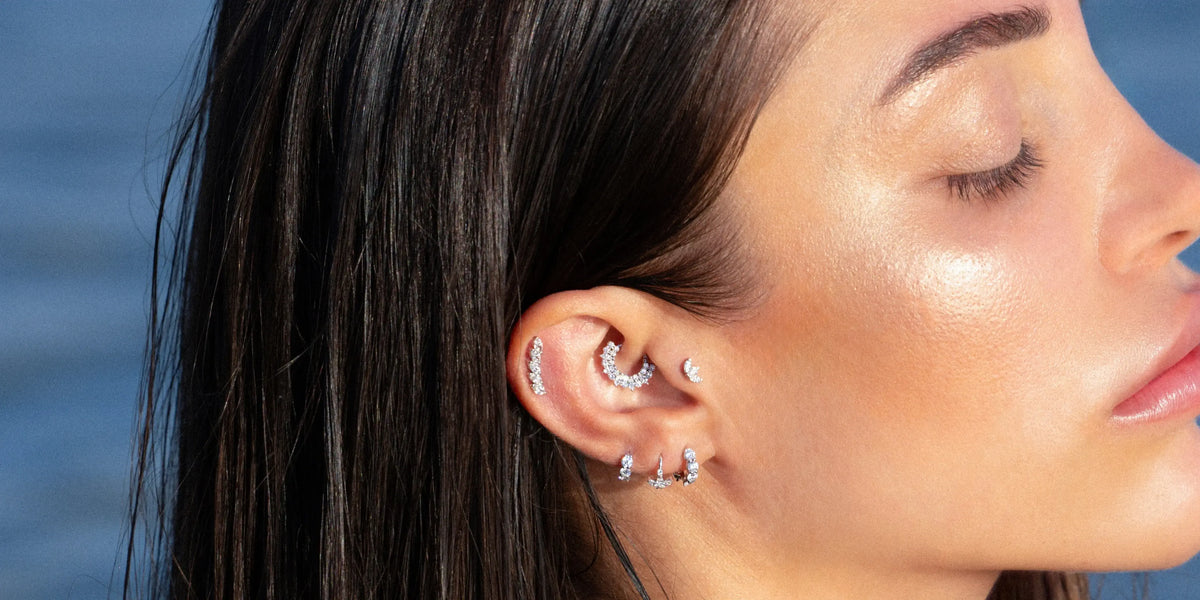
Start with what's already in the ear rather than the placement itself. A rook makes sense when the lobe is already busy: it moves the eye upward and can bridge a lower stack with a higher one, such as a helix or forward helix. A daith makes more sense when the middle of the ear feels open, since its curved shape can anchor a stack built mostly from small studs.
The Ear Piercings Placement Guide is useful here, since it maps the daith, rook, tragus, conch, helix, and lobe relative to each other. A curated ear works as one composition, so it helps to see where a new piercing would actually sit before deciding on it.
Does Anatomy Decide Between a Daith and Rook?
Sometimes, yes, and this is worth ruling out before getting attached to either option. A daith needs a developed inner fold; a rook needs enough depth in the antihelix ridge. It's entirely possible for an ear to support one and not the other.
That's the reason placement shouldn't be chosen from a reference photo alone. Fold depth, ridge angle, and spacing between existing piercings vary enough from ear to ear that a professional piercer needs to confirm what's actually viable before any jewelry gets chosen. The size guide applies the same logic to fit: confirm sizing in person rather than assuming a diameter that worked for someone else's ear will work for yours.
Daith vs Rook Piercing Pain and Healing
Both are cartilage piercings, so neither should be judged against a universal pain scale. Daith piercings are generally described as moderate on pain, and rook piercings pass through a denser fold, though individual tolerance still varies more than any chart can capture.

Healing typically runs 9 to 12 months for a daith and 6 to 12 months for a rook. Treat both as ranges rather than fixed dates. Anatomy, the piercing itself, jewelry fit, aftercare habits, and everyday pressure on the area all move the timeline in one direction or the other.
For daily care, sterile saline and avoiding an early jewelry change apply to both placements. For broader safety and jewelry standards beyond what's here, the Association of Professional Piercers is a useful outside reference.
How Should You Choose Between a Daith and a Rook Piercing?
If a jewelry silhouette is the deciding factor, pick the daith for a ring that frames the inner ear clearly, or the rook for a higher accent that folds into a wider stack without dominating it. If color and material matter more, both placements currently support 18k white, yellow, and rose gold, along with natural diamonds, black diamonds, emeralds, rubies, and sapphires, so a consistent color story can carry across either choice.
There isn't a single right answer between the two. A daith fits an ear that can support the fold and a stack that wants one strong inner point. A rook fits an ear with room in the antihelix and a stack that already has weight lower down. A piercer can confirm which of those, or both, your ear actually supports, and MADAJ's client care team can help from there with sizing, gold color, and gemstone questions once you know which placement is realistic.

Leave a comment
This site is protected by hCaptcha and the hCaptcha Privacy Policy and Terms of Service apply.