


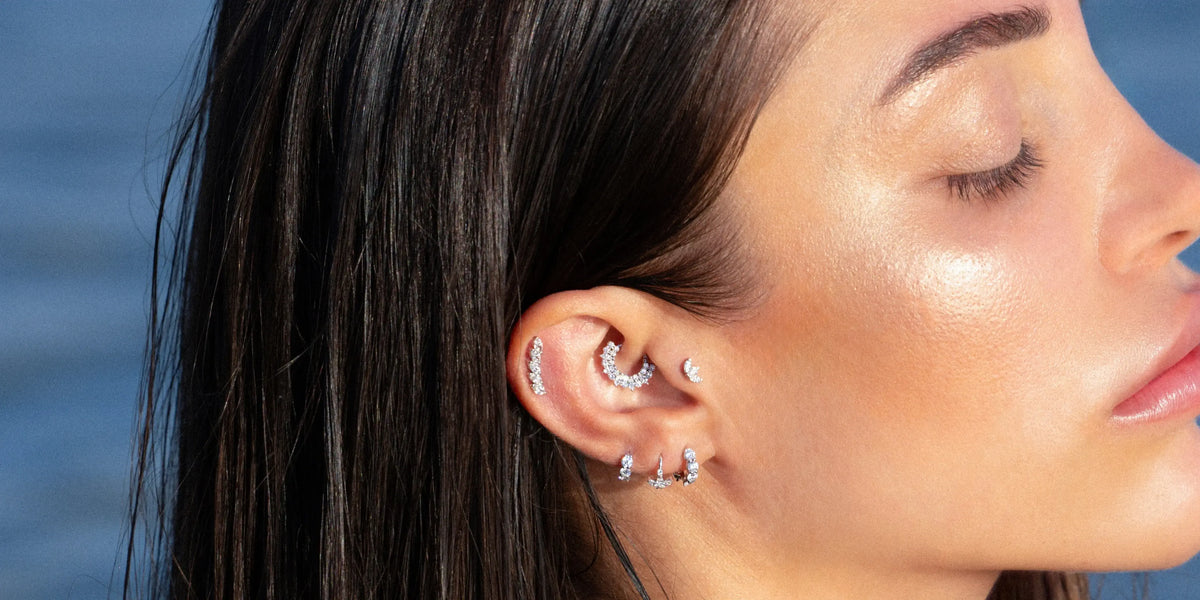
Getting Your First Piercing: What to Expect Before, During, and After
Most of the nervousness around a first piercing has less to do with the placement itself and more to do with not knowing what actually happens. Once the appointment stops being a mystery, from what to bring to what the healed piercing will feel like in week one, most of that nervousness goes away on its own.
This isn't a guide to choosing a placement. If you're still deciding between lobe or cartilage, nostril or septum, our First Piercing Guide has that breakdown. This is what happens once you've picked one and booked the appointment.
In this guide:
- Before Your Appointment
- What Actually Happens During a Piercing
- The First 48 Hours
- Common First-Piercing Fears, Addressed
- When to Call Your Piercer vs. When It's Normal
-
Frequently Asked Questions
Before Your Appointment
What to Do the Night Before Your Piercing

Eat a real meal before you go, an empty stomach combined with adrenaline is one of the more common reasons first-timers feel lightheaded during or right after a piercing. Staying hydrated matters for the same reason. Avoid alcohol in the 24 hours before your appointment, since it thins the blood and can increase bleeding and swelling. The same goes for blood-thinning medication like aspirin, unless a doctor has told you otherwise.
What to Bring to Your Piercing Appointment

Bring a valid ID, most studios require it regardless of age, and comfortable clothing that gives easy access to the placement, this matters more than people expect for navel or upper-ear placements. Leave excess jewelry, tight collars, or anything that could get in the way at home. If you're getting an ear piercing, tying long hair back before you arrive saves time and avoids it getting caught mid-appointment.
How to Choose a Piercer, Not Just a Placement

The placement matters, but who does it matters more. A few things worth confirming before booking: whether the studio uses single-use needles rather than a piercing gun (needles are the standard for cartilage and most modern piercing, since a gun can cause more tissue trauma), whether the piercer is licensed or certified where required, and whether the studio visibly follows sterilization practices, sealed needle packaging, gloves changed between clients, surfaces wiped down. The Association of Professional Piercers publishes safety standards that most reputable studios follow, and it's worth checking a studio against them before booking. A reputable piercer will answer these questions without hesitation, and won't rush the placement marking step before the actual piercing. If you haven't settled on a placement yet, our Ear Piercings Placement Guide breaks down pain and healing time by zone.
What Actually Happens During a Piercing
What Happens During a Piercing Appointment

Most first appointments follow a similar structure. The piercer reviews the placement with you, sometimes marks it on your skin, and asks you to confirm it in a mirror before doing anything else, this is the moment to speak up if it looks off-center or not what you pictured. Once you've confirmed it, the actual piercing itself takes only a few seconds, and the full appointment, consultation, marking, confirmation, piercing, and initial aftercare instructions together, typically runs 15 to 20 minutes. Our full Ear Piercings Procedure & Aftercare guide covers the complete cleaning routine by healing stage if you want the full detail beyond what's covered here.
What Does Getting Pierced Feel Like?
Piercing is typically described, as Cleveland Clinic puts it, as feeling something like a quick pinch followed by some throbbing. That initial sensation fades within seconds, and the throb that follows can last anywhere from a few minutes to a few hours depending on placement. This is different from ongoing pain, a piercing that still hurts sharply hours later, rather than a fading throb, is worth mentioning to your piercer before you leave.
The First 48 Hours
Is Swelling and Discharge Normal After a Piercing

Yes, mild swelling, tenderness, and slight redness around the piercing are expected in the first day or two, especially for cartilage. Some clear or slightly yellow fluid (not pus) crusting around the jewelry is also normal as the piercing starts healing, this is lymphatic fluid, not a sign of infection.
Common First-Time Mistakes

Touching it too much. Checking a new piercing constantly, especially with unwashed hands, is one of the most common ways first-timers introduce irritation that wasn't there to begin with.
Over-cleaning. More saline, more often, isn't better. Over-cleaning can irritate healing tissue just as much as under-cleaning can. Stick to what your piercer actually recommended, not a routine you found online.
Sleeping on it. Pressure on a fresh piercing overnight, especially cartilage, can slow healing or cause irritation that wouldn't happen otherwise. Sleeping on the opposite side, or with an extra pillow to avoid contact, makes a real difference in the first few weeks.
Rotating or twisting the jewelry. This is outdated advice that's still widely repeated. As Cleveland Clinic notes, this is no longer recommended, a piercing is essentially a puncture wound, and disturbing it more can complicate healing rather than help it.
Starting with the wrong jewelry. A first piercing done in plated or nickel-containing jewelry is more likely to irritate healing tissue than one done in solid, nickel-free metal from the start. Mayo Clinic identifies nickel as the most common metal allergen, and a fresh piercing gives it direct access to tissue that intact skin wouldn't. See why cheap piercing jewelry causes problems for the full explanation of how that plays out over time.
Common Piercing Worries and Myths, Debunked
"What if I move during it?" Piercers are experienced at accounting for small movements, and the actual piercing happens fast enough that this is rarely an issue in practice.
"What if I regret the placement?" This is exactly why the mark-and-confirm step exists. Take the moment to actually look in the mirror before saying yes, rather than assuming it's fine.
"What if it gets infected?" True infection is far less common than general irritation, and the two are often confused. The Association of Professional Piercers notes that most redness and discomfort in the first weeks is a normal part of healing, not infection, and that genuine infection usually comes with spreading redness, worsening pain, or discharge rather than mild tenderness. Following your piercer's actual aftercare instructions, not a mix of things read online, is the biggest factor in avoiding it.
Myths worth ignoring: numbing the area with ice beforehand isn't recommended, since it can make the tissue harder to pierce accurately. Alcohol doesn't calm nerves in a way that helps, it increases bleeding risk instead. Neither actually makes the appointment easier.
When to Call Your Piercer vs. When It's Normal
Normal |
Call Your Piercer |
| Mild swelling for the first few days | Swelling that worsens after day 3 or 4 |
| Slight tenderness when touched | Sharp pain that doesn't fade |
| Clear or pale yellow crusting | Green, yellow, or foul-smelling discharge |
| Slight redness around the piercing | Redness spreading outward from the piercing |
| Mild warmth at the site | Heat combined with visible swelling and fever |
This isn't a substitute for professional advice, if anything feels wrong or doesn't match what's described as normal, contact your piercer or a doctor rather than waiting it out. Cleveland Clinic lists persistent redness, swelling, pus or bloody discharge, and increasing pain or sensitivity as signs worth having checked by a healthcare professional.


Leave a comment
This site is protected by hCaptcha and the hCaptcha Privacy Policy and Terms of Service apply.