


Nose Piercings for Men: Nostrils, Septum & What to Expect
Nostril or septum? Left or right? Stud or ring? A man weighing his first nose piercing runs into more decisions than he expected, and most of the advice out there wasn't written with him in mind.
Nose piercings on men aren't a modern trend, they go back thousands of years. Warriors and chiefs across Indigenous American and Papua New Guinean cultures wore them as marks of rank, and in parts of South Asia, a nose ring has long signaled marital status.
Western pop culture got the story backwards: it painted pierced men as troublemakers and rebels, when for most of history a pierced man was more likely showing status than defying it. Punk culture leaned into that rebellious image in the 70s and 80s, and the stereotype stuck for decades. It's only more recently that piercings settled in next to tattoos as something men wear because they like how it looks, not to prove a point.
Today, a nose piercing reads less like a statement about who you are and more like a style choice, worn by musicians, actors, and athletes without needing an explanation. This guide covers what actually matters before booking: which piercing suits you, which side to choose, what jewelry works with your life, and what healing really looks like.
Table of Contents:
-
Nostril vs Septum Piercing: Which Is Right for You?
-
How Painful Is a Nose Piercing?
-
How Long Does It Take a Nose Piercing to Heal?
-
Does a Nose Piercing Suit Me?
-
Which Side Should Guys Get Their Nose Pierced?
-
Stud or Ring: Choosing Jewelry That Fits a Man's Face and Lifestyle
-
Nose Piercing Aftercare
-
Other Types of Nose Piercing
-
Male Celebrities with Nose Piercings: Why Are Men Hotter with Nose Piercings?
- FAQs
Nostril vs Septum Piercing: Which Is Right for You?
Nostril or septum isn't just a style choice, they're two different piercings with their own pain levels, healing times, and jewelry needs. Here's how they actually compare, and what to think about before picking one.
Are Nose Piercings Popular for Men?
Nose piercings on men are everywhere now, on musicians, athletes, and actors, in office settings that once banned them, and on plenty of guys who just like how it looks, no statement necessary. What was once a rare, subculture-only choice is now a mainstream one.
What Is a Nostril Piercing?

A nostril piercing goes through the ala, the soft, curved outer wall of the nose where each nostril flares out. It sits on the side of the nose, unlike the septum piercing, which sits at the center between the nostrils.
What Is a Septum Piercing?

A septum piercing goes through the columella, the small strip of skin at the base of the nose between the nostrils. This is the classic "bull ring" look, worn as a small hoop that can also be flipped up and hidden inside the nose.
Nostril |
Septum |
|
|---|---|---|
| Placement / Anatomy | Through the ala, the curved side wall of the nose, passing through the alar cartilage, fibrofatty tissue, and skin | Through the columella, the thin, fleshy "sweet spot" of tissue between the nostrils and the hard septal cartilage, not through the cartilage itself. |
| Pain Level | 4-5/10 | 4/10 |
| Healing Time | 4 to 6 months or longer | 6–8 weeks initial healing, 3–6 months for full healing |
| Typical Jewelry | L-shape, screw, or flat-back labret, nose ring | Horseshoe (circular barbell), clicker or hinged segment ring |
| Standard Gauge | 20G (0.8mm) most common in the US; 18G (1.0mm) as an alternative | 16G (1.2mm) is the professional standard |
| Recommended Size |
Stud: New Piercing = 10 mm Fully Healed: 6.5 mm |
8 mm |
How Painful Is a Nose Piercing?
Pain comes down to location and nerve density more than the piercing type itself. A nostril piercing generally lands around 4 to 5 out of 10, and a septum piercing sits close behind at about 4, both over in seconds and rated moderate at most: a quick pinch or pressure that fades fast. Thicker cartilage or a tip placement, like a rhino, still takes seconds to pierce, but the soreness afterward tends to stick around longer since more tissue is involved. Piercer skill matters too: a fast, confident, well-placed needle hurts less than a hesitant one. Expectation plays a role as well, tensing up beforehand usually makes the pinch feel sharper than it actually is.
How Long Does It Take a Nose Piercing to Heal?
Healing time isn't fixed. A nostril piercing typically needs 4 to 6 months to fully settle, sometimes longer. A septum piercing moves faster, technically healed enough in 6 to 8 weeks, though full healing can take 3 to 6 months. Where you land in that range depends on more than which piercing you picked: consistent saline care, leaving the jewelry alone, and keeping your hands off it all help it heal faster, while skipping aftercare, changing jewelry too soon, or letting makeup and grooming products reach the piercing can push it past those numbers.
Does a Nose Piercing Suit Me?
Same piercing, different face, different look. A stud that sits perfectly on one guy might not suit someone with a different face or nose shape at all. The next few points match the piece to yours.
Face Shape: There's no strict rule, but many piercers suggest that a septum ring suits rounder, softer face shapes, while a small stud tends to sit cleaner on angular faces like square or diamond shapes.
Nose Shape: As a general guide, a narrower nostril suits a smaller stud, while a fuller or wider nostril can carry a slightly larger stud or hoop without looking out of proportion. A septum ring is less shape-dependent since it sits centrally rather than following one nostril's contour, so it works across most nose shapes.
Personal Style: A flat-back stud in a small gauge reads minimal and professional; a septum ring or hoop leans toward a bolder, streetwear-adjacent look; a subtle gemstone stud (diamond, sapphire, ruby, emerald, or black diamond) sits closer to a classic, refined choice.
Which Side Should Guys Get Their Nose Pierced?
Left or right sounds like it should mean something, and plenty of old beliefs say it does. In practice, it comes down to your face and daily habits, not tradition. Here's what actually decides it.
Does the Side Actually Matter?
Medical Belief
Ayurvedic tradition ties the left nostril to Ida Nadi, the feminine, lunar energy channel, linked to reproductive health, easier childbirth, and hormonal balance. The right nostril connects to Pingala Nadi, tied to vitality and mental focus. Both come from a centuries-old medical philosophy, not modern clinical research. Modern medicine has its own left-right nose fact, the nasal cycle, where nostrils alternate congestion every few hours per Cleveland Clinic research, but it swaps sides constantly and has nothing to do with piercing. There's still no clinical research saying either side is better, or worse, to pierce.
Cultural Belief
Nose piercing side actually does carry regional meaning in parts of South Asia, just not a universal one. North, West, and Central India traditionally favor the left nostril; South India tends to prefer the right. In some Hindu traditions, a left nostril piercing (the nath) also signals a woman's marital status. Middle Eastern and North African customs go a different direction, tying nose rings to beauty, wealth, or family lineage rather than a specific side.
Neither belief actually decides which nostril to pick. The medical claim comes from a traditional philosophy, not a clinical study. The cultural customs, like regional or marriage traditions, don't apply to how you're choosing your side. What decides it is personal choice or the practical factors below.
The Practical Factors That Should Actually Decide It
Face Symmetry
A piercer will often recommend the side that balances a slight asymmetry in your nose or face rather than defaulting to left or right.
Sleep Position
Side sleepers usually do better piercing the side they sleep on less, since pillow pressure and friction slow healing and increase irritation.
Stud or Ring: Choosing Jewelry That Fits a Man's Face and Lifestyle
Picking where to get pierced is only step one. What you actually wear in it, stud or ring, in what size, closure, and material, is what determines how it looks and how well it holds up day to day. Here's what to know before you choose.
Stud
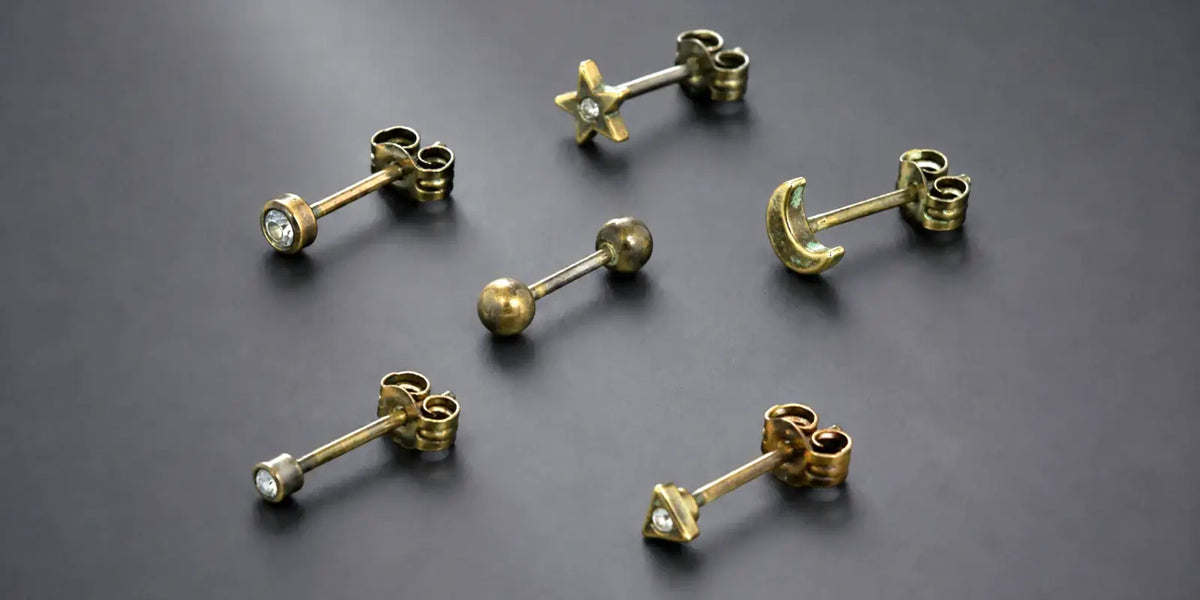
Post / Bar Length: Flat-back labret post typically starts at 8mm for a fresh nostril piercing to accommodate swelling, then gets sized down to 6.5mm once fully healed, with 5mm as an option for a snugger fit.
Closure: MADAJ studs use an internally threaded screw-back closure, where the threading sits inside the post rather than on the outside, so nothing drags against the piercing channel when the decorative end is attached or removed. It's the easiest closure for a first piercing, carries the lowest snag risk, and stays gentle on healing tissue through every jewelry change.
Nose Ring or Septum Ring
Diameter: 8mm is the general recommendation for both a nostril hoop (nose ring) and a septum ring, though the right fit depends on skin thickness and nose shape, and either should only be worn once the piercing is fully healed.
Closure: MADAJ's nose ring and septum ring both use a clicker mechanism once the piercing is fully healed. The septum clicker is designed for a discreet, durable, secure fit; the nose ring's clicker sits close to the skin for a safe, low-visibility look.
Nose Piercing Material : What to Choose and What to Avoid
The Association of Professional Piercers' standard for a fresh piercing covers four safe options:
Recommended:
- 18-karat or higher solid gold, preferred over 14-karat during healing since the higher gold content is less reactive against irritated tissue.
- Implant-grade titanium (ASTM F136)
- Implant-grade steel (ASTM F138)
- Niobium
Avoid:
- Nickel, the most common cause of piercing-site reactions, and often hidden inside jewelry marketed simply as "gold" or "steel" without a nickel-free guarantee
- Acrylic and cheap plated jewelry, which carry the same risk
Gemstone
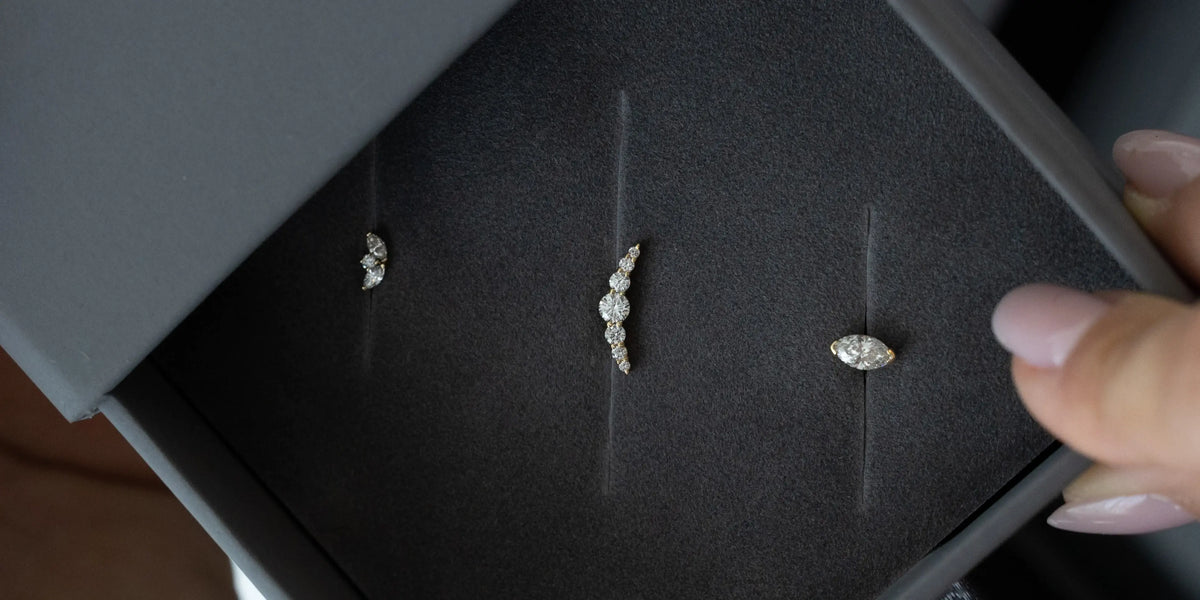
Every stud, ring, and clicker MADAJ makes is set with a gemstone: diamond, ruby, sapphire, emerald, or black diamond, all in nickel-free, hypoallergenic 18-karat gold. A diamond or blue sapphire stud keeps a fresh piercing understated and easy to wear daily; a ruby, emerald, or black diamond septum ring reads bolder and works best once the piercing is fully healed and ready for a statement piece.
Nose Piercing in Professional and Conservative Settings
Certain corporate, hospitality, government, and military environments still restrict visible facial piercings. A small flat-back stud is the easiest to keep professional; it barely registers on camera or across a desk. Septum jewelry has an advantage too: a horseshoe barbell flips up into the nostrils and stays hidden under most dress codes, though flipping it too often during the first weeks of healing can irritate the piercing. For anyone required to remove jewelry entirely during a shift, a clear or flesh-tone PTFE or glass retainer keeps the channel open without showing.
Which Is Better to Pick, Nose Ring, Stud or Septum?
A stud is quiet and deliberate, works just as well in a formal setting as a casual one without trying too hard. A nose ring has movement and presence, a bolder, more confident statement. A septum piece sits centered rather than to one side, giving the face a more balanced look. None is more "correct," just three different answers to what you want people to notice first.
When to Change Your Nose Piercing Jewelry?
- Wait for the right time: Nostril piercings need 2-4 months to close over and up to 6 months to fully settle before a first jewelry change; septum piercings are usually ready in 6-8 weeks.
- Healed Signs: The piercing has no pain, no redness, no swelling, and no crusting or discharge at the site.
- First change: Have a professional piercer do the first swap if you feel any resistance or aren't confident doing it yourself, especially for a septum ring.
How to Change the Nose Piercing Jewelry Safely?
- Clean hands first: Wash hands thoroughly with antibacterial before touching the piercing or handling jewelry.
- Prep the new piece: Disinfect the new jewelry with sterile saline solution, even if jewelry is straight out of the box.
- Remove the old piece: Unscrew a stud's decorative end by hand (internally threaded, so it turns free without dragging), or open a ring's hinge and ease it out along the piercing's natural curve.
- Insert the new piece: Insert the jewelry gently. If it doesn't slide in with light resistance, stop, the piercing may not be ready.
- Make sure it is secured: Screw the stud top back on until snug, or close the ring's hinge until it clicks fully shut.
Nose Piercing Aftercare
Most nose piercing problems don't happen during the piercing itself, they happen after, when aftercare gets skipped or rushed. It's the one part of the process that decides whether everything else, the placement, the jewelry, was worth it. Here's what to know and do during healing.
How to Clean Your Nose Piercing
- Always wash your hands before you touch the piercing or your nose jewelry.
- Use a saline solution: a sterile, piercing-specific spray, or a hand-mixed solution of ¼ teaspoon non-iodized sea salt to a cup of warm distilled water then soak a gauze pad on it.
- Gently clean and remove any crust in the area.
- Pat the area dry with a fresh paper towel or clean towel.
- Apply it twice a day, morning and night.
How to Care for Your Nose Piercing
- Avoid alcohol, hydrogen peroxide, and ointments like Neosporin; they dry out or trap the wound instead of helping it.
- Try not to touch or twist your piercing. This can slow down the healing process.
- Leave the jewelry in for the full healing time (see the comparison table above).
- Avoid swimming pools, lakes, rivers, and hot tubs until your nose heals.
Risks to Watch For
- Small bumps: usually caused by friction or grooming products, not infection.
- Allergic reaction: happens when the jewelry isn't nickel-free.
- Snags and knocks: from clothing, sheets, or gym equipment before the piercing is healed. Tape the jewelry down during contact sports, or wait until it's fully healed before playing.
Recognizing an Infection
- Normal healing: light crusting, mild tenderness.
- Infection: spreading redness, thick yellow or green discharge, or fever.
How to Treat an Infected Piercing
-
Don't remove the jewelry: taking it out can trap the infection under the skin instead of letting it drain, which usually makes it worse.
-
Keep cleaning with saline two times a day, morning and evening, and leave the piercing alone otherwise.
Other Types of Nose Piercing
A nostril or septum piercing isn't the only way to wear one. Several other placements exist, most rarely discussed outside piercing studios.
High Nostril

Positioned higher on the nostril, above the natural crease, through thicker tissue. Heals slower than a standard nostril piercing because of the extra cartilage backing.
Bridge

A surface piercing across the flat skin between the eyes. It sits on skin rather than through a natural fold of tissue, so it carries a higher risk of migration or rejection than the others on this list.
Nasallang

A single piece of jewelry running horizontally through both nostrils and the septum. An advanced placement that only experienced piercers perform.
Double Nostril

Two piercings on one nostril, or a matching pair on each side. Each hole heals on its own timeline.
Rhino/ Vertical Tip

A vertical piercing through the tip of the nose, running from the very top of the nose tip down through the cartilage to exit near the base, between the nostrils. Unlike a septum piercing, it goes through the nose's own tip cartilage rather than the soft tissue between the nostrils.
Septril

A piercing that connects a channel through the nose tip to an already-stretched septum fistula, the healed tunnel of an existing septum piercing. It's an advanced, later-stage option, not a starting piercing.
Third Eye

A vertical surface piercing on the bridge of the nose, essentially the bridge piercing turned 90 degrees. It carries the same migration and rejection risk as the bridge, since it also sits on flat skin rather than a natural fold of tissue.
Austin Bar

A horizontal piercing through the tip of the nose, running side to side instead of top to bottom like the rhino. It's a less common, surface-level placement, and typically only performed by piercers experienced with tip piercings.
Male Celebrities with Nose Piercings: Why Are Men Hotter with Nose Piercings?
There's no data proving a piercing makes anyone more attractive, but there's a reason the look keeps showing up on magazine covers and red carpets. A nose piercing adds a small, deliberate disruption to an otherwise polished look, which is part of why it reads as confident rather than careless on the men who wear it well. Here are five who've helped make that case.
Zayn Malik

Lenny Kravitz

Source: Pinterest
A septum ring worn as part of his signature look for decades, rock-and-roll credibility that's outlasted every passing trend.
Chris Brown

Justin Bieber

Source: Pinterest
A nose piercing he's brought back bigger than before, swapping his original single diamond stud from 2016 for two studs placed closely together.
Travis Barker


Source: Pinterest
The Blink-182 drummer's nose piercing fits the same heavily tattooed, punk-rooted aesthetic he's built his whole career around.
Lewis Hamilton

Source: Pinterest
Wore a nose stud during Formula 1 races in 2022, a big enough deal that the FIA fined Mercedes nearly $25,000 over it before granting him a medical exemption to keep wearing it. Proof the look has made it well past music and into professional sports.

Leave a comment
This site is protected by hCaptcha and the hCaptcha Privacy Policy and Terms of Service apply.