


When Can I Change My Piercing? A Guide for Ear, Nose and Belly Button Piercings
A piercing rarely tells the whole truth about how healed it is. It can feel comfortable, look clean and stop crusting within a few weeks, then turn red and swollen two days after a jewelry change.
That gap between how a piercing looks and how it is actually doing comes from the way piercings heal. The skin at the surface closes first, often within weeks. Underneath, the channel that holds the jewelry, called the fistula, keeps forming for months. Change the jewelry too early, and that channel is disturbed before it can hold up on its own.
So when can you change your piercing? The answer comes in two stages.
Downsizing comes first. Every new piercing is fitted with a longer post to leave room for swelling. Once the swelling settles, generally after 4 to 8 weeks, that extra length becomes a liability: the jewelry slides, catches on hair and clothing, and tilts out of position. Exchanging it for a shorter post in the same style holds the piercing steady for the rest of its healing. The timing varies with the placement and with how each person's skin heals, and while every ear, nose and belly button piercing needs this step, many people skip it.
A new style comes later. Switching a stud to a ring, or wearing a different design, waits until the piercing is fully healed. That is around 2 to 4 months for a lobe and 6 to 12 months for ear cartilage, with some nose and navel piercings taking longer. Pierced on the same afternoon, a lobe and a belly button can be ready for new jewelry months apart.
In This Guide:
- Piercing Change Timeline at a Glance
- Weeks 1 to 4: Why It's Too Early to Change Your Piercing
- Weeks 4 to 8: When and How to Downsize Your Piercing
- Months 2 to 4: When You Can Change a Lobe or Septum Piercing
- Months 4 to 6: When You Can Change a Nostril Piercing
- Months 6 to 12: When You Can Change Cartilage and Belly Button Piercings
- How to Tell If Your Piercing Is Fully Healed
- How to Change Piercing Jewelry Safely at Home
- What to Do If Your Piercing Reacts After a Change
- Piercing Change Myths, Explained
- Choosing Your Next Piece
- Frequently Asked Questions
Piercing Change Timeline at a Glance
Every piercing changes in two stages: downsizing first, then a new style once it is fully healed.
Placement |
Downsize |
New style |
Lobe |
4 to 8 weeks | 2 to 4 months |
Septum |
4 to 8 weeks | 2 to 4 months |
Nostril |
4 to 8 weeks | 4 to 6 months |
Helix, forward helix, conch, rook, flat, contraconch, tragus |
4 to 8 weeks | 6 to 12 months |
Daith, antitragus |
4 to 8 weeks | 9 to 12 months |
Navel |
4 to 8 weeks | 6 to 12 months |
Timelines vary with anatomy and aftercare. Check your piercing is fully healed before changing styles.
Weeks 1 to 4: Why It's Too Early to Change Your Piercing
The first weeks are the most active phase of healing. The area swells, the tissue starts to rebuild around the jewelry, and a thin layer of new skin begins to line the channel. Removing jewelry now disturbs that new lining and restarts part of the process.
This is also why the first piece goes in longer than it will stay. An 8mm starter post leaves room for swelling so the jewelry never presses into the skin. It is meant to be temporary.
What helps during this stage:
- Clean the piercing twice a day with sterile saline solution.
- Dry it gently with non-woven gauze.
- Leave the jewelry still, without twisting or turning it.
- Avoid sleeping on the piercing and keep in-ear headphones away from new ear piercings. Over-ear headphones are a comfortable alternative.
Want to avoid the most common healing setbacks? Read Ear Piercing: 5 Common Mistakes to Avoid for Faster Healing.
Weeks 4 to 8: When and How to Downsize Your Piercing

Once the swelling has gone down, the long starter post stops being useful. Extra length lets the jewelry move back and forth, catch on hair, clothing and towels, and sit at an angle. That movement irritates the channel and can lead to bumps.
Downsizing solves this by swapping the starter post for a shorter one, such as a 6.5mm post, that sits closer to the skin. The style stays the same. Only the length changes.
A professional piercer is the right person for this first change. They can confirm the swelling has fully settled, measure the length your anatomy needs and make the swap without stressing the healing tissue. This matters most for cartilage, septum and navel piercings, where the angle is difficult to see on your own. Many studios offer downsizing as a quick appointment.
Signs it may be time to downsize:
- The swelling has visibly gone down
- There is a gap between the front of the jewelry and the skin
- The post slides back and forth more than before
- The jewelry catches more often than it did in the first weeks
Not sure which size suits your ear? Check our Ear Piercings Size Guide. For post lengths by placement, read our Piercing Downsizing guide.
Months 2 to 4: When You Can Change a Lobe or Septum Piercing

Lobe piercings pass through soft tissue with a steady blood supply, which is why they heal faster than any other ear placement. Most lobes are ready for a new style after 2 to 4 months. This is the stage where many people add a hoop, swap to a gemstone stud or start planning a second lobe piercing.

Septum piercings go through a thin band of soft tissue at the front of the nose, just below the cartilage. That tissue heals relatively quickly, usually within 2 to 4 months. A septum still benefits from patience before switching ring styles, especially if it still feels tender when you touch the tip of your nose.
Thinking about your next placement? Read Your First Piercing After Lobes.
Months 4 to 6: When You Can Change a Nostril Piercing

A nostril piercing passes through thin cartilage on the side of the nose. It is exposed every day to face washing, skincare, makeup and the occasional towel snag, which slows healing compared with a septum.
Most nostrils are ready for a new style after 4 to 6 months. Switching from a stud to a ring is the change people ask about most. A ring moves more inside the channel than a stud, so waiting for full healing keeps the switch comfortable.
Nostrils also tighten quickly when left empty. Keep the new piece cleaned and within reach before removing the old one.
For more on nostril and septum placements, read Nose Piercings for Men: Nostrils, Septum & What to Expect.
Months 6 to 12: When You Can Change Cartilage and Belly Button Piercings

Ear cartilage has less blood flow than the lobe, so it heals more slowly. The helix, forward helix, conch, rook, flat, contraconch and tragus usually need 6 to 12 months. The daith and antitragus sit deeper in the folds of the ear and need 9 to 12 months.
Cartilage piercings are also the ones that feel healed earliest. Tenderness can disappear within weeks while the channel is still forming, so time is a more reliable guide than comfort.

Navel piercings take a similar amount of time, usually 6 to 12 months. The belly button moves every time you sit, bend or twist. That constant movement is why a navel piercing can look settled for months before it is ready for a new design.
For a full breakdown by placement, see our Ear Piercings Healing Time guide.
How to Tell If Your Piercing Is Fully Healed
The timeline gives a range. Your piercing confirms where you are within it. A piercing is usually ready for a new style when all of these are true for several weeks in a row:
- No tenderness when you press gently around it
- No redness, warmth or swelling
- No discharge or crusting on the jewelry
- The jewelry moves slightly without any discomfort
If one of these is still present, the piercing needs more time. Continue cleaning twice a day with sterile saline solution and check again in a few weeks.
How to Change Piercing Jewelry Safely at Home
Once a piercing is fully healed, changing jewelry yourself is straightforward.
Prepare first. Wash your hands with soap and water. Clean the piercing and the new jewelry with sterile saline solution. Work in front of a mirror with good light, over a clean surface where small parts will not roll away.
For studs with an internally threaded flat disc back: hold the back steady, unscrew the front counterclockwise and remove the post. Insert the new post from the back, following the natural angle of the piercing, and screw the front on clockwise until secure.
For hinged rings: open the hinged segment, slide the open end through the piercing and press it closed until it clicks. This applies to nose rings, septum rings, daith rings and hoops.
For navel piercings: unscrew the top of the bar, slide the bar out from below, insert the new bar from below and screw the top back on.
If the jewelry resists, stop. Forcing it can tear the channel. Clean the piercing, wait and try again later, or ask a piercer to help.
A note on gauge: keeping the same thickness as your current jewelry, or moving to a thinner one, makes the change easy. Moving to a thicker gauge should be done by a piercer.
Not sure which type of back your jewelry has? Read Internally Threaded vs. Externally Threaded vs. Threadless.
What to Do If Your Piercing Reacts After a Change
Changing jewelry too early rarely causes a problem the same day. Signs usually appear over the next few days: renewed redness, tenderness, swelling or a small bump beside the piercing.
When this happens, go back to the basics. Clean twice a day with sterile saline solution, dry with non-woven gauze and leave the jewelry alone. Most reactions settle within a few weeks once the piercing is left undisturbed. If the reaction grows or does not improve, see a professional piercer or a doctor.
For more on bumps and scarring, read Keloids and How to Protect Your Piercing.
Piercing Change Myths, Explained
Myth: Twisting the jewelry stops it from sticking. Twisting drags the crust into the channel and moves the healing tissue. Saline loosens any buildup on its own.
Myth: A piercing heals faster without jewelry at night. Healing tissue does not need air. Removing the jewelry overnight lets the channel shrink and makes reinsertion harder on the tissue.
Myth: No pain means fully healed. Pain fades early, especially in cartilage. Healing continues long after the tenderness is gone.
Myth: A healed piercing can stay empty for a while. Healed piercings can still tighten, and nostrils can shrink within a short time. Plan the change so the piercing is empty for as little time as possible.
Choosing Your Next Piece
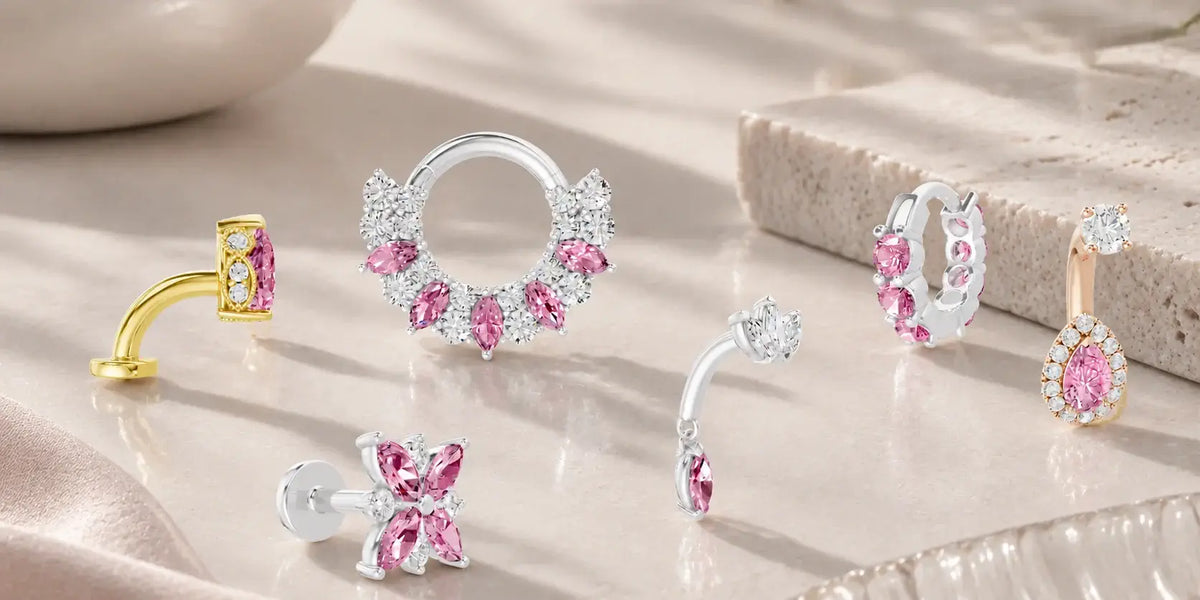
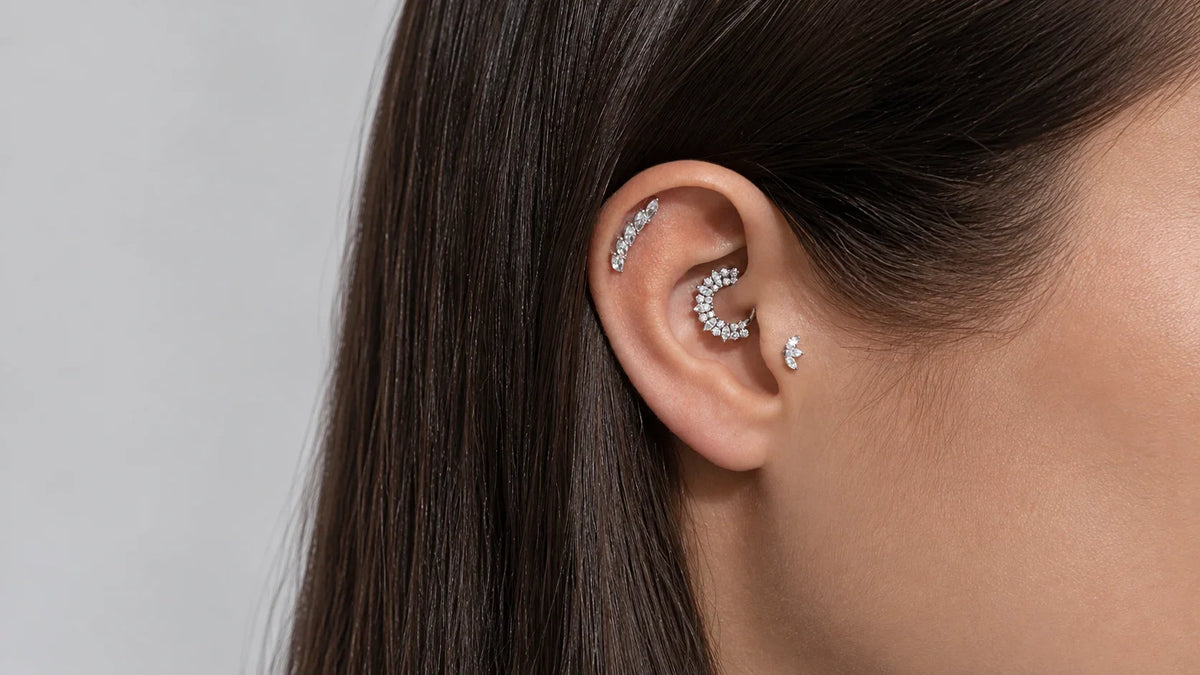
When the timeline is complete and the piercing has been calm for weeks, the next piece is the one you will likely wear for years. MADAJ crafts its piercings in solid, nickel-free 18k gold for every placement covered here, from lobe and cartilage to nose, septum and navel.
Shop by placement: Lobe | Helix | Nose | Septum | Belly Button

Leave a comment
This site is protected by hCaptcha and the hCaptcha Privacy Policy and Terms of Service apply.